
Electric Pallet Truck for Cold Rooms
The Vestil EPT-CFR-2748-40 electric pallet truck combines powered travel and lift for pallet handling in cold-room applications. Material Handling USA can help you compare its published specifications with your loads, pallets and operating route. Confirm the actual temperature and charging requirements for your facility before ordering; a cold-room product description is not a substitute for an approved application review.

Define the cold-storage duty cycle

Cold-storage handling is more specific than moving a pallet inside a refrigerated building. The truck may remain in one room, travel repeatedly through a vestibule or move between a dock and several temperature zones. These patterns affect the questions that need to be answered about equipment, battery use and the working environment.
Record the temperatures in each operating area and the time spent there. Describe transitions, waiting periods and where the truck is parked when not in use. Include cleaning conditions, moisture and the condition of the floor. Provide this information to the supplier so suitability is reviewed for the actual application rather than inferred from the product name.
Measure the work performed
Count pallet movements during a representative shift and identify peak periods. Record travel distances, load weights and the number of starts, stops and turns. Include empty return trips. A simple daily pallet total does not describe whether the truck makes short intermittent movements or operates continuously over a longer route.
- Identify the heaviest and most awkward loads, including pallet weight.
- Record pallet dimensions and entry configurations.
- Map doors, turns, thresholds and shared traffic areas.
- State the required operating periods and available charging windows.
Avoid setting a minimum-temperature claim from an old marketing page. Obtain the current manufacturer guidance for operating, storing and charging the exact configuration. If the facility's conditions fall outside the documented requirements, review another solution. That application check is especially important when a truck will cross temperature boundaries repeatedly during the shift.
Review the published EPT-CFR specifications

Vestil's current product data identifies the EPT-CFR-2748-40 with a 4,000-pound uniform capacity, 48-inch forks and 27-inch fork spacing. The listed service range is 3-1/5 to 7-3/4 inches. It uses a lithium-ion battery and includes an emergency-stop control and a quick-change battery compartment. Confirm the current specification and supplied documentation with the order.
Use dimensions for a fit check
| Published item | EPT-CFR-2748-40 value | Application check |
|---|---|---|
| Uniform capacity | 4,000 lb | Actual load, pallet and distribution |
| Fork length | 48 in | Pallet depth and supported entry |
| Fork spacing | 27 in | Pallet openings and support arrangement |
| Service range | 3-1/5 to 7-3/4 in | Entry and required floor clearance |
Capacity is not the only selection criterion. An irregular load, unsuitable pallet or obstructed route can make a truck inappropriate even when the total weight is below the listed capacity. Provide representative load information and follow the manufacturer's instructions for the intended handling arrangement. Do not estimate suitability from a photograph of a similar pallet.
Distinguish low lift from stacking
This is a low-lift pallet transport application. It should not be confused with equipment intended to place loads into elevated rack positions or raise a pallet to a workstation height. If the process requires stacking or elevated transfer, describe that need separately so the correct equipment category can be evaluated.
The lifting and material transport guide explains the broader selection questions. Defining whether the task is transport, positioning or elevated placement helps prevent a purchase that moves the load across the room but cannot complete the next step in the process.
Check pallet compatibility and the travel route

The pallet and the truck need to work together throughout entry, lifting, travel and placement. Inspect the pallet types used by all relevant suppliers or clients. Differences in bottom boards, openings or damage can change whether the forks and load wheels can enter correctly. Include the difficult pallets in the review, not only a new sample of the preferred design.
Review load stability
Identify how the goods are secured and whether the load obstructs the operator's view. Note overhang, uneven distribution and packaging that may shift during movement. The equipment choice does not replace a suitable pallet and stable load. Establish a process for rejecting damaged or unsuitable pallets before they enter the transport route.
Check the route with the actual load envelope. Include turning space at doors, intersections and staging locations. A clear aisle width alone does not describe a turn with an overhanging load. Review the truck manufacturer's operating requirements and the facility's traffic plan together before deciding that an existing route is adequate.
Inspect surfaces and transitions
Look for uneven joints, thresholds, drainage features and damaged floor areas. Record ramps or grades and ask the manufacturer whether they are within the equipment's permitted use. Do not assume that a powered pallet truck is suitable for any incline because it can move the load on a level floor.
Cold-room routes also need attention to moisture and ice. The site must maintain appropriate operating conditions and address slippery surfaces through its established procedures. A cold-room designation does not mean the truck can safely operate on every frozen or contaminated surface. Include these conditions in the application discussion and in the facility's daily operating checks.
Plan battery use and charging around the shift
Operate
Confirm room and duty-cycle limits.
Store
Define the parked condition.
Charge
Check separate battery requirements.
Battery planning should reflect the duty cycle, temperature conditions and available charging periods. Ask for the supplied battery and charger information for the exact truck configuration. Confirm operating, storage and charging limits separately. These may not be the same, and a statement about cold-room operation should not be applied automatically to charging.
Define the charging location
Identify where the truck or battery will be charged and which team owns the process. Review power requirements, access, handling and the surrounding conditions with the appropriate facility personnel. Keep charging equipment protected from impact and unsuitable environmental exposure. Follow the manufacturer instructions and the site's applicable safety procedures.
Avoid promising a fixed number of operating hours from a single charge without a supported duty-cycle assessment. Load, travel, stops, temperature and battery condition can affect use. If continuous availability is essential, ask the supplier to evaluate the proposed schedule and any approved spare-battery arrangement. Confirm the change process and compatibility rather than assuming batteries can be freely substituted.
Make problems visible
Provide a clear method for reporting charging faults, damaged connectors or abnormal battery behavior. Operators should know when to stop using equipment and involve the responsible service team. Do not improvise repairs or alter chargers, connectors or battery compartments. Keep the relevant documentation and support contact with the equipment record.
Track charging interruptions alongside operational delays. A truck may appear to have insufficient capacity when the real problem is an unavailable charging point or an inconsistent handover between shifts. Review the routine first, then assess whether additional equipment is needed. A practical charging plan is part of the handling system, not an accessory decision after delivery.
Prepare operators and daily inspection procedures
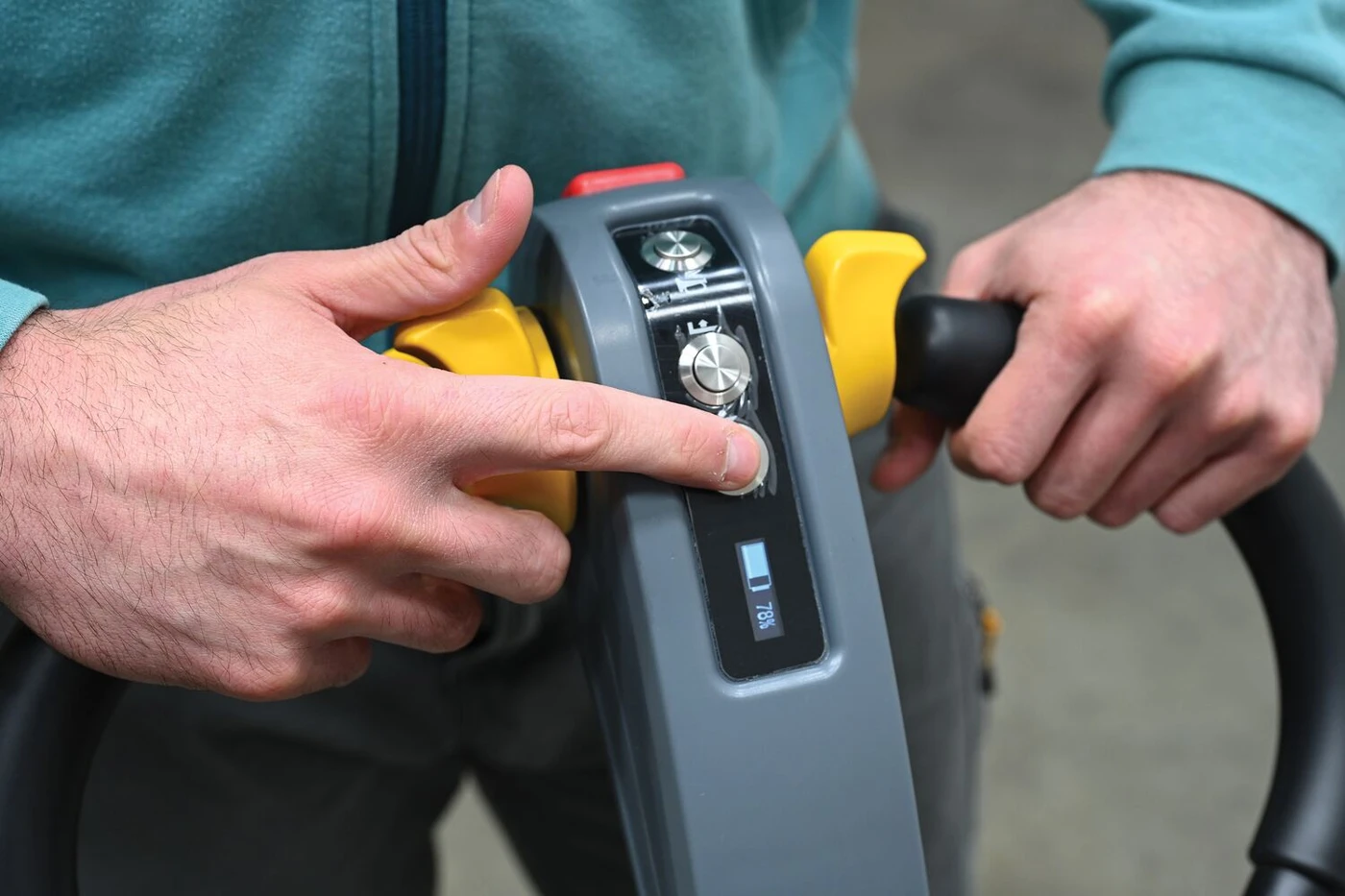
Powered equipment needs trained operators and a working inspection process. OSHA's powered industrial truck guidance emphasizes operator training and pre-shift checks, with checklists adapted to the truck and manufacturer's instructions. The employer should establish the applicable requirements for the equipment and workplace rather than relying on a general statement that a product is compliant.
Use the supplied instructions
Build the inspection routine around the actual model and its documentation. Include the condition of forks, wheels, controls and battery connections as applicable. Check the equipment record and identify who receives a defect report. A completed checklist is useful only when problems lead to an appropriate response before the truck returns to service.
Review the workplace as well as the truck
- Confirm that the planned route is clear and suitable for operation.
- Check the load and pallet condition before handling.
- Identify pedestrian interactions and restricted areas.
- Follow the site's process for defects, spills, ice or other changing conditions.
Train operators on the equipment they will actually use and the conditions they will encounter. A familiar control layout does not establish that a person is prepared for a different truck or application. Include the emergency-stop function and the site's response procedures in the appropriate training, following the manufacturer information and employer requirements.
Keep inspection and service records available to the responsible team. If the truck is removed from service, make its status clear so another shift does not use it inadvertently. Resolve the underlying issue through qualified service personnel and the approved process. The goal is consistent equipment readiness, not simply documenting that someone looked at the truck.
Compare the full purchase and support scope

The purchase decision should cover the truck, its accessories and the support needed to keep it useful. Confirm the exact model, battery, charger and supplied documentation. Ask about current availability, delivery arrangements and the service process for the location where the equipment will operate. Avoid treating a general quick-ship label as a guaranteed delivery date.
Make the quote application specific
Include your temperature profile, pallet information, load weights and route description. State the number of shifts and any periods when the truck must remain continuously available. Ask the supplier to identify assumptions and confirm suitability for the proposed use. If a requirement cannot be confirmed, resolve it before committing the order.
Compare freight, unloading needs, initial setup and operator familiarization responsibilities. Clarify which support activities are included and which are handled separately. Ask how replacement wear parts and service information are obtained. A lower initial price may not describe the complete ownership cost if the equipment is difficult to support in the actual facility.
Review alternatives when the task changes
If the route includes elevated placement, substantial grades, unusual pallets or a different environment, revisit the equipment category. A specialized application may call for a different pallet truck or another handling method. Describe the complete task rather than adding accessories to compensate for a mismatch in the original selection.
Material Handling USA can help coordinate that comparison. The EPT-CFR-2748-40 should be considered against its documented capabilities and your operating conditions. Where an exact online listing is unavailable, request a model-specific quote rather than treating another pallet truck in a broad catalog category as an equivalent cold-room solution.
Verify the application at delivery and handover
Configuration
Check truck, battery and charger.
Route
Confirm representative loads and clearances.
Records
Retain the application assessment.
Before delivery, prepare the receiving area and confirm how the equipment will be unloaded. Check that the charging arrangement and required site provisions are ready. Assign responsibility for inspecting the shipment and retaining the model, serial and documentation details. Resolve damage or missing items through the supplier before placing the truck into normal service.
Confirm the supplied configuration
Compare the equipment, battery and charger with the approved order. Review the current operating instructions and any application conditions agreed during selection. Do not rely on an older web description if the supplied documentation differs. Bring discrepancies to the supplier so the intended use can be confirmed in writing.
Use a controlled introduction with appropriately trained personnel and representative loads, following the manufacturer's instructions and site procedures. Confirm pallet entry, route suitability and the issue-reporting process. Record any operational concerns and resolve them before expanding use across all shifts. Handover should demonstrate that the complete process is ready, not only that the truck powers on.
Keep the selection record useful
Retain the temperature profile, load assumptions and route reviewed for the purchase. Reassess suitability when the facility changes pallets, adds a new cold room or moves the charging location. Those changes may affect the original application assessment even when the truck itself remains unchanged.
To begin a review, send Material Handling USA the pallet dimensions, maximum load, room temperatures, operating schedule and route photographs. Include any thresholds, slopes or cleaning conditions. This information supports a focused discussion about whether the Vestil cold-room pallet truck fits the work and what needs confirmation before ordering.
Frequently asked questions
What is the listed capacity of the EPT-CFR-2748-40?
Vestil currently lists a 4,000-pound uniform capacity. Confirm the actual load, pallet and handling arrangement against the manufacturer's instructions; capacity alone does not establish application suitability.
What minimum temperature can it operate at?
Obtain the current operating limits for the exact configuration from the manufacturer or supplier. The cold-room designation should not be used to infer an unverified minimum temperature.
Can the truck charge inside a freezer?
Do not assume so. Charging conditions must be checked separately against the battery and charger instructions and the proposed installation.
Can this pallet truck place loads into elevated rack positions?
It is a low-lift pallet transport product. Elevated placement or stacking requires an equipment selection matched to that task.
Does it fit every standard pallet?
No universal fit should be assumed. Check the actual pallet openings, bottom-board arrangement, condition and dimensions against the truck's fork and wheel configuration.
What should I provide for a quote?
Provide load and pallet details, temperature conditions, travel route, shift pattern and charging arrangements. Include photographs and any slopes, thresholds or unusual environmental conditions.
Check Your Cold-Storage Handling Application
Share your application details, photographs and requirements with Material Handling USA to start a focused project discussion.