
Industrial Real Estate & Developer Storage Partner
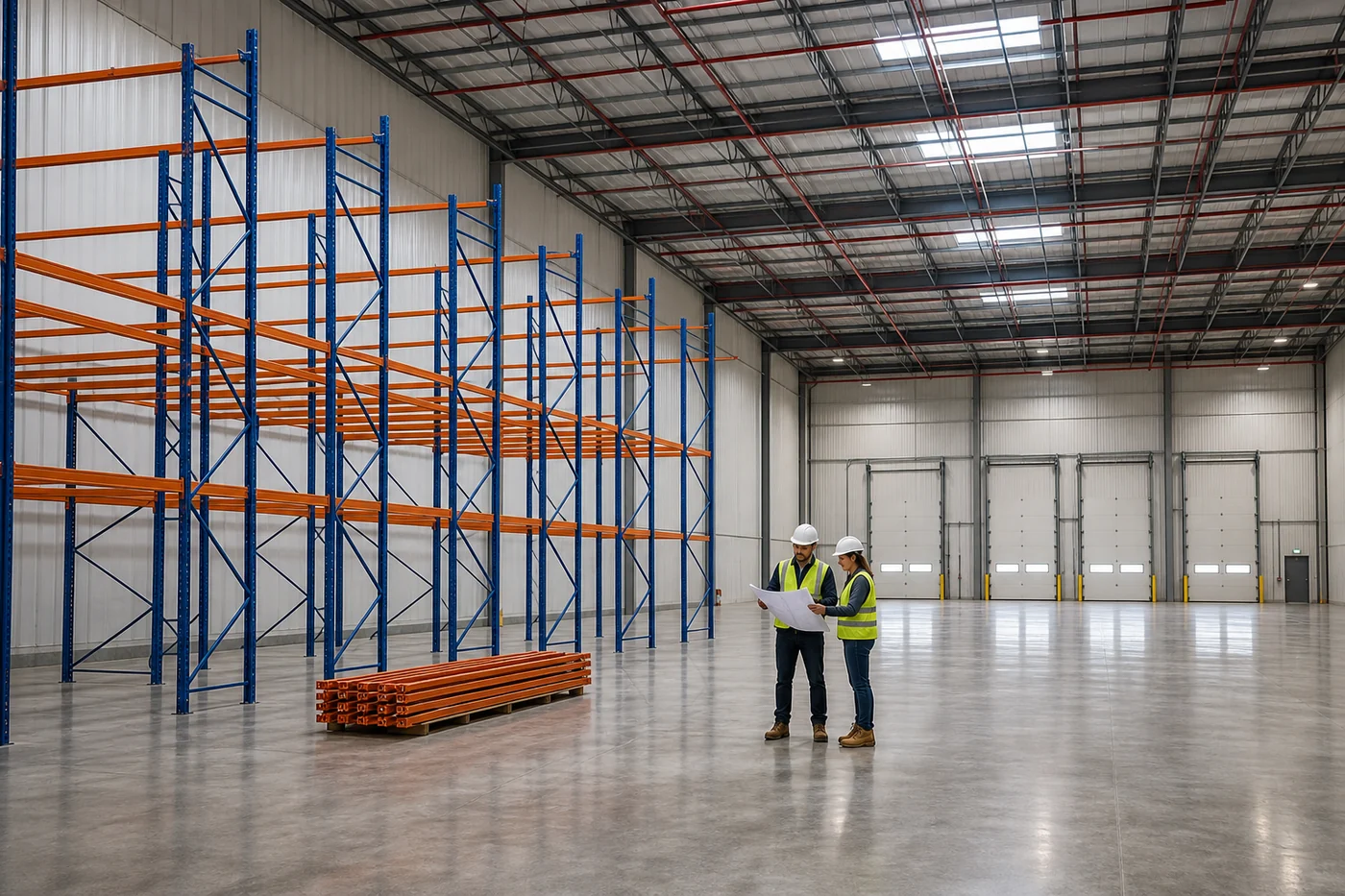
A warehouse is a shell until it has storage infrastructure. We give developers, brokers and general contractors free pre-lease rack layouts, real pallet position counts, TI-ready pricing and turnkey installation — racking, mezzanines and wire partitions, supplied and installed nationwide.
Free
Spec & pre-lease rack layouts
3–6 weeks
Typical PO to installed rack
PE-stamped
Drawings for permit submittal
Nationwide
Supply and installation
Storage Infrastructure Is Part of the Deal

Industrial tenants do not lease square feet. They lease pallet positions, pick faces, staging depth and clear height they can actually use. Two 150,000 square foot buildings a mile apart can differ by thousands of pallet positions once you account for clear height, column grid, sprinkler type and how the docks are laid out — and the prospect walking the building has no way to see that from an empty floor.
Material Handling USA works on the storage side of industrial real estate: pre-lease and spec layouts for developers and listing teams, tenant improvement fit-outs with general contractors, demising and secure storage for multi-tenant buildings, and reconfiguration between tenants. We design it, engineer it, supply it and install it, and we do the pre-lease design work at no charge because it usually decides whether a building is competitive.
What follows is the same information we walk developers through: how pallet positions are actually calculated, which parts of the shell control the number, the code and permit path for storage racks, and what we deliver at each stage.
Have a building to lay out?
Send us a floor plan, the clear height and the sprinkler type. You will get a rack layout, a pallet position count and an alternate configuration you can use in marketing — free, and usually within a week.
Request a Layout or Quote Try the Pallet Rack Configurator Call (800) 326-4403
Turning Square Feet Into Pallet Positions
Capacity is not a per-square-foot constant. It is a module repeated across the floor: a double-row rack, an aisle, and however many beam levels the clear height and the load height allow. Get the module right and the building count follows.

The vertical half of the equation
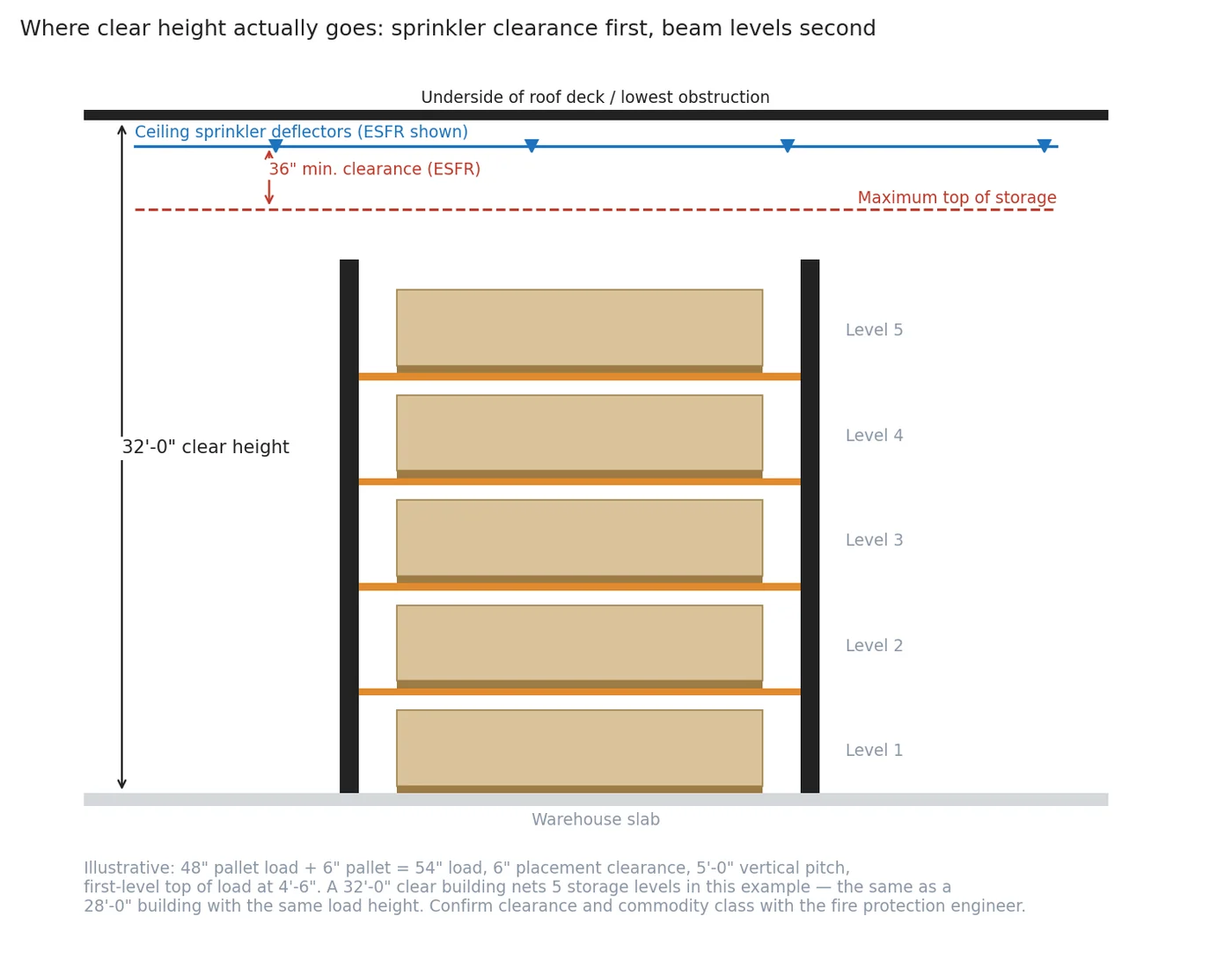
Beam levels only come in whole numbers, and the top of storage is capped by the sprinkler design before it is capped by the roof. NFPA 13 requires 18″ of clearance below standard spray sprinkler deflectors and 36″ below ESFR heads, so a tall building can still lose a level to a load height that does not divide cleanly.
Illustrative capacity by clear height
| Clear height | Beam levels (54″ load) | Positions per 100,000 sq ft gross | Where you see it |
|---|---|---|---|
| 24′-0″ | 4 levels | ~2,950 | Older infill and small-bay industrial |
| 28′-0″ | 5 levels | ~3,700 | Common 1990s–2000s distribution stock |
| 32′-0″ | 5 levels | ~3,700 | Modern spec floor — extra height is lost unless load heights change |
| 36′-0″ | 6 levels | ~4,450 | Current large-format spec standard |
| 40′-0″ | 7 levels | ~5,200 | Height-constrained land; watch in-rack sprinkler triggers |
How this table was calculated — and why we still measure your building
Assumptions: 48″ × 40″ GMA pallets stored 40″ deep, two per 9′-0″ bay level, 54″ load height plus 6″ placement clearance on a 5′-0″ vertical pitch, 36″ ESFR clearance, 7′-6″ double-row rack depth, 12′-0″ aisles, and 65% of the gross floor area available for rack and aisle after docks, staging, cross aisles, offices and equipment. Change the load height or the aisle width and every number moves — narrow-aisle reach trucks at 10′-0″ aisles add roughly 11% on their own. Treat this as a sanity check, not a specification.
- Deep-lane systems change the answer more than height does — push-back at 4 deep or pallet flow can add 40–80% more positions in the same footprint, in exchange for selectivity.
- Clear height is measured to the lowest obstruction. Sprinkler branch lines, lights and ducts routinely cost 2–4 feet against the number on the flyer.
- Columns inside a rack row can be absorbed in a flue space; columns in the wrong place cost pallet positions in every bay of the run.
- Above roughly 40 feet of storage height, in-rack sprinklers become a real possibility — and a cost that resurfaces at tenant rollover if they have to come out.
What the Building Shell Decides
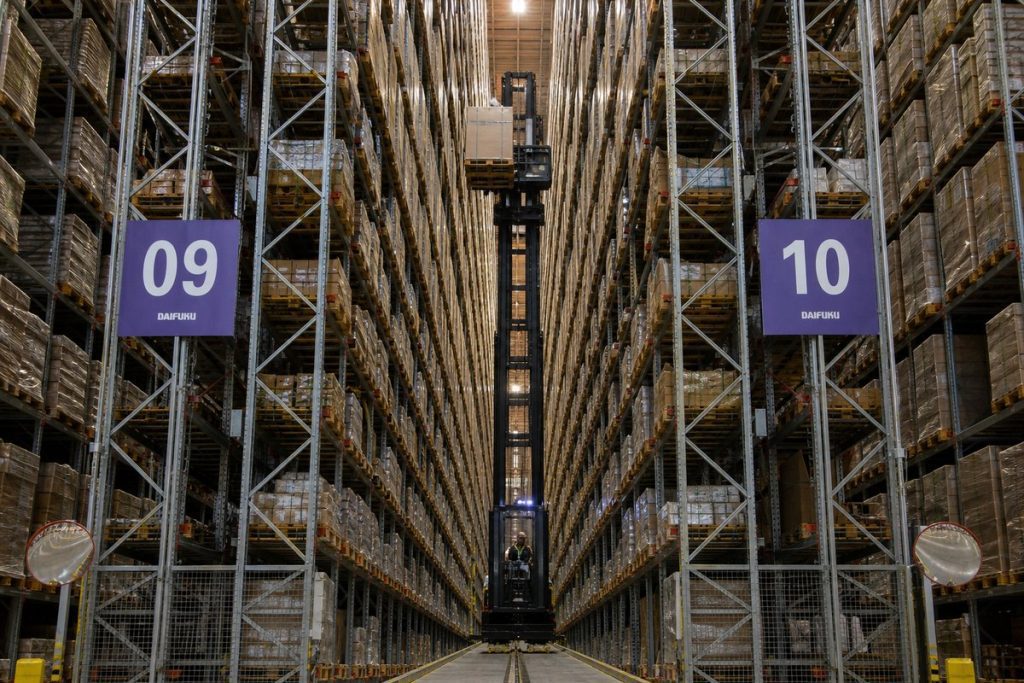
Most of the storage answer is fixed by the shell before anyone talks about rack. Modern spec buildings have converged on 32–40 feet clear and 50–56 foot bays for exactly this reason: those two numbers, plus the sprinkler system, set the ceiling on what any tenant can do in the space.
That is also why storage input is worth more during design than after handover. On a build-to-suit or a spec building still in permitting, a foot of clear height, a wider bay or an ESFR upgrade can be traded against pallet count while it is still a drawing revision instead of a change order.
| Shell factor | What we need from you | What it controls |
|---|---|---|
| Clear height | Measured to the lowest obstruction — sprinkler branch lines, ducts, lights, joist bottom chord — not to the deck | Sets the number of beam levels, and therefore most of the pallet count |
| Column grid | Bay dimensions and column size; 50′–56′ bays are the most common in modern spec buildings | Rack rows are laid out to bury columns in flue spaces instead of losing pallet positions to them |
| Sprinkler system | ESFR or ceiling density/area, K-factor, and any existing in-rack piping | Drives flue spaces, storage height limits and whether a commodity change needs an FPE review |
| Slab | Thickness, reinforcement, joint layout and allowable point loading; F-min flatness if VNA trucks are planned | Base plate size, anchor selection and whether narrow-aisle equipment can be used at all |
| Seismic data | Site class and design ground motions for the address | Rack frame and anchor design under ASCE 7 §15.5.3; a Utah or California building is not a Midwest building |
| Dock and door layout | Dock door count and spacing, drive-in doors, truck court depth | Cross-aisle locations, staging depth and where rack runs have to stop |
| Egress and fire access | Exit locations, travel distance, fire department access doors | Cross-aisle spacing and where rack cannot block a path |
| Power and lighting | Panel capacity, lighting layout and fixture heights | Whether lights sit below the top of storage and have to be relocated or re-aimed |
The slab is the constraint people forget
Rack loads arrive at the floor through base plates, so slab thickness, joint locations and allowable point load decide anchor selection and sometimes frame spacing. If narrow-aisle or very-narrow-aisle trucks are in the plan, floor flatness matters too: ACI 360R defined-traffic F-min guidance rises with rack height, so a 40-foot VNA aisle demands a flatter floor than a 25-foot one. Finding that out after the slab is poured is expensive.
Systems We Fit Out
Most industrial fit-outs use two or three of these together — selective rack in the reserve area, a denser system for fast movers, a mezzanine or pick module where the height is worth using, and partitions where space has to be secured or demised.
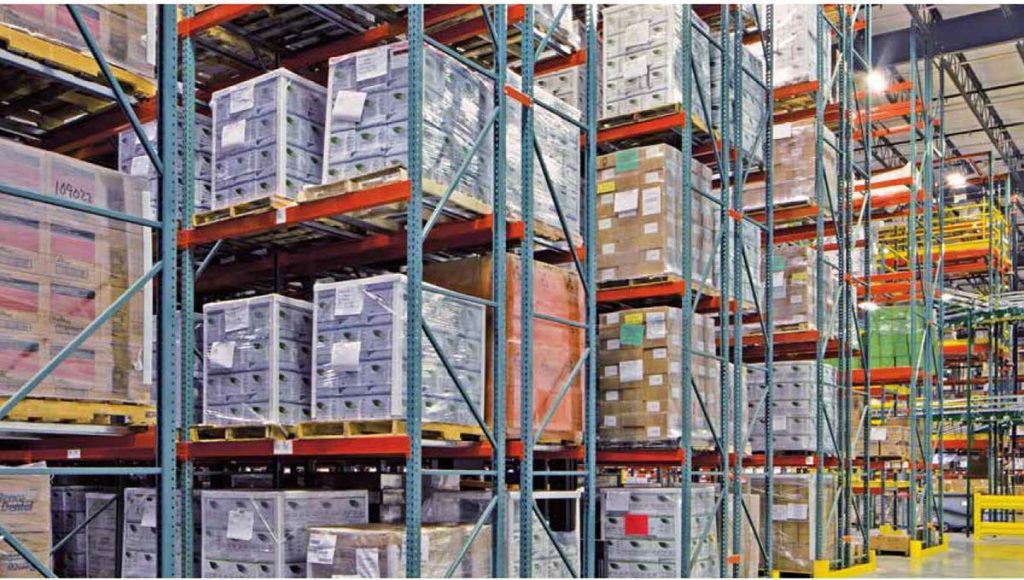 Selective Pallet RackThe default fit-out system and the one prospects understand instantly: every pallet directly accessible, beams adjustable on 2″ centers, bays sized to the tenant’s pallet and load height. Laid out around the real column grid and clear height rather than a generic template.
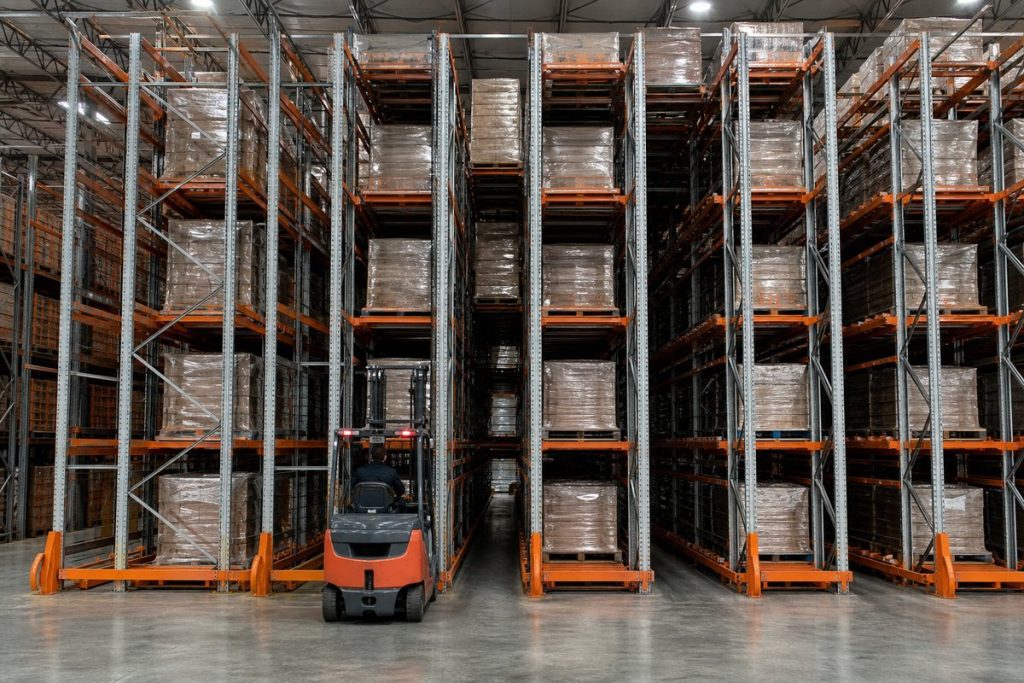 Drive-In RackDeep lanes for low-SKU, high-volume inventory where floor area is tight. Density comes at the cost of selectivity, and lane depth has to be matched to the forklift and the flue/sprinkler design. Drive-in is outside the scope of ANSI MH16.1, so we specify it from the manufacturer’s engineering.
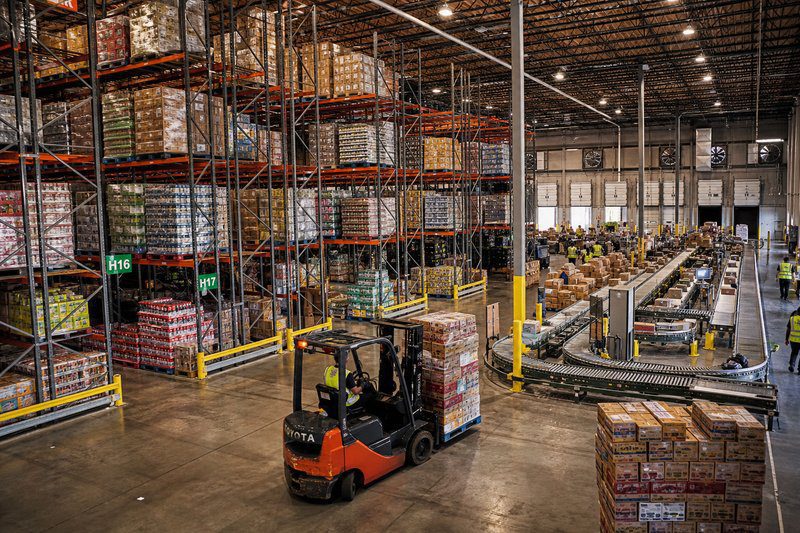 Push-Back Rack2 to 6 pallets deep on nested carts and inclined rails, loaded and unloaded from one aisle. Roughly doubles positions per square foot against selective rack while keeping a pick face for every lane.
 Pallet Flow RackGravity lanes with rollers and speed controllers for first-in, first-out flow — load at the back, pick at the front. Common where a tenant runs dated stock or high-throughput replenishment.
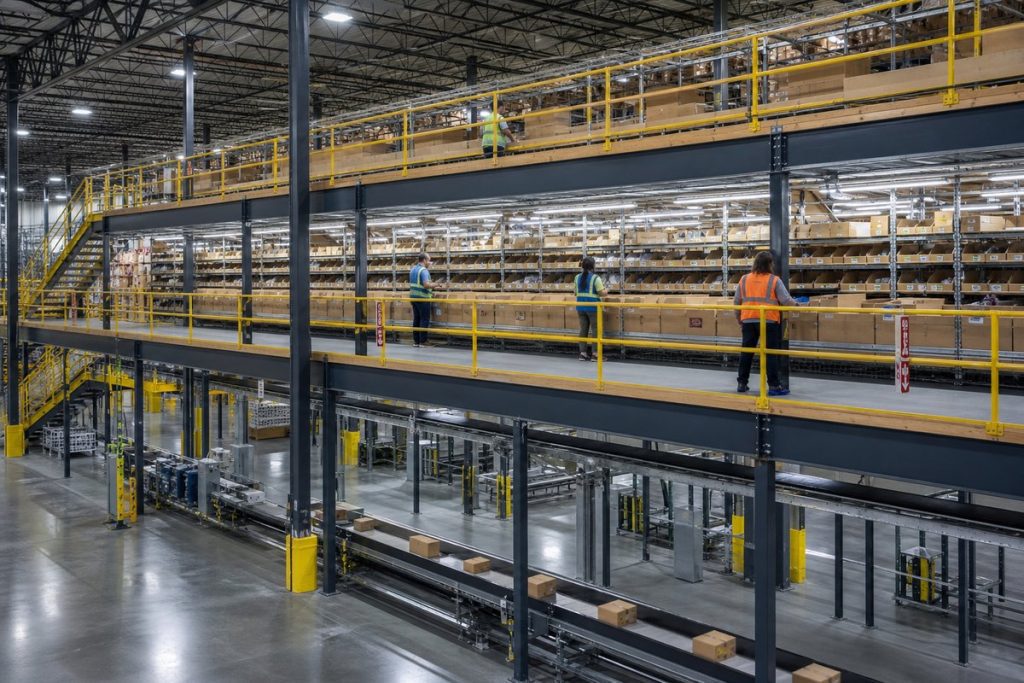 Pick Modules & Carton FlowMulti-level pick modules combine rack, mezzanine framing, carton flow shelving and conveyor into one structure. This is the system that turns a tall shell into an e-commerce fulfillment building.
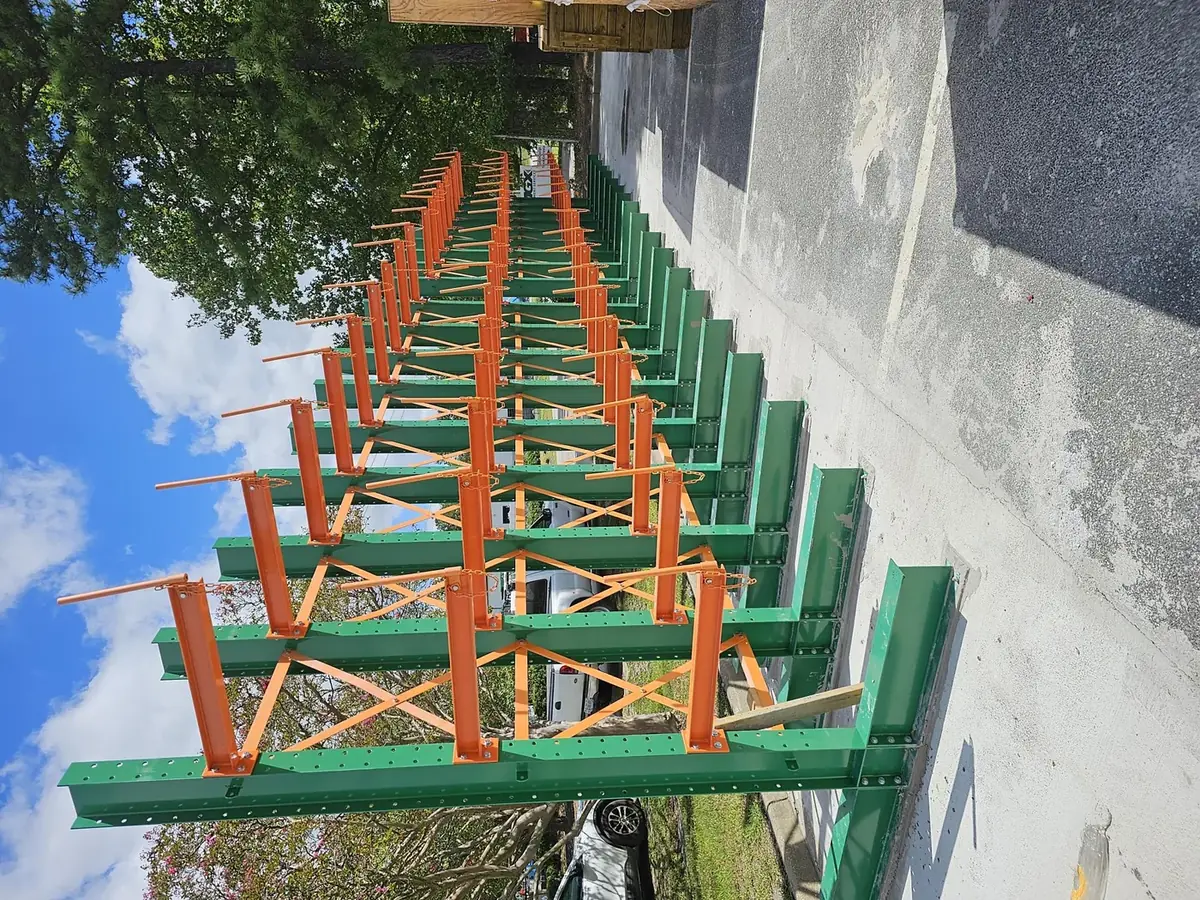 Cantilever RackArms on a single column line for pipe, lumber, steel, sheet goods and anything that will not sit on a pallet. Designed to ANSI MH16.3 rather than MH16.1, and often the difference between a building working for a building-products tenant or not.
 Industrial MezzaninesAdded usable area inside the existing footprint — storage, office, or a pick platform — with clear spans set around your columns, stair and gate locations coordinated with egress, and stamped calculations for permit.
 Wire Partitions & Security CagesWelded wire panels demise space, build tool cribs, protect high-value or controlled inventory and separate tenants — and unbolt and move when the next tenant needs a different footprint.
 Industrial Shelving & BackstockBoltless rivet shelving, wide-span and steel shelving for parts, case picking and backstock in flex suites, service bays and small-bay industrial where full pallet rack is the wrong tool.
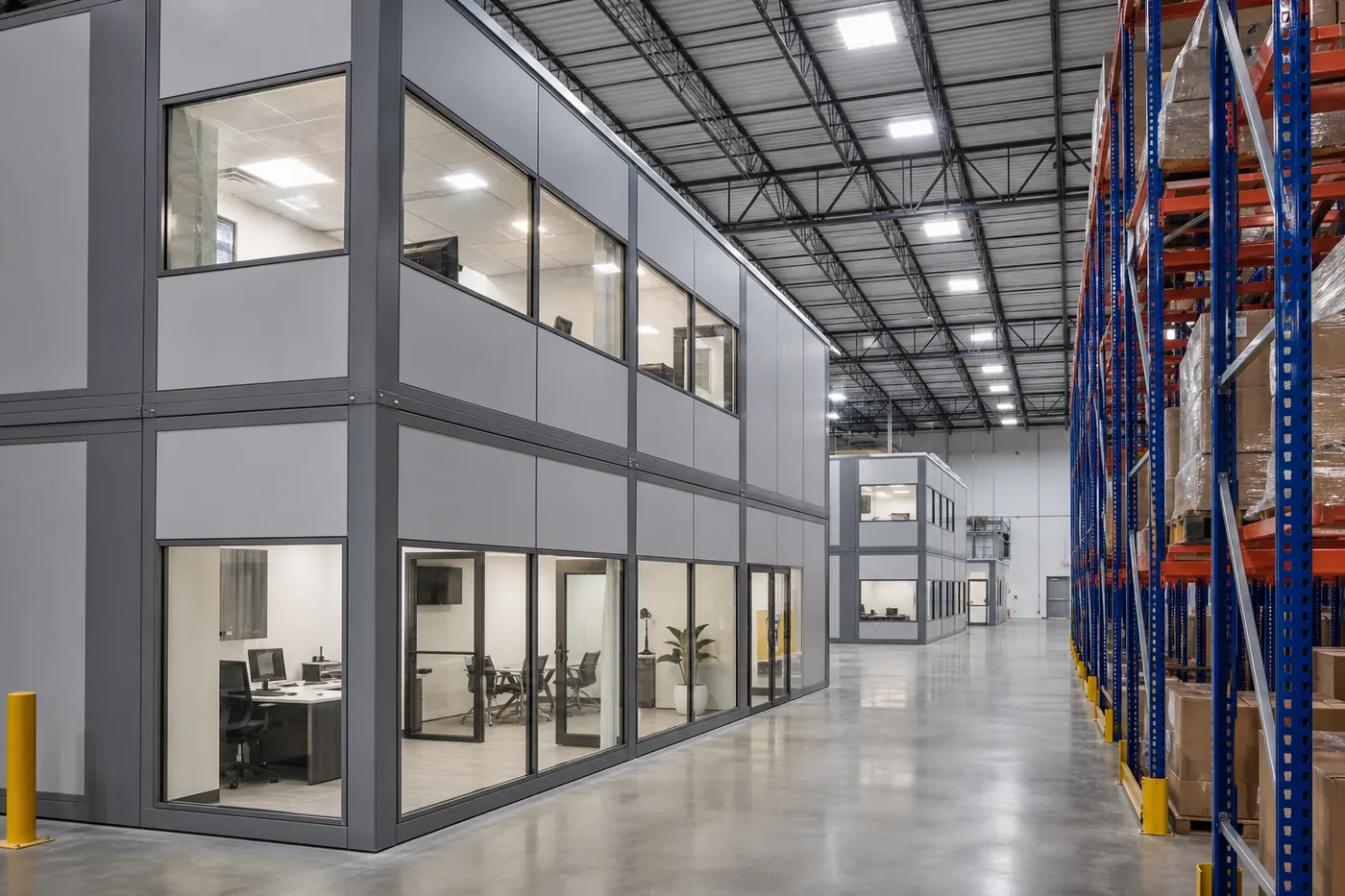 In-Plant Offices & EnclosuresPrefabricated offices, QC rooms, break rooms and equipment enclosures that install inside the shell without permanent construction — useful when a TI budget will not carry stick-built walls.
Not sure which system fits the building?
Send the plan and the tenant’s SKU and throughput profile. We will show the density and selectivity trade-off side by side, with pallet counts for each option.
Request a Quote Warehouse Design Services Call (800) 326-4403
Codes, Permits and the Drawings You Will Need
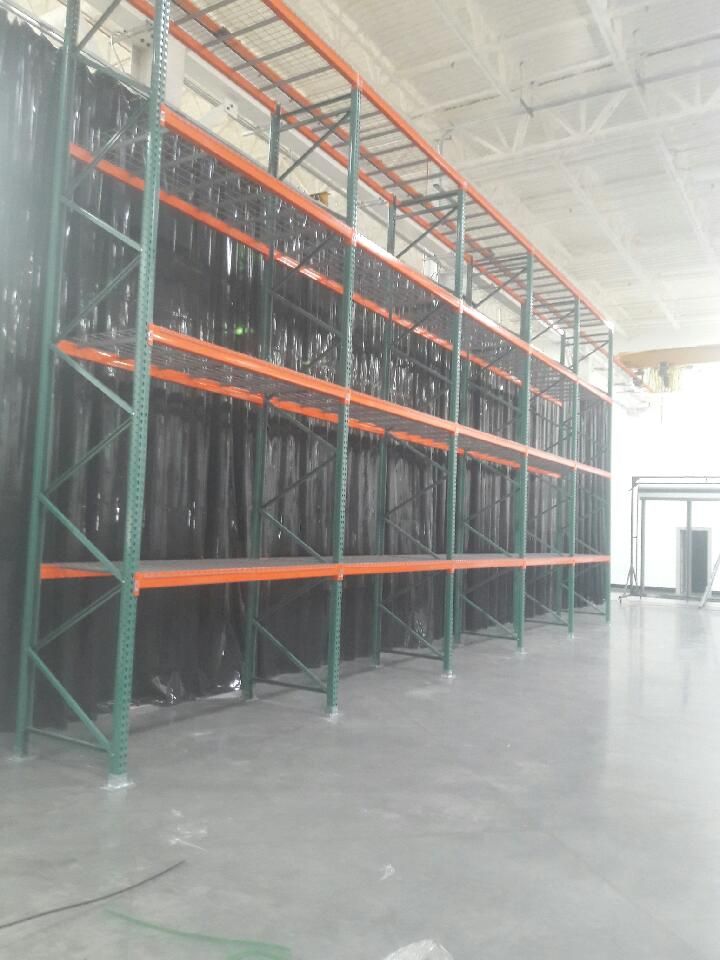
Rack is engineered structure, not furniture
IBC §2209 requires steel storage racks made of cold-formed or hot-rolled members to be designed, tested and used in accordance with RMI ANSI/MH16.1, with seismic design per ASCE 7 §15.5.3 where ASCE 7 requires it. The current edition is ANSI MH16.1-2023, and it covers pallet rack, pallet-flow, push-back, case-flow, pick modules, rack-supported platforms and AS/RS. Drive-in and drive-through rack and cantilever rack are outside MH16.1 — cantilever is covered by ANSI MH16.3 — so those are specified from the manufacturer’s engineering.
Two consequences matter for a landlord. First, in higher seismic design categories, rack anchorage is on the list of systems needing special inspection, and ASCE 7 assigns an importance factor of 1.5 to racks in areas open to the public — relevant to any retail or showroom-adjacent storage in a mixed-use industrial building. Second, existing rack that came with a building has no documented capacity until someone establishes one; we inspect and load-rate inherited rack rather than assuming it.
High-piled combustible storage: the permit that surprises tenants
Under IFC Chapter 32, storage of combustible materials in racks or piles where the top of storage is above 12 feet — or above 6 feet for high-hazard commodities such as Group A plastics, rubber tires, idle pallets or flammable liquids — and covering more than 500 square feet including aisles requires a permit and a construction-document submittal. Fire officials typically ask for all of the following, and a rack supplier who cannot produce it will hold up occupancy:
- Floor plan showing the location and dimensions of each high-piled storage area
- Usable storage height for each area and the number of tiers in each rack
- Commodity classification and the location of banded or encapsulated goods
- Aisle dimensions, maximum pile volumes and fire department access door locations
- Transverse and longitudinal flue space dimensions and locations
- Clearance between the top of storage and the sprinkler deflectors
- Type and location of ceiling and in-rack sprinkler protection and their control valves
Flue spaces are a rack layout decision
Flue spaces are the vertical channels that let sprinkler water reach a fire inside the rack, and their required size depends on the rack configuration, the storage height and the sprinkler design. They have to be designed into the bay layout — not discovered at inspection.
| Rack configuration | Sprinkler protection | Transverse flue | Longitudinal flue |
|---|---|---|---|
| Single-row rack | Ceiling sprinklers, storage ≤ 25′ | 3″ | Not required |
| Single-row rack | Ceiling sprinklers, storage > 25′ | 3″, vertically aligned | Not required |
| Double-row rack (Option 1) | Ceiling sprinklers, storage ≤ 25′ | 6″ (3″ at least every 10′ with ESFR) | Not required |
| Double-row rack (Option 1) | Ceiling sprinklers, storage > 25′ | 3″, vertically aligned | 6″ |
| Double-row rack (Option 2) | Ceiling sprinklers, storage ≤ 25′ | 3″ | 6″ |
| Multiple-row rack | Ceiling sprinklers, any height ≤ or > 25′ | 6″ | Not required |
| Any configuration | In-rack sprinklers at every tier | Not required | Not required |
Solid shelving and commodity changes trigger sprinkler work
Racks with solid shelves larger than 20 square feet measured between flue spaces generally require in-rack sprinklers, with vertical spacing tightening as the shelf area grows, and in-rack heads limited to about 10 feet apart for Class I–IV commodities and 5 feet for Group A plastics. Adding wire decking instead of solid shelving, or changing what a tenant stores, can move a building from compliant to non-compliant without a single bolt moving. We flag it in design; the fire protection engineer of record makes the call.
Need a permit-ready rack package?
We produce rack elevations, base plate and anchor details, load application drawings and stamped calculations for the jurisdiction, plus the storage data a high-piled submittal needs.
Talk to Our Engineering Team Mezzanine & Platform Options Call (800) 326-4403
Mezzanines: Extra Area Without Extra Footprint
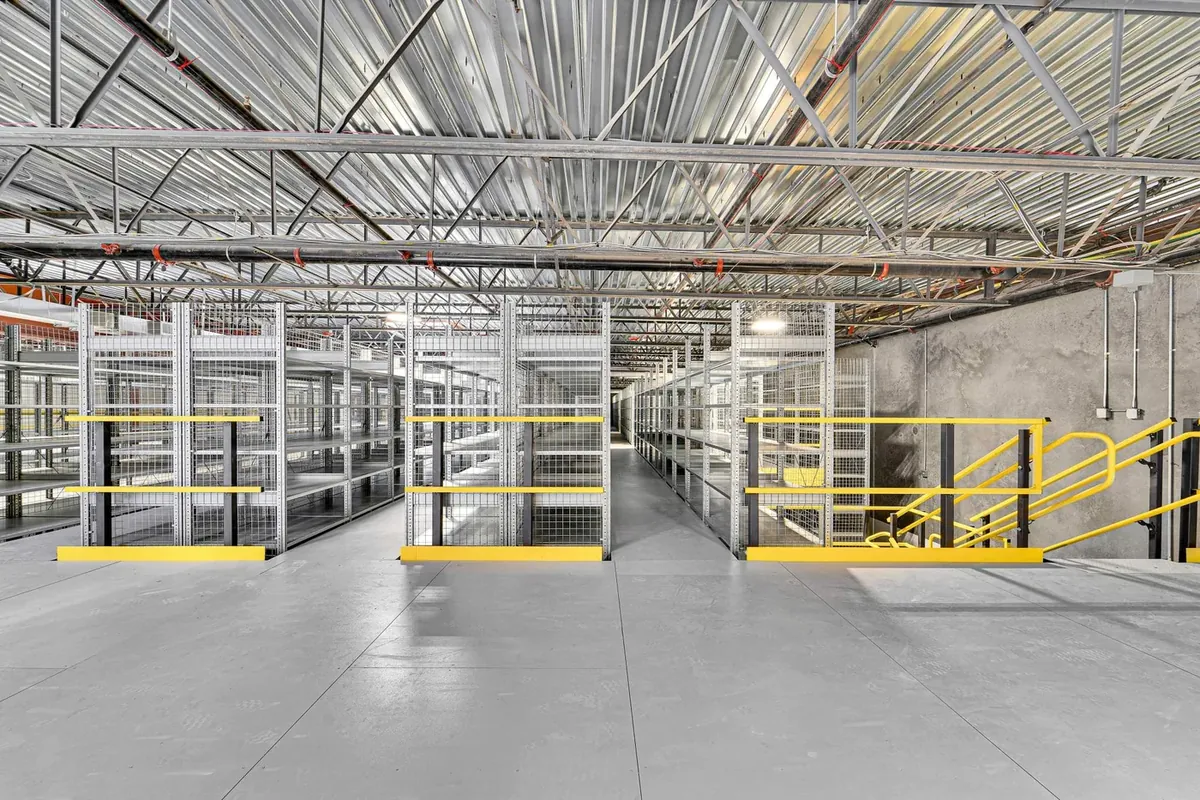
A mezzanine is the cheapest square footage in an industrial building, and it is often what makes a tenant fit a space they would otherwise pass on — office over warehouse in an industrial condo, a pick platform in a fulfillment building, or storage above a service area.
It is also code-governed area. Under IBC §505.2, a mezzanine that qualifies counts as part of the story below rather than as an additional story, but it needs at least 7 feet of clear height above and below, and its aggregate area is limited to one-third of the room it sits in. That limit rises to one-half in Type I or II construction with a compliant sprinkler system and an approved emergency voice/alarm communication system, and to two-thirds for special industrial occupancies. Egress, guarding and gate selection are designed with it, not bolted on afterward.
We supply the structure, decking, stairs, handrail, safety gates and pallet-drop options, with stamped calculations for permit, and we install around live operations when the building is already occupied.
How Developers, Brokers and GCs Use Us
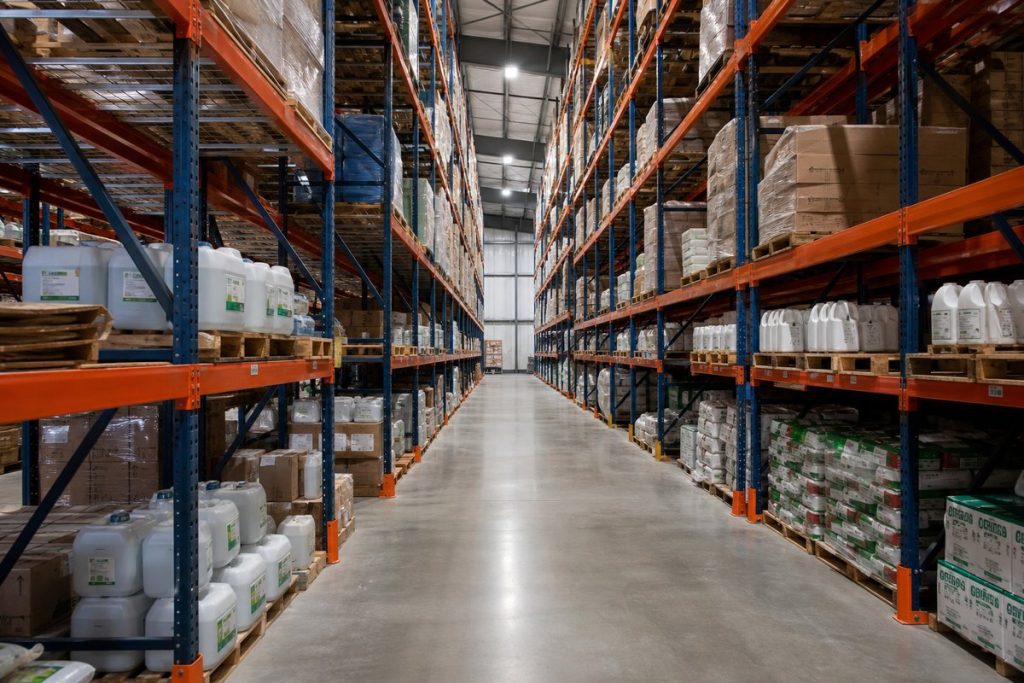 Spec Industrial Pre-LeasingA 200,000 sq ft spec building shows better with numbers than with empty floor. We build generic layouts at the real clear height and column grid so a prospect sees pallet positions, aisle widths and dock-to-rack flow — not just square footage. No charge, and you keep the drawings.
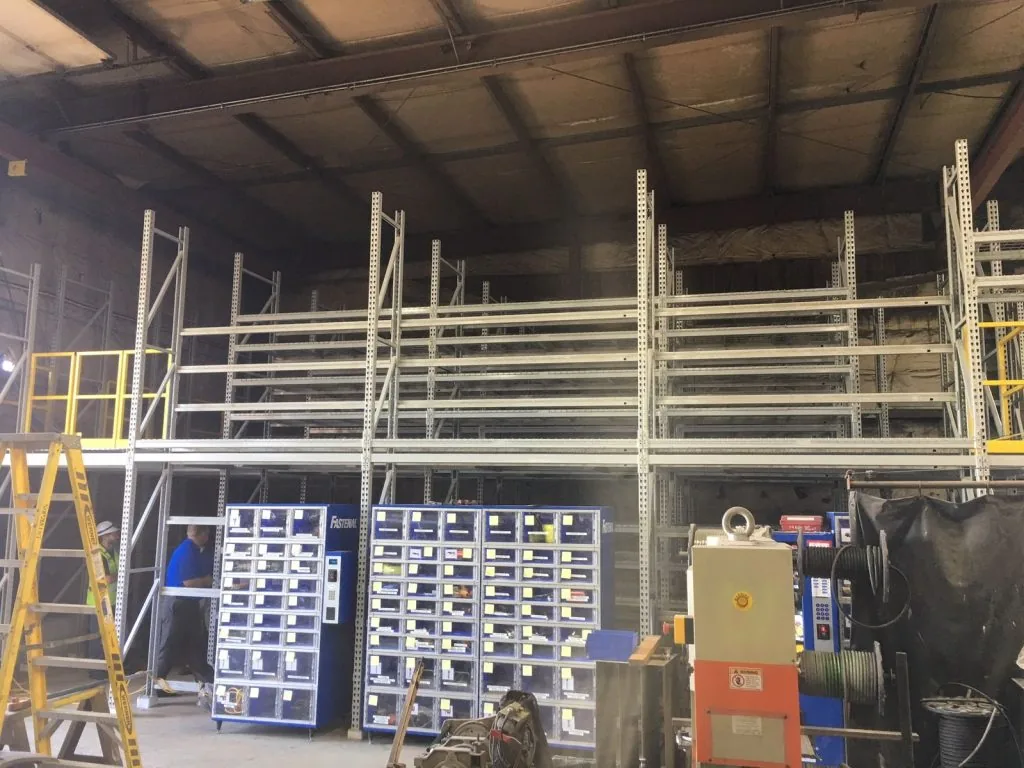 Tenant Improvement Fit-OutWhen racking, mezzanine or partitions sit inside a TI allowance, the constraint is the construction schedule. We quote line-item so the allowance math is clean, then sequence installation with the GC around slab work, sprinkler modifications and final inspection.
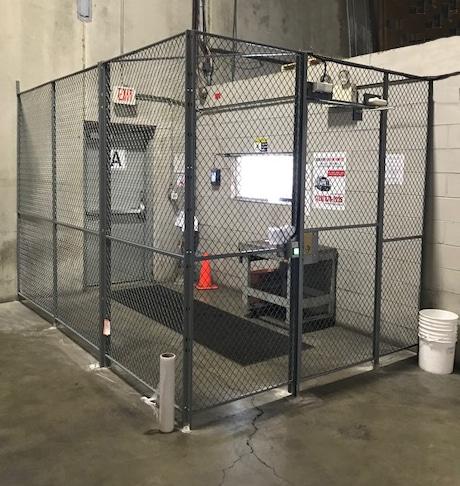 Multi-Tenant & Industrial CondoWire partitions demise storage, protect shared corridors and build tool cribs without permanent construction — and they unbolt and reconfigure at turnover instead of being demolished.
 Build-to-Suit & 3PL RequirementsOn a build-to-suit, storage should influence the shell while it can still change: clear height, bay width, sprinkler type and slab spec all trade against pallet count. We model the options before the design is frozen.
 Flex, Small-Bay and Service SuitesShelving, workbenches, secure cages and light shelving-over-mezzanine layouts for small-bay and service tenants, where full pallet rack would waste the suite.
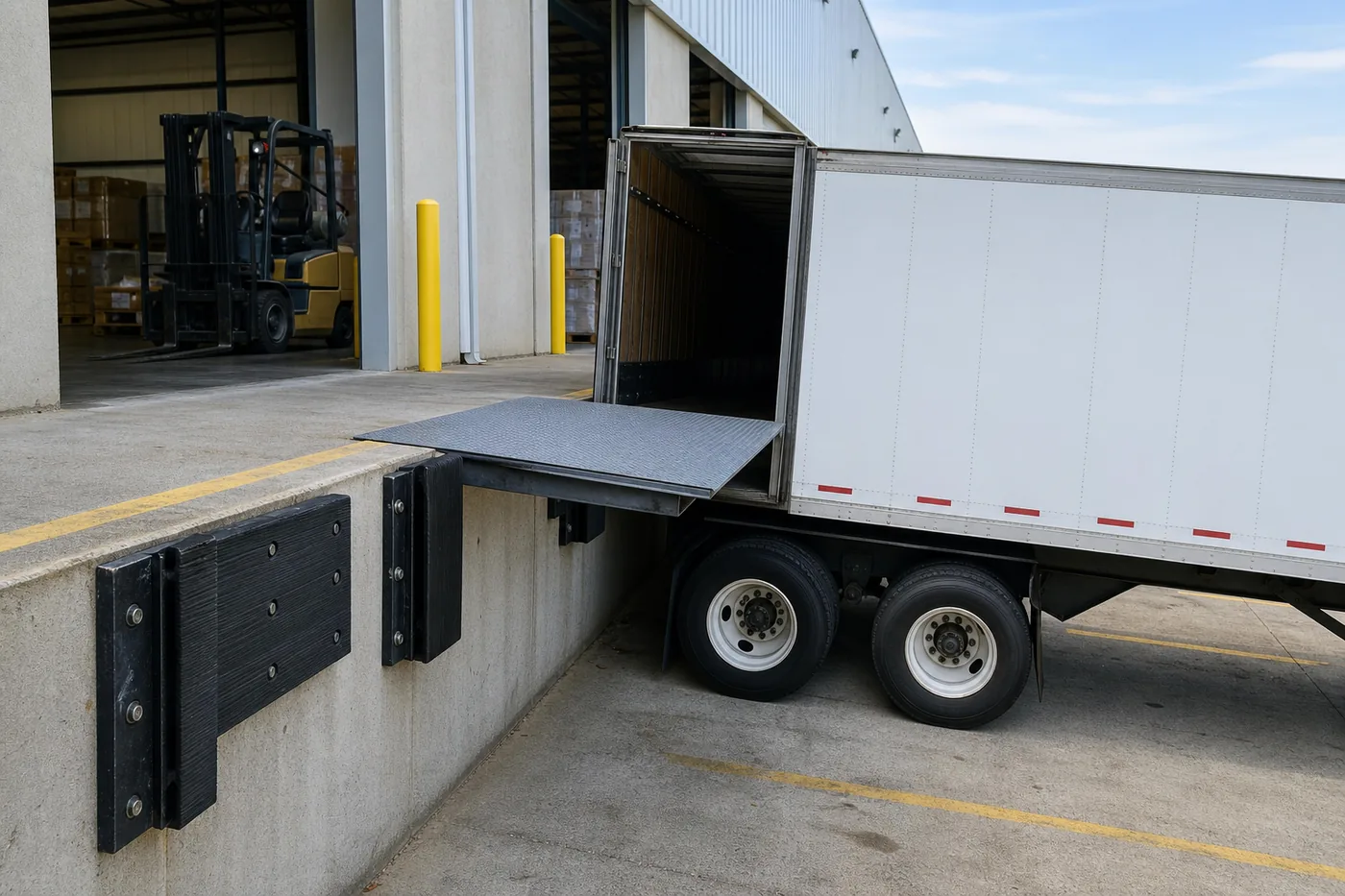 Dock, Staging and FlowThe first 60 feet inside the door decides how the building feels to a tenant. We plan staging depth, cross aisles and dock equipment alongside the rack layout instead of after it.
What You Actually Get
Every stage has a deliverable you can hand to someone else — a prospect, a lender, a plan reviewer or a GC. Nothing here is contingent on buying the racking from us.
| Stage | Deliverable | Timing and cost |
|---|---|---|
| Pre-lease / spec layout package | AutoCAD floor plan with rack rows, aisles, cross aisles and staging; pallet position count; one alternate configuration | Free, typically 2–5 business days from receiving the building plan |
| Marketing-ready capacity summary | Pallet positions by system option, in a format you can put in a flyer, OM or tour packet | Included with the layout package |
| Budget pricing | Line-item pricing for rack, decking, safety accessories, freight and installation labor | Sized for a TI allowance line or a construction budget |
| Permit set | Rack elevations, base plate and anchor details, load application drawings and PE-stamped calculations for the jurisdiction | Prepared when the configuration is locked; required for high-piled storage submittals |
| Installation plan | Crew size, sequencing around other trades, delivery windows and site requirements | Coordinated with the GC or PM before mobilization |
| Close-out documents | Load capacity placards, as-built layout, anchor torque record and inspection guidance for the tenant | Handed over at completion |
Who we normally work with
How a Fit-Out Project Runs
Send the building plan
A dimensioned floor plan or CAD file, the clear height, the column grid and the sprinkler type is usually enough to start. Photographs help on an existing building.
Set the operating assumptions
Pallet size and load height, forklift type, expected SKU count and throughput, and whether the space has to stay flexible for a future tenant.
Layout and capacity options
We draw the rack rows, aisles and cross aisles, count positions, and show at least one alternate system so the trade-off between density and selectivity is visible.
Budget and schedule
Line-item pricing including freight and installation, with a lead time you can put in a schedule rather than a rough guess.
Engineering and permits
Stamped drawings and calculations for the jurisdiction, plus the rack information a high-piled storage submittal needs.
Install and hand over
Delivery coordinated with the GC, installation to the approved drawings, anchors set and torqued, then capacity placards and as-builts to the tenant.

What to send us to get a real answer
The difference between a useful layout and a guess is about ten minutes of information gathering. If you have a plan and a clear height we can start; the rest sharpens the pallet count and the price.
If you would rather sketch it yourself first, our free pallet rack configurator lets you set bay sizes, beam levels and aisle widths and send the configuration straight to our team.
- Dimensioned floor plan or CAD file, and the building address for seismic data
- Clear height to the lowest obstruction, and the column grid
- Sprinkler type — ESFR or ceiling density/area — and any existing in-rack piping
- Pallet size, load weight and load height, or the tenant’s best estimate
- Forklift type and whether narrow-aisle or VNA equipment is planned
- Dock door and drive-in door locations, plus any known slab or joint constraints
- Target dates: lease commencement, TI completion, occupancy inspection
- Whether the building has to stay flexible for an unknown future tenant
Get a layout, a pallet count and a budget
Free layout design, line-item pricing you can drop into a TI schedule, PE-stamped drawings when the jurisdiction wants them, and one team for supply and installation.
Request a Quote Open the Pallet Rack Configurator Call (800) 326-4403
Industrial Real Estate Storage: FAQs
Will you create racking layouts for our spec buildings before we have a tenant?
How many pallet positions will our building hold?
Does extra clear height always mean more pallet positions?
How do you work with a TI allowance?
What is the typical timeline for a warehouse racking fit-out?
What permits and engineering does racking require?
Can racking be reconfigured when a tenant leaves?
Do you only work in Utah?
Can we mark up or resell the racking to the tenant?
Related Products & Resources
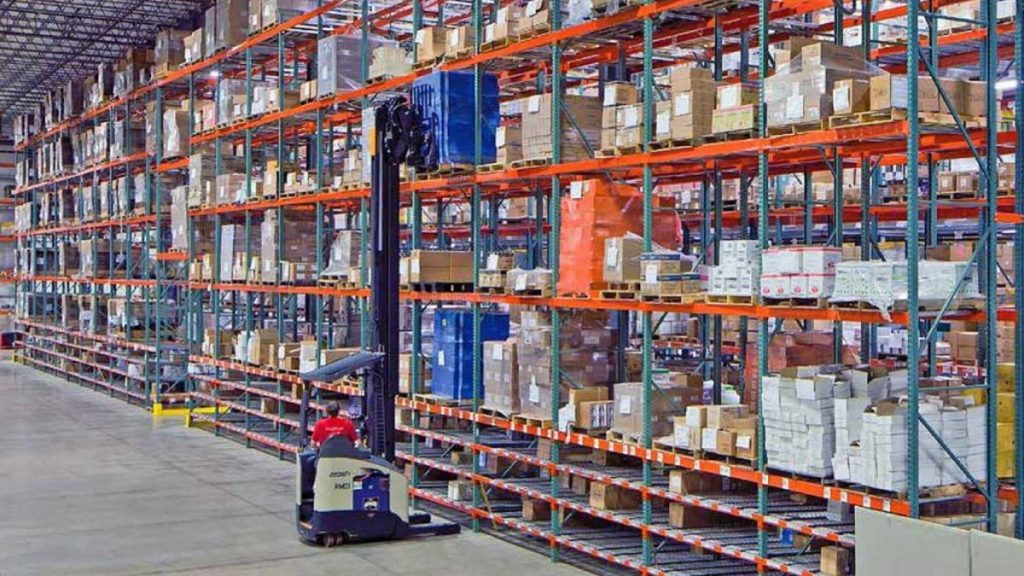 Pallet Rack SystemsSelective, drive-in, push-back, pallet flow, carton flow and cantilever — the full rack line with specifications and applications.
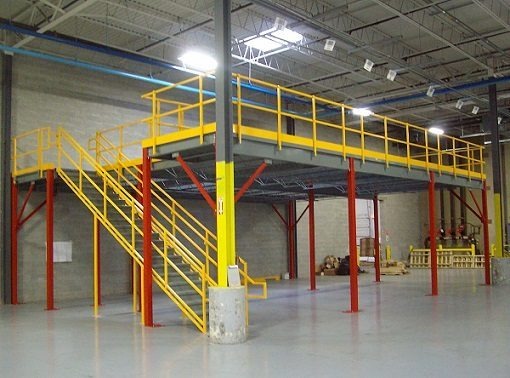 Industrial MezzaninesStructural mezzanines, work platforms, decking, stairs and safety gates with stamped drawings for permit.
 Security Cages & EnclosuresWelded wire cages for controlled inventory, tool cribs, server rooms and tenant separation.
 Wire PartitionsModular wire mesh partition systems that demise space and reconfigure when tenants change.
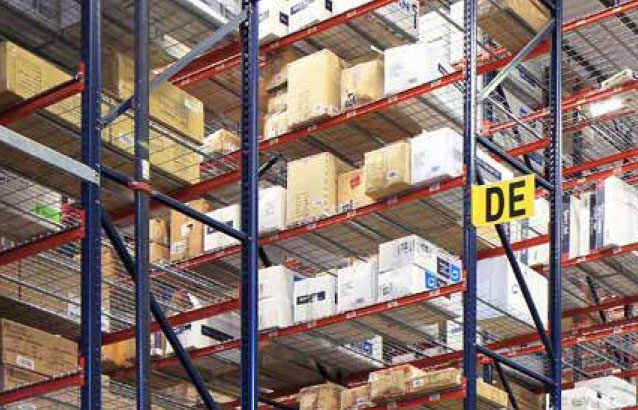 Warehouse Design ServicesFull-building layout and flow design: storage systems, aisles, staging, picking and equipment.
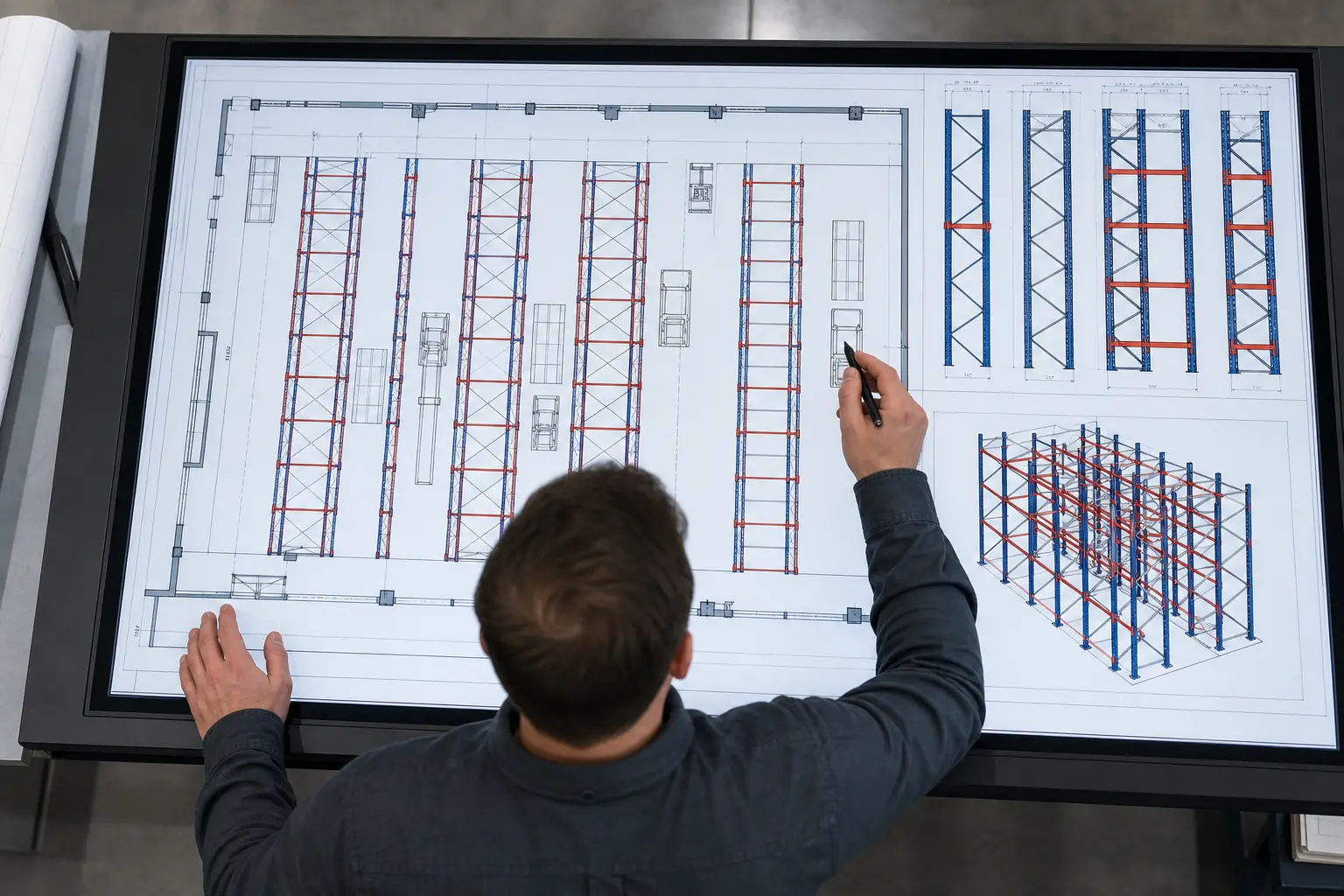 Pallet Rack ConfiguratorFree online configurator — set bay sizes, beam levels and aisles, then send the layout to our team.
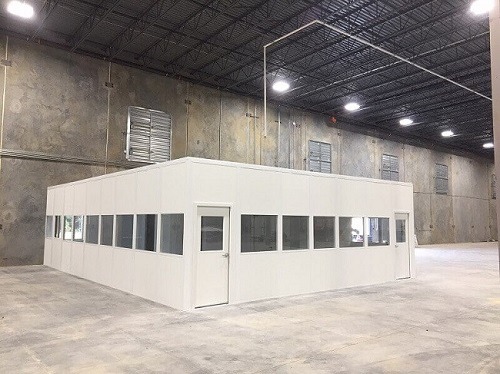 Modular Buildings & In-Plant OfficesPrefabricated offices, QC rooms and enclosures that install inside the shell without permanent construction.
 All Design ToolsEvery free MH-USA configurator in one place, from pallet rack to modular buildings and security cages.
Make the Building Show Its Real Capacity
Send us a floor plan, the clear height and the sprinkler type. You will get a rack layout, a pallet position count and an alternate configuration at no charge — and if the deal moves, one team to engineer, supply and install the racking, mezzanine and partitions on your schedule. Call (800) 326-4403 or request a quote.