
County Assessor Records Mobile Shelving Case Study: Parowan, Utah
How a southern Utah county assessor’s office moved its records into high-density mobile shelving as part of a new county building, purchased on the Utah state cooperative contract.
Customer
A county assessor’s office in Iron County, Utah
Location
Parowan, Iron County, Utah
Product
Mobile shelving with six shelf levels and file dividers
Application
County assessor records storage
About the project
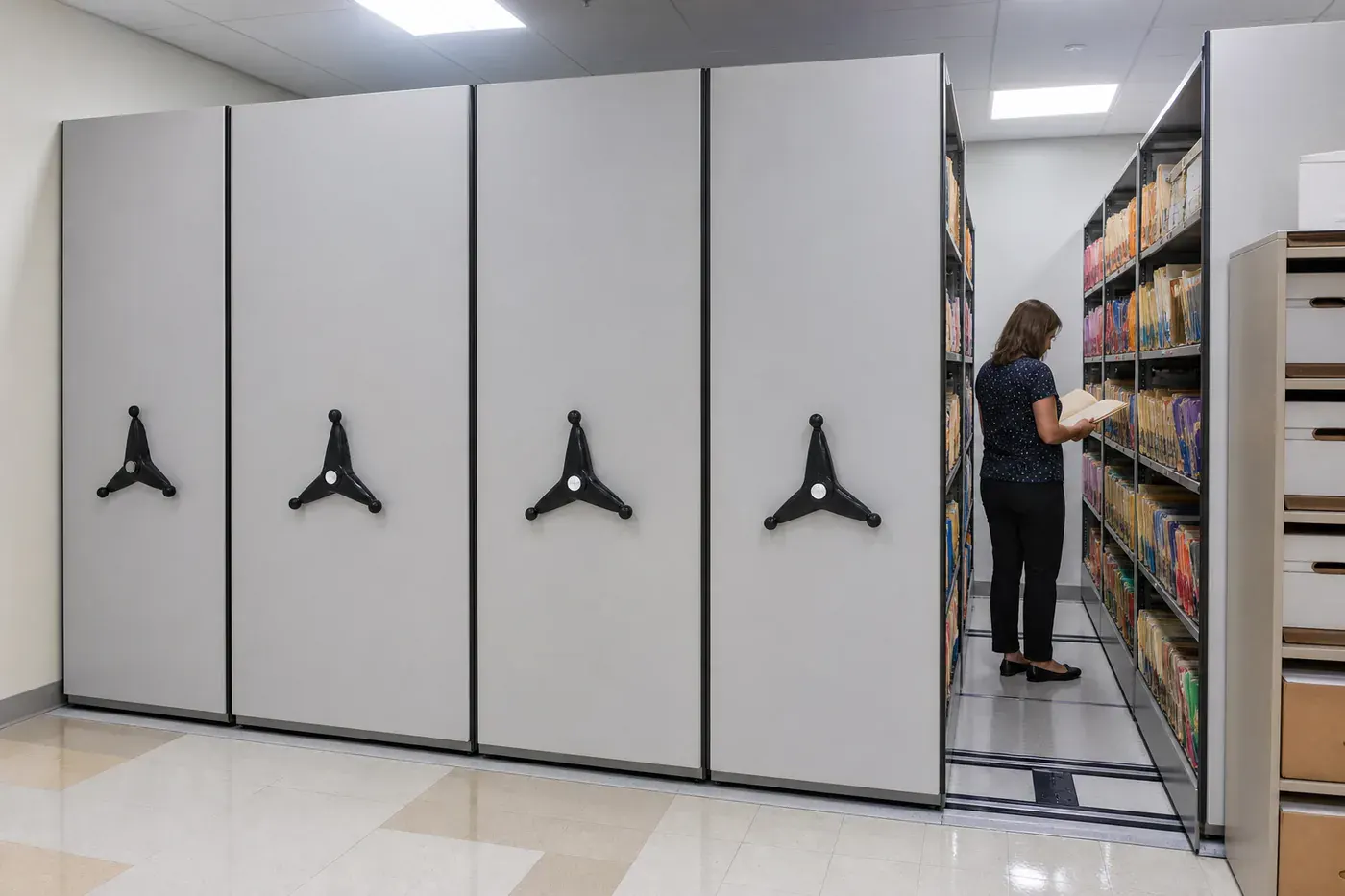
This project supplied high-density mobile shelving for the records storage area of a county assessor’s office in Parowan, the county seat of Iron County in southern Utah. The office was moving into a new county building, and the records room was fitted out with mobile shelving as part of that move rather than being retrofitted years later.
Material Handling USA supplied and installed a mobile shelving system laid out to the room drawing, with six shelf levels and three file dividers per shelf so the ranges hold filed records upright and organized. The system was purchased on the State of Utah cooperative contract and the project closed in October 2017, with installation completed in January 2018 once the building was ready.
Project scope at a glance
The situation
A county assessor’s office is a records operation. The office keeps the property and parcel records it works from, and those records only accumulate: every year adds another layer of documentation that has to stay accessible to staff and, in many cases, to the public.
Static shelving and filing cabinets handle that badly over a long horizon. Cabinets waste floor area on drawer pull space, and static shelving ranges each need their own permanent aisle. In a county building where every square foot had a planned use, a records room laid out that way fills up years before anyone budgeted for more space.
Because this office was moving into a new building, there was a rare opportunity: decide the storage density before the room is occupied instead of after it is already full. That is the cheapest possible moment to install high-density storage, because nothing has to be moved twice and no operations are interrupted.
What Material Handling USA supplied
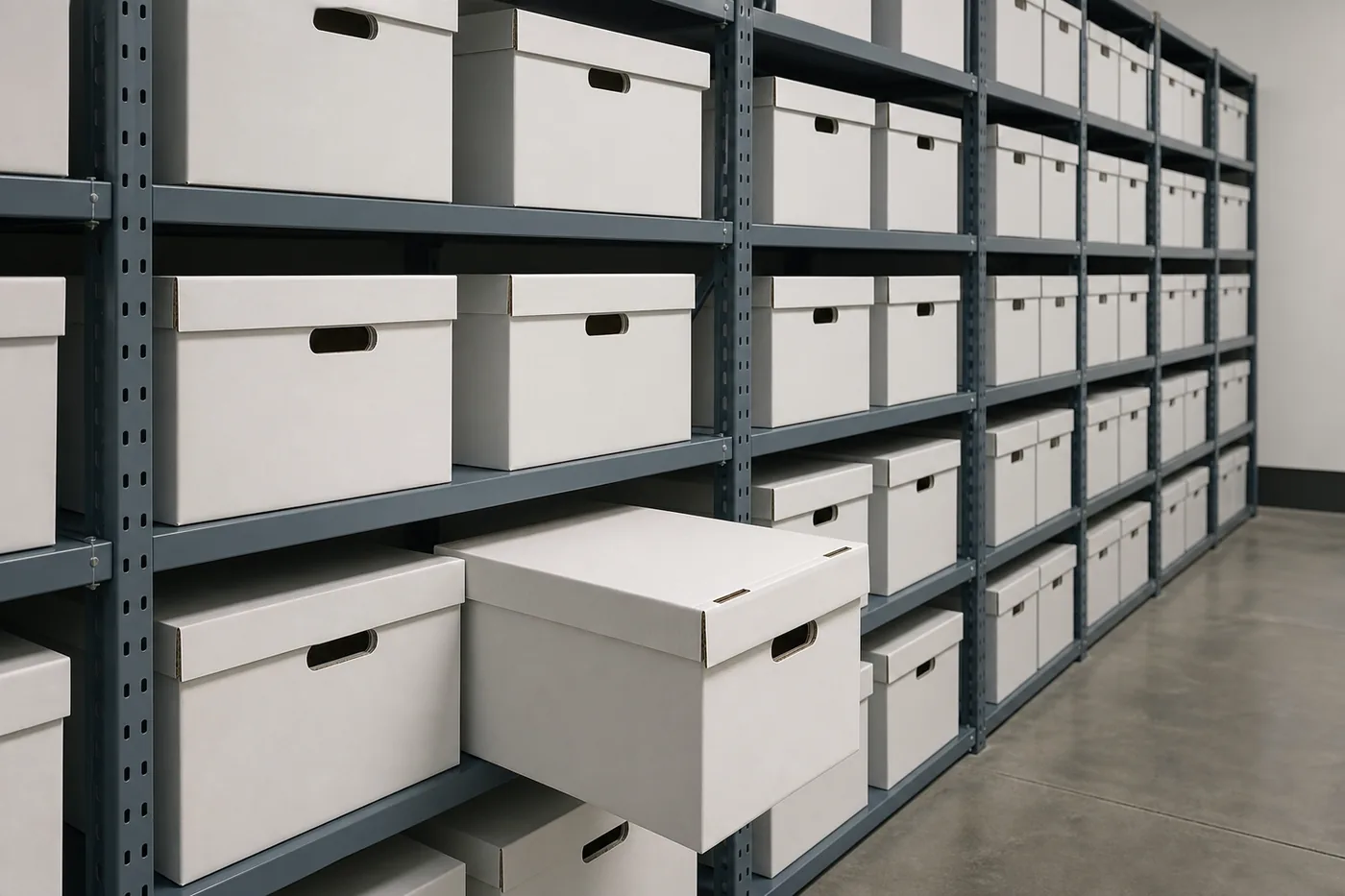
We supplied a mobile shelving system for the records area, configured for filing: six shelf levels per section and three dividers per shelf. Dividers matter more than people expect in a records room. They keep filed material upright and squared so a shelf stays orderly as it fills, and they make retrieval a matter of walking to a labeled position instead of hunting through a leaning row.
The scope included freight and inside delivery, the shelving and mobile carriages, and installation by our own crew. Because the county had no dock and no forklift on site, we planned receiving as part of the job rather than leaving the county to figure out how to take delivery of a full truck.
The ranges were laid out to an approved drawing of the room so the moving aisle, the fixed clearances and the door swings all worked before fabrication started.
Fitting out a building that was still under construction
Installing into new construction is a scheduling exercise. The room has to be finished enough to take rail and anchors, the floor has to be clean and level, and the crew has to work around whoever else is still on site. On this project the building was still under construction at delivery, so our installers coordinated their arrival with the general contractor and checked in on site as a subcontractor would.
Site access was straightforward but had to be respected: main-floor room, an accessible ramp at the entrance, no dock and no forklift, and a working window during normal business hours with earlier or later access available if we asked in advance.
Sequencing this correctly is what keeps a records room from becoming the last thing anybody thinks about. When mobile shelving goes in with the building, the office moves its records once, straight into their permanent home.
Buying mobile shelving on the Utah state contract
This system was purchased on the State of Utah cooperative contract, which is the route most Utah public agencies use for storage equipment. Contract pricing is already competitively established, so a county, city, school district or state agency can issue a purchase order without running its own bid for the shelving.
For a small county office that difference is practical, not theoretical. It removes weeks of procurement work from a project that is really a facilities decision, and it lets the office spend its attention on the layout and the record types instead of on paperwork.
We supply Utah counties, cities and state agencies this way regularly. See buying mobile shelving on GSA and cooperative contracts for how the purchasing routes compare.
What the office gained
Density from day one. The records room started life with high-density storage instead of filling static shelving and running out of room a few years in.
Orderly filing. Six levels with dividers throughout keep records upright and positionally findable, which is what makes a records room usable by more than one person.
Room to grow inside the same footprint. Sections that are only partly full today absorb years of additional records without any change to the building.
County and city records storage across Utah
Material Handling USA is based in Salt Lake City and supplies mobile shelving to counties, cities, school districts and state agencies throughout Utah, from the Wasatch Front down to Iron County and the southern Utah communities around Parowan and Cedar City. Parowan has been the Iron County seat since the region’s earliest settlement, and its county offices hold records that reach a long way back, which is exactly the profile that rewards high-density storage.
Government records projects repeat a familiar pattern: statutory retention means nothing gets thrown away on schedule, the building cannot grow, and the office needs same-day access to material that off-site storage would delay.
If your office is at the planning stage, our guide to planning a records room for a Utah city or county office covers retention schedules, State Records Center transfers and State Archives box standards before any shelving is sized.
Related reading: the election office storage case study in North Ogden, our plan and map storage page, and mobile shelving cost and budget drivers.
Call (801) 328-8788 to plan records storage for a Utah county, city or state office.
Frequently asked questions
Why do county offices use mobile shelving for records?
How many shelf levels should a records room use?
What do file dividers do on mobile shelving?
Can mobile shelving be installed while a building is still under construction?
What if the site has no loading dock or forklift?
Can Utah counties buy mobile shelving on a state contract?
Does a records room need electric mobile shelving?
How long does a county records room project take?
Planning records storage for a county, city or state office?
Send us the records room footprint and what you file, and we will lay out a mobile shelving system that fits it, including Utah state contract pricing and installation. Utah and nationwide delivery and installation.