
Protecting Vital Records: Disaster Preparedness for Mobile Shelving
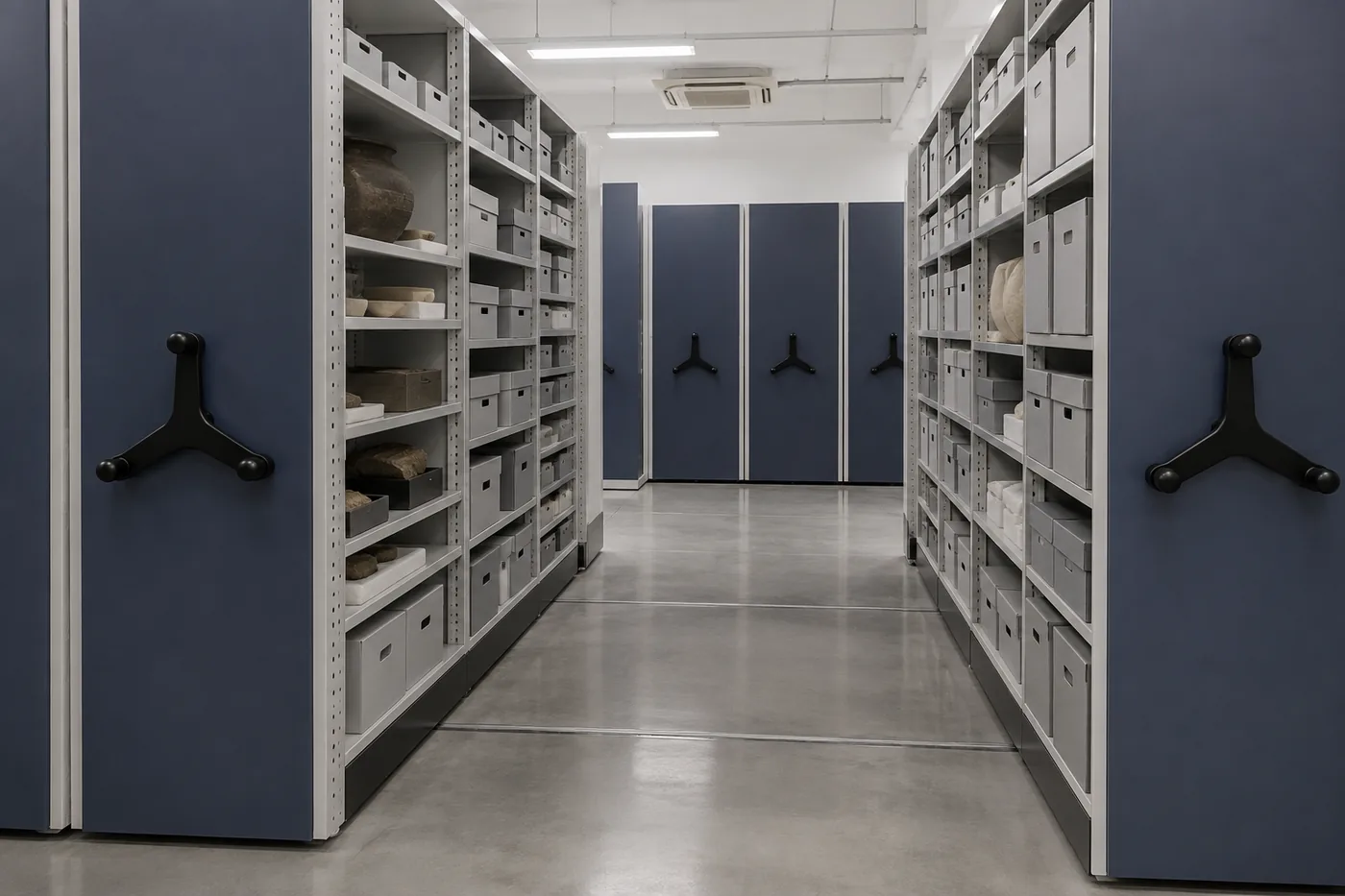
Disaster preparedness for stored records starts with decisions made at the shelving level, long before anything happens: what sits low or high, what’s enclosed, what’s classified as vital, and what’s protected by clearance rather than luck.
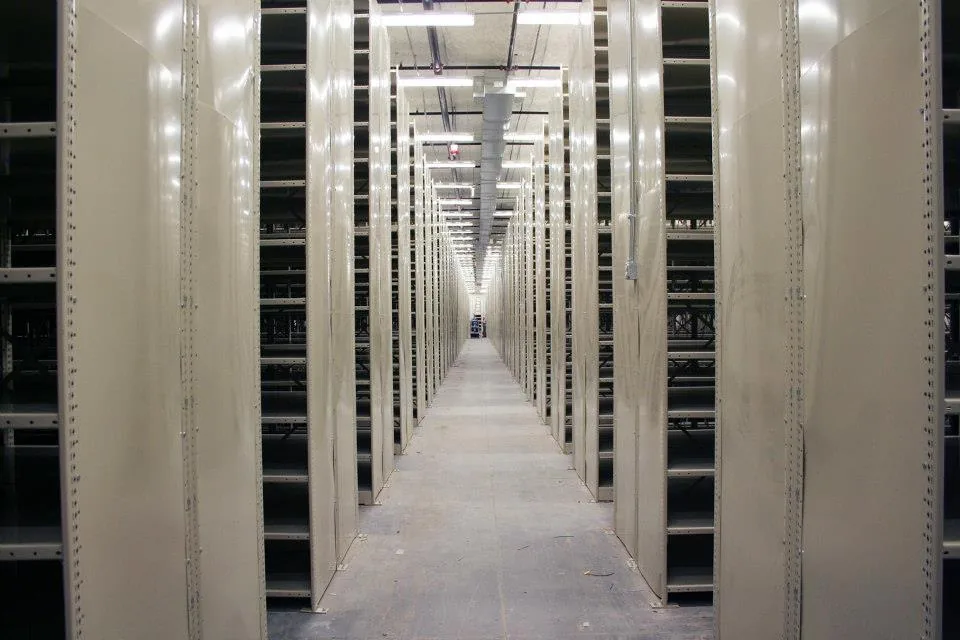
Classify first
Vital/permanent records should be identified before, not during, an event
Elevate
Lowest shelf height off the floor is the cheapest flood mitigation available
Enclose
Solid backs, sides and closed fronts limit water and debris intrusion from the aisle
Clear the sprinklers
Dense mobile shelving needs engineered clearance, not assumed coverage
Records disaster planning is a separate discipline from general safety
General facility safety asks how to keep people safe around a mobile shelving system day to day. Disaster preparedness asks a different question: if water, fire or another event reaches this room, what happens to what’s stored in it, and did anything decided at the shelving level make that better or worse? Records and archives programs treat this as its own planning discipline because the two failure modes that matter most — water and fire — behave completely differently and call for different mitigations, and because the decision about what to protect first has to be made in advance, not during an emergency.
- Water risk comes from below (floor flooding, pipe failure, sprinkler discharge) and needs elevation and enclosure answers.
- Fire risk is driven by combustible loading and sprinkler design, and mobile shelving’s density changes the engineering, not the default outcome.
- Prioritization has to exist before an event — deciding what’s irreplaceable during a flood is too late.
- Recovery capability (drying, freezing, conservation access) is a resource decision made in advance, same as the other two.
Classifying vital records comes before any shelving decision
Records and archives programs generally sort holdings into tiers: vital records the organization cannot function without and cannot recreate, permanent or historically significant records, and everything else that is useful but replaceable or already duplicated elsewhere. This classification, not the shelving spec, is what actually drives a disaster plan — it tells you what belongs on the lowest-risk shelf positions, what justifies solid enclosure or off-site duplication, and what can reasonably ride out an event without special protection.
If your organization has a records retention schedule, it likely already contains this classification. If it doesn’t, building one is the real first step of disaster preparedness for stored records; shelving and building measures only protect what a plan has already identified as worth protecting.
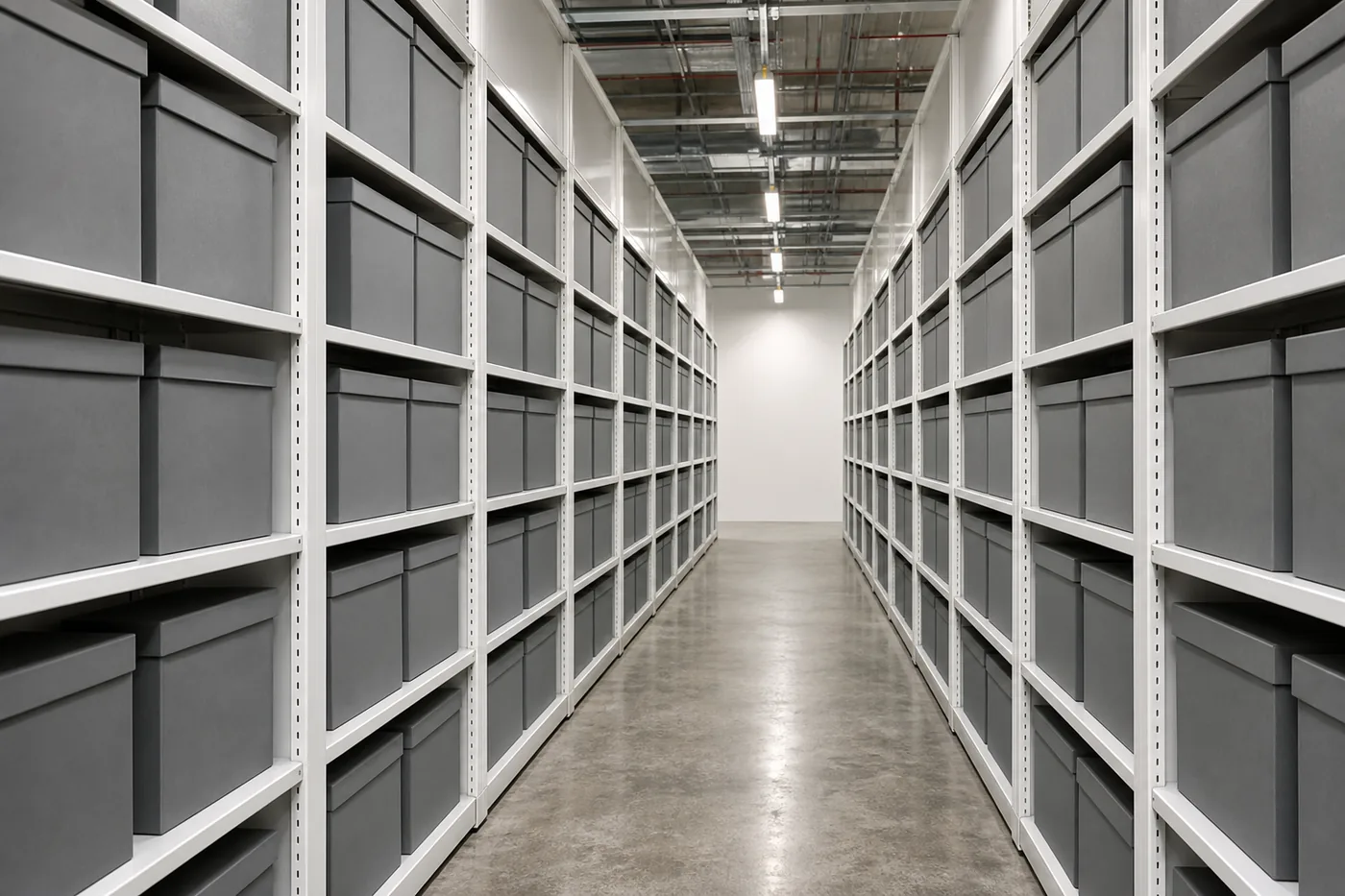
Flood and water intrusion
Water reaches a records room from below (floor flooding, slab seepage), from above (roof or pipe failure, sprinkler discharge) or sideways (an adjacent flooded space). At the shelving level, two choices do the real work:
Elevation off the floor
The cheapest and most consistently effective flood mitigation available is simply keeping the lowest shelf position elevated rather than resting at floor level. This protects against everyday water intrusion, minor plumbing failures and shallow flooding without any added equipment cost, and it is worth specifying as a requirement rather than accepting whatever a standard carriage configuration defaults to.
Enclosure at the aisle
Solid-back, solid-side carriage construction limits how far water already in an aisle can wick sideways into stored contents, and closed-front doors add a further barrier. This is a real but partial protection — it slows and limits intrusion, it does not make a system flood-proof.
Neither measure protects against a genuinely serious flood event. Records classified as vital and also at real flood risk (basement or ground-floor rooms in a flood zone, for example) are usually better served by off-site placement in a facility built around disaster resistance, covered in the on-site vs. off-site section below, than by shelving detail alone.
Fire protection at the shelving level
Whether shelving is fixed or mobile does not, by itself, change fire risk — that is driven by combustible loading, sprinkler design and building construction. What mobile shelving does change is the fire protection engineering: because carriages travel to close the aisle, a dense mobile system concentrates more combustible material under a given sprinkler head than the same floor area of static shelving with normal fixed aisles. That is exactly why sprinkler clearance and coverage above mobile shelving has to be engineered for the system rather than assumed to carry over from a general warehouse sprinkler design.
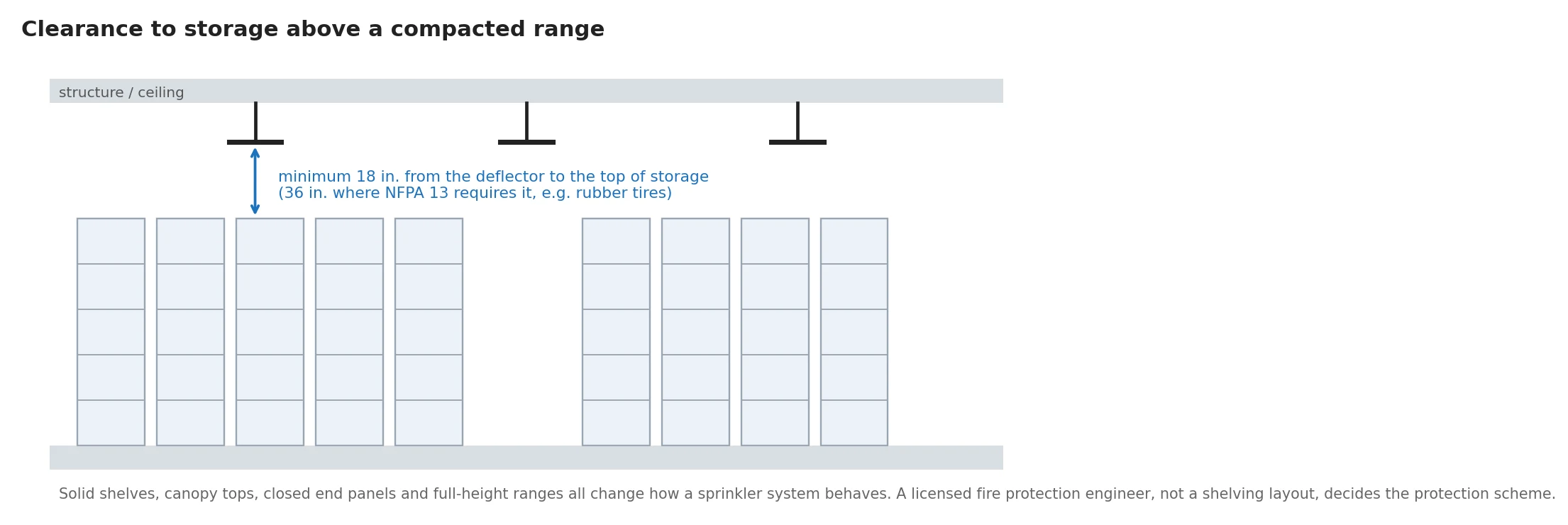
The full mechanics of sprinkler deflector clearance, in-rack protection thresholds and how it coordinates with lighting and HVAC above the shelving are covered on the sprinklers, lighting and HVAC coordination guide — this page’s scope is the records protection side of the same question: fire suppression exists specifically to protect what’s on the shelves, so getting that coordination right is a records preservation measure, not only a building code item.
Enclosure choices: solid vs. open, and where each wins
The same solid-vs-open decision that shows up in weight ratings and general specification also matters for disaster resistance, and it pulls in two directions at once:
| Solid backs / sides / closed doors | Open wire decking, open ends | |
|---|---|---|
| Water intrusion from the aisle | Better — limits wicking and splash into contents | Weaker on this specific point |
| Airflow and moisture detection | Weaker — sealed spaces can trap humidity and hide early mold conditions | Better — visible contents and air movement |
| Debris and airborne contamination after an event | Better — physical barrier | Weaker |
| Access control alongside protection | Doors add lockable security, covered in the security and access control guide | Not applicable |
There is no universally correct answer here — it belongs in the specification alongside the actual risk profile of the room (flood exposure, humidity control already in place, what’s stored) rather than defaulting to whichever option looks more protective on paper. Finish and enclosure material options generally are covered in the finish, material and end-panel options guide.
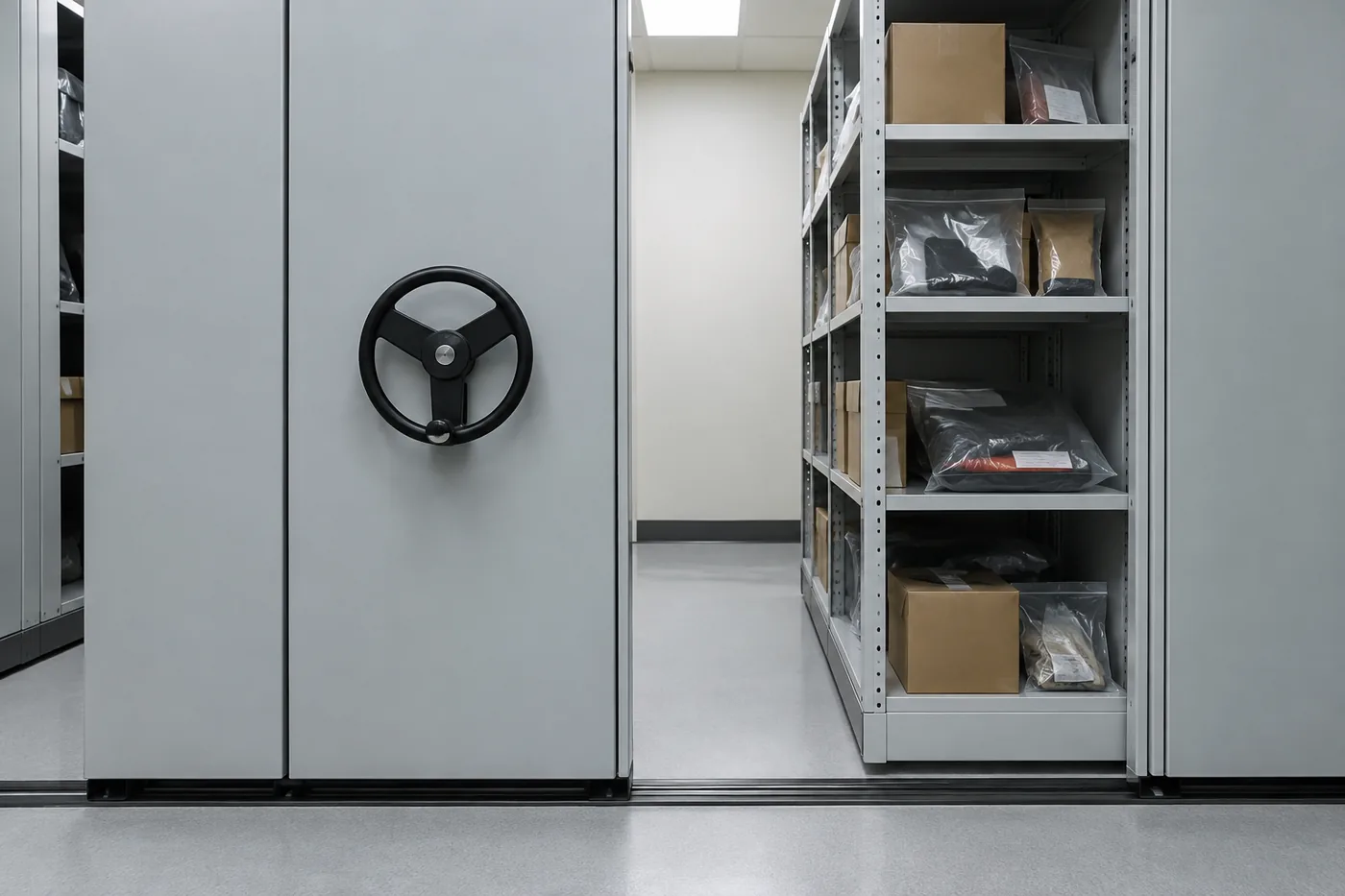
On-site vs. off-site for the highest-risk records
For records classified as vital or permanent that also carry real disaster exposure — a basement or ground-floor room in a flood-prone area, a building without engineered fire suppression, a jurisdiction with real seismic risk covered in the seismic anchoring guide — the honest comparison is not “better shelving” versus “worse shelving.” It is on-site versus off-site.
A dedicated records center is generally built and operated around disaster resistance as its core function in a way a typical office, school or municipal building is not. For records that need frequent staff access, keeping them on-site with sensible elevation, enclosure and sprinkler-clearance choices is the practical answer. Many organizations split their holdings this way — active and frequently accessed material stored on-site in mobile shelving, and the smaller set of truly vital, infrequently accessed material duplicated or relocated off-site. The off-site vs. on-site records storage comparison covers the operational and cost side of that decision in full; this page’s point is narrower: the split should be driven by disaster exposure and criticality, not only by access frequency and cost.
Building disaster preparedness into the specification
Disaster resistance is easiest to get right when it’s written into the project the same way any other performance requirement is handled in the specification and submittal checklist, rather than assumed to come with the shelving by default:
- Confirm or build a records classification (vital, permanent, general) before laying out the room, so protected positions can be assigned deliberately.
- Specify a minimum floor clearance on the lowest shelf position rather than accepting a standard configuration’s default.
- Decide solid vs. open enclosure by the room’s actual risk profile (flood exposure vs. humidity/moisture detection needs), not by habit.
- Require sprinkler clearance and coverage above the finished system to be engineered for the actual mobile shelving configuration — see the sprinkler coordination guide.
- In seismic regions, confirm anti-tip and anchoring provisions per the seismic anchoring guide; a toppled range is its own disaster event.
- Decide, in writing, which holdings are on-site vs. off-site or duplicated, before an event forces the question.
Building disaster resistance into a new or existing mobile shelving room?
Tell us what you store, how it’s classified, and what disaster exposure the room actually has (flood zone, seismic region, sprinkler coverage already in place). We’ll match elevation, enclosure and clearance choices to that risk rather than a generic default.
If an event happens: salvage basics
This page is planning-level orientation, not a salvage procedure — a real water or fire event should go to a qualified records-recovery or conservation service. The broad shape of early response is still worth knowing before you need it:
- Get air moving and humidity down immediately. Mold can begin developing within roughly 48 hours in a wet, humid space, so speed matters more than perfection in the first response.
- Remove wet material to a stable, controlled environment for drying or freezing rather than leaving it in place to dry unevenly.
- Handle wet paper as little as possible until it can be professionally dried — wet paper is at its most fragile exactly when the urge to intervene is strongest.
- Work from the prioritized (vital/permanent) list first when time, space or drying capacity is limited.
- Document damage before and during recovery for insurance and institutional records, without delaying stabilization to do it.
For collections with conservation-grade material rather than administrative records, the museum and archival collections storage guide covers environmental and handling considerations that go beyond general records disaster planning.
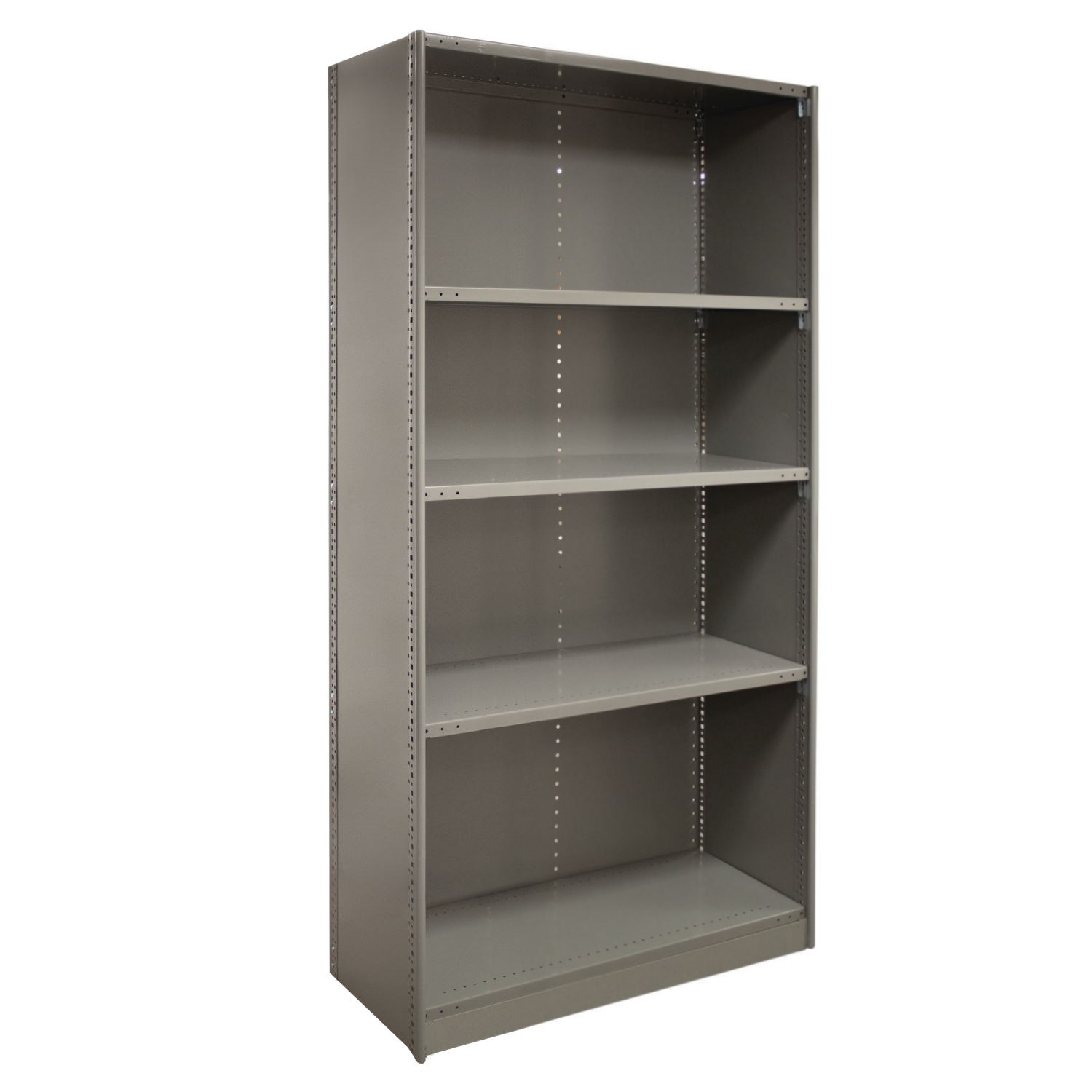
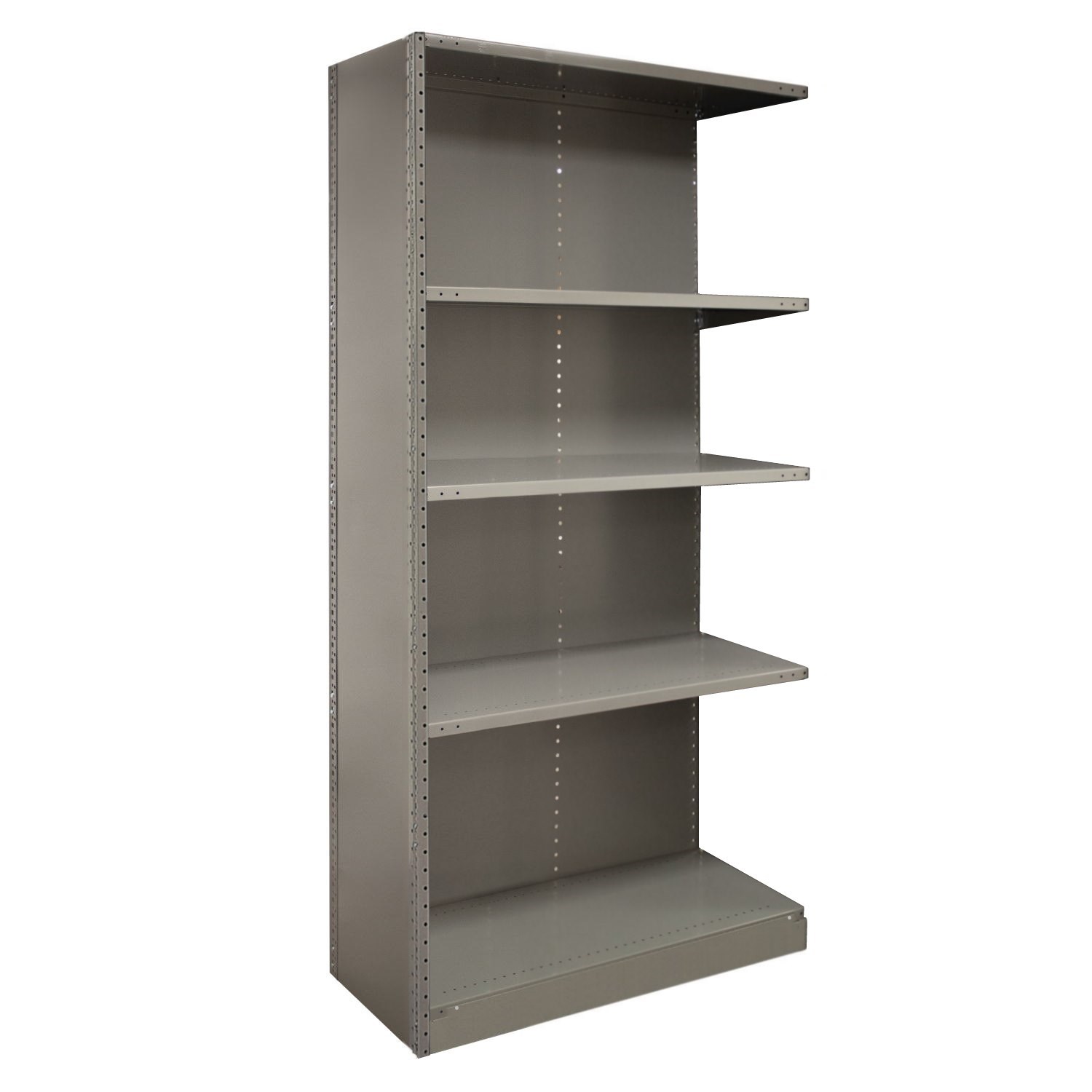
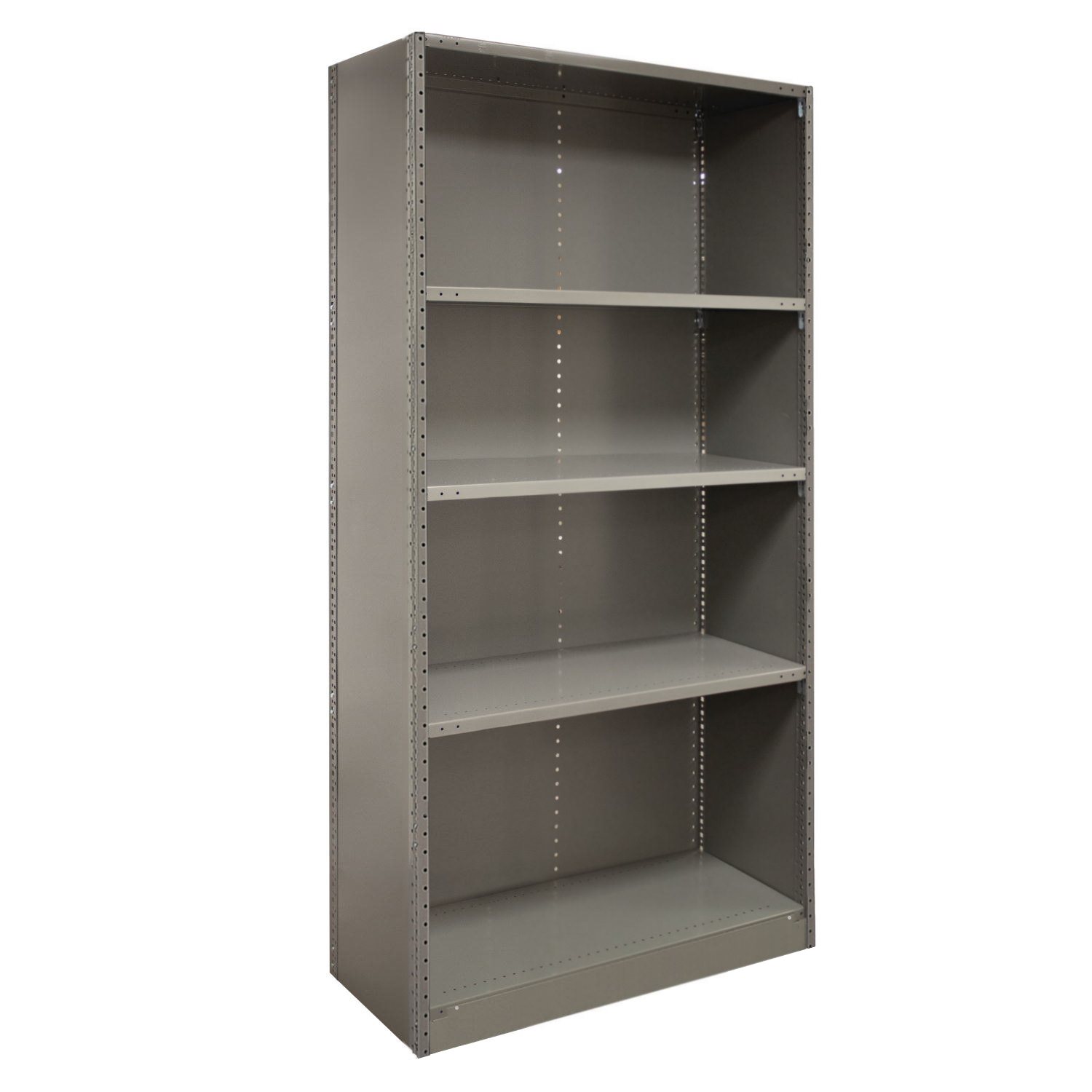
Shop Records Storage & Closed Shelving Online
Buy select items directly from our online store, or request a quote for volume, custom sizes and freight-rated orders.

Get a free quote
Tell us what you are storing, the room size and your timeline. A project specialist will follow up with layout options and pricing. Prefer to talk? Call (800) 326-4403.
Frequently asked questions
What are vital records, and why do they need special protection?
Can mobile shelving actually protect records from a flood?
Does mobile shelving increase or reduce fire risk compared to open static shelving?
Should solid or open shelving be used for records that need disaster protection?
What should be prioritized if only part of a records room can be protected or moved?
Is off-site storage a better disaster-preparedness choice than on-site mobile shelving?
What does salvage after a water or fire event actually involve?
Get disaster resistance built into your mobile shelving plan
Tell us what you store, how it’s classified and what disaster exposure the room actually has. We’ll match elevation, enclosure, sprinkler clearance and anchoring choices to that risk before anything is specified.