A 27-inch-wide pallet truck with 48-inch forks is a common starting point for standard 48 x 40 inch pallets in the United States. It is only a starting point. A truck that looks right on a product page can still be a poor fit if its forks miss the pallet openings, its chassis cannot make the tightest turn, or the dock route creates a hard floor transition.
Choose pallet truck size by matching the truck to the pallet fleet and the actual travel path. That means checking fork length, overall fork width, individual fork width, pallet entry direction, aisle turns, dock conditions, and the work the operator does on each move.
Choose Pallet Truck Size by Fit, Not Capacity Alone
Capacity is important, but it does not answer every sizing question. A truck can have enough rated capacity and still be the wrong choice if the forks do not enter the pallet cleanly or the truck cannot move through the tightest part of the route. Start with the pallets and the work area. Then compare those measurements with the exact truck specification sheet.
Do not rely on one measurement alone. The pallet’s top size, its entry openings, the bottom-board pattern, and the direction of entry can all affect fork fit. The same is true for the route. An open receiving area may be easy, while one rack end, dock approach, or stockroom corner becomes the point that controls the truck choice.

Start with the pallet entry, not just the pallet top
A pallet may be 48 x 40 inches across the top, but the dimensions that control fork entry are underneath. Note whether the pallet is two-way or four-way entry, where the stringers or blocks sit, and which side operators use. A pallet that accepts forks from one direction may not accept them from another.
| What to record | Why it matters | What to compare |
|---|---|---|
| Pallet length and width | Sets the basic load footprint | Fork length and overall fork width |
| Entry direction and openings | Controls whether forks enter cleanly | Fork spacing and individual fork width |
| Narrowest aisle and tightest turn | Controls maneuvering room | Turning path and right-angle stacking data for the exact truck |
| Dock, ramp, or trailer transition | Can change the route and clearance needs | Manufacturer instructions for the truck and dock equipment |
| Load weight and condition | Controls the equipment capacity requirement | Rated capacity label and stated load center |
Understand the Measurements on a Pallet Truck Spec Sheet
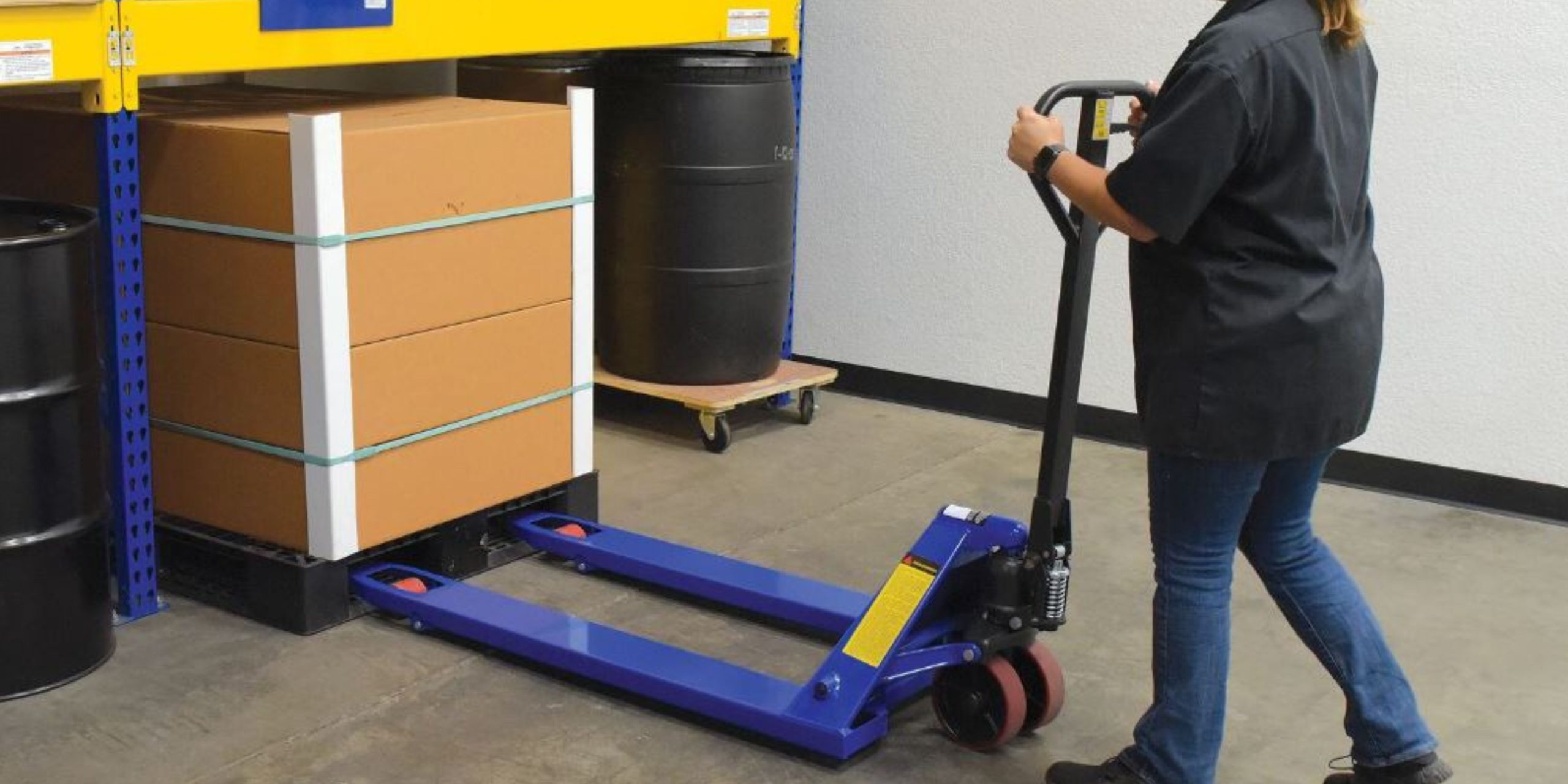
Manufacturers use several related measurements, and they should not be treated as interchangeable. Fork length is the distance from the fork heel to the fork tip. Overall fork width is the outside distance across both forks. Individual fork width and the space between forks affect entry into the pallet. Lowered height affects whether the forks can get under the pallet. Turning and aisle data describe what happens after pickup.

Read the dimensions in the right order
- Fork length: Compare it with the pallet dimension in the direction of travel.
- Overall fork width: Compare it with the pallet opening and the load footprint.
- Individual fork width and spacing: Check that both forks can enter without catching boards or blocks.
- Lowered height: Confirm that the forks can enter the pallet you use.
- Turning and aisle data: Use the measurements for the exact truck, load, and pallet orientation.
- Capacity: Check the nameplate and manufacturer documentation for the load and operating conditions.
ISO 509 covers principal pallet-truck dimensions. In the unloaded lowered position, it specifies at least 30 mm between the underside of the fork arms and the ground, a maximum 86 mm height at the point of entry, and a maximum 90 mm height at the heel. In the unloaded raised position, it specifies a minimum 185 mm height to the top surface of the fork arms. The standard does not remove the need to confirm fit with the pallet and truck under consideration.
If the truck choice is part of a larger facility change, our warehouse design and layout solutions can help turn measurements into a workable plan before equipment is selected.
Pallet Truck Capacity: What the Rating Means
Pallet truck capacity is the maximum load a specific truck is rated to lift and move, printed on the nameplate. It is not the same thing as fork fit. A truck can be rated for a heavy load and still be the wrong size if the forks do not enter the pallet or the chassis cannot turn where you need it to.
Manual pallet trucks are commonly available in a few broad capacity classes. Use these as a starting point for comparison shopping, then confirm the exact rating on the nameplate of the model you are considering. You can browse manual and electric pallet trucks by capacity and fork configuration once you know your target class.
| Capacity class | Typical use | What to confirm |
|---|---|---|
| Low-profile manual | Pallets with a lower lowered-fork clearance requirement | Rated capacity, lowered height, and load center on the nameplate |
| Standard manual | General warehouse and dock work with common pallet loads | Rated capacity against your heaviest routine load, not just the average one |
| Heavy-duty manual | Dense freight such as steel, stone, or paper rolls | Frame and wheel construction, plus floor loading from the concentrated weight |
| Electric pallet truck | Frequent moves, longer travel distances, or operator fatigue reduction | Rated capacity, battery run time, and the wider chassis footprint |
Capacity ratings usually assume a load centered over the forks at a standard load center. An off-center, unstable, or overhanging load can reduce the safe working capacity below the nameplate number. When in doubt, follow the manufacturer’s documentation for the exact model and load condition rather than a general capacity class.
Match Forks to Your Actual Pallet Fleet
There is no universal fork configuration for every pallet. A common 27 x 48 inch truck may work well with many standard North American pallets, but a facility with import pallets, export pallets, specialty pallets, or inconsistent inbound freight needs a fuller review. Do not convert a metric fork designation to an inch description and assume the configurations are the same. For example, 27 inches is about 686 mm, not 550 mm.
Euro pallet truck dimensions differ from GMA-fork trucks
A truck built for 800 x 1200 mm Euro pallets is often called a Euro pallet truck. Its fork spacing and overall width are set up for the Euro pallet’s entry openings and block pattern, which are not the same as a standard 27 x 48 inch North American truck. Do not assume a truck sized for 48 x 40 inch pallets will enter an 800 x 1200 mm pallet cleanly, and do not convert one region’s fork dimensions to the other by unit conversion alone. Confirm Euro pallet truck dimensions against the pallet’s actual entry openings before ordering.
Build a short pallet list before choosing a truck. Include every pallet that moves through the route, not just the one used most often. A mixed pallet fleet may justify more than one truck configuration. That is often better than forcing operators to make a poor-fit truck work in every lane.
| Pallet group | What to verify before choosing forks | Planning note |
|---|---|---|
| 48 x 40 inch North American pallets | Entry direction, opening size, and bottom boards | A 27 x 48 inch truck is a common starting point, not a substitute for measurement. |
| 800 x 1200 mm Euro pallets | Entry side, blocks, and fork spacing | Confirm fit using the actual pallet and truck specification. |
| 1000 x 1200 mm pallets | Pallet openings, fork width, and travel direction | Do not assume one configuration fits all 1000 x 1200 mm pallets. |
| Specialty, display, or printer pallets | Load support, openings, and load stability | Measure the specific pallet before ordering equipment. |
| Mixed inbound pallets | Every pallet type that reaches the route | Consider a mixed fleet when one compromise creates repeated handling problems. |
For work that moves pallets into floor-level or low-level rack positions, the storage layout matters as well. Use the pallet rack configurator to explore a rack layout, then confirm the aisle and truck clearances with the equipment documentation. Our guide to pallet rack wire decking can also help with the storage side of the plan.
Check Aisle Clearance and Turning at the Tightest Point
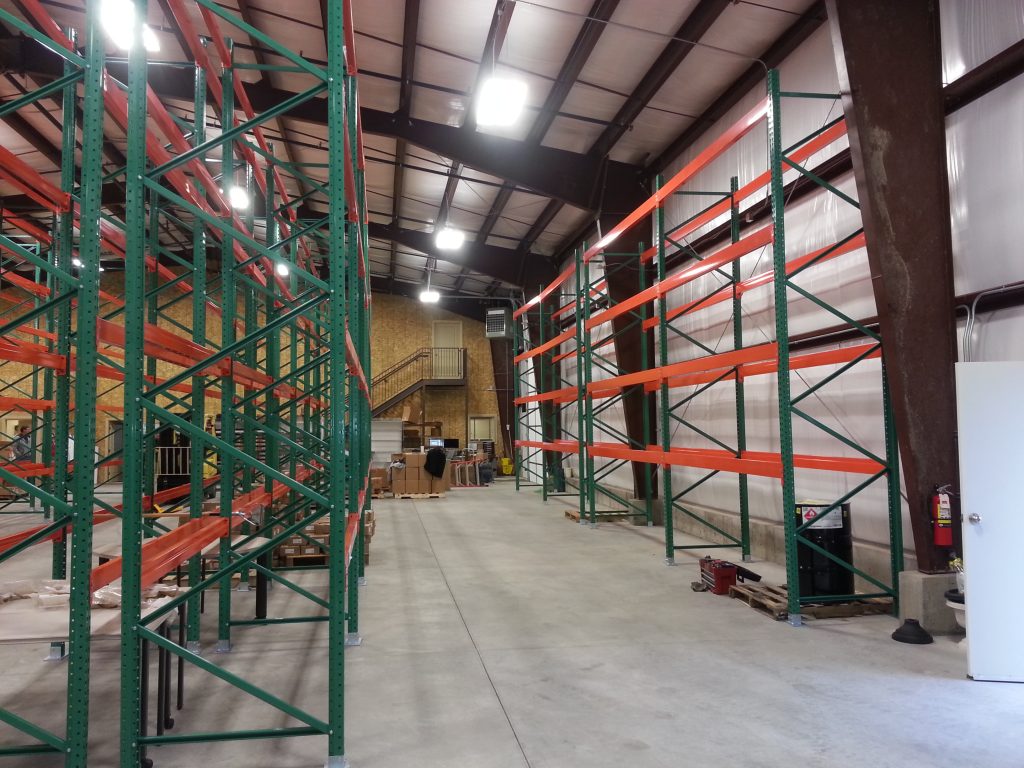
A pallet truck can fit the pallet and still fail the route. The important question is not whether the truck rolls through the widest aisle. It is whether it can pick up a loaded pallet, turn, and travel through the least forgiving point without repeated correction.
Measure from the surfaces that are actually in the way. Include rack uprights, guards, posts, staged pallets, doors, wall projections, and the pallet itself. Also write down how the pallet is oriented during the turn. A change in orientation can change the space the move needs.
Use the exact truck data for the exact move
Manual and powered pallet trucks do not have one shared aisle requirement. A powered unit has its own chassis, controls, and published turning data. The pallet, load orientation, and handling pattern also matter. Ask for the right-angle stacking aisle and turning information for the specific model rather than using a generic chart.
Our aisle width planning guide can help you document the route. It should support, not replace, the manufacturer’s dimensions for the truck you are evaluating.

Include Trailer, Dock, and Floor Transitions
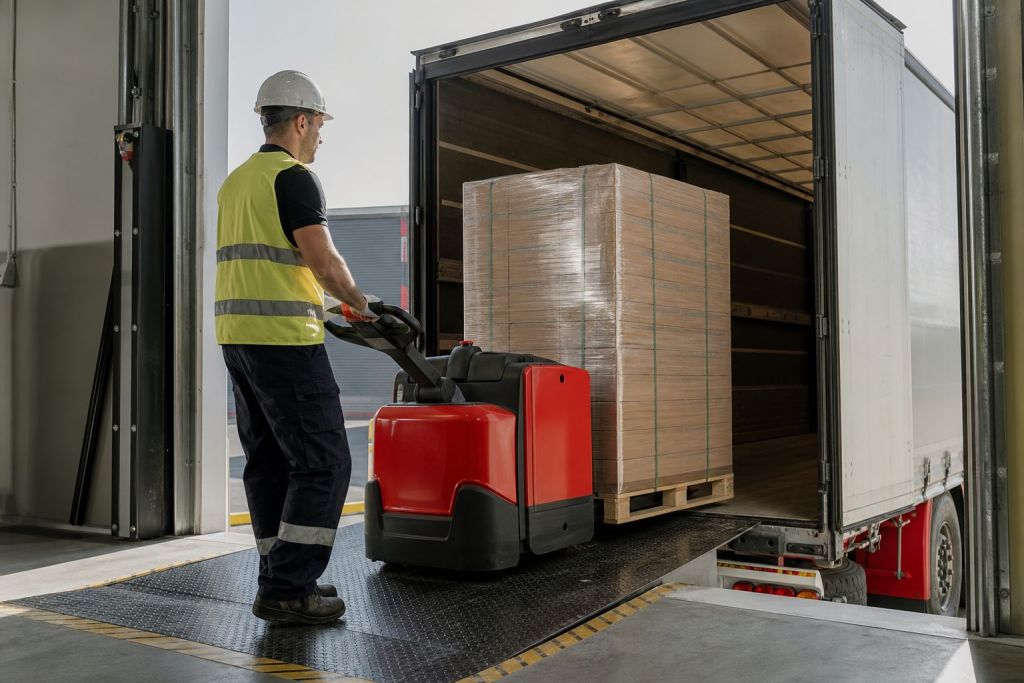
Trailer length alone does not decide pallet truck size. Pallet orientation, trailer interior dimensions, load pattern, dock approach, and the need to turn or reverse all affect the job. Review the route between the staging area and trailer, not just the space inside the trailer.
Make three dock checks
- Follow the complete path. Start at staging and include the dock opening, trailer threshold, and the point where the truck turns or reverses.
- Check the transition. Use the applicable manufacturer instructions for the truck, dock plate, ramp, leveler, and trailer condition.
- Plan for the real load. Include the pallet, load height, wrap, and any overhang in the clearance review.
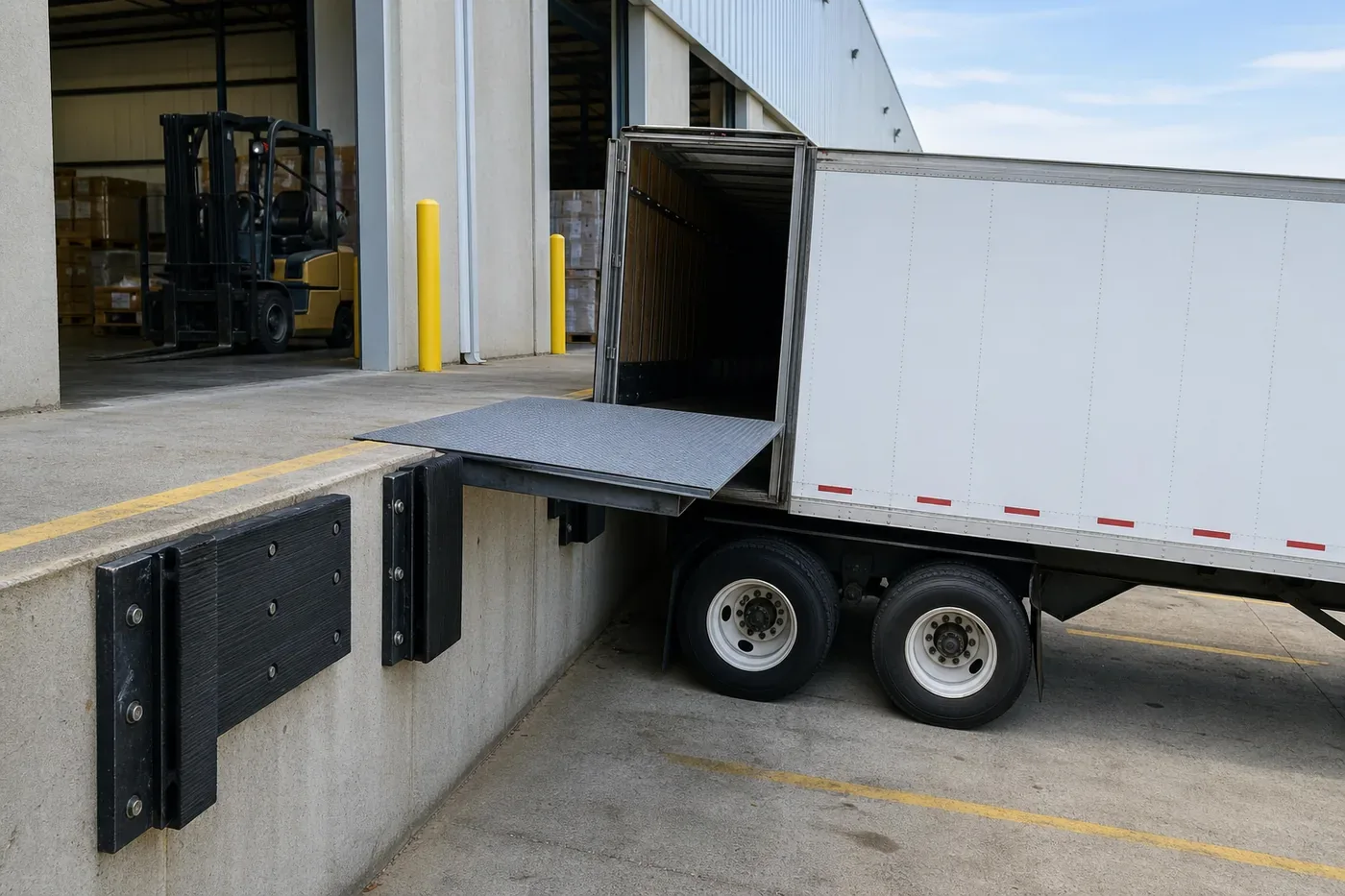
Review loading dock equipment alongside the truck. The dock surface, bridge, and trailer condition need to support the move as a complete system.
How Many Pallets Fit in a Truck or Trailer
The pallet truck questions above assume you already know the pallet fleet and the route. A related question that drives just as much planning is how many pallets a truck or trailer can carry. The count depends on pallet size, load height, weight limits, and whether pallets are floor-loaded or stacked, so treat the figures below as planning ranges, not guarantees for a specific shipment.
Typical pallet counts by trailer and truck type
| Vehicle | Standard 48 x 40 in pallets, single layer | Double-stacked (if freight allows) | Planning note |
|---|---|---|---|
| 53-foot dry van trailer | About 26 straight-loaded, up to about 30 turned sideways | Roughly 50 to 56 | Interior width and door opening control the layout, not trailer length alone |
| 48-foot dry van trailer | About 24 to 28 | Roughly double, height and weight permitting | Still common on regional routes with shorter tractors |
| 26-foot box truck | About 10 to 12 | Usually not practical due to interior height | Confirm interior height before planning any stacking |
| Standard pickup truck bed | Typically 1 | Not applicable | A 48 x 40 inch pallet usually fits flat between the wheel wells on a full-size bed; the tailgate may need to stay down |
| Standard 13.6 m European trailer | About 33 Euro pallets (800 x 1200 mm) | Up to about 66, height permitting | Euro pallet counts differ from GMA pallet counts because the pallet footprint is different |
These are floor-fit planning numbers for unstacked or evenly stacked, stable freight. Actual load counts still depend on weight limits (a dry van typically tops out well under its floor-fit pallet count once cargo weight is added), load height, whether the freight can be stacked at all, and how the carrier balances the trailer. Confirm the number with your carrier or logistics provider for a specific shipment rather than relying on a general planning figure.
Whatever the count, the pallet truck moving those pallets on and off the trailer still needs to match the pallet fleet and the dock route. Review the loading dock equipment section above and the aisle and turning guidance earlier in this guide before finalizing equipment.
Pallet Height and Why It Affects Truck Fit
Pallet height means two different things, and mixing them up leads to fit problems. The empty pallet’s own height is usually about 5 to 6.5 inches for a standard wood pallet, measured from the floor to the top deck boards. The loaded height is the empty pallet plus the freight stacked on it, and that number is what actually has to clear doorways, rack beams, and trailer ceilings.

Where pallet height connects back to pallet truck size
- Empty pallet height affects whether the forks can lift the pallet clear of the floor at the truck’s rated raised height.
- Loaded pallet height is commonly planned to a ceiling of roughly 48 to 60 inches for single-stack storage, though your racking, doorways, and trailer interior height set the real limit.
- Double-stacked or high-stacked loads need a clearance check against every doorway, rack beam, and trailer interior height in the route, not just the tallest point in the warehouse.
- Pallet truck lowered height (see the spec sheet section above) has to be low enough to get under the pallet, and raised height has to lift the load clear of the floor and any dock plate or ramp.
Record pallet height along with pallet length, width, and entry direction on your measurement sheet. A pallet that fits the forks can still be rejected at a dock door or rack aisle if nobody checked the loaded height first.
Measure Your Space Before You Request a Quote
A simple measurement sheet gives a supplier useful information and keeps the selection process focused. Take measurements at the point where the truck has the least room, not where the route is easiest.
Six-step pallet truck measurement checklist
- List every pallet style. Record length, width, entry direction, opening details, and a photo if possible.
- Record the load. Note the normal load weight, load height, overhang, and whether loads vary.
- Measure the narrowest aisle. Include uprights, guards, staged materials, and the pallet position during the move.
- Map the tightest turn. Record doorways, rack ends, wall corners, and any point that requires a pivot or reverse.
- Check dock and trailer conditions. Include the dock opening, transition equipment, and trailer floor condition.
- Note floors and changes in grade. Record ramps, uneven areas, floor joints, and surface changes on the route.
Need help turning site measurements into a layout? Send the pallet list and the tightest route dimensions with your quote request, or call (800) 326-4403. The more complete the measurements, the easier it is to compare a truck with the job.
Safety and Future Changes Belong in the Selection
Good sizing helps operators avoid rushed corrections, poor fork entry, and travel paths that do not leave enough working room. For powered industrial trucks, OSHA requires operators to be trained and evaluated for safe operation. It also requires written manufacturer approval before a customer or user makes modifications that affect capacity or safe operation. Follow the equipment instructions and capacity markings for the truck you select.
For the broader work area, review pallet storage, pedestrian space, dock conditions, and traffic flow together. Our article on OSHA-compliant warehouse design covers planning factors that should be considered with the equipment route.
Also plan for changes. A new supplier, a different pallet style, additional racking, or a new dock process can change what the truck must handle. Record the likely future pallet and route conditions before standardizing the fleet.
Frequently Asked Questions
What is the standard pallet truck size in the United States?
A 27-inch overall fork width with 48-inch-long forks is a common starting point for standard 48 x 40 inch pallets. It is not a universal fit. Confirm the pallet entry openings, bottom-board pattern, and load before choosing a truck.
What is the difference between fork length and fork width?
Fork length is the distance from the fork heel to the tip. Overall fork width is the outside distance across both forks. Both measurements matter, but they answer different fit questions.
How many pallets fit in a semi trailer or on a truck?
A standard 53-foot dry van trailer typically holds about 26 standard 48 x 40 inch pallets floor-loaded in a single layer, or up to about 30 when pallets are turned sideways. A 48-foot trailer usually holds about 24 to 28. Double-stacking non-crushable freight can roughly double those counts, weight and height permitting. Confirm the exact count with your carrier for a specific shipment.
How wide does an aisle need to be for a pallet truck?
There is no single aisle number for every truck. Measure the tightest turn with the actual pallet orientation, then compare it with the model’s published turning and right-angle stacking data.
Do electric pallet trucks need more planning than manual pallet trucks?
Often, yes. A powered truck has its own chassis dimensions, controls, and operating requirements. Use the exact model documentation and make sure operators receive the training required for the equipment they use.
What is a hand pallet truck, and is its size different from a pallet jack?
A hand pallet truck and a manual pallet jack are names for the same equipment. Both use hydraulic forks that a person pumps by hand and steers with a handle. Size is described the same way for both: fork length, overall fork width, individual fork width and spacing, and lowered height matched to the pallet fleet.
What does ISO 509 cover for pallet trucks?
ISO 509 sets principal dimensional requirements for pallet-truck fork arms, including specified height limits in unloaded raised and lowered positions. It does not replace checking the exact truck, pallet, and operating conditions.
What should I send with a pallet truck quote request?
Send pallet dimensions and photos, pallet entry direction, load weight, the narrowest aisle and turning point, dock or trailer details, floor conditions, and whether the truck will be manual or powered.
Get Help Choosing the Right Pallet Truck Size
The right pallet truck is the one that fits the pallet, the route, and the work. Start with the pallet entry, then check fork dimensions, the narrowest aisle, the tightest turn, and every dock or floor transition. Confirm the exact model data before you order.
Browse our manual and electric pallet trucks. When you are ready to compare options for your facility, request a quote or call (800) 326-4403 with the measurements from your route.