
How Do Parcel Delivery Lockers Work?
Parcel delivery lockers give a carrier a designated place to leave a package and give its recipient a controlled way to collect it. In a typical electronic system, the carrier identifies the recipient, places the parcel in an available compartment and closes the door. The system then sends pickup instructions. The recipient uses the supported credential to open the assigned compartment.
That short transaction depends on a larger building workflow. Someone must maintain recipient records, manage full compartments, handle oversized deliveries and support users when a notification or door fails. Material Handling USA helps facilities define these requirements before selecting equipment.
Follow the delivery from arrival to collection
Start with the carrier's journey into the building. Identify the delivery entrance, the route to the lockers and the conditions under which a carrier can enter. A locker bank that is convenient for residents may be difficult for a driver with a loaded cart to reach. Both journeys belong on the layout.
In a typical electronic transaction, an authorized delivery user selects or identifies the recipient and chooses a suitable available compartment. After the package is deposited and the door is closed, the system records the event and issues the configured notification. The details differ by platform: do not assume that every locker uses the same screen, barcode process or carrier credential.
The recipient follows the notification instructions, authenticates using the supported method and removes the parcel. Closing the compartment completes the physical task. Confirm how the proposed system determines that the transaction is complete and returns the compartment to availability; software behavior and sensors vary.
Test the complete sequence
- Deliver a representative small package and a larger carton.
- Confirm that the correct recipient receives the pickup instructions.
- Retrieve the package using each supported access method.
- Review what staff see if a door remains open or the transaction is interrupted.
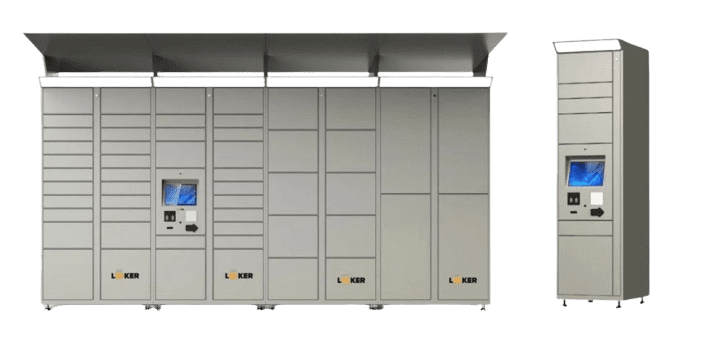
The Explore our related solutions illustrates a commercial electronic locker process. It is a reference example, not a statement that every system supplied for your project includes the same features. Put the required workflow into the quotation and acceptance plan.
Size the locker bank for occupied time
Arrivals
Count deliveries across ordinary and peak periods.
Occupancy
Measure how long packages remain.
Size mix
Match compartments to actual cartons.
Daily delivery volume is a useful starting point, but lockers hold packages until people collect them. Ten deliveries spread across a day with rapid pickup create a different demand from ten deliveries that remain overnight. Record both arrivals and pickup timing before deciding how many compartments the building needs.
Collect observations over ordinary and busy periods. Include weekends, holidays, move-in periods or other events that affect your property. Note the package size distribution and the frequency of items that will not fit. A total compartment count can conceal a shortage of the sizes people actually need.
Separate counts from usable capacity
A large compartment can often hold a smaller parcel, but repeated use of large spaces for small items may leave no place for a large delivery. Ask how the proposed workflow selects compartment sizes and whether staff can influence that allocation. Avoid promising that software automatically solves every mismatch.
| Planning input | Why it matters | Evidence to collect |
|---|---|---|
| Daily arrivals | Establishes ordinary demand | Delivery observations |
| Pickup delay | Determines occupied time | Collection records |
| Package dimensions | Determines size mix | Representative cartons |
| Peak periods | Reveals temporary pressure | Seasonal history |
| Exceptions | Defines supporting space | Oversized and failed deliveries |
Show a separate receiving or exception location on the plan. A locker bank is not an unlimited overflow room. Staff need an approved procedure when no suitable compartment is available, rather than leaving packages in circulation space or choosing an unrelated recipient.
Review expansion options with the supplier. Confirm whether an additional bank can connect to the proposed system, where it would fit and what utilities it would require. Keep the first phase workable on its own instead of counting future compartments as present capacity.
Choose a location that serves carriers and recipients
A good location balances delivery access, recipient convenience, supervision and building circulation. Observe the space at the times deliveries and pickups actually occur. A quiet lobby in the morning may become crowded later, and an open compartment door can occupy space beyond the locker footprint.
Measure the approach route, turns and door openings used by delivery carts. Include the area needed to place a cart while a driver operates the locker. Recipients also need room to open a compartment, lift the package and leave without blocking other users.
Review the surrounding building conditions
Confirm the proposed equipment's indoor or outdoor rating and the specific environmental conditions it can tolerate. A covered exterior location may still experience wind-driven rain, dust, temperature changes or direct sunlight. An indoor product should not be treated as outdoor equipment merely because it sits beneath an overhang.
Coordinate power, connectivity, anchoring and access with the responsible building team. Identify which services the supplier requires and which party provides them. Document the actual connection point and installation route before equipment arrives, including any restrictions on work in occupied areas.
Accessibility requires review of the complete installation, including the approach, controls and assigned compartment locations. Ask the supplier to explain supported accessible workflows, then have the project team evaluate them for the building. A product feature alone does not establish that every proposed arrangement meets applicable requirements.
For residential projects, coordinate the locker location with other shared amenities. The apartment bicycle storage guide offers related questions about resident routes and shared access. Keep parcel handling and bicycle parking distinct so neither activity obstructs the other.
Define credentials, notifications and staff access

Recipient information is central to an electronic parcel workflow. Decide who creates records, corrects errors and removes access when a person leaves. Apartment buildings, offices and campuses have different identity sources, and the proposed system needs a clear process for the setting where it will operate.
Confirm the notification channels supported by the selected platform. Ask what happens when a phone number is incorrect, a message is delayed or a recipient cannot use the normal method. Staff should have a documented support process that verifies the person before releasing a package.
Give administrators appropriate responsibilities
Separate ordinary delivery activity from administrative actions. Identify who may open compartments, change recipient records, investigate a failed transaction or export records. Ask how those actions are recorded and which permissions can be limited. Do not assume that every employee needs the same access.
Review data handling with the organization's responsible team. Establish what information is collected, who can see it and how long records are retained. Those decisions should align with the actual platform and organizational policies rather than a generic promise that all locker systems are equally private or secure.
Clarify the relationship between building entry and locker access. A pickup credential may open a compartment without admitting a person through a locked exterior door. If pickup is advertised outside staffed hours, the access route and support arrangements must work during those hours too.
The smart locker systems guide covers related issue-and-return workflows for shared assets. Parcel delivery has its own recipient and carrier requirements; use the comparison to identify questions, not to assume that one software package supports every application.
Plan for oversized parcels and interrupted service
Oversized
Use an approved receiving location.
Unavailable
Define power and network outage procedures.
Uncollected
Follow the property’s documented escalation policy.
Exceptions are normal operating events and should be designed into the service. Examples include a package that does not fit, an unknown recipient, a damaged carton, a full bank or a recipient who needs help collecting an item. Each requires a defined next step and an accountable person.
Create an oversized-package procedure that protects the delivery record and identifies the recipient. If a staffed room is used, explain its access hours and release method. Avoid describing an unattended floor area beside the lockers as secure overflow storage simply because the locker bank itself has access control.
Ask specific outage questions
What happens when network service is unavailable? Can an already-issued credential still be used? What happens after a power interruption? Which functions recover automatically, and when must staff or service personnel intervene? Obtain answers for the exact proposed hardware and software combination.
Include a door that will not open and a door that will not latch in the support plan. Staff should know whom to contact and how to keep an affected compartment out of normal use. Mechanical access methods and emergency procedures should be documented by the supplier and restricted to authorized personnel.
Define how uncollected packages are handled. Reminder timing, escalation and any eventual removal belong in the property's approved policy. Communicate that policy when users join the service so staff are not inventing a rule for the first long-staying parcel.
Parcel lockers should not be assumed suitable for temperature-sensitive, hazardous or specially controlled goods. Such deliveries require their own approved handling arrangements and equipment documentation. Keep the ordinary parcel service's accepted items and limits clear to carriers and recipients.
Compare the full purchase and operating scope
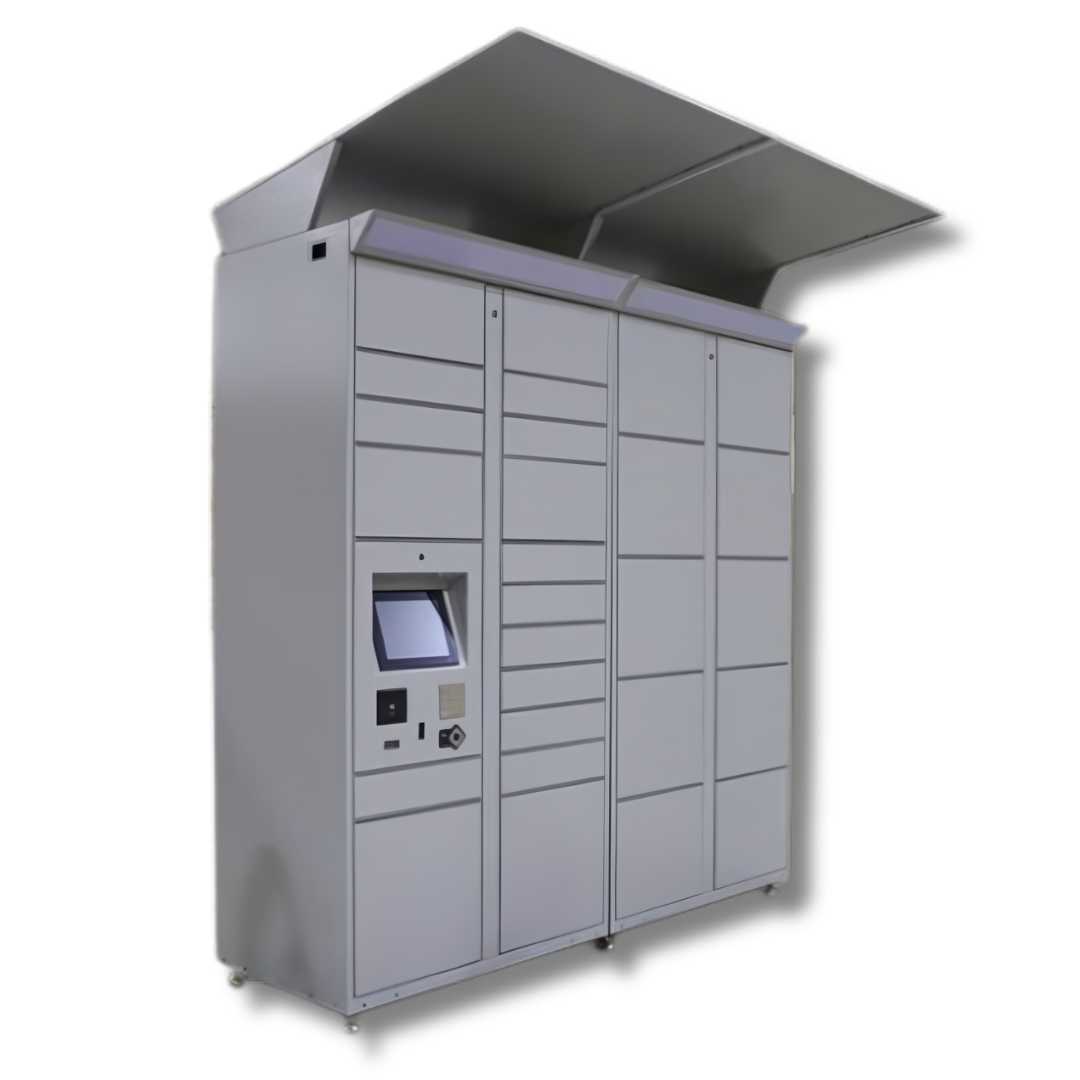
A useful proposal identifies the compartment arrangement, controller, supported workflows, installation requirements and ongoing services. Compare systems on the same operating assumptions. A lower hardware price may exclude connectivity, software fees, support or building work included elsewhere.
Ask who owns each ongoing responsibility. Someone will update recipient records, answer pickup questions, coordinate repairs and manage packages that do not fit. The equipment may reduce particular manual tasks, but staffing requirements depend on delivery volume, user behavior and the chosen exception process.
Put recurring costs in the comparison
- Software or service subscriptions and the functions they include.
- Network or cellular service where required.
- Support hours, response commitments and exclusions.
- Replacement components and on-site labor arrangements.
- Training for administrators and delivery users.
Review the warranty and service documents for the exact system being quoted. Confirm how a failed component is diagnosed, who can replace it and whether a service interruption affects the whole bank or only selected compartments. Avoid treating a general manufacturer's statement as a project-specific service commitment.
Identify ownership and access to operational information if the service changes later. Ask about recipient data, transaction records, administrator accounts and any steps needed when management changes. These questions are easier to resolve before installation than during a future transition.
Material Handling USA can help organize the equipment discussion around your building's requirements. Bring delivery observations, a measured location plan and the operating responsibilities you want the proposal to address. That brief gives suppliers a concrete basis for comparison.
Commission the system with realistic deliveries
Test
Deliver and retrieve representative packages.
Train
Practice normal transactions and exceptions.
Review
Compare occupancy and support requests with the plan.
Installation is complete only when the equipment and building workflow operate together. Check the physical installation against the approved drawing, then test normal deliveries and the important exceptions. Include the staff who will administer the service after the installer leaves.
Use representative cartons rather than testing only an empty compartment. Observe carrier access, package placement, notification, pickup and door closure. Confirm that package dimensions are compatible with usable openings, not merely the dimensions printed on a compartment schedule.
Review the handover information
Collect the approved layout, component identification, operating instructions, administrator training and support contacts. Document the procedures for recipient changes, failed delivery attempts, outages and uncollected items. Identify where staff can find this information during a shift.
Test supported access methods with the intended users. Include someone unfamiliar with the interface and ask them to follow the actual instructions. Confusing wording or an inconvenient control location can be apparent immediately when the test reflects everyday use.
Plan an early operating review. Compare compartment occupancy, oversized deliveries, pickup delays and support requests with the assumptions used for sizing. A recurring problem may call for a change in instructions, compartment allocation or staffing procedure before additional equipment is considered.
Keep expansion decisions tied to evidence. If capacity is constrained by long pickup delays, adding compartments may postpone the same issue without resolving it. If the size mix is wrong, a different arrangement may be more useful than simply repeating the first bank. A clear operational record makes the next investment easier to justify.
Frequently asked questions
Do recipients need to be present when a package arrives?
Typically, no. In an electronic parcel workflow, the carrier deposits the package and the recipient collects it later using the supported credential. Building access and operating hours still determine when either person can reach the lockers.
Does every locker system use a phone app?
No. Access methods differ by platform and may include codes, credentials or an app. Confirm the supported methods and the process for users who cannot use the primary method.
How many compartments does a building need?
Evaluate delivery volume, package sizes, peak periods and how long parcels remain before pickup. Daily arrivals alone do not establish the required compartment count.
What happens when a parcel is too large?
Use the building's approved oversized-package procedure. Plan a suitable receiving location and a documented release process before the service begins.
Will lockers work during a network outage?
That depends on the proposed system and configuration. Obtain written information about offline functions, power loss, recovery and staff support for the exact equipment being quoted.
What information is needed for a quotation?
Provide delivery observations, package sizes, pickup patterns, site dimensions, access hours, utility information and the required recipient and administrator workflows.
Build a parcel workflow your property can operate
Share your application details, photographs and requirements with Material Handling USA to start a focused project discussion.