
How Does the State of Utah Store Liquor?
Utah liquor storage combines receiving, inventory control, warehouse handling and replenishment of retail locations. Those activities call for different equipment: pallet storage for reserve cases, accessible picking locations for outgoing orders, and fixtures suited to store replenishment. Material Handling USA helps facilities evaluate the storage and handling side of this process, including carton flow, shelving and conveyor interfaces.
The equipment examples below are planning options. They should not be read as a current inventory of equipment installed by the Utah Department of Alcoholic Beverage Services, or as a claim that MH-USA supplied a particular state facility.

Separate verified operations from equipment examples
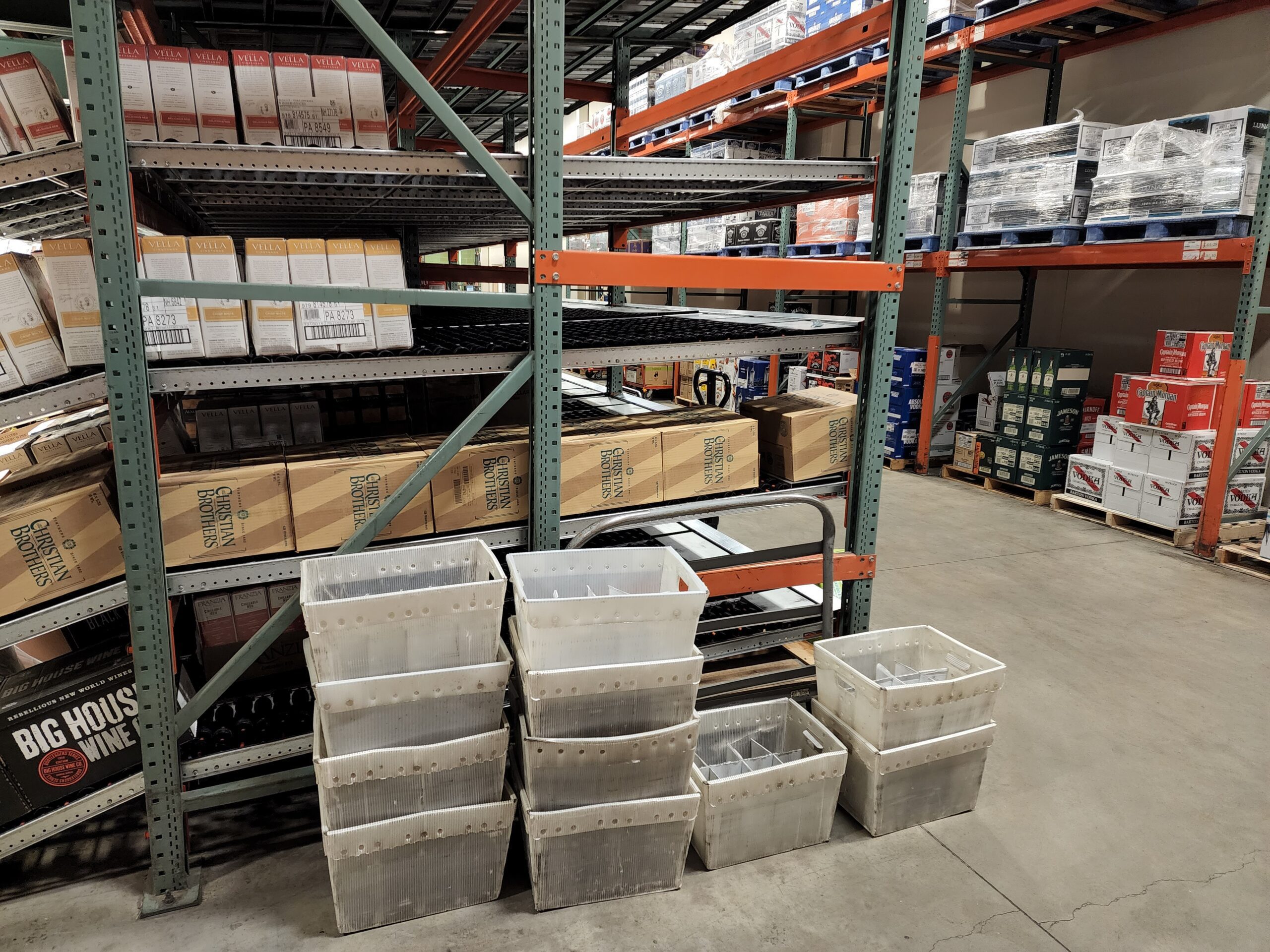
The Utah Department of Alcoholic Beverage Services, commonly called DABS, publishes requirements covering warehouse deliveries, case identification, packaging condition and inventory responsibilities. Its 2026 Vendor Partnership Manual describes a warehouse distribution operation and a bailment arrangement. Vendors should use the department's current instructions and their own agreements for shipment decisions.
For a storage project, this distinction matters. The administrative system determines which goods arrive and how they are identified. The physical system determines where those goods fit, how employees retrieve them and how cases move to the next operation. A successful arrangement needs both clear records and usable storage positions.
Start with the handling task
- Identify whether the facility receives pallets, individual cases, mixed orders or a combination.
- Separate reserve storage from the locations used for regular case picking.
- Record the size, weight and condition of representative cartons before choosing equipment.
- Map replenishment, order assembly, exceptions and outbound staging as separate activities.
The DABS vendor manual is a source for departmental requirements, not a shelving specification. Confirm that the published version remains applicable before arranging a delivery. A generic warehouse guide cannot establish a supplier's current acceptance conditions or replace an approved equipment design.
An equipment proposal should therefore describe its assumptions explicitly. If the carton range is incomplete, identify the missing examples. If reserve stock will remain in another room, show that interface. These small distinctions prevent a layout from appearing complete while important handling work remains outside the drawing.
Match reserve storage to the actual inventory
Inventory
Record load sizes, weights and quantities.
Access
Show replenishment and order-picking routes.
Capacity
Obtain ratings for the proposed configuration.
Reserve storage holds quantities that are not immediately needed at the picking face. The right arrangement depends on how many different products must remain accessible, the number of pallets per product and the equipment used to replenish orders. High storage density can be useful, but only when the stored stock can be retrieved in the sequence the operation needs.
Count usable positions with representative loads. A pallet position that cannot accommodate a particular overhanging carton or load height should not be counted as available capacity for that product. Similarly, an apparently empty aisle may be essential working space for turning, checking stock or moving an unusually sized load.
Record more than pallet quantity
Include pallet condition, overall dimensions, total weight, carton arrangement and any restrictions on stacking. Identify slow-moving stock, seasonal peaks and products that require special handling. These details influence both the storage structure and the amount of space needed around it.
Shelving may be appropriate for smaller quantities or case-level access, while pallet rack supports a different handling pattern. The correct choice comes from the inventory and equipment assessment. Do not transfer a capacity from a similar-looking rack or assume that shelf and bay ratings are interchangeable.
Reserve storage also needs location identification. Give each position an address employees can find from the approach aisle, and define how stock moves from reserve to pick locations in the inventory system. Without this connection, an orderly rack can still contain inventory that is difficult to locate or replenish.
For a broader review of receiving, picking and reserve areas, see our 3PL warehouse storage guide. Its planning questions can help clarify flow even when the facility does not operate as a third-party logistics provider.
Evaluate carton flow for case picking

Carton flow presents cases at a picking face while replenishment occurs from the other side of the rack. Gravity movement can reduce repeated reaching into deep storage, but performance depends on the carton, supporting rollers, slope, stops and operating conditions. Test the actual package range rather than assuming every cardboard box will behave the same way.
Engineered Products identifies FlexTrak Bed as a laneless carton-flow arrangement with a full roller bed. Its published description explains that changing carton or tote dimensions can be accommodated without rebuilding fixed roller lanes. That product characteristic is useful to evaluate where the assortment changes frequently; it does not establish suitability for every case or existing rack.
Use a representative trial
- Include small and large cases, light and heavy cases, and the normal range of carton bottoms.
- Observe starting, travel and stopping behavior through the proposed storage depth.
- Check access when a case does not advance as expected.
- Review how employees replenish the rear and remove goods from the front.
A carton that flows well when new may behave differently after moisture exposure or handling damage. The operating procedure should identify packages that require an exception route. Employees should not improvise a way to reach into a loaded flow lane when the planned recovery method is unclear.
Define the replenishment rule as part of the layout. A forward-moving lane does not by itself guarantee stock rotation: product identification, loading order and exception handling still matter. Label the intended contents and keep the picking face consistent with the inventory record.
Ask for a complete proposal covering the supporting rack, roller bed, end stops, installation and acceptance checks. A replacement insert should be reviewed against the existing structure and its documented condition before it is treated as a simple drop-in purchase.
Connect picking to conveyors and order assembly
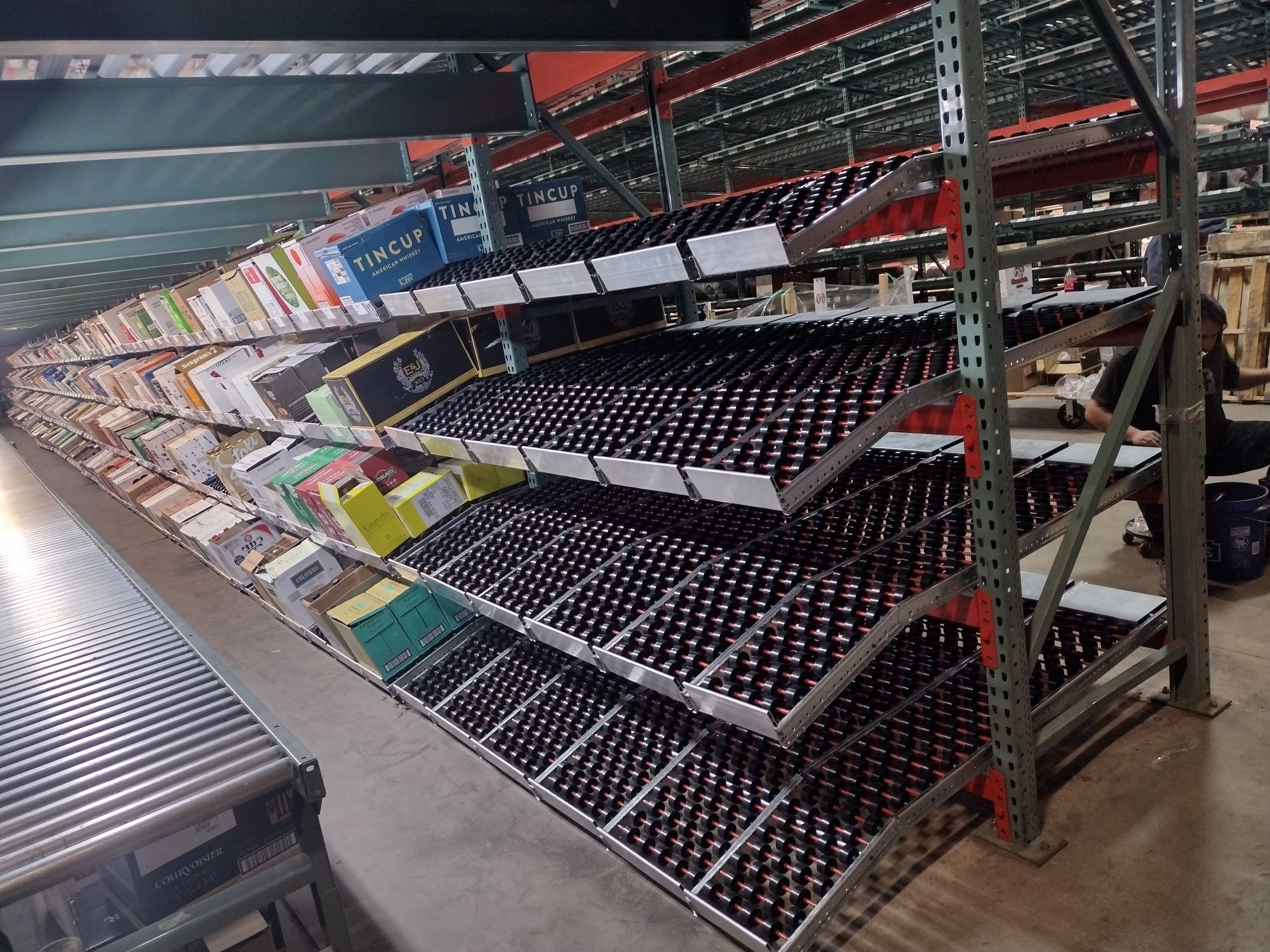
A conveyor can shorten the distance employees carry cases between picking and order assembly. Its benefit depends on where cases enter, where they accumulate and how they leave the line. A short conveyor placed without considering the next task can simply move a queue of cartons from one location to another.
Map the whole sequence from removing a case to identifying its order and placing it in outbound staging. Include scanning, inspection, sorting and handling exceptions. If an employee needs to rotate a carton to read a label, show where that work happens and how the carton remains supported during the task.
Define the transfer points
Compare case dimensions and bottom construction with the proposed conveying surface. Review each change in direction, height or support. Transfers, stops and accumulation zones need equipment-specific design; a photograph of rollers does not establish their load rating or suitability for the application.
Consider staff access around the line. People still need to reach replenishment areas, inspection points and nearby equipment. Crossings, guarding and emergency provisions belong in the complete system review. The conveyor guard planning page explains why protection should be considered with the handling layout.
Keep a defined route for damaged, leaking or unidentified cases. Those goods should not continue through normal order assembly merely because the conveyor is available. Specify who stops the process, who reviews the exception and where the item waits for a decision.
Before accepting the system, run realistic orders through it. Observe ordinary work and peak conditions, including a temporary stoppage downstream. The trial should reveal whether employees have enough working space and whether the next operation can accept goods at the expected rate.
Plan the retail stockroom and replenishment route
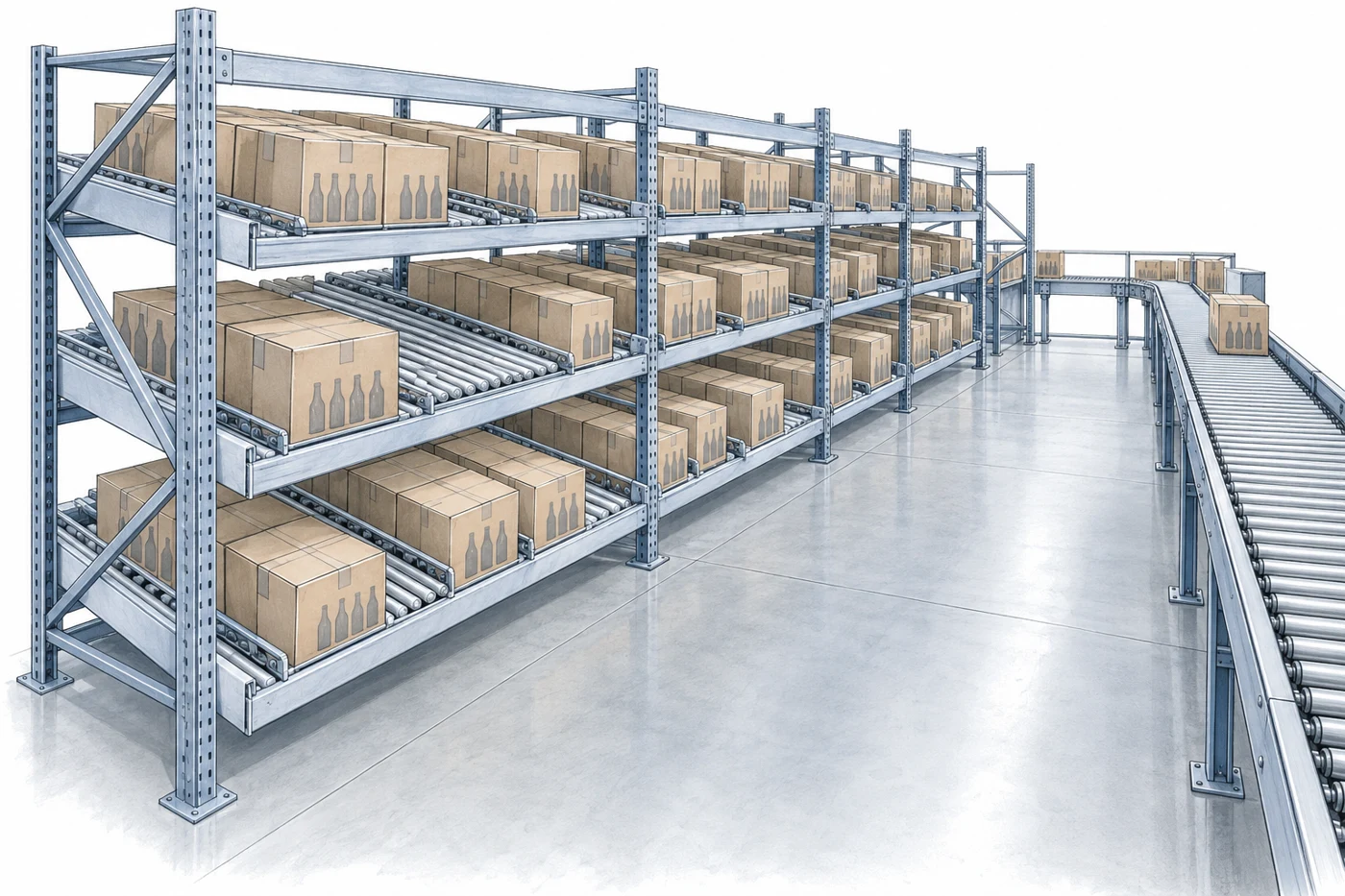
A retail stockroom has a different job from a distribution warehouse. It supports frequent replenishment of selling locations, smaller quantities and work performed around store operations. Storage should make it possible to identify a case, retrieve it without unnecessary rearrangement and move it to the intended destination.
Group inventory using a consistent location method. Product family, package size and replenishment frequency can all influence placement. The best arrangement is one employees can maintain when deliveries arrive and shelves need restocking at the same time. Leave defined space for receiving and checking goods before they become available stock.
Compare access with storage density
Static shelving provides continuous access to each aisle. Mobile storage can reduce the number of permanently open aisles, but users may need to share access to a particular section. Compare both arrangements against the busiest replenishment period, rather than against an empty-room drawing.
Shelf depth should match the cartons being handled. Excessive depth can hide stock behind the front row, while a shallow shelf may leave packaging unsupported. Include the space needed to grip and lift a case, and confirm the complete shelf and unit ratings with the supplier.
Retail display fixtures and backroom storage serve different purposes. A display may be selected for visibility and customer access; reserve shelving must support the handling and storage requirements of packaged stock. Do not assume a sales-floor fixture is suitable for warehouse quantities.
Our stockroom solutions guide covers receiving areas, mobile shelving, replenishment and returns. Use those questions to connect the stockroom layout with the people and carts that actually move goods through the building.
Protect goods through condition checks and housekeeping
Inspect
Check cartons, shelving and working space.
Separate
Keep exceptions out of normal picking locations.
Document
Record damage and maintenance needs.
Storage equipment is only one part of protecting packaged beverages. Carton condition, handling practices, housekeeping and environmental requirements affect whether goods remain suitable for their intended destination. Use the product supplier's requirements and the facility's approved procedures rather than treating one temperature or humidity range as universal.
Inspect incoming packaging before putting goods into normal storage. Record damage and discrepancies through the established process. A compromised carton may no longer behave like an intact carton on rollers or support the same stacking arrangement, even when its contents appear unchanged.
Assign an exception location
Provide a clearly identified place for goods awaiting review. Keep it separate from available inventory in both the physical layout and records. The location should allow responsible staff to inspect the item without obstructing picking, replenishment or exit routes.
Housekeeping should include accessible inspection around shelving, rack bases and conveying equipment. Plan how debris and spills will be addressed using approved procedures. Avoid creating inaccessible gaps that collect packaging material or require employees to reach beneath equipment in unsafe ways.
Consider packaging changes during ongoing operation. A supplier may change case dimensions, cardboard construction or pack quantity. Those changes can affect slotting, roller support and handling. Give the inventory or operations team a way to flag changes before the new packaging is assigned to an existing flow location.
Document the arrangement that was approved: equipment identification, load limits, accepted carton range and responsible contacts. When the operation changes, review those assumptions before rearranging components. Familiarity with an old layout is not evidence that a new loading pattern has been evaluated.
Prepare a practical storage project brief
Brief
Inventory, peak activity and handling equipment.
Drawing
Storage positions, aisles and interfaces.
Review
Loads, access and installation requirements.
A useful project brief combines inventory information with a measured layout and a description of the work. Begin with the problem you want to solve: slow case picking, insufficient reserve positions, congestion at order assembly or repeated movement between rooms. Different problems may require different changes.
Collect photographs from the routes employees actually use. Show receiving doors, obstructions, floor conditions, existing rack, pick faces and staging areas. Include dimensions and identify which structures or services must remain accessible. Supplier drawings are more useful when they begin with reliable site information.
Compare proposals on the same basis
Ask each proposal to state the inventory assumptions, usable capacity, handling sequence and installation scope. Include removal or reuse of existing equipment, floor work, freight, unloading, training and service arrangements. A lower equipment price may exclude work that another proposal includes.
Agree on acceptance checks before installation. Verify a representative range of loads, employee access, replenishment routes, labels and exception handling. For powered or integrated equipment, include the applicable controls and operating documentation in the handover scope.
Plan the transition as well as the final room. Identify where inventory will wait while equipment is installed and how orders will continue to be handled. A phased project may be more practical than clearing the entire area at once, but each temporary arrangement still needs defined capacity and access.
Material Handling USA can help turn this information into a focused equipment discussion. Send your inventory profile, site photographs and handling requirements so the proposed storage arrangement can be reviewed against your actual operation.
Frequently asked questions
Does this page identify all equipment currently used by Utah DABS?
No. It distinguishes published DABS operating information from general storage and handling options. The equipment photographs and concepts are not proof of a current state installation or an MH-USA project.
What is the difference between pallet storage and carton flow?
Pallet storage generally holds reserve quantities handled as unit loads. Carton flow presents individual cases at a picking face. Many facilities need both, with a defined replenishment process between them.
Can any beverage case be used in carton flow?
Suitability depends on dimensions, weight, carton construction, condition and the proposed equipment. Representative testing is important, including cases at the limits of the expected range and the procedure for packages that do not flow normally.
Does a conveyor eliminate manual handling?
It can change where and how cases are handled, but loading, inspection, sorting and unloading may still involve people. Review the complete task and each transfer point before estimating the benefit.
Where should vendors find current Utah delivery requirements?
Use the current DABS instructions and the applicable vendor or bailment agreement. Confirm the version and requirements with the department before shipping; this equipment-planning guide does not replace those documents.
What information helps start a storage assessment?
Provide case and pallet dimensions, weights, inventory quantities, picking volumes, current equipment details, a measured layout and photographs. Identify seasonal peaks, damaged-goods handling and the operational problem the project should address.
Plan storage around the cases you handle
Share your application details, photographs and requirements with Material Handling USA to start a focused project discussion.