
Box Strength Guide: ECT vs Burst (Mullen) Test, Single vs Double Wall
How to read a box maker’s certificate, what ECT-32, 44, 48 and 71 really mean next to 200#, 275# and 350# burst-test boxes, and when a heavier single wall, double wall or triple wall carton is worth the money.
Packaging sales · (800) 326-4403 · sales@mh-usa.com

ECT-32
Standard single wall (≈ 200# test)
ECT-44
Heavy-duty single wall (≈ 275#)
ECT-48
Standard double wall (≈ 275# DW)
ECT-71
Heavy-duty double wall (≈ 500# DW)
Shop Corrugated Boxes by Strength Grade
One card per grade, from everyday ECT-32 cartons to ECT-71 heavy-duty double wall. Each card shows a live online price for an example size; the blue button opens every size in that grade.
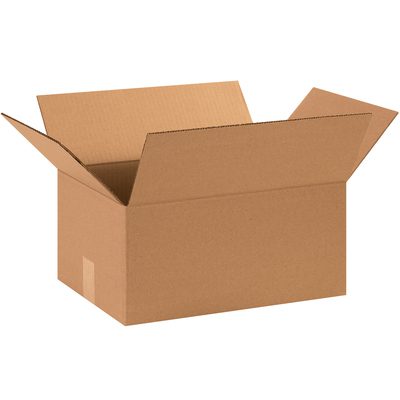
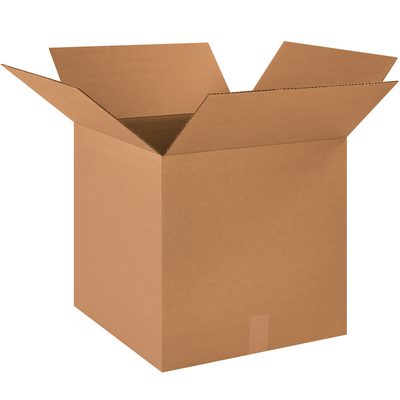

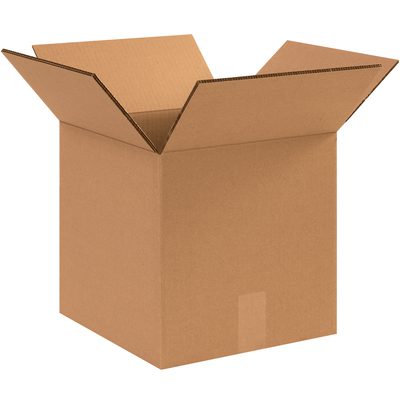
Grades shown are taken from each product listing. Boxes ship flat in bundles from our packaging distribution network; some common sizes are in stock at select manufacturers, subject to confirmation on your order.
The Short Answer: ECT vs Burst Test
If you only read one section, read this one.
- ECT (Edge Crush Test) measures how much load the board can carry on its edge before it crushes, in pounds per inch of edge. It predicts stacking strength, which is what most boxes need in a warehouse and on a pallet.
- Burst (Mullen) test measures how much pressure, in pounds per square inch, it takes to rupture the face of the board. It predicts puncture and rough-handling resistance and tells you about the weight of the liners.
- Both ratings are legal ways to certify a box under the freight classification rules, and both appear in a stamp on the bottom flap called the box maker’s certificate.
- Common equivalents: ECT-32 ≈ 200# test and ECT-44 ≈ 275# test in single wall; ECT-48 ≈ 275# and ECT-71 ≈ 500# in double wall. Each pair carries the same certificate weight limit, but the boards are made differently, so they are not identical boxes.
- Choose ECT for parcel and palletized shipping where boxes are stacked; consider a burst-rated box when packages are thrown, dropped and handled individually many times, or when contents can punch through a panel.
| ECT (Edge Crush Test) | Burst / Mullen Test | |
|---|---|---|
| What it measures | Edgewise compression of a short board sample (stacking strength) | Pressure needed to rupture the board face (puncture resistance) |
| Unit | Pounds per lineal inch (ECT-32 = 32 lb/in) | Pounds per square inch (200# = 200 psi) |
| Industry test method | TAPPI T 811 (short column edge crush) | TAPPI T 810 (Mullen bursting strength) |
| Best predictor of | Box compression strength and stacking life | Rough handling, punctures, overstuffed boxes |
| Board make-up | Often lighter liners with strong medium; recycled fiber friendly | Requires a minimum combined weight of liners (facings) |
| Typical use today | Most stock shipping cartons, including our standard and heavy-duty lines | Older specs, export, some heavy single-unit shipments |
What ECT and Burst Ratings Actually Measure
Two different tests, two different failure modes. Knowing which failure you are trying to prevent tells you which number matters.
Edge Crush Test. A small strip of combined board is stood on its edge and squeezed until it buckles. The result, in pounds per inch of edge, is the board’s ECT value. Because a box on a pallet is held up by its four vertical panels, ECT is the single best predictor of how much weight a box can carry from above before it bulges and collapses.
Burst (Mullen) test. A rubber diaphragm pushes against the flat face of the board until it ruptures. The pressure at failure, in psi, is the burst rating. It reflects the strength of the liners and how well the board resists a corner of the contents, a forklift tine or a sharp drop puncturing a panel.
A box can score well on one test and only average on the other, which is why the industry never converts them with a formula — only with the shared certificate limits in the chart below.

The Box Maker’s Certificate, Rule 41 and Item 222
The round stamp on the bottom flap is the box’s spec sheet. Here is how to read it.
Freight carriers classify shipments under the National Motor Freight Classification (NMFC Item 222) and the rail Uniform Freight Classification (Rule 41). Those rules set minimum construction standards for fiberboard boxes, and since the early 1990s they have allowed a box to qualify on either a burst/combined-facing basis or an edge crush basis. The manufacturer prints the qualifying values in a box maker’s certificate (BMC) on a bottom flap: the rating (burst test in pounds or ECT in pounds per inch), the size limit (the maximum length + width + height of the outside dimensions) and the gross weight limit for the packed box. Parcel carriers do not apply Rule 41 directly, but the certificate is still the most reliable shorthand for what a box can carry.
Commonly cited box maker’s certificate limits
| Construction | Burst test | Min. combined facings | Equivalent ECT | Max gross weight | Max L+W+H (outside) |
|---|---|---|---|---|---|
| Single wall | 125# | 52 lb/MSF | ECT-23 | 20 lb | 40 in |
| Single wall | 150# | 66 lb/MSF | ECT-26 | 35 lb | 50 in |
| Single wall | 175# | 75 lb/MSF | ECT-29 | 50 lb | 60 in |
| Single wall | 200# | 84 lb/MSF | ECT-32 | 65 lb | 75 in |
| Single wall | 250# | 111 lb/MSF | ECT-40 | 80 lb | 80 in |
| Single wall | 275# | 138 lb/MSF | ECT-44 | 95 lb | 85 in |
| Single wall | 350# | 180 lb/MSF | ECT-55 | 120 lb | 95 in |
| Double wall | 200# | 92 lb/MSF | ECT-42 | 80 lb | 85 in |
| Double wall | 275# | 110 lb/MSF | ECT-48 | 100 lb | 95 in |
| Double wall | 350# | 126 lb/MSF | ECT-51 | 120 lb | 105 in |
| Double wall | 400# | 180 lb/MSF | ECT-61 | 140 lb | 110 in |
| Double wall | 500# | 222 lb/MSF | ECT-71 | 160 lb | 115 in |
| Double wall | 600# | 270 lb/MSF | ECT-82 | 180 lb | 120 in |
| Triple wall | 1100# | 264 lb/MSF | ECT-90 | 280 lb | — |
Values are the limits commonly published for box maker’s certificates under Rule 41 / Item 222 (MSF = per 1,000 sq. ft.). Bold rows are the grades most often stocked. Always confirm the certificate printed on the actual box and your carrier’s current packaging rules.
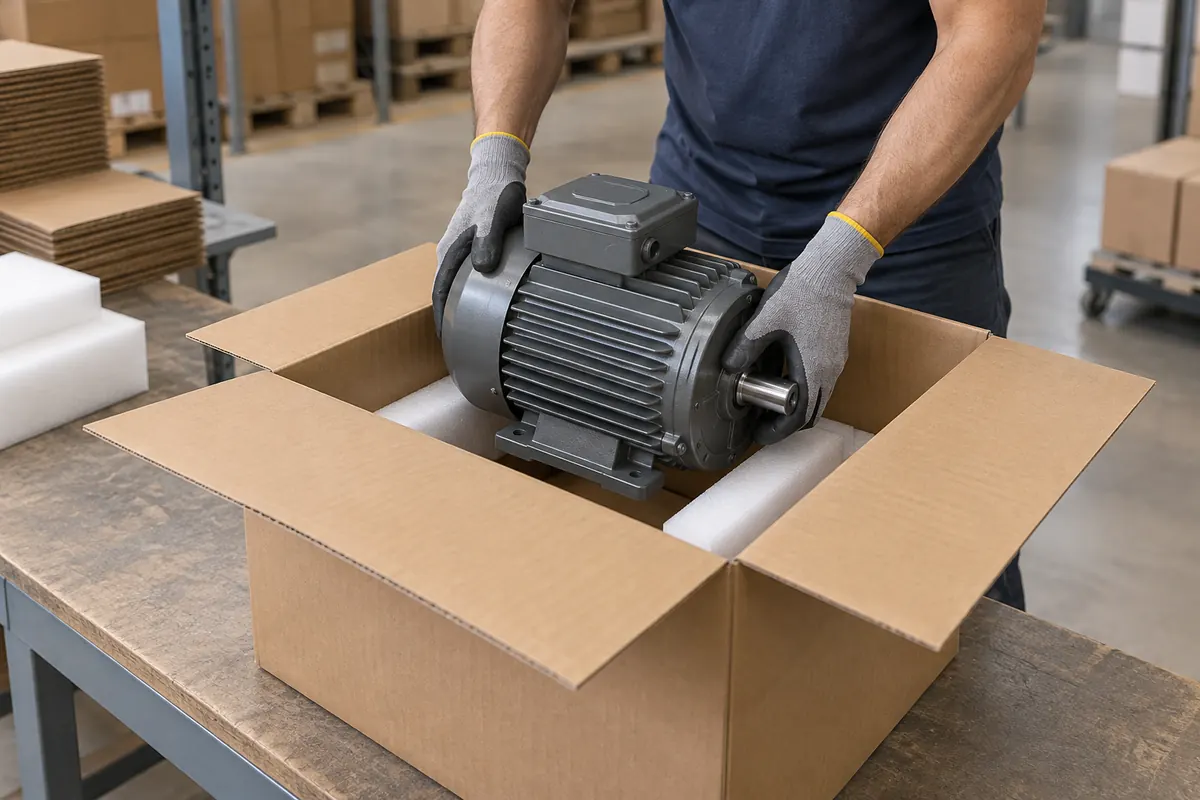
How to use the chart. Weigh a fully packed box, measure its outside length, width and height, and add the three numbers. The box qualifies when both the packed weight and the L+W+H total are at or under the limits on its certificate. A 24 x 18 x 18 in. box, for example, has an L+W+H of 60 in., which fits inside the ECT-32 size limit of 75 in.; packed to 70 lb it would exceed the 65 lb weight limit and should step up to ECT-44 or double wall.
The weight limit assumes the load is distributed and the box is filled. A partly filled box or a single dense item concentrated in one spot needs more margin, and a stacked box needs an allowance for everything that sits on top of it.
32 ECT vs 44 ECT (and the 200 lb Test Box)
The two single-wall grades most shippers choose between, plus what “200 lb test” really means.
ECT-32 is the industry’s standard single-wall grade — it is what our standard corrugated, cube and long boxes are made from, according to their listings. Its certificate limit is 65 lb gross weight and 75 in. L+W+H. ECT-44 is the heavy-duty single-wall grade; the listings for our heavy-duty single-wall boxes describe them as ECT-44 and 40% stronger than standard shipping containers, which tracks the jump from 32 to 44 lb per inch of edge. Its certificate limit is 95 lb and 85 in.
A “200 lb test box” is a burst-rated single-wall box with a 200 psi Mullen rating. The name sounds like a weight capacity, but it is not: a 200# test box carries the same 65 lb certificate weight limit as ECT-32. Likewise, “275 lb test” does not mean 275 lb of contents — it shares the 95 lb single-wall limit with ECT-44. When a buyer asks for a 200 lb test box today, an ECT-32 box is the usual stock equivalent for stacking and parcel use.
Same 18 x 18 x 18 in. box, five strength grades
| Grade | Construction | Certificate weight limit | Sold as | Bundle price | Per box | Product |
|---|---|---|---|---|---|---|
| ECT-32 | Single wall | 65 lb | Bundle of 20 | $51.02 | $2.55 | View → |
| ECT-44 | Heavy-duty single wall | 95 lb | Bundle of 20 | $84.72 | $4.24 | View → |
| ECT-48 | Double wall | 100 lb | Bundle of 10 | $49.37 | $4.94 | View → |
| ECT-71 | Heavy-duty double wall | 160 lb | Bundle of 10 | $146.15 | $14.62 | View → |
| ECT-90 | Triple wall | 280 lb | Bundle of 5 | $170.44 | $34.09 | View → |
Online prices when this guide was last updated; the product page always shows the current price. Weight limits are the commonly cited certificate values for each grade.
The ladder makes the trade-off concrete. Moving from ECT-32 to ECT-44 adds a modest cost per box for roughly 46% more certificate weight allowance; double wall ECT-48 costs a little more again but adds a second flute for puncture and corner protection. The jump to ECT-71 and triple wall is steep, so reserve those grades for dense, heavy or high-value loads where a failed box costs far more than the carton.
Flute Types: B, C, E and BC Double Wall
The flute is the wavy medium between the liners. Its size changes thickness, cushioning, stacking and print surface.
| Flute | Approx. board thickness | Approx. flutes per foot | Strengths | Common uses |
|---|---|---|---|---|
| A flute | about 3/16–1/4 in. | about 33 | Highest cushioning and top-to-bottom stacking of single flutes | Fragile items, some heavy single wall |
| B flute | about 1/8 in. | about 47 | Good puncture and crush resistance, flat printable surface | Mailers, die-cut boxes, retail packs, canned goods |
| C flute | about 5/32–3/16 in. | about 39 | Best all-round balance of stacking and cushioning | Most standard shipping cartons (RSCs) |
| E flute | about 1/16 in. | about 90 | Thin, crisp folds and a smooth print face | Retail, cosmetic and small product boxes |
| BC double wall | about 1/4 in. | B + C combined | Two flutes and three liners for stacking and puncture resistance | Heavy parts, export, gaylords |
Single wall is one fluted medium glued between two liners. Double wall adds a second flute and a third liner — most often a B flute paired with a C flute (BC). Triple wall stacks three flutes and four liners and approaches the stiffness of a light wooden crate, which is why our triple-wall listings compare them to a plywood crate.
Flute choice and ECT work together. Two boards with the same ECT can feel different: a C-flute box is thicker and cushions better, while a B-flute box of the same grade gives a flatter panel for labels and printing. For general shipping cartons, C flute is the default; for corrugated mailers, B flute is common — our white and kraft mailer listings, for instance, are 200#/ECT-32-B board.

When to Pick Double Wall or Triple Wall
Double wall is not just a stronger single wall. It solves specific problems; if you do not have them, a heavier single wall is often the better buy.
| Situation | Usually enough | Step up to |
|---|---|---|
| Packed weight under about 65 lb, parcel shipping | ECT-32 single wall | ECT-44 if boxes are stacked high or stored for weeks |
| 65–95 lb, or heavy stacking in storage | ECT-44 heavy-duty single wall | ECT-48 double wall if contents have hard corners |
| Hard, sharp-cornered or dense parts (castings, tools, motors) | ECT-48 double wall | ECT-71 double wall for heavier parts |
| Items up to about 120 lb on a pallet or LTL | ECT-51 (350#) double wall | ECT-71 (500#) double wall |
| Very heavy single units, export, crate replacement | ECT-71 double wall | ECT-90 triple wall |
| Bulk loose parts on a pallet | Double-wall gaylord | Triple-wall gaylord (see below) |
Remember the parcel limit: UPS and FedEx cap a single package at 150 lb, and USPS at 70 lb. Our ECT-71 listings note that UPS rates those cartons up to 140 lb capacity. Anything heavier than a parcel box should move on a pallet as LTL freight, which is where triple wall and gaylords earn their keep.
 MH-USA 48 x 40 x 36" 350 Lbs/ECT-51 Heavy-Duty Double Wall Boxes (5/Bundle)$216.81 · View product →
 MH-USA 18 x 18 x 18" Double Wall Boxes with Hand Holes (10/Bundle)$76.01 · View product →
 MH-USA 18 x 18 x 18" Triple Wall Boxes (5/Bundle)$170.44 · View product →
Stacking Strength and Box Compression
Most box failures are not drops — they are slow crushes at the bottom of a stack.

The load a box carries before it collapses is its box compression strength (BCT, tested under TAPPI T 804 / ASTM D642). Packaging engineers estimate it from ECT with the McKee formula: compression is roughly 5.87 × ECT × √(board caliper × box perimeter). In plain terms, a higher ECT, thicker board and larger perimeter all raise stacking strength.
Lab strength is not real-world strength. Humidity, time under load, pallet overhang, misaligned stacking and hand holes all cut the usable figure, sometimes by half or more. That is why packaging engineers apply a safety factor — often 3 to 5 for warehouse storage — between the tested strength and the weight actually stacked on the bottom box.
Stack column, not brick
Line boxes corner to corner; interlocked (brick) patterns cut compression strength because corners no longer carry the load.
No pallet overhang
Boxes hanging past the pallet edge lose their strongest support at the corners and crush first.
Fill the box, keep it dry
A snug fit lets contents share the load, and dry storage off damp floors and away from dock doors keeps board stiff.
Respect the bottom box
Add up everything stacked above it and compare that load, with a safety factor, to what the grade can carry.
The DIM Weight Angle: Stronger Box or Bigger Box?
Box grade and box size both change your freight bill. Overboxing to add padding often costs more than a stronger, tighter box.
UPS, FedEx and USPS bill parcels on the greater of actual weight and dimensional (DIM) weight: length × width × height in inches, divided by the carrier’s divisor (139 is common for UPS and FedEx daily rates; USPS uses 166 for larger packages). A 24 x 18 x 18 in. box is 7,776 cubic inches — about 56 lb of billable weight at a 139 divisor, even if the contents weigh 20 lb.
That makes box strength a sizing tool. Upgrading from ECT-32 to ECT-44 or double wall lets you drop a size, cut void fill and still protect the product. Use the smallest box that leaves room for cushioning, and check current divisors in your carrier rate guide.

For help with sizing, see our how to measure box dimensions guide and the shipping box dimensions guide, which covers common stock sizes and carrier size limits.
Gaylords and Bulk Boxes: Strength by the Pallet
Pallet-sized bulk boxes use the same grading language, scaled up.
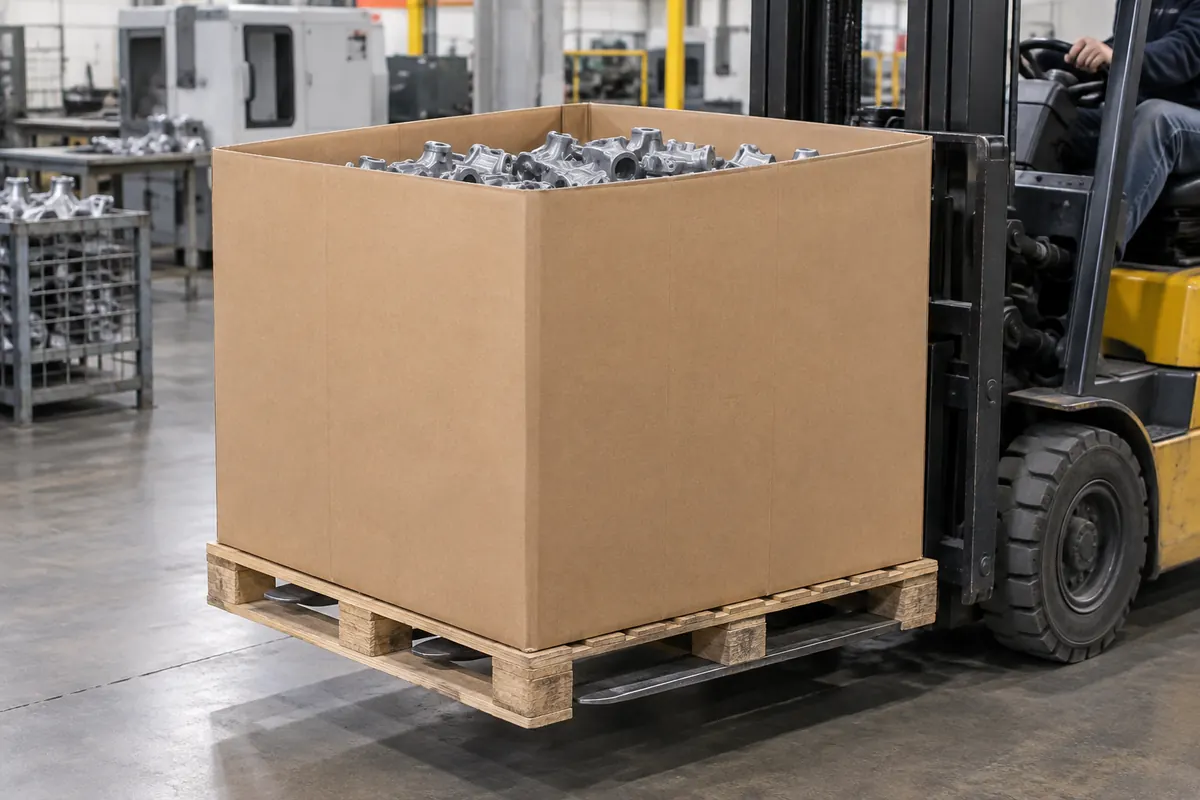
A gaylord (bulk cargo box) sits on a pallet and holds loose parts, resin, produce or consolidated shipments. Because the whole pallet load bears on the side walls, wall count matters even more than on a parcel box. In our catalog the same 48 x 40 x 36 in. footprint comes in three grades:
- Single wall, ECT-32 — light, bulky contents and internal moves (example).
- Double wall, ECT-48 — general consolidation and heavier mixed loads.
- Triple wall, ECT-90 — dense parts and loads that are double-stacked or shipped long distances.
Lids are sold separately in single wall, double wall and heavy-duty ECT-44 versions; match the lid to the box footprint.
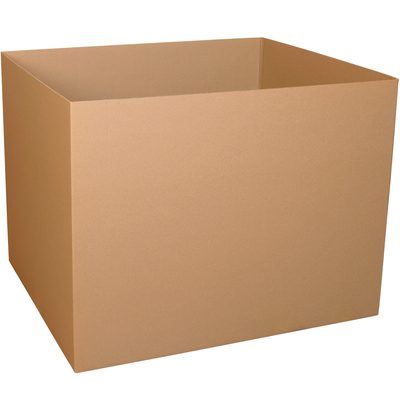 MH-USA 48 x 40 x 36" Double Wall Gaylord Bottom (5 Pack)$127.06 · View product →
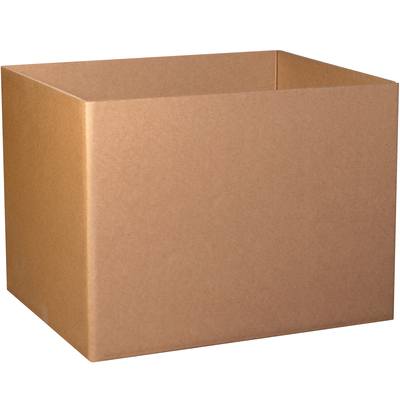 MH-USA 48 x 40 x 36" Triple Wall Gaylord Bottoms (5/Bundle)$365.31 · View product →
 MH-USA 49 1/4 x 41 1/4 x 4" Heavy-Duty Gaylord Lids (5/Bundle)$37.04 · View product →
Box Strength Selection Checklist
Work through these in order and you will land on the right grade nearly every time.
Weigh and measure
Weigh the packed box (product, cushioning, paperwork) and add outside L + W + H. Both must be within the grade’s certificate limits.
Decide how it ships
Single parcels thrown and dropped favor puncture resistance; palletized or stored loads favor ECT. Estimate the weight on the bottom box and add a safety factor.
Check the contents
Hard corners, dense metal or liquids point to double wall; soft goods rarely need it.
Right-size for DIM weight
Use the smallest box that fits product plus cushioning; a stronger box can let you drop a size.
- Under 65 lb and not stacked high: ECT-32 / 200# single wall
- 65–95 lb, or stacked for weeks: ECT-44 / 275# single wall
- Sharp or dense parts up to about 100 lb: ECT-48 / 275# double wall
- Up to about 160 lb (freight, not parcel): ECT-71 / 500# double wall
- Heavier single units or bulk: ECT-90 triple wall or a triple-wall gaylord
Do Not Undo a Strong Box With Weak Tape
A box is only as strong as its closure. Heavier grades need heavier sealing.
Use 2 in. (48 mm) carton sealing tape on standard boxes and wider 3 in. (72 mm) tape on double wall and heavy loads. Seal with the H-pattern — one strip along the center seam and one across each edge seam — on both the top and bottom, and press the tape down firmly so the adhesive wets into the board.
Heavier tape grades and the right adhesive matter more than most people expect on recycled-content board; see our carton sealing tape guide for grades and adhesives. For pallet loads, add edge protectors under the strapping and stretch wrap to lock boxes into one column.

Get a free quote
Tell us what you are storing, the room size and your timeline. A project specialist will follow up with layout options and pricing. Prefer to talk? Call (800) 326-4403.
Box Strength, ECT and Burst Test: FAQ
What is the difference between ECT and burst test?
Is 32 ECT the same as 200 lb test?
What is the difference between 32 ECT and 44 ECT?
How much weight can a 200 lb test box hold?
When should I use a double wall box?
What does ECT-71 mean?
Where do I find a box’s strength rating?
Which flute is strongest?
Does a stronger box reduce shipping cost?
Related Packaging Guides & Pages
Boxes & Sizing
Packing & Shipping
Need Help Choosing a Box Grade?
Tell us what you ship, how much it weighs and how it travels, and we will recommend a grade and size and quote bundle, case or pallet pricing with freight.