
Wholesale Corrugated Boxes & Bulk Shipping Solutions
Stock and custom corrugated cartons by the case, the pallet or the scheduled release — specified to the real weight, stack height and transit of your product, not just to a size chart.
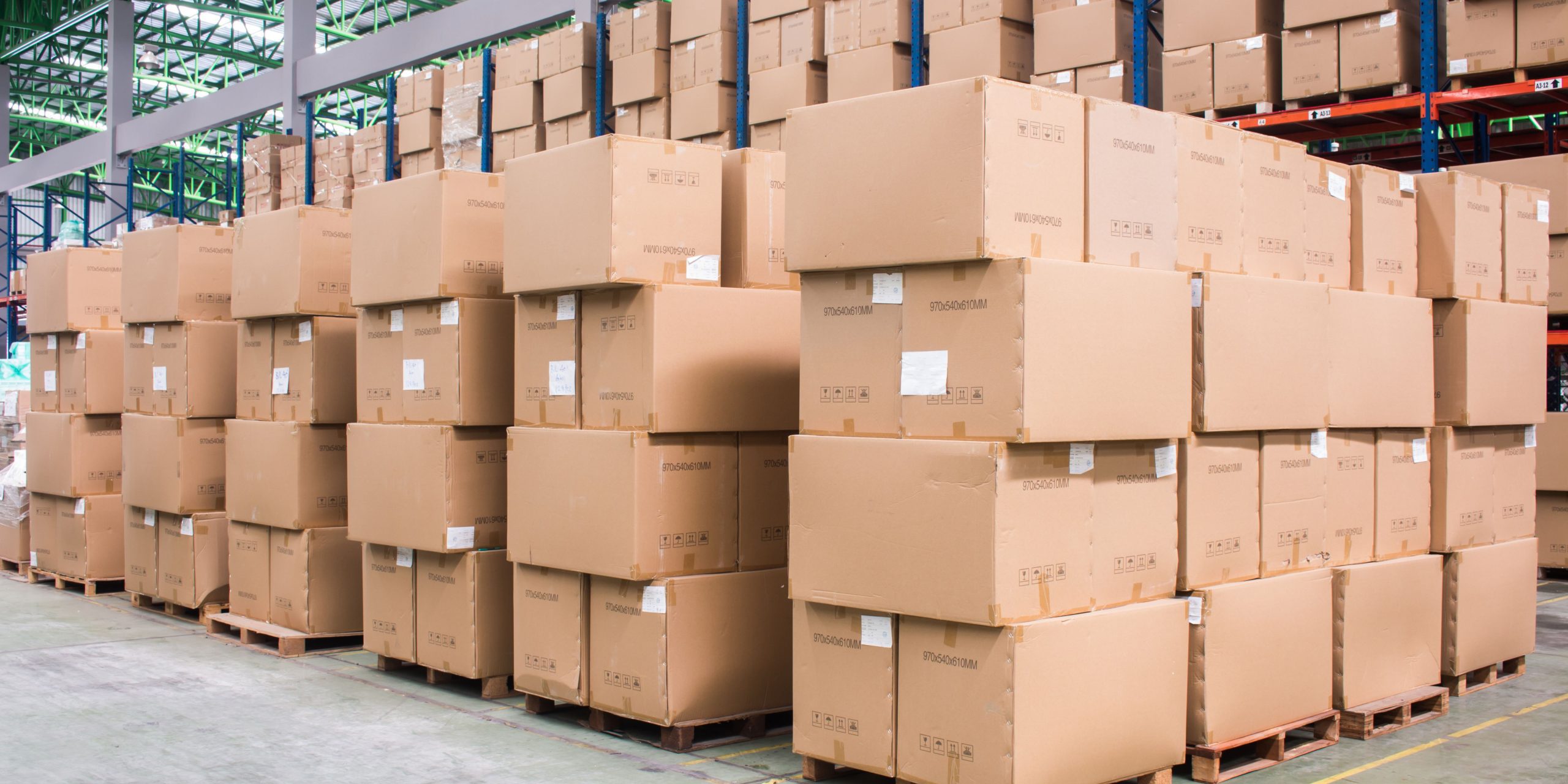
32 ECT
Standard single wall distribution grade
48+ ECT
Double wall grades for stacked freight
139
Carrier DIM divisor that punishes oversized boxes
(800) 326-4403
Talk to a packaging specialist
Shop Corrugated Boxes by Type
Buy boxes online by the bundle: pick a type to shop the full range, or use the box size finder to match your product’s inside dimensions. Each card shows the lowest bundle price and the best-selling size.


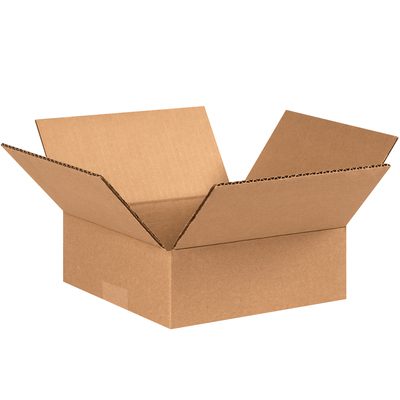

The Cheapest Part of the Shipment, and the One That Decides the Claim

A corrugated box is usually the least expensive line on a packing bench and the single item most likely to cost you money when it is wrong. Order a grade too light and cartons crush in the bottom of the pallet stack. Order a size too large and you pay dimensional-weight charges on air, plus the void fill needed to keep the product still. Order the wrong style and your packers spend an extra few seconds per carton, every carton, all year.
This page is the practical version of that decision: how corrugated board is built, what ECT and burst strength actually certify, which box styles exist and when to use them, how to size a carton against carrier billing rules, and how bulk quantities are structured. Material Handling USA supplies stock and custom corrugated boxes in bulk from Salt Lake City, alongside the tape, film, void fill and labels that leave the dock with them.
- Stock single wall, double wall and triple wall cartons in the common distribution sizes
- Custom interior dimensions, board grades, styles and printing on made-to-order runs
- Case, multi-case, pallet and scheduled-release quantities
- Board grade and box style specified against your actual weight, stack height and transit
- One source for the boxes plus tape, cushioning, edge protection, film, mailers and labels
How Corrugated Board Is Built
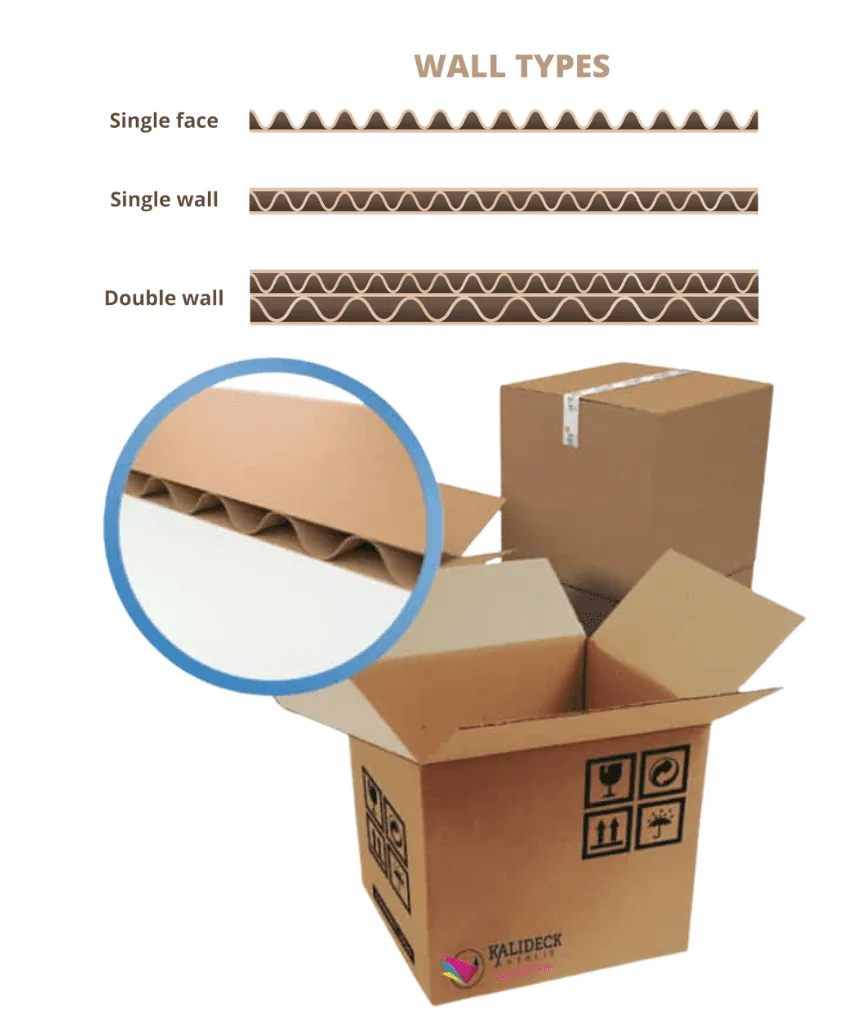
Corrugated board is a sandwich. A fluted medium is glued between flat linerboard facings, and the arch geometry of the flutes is what gives an otherwise flexible material its stiffness, cushioning and edgewise compression strength. Single face board has one liner and an exposed medium and is used as a wrap or pad. Single wall has one medium between two liners — the great majority of shipping cartons. Double wall stacks two mediums and three liners; triple wall adds a third for bulk bins and crate replacements.
Flute profile is the second half of the spec and it is often ignored. Flute height and count per foot change the balance between cushioning, stacking strength and print quality at the same nominal grade, which is why two 32 ECT boxes can behave differently on the same pallet.
| Flute | Approx. thickness | Flutes per foot | Where it fits |
|---|---|---|---|
| A-flute | ≈ 3/16″ (4.8 mm) | ≈ 33 | Thickest common profile — maximum cushioning and stacking strength for light, fragile goods |
| B-flute | ≈ 1/8″ (3.2 mm) | ≈ 47 | Good crush resistance and a flatter print surface; canned goods, dense product, die-cut trays |
| C-flute | ≈ 5/32″ (4.0 mm) | ≈ 39 | The default. Balanced stacking and cushioning; roughly 80% of U.S. boxes |
| E-flute | ≈ 1/16″ (1.6 mm) | ≈ 90 | Thin, rigid, excellent print surface; retail-ready and small-parcel cartons |
| F-flute | ≈ 1/32″ (0.8 mm) | ≈ 128 | Thinnest profile; compact e-commerce cartons where cube matters more than cushioning |
| BC / EB double wall | Two flute layers combined | — | Combines a stiff and a cushioning profile for heavy or pallet-stacked freight |
C-flute is the default for a reason
C-flute sits between B-flute stiffness and A-flute cushioning and accounts for roughly 80% of U.S. boxes. Move away from it deliberately — E-flute when you need a thin, printable retail carton, B-flute when crush resistance and a flat print surface matter more than cushioning, and BC double wall when the load is heavy or stacked.
ECT vs. Burst Strength: What the Grade Actually Certifies
Two standardized tests describe corrugated board, and they measure different failure modes. The Edge Crush Test (TAPPI standard T811) crushes a strip of combined board on edge and reports the force it holds in pounds per inch of width; it predicts how a box behaves in a stack. The Mullen burst test (TAPPI standard T810) pushes a pressurized diaphragm through the board face and reports pounds per square inch; it predicts resistance to punctures and rough handling.
Both are recognized by the carrier classifications — Item 222 of the National Motor Freight Classification and Rule 41 of the Uniform Freight Classification. Until 1990 the rules required a minimum burst strength and combined basis weight; the industry then added ECT as an alternative certification path, which let box makers engineer to a performance target instead of to a paper weight. A box is certified one way or the other, so ECT and burst grades are not interchangeable numbers even though the market pairs them loosely (200# test with 32 ECT, 275# test with 44 ECT).
| Construction | ECT grade | Max. gross weight of box and contents | Typical use |
|---|---|---|---|
| Single wall | 23 ECT | 20 lb | Light, low-density product; small parcel only |
| Single wall | 26 ECT | 35 lb | General light-duty cartons |
| Single wall | 29 ECT | 50 lb | Medium-weight parcels |
| Single wall | 32 ECT | 65 lb | The standard e-commerce and distribution carton |
| Single wall | 40 ECT | 80 lb | Denser product, longer transit, some palletizing |
| Single wall | 44 ECT | 95 lb | Heavy single wall — often the alternative to light double wall |
| Single wall | 55 ECT | 120 lb | Maximum single wall certification |
| Double wall | 42 ECT | 80 lb | Entry double wall for stacked loads |
| Double wall | 48 ECT | 100 lb | Common heavy-duty stock grade |
| Double wall | 51 ECT | 120 lb | Industrial parts, machined components |
| Double wall | 61 ECT | 140 lb | Heavy freight and tall pallet stacks |
| Double wall | 71 ECT | 160 lb | Very heavy or high-value freight |
| Double wall | 82 ECT | 180 lb | Maximum double wall certification |
| Triple wall | 67–112 ECT | 240–300 lb | Bulk bins, gaylords, crated equipment replacements |
Those weight limits come from the carrier tables, not from a laboratory stacking test of your specific product. Read them as certification ceilings. Real-world compression strength also falls with time under load, with humidity, and with anything that puts load on the box faces instead of its corners — which is why a leaning or poorly unitized pallet fails far below its rated grade.
The Box Maker’s Certificate (BMC)
The round stamp on the bottom flap certifies board manufactured to Item 222 / Rule 41 and lists the certification basis, maximum gross weight and maximum size in united inches. It was written for palletized rail and motor freight, and some retail vendor programs still require it. Small-parcel carriers publish their own box-strength guidance instead, so specify a BMC when your freight or vendor program calls for one — and specify to performance when it does not.
Not sure which grade your product actually needs?
Send us the interior dimensions, the packed weight and how high the cartons stack. We will come back with a board grade and a box style, and tell you where a smaller carton saves more than a heavier grade costs.
Corrugated Box Types We Supply in Bulk
Most operations need three or four of these and try to make one of them do everything. The mix below covers the vast majority of warehouse, manufacturing and fulfillment shipping.
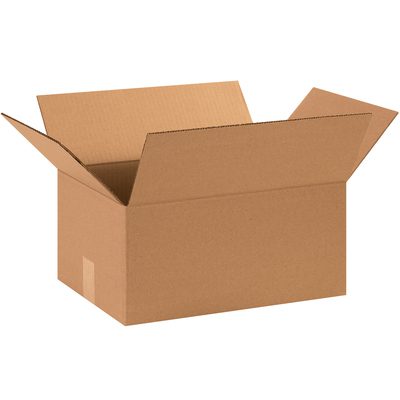
 Single Wall BoxesOne layer of fluting between two liners — the workhorse of parcel shipping. Most stock single wall cartons are 32 ECT (or the 200# burst equivalent) and handle lightweight to medium-weight goods that travel as individual parcels. Shipped flat, bundled by the case.
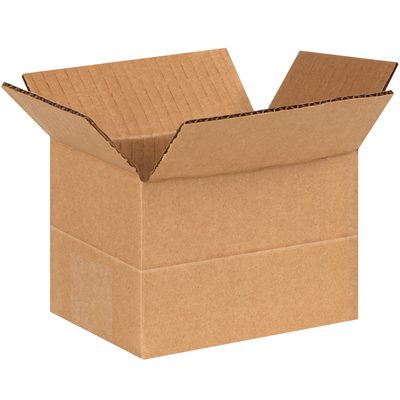
 Double Wall BoxesTwo layers of fluting and three liners for heavier, denser or pallet-stacked freight. Common stock grades run 48–61 ECT, which under the carrier rules covers gross weights of roughly 100–140 lb per box instead of the 65–95 lb range typical of single wall.
 Hand-Hole & Heavy-Duty CartonsDie-cut hand holes make awkward, dense cartons safer to lift and set down, which matters for anything routinely handled by two people. Heavy-duty versions pair the hand holes with double wall board so the grip cut-out does not become the failure point.
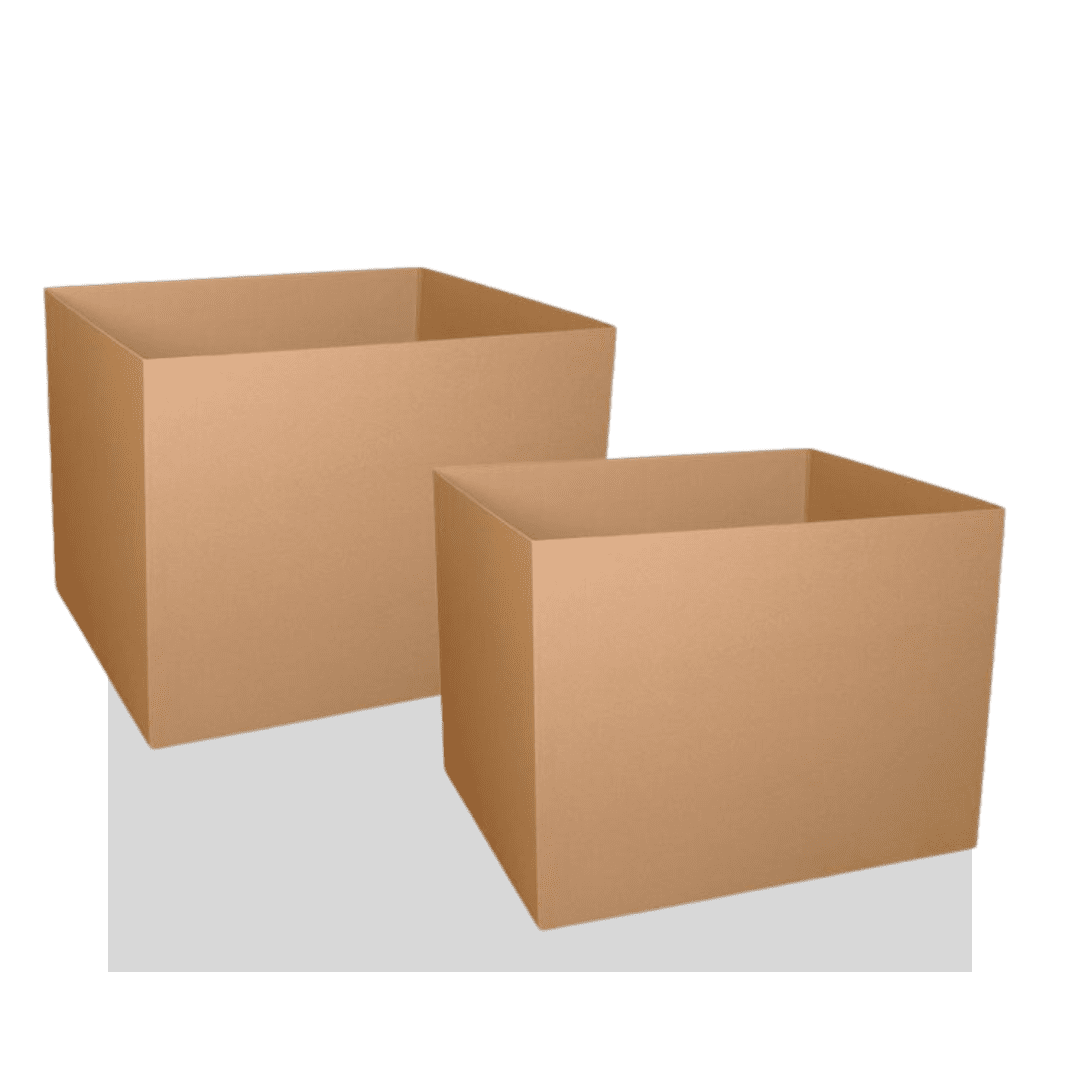 Bulk Bins & Open-Top BottomsPallet-footprint open-top containers (half slotted containers, FBA style 0200) for scrap, bulk components, recycling and line-side accumulation. Available in double and triple wall, with separate lids and full-depth covers when the load has to be stacked.
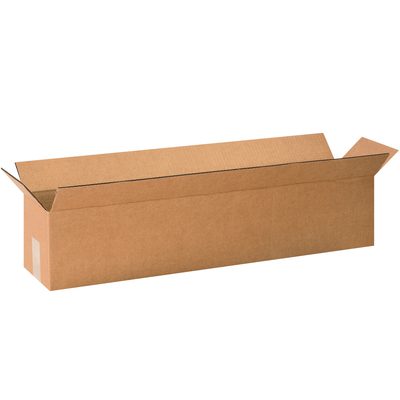
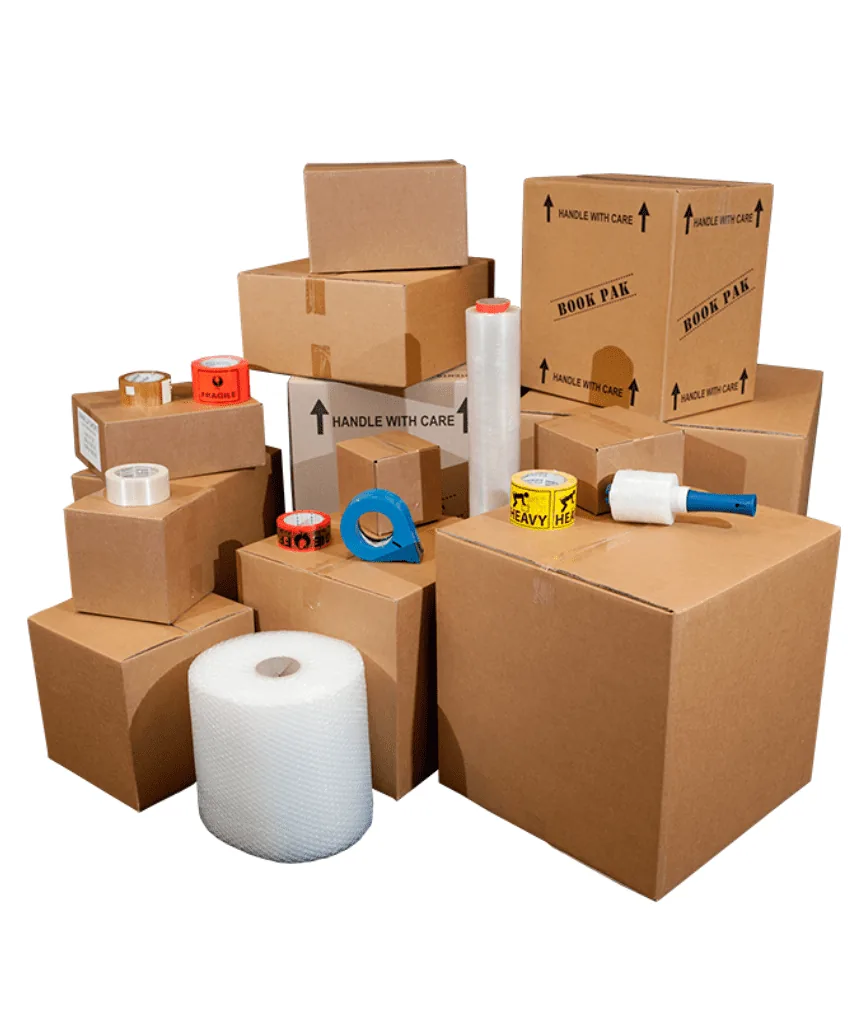 Specialty & Custom SizesLong, flat, cube and tall cartons for products no stock size fits, plus made-to-order interior dimensions. The right footprint removes void fill, cuts dimensional-weight charges and stops product from shifting in transit.
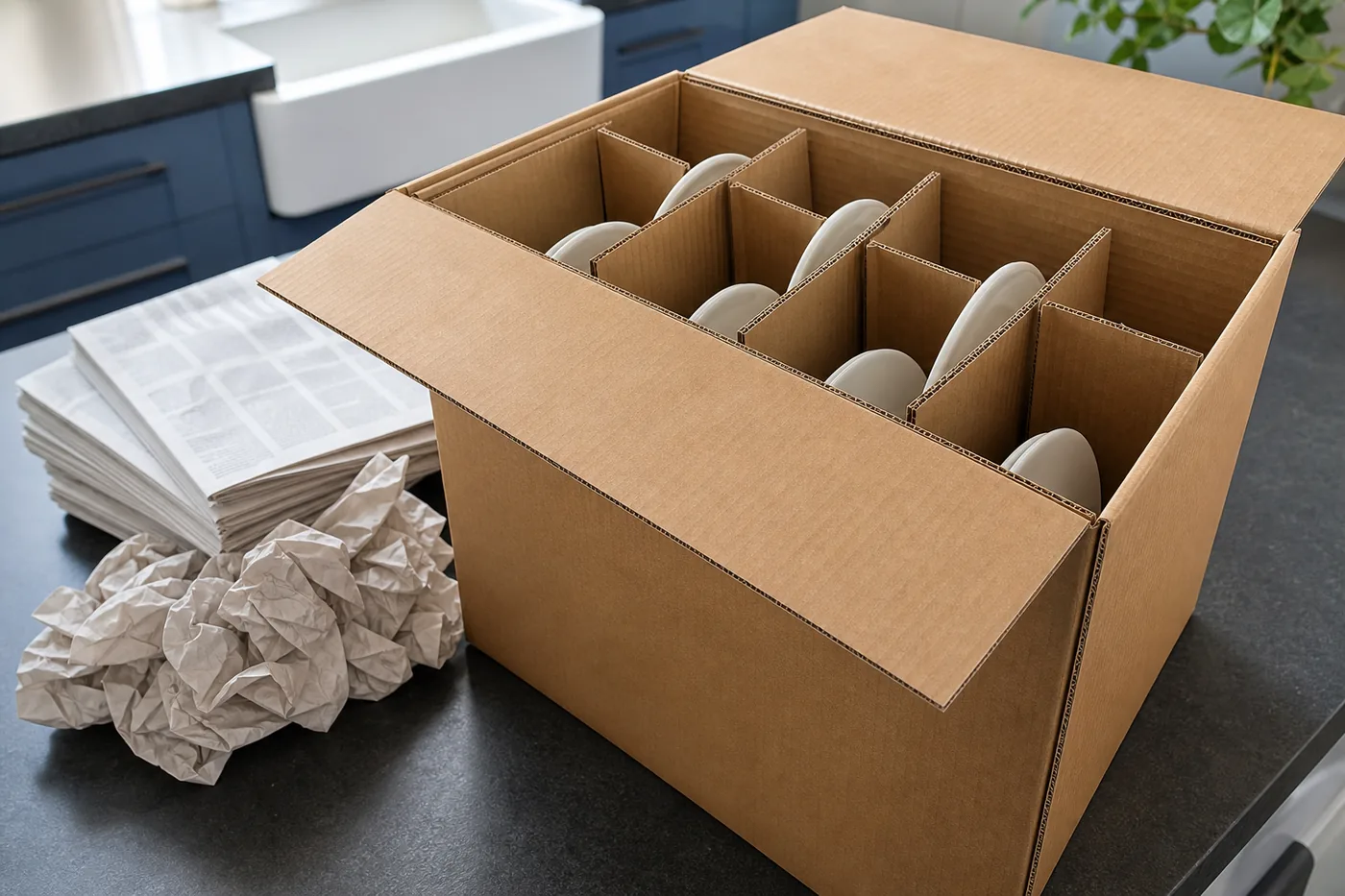 Partitions, Pads & InsertsCorrugated cell partitions, layer pads and die-cut inserts (FBA 09 series) give each piece its own cell. Standard practice for glassware, bottles, instruments and any kit that must not touch itself in transit.
When to Step Up to Double Wall
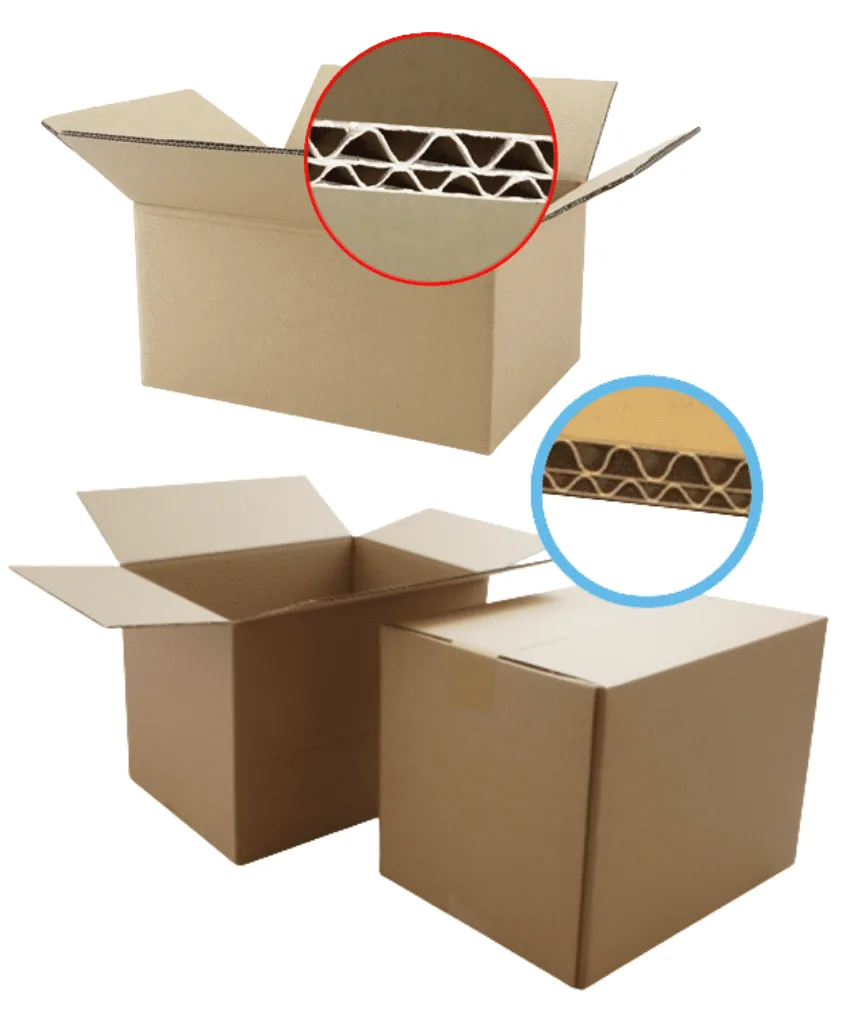
Double wall board adds a second fluted medium and a third liner. The result is a substantial gain in edgewise compression, rigidity and puncture resistance rather than a marginal one, and under the carrier tables it moves the certified gross weight from the 65–95 lb single wall range into 100–180 lb.
Step up when any of these is true: the packed carton is heavy or dense; the product has hard edges or corners that load the board from inside; cartons are stacked more than a few high on a pallet or stored for weeks under load; the shipment moves as LTL freight with repeated handling; or the boxes sit in a humid or refrigerated environment, where fiber board loses compression strength. Double wall is also the honest answer when your damage claims are crush-shaped rather than tear-shaped.
- Heavy or high-density product — parts, tooling, liquids, print, electronics
- Tall pallet stacks or long-term storage under load
- LTL freight and multi-touch handling instead of single-touch parcel
- Cold storage, humid plants and outdoor staging
- High-value contents where one breach costs more than a year of board upgrades
Box Styles: RSC, FOL and the Rest
Style codes come from the Fibre Box Association and the International Fibreboard Case Code, and they describe how the blank is cut and folded rather than how strong it is. Getting the style right is usually cheaper than upgrading the board.
| Style | Code | Construction | Best for |
|---|---|---|---|
| RSC — Regular Slotted Container | 0201 | All flaps the same length; the two outer flaps are each half the box width and meet at the center. | The default box. Least manufacturing waste, works for most products. |
| FOL — Full Overlap Slotted Container | 0203 | Both sets of outer flaps overlap the full width of the box. | Four layers of board top and bottom — heavy or rough-handled product, extra stacking support. |
| OSC — Overlap Slotted Container | 0202 | Outer flaps partially overlap. | Boxes much longer than they are wide, where RSC flaps would not meet. |
| HSC — Half Slotted Container | 0200 | An RSC with no top flaps. | Open-top bulk bins, bin bottoms, tray-and-cover pairs. |
| CSSC — Center Special Slotted Container | 0204 | Inner and outer flaps cut to different depths so both pairs meet at the center. | Deep boxes needing full double coverage on both faces. |
| FTD — Full Telescope Design | 0301 | Separate tray and cover that telescope over each other. | Heavy or awkward product, kits, and loads that must be lifted out rather than tipped. |
| FPF — Five Panel Folder | 0410 | One scored blank with a fifth closing panel wrapping the box. | Long, small-diameter items: rods, tubing, extrusions, poster art. |
| Partitions & inserts | 09 series | Interlocking corrugated cells and pads inside another style. | Glassware, bottles, instruments, multi-piece kits. |
RSC or FOL, in one sentence
An RSC uses the least board for a given size and is the right default; an FOL doubles the board on the top and bottom faces, so it earns its extra cost only when the contents are heavy, the handling is rough, or the box needs support across its faces rather than only at its corners.
Sizing, Dimensional Weight and the Cost of an Oversized Box
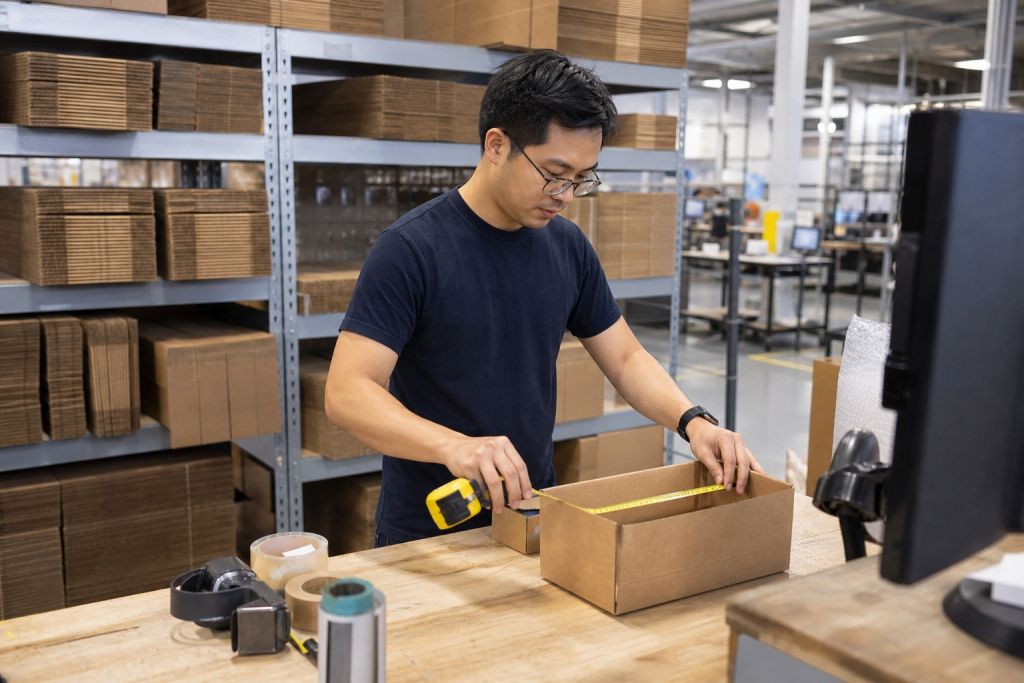
Corrugated boxes are specified by interior dimensions, in length × width × depth order, because the interior is what has to fit the product. Carriers, however, bill on the outside. Parcel carriers charge the greater of actual weight and dimensional weight, and for UPS daily rates and FedEx U.S. domestic shipments dimensional weight is length × width × height in whole inches divided by 139. UPS retail rates use 166.
That divisor is why box selection is a freight decision, not a stationery decision. A 12″ cube is 1,728 cubic inches and bills at roughly 13 lb even when it holds a 4 lb item. Trimming the same shipment to 10″ × 10″ × 8″ drops the billable weight to about 6 lb and cuts the void fill needed to stop the contents moving. Across a few thousand shipments, right-sizing usually beats every other packaging saving available.
| Carton | Cubic inches | Billable DIM weight (÷139) | Notes |
|---|---|---|---|
| 12″ × 12″ × 12″ | 1,728 | ≈ 13 lb | Common “one size fits most” carton; usually mostly air |
| 10″ × 10″ × 8″ | 800 | ≈ 6 lb | Same product, right-sized — roughly half the billable weight |
| 14″ × 14″ × 14″ | 2,744 | ≈ 20 lb | Oversizing by two inches per side costs more than the board does |
| 18″ × 12″ × 6″ | 1,296 | ≈ 10 lb | Flat, dense loads bill better than cubes of the same volume |
- Measure the packed product, add the cushioning you actually need, then pick the nearest stock size
- Standardize on a short list of sizes — fewer SKUs, better price breaks, faster packing
- Audit your top ten shipments for wasted cube once a year; carrier rules and rates change
- Round dimensions up to whole inches the way the carriers do before you compare options
- Weigh interior partitions and pads against a smaller box — sometimes the smaller box wins twice
Custom Sizes, Custom Board and Printing
When no stock size is within about an inch, a made-to-order run is usually the better economics: you stop paying for cube, void fill and damage at the same time. Custom runs carry a minimum quantity and a lead time, so plan them against annual usage rather than the next order.
How Bulk Corrugated Pricing Is Structured

Corrugated is priced in steps, not on a smooth curve. The cost per box falls as the order moves from a single bundle to multiple bundles to a full pallet of one size, and again on a scheduled release program where a quantity is agreed once and drawn down over time. Board grade, size, style and print all shift the starting point, and freight matters: pallet quantities ship as freight, which is exactly where the per-box economics improve.
The practical pattern for most operations is a split. Move your two or three highest-volume sizes to pallet quantities or a release program, keep the long tail of sizes in case quantities, and stop buying the sizes you use twice a year altogether. We will not quote a price on a web page — send your annual usage by size and we will show you where your break points actually are.
| Order tier | What it looks like | When it fits |
|---|---|---|
| Case / bundle | One printed bundle of a single size, typically 10–25 boxes for large sizes and 25–50 for small ones | Sampling a new size, low-volume or seasonal SKUs |
| Multi-case | Several bundles of one or more sizes on a single order | Established pack lines with a stable size mix |
| Pallet quantity | Full pallet of one size, shipped as freight | Best per-box price on a proven high-runner; needs pallet-depth storage |
| Multi-pallet / program | Recurring release schedule against an agreed quantity and price | Predictable volume where you want price stability and no stock-outs |
| Custom run | Made-to-order interior dimensions, board grade, style and print | Products no stock size fits, or brand-printed shippers |
Shop Online at MaterialHandling-USA.com
Reordering standard sizes and consumables? Our e-commerce store carries corrugated boxes and the rest of the shipping-room list with online pricing and account ordering:
Get a bulk quote on your box list
Send the sizes, grades and annual quantities you buy today. We will quote the mix, flag sizes worth consolidating, and price the pallet-quantity break on your high-runners.
Request a Bulk Quote Shop Corrugated Boxes Online Call (800) 326-4403
The Supplies That Ship With the Boxes
A carton only performs as well as the way it is closed, cushioned and unitized. These are the items that determine whether the board grade you paid for actually does its job.
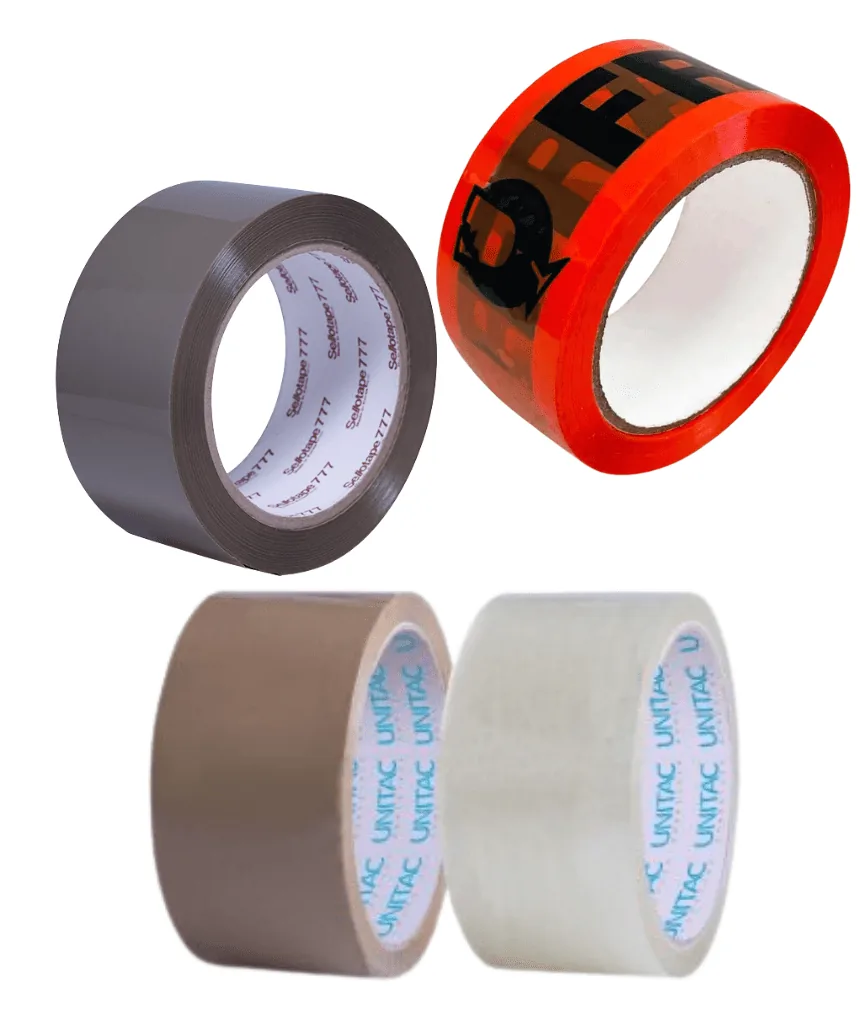 Carton Sealing TapeMatch the tape to the board: 1.6–2.0 mil hot melt or acrylic for standard single wall, heavier hot melt or reinforced tape for double wall and cold-warehouse sealing. Shop Packing Tape →
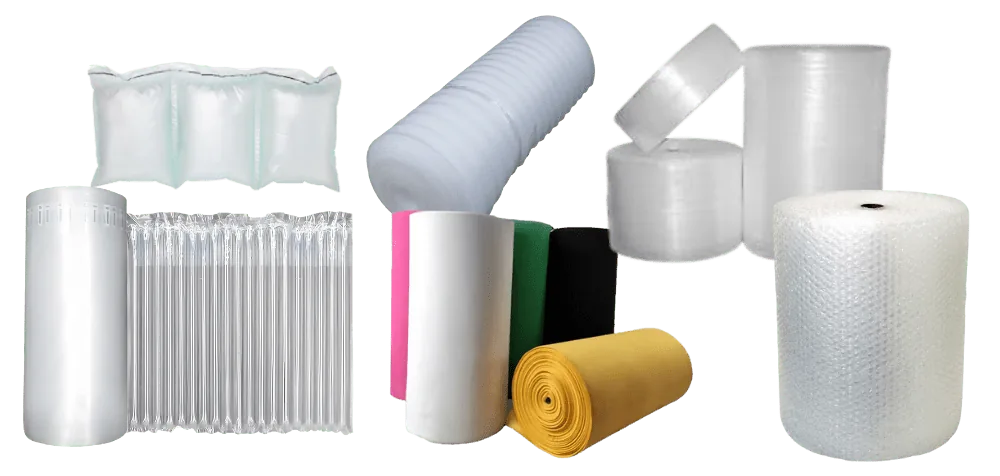 Cushioning & Void FillBubble roll, foam, air pillows and kraft paper keep product off the box wall. Right-sizing the carton first is what makes the cushioning budget small. Shop Protective Packaging →
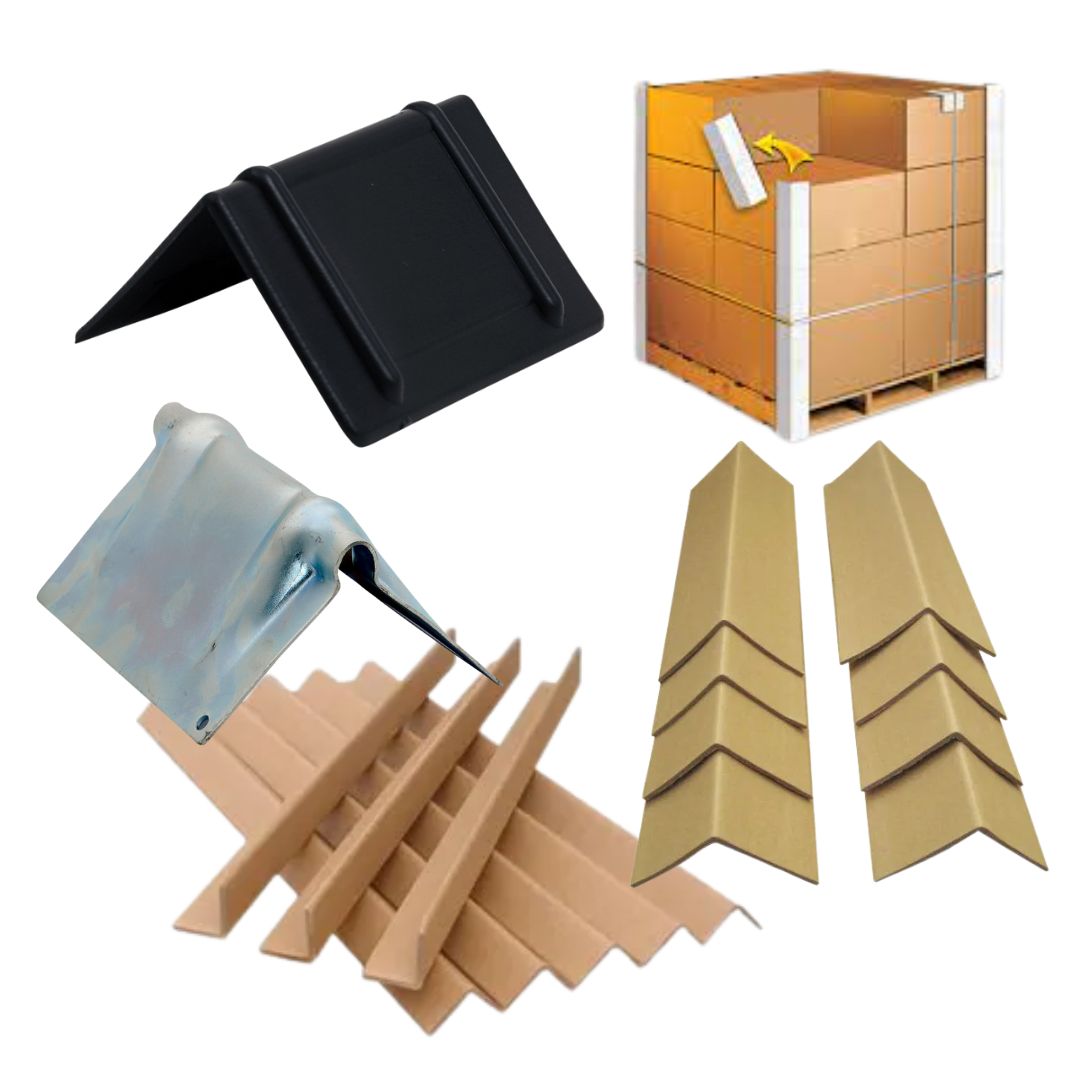 Edge Protectors & Corner BoardsCorrugated and laminated corner boards transfer stacking load down the corners of a palletized load, which is exactly where box compression strength lives. Shop Edge Protection →
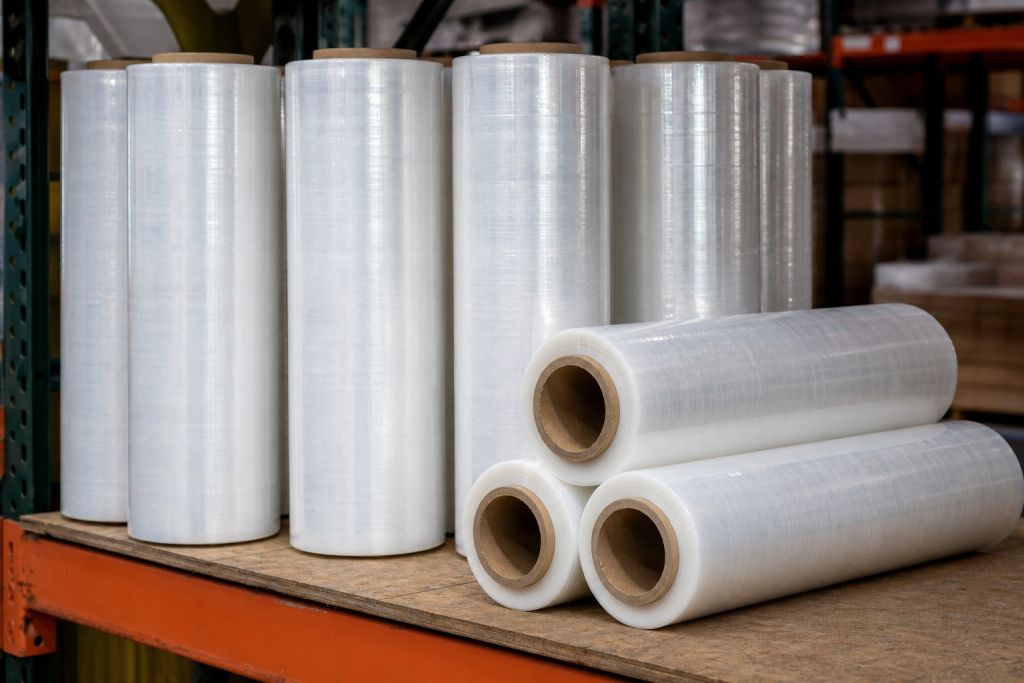 Stretch Wrap & StrappingUnitizing a pallet stops boxes from leaning, and a leaning stack loses compression strength fast. Hand rolls, machine rolls, banding and buckles for bulk shipping. Shop Stretch Wrap →
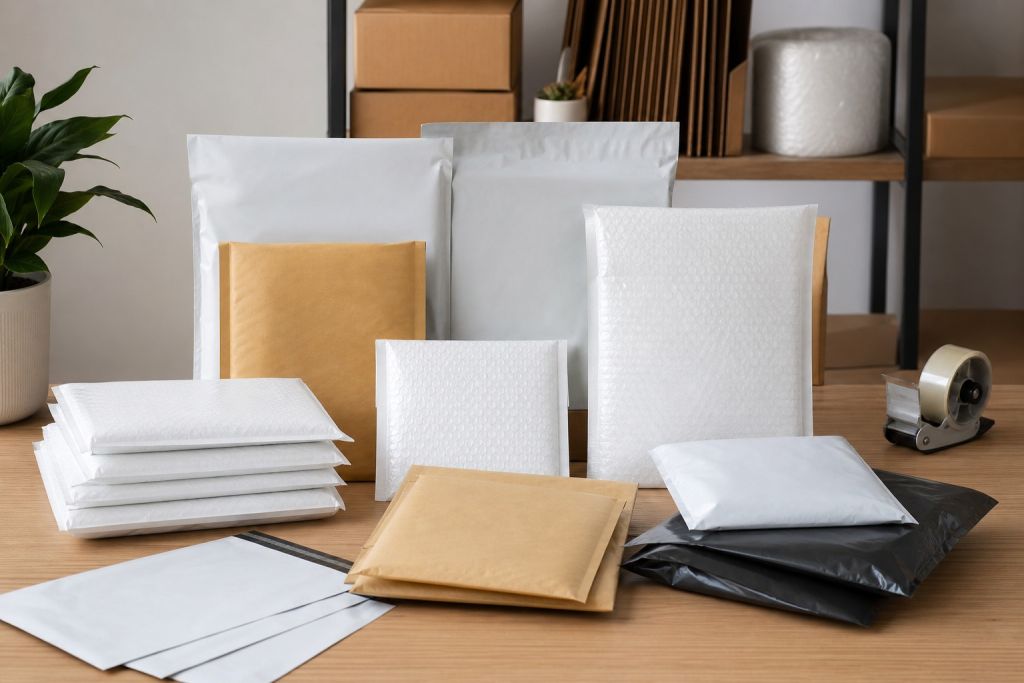 Mailers & EnvelopesFor small, flat or non-fragile items a bubble mailer or rigid flat mailer beats a box on both material cost and billable weight. Shop Mailers →
 Labels, Markings & BagsHandling labels, shipping label stock, poly bags and reclosable bags finish the pack line so cartons leave marked, sealed and scannable. Shop Labels →
Buying boxes and consumables from one source keeps the sizes, the tape width and the void fill matched, and it removes the small stock-outs that quietly stop a pack line. See wholesale shipping supplies for the full program, or frequently purchased shipping and packing supplies for the items most shipping departments reorder every month.
How We Spec and Supply Your Boxes
Send Us the Product Data
Interior dimensions, weight, how the boxes travel (parcel, LTL, full pallets) and how high they stack.
We Spec the Board and Style
We match a flute, grade and box style to the actual load and transit, and flag where a smaller box or a different style saves more than the board upgrade costs.
Sample and Confirm
You test-pack the size before committing to volume — the cheapest possible time to find a fit problem.
Bulk Order and Replenish
Case, pallet or scheduled-release quantities delivered to your dock, with the size mix kept on a repeatable reorder cycle.
Popular Corrugated Box Sizes
The 60 most-ordered standard box sizes, sorted by length, width and depth, each linked to its product page with the live bundle price. For all 584 standard sizes plus cube, long, tall, flat, multi-depth and double wall boxes, use the box size finder. Not sure which board grade you need? See the box strength guide: ECT vs burst test.
| Inside size (L x W x D) | Box | Pack | Price |
|---|---|---|---|
| 4 x 4 x 3″ | Corrugated Boxes | 25/Bundle | $11.66 |
| 4 x 4 x 5″ | Corrugated Boxes | 25/Bundle | $12.85 |
| 4 x 4 x 6″ | Corrugated Boxes | 25/Bundle | $11.61 |
| 5 x 4 x 4″ | Corrugated Boxes | 25/Bundle | $10.80 |
| 5 x 5 x 3″ | Corrugated Boxes | 25/Bundle | $12.72 |
| 5 x 5 x 4″ | Corrugated Boxes | 25/Bundle | $10.84 |
| 5 x 5 x 6″ | Corrugated Boxes | 25/Bundle | $16.83 |
| 6 x 4 x 2″ | Corrugated Boxes | 25/Bundle | $13.25 |
| 6 x 4 x 3″ | Corrugated Boxes | 25/Bundle | $14.18 |
| 6 x 4 x 4″ | Corrugated Boxes | 25/Bundle | $8.88 |
| 6 x 5 x 4″ | Corrugated Boxes | 25/Bundle | $9.67 |
| 6 x 5 x 5″ | Corrugated Boxes | 25/Bundle | $9.41 |
| 6 x 6 x 3″ | Corrugated Boxes | 25/Bundle | $10.58 |
| 6 x 6 x 4″ | Corrugated Boxes | 25/Bundle | $9.31 |
| 6 x 6 x 5″ | Corrugated Boxes | 25/Bundle | $11.13 |
| 6 x 6 x 8″ | Corrugated Boxes | 25/Bundle | $14.60 |
| 7 x 4 x 4″ | Corrugated Boxes | 25/Bundle | $10.63 |
| 7 x 5 x 3″ | Corrugated Boxes | 25/Bundle | $13.01 |
| 7 x 5 x 4″ | Corrugated Boxes | 25/Bundle | $10.05 |
| 7 x 5 x 5″ | Corrugated Boxes | 25/Bundle | $9.64 |
| 7 x 6 x 4″ | Corrugated Boxes | 25/Bundle | $14.42 |
| 7 x 6 x 5″ | Corrugated Boxes | 25/Bundle | $17.40 |
| 7 x 6 x 6″ | Corrugated Boxes | 25/Bundle | $13.49 |
| 7 x 7 x 4″ | Corrugated Boxes | 25/Bundle | $13.13 |
| 7 x 7 x 4 1/2″ | Corrugated Boxes | 25/Bundle | $13.03 |
| 7 x 7 x 5″ | Corrugated Boxes | 25/Bundle | $12.86 |
| 7 x 7 x 6″ | Corrugated Boxes | 25/Bundle | $15.19 |
| 7 x 7 x 8″ | Corrugated Boxes | 25/Bundle | $16.11 |
| 8 x 5 x 3″ | Corrugated Boxes | 25/Bundle | $16.97 |
| 8 x 5 x 4″ | Corrugated Boxes | 25/Bundle | $11.47 |
| 8 x 5 x 5″ | Corrugated Boxes | 25/Bundle | $11.00 |
| 8 x 6 x 4″ | Corrugated Boxes | 25/Bundle | $10.82 |
| 8 x 6 x 5″ | Corrugated Boxes | 25/Bundle | $12.71 |
| 8 x 6 x 6″ | Corrugated Boxes | 25/Bundle | $13.06 |
| 8 x 8 x 5″ | Corrugated Boxes | 25/Bundle | $15.63 |
| 8 x 8 x 6″ | Corrugated Boxes | 25/Bundle | $15.02 |
| 8 3/4 x 4 3/8 x 9 1/2″ | Corrugated Boxes | 25/Bundle | $13.12 |
| 9 x 5 x 3″ | Corrugated Boxes | 25/Bundle | $16.86 |
| 9 x 5 x 4″ | Corrugated Boxes | 25/Bundle | $11.44 |
| 9 x 5 x 5″ | Corrugated Boxes | 25/Bundle | $10.87 |
| 9 x 6 x 4″ | Corrugated Boxes | 25/Bundle | $11.86 |
| 9 x 6 x 5″ | Corrugated Boxes | 25/Bundle | $13.15 |
| 9 x 6 x 6″ | Corrugated Boxes | 25/Bundle | $13.75 |
| 9 x 7 x 4″ | Corrugated Boxes | 25/Bundle | $14.54 |
| 9 x 7 x 5″ | Corrugated Boxes | 25/Bundle | $15.17 |
| 9 x 7 x 6″ | Corrugated Boxes | 25/Bundle | $17.39 |
| 9 x 8 x 4″ | Corrugated Boxes | 25/Bundle | $16.93 |
| 9 x 9 x 5″ | Corrugated Boxes | 25/Bundle | $17.63 |
| 10 x 6 x 4″ | Corrugated Boxes | 25/Bundle | $12.54 |
| 10 x 6 x 5″ | Corrugated Boxes | 25/Bundle | $15.11 |
| 10 x 7 x 4″ | Corrugated Boxes | 25/Bundle | $14.54 |
| 10 x 7 x 5″ | Corrugated Boxes | 25/Bundle | $15.94 |
| 10 x 8 x 6″ | Corrugated Boxes | 25/Bundle | $16.41 |
| 10 x 8 x 8″ | Corrugated Boxes | 25/Bundle | $17.67 |
| 10 x 10 x 6″ | Corrugated Boxes | 25/Bundle | $17.67 |
| 11 x 6 x 6″ | Corrugated Boxes | 25/Bundle | $16.72 |
| 12 x 8 x 6″ | Corrugated Boxes | 25/Bundle | $17.57 |
| 15 x 11 x 7″ | Corrugated Boxes | 25/Bundle | $30.39 |
| 16 x 10 x 10″ | Corrugated Boxes | 25/Bundle | $31.57 |
| 18 1/2 x 12 1/2 x 14″ | Corrugated Boxes | 20/Bundle | $39.62 |
Shop boxes, mailers, tape, film and void fill on our main packaging supplies page.
Corrugated Box FAQs
What is ECT, and why does it matter?
What is the difference between ECT and burst (Mullen) strength?
How do I choose between single wall and double wall?
What is a Box Maker’s Certificate?
What does RSC mean, and when should I use an FOL instead?
How do box dimensions affect my shipping cost?
How much do I have to order to get wholesale pricing?
Can I get custom sizes and custom printing?
Are corrugated boxes recyclable, and can I use recycled board?
Do you deliver to Salt Lake City and the Mountain West?
Related Products & Resources
 Wholesale Shipping SuppliesThe full wholesale supply program — tape, film, mailers, void fill, strapping and labels alongside your box sizes.
 Frequently Purchased Shipping & Packing SuppliesThe fast-moving items most shipping departments reorder every month, in one list.
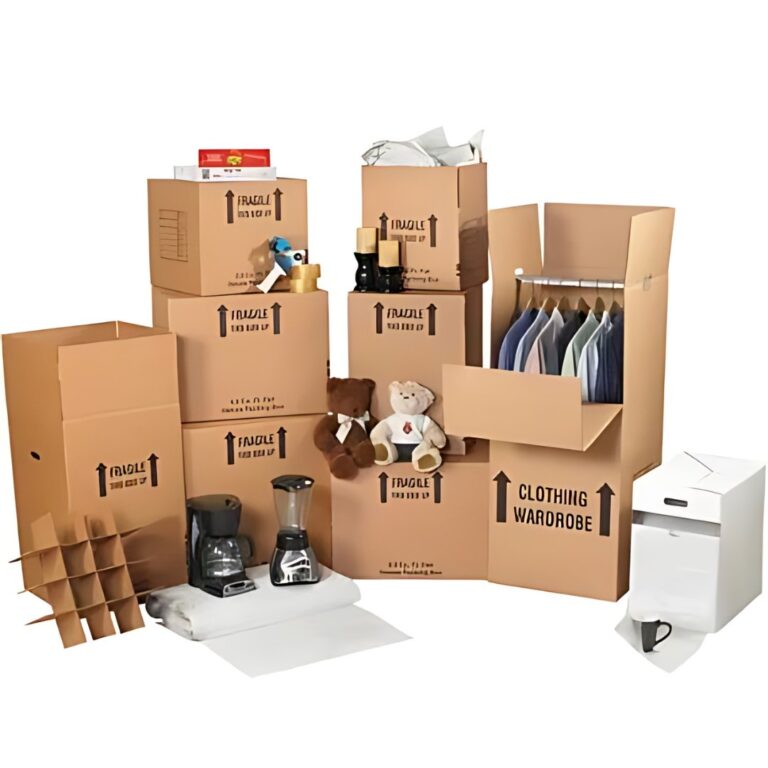 Moving BoxesWardrobe, dish pack, mirror and heavy-duty cartons for office relocations and facility moves.
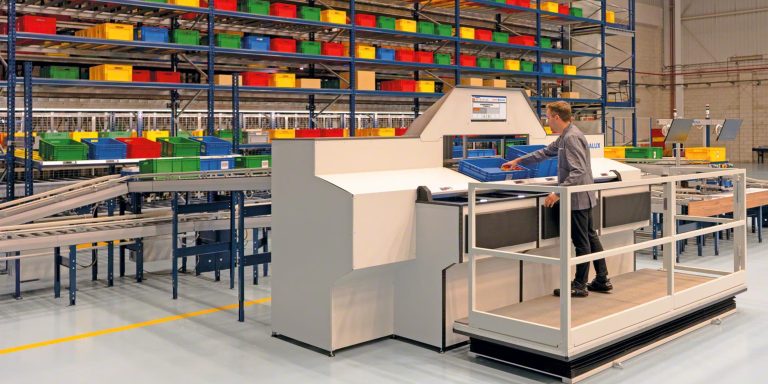 Picking & Packing SolutionsPack benches, carts, bins and flow layouts so the right box is always in reach of the packer.
 Warehouse Design & LayoutWhere the carton inventory, pack stations and staging lanes should sit before you buy more shelving.
Ready to Order Corrugated Boxes in Bulk?
Send your sizes and annual quantities, or call and describe the product — we will spec the board and the style with you.