
Home › Shelving › Penco Clipper Shelving
Penco Clipper Shelving
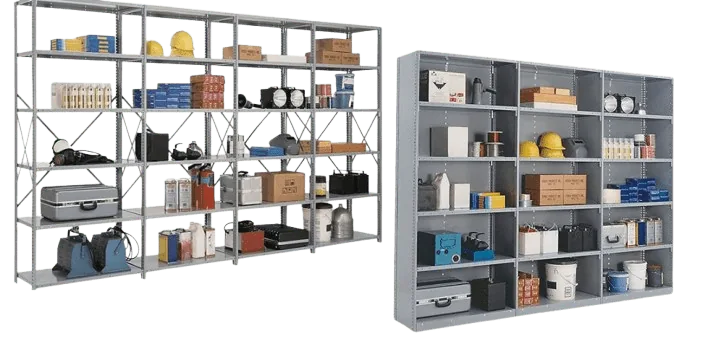
Clipper is the clip-style steel shelving system that has been specified into warehouses, supply rooms, and government facilities for more than seventy years. No bolts, no tools, one-inch shelf adjustment, and load ratings you can build a supply room around.
70+ yrs
In continuous production since WWII
1 in
Shelf height adjustment increment
0
Tools required for assembly
GSA
Contract availability for government buyers
A Seventy-Year-Old Design That Never Needed Replacing
Penco Clipper shelving began as military storage during the Second World War, where the requirement was blunt: hold heavy loads, go up fast, come apart fast, and survive being moved. That specification produced a clip-and-post system that has outlasted nearly every competing design of its era and is still specified into warehouses, stockrooms, records rooms, and federal facilities today.
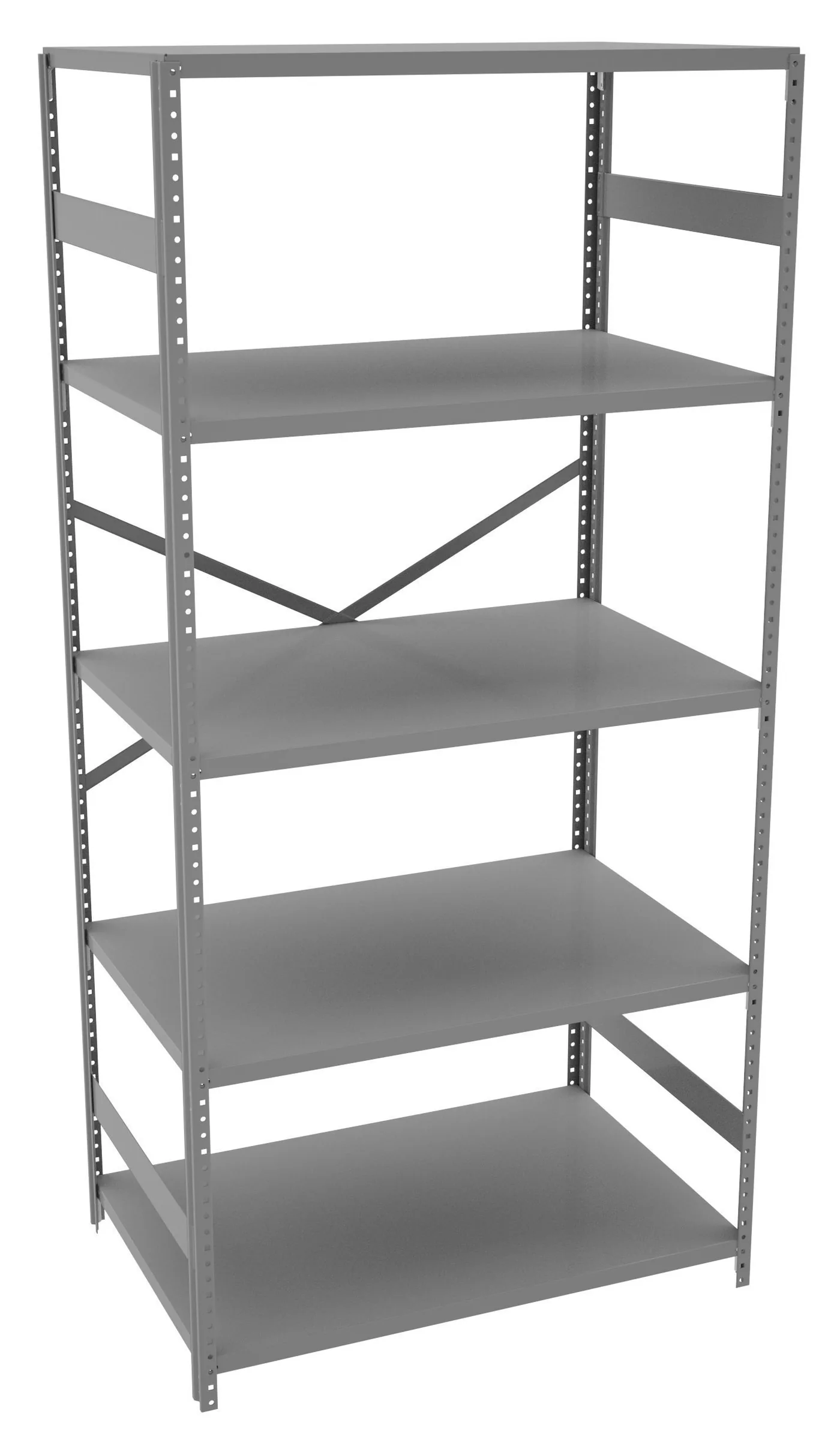
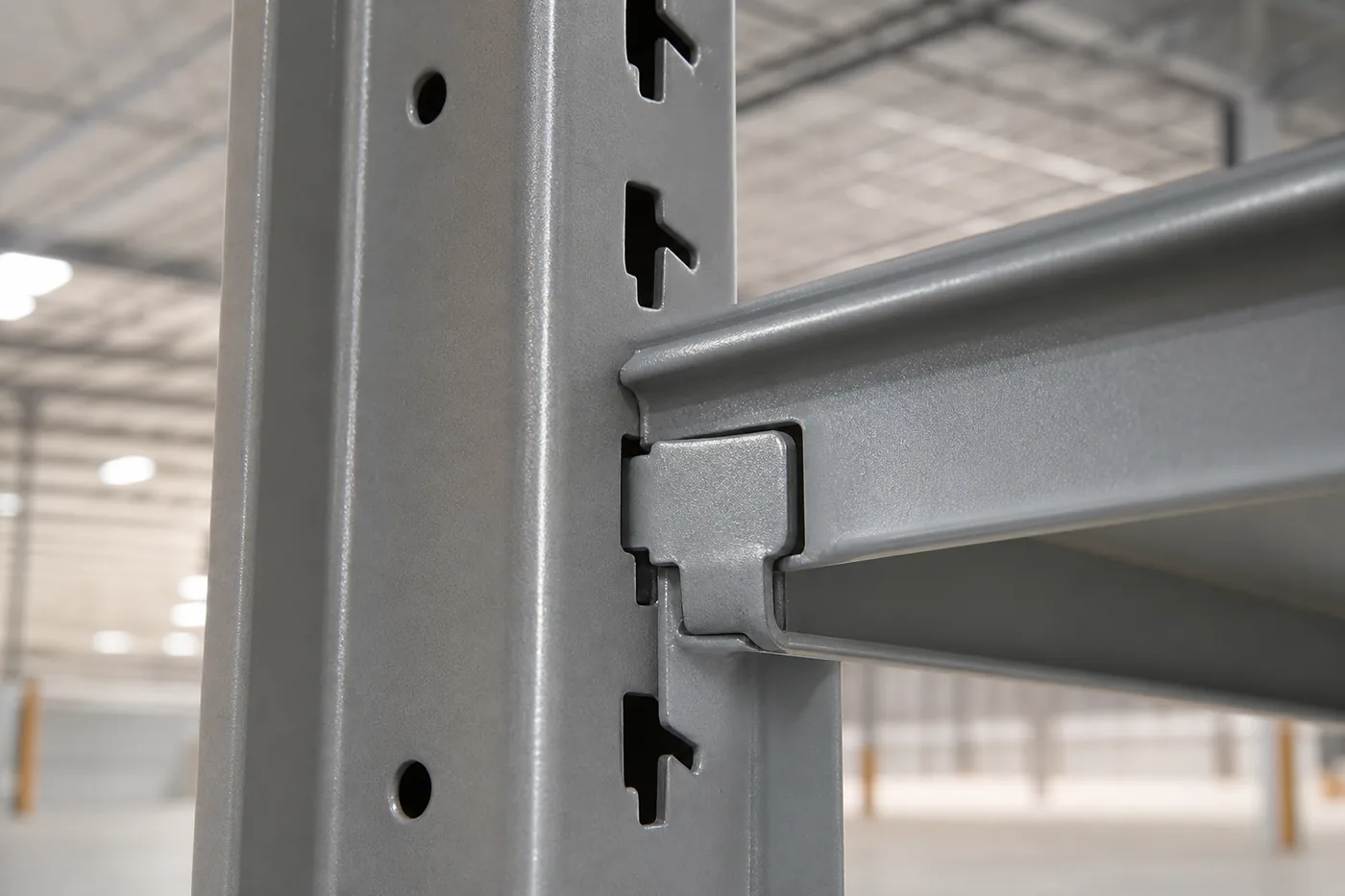
The system is simple. Cold-rolled steel posts are punched with slots on one-inch centers. Shelves carry formed side and end channels. Steel clips engage the post slots and the shelf channel simultaneously, and the load itself locks the joint. You assemble a unit with your hands and a mallet — no bolts, no nuts, no threaded hardware anywhere in the structure.
What that buys you in practice is a shelving run you can reconfigure in an afternoon when the inventory changes, and one where a damaged shelf or a bent post is a part you replace rather than a unit you scrap.
Why the clip design still wins on total cost
Bolted shelving is cheaper to manufacture and more expensive to own. Every reconfiguration means loose hardware, stripped threads, and a technician with a wrench. Clipper reconfigures with a mallet, which is why facilities that change their stock profile regularly — supply rooms, parts rooms, archives — keep specifying it.
How the Clip System Works
Stand the posts
Four cold-rolled steel posts, slotted on one-inch centers on both flanges. Post gauge determines unit capacity, so this is where the duty rating is decided.
Set the clips
Steel clips insert into the post slots at the height you want. Because slots are on one-inch centers, shelf placement is genuinely arbitrary rather than limited to a few fixed positions.
Drop in the shelf
The shelf’s formed side channels engage the clips. Tap down with a rubber mallet until the shelf seats flat and square against all four posts.
Repeat, checking square
Work upward, measuring both diagonals as you go. A unit assembled out of square will keep distorting as you load it.
Add sway bracing where required
Open-style units use back and side sway braces for rigidity. Closed-style units get their rigidity from the panels themselves.
Level, anchor, load
Shim on uneven slab, anchor tall or narrow units, and load heaviest on the bottom. Seismic anchoring applies across most of the Intermountain West.
What to check on a clip-style unit
- Every clip fully seated. A high clip carries a fraction of its rating and is the most common assembly fault on any clip system.
- Shelf seated flat on all four clips. Three-point contact means the shelf will rock and the load will shift.
- Sway bracing installed on open units. It is structural, not cosmetic — without it the unit will rack under lateral load.
- Square within a quarter inch. Measure both diagonals before loading.
- Anchors on tall or narrow units. Above roughly a 5:1 height-to-depth ratio, restraint is required.
- One series per run. Slot pitch and clip geometry are not interchangeable across manufacturers or across series.
Open Style vs. Closed Style
This is the first decision on any Clipper quote, and it drives both cost and how the run behaves in service.
| Open Style | Closed Style | |
|---|---|---|
| Construction | Posts, shelves, and sway braces — back and sides open | Posts, shelves, plus solid back and side panels |
| Rigidity | From diagonal sway bracing | From the panels themselves |
| Cost | Lower — fewer components | Higher, but panels replace separate bracing |
| Product retention | Items can be pushed off the back | Panels contain product on three sides |
| Visibility & light | Best — see through the unit | Blocked; interior is darker |
| Dust | Less accumulation | More; panels trap it |
| Best used for | Warehouse and parts storage, back-to-back double rows | Retail-facing areas, records storage, offices, anywhere appearance matters |
| Access | Load from front or back | Front only |
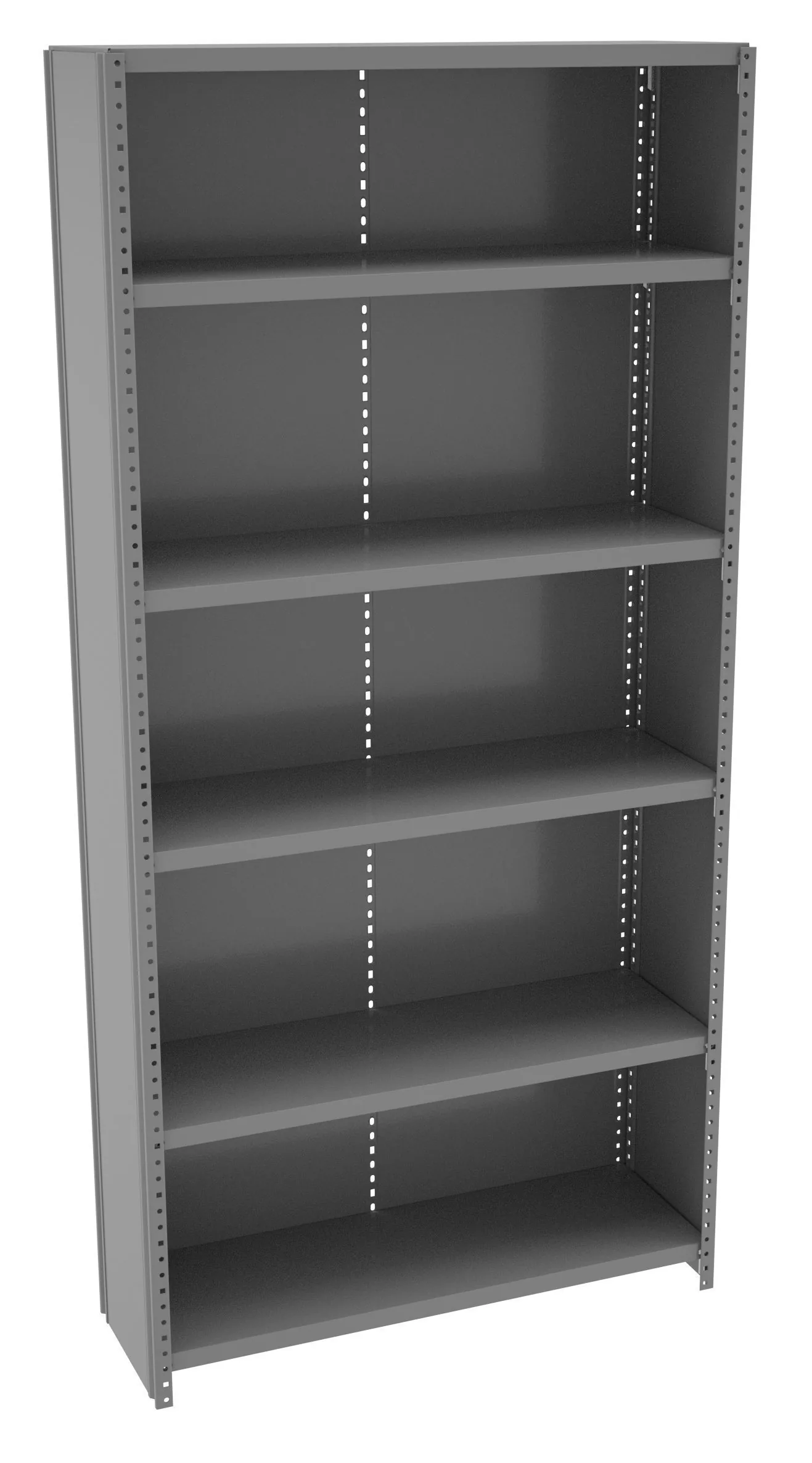 Open StyleThe warehouse default. Lower cost, better visibility, loads from either side, and ideal for back-to-back double rows where two units brace each other.
 Closed StylePanels contain product, hide clutter, and stiffen the unit without separate bracing. The right choice for records rooms, offices, and any shelving a customer will see.
 Mix Within a RunOpen and closed units of the same series and height can sit in one continuous run — open in the back of the room, closed where it faces the door.
Sizes and Load Ratings
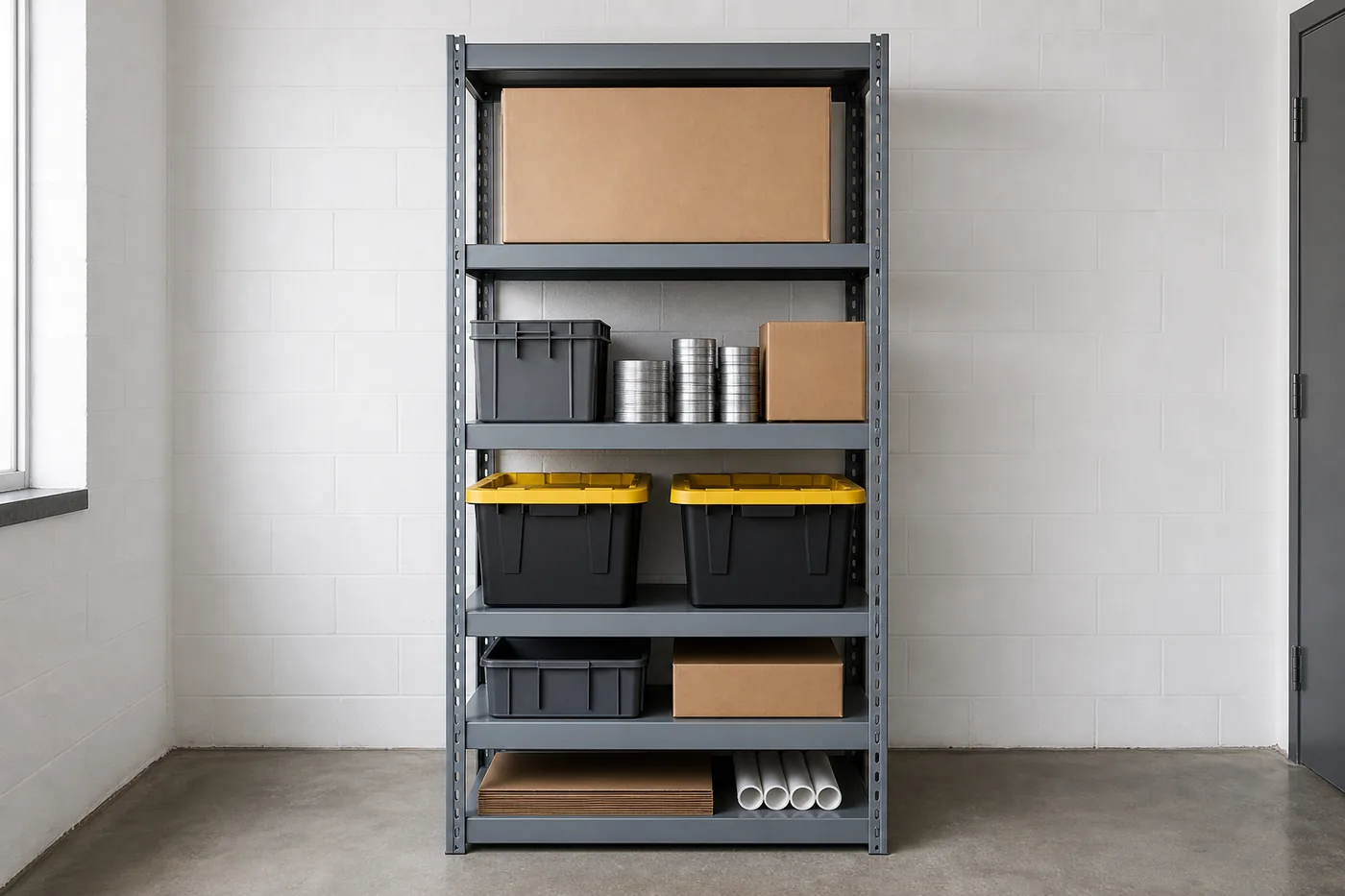
Clip-style shelving is sold by shelf size and duty series. The useful specification is always per-shelf capacity at your shelf width, evenly distributed — not a total unit figure and not a point load in the middle of a span.
Capacity falls as shelf width grows, because you are asking the same shelf channel to span further. A 36-inch shelf in a given series will always outrate a 48-inch shelf in that same series. If you need both width and capacity, you move up a duty series rather than hoping the wider shelf holds.
Standard configurations cover the vast majority of installations:
- Widths: 36 in and 48 in are standard; wider available in heavier series
- Depths: 12, 18, 24, and 36 in cover records boxes through bulk cases
- Heights: 75, 87, and 99 in are common; 75 in keeps every shelf hand-reachable
- Openings: 4 to 7 per unit, set per level rather than divided evenly
- Finish: medium grey and putty are standard; specialty colors on lead time
| Duty Series | Typical Shelf Capacity | Common Sizes | Best For |
|---|---|---|---|
| Light duty | About 350–500 lb per shelf | 36×12, 36×18 | Offices, records boxes, light retail stock |
| Standard duty | About 500–750 lb per shelf | 36×18, 36×24, 48×18 | General supply rooms, stockrooms, institutional storage |
| Heavy duty | About 750–1,100 lb per shelf | 36×24, 48×24, 36×36 | Parts rooms, maintenance shops, warehouse picking |
| Extra heavy duty | 1,100 lb and above per shelf | 36×36, 48×36 | Heavy assemblies, dies, castings, bulk cases |
| Reinforced shelves | Raises rating in a given width | Any standard size | When you need capacity without giving up shelf width |
| Multi-level / catwalk | Per shelf, per level | Engineered to the building | Records archives and supply rooms using full clear height |
Confirm capacity at your width, not at the series maximum
Published “up to” capacities are almost always quoted at the narrowest shelf in the series. Ask for the rating at the exact width and depth you are ordering, with the reinforcement you are actually buying.
Configurations
 Single UnitsFour posts, complete and free-standing. Use these as starters and at the ends of a run — not for every bay, or you pay for duplicate posts at every joint.
 Add-On UnitsTwo posts, sharing the posts of the unit beside them. A five-bay run needs one starter and four add-ons, which saves both money and floor space.
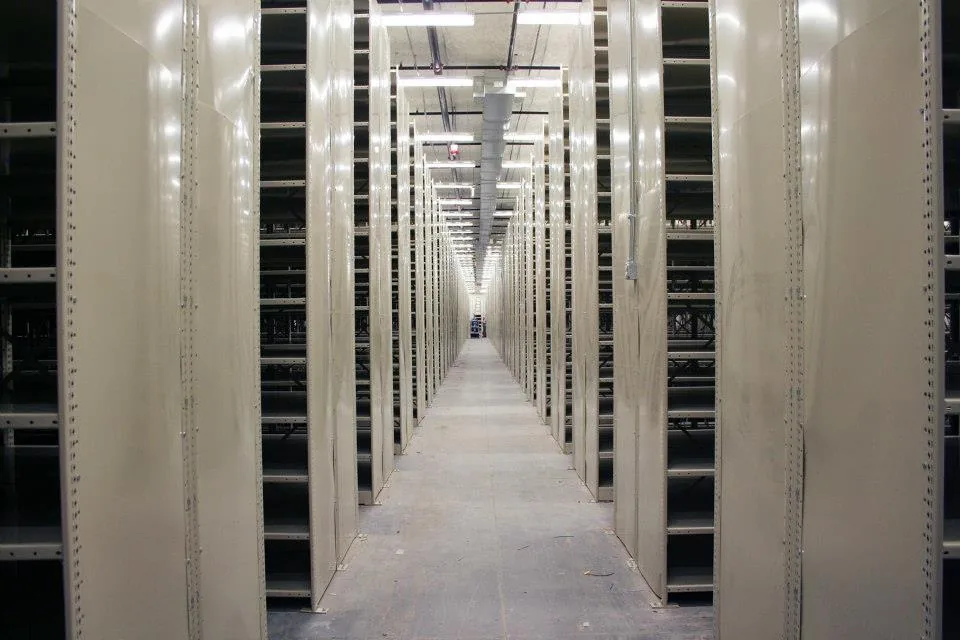 Back-to-Back Double RowsTwo runs sharing a common back. The rows brace each other, reduce anchoring requirements, and put twice the storage on one aisle.
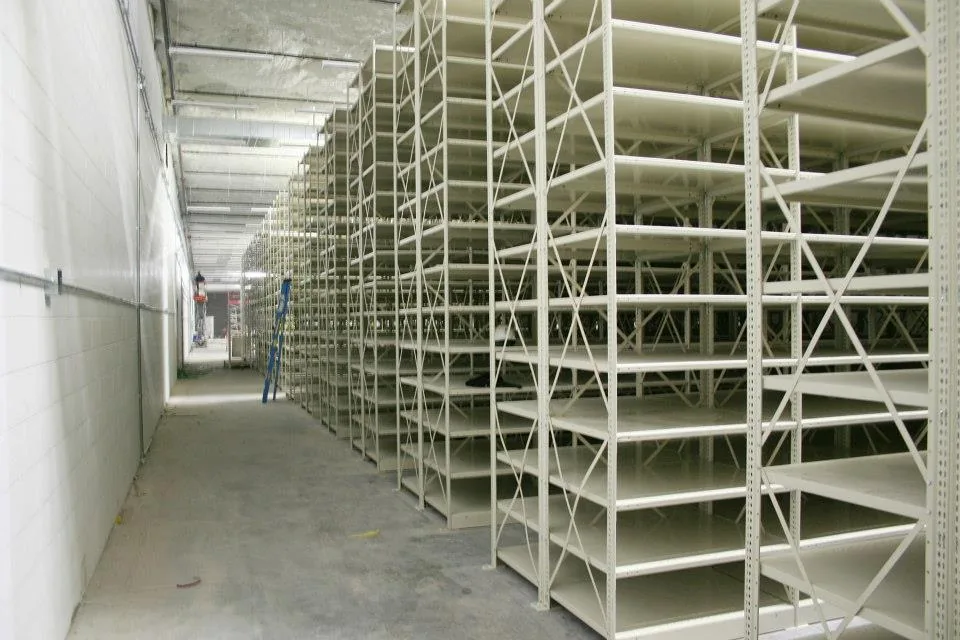
Also available on a Clipper run: bin fronts and alternate deck materials (wood, particle board, or wire mesh inserts), mobile carriage conversion to eliminate fixed aisles, and engineered two- and three-tier multi-level systems with integral walkways and stairs. Ask us for photos of a comparable installation when you request a layout.
Accessories
Accessories are where a shelving run stops being a stack of steel and starts being a storage system. On a clip-style run they matter more than usual, because almost all of them retrofit to shelving that is already installed and loaded.
 Shelf DividersSubdivide a shelf into separate SKU locations without buying more shelves.
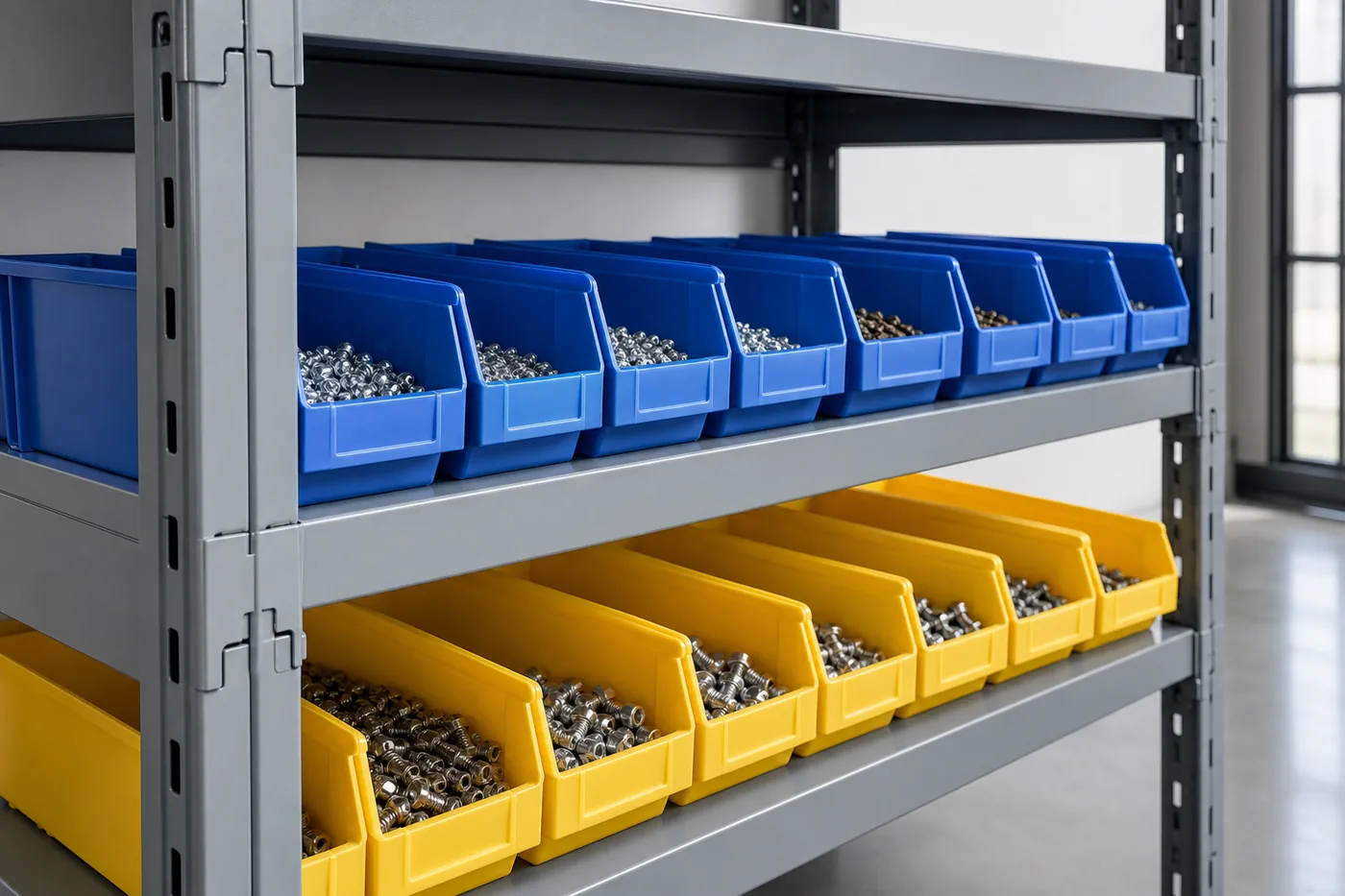 Plastic BinsSmall parts on an open shelf are lost parts. Bins turn one shelf into a dozen labelled locations.
 Label HoldersEvery opening should be a barcoded location. The cheapest inventory accuracy gain available.
 Back and Side PanelsRetrofit to an open unit when product starts getting pushed off the back of the shelf.
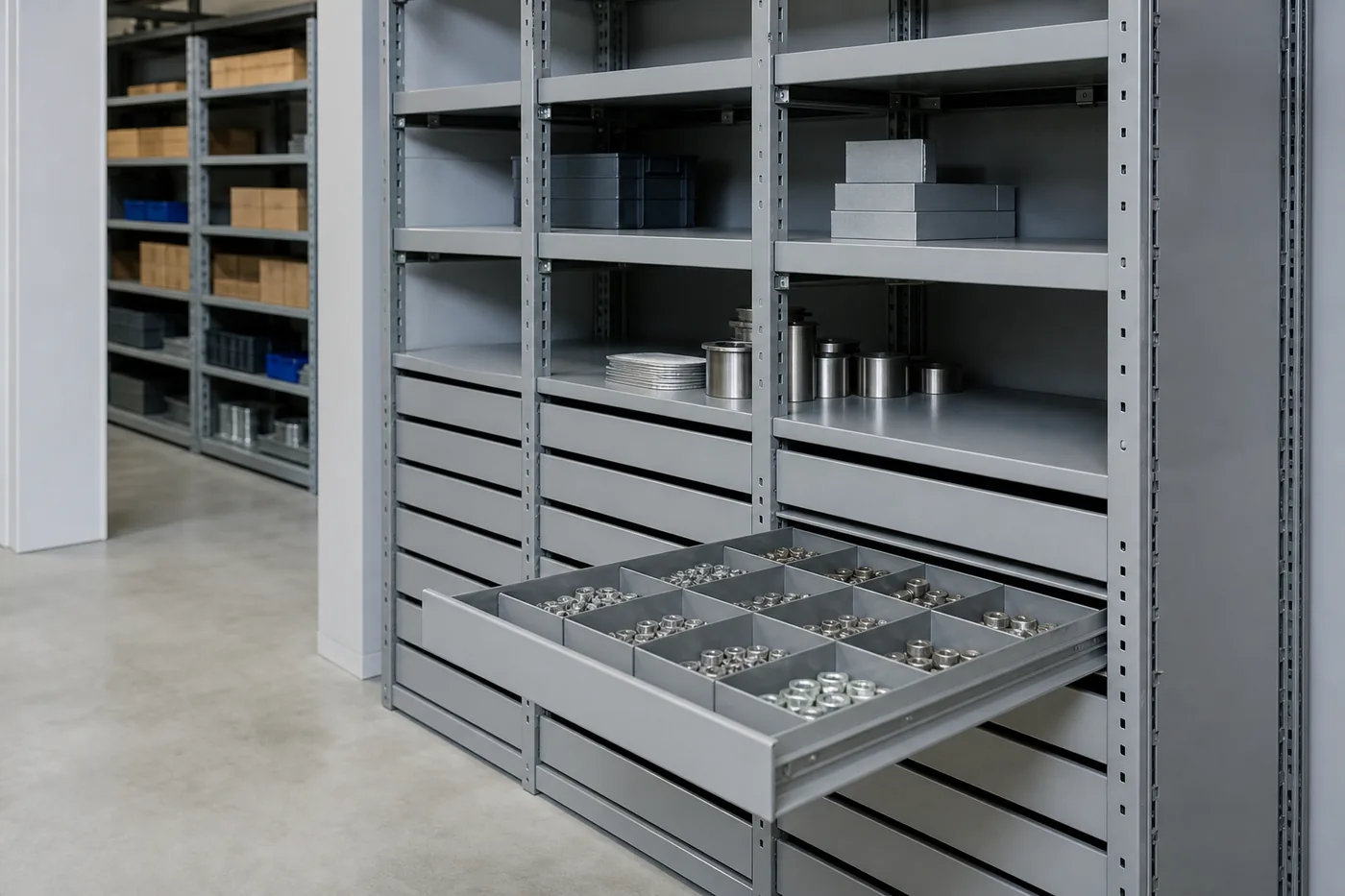 Drawer UnitsDrop-in steel drawers for high-value or high-count small parts inside a standard bay.
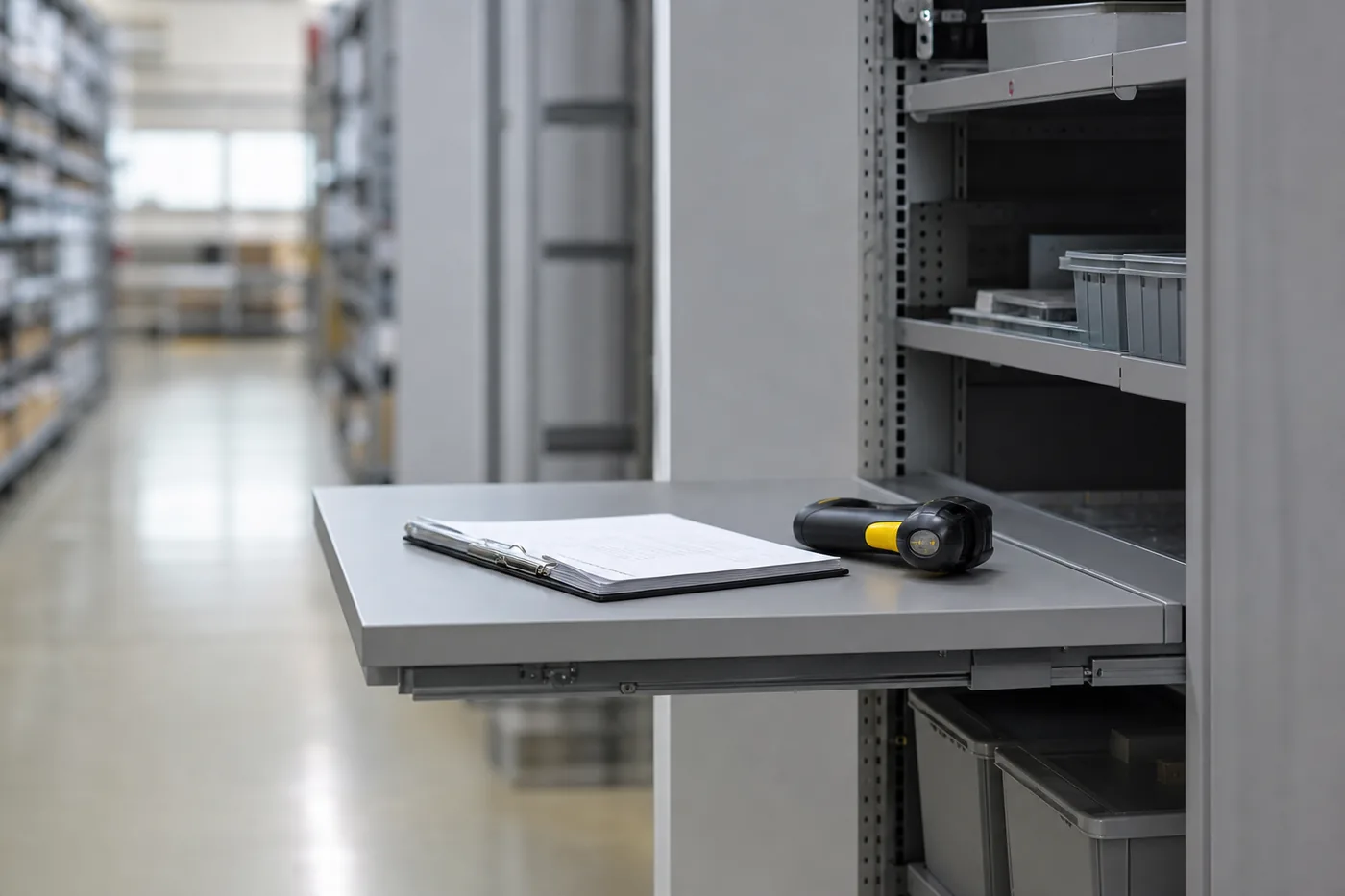 Reference Shelves and Work SurfacesA pull-out surface at the pick face keeps paperwork, scanners, and kits off the floor.
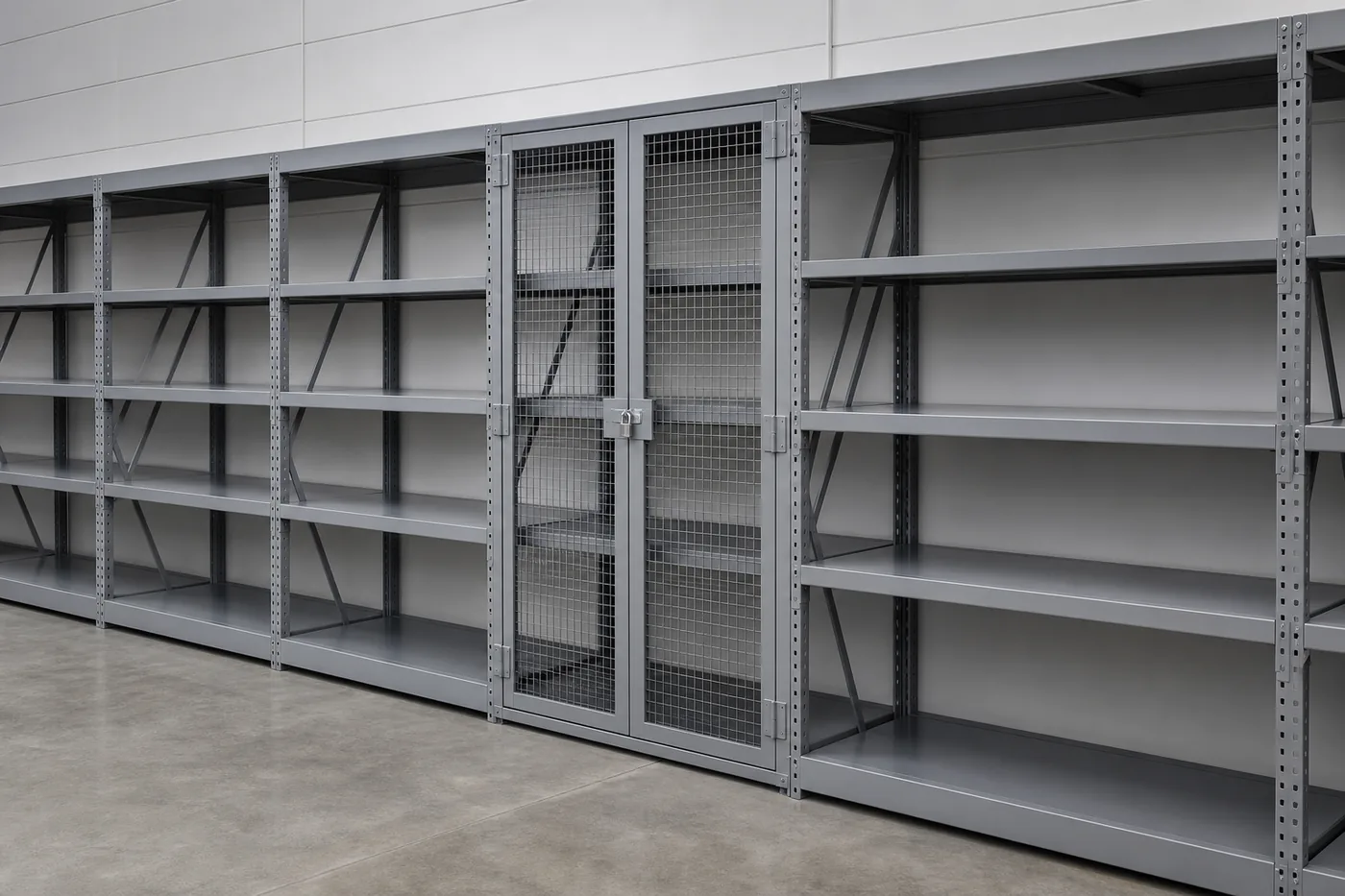 Security Panels and DoorsLock one section of a run instead of buying separate cabinets for controlled stock.
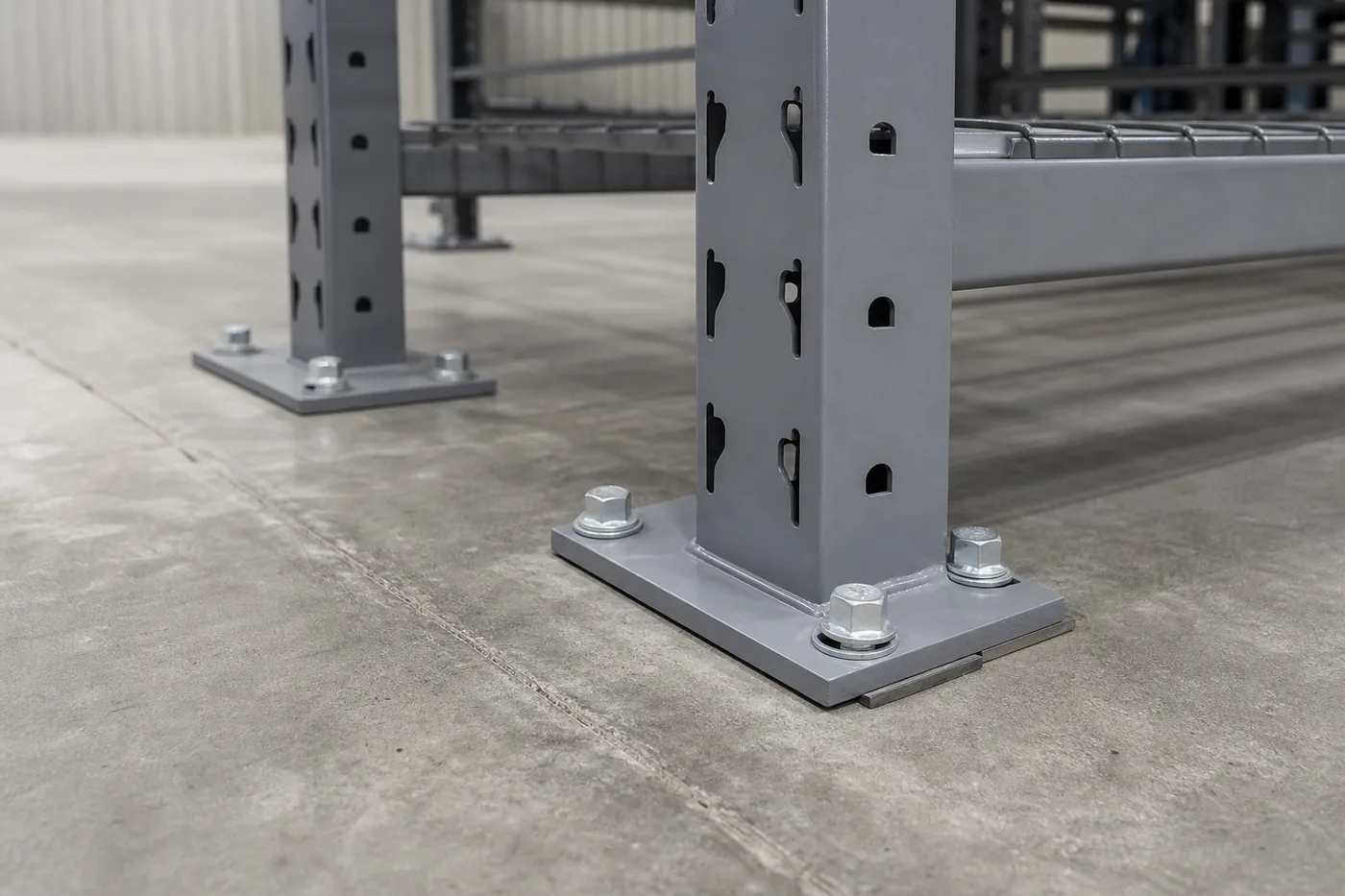 Anchors, Shims, and Seismic HardwareRequired on tall units and across most of the Intermountain West. We verify local code.
Shop Online at MaterialHandling-USA.com
Shelf clips, bins, dividers, decking, and replacement components ship from stock. Full Clipper runs are quoted with freight — call for a layout.
Where Clipper Gets Specified
| Environment | Typical Configuration | Why Clipper |
|---|---|---|
| Government and military supply | Open style, standard duty, GSA contract | Long service life, replaceable components, and contract availability for federal buyers |
| Warehouse parts rooms | Open style, heavy duty, 36×24 with bins | One-inch adjustability keeps up with a constantly changing parts mix |
| Records and archives | Closed style, light duty, 36×12 | Standard box footprints slot cleanly and panels keep files contained |
| Healthcare central supply | Closed style with bins and dividers | Cleanable, contained, and convertible to mobile carriages to double capacity |
| Education and libraries | Open or closed, standard duty | Tool-free reconfiguration between terms and no loose hardware around students |
| Retail backrooms | Closed style for customer-facing areas | Panels hide clutter where shelving is visible from the sales floor |
| Manufacturing WIP and tooling | Open style, extra heavy duty | Handles dies, castings, and fixtures that would deflect a lighter shelf |
| Law enforcement evidence | Closed style with security panels and locks | Chain-of-custody storage with lockable sections inside a single run |
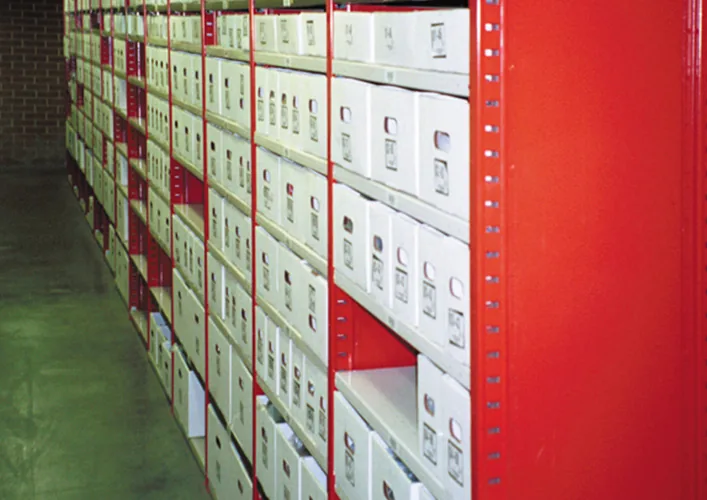
Clipper vs. Boltless vs. Wire
These three cover most industrial shelving decisions. They are not competitors so much as answers to different questions.
| Clip-style (Clipper) | Boltless / rivet | Wire shelving | |
|---|---|---|---|
| Assembly | Clips, mallet, no tools | Rivets into keyholes, mallet | Slip sleeves, mallet |
| Adjustability | 1 in increments | 1 in increments | Fixed increments on the post |
| Enclosure | Open or closed panels available | Open frame only | Open only |
| Shelf capacity | Moderate to high, series dependent | Highest per dollar in wide spans | Lowest of the three |
| Appearance | Finished; suits customer-facing areas | Utilitarian | Clean, sanitary look |
| Airflow / sanitation | Limited unless wire inserts used | Good with wire deck | Best — the reason it dominates food and clinical use |
| Cost per cubic foot | Moderate | Lowest | Moderate to high |
| Specify it when | You need closed sides, a finished look, or GSA availability | You need maximum cube for minimum cost | Airflow, visibility, or wash-down drives the choice |
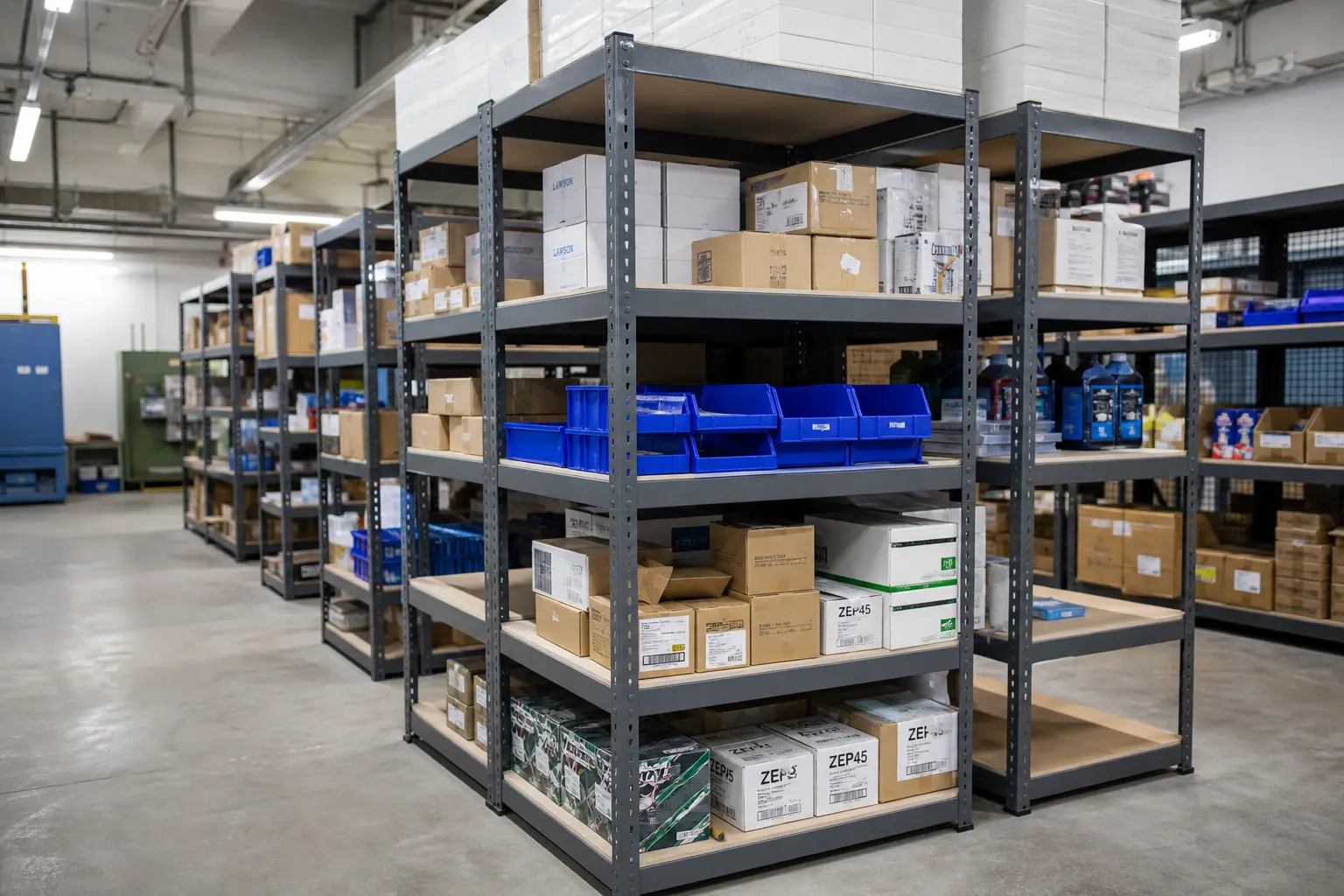 Boltless ShelvingThe lowest cost per cubic foot in the catalog, in rivet and widespan configurations.
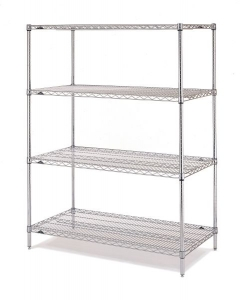 Wire ShelvingOpen-grid shelving for food service, clinical, and cleanroom environments where airflow matters.
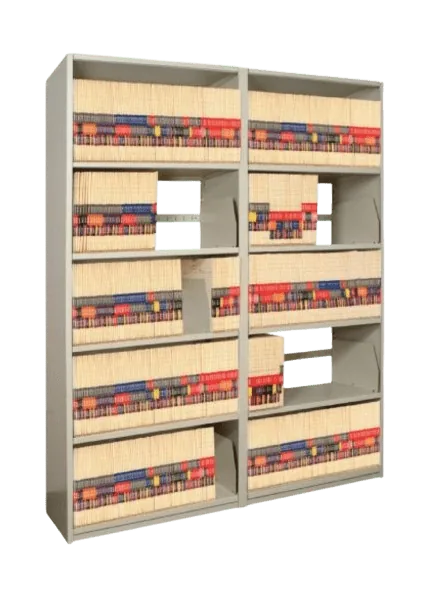 All Shelving SolutionsEvery shelving family we supply, with layout and design support included.
Specifying a Run
Six numbers determine whether a shelving order fits the room and the inventory. Get these before requesting a quote and the rest is straightforward.
1. Wall-to-wall dimensions, including columns, doors, and anything that intrudes into the run. Measure at floor level and at shelf height — they are not always the same.
2. Product dimensions and weight per level. This sets depth, opening heights, and duty series simultaneously.
3. Top usable height. If picks happen above about 72 inches, you are buying step stools and a slower pick path. Keep overstock high and picks low.
4. Aisle width based on how product moves — hand carry, cart, or pallet jack
— and checked against egress requirements.
5. Open or closed per section, not per project. Most rooms want both.
6. Sprinkler and seismic conditions. Solid decking may be restricted in sprinklered areas, and anchoring requirements vary by jurisdiction across the Intermountain West.

Government and Institutional Buyers
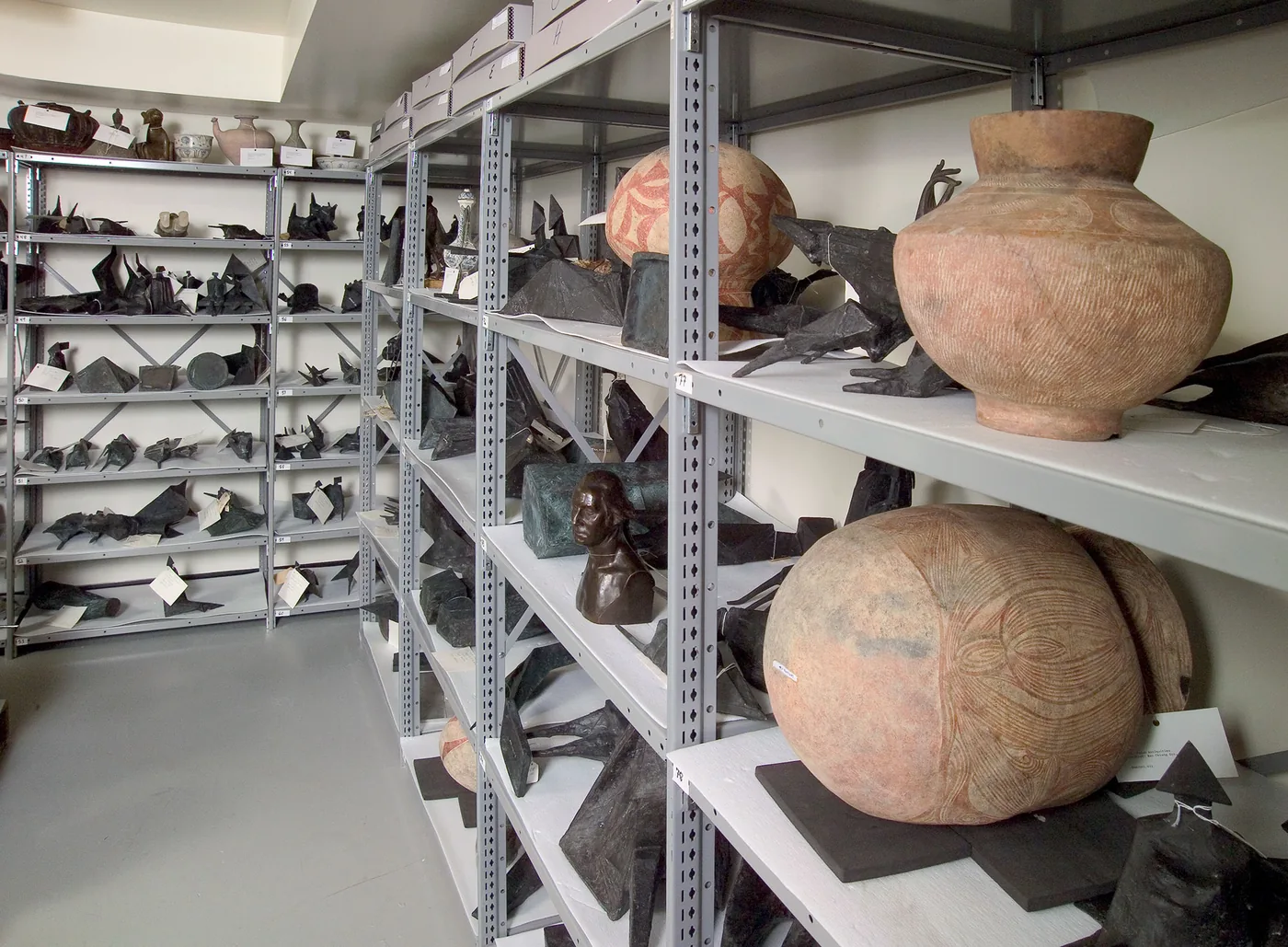
Clipper’s origins are military, and it remains one of the most commonly specified shelving systems in federal, state, and municipal facilities. Three reasons come up repeatedly in bid documents:
- Contract availability. GSA-approved shelving lines simplify procurement for federal buyers and shorten the path from requirement to purchase order.
- Component replaceability. A bent post or damaged shelf is a part number, not a unit replacement — which matters over a twenty-year service life.
- Accountability. Discrete, labelled, lockable locations support the inventory control and chain-of-custody requirements that institutional storage lives under.
We support government, military, law enforcement, education, and healthcare buyers with layout drawings, submittal packages, spec compliance review, and installation. If you are writing a specification rather than buying from one, send us the draft and we will flag anything that will limit your bidder pool unnecessarily.
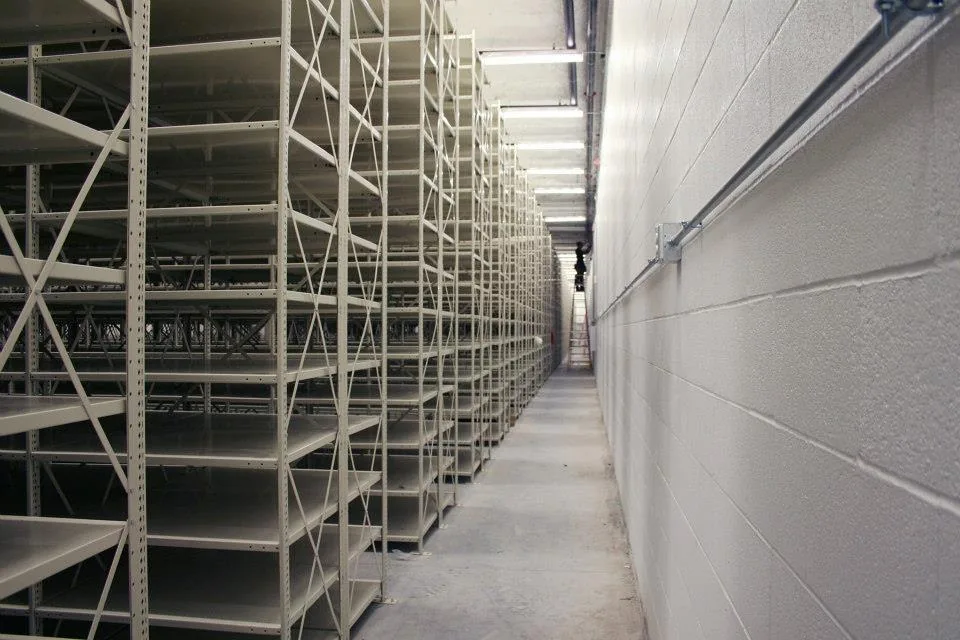 Military & Government StorageSupply rooms, armories, gear lockers, and secure storage for federal and defense facilities.
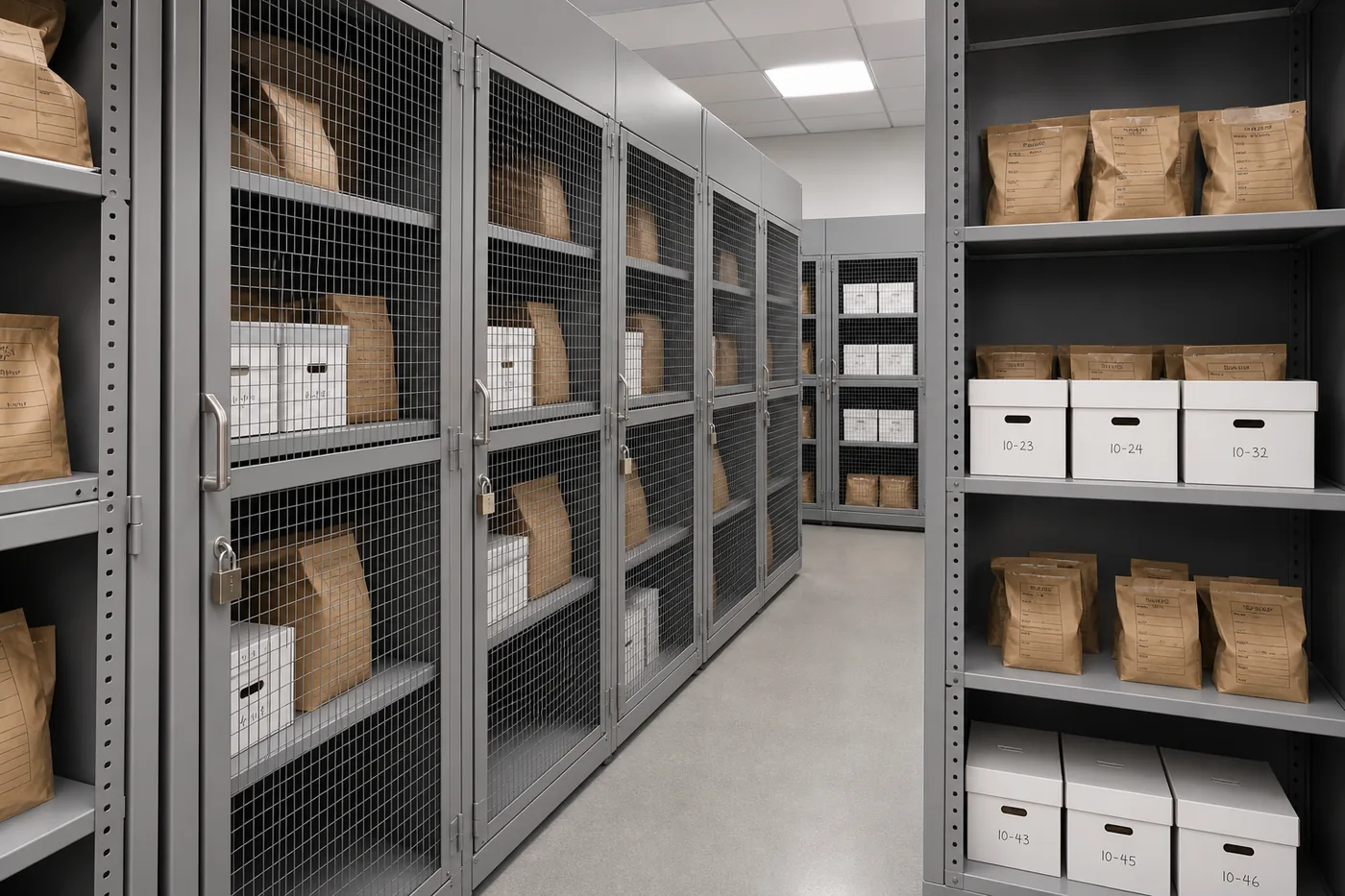 Law Enforcement StorageEvidence rooms, weapon storage, gear lockers, and chain-of-custody storage systems.
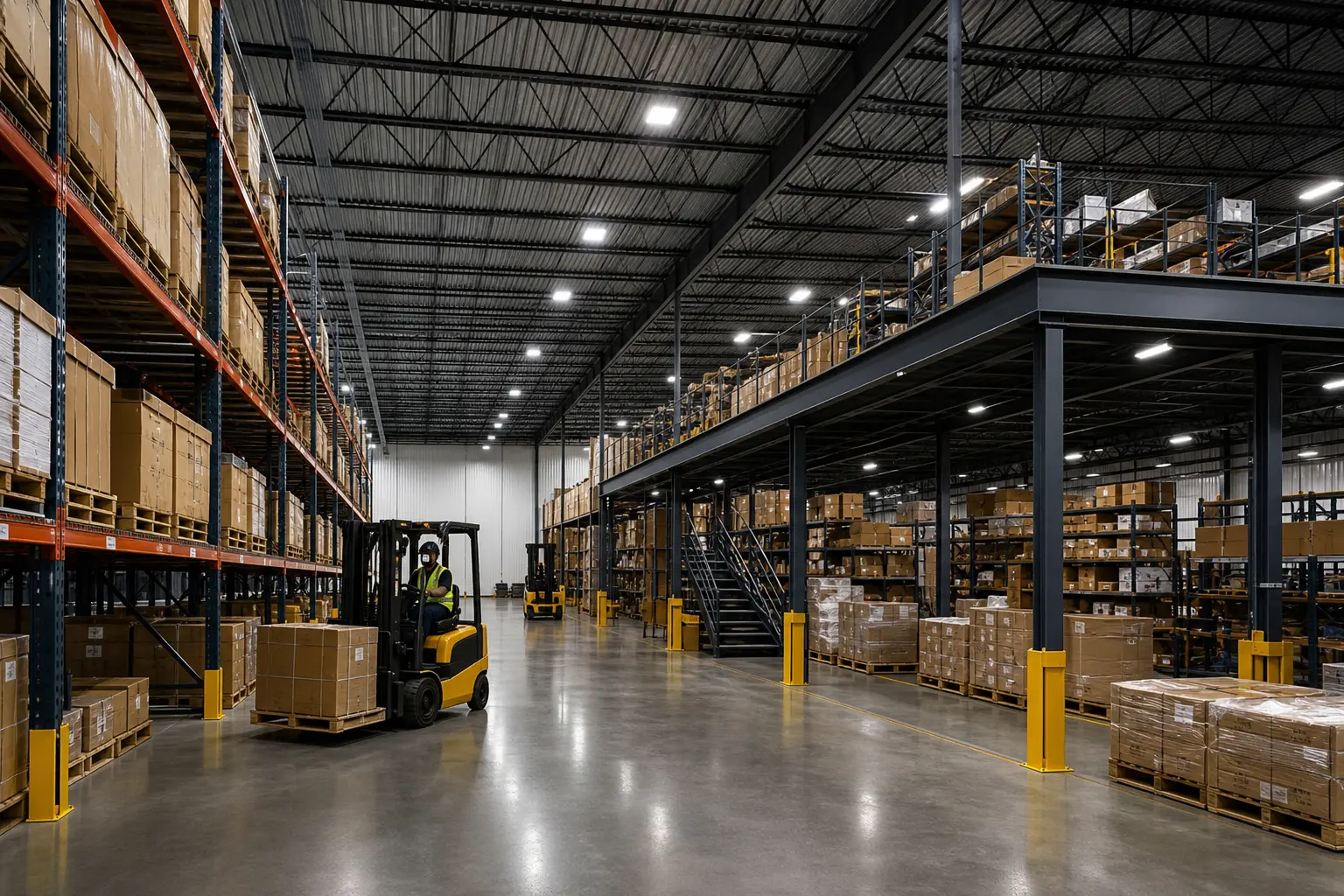 Warehouse DesignLayout, slotting, and flow design so the shelving lands in the right place the first time.
Shop Shelving Kits Online
Buy select items directly from our online store, or request a quote for volume, custom sizes and freight-rated orders.
Frequently Asked Questions
What makes Clipper different from bolted steel shelving?
How much weight will a Clipper shelf hold?
Should I order open style or closed style?
Do I need any tools to assemble it?
Can I extend an existing Clipper run?
Does it need to be anchored?
Can Clipper shelving be converted to high-density mobile shelving?
Is Clipper available on GSA contract?
Get a Clipper Shelving Layout and Quote
Send us room dimensions and what you are storing. We will return a scaled layout, a starter and add-on breakdown, and a quote with freight. Free design consultation — call (800) 326-4403.