
Distributor Will-Call Lockers for After-Hours Contractor Pickup
Let electrical, HVAC, plumbing and industrial parts customers collect staged orders when the counter is closed or crowded. MH-USA, an authorized Parcel Pending dealer, helps plan the handoff, the hardware and the branch workflow.
What a will-call locker changes at a distribution branch
Will-call is the counter where a contractor collects an order that was placed by phone, online, through an account rep or at the counter earlier in the day. At most electrical, HVAC, plumbing and industrial supply branches it is also a bottleneck. The order is ready, but the customer still waits in line behind people who need advice, quotes or special orders. Or the order is ready at 5:15 p.m. and the counter closed at 5:00.
A will-call locker moves the final handoff of a prepaid or account-approved, already-picked order into an assigned electronic compartment. Branch staff load it, the system notifies the contractor, and the contractor opens only that compartment with a code, barcode or app credential. Counter staff keep their time for the conversations that need a person. Contractors get a predictable pickup without waiting.
This page is about that specific job: B2B parts pickup for trade contractors at a distributor branch. For the full range of locker types, start with our smart locker systems guide. For the manufacturer behind the systems described here, see our Parcel Pending lockers page.
Shop Will-Call Staging Shelving
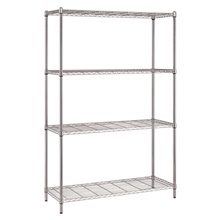
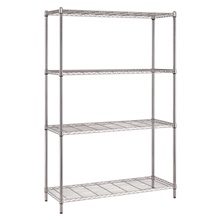
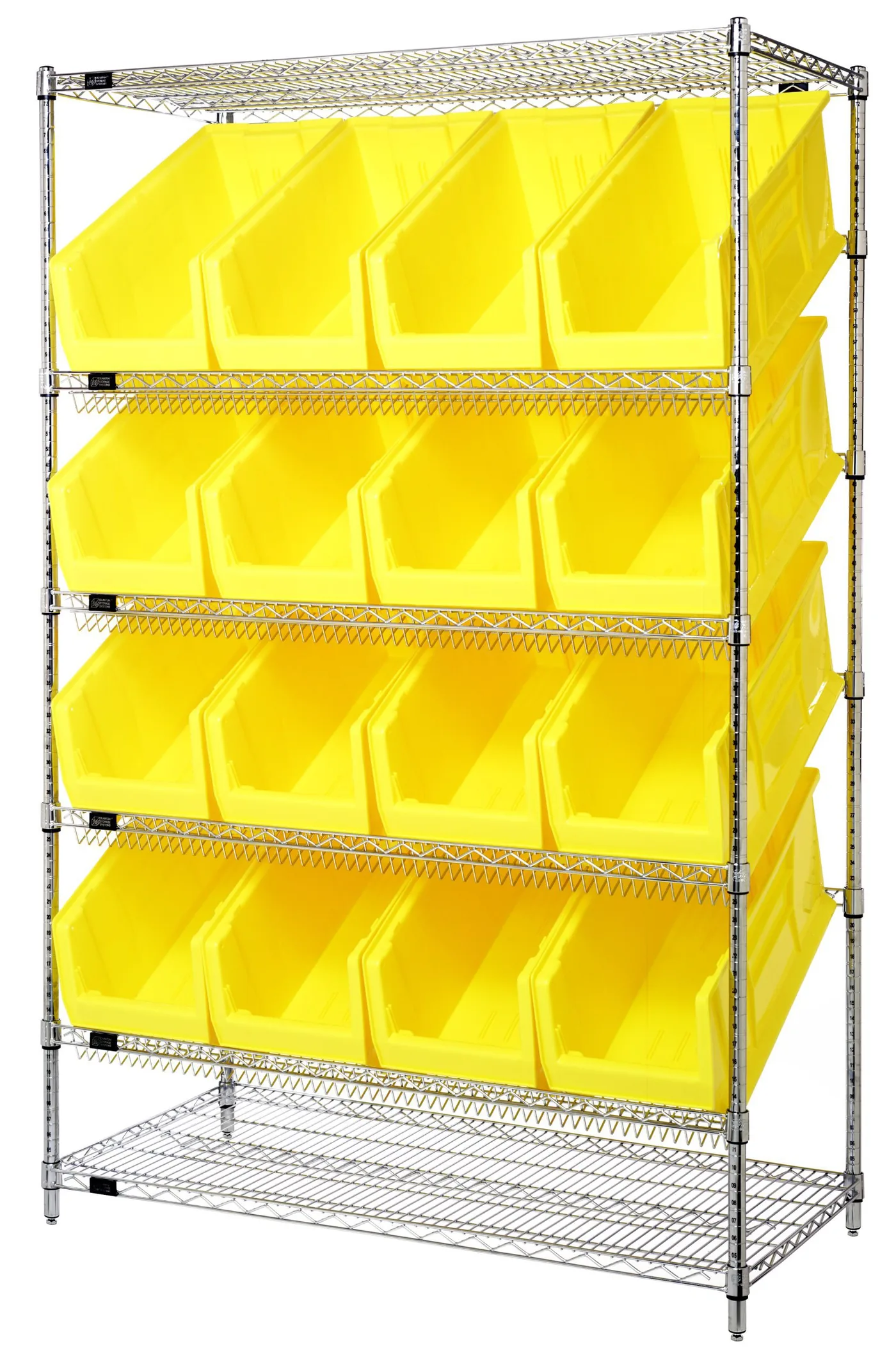
Pickup lockers are quoted per project, but most branches also need organized staging behind the counter for picked orders waiting to be loaded. These shelving units are sold online; they are not Parcel Pending locker components.

Distributor will-call is not the same as retail BOPIS
Retail buy-online-pickup-in-store lockers and distributor will-call lockers use similar hardware, but the business around them is different. A retail locker usually serves an anonymous consumer with a card-paid order of small, boxed items. A distributor locker serves a repeat trade account whose orders are larger, less uniform, often charged to terms and sometimes collected by a different crew member from the one who placed the order. Planning a branch from a retail playbook misses most of those differences. Our retail smart locker guide covers the store version.
| Planning factor | Retail BOPIS locker | Distributor will-call locker |
|---|---|---|
| Customer | Individual shopper | Trade account with several authorized pickup people |
| Payment | Card paid at checkout | Often on account terms; release rules matter |
| Typical items | Boxed consumer goods | Fittings, wire, controls, motors, coils, pipe and long or heavy parts |
| Peak demand | Evenings and weekends | Early morning before job starts, after-hours emergency repairs |
| Source of order | Ecommerce platform | Distribution ERP, counter, phone or rep entry |
| Closing the transaction | Pickup confirms a sale | Pickup may need to update the ERP ticket, invoice and inventory |
The practical result: a will-call project is mainly an operations and software project with a locker attached, not the other way around.
Built around a contractor’s working day
HVAC, refrigeration and plumbing
Service technicians answer no-heat, no-cooling and leak calls on the customer’s schedule. A failed capacitor, motor, valve or water heater part is often needed before the branch opens or after it closes. When the counter can stage that part for locker pickup, the technician can collect it on the way to the job instead of waiting for opening time.
Seasonal peaks matter too. Summer cooling and winter heating rushes put the most pressure on the counter at exactly the moment contractors have the least time to stand in line. A locker absorbs routine pickups so counter staff can focus on troubleshooting and substitutions.


Electrical and industrial MRO
Electrical contractors and plant maintenance teams often pre-order material for the next day’s work, then send whoever is free to collect it. That makes authorization important: the system should let the account name the people who can open the compartment, and record who actually did.
Industrial customers add urgency of a different kind. A belt, bearing or control component for a down line is worth more at 6 a.m. than at 8 a.m. Decide in advance whether emergency orders are eligible for locker pickup and who on the branch team approves them.
What distributors have already done with Parcel Pending
Wholesale distribution is a named market for Parcel Pending by Quadient, not an afterthought. These points come directly from the manufacturer’s published announcements; they describe other companies’ projects, not MH-USA installations.
- Johnstone Supply (March 11, 2024): Quadient announced that the HVACR wholesale distributor chose it as preferred automated parcel locker partner, with Parcel Pending lockers already installed at 30 Johnstone locations. Johnstone’s marketing manager cited integration with existing solutions such as its ERP platform. Read the announcement.
- Epicor Eclipse integration (September 16, 2024): Quadient announced that its locker platform integrates with Epicor Eclipse, an ERP for electrical, plumbing, HVAC and PVF wholesale distributors, and named Johnstone Supply as the first joint customer. Read the integration announcement.
- Additional ERP connections (September 2025): the manufacturer says its open API can connect to other ERP systems and lists existing integrations with Epicor Eclipse and Advantive’s DDI System. It describes pickup closing the transaction, billing the customer and updating inventory when the door closes. Read the electrical distributor article.
- Oversize parts: the same manufacturer content describes oversize lockers holding items up to 11 feet long, such as pipe runs, air handlers, water heaters and coil rolls, for indoor or outdoor use.
The manufacturer also reports that one unnamed distributor saw nearly a quarter of locker pickups happen after hours. Treat figures like that as a vendor-reported example, not a forecast for your branch. Your own counter data is a better guide.
Planning after-hours and 24/7 access
Access hours are set by the site, not the locker
A locker inside the showroom is only available when the doors are unlocked. True after-hours pickup usually means an outdoor-rated unit, a vestibule with separate access, or a wall-through design loaded from inside. Parcel Pending offers indoor and outdoor families; outdoor units are a different product, not indoor units under an awning.
Walk the route a contractor’s truck takes at night: entrance, parking, lighting, camera coverage, snow and rain exposure, and whether a gate closes the lot. Then review power and network requirements from the selected model’s documentation.
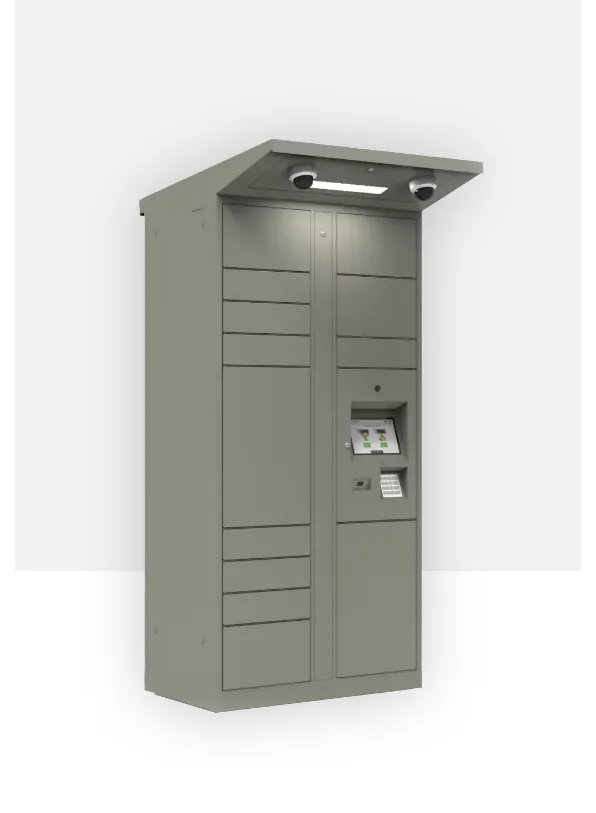
Keep the locker apart from yard traffic. Contractors collecting at 5 a.m. should not cross a forklift aisle, a delivery dock or a pipe yard. A short, lit, curbside approach is better than a convenient-looking spot that forces customers into the working area.
Finally, decide what support exists outside business hours. If a code fails or the wrong part was staged, who answers? A posted phone number, an on-call contact or a clear morning-resolution policy keeps one failed pickup from becoming a lost account.
The order handoff, step by step
Release the order
Only orders that are fully picked, checked and payment-released or account-approved are eligible for locker pickup.
Assign a compartment
Staff or the integration selects a compartment size that fits the packed order, including multi-piece orders.
Load and confirm
Staff scan the ticket, load the parts and close the door, which triggers the order-ready notification.
Contractor collects
The authorized person enters a code, scans a barcode or uses the app; the pickup event is logged.
Close the ticket
The pickup updates the order record, manually or through an ERP integration, and the compartment is freed.
Load from the back of house where possible
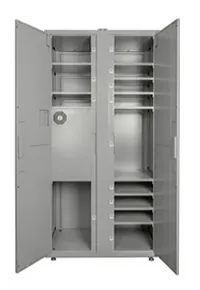
Parcel Pending shows rear-loading configurations in which staff fill compartments from a secure side while customers open doors from the public side. For a branch that often fits well: the will-call team loads from the warehouse without walking orders through the showroom, and the public face stays clean.
Whether a wall-through installation is possible depends on the building, the wall construction and the manufacturer’s specifications. Raise it early, because it affects where the locker can go.
Identity, authorization and accountability
Who may open the door?
Trade accounts rarely have a single pickup person. The account owner, an office manager or a foreman may place orders while apprentices and drivers collect them. Agree how the notification reaches the right person: by email, text or app message, and whether it can be forwarded.
Parcel Pending systems support PIN, barcode, QR code and app access, depending on the product and configuration. The system logs each delivery and pickup. Use those logs to resolve disputes about whether, when and by which credential an order was collected.

- Restricted items: decide which products should never go into an unattended locker, such as items requiring age, license or certification checks, or anything your policy requires a signature for.
- High-value orders: set a value threshold above which the branch requires counter pickup or a manager’s release.
- Credit holds: make sure an order on hold cannot generate a pickup code.
- Lost codes: define how staff verify a caller before reissuing access.
- Uncollected orders: set reminders, a maximum dwell time and who returns parts to stock.
Mixed, long and oversize orders
Size the bank from your real order mix
A distributor locker that only holds shoebox parts will push the orders that need help most back to the counter. Pull a few weeks of will-call tickets and note the packed dimensions of typical, large and awkward orders. Count multi-piece orders separately, since several parts may need to share one compartment.
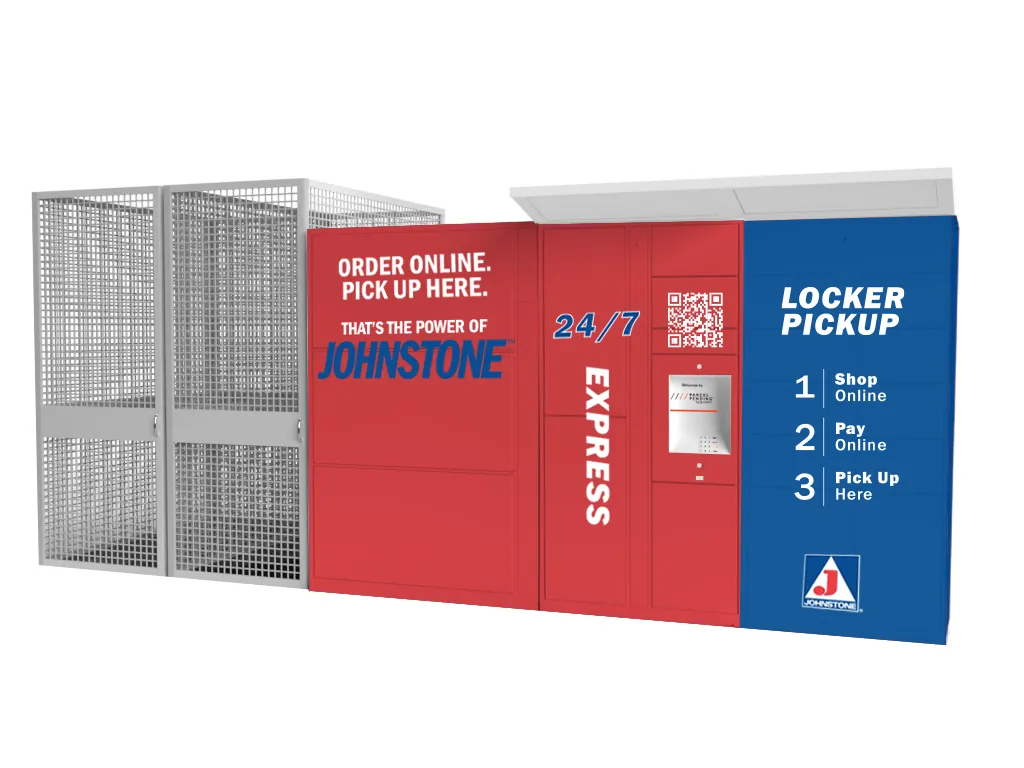
The manufacturer offers oversize options, and its distributor rendering at the top of this page shows mesh-front compartments beside standard doors for bulky items. Confirm weight limits, door clearances and how a contractor will lift heavy items safely before deciding what qualifies.
Some items will never fit a locker sensibly: full sticks of pipe beyond the oversize range, pallet quantities or hazardous materials. Those stay on a staffed yard or counter process. Writing the rule down prevents staff from improvising at closing time. For organizing the parts that wait behind the counter, see our contractor bin shelving guide.
ERP integration and data responsibilities
Start from the system of record
Most distribution branches run on an industry ERP. Parcel Pending names established integrations with Epicor Eclipse and Advantive’s DDI System, and an open API for others. An announced integration is a capability, not a commitment for your project. Confirm that your ERP version, hosting and modules are supported and who configures them.
Without an integration, staff can still create deliveries at the locker kiosk or in the software. That works for a pilot but adds double entry, so measure it before scaling.

- Which ERP event marks an order eligible for the locker?
- Does pickup update the ticket automatically, and who reconciles failures?
- How are contractor contacts and authorized pickup people synchronized?
- What happens to an order changed or cancelled after loading?
- Which logs, reports and retention periods do finance and operations need?
- Who owns the connection after go-live: the distributor’s IT team, the ERP vendor or the locker manufacturer?
Ask for the manufacturer’s current security documentation for the proposed software scope. Parcel Pending states it holds SOC 2 Type 2 certification; your IT team should still review the specific data flow. Our smart locker software and integration guide has a broader checklist.
Operational planning checklist for a branch rollout
Most successful rollouts start with one branch and a short list of measured outcomes. Before requesting a proposal, gather the following.
- Volume: daily will-call tickets, the share that are prepaid or account-approved, and peak hours.
- Order sizes: packed dimensions and weights for small, typical and oversize orders, plus multi-piece frequency.
- Hours: current counter hours and the pickup window you want to offer.
- Site: indoor, outdoor or wall-through location options, photos, power and network availability.
- Software: ERP name and version, ecommerce platform, and the IT contact for integration.
- Rules: eligibility, restricted items, credit holds, dwell time and after-hours support.
- Staffing: who loads, when loading happens and who handles exceptions.
Then measure a pilot: counter wait times, pickups outside business hours, uncollected orders, failed pickups and staff time spent loading. Compare with the weeks before installation. Those numbers decide whether to expand, resize or change the rules. For budget planning, our smart locker cost guide explains what drives pricing; a branch proposal should separate hardware, software subscription, integration services, installation and support.
A will-call locker also changes the counter’s physical layout. Plan where picked orders are staged before loading and how the wall or area around the locker connects to the warehouse. MH-USA also supplies the shelving, partitions and storage around the counter, so the locker and the staging area can be planned together. If you stage wire, conduit or reels for pickup, our electrical, plumbing and HVAC distribution storage page covers dense picking storage for those branches.
Request a distributor will-call locker quote
Tell us about your branch, typical order sizes, desired pickup hours and the ERP you use. Include your ZIP code so we can review the location.
Distributor will-call locker FAQs
What is a will-call locker?
Can contractors pick up orders after the branch closes?
Do Parcel Pending lockers integrate with Epicor Eclipse?
How is a distributor will-call locker different from a retail pickup locker?
Can the lockers hold pipe, coils or other long parts?
Who can open a contractor’s compartment?
How much does a will-call locker system cost?
Plan after-hours pickup for your branch
Share your counter volume, order sizes and site photos with the MH-USA team.