
Parcel Pending by Quadient Smart Lockers
Make package pickup, order collection and returns easier to manage. MH-USA is an authorized Parcel Pending dealer, helping businesses plan the right locker configuration and workflow.

A connected pickup point, not just a bank of locked doors
Parcel Pending by Quadient combines electronic compartments with software that assigns deliveries, notifies recipients and records collection activity. A delivery can wait for the right person without requiring someone to remain at a service counter. For retailers, distributors, workplaces and campuses, that changes how staff hand off orders, parcels and equipment.
MH-USA helps translate those workflows into a practical project brief. Start with what people collect, when they need access and who loads the system. Then match the locker family, compartment mix and software requirements to that job. Compare the wider category in our smart locker systems guide, or use this page to explore Parcel Pending specifically.
These are configured business systems. Request a project quote rather than selecting an unverified off-the-shelf package. Hardware, software scope, installation conditions and ongoing service should all be identified in the proposal.
How a Parcel Pending handoff works
Separate delivery time from collection time
A staff member or courier places an item in an assigned compartment. The system connects that deposit with the intended recipient or order and sends a collection notification. The recipient follows the configured access process to open the appropriate door and retrieve the item.
The exact identification method depends on the selected solution and integration. Parcel Pending offers PIN, barcode and app-based access options across its range. Plan around the people who will actually use the system, including occasional visitors and recipients who do not want another app.
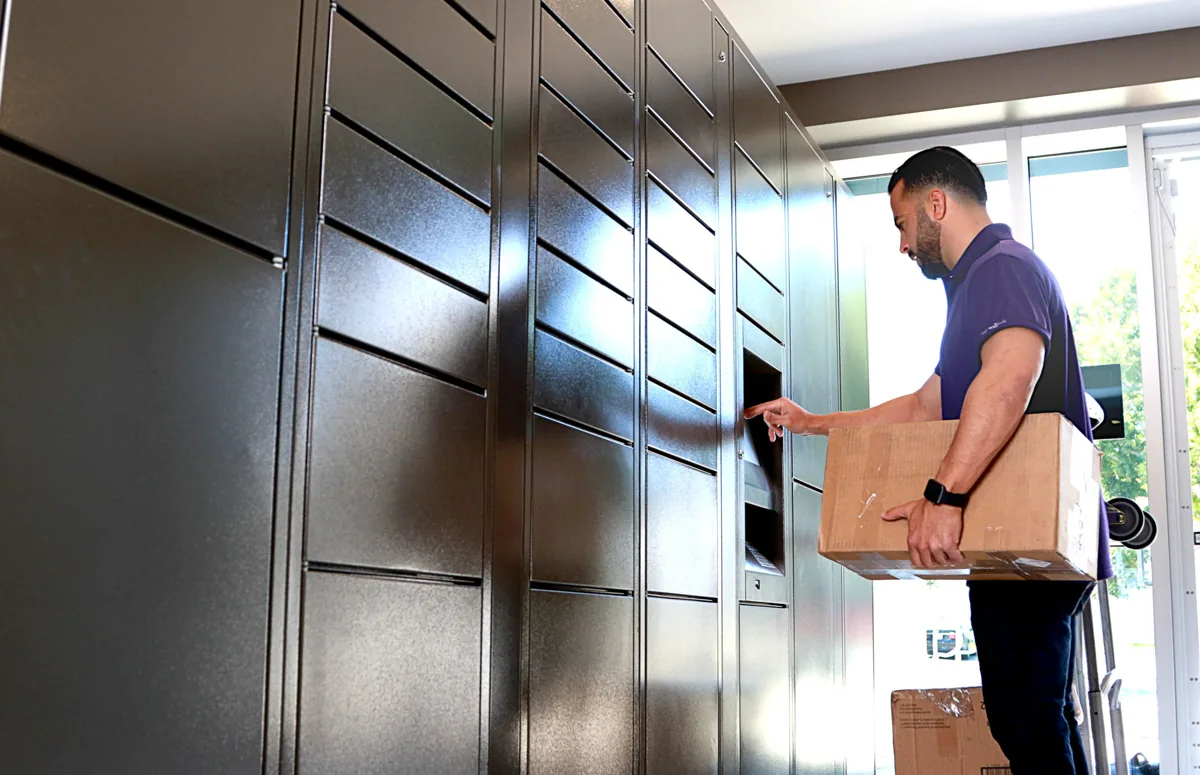
Prepare the handoff
Identify the order or recipient, check the item and assign the right compartment.
Load and notify
Deposit the item and trigger the configured collection notification.
Collect and record
The authorized recipient retrieves the item and the system records the pickup event.
Handle exceptions
Give staff a clear process for overdue orders, failed notifications and items that do not fit.
Choose the Parcel Pending product family for the task
Parcel Pending’s range includes indoor, outdoor, refrigerated and oversize lockers, returns-focused Drop Box lockers and package-room solutions. These solve different problems. A larger compartment does not provide refrigeration, and placing indoor equipment under a roof does not make it an outdoor-rated installation. Build the specification around the intended operating environment.
| Option | Best planning fit | Decision to resolve |
|---|---|---|
| Indoor lockers | Workplace and campus package exchange | Compartment mix, public access hours and loading route |
| PREMIER Indoor | A newer indoor platform with a larger interface | Interface requirements and approved software connections |
| Outdoor lockers | Pickup outside the staffed building | Exposure, location, power, connectivity and site access |
| Refrigerated lockers | Chilled grocery or food-order pickup | Product temperature requirements and collection policy |
| Oversize lockers | Bulky retail or distributor orders | Actual packaged item dimensions and handling needs |
| Drop Box lockers | Self-service returns and drop-offs | Labels, customer instructions and staff retrieval |
| Package room | Controlled-access overflow storage | Room access, shelving layout and item-level tracking |
Indoor lockers and the PREMIER platform
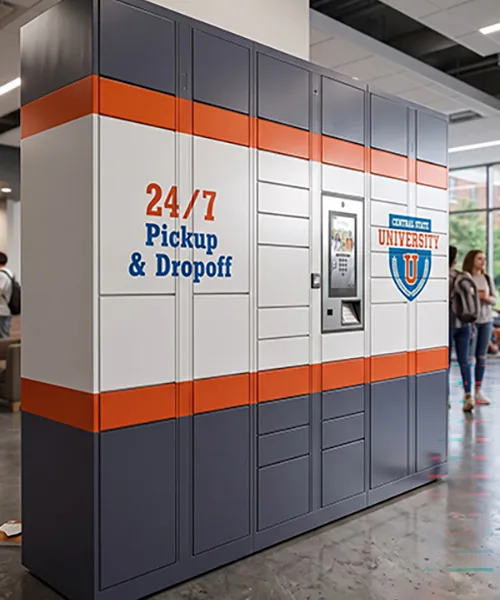
Plan the interface as carefully as the compartments
Indoor lockers can create a consistent collection point close to a mailroom, service desk or shared circulation area. Parcel Pending’s PREMIER Indoor line includes a 15.6-inch full-HD display, a scanner and a braille keypad. The manufacturer also describes compartment sensors and a management dashboard.
Those features are a starting point for selection, not a substitute for a workflow review. Determine who operates the screen, how recipients identify themselves and which staff members administer the system. The configuration pictured is manufacturer imagery, not a representation of a completed MH-USA project.
For either indoor platform, review the largest and most frequent package sizes separately. A system sized only for an average parcel can have free small compartments while larger deliveries wait outside it. Collect a representative sample of package dimensions and note days when volume rises. Include a defined overflow method in the design instead of leaving staff to improvise.
Outdoor pickup without relying on an open service counter
Access hours are a site decision
Parcel Pending offers purpose-built outdoor lockers with weather-oriented kiosk features. They can support pickup outside normal staffing hours when the site’s access arrangements allow it. A locker behind a locked gate still follows that gate’s hours, so evaluate the full route from parking to collection.
Review exposure to weather, lighting, pedestrian circulation and the courier loading position. Include the vendor’s electrical and connectivity requirements in the site review. Do not assume a canopy alone resolves drainage, temperature, anchoring or other installation questions.

Keep loading and collection traffic out of vehicle working areas. A distributor may need contractors to reach the lockers without entering the warehouse; a campus may need an accessible public approach that does not cross a delivery lane. Resolve these practical constraints before choosing where the equipment will stand.
Refrigerated lockers for chilled pickup workflows
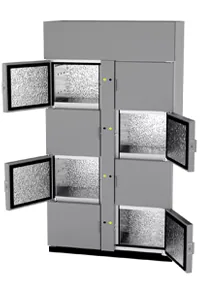
Keep temperature requirements explicit
Parcel Pending publishes a refrigerated operating range of 35°F to 46°F for its refrigerated lockers. The manufacturer describes fan-circulated cooling and a dedicated electrical outlet. Check the selected model’s current technical requirements during project development.
Match the application to the actual product being stored. Refrigeration does not automatically establish suitability for medicines, vaccines or every food category. Define the required temperature range, acceptable holding time, monitoring process and response to a missed collection before selecting equipment.
A campus dining program or grocery pickup operation also needs a staff routine: confirm the order is ready, load the correct compartment, notify the recipient and remove uncollected items according to the organization’s policy. Separate the equipment specification from food-handling responsibilities so neither is assumed to cover the other.
Business applications worth planning around
Campus mailrooms and shared-service pickup
Parcel Pending’s higher-education applications extend beyond parcels to bookstore orders, class materials, IT equipment and dining pickup. A single campus may need different workflows for each. The right design starts with the receiving team, intended users and the software already managing those items.
A campus deployment also needs a plan for peak arrivals, reminders and uncollected items. Compare these requirements with our university parcel locker planning guide rather than creating a separate collection process for every department.
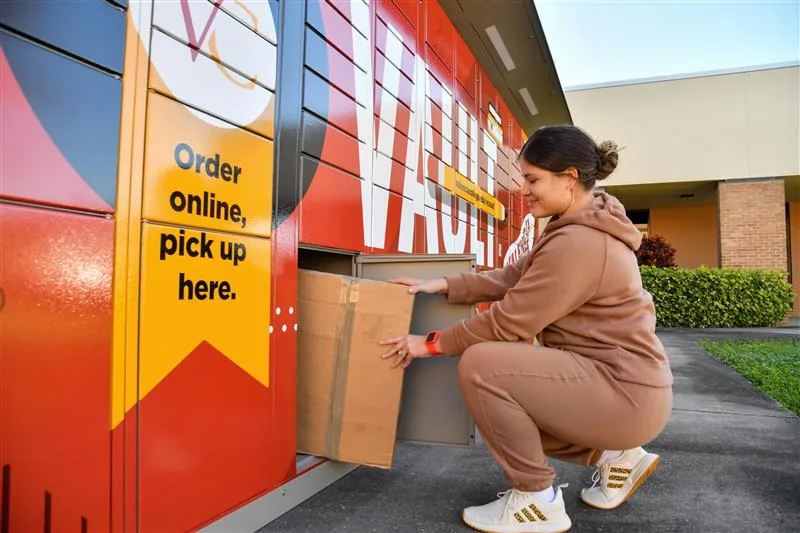
Distributor will-call and contractor pickup
For an HVAC, electrical, plumbing or industrial distributor, the central problem is often a mismatch between counter hours and a contractor’s working day. Parcel Pending explicitly offers distributor pickup and drop-off solutions. An order staged in a locker can be collected after the counter closes if the site remains accessible and the order is eligible for unattended handoff.
Keep payment authorization, restricted items, incomplete orders and signature requirements in the branch’s business rules. A locker notification should mean the order is actually ready. Decide whether staff will scan orders into the system manually or use a supported software connection, and assign responsibility for checking the order before deposit.
Retail order collection
Retailers can use Parcel Pending for buy-online-pickup-in-store workflows. Location, instructions and order readiness matter as much as the hardware. Customers need a clear destination and a reliable notification, while associates need an efficient loading route. Our retail smart locker guide covers the wider store-planning questions.
Workplace packages and equipment exchange

Reduce dependence on a staffed handoff
Parcel Pending’s commercial applications include packages, documents and IT equipment exchange. That can help a workplace separate receiving activity from the time an employee is available to collect an item. It is particularly useful to examine where people work across shifts or spend only part of the week on site.
For laptops and shared devices, specify the required audit events, authorized users and return process. Do not assume that a parcel locker includes device charging or an asset-management integration. See our office smart locker guide for the broader workplace workflow.
Write down what happens after an unsuccessful handoff. Staff should know who can correct the recipient, resend a notification or retrieve an abandoned item. These exception paths are often more important to daily operations than the normal pickup demonstration. Include them in training and acceptance checks.
Oversize collection and self-service returns
Different orders need different handling
Parcel Pending’s oversize range addresses bulky orders that do not fit conventional parcel compartments. Its Drop Box lockers address returns and drop-offs, including a built-in label printer. These are distinct workflow choices, not interchangeable names for one product.
For oversize pickup, supply dimensions for the item as packed, not just its catalog dimensions. For returns, define which items qualify, how the customer identifies the return and where staff move the goods after retrieval. Keep the retailer’s return authorization and refund process separate from the physical deposit event.
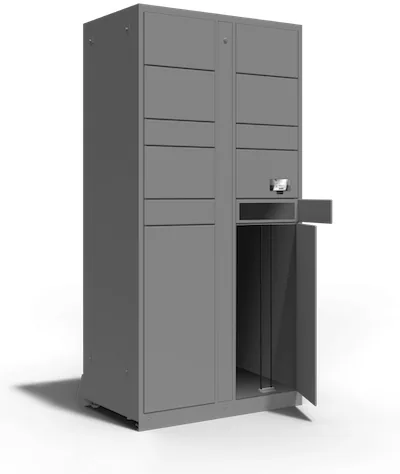
Plan for multi-piece orders, fragile items and packages that require two-person handling. An oversize locker does not automatically make a heavy order safe for unattended lifting. Similarly, a successful returns deposit is not necessarily proof that the contents have been inspected or a refund approved. Set those expectations in the customer instructions.
Package rooms when compartments are not the whole answer
Give overflow a defined place
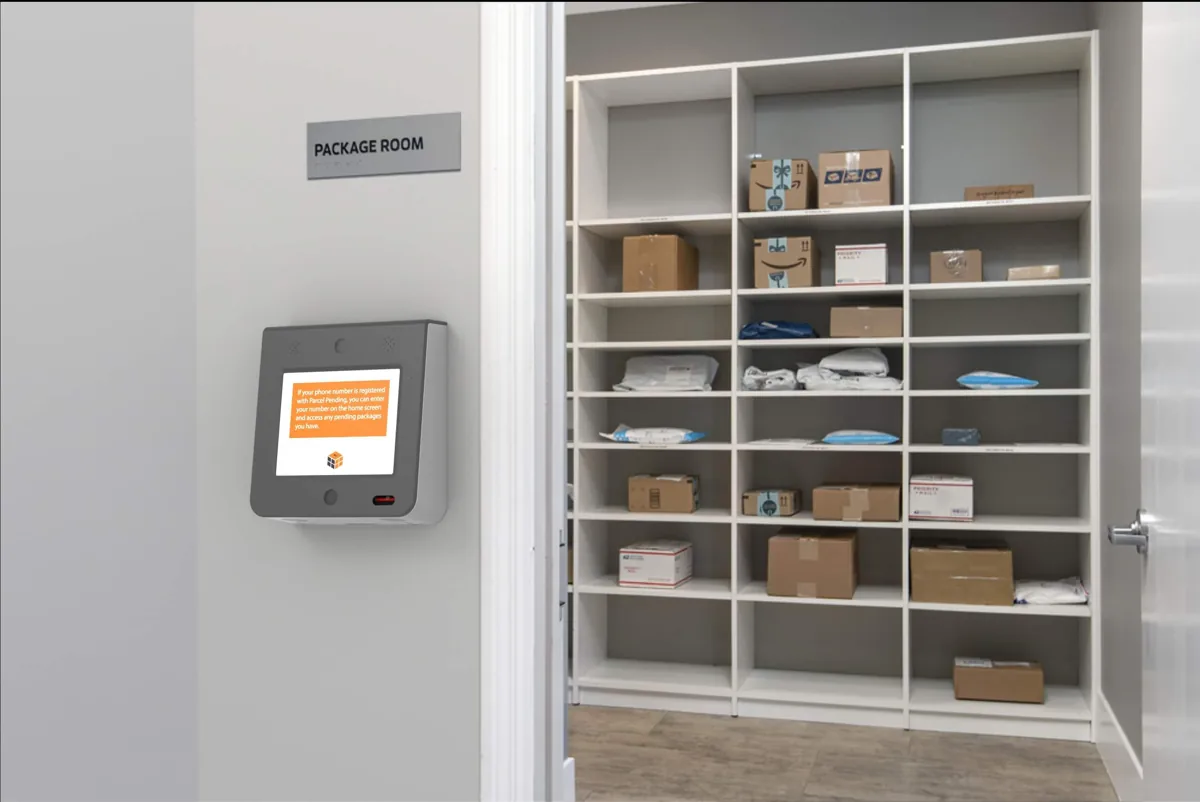
Parcel Pending offers a controlled-access package-room solution that can connect with its lockers. This is worth evaluating where some packages are too large, irregular or numerous for the available compartment bank. The room layout and the locker workflow should be designed together.
A controlled room provides access to a shared storage area rather than isolating every item behind an individual locker door. Decide which users enter, how packages are identified inside and what event confirms collection. Include shelving, staff circulation and the route for bulky items in the planning review.
Do not use a package room as an undefined dumping area. Assign receiving locations, label storage positions and agree how long items can remain. If both lockers and a room are used, staff need a consistent rule for choosing between them so recipients are sent to the correct collection point.
Software, integrations and data responsibilities
The physical locker bank is only one part of a Parcel Pending project. The manufacturer offers an open API and application-specific software, including Campus Hub and retail Overflow Manager. An API makes integration work possible; it does not prove that a particular connection is included, configured or supported for your organization.
Provide the exact names and versions of the systems involved. For a distributor this may be an order-management or ERP platform; for a campus, a mailroom or receiving system; for a workplace, a directory or asset platform. Identify which system is the source of truth for recipients and orders. Our smart locker software and integration guide provides a wider checklist.
- Which events create an assignment, trigger a notification and close a pickup?
- What happens if the recipient record is missing or a barcode cannot be read?
- Who maintains accounts, user permissions and staff access?
- Which logs, exports and retention settings are required?
- How will IT and operations handle a connectivity interruption?
- Who owns setup, testing, training and ongoing support?
Ask for current security and privacy documentation relevant to the proposed software scope. Review what recipient information is collected, where it is used and who can access it. Do not treat a manufacturer’s general security statement as approval of the customer’s entire deployment.
What to send MH-USA for a Parcel Pending quote
A useful project brief does not need a finished drawing. It needs enough information to distinguish the normal daily workload from the exceptions. Send a few site photos or a simple plan, then describe the handoff you want to improve. We can use that information to help identify the appropriate configuration questions.
- Items and volume: normal and peak order counts, packaged dimensions, multi-piece orders and any temperature requirements.
- Users and hours: who loads, who collects, desired pickup hours and the site’s actual access restrictions.
- Location: indoor or outdoor setting, approach routes, available space and the staff loading path.
- Software: current receiving, ERP, order or asset system, plus the team responsible for integration.
- Operating rules: reminders, overdue collections, returns authorization and the overflow process.
- Project scope: preferred timing, rollout stages and who will handle site preparation and acceptance.
Ask the proposal to distinguish hardware, software, integration services, site work and ongoing service. That makes it easier to compare configurations without assuming every item is bundled. Final placement and installation requirements should come from the selected equipment documentation and the responsible project professionals.
For a pilot, choose a location and workflow that can be measured clearly. Track staffed handoffs, collection delays, uncollected orders and exception workload before and after deployment. These observations are more useful than adopting another organization’s savings figure as your own forecast.
Request a Parcel Pending project quote
Tell us what needs to be collected, where the system will go and which software is involved. Include your site ZIP code so we can review the project location.
Parcel Pending locker FAQs
Is MH-USA an authorized Parcel Pending dealer?
Can Parcel Pending support pickup outside normal business hours?
What is the difference between indoor and outdoor Parcel Pending lockers?
Does Parcel Pending offer refrigerated lockers?
Can Parcel Pending integrate with our existing software?
Can large orders and returns use the same locker solution?
How much does a Parcel Pending system cost?
Shop Packaging for Order Fulfillment
These shipping boxes are fulfillment supplies, not Parcel Pending locker components. Parcel Pending systems are quoted separately for your project.


Plan your Parcel Pending pickup workflow
Share your location, package mix and access requirements with the MH-USA team.