
Home › Vertical Storage Solutions › Boise
Vertical Storage Solutions in Boise
Material Handling USA supplies, installs, and services Vidir vertical carousels, vertical lift modules, and hospital bed lifts throughout Boise and the Treasure Valley — Meridian, Nampa, Caldwell, Eagle, and Kuna included. Free design consultation and professional installation.
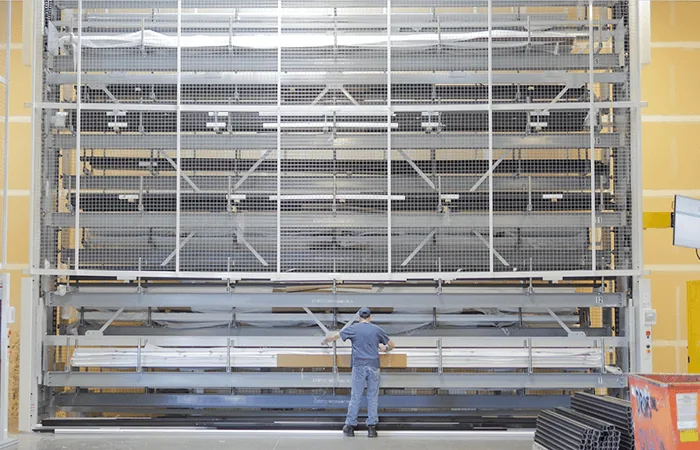
50–80%
Floor space recovered
8–16 wks
Typical equipment lead time
1–3 days
Typical installation on site
25+ yrs
Vertical storage experience
Why Boise Operations Are Looking Up
Boise has been one of the fastest-growing metros in the country, and commercial space has priced accordingly. Treasure Valley operations that could once absorb inventory growth by leasing another bay now find that the bay costs considerably more than it did and may not be available at all. Vertical storage recovers capacity inside the building you already have.
Where we see this most often in the Treasure Valley:
- Boise and Garden City industrial areas — distribution, wholesale, and service operations where floor area is the binding constraint
- Meridian and Nampa corridors — newer manufacturing and fabrication facilities with high clear height that current racking does not use
- Caldwell and the west valley — agricultural equipment, food processing, and parts operations
- Downtown and the medical district — St. Luke’s and Saint Alphonsus facilities where corridor space is at a premium and must stay clear
- Eagle and Kuna — growing service, contractor, and light industrial operations outgrowing their first buildings

Run the lease-rate math first
Take the floor area your current storage occupies, estimate what a vertical system would free up — typically 50 to 80 percent for the same inventory — and multiply by your annual cost per square foot in the Treasure Valley. That number is usually larger than people expect, and it is before you count the labor and accuracy improvements.

Goods to Person, Not Person to Goods
Conventional storage makes the operator do the travelling. They walk the aisle, find the location, climb if it is high, search the shelf, and walk back. Most of that time is not picking — it is travel and search.
Vertical storage inverts it. Inventory lives on carriers or trays inside an enclosed vertical unit. The operator requests an item, the machine rotates or extracts, and the item arrives at an ergonomic working height at a single access opening. The operator never walks the aisle, never climbs, and never searches.
Three things follow from that, and all three usually matter more than the storage density itself:
Floor area returns. A footprint that was aisles and shelving becomes one enclosed unit using the full clear height of the building.
Labor drops. Travel and search time largely disappear, so one operator covers what previously took several.
Accuracy improves and shrink falls. Every item has a controlled location behind a closed door, with software directing every transaction.
Systems We Install in Boise
Vidir builds vertical storage for specific product types rather than one generic machine, which is why the equipment we quote in the Treasure Valley varies so much by industry.
 Tire carouselsDealership groups and independent tire operations across the Treasure Valley. One enclosed footprint replaces a wall of tire racking and takes the ladder work out of the job.
 Wire and cable carouselsElectrical distributors and contractors serving the valley’s construction growth. Spooled wire dispensed at working height rather than handled off the floor.
 Hospital bed liftsSt. Luke’s Health System and Saint Alphonsus facilities. Vertical bed and stretcher storage keeps corridors clear, which is a life-safety requirement rather than a housekeeping preference.
 Vertical lift modulesManufacturing and fabrication shops in the Meridian and Nampa industrial corridors, storing sheet stock, tooling, and small parts with goods-to-person retrieval.
 Shelving and pan carouselsGovernment archives, records storage, and business document operations, where density and controlled access both matter.
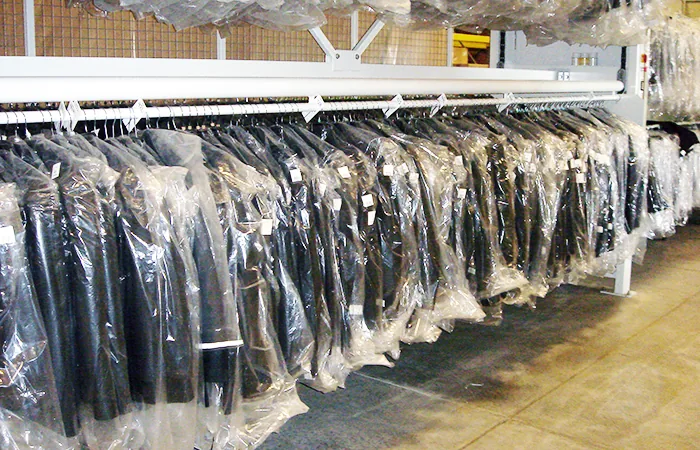 Garment carouselsUniform programs, healthcare linen, and athletic operations across the valley.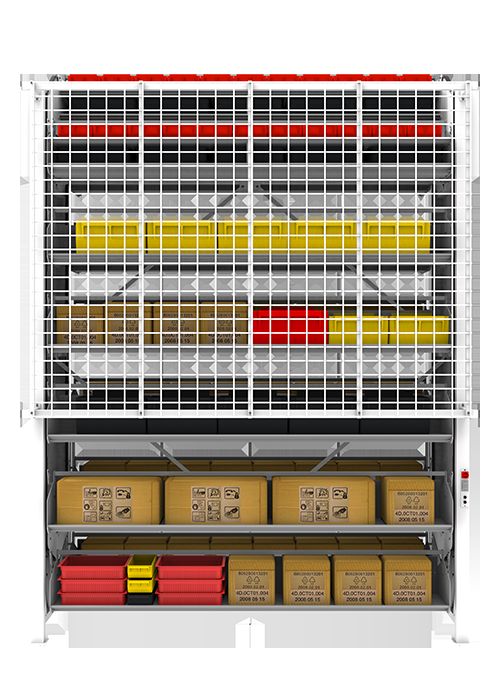

Vertical Carousel or Vertical Lift Module?
Both bring goods to the operator, and they are not interchangeable. This is the first question we work through on a site visit.
| Vertical Carousel | Vertical Lift Module (VLM) | |
|---|---|---|
| How it works | Carriers rotate continuously around a track, like a Ferris wheel | An extractor travels vertically and pulls the requested tray to the opening |
| Best clear height | Effective in moderate clear heights | Scales best in tall buildings |
| Load flexibility | Carriers are a consistent size | Trays accommodate varied heights; the machine stores them by measured height |
| Cube efficiency | Good | Excellent — dynamic tray spacing eliminates wasted air |
| Throughput | High | Very high, especially with dual access openings |
| Typical use | Small parts, tires, wire, garments, records | Sheet stock, tooling, dies, mixed-height parts, high-volume picking |
| Relative cost | Lower entry point | Higher, with the stronger labor payback at volume |
| Choose it when | Product is uniform and pick rates are steady | Clear height is tall, product heights vary, or throughput is high |


Building the Business Case
Vertical storage is capital equipment, and it should be justified with numbers rather than enthusiasm. These are the five lines that carry almost every project we quote.
| Value Driver | How to Quantify It | Why It Usually Beats Expectations |
|---|---|---|
| Floor space recovered | Square feet freed × your annual cost per square foot | Typically 50 to 80 percent of the storage footprint, and it recurs every year |
| Labor per pick | Time-study current picks per hour vs. projected | Travel and search time are the bulk of a pick and they largely disappear |
| Avoided expansion | Cost of the lease, move, or building addition you do not do | Frequently the single largest number, and the easiest to defend |
| Inventory accuracy | Current cycle-count variance and its carrying cost | Software-directed transactions and controlled locations cut variance sharply |
| Shrink and damage | Historic loss on the affected inventory | Enclosed, access-controlled storage removes casual loss entirely |
| Injury and ergonomics | Recordables tied to reaching, climbing, and lifting | Items arrive at working height — no ladders, no floor-level reaching |
Where the payback comes from fastest
- High pick frequency on a moderate number of SKUs
- Expensive floor area, or an expansion decision already on the table
- Tall clear height that current storage does not use
- Persistent inventory accuracy or shrink problems
- Storage requiring ladders, climbing, or awkward reaching today
- Operations struggling to hire and retain warehouse labor

Site Requirements We Verify Before Quoting
Boise Service Areas
| Area | Coverage |
|---|---|
| Boise | Primary service area |
| Meridian | Full service |
| Nampa | Full service |
| Caldwell | Full service |
| Eagle | Full service |
| Kuna and Star | Full service |
| Mountain Home | Scheduled service |
| Twin Falls | Scheduled service |
| Ontario, Oregon | Scheduled service |
What local coverage actually buys you
Automated storage is only as good as the support behind it. A carousel that is down is not storage
— it is a locked box with your inventory inside.
We travel to the Treasure Valley from our Salt Lake City headquarters for assessments, installation, and service. Site visits are scheduled rather than same-day, and we recommend a preventive maintenance schedule on any automated system so that service is planned rather than reactive.
We also handle the parts of a project that are not equipment: layout drawings, seismic anchorage documentation, power coordination, freight and rigging, operator training, and the preventive maintenance schedule afterward.
How a Project Runs
Discovery call
What you store, how often it is picked, what your current storage looks like, and what is driving the project — space, labor, accuracy, or an expansion decision.
Site visit
We measure clear height and obstructions, check slab and power, and confirm delivery access at your Boise facility.
Layout and equipment selection
Carousel or lift module, unit count, carrier or tray configuration, access opening height, and software approach — with a drawing showing how it lands in your building.
Quote and ROI review
Equipment, freight, installation, and anchorage, alongside the space and labor case so you can defend the capital request internally.
Engineering and permitting support
Anchorage design to local seismic criteria plus the documentation your building department needs.
Delivery and installation
Typically one to three days on site once equipment arrives, scheduled around your operating hours.
Training and handover
Operator training at the machine, software configuration, and load-in of your inventory into locations.
Preventive maintenance
A scheduled maintenance program so service is planned. Unplanned downtime on an automated system always costs more than the maintenance visit would have.
Shop Online at MaterialHandling-USA.com
Shelving, carts, bins, and storage accessories that pair with a vertical storage project can be ordered online. Vertical storage equipment is quoted per layout.
Explore Vertical Storage
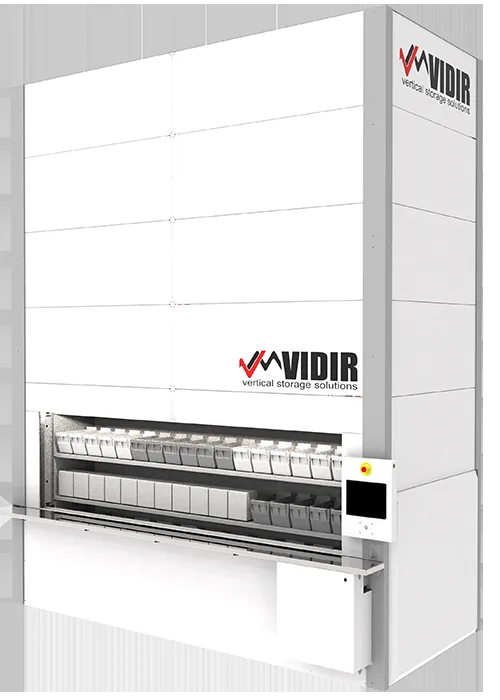
 Vertical CarouselsHow carousels work, configurations by product type, and where they fit best.
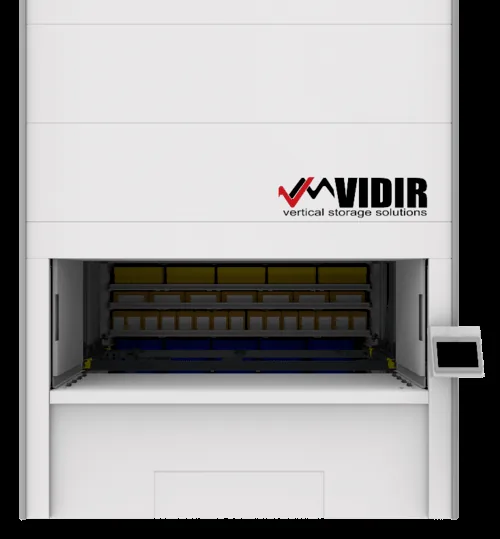 Vertical Lift ModulesTray-based automated storage for tall buildings and mixed-height product.
 Vidir Vertical Storage SolutionsThe full Vidir line and the cities we serve across the Intermountain West.
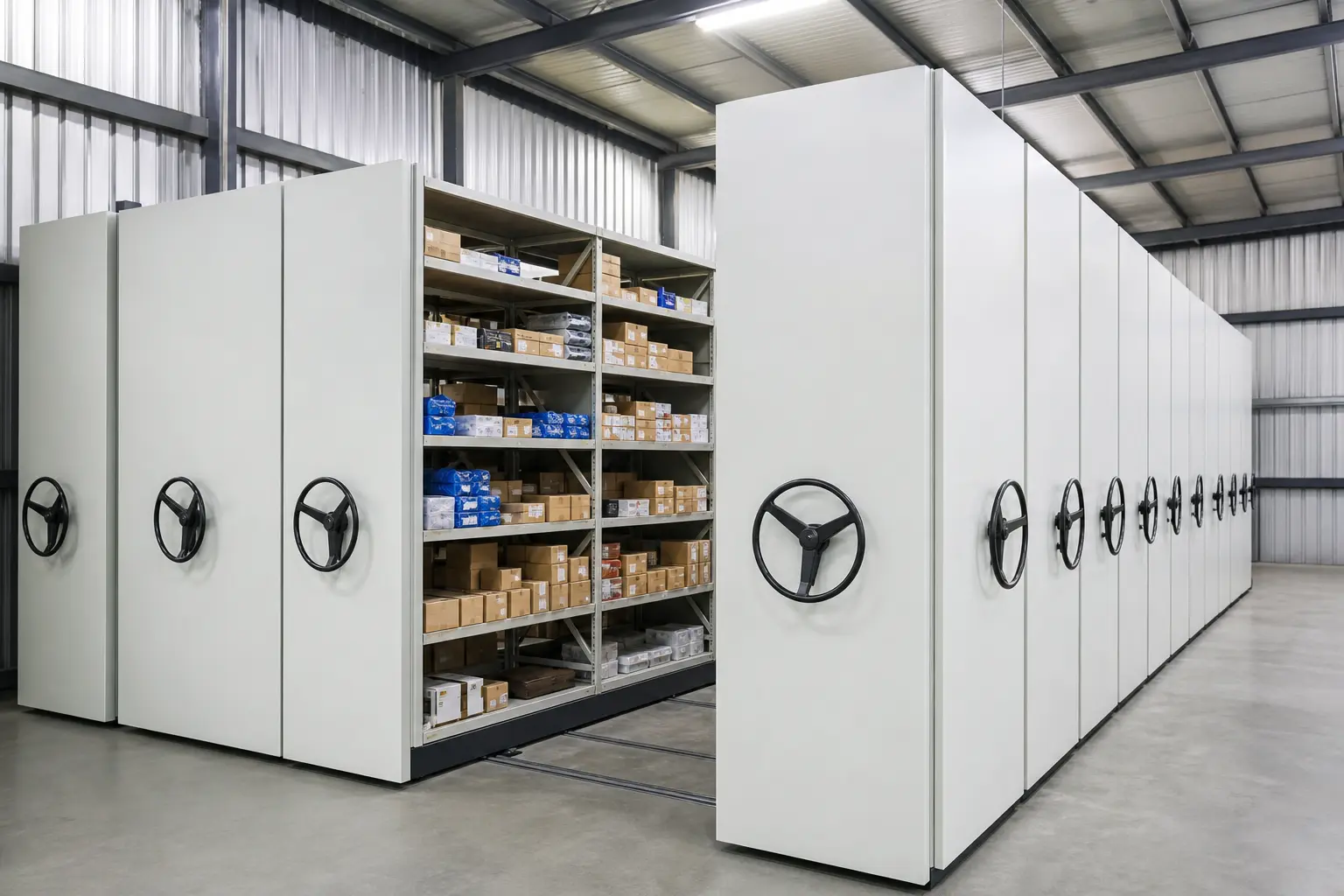 Mobile ShelvingThe non-automated density option — eliminate fixed aisles at a much lower capital cost.
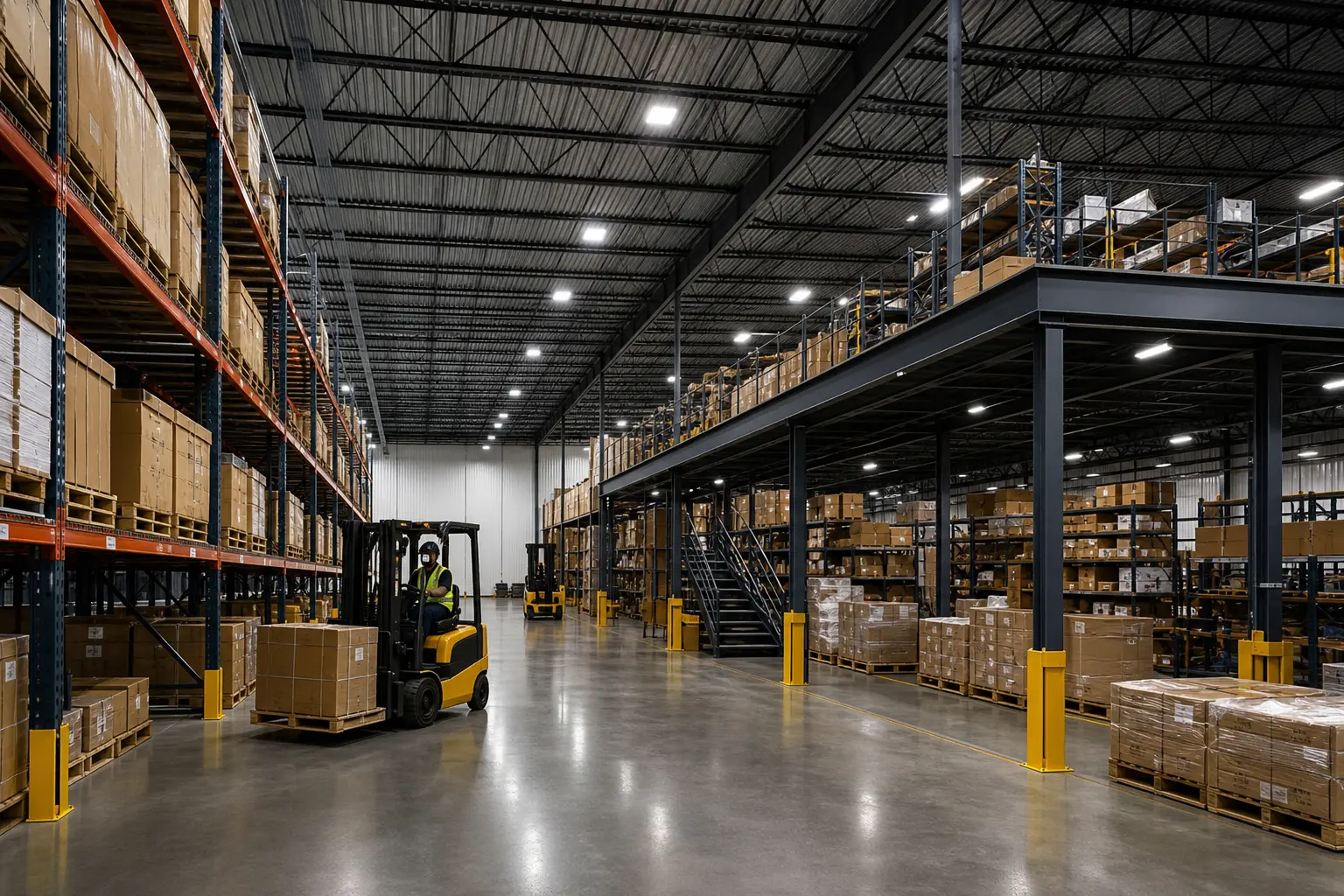 Warehouse DesignLayout, slotting, and flow design — where an automation decision should start.
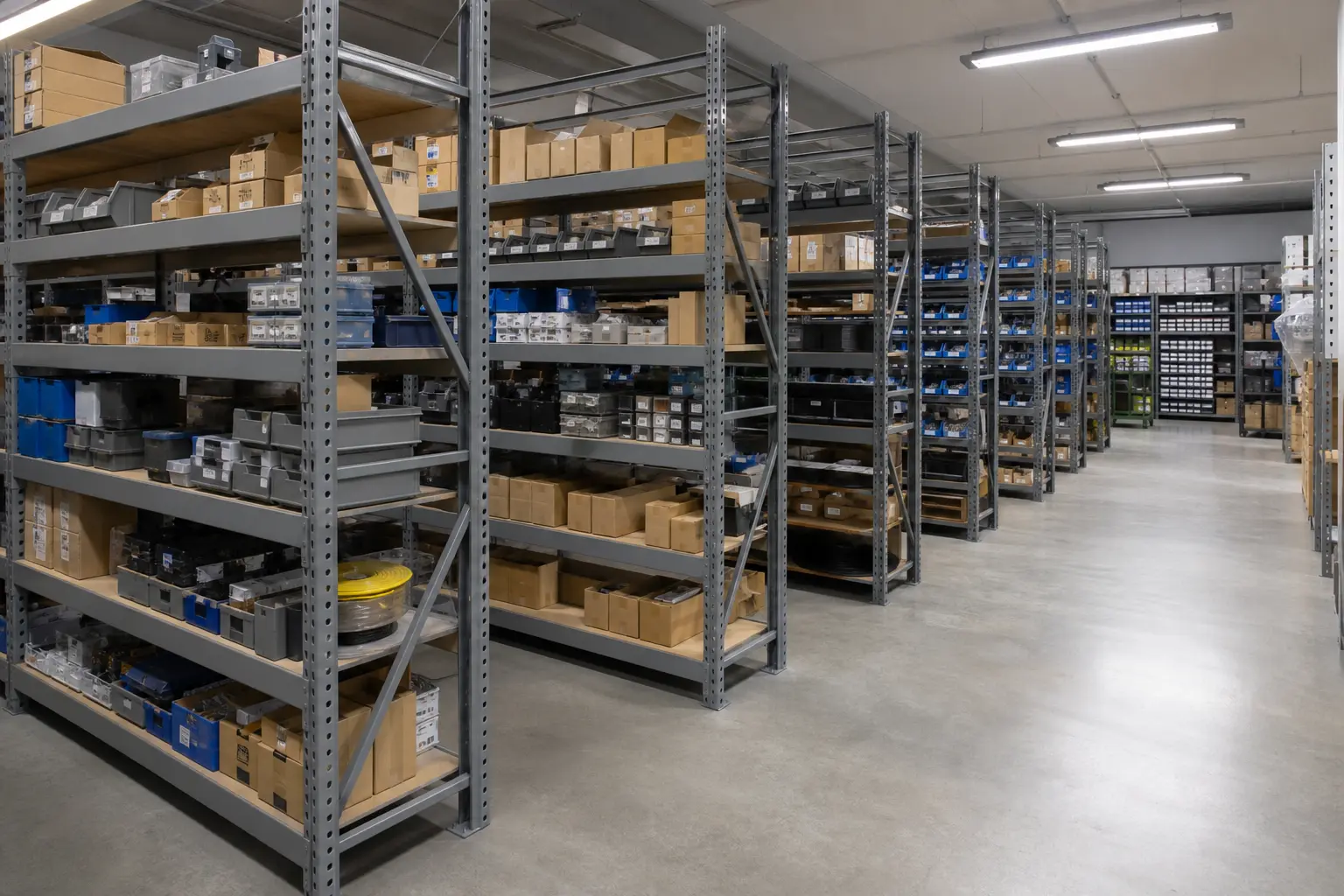 Shelving SolutionsBoltless, clip-style, wire, and plastic shelving for everything that does not need automation.
Vertical Storage Applications in Boise
Treasure Valley operations use Vidir vertical storage for a range of inventory types, from tires and wire to medical supplies and general parts. Here are the most common fits we see in the Boise area.
Recent Regional Projects Near Boise
We don't yet have a published case study from an Idaho installation, so the nearest comparable Vidir wire carousel project is in Colorado.
Frequently Asked Questions
Does Material Handling USA serve Boise, Idaho?
What is the lead time for delivery to Boise?
Do you provide service and maintenance in the Treasure Valley?
Do you do site visits in Boise before quoting?
What seismic and code requirements apply in Idaho?
Is vertical storage worth it at Boise lease rates?
Talk With a Vertical Storage Specialist in Boise
Tell us what you store and what your floor area costs, and we will model the space and labor case for your Boise facility. Free design consultation — call (208) 284-2559 or request a quote.