
Interlake Mecalux Seismic Pallet Racking
Interlake Mecalux teardrop selective rack, engineered project by project for seismic demand: heavier footplates, reinforced frames, row spacers and anchoring sized from the calculations.
MH-USA is an Interlake Mecalux dealer. We quote, coordinate engineering and install.
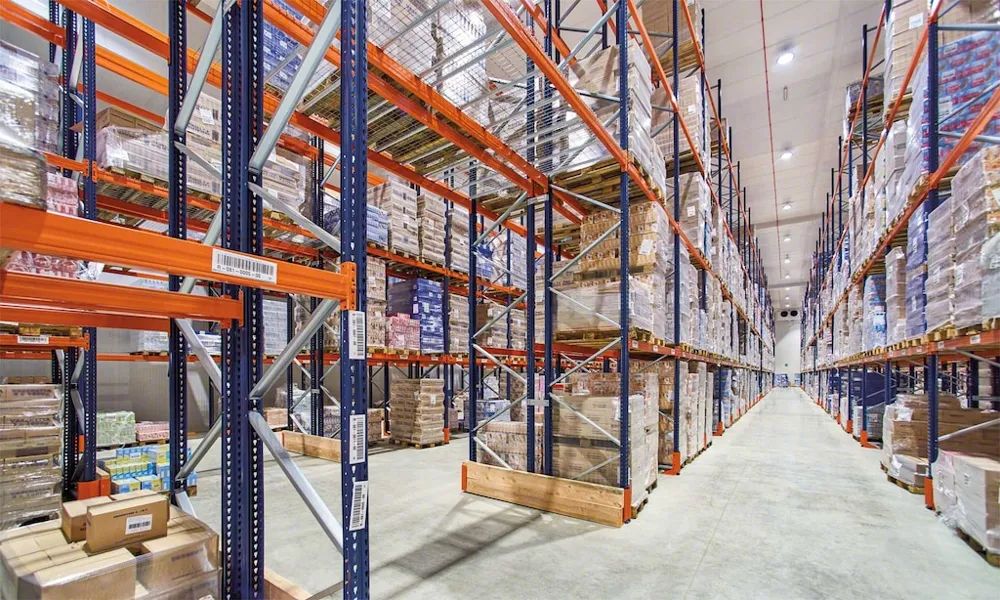
MH16.1
R-Mark certified selective rack
2 in.
Teardrop slot pitch
8 x 8 in.
Oversized footplate option
2 locks
Spring-loaded per beam end
Shop Interlake Pallet Rack Online
These Interlake teardrop starter and add-on sections, wire decks and column protectors have current online prices. For a seismic area, treat them as parts of an engineered layout: the footplate, anchor and frame model must match the calculations for your building before you order.
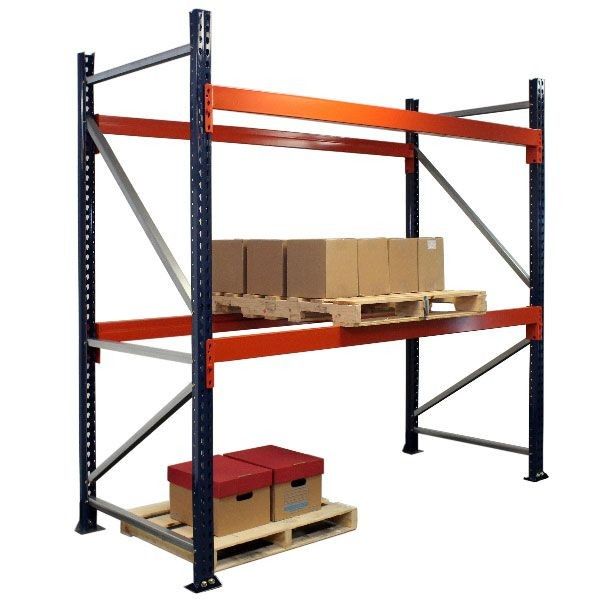
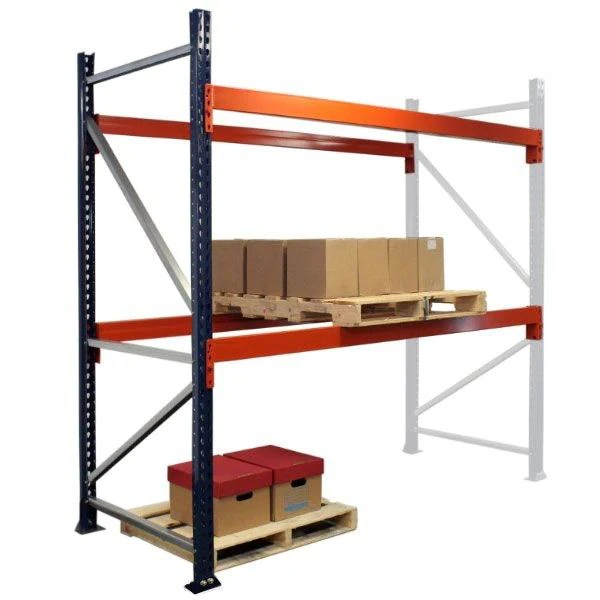
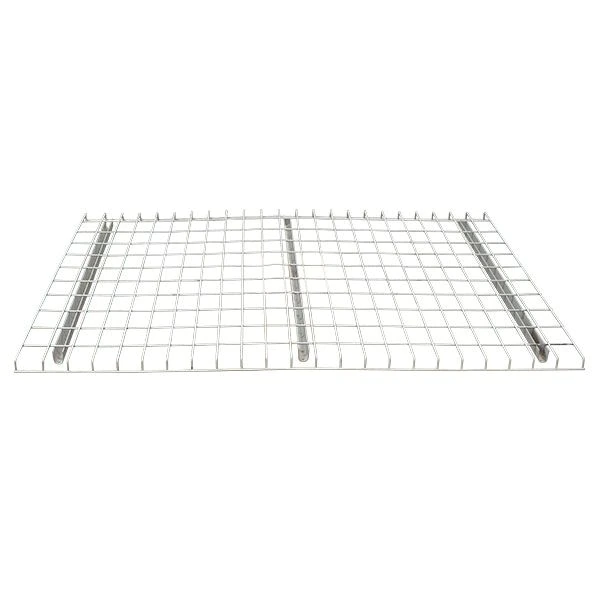

Browse all pallet rack parts and accessories → · Build & price a rack online →
How Interlake Mecalux approaches seismic racking
Interlake Mecalux does not sell a separate seismic product line with its own part number. Its seismic racking is the company’s selective pallet rack, designed for the earthquake demand at a particular site and built from components chosen by that design. In its article on seismic racking for pallets, Interlake Mecalux describes rack as a light structure compared with the loads it carries, and says that racks for high-risk regions need specific design procedures.
That matches how we work with the line. We start from your building, loads and rack height, and the rack is configured, calculated and detailed for that combination. The same frame and beam that suit a standard layout may be upgraded, reinforced or anchored differently once the seismic numbers are run.

If you are comparing brands or still deciding what a seismic rack needs, start with our manufacturer-neutral seismic-rated pallet rack guide, which also covers Penco Pallet Rack Plus. This page focuses on the Interlake Mecalux system and the options its technical literature lists for seismic projects.
Three requirements Interlake Mecalux designs for
No collapse
The structure has to resist the seismic action and stay intact. That means calculating the forces each component can carry and checking them against the demand.
Unit loads stay put
Ground acceleration can make pallets slide on the beams and fall. Interlake Mecalux notes this risk can be reduced with cross-ties or mesh panels on the beams, selected as part of the design.
Damage limitation
After an earthquake, the level of damage must be assessed and corrective action taken before the rack is used again.
Two-stage analysis
Interlake Mecalux describes seismic rack design in two stages. First, engineers study the rack’s own dynamic behavior: how it naturally moves when disturbed. That behavior depends on the relationship between mass, meaning the weight of the rack and its unit loads, and stiffness, meaning how strongly the rack resists sideways displacement. Second, they apply the seismic action for the site. That action depends on expected ground acceleration and soil type, from rock to loose soil, and the applicable code for the location.
The manufacturer also notes that design demand can be increased by the facility itself, for example when the public has access to the racks, when liquids are stored, or in freezer storage. In the United States, those inputs are handled through ASCE 7 seismic loads and the ANSI MH16.1 rack specification referenced by the building code, and the result has to satisfy the local building department.
Interlake Mecalux components used in seismic designs
Upright frames
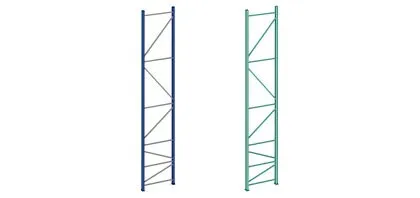
Interlake Mecalux frames are two posts connected by horizontal and diagonal struts, with a foot plate welded or bolted to the bottom of each post. Posts are slotted every 2 in. in a teardrop pattern. Several post models are offered in different dimensions and gauges, so a heavier column can be chosen when the calculations ask for it.

Beams and the piston lock
Roll-formed beams have welded end plates that drop into the teardrop holes and are secured by two spring-loaded locking devices, which Interlake Mecalux calls its piston lock. Beams need no bolts, so levels can be moved later without reordering material, but any change to beam elevations in a seismic layout should be checked against the engineering first.
Reinforced frames and splices
The selective rack support guide describes bolted reinforced frames, where both columns are reinforced up to just above certain beam levels to raise capacity, and notes that they are usually required in seismic areas. Reinforcement uses bolted brackets at 24 in. spacing, so no field welding is needed, and each post can only be reinforced with the same post model. Taller frames are spliced with bolted kits.

Interlake Mecalux states that its selective pallet racks hold RMI R-Mark certification for cold-formed steel racks to ANSI MH16.1:2023, and its support guide notes that the Mecalux Group also follows the standards of IAS, the City of Los Angeles, the City of Phoenix and Clark County. Its bolted rack brochure adds that reinforced profiles, safety accessories and a non-rigid structure help the rack perform better against seismic movement. Those are statements about the product and its design basis. Approval of your installation still comes from site-specific calculations and the local permit process.
Footplates, shims and anchors
Footplate choice is where seismic projects most visibly differ from standard ones. Interlake Mecalux lists several options:
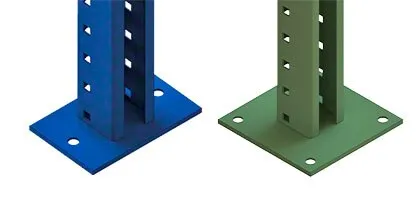
- Standard bolted foot plates, anchored with a Hilti 1/2 x 5-1/2 in. anchor. All plates have 5/8 in. holes.
- Heavy-duty “J” and “M” foot plates, which the guide says are commonly used in seismic areas or where the floor structure is less than desired.
- Flush heavy-duty plates, used when anchors must not interfere with the aisle or fall outside the frame.
- Oversized welded “PP” plates and an 8 x 8 in. welded option, used when seismic calculations require them.
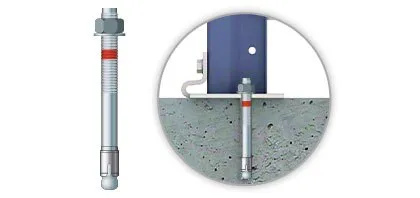
Where a different plate is used, Interlake Mecalux states that the number of anchors is determined by the calculation. In practice the engineer specifies anchor type, diameter, embedment, quantity and edge distances from the base reactions and your slab.
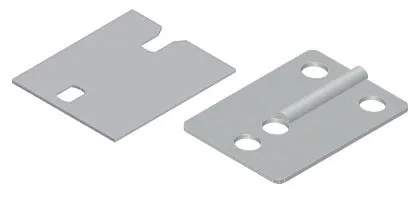
Shims level frames on uneven floors. Interlake Mecalux publishes shims for its standard and heavy-duty plates along with shimming guidelines, and shim stacks have to stay within those limits because they change how load reaches the plate and anchor.
For anchor types and slab questions across brands, see our pallet rack anchor bolts and base plates guide.
Row spacers, wall ties and load containment
Interlake Mecalux says rack stability can be increased with row spacers and wall ties, depending on rack height and depth, wall type and installation location. Row spacers join back-to-back rows and add rigidity. Its guide recommends the bottom row spacer be no higher than 50 in. from the floor, the top one next to the highest horizontal strut, and intermediate spacers no more than 144 in. apart. Heavy-duty row spacers and cross-aisle ties are also offered.

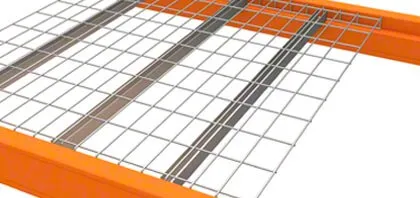 Wire mesh deckingMesh panels on the beams support loads and help keep them in place, one of the containment measures Interlake Mecalux cites.
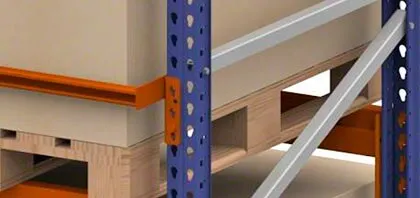 Backstops and pallet stopsRails and stops keep loads from moving off the back of a level and into the flue or the next aisle.
 Post protectorsGuards reduce forklift damage, so frames stay in the condition the calculations assumed.

Load signs
Every installation should carry a load application and configuration sign so operators know the allowed loads and configuration. In seismic layouts the sign also documents the configuration that was engineered, which matters when someone wants to add a level later.
Interlake Mecalux bolted frame models
| Column model | Post width | Steel gauge |
|---|---|---|
| 314 | 3.00 in. | 14 ga. |
| 313 | 3.03 in. | 13 ga. |
| 312 | 3.06 in. | 12 ga. |
| 101 | 3.97 in. | 13 ga. |
| 102 | 4.01 in. | 12 ga. |
| 122 | 4.80 in. | 12 ga. |
| A10 | 4.01 in. | 12 ga. |
The bolted frame part number tells you a lot about a seismic design. It encodes whether the frame ships assembled or knocked down, the column model, the strut pattern, the frame height and depth, and the foot plate model, which can be standard, J, M, PP or PP 8 x 8. Standard frames are made in 12 in. height increments and 2 in. depth increments, with 36, 42 and 48 in. as standard depths and special sizes on request. Struts can be galvanized or painted, and frames come in a standard cataphoresis blue finish.
Post profiles have nine bends and perforations every 2 in. on the face and sides. The teardrop face holes take the beams with the narrow end down; side holes take 5/16 in. grade 5 bolts for struts and accessories such as row spacers and column protectors. When an engineer moves a design from a 314 column to a 312 or a 4 in. class column, the change in width and gauge is what adds capacity at the base of a tall, heavily loaded frame. Welded frames are also offered in 3 x 3 in. and 4 x 3 in. profiles.
Because a seismic layout ties a specific column, foot plate and anchor together, check part numbers on delivery against the approved drawings. A frame with the right height and depth but the wrong foot plate code is not the frame the engineer designed.
Design clearances Interlake Mecalux publishes
Seismic design does not change basic pallet geometry, but it makes mistakes more expensive. Interlake Mecalux optimizes its products around the 40 x 48 in. GMA pallet and publishes these planning guidelines:
- Leave 4 to 6 in. between the top of a load and the beam above so the load can be lifted off cleanly.
- Let the pallet extend 3 in. beyond the frame depth front and back.
- Keep 3 to 4 in. between pallets and between a pallet and the adjacent post.
- Typical beam lengths for 40 in. wide pallets are 48 in. for one pallet per level, 96 in. for two and 144 in. for three.
In earthquake areas these clearances also affect how loads behave when the rack moves. Tight clearances make it more likely that a pallet is set down off-center or bumps the beam, and overhang beyond what the decking or supports allow increases the chance of a load tipping. Wire decks, pallet supports and backstops chosen during design help, and our installers set beam elevations to the approved drawings so the clearances you planned are the ones you get.
Manufacturer project examples
Interlake Mecalux cites projects completed by the Mecalux Group in seismic regions. These are the manufacturer’s projects, not MH-USA installations, and they show the type of engineering involved rather than results you should expect in a given building.
Brivio & Viganò, Italy. Mecalux equipped seven freezer warehouses for this food logistics provider with pallet racking and push-back racking. The site is in the seismic zone of Pozzuolo Martesana, and the systems were designed for storage capacity and to absorb forces from potential ground motion.
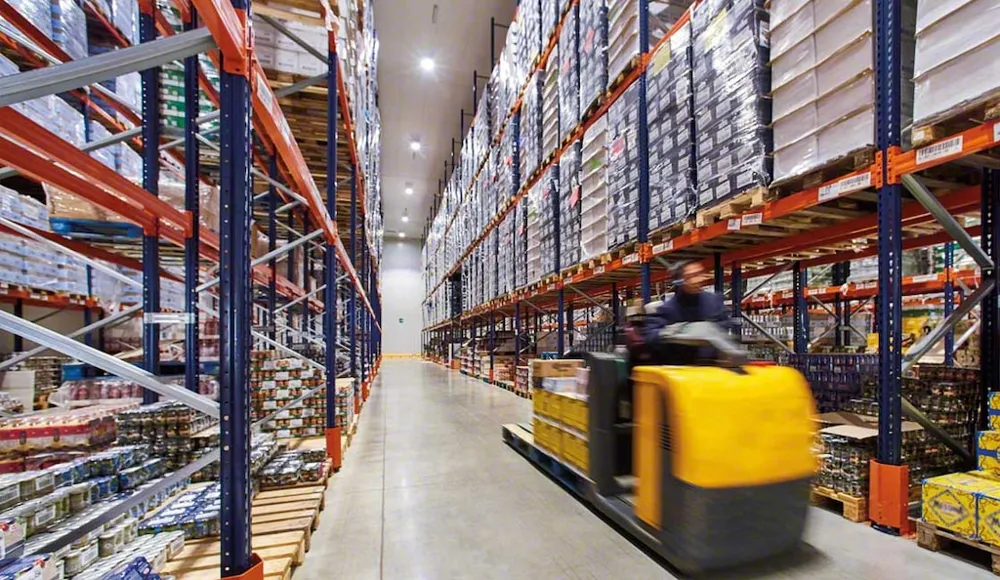

Iron Mountain, Chile. Mecalux reports that after the magnitude 8.8 earthquake in February 2010, a records warehouse it had started up five months earlier was still standing, while the customer lost seven facilities with racking from other manufacturers. Iron Mountain then had Mecalux rebuild those sites and build two new warehouses.
Hayat Kimya, Turkey. For an automated rack-supported warehouse 390 ft long, 345 ft wide and 150 ft high, Mecalux reports using 11,000 tons of steel, including 2,200 tons of additional anti-seismic reinforcing steel, along with reinforced anchoring.
Planning an Interlake Mecalux seismic project with MH-USA
Collect site data
Address, slab thickness and condition, clear height, sprinklers and dock and aisle layout.
Define loads
Pallet size, maximum unit load, levels and any special products such as liquids or frozen goods.
Configure the rack
Frame model, depth and height, beam profiles and levels, row spacers and accessories.
Engineer and permit
Calculations and sealed drawings where required, with the footplate and anchor detail.
Install and inspect
Installation to the anchor detail, load signs, and any special inspection your jurisdiction requires.
We sell and install Interlake Mecalux rack across the Intermountain West. For buildings along the Wasatch Front, our Utah seismic pallet rack page explains local permit submittals, and our Interlake pallet rack in Utah page covers the line we stock and install locally.
Interlake Mecalux manufactures frames and accessories at plants in Pontiac and Melrose Park, Illinois, and in Tijuana and Matamoros, Mexico, with Quick Ship stock for commonly ordered products. Seismic projects often need non-stock plates or reinforced frames, so allow time for engineering and production.
Questions to settle before ordering
- Bolted or welded frames? Interlake Mecalux offers both. Bolted frames ship compactly and allow bolted reinforcement; welded frames suit some heavy-duty designs. The engineer and lead time usually decide.
- Which foot plate code? Standard, J, M, flush, PP or PP 8 x 8, chosen from the base reactions and the slab, and shown on the drawings.
- How many anchors per plate, and which product? Your jurisdiction may require a specific anchor approval or special inspection of anchor installation.
- Are reinforced frames needed? For taller or heavier layouts the lower posts may be reinforced to a height above certain beam levels.
- What containment is required? Wire mesh decks, crossbars, backstops or other measures, coordinated with the sprinkler design.
- Row spacers and ties? Quantity and spacing by frame height, plus wall ties or cross-aisle ties if the design uses them.
- Who stamps the drawings? Where a licensed engineer must seal calculations, confirm that the engineer is licensed in your state.
We work through these with you and the engineering team before the order is released, so the bill of materials matches the approved design.
Expanding or reusing Interlake rack
Adding bays to an existing Interlake installation is common. In a seismic area the new and existing rack should be checked together, especially if you are adding height or levels, changing beam elevations or changing loads. Mixing brands in one bay is not acceptable in an engineered seismic layout. Our pallet rack identification guide helps confirm what you have.
Used rack savings are often consumed by installation, because parts rarely fit well after disassembly. Reusing rack you already own can work if it is identified, inspected and included in the calculations. Send photos and we will help decide. More of the Interlake line, including drive-in, push-back and pallet flow, is on our Interlake Mecalux page.
Get a free quote
Tell us what you are storing, the building address, the rack height you want and your timeline. A project specialist will follow up with layout options, engineering scope and pricing. Prefer to talk? Call (800) 326-4403.
Frequently Asked Questions
Does Interlake Mecalux make a separate seismic pallet rack product?
Is Interlake Mecalux rack certified for seismic zones?
Which footplates are used in seismic areas?
What anchor does Interlake Mecalux use?
Do reinforced frames cost more?
How do I keep pallets from sliding off in an earthquake?
What happens after an earthquake?
Can MH-USA quote Interlake seismic rack outside Utah?
Quote Interlake Mecalux seismic racking
Send your building address, loads and rack height and we will configure the rack, coordinate engineering and plan installation.