
Penco Pallet Rack Plus: Seismic-Rated Pallet Rack
Four-prong beam connectors, larger 3/8 in. footplates and the same rated loads as standard Penco pallet rack, planned around the engineering and anchoring your building requires.
MH-USA quotes, plans and installs Penco pallet rack. Seismic suitability is confirmed for each site, not assumed.

4 prongs
Plus beam end connector
11-1/2 in.
Connector length
5 x 7 in.
3/8 in. thick footplates
4 holes
9/16 in. anchor holes per plate
Shop Pallet Rack Parts Online
Need rack components now? These are Interlake teardrop starter and add-on sections, wire decking and column protectors with current online prices. They are a different brand from Penco Pallet Rack Plus, which we quote by project. Do not mix brands in one bay without an engineering review.
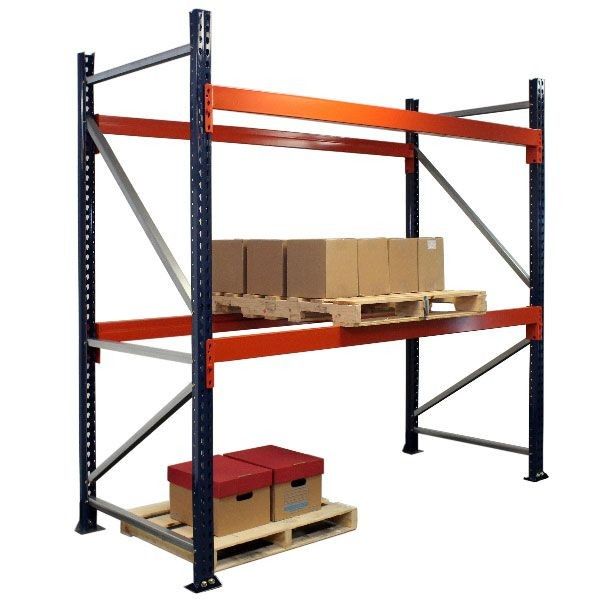
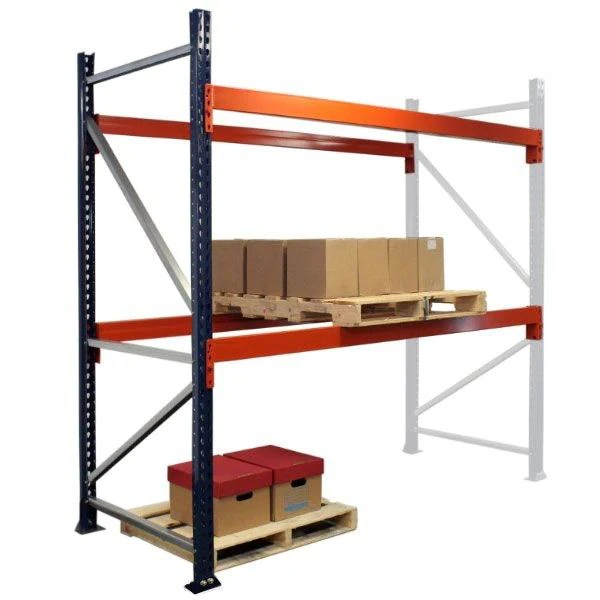
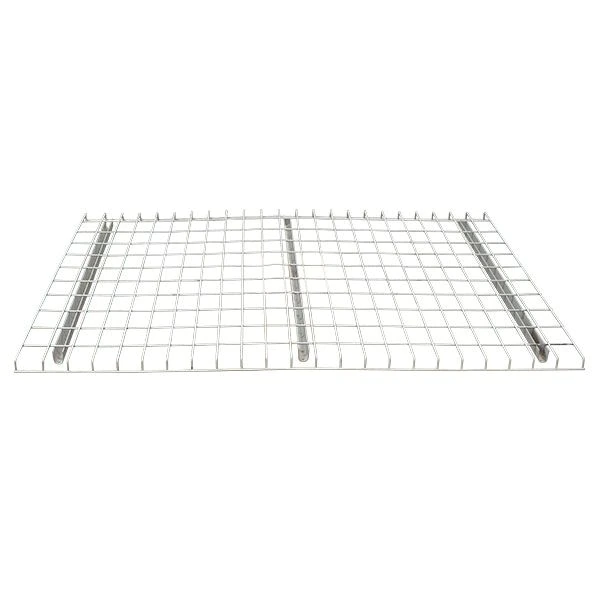

Browse all pallet rack parts and accessories → · Build & price a rack online →
What makes Penco Pallet Rack Plus different
Pallet Rack Plus is Penco’s version of its slotted pallet rack for buildings in high seismic areas or other severe conditions. Penco states that load capacities are the same as its standard heavy-duty pallet rack. The change is in how the frame and beam resist horizontal and vertical forces that could damage a standard rack and the product stored on it.
Two details do most of that work. First, Plus beams use a four-prong end connector instead of the standard three-prong connector. Second, every Plus upright frame gets two heavier footplates with more anchor holes, giving the installer more options when the floor anchoring is designed.
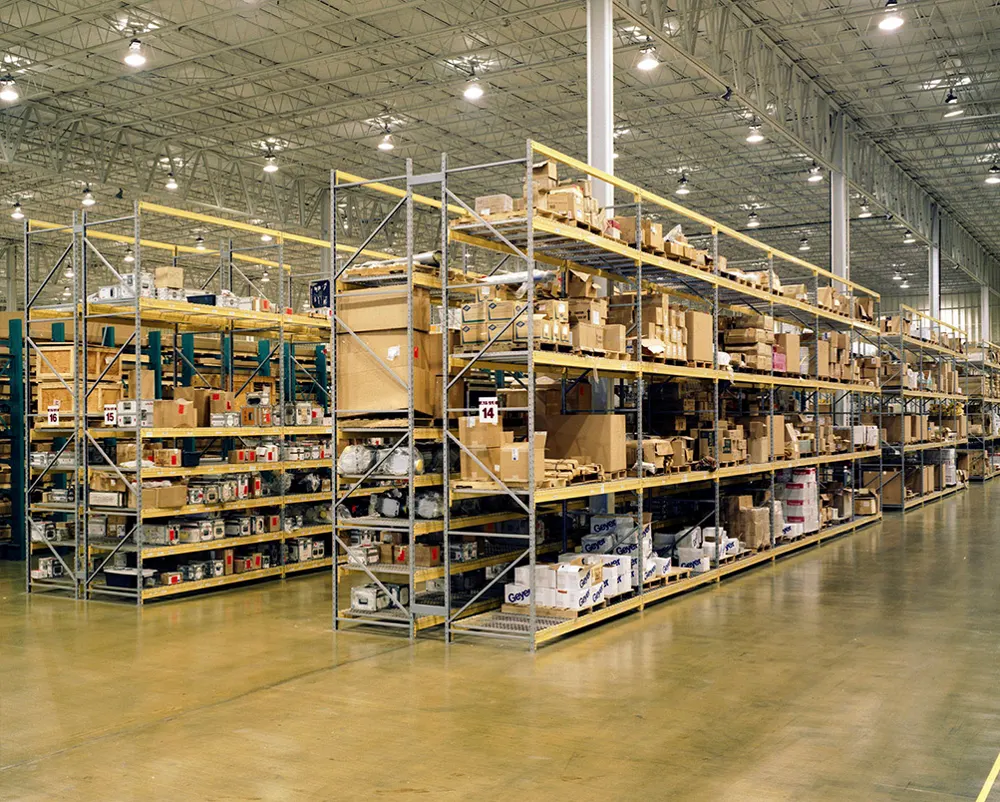
That makes Pallet Rack Plus a product decision, not a compliance certificate. Penco itself tells buyers to contact a Penco representative to learn the seismic rating where the rack will be used. In practice, whether a given layout works in your building depends on the site’s seismic design values, the rack height, the load per level, the slab and the anchors. Our job is to pull those pieces together so the rack you order is the rack the engineer and the building official can approve.
If you are still deciding whether your project needs seismic-rated equipment at all, start with our pallet rack seismic compliance guide. This page focuses on the Penco product line and on what changes when you specify it.
Comparing manufacturers? Our brand-neutral seismic-rated pallet rack guide sets Pallet Rack Plus beside other options, including Interlake Mecalux seismic pallet racking. Utah buyers can also see our Utah seismic pallet rack permit and engineering guide.
The four-prong Plus beam connector
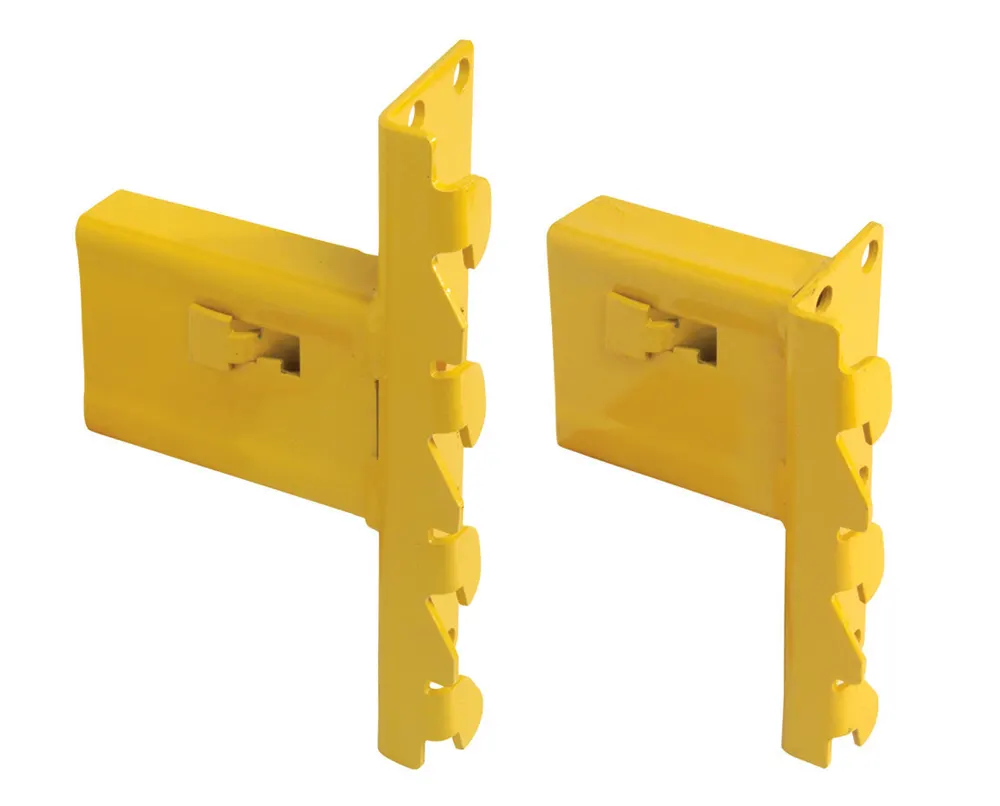
Penco’s standard beam end has a three-prong connection along an 8-1/2 in. connector. The Plus connector is 11-1/2 in. long and carries four prongs. Penco centers the beam on that longer connector, so the beam load is shared evenly by all four prongs, and the extra engagement gives a stronger connection between beam and upright where lateral forces are higher.
Like the standard version, Penco end connectors slip into slanted slots in the upright to create a compression fit: the more load placed on the beam, the tighter the connection becomes.
Same safety locking key
Plus beams use the same recessed locking key as standard Penco beams. The key is heavy gauge steel, is part of the beam assembly, slides into a slot in the side of the post without tools, and stays visible for inspection. Penco rates it to resist an upward force of up to 1,000 lb from material handling equipment. The key only works if it is engaged, so we include key checks in installation walk-throughs and recommend them in routine rack inspections.
Placement limits to plan around
- The beam sits 3 in. down from the top of the Plus connector, so Plus beams cannot be installed flush with the top of the uprights. Allow for that when you set the top level and overall frame height.
- Plus beams can be set as low as 9 in. above the floor.
- Beam levels adjust on 3 in. vertical centers and can be set independently on each side of a frame.
- Beams cannot be placed where a frame splice is located.
- Penco notes that any Penco pallet rack beam can be equipped with four-prong connectors, which matters if an existing Penco installation is being reviewed for an upgrade. Treat that as a question for the engineer and the factory, not a field swap.
Standard Penco pallet rack vs. Pallet Rack Plus
| Feature | Standard Penco Pallet Rack | Penco Pallet Rack Plus |
|---|---|---|
| Intended use | General warehouse storage; Penco lists it for legacy Seismic Zones 0, 1, 2A and 2B | High seismic areas or other severe conditions; rating confirmed for the site |
| Beam end connector | Three prongs, 8-1/2 in. long | Four prongs, 11-1/2 in. long, beam centered |
| Locking key | Recessed key, resists up to 1,000 lb upward force | Same key as standard beams |
| Footplate | 7 ga. plate, 13.7 sq. in., two 9/16 in. holes | 5 x 7 x 3/8 in. plate, 35 sq. in., four 9/16 in. holes |
| Top beam | Can be set flush with top of upright | Set 3 in. below connector top; not flush |
| Lowest beam | As close as 9 in. from floor | Within 9 in. above floor |
| Rated loads | Per frame and beam letter code | Same as standard, per Penco |
The zone labels in Penco’s description of its standard rack come from the older Uniform Building Code zone map. Current building codes in most U.S. jurisdictions use seismic design categories (A through F) derived from the International Building Code and ASCE 7, so do not read an old zone label as approval under today’s code. A building in a low design category may never need Plus components; a building in category D, E or F will usually need an engineered rack design regardless of brand.
Plus upright frames and beams
Upright frames
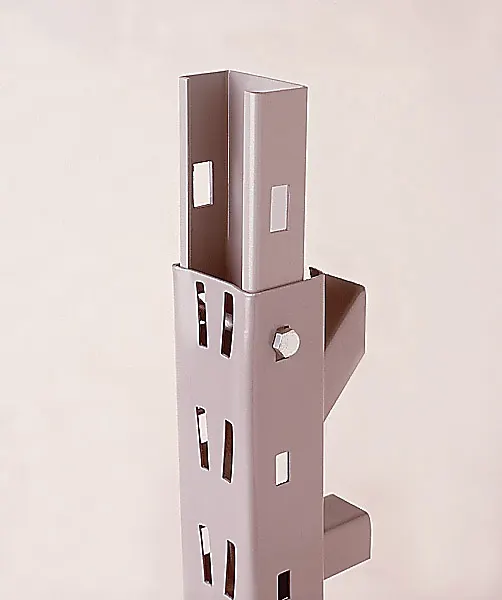
Plus upright frames are fully welded at the factory. The columns are MIG welded to channel braces for rigidity, and each post is a continuous roll-formed “M” profile with slanted slots for beams on 3 in. centers. Frames come in five load-carrying ranges; a letter code stamped into the face of the post identifies the frame type, which helps future inspections and reconfigurations.
Standard depths are 30, 36, 42, 48, 54 and 60 in., with other depths available. Standard heights run from 48 to 240 in. in 6 in. increments. Frames are finished in 028 Gray baked enamel by default.

Taller frames and custom uprights
Greater heights are possible by splicing frames. Penco’s frame splice works with both standard and Plus uprights, allows two bolt locations on each side of the joint and ships with hardware; the top frame is ordered without footplates. Double-posted and cantilever-leg custom upright configurations are available on request.
Height is where seismic engineering usually tightens. Taller frames and higher top loads raise the forces at the base, so splices, bracing and anchorage are worked out together, never added on site.
Beams
Penco roll-forms a one-piece beam and offers eight basic styles with different vertical profiles and steel gauges. Beams come with a 7/8 in. or 1-5/8 in. step for accessories. The overlapping seam and the end connector are MIG welded, and an M-shaped recess in the beam face adds strength, protects the locking key and takes labels.
Each beam is stamped with a letter for its load capacity. Beams are finished in 710 Sagebrush Yellow for visibility, with safety yellow or other Penco colors on request.

Because Penco rates Plus frames and beams to the same loads as its standard rack, the capacity for a given beam style and frame type comes from Penco’s load tables and the project engineering, not from a generic number on a web page. We do not publish blanket per-level figures for Pallet Rack Plus; we confirm them for your exact beam length, level spacing and frame height when we quote.
Seismic engineering is site-specific
Rack in a high seismic area is a structure attached to a building, and most jurisdictions treat it that way. Under IBC-based codes, steel storage racks are generally designed to the ANSI MH16.1 rack specification together with the seismic provisions of ASCE 7. Many cities and counties also require a building permit and stamped calculations for rack above a set height.
The inputs are specific to your project: the site’s mapped ground motion and soil class, the building’s design category, the rack height and beam levels, the actual unit loads, whether levels are loaded fully or partly, and the floor slab.
What Pallet Rack Plus does and does not settle
What it gives you
A stronger beam-to-post connection with four prongs, heavier footplates with four anchor holes, the same beam locking key and the same rated loads as standard Penco rack. Those are real advantages when an engineer is checking connection and base forces.
What still has to be done
Site seismic data, structural calculations, anchor selection and embedment, slab review, load signage and the permit process. Some layouts in very high design categories may still need different frames, bracing or a lower load or height than a buyer first planned.
Our pallet rack permits and engineering guide walks through what building departments typically ask for and how long reviews take. For Utah projects along the Wasatch Front, where many jurisdictions require seismic calculations, see our Utah pallet rack page.
Footplates and floor anchoring
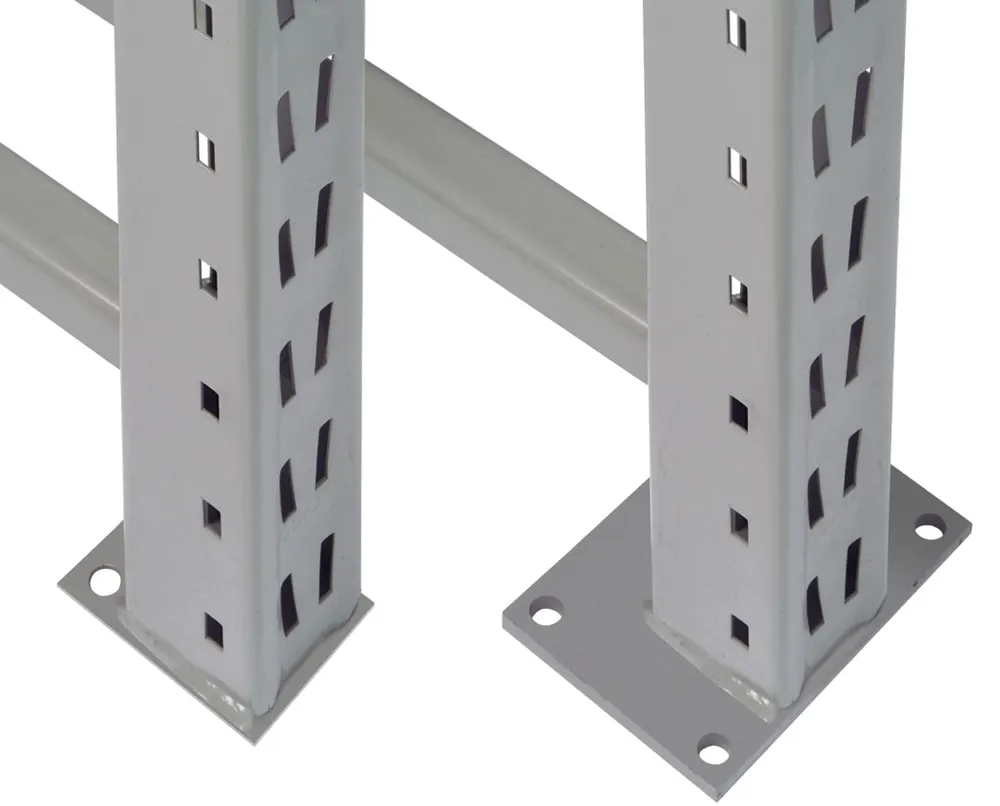
Every Plus upright frame has two 5 x 7 in. footplates, 3/8 in. thick, for 35 sq. in. of bearing each. Each plate has four 9/16 in. holes at the corners. By comparison, Penco’s standard 7 ga. footplate covers 13.7 sq. in. and has two holes.
More bearing area spreads column load into the slab, and four holes give the installer more choices for anchor locations, including room to move off a slab joint or rebar hit.
Penco recommends that every upright frame be anchored to the floor. Its standard anchor is a 1/2 in.-13 x 3-3/4 in. wedge anchor, but Penco notes that seismic conditions and local codes may require a different anchor, and many jurisdictions have their own approved anchor lists. Your engineer specifies the anchor type, diameter, embedment and count from the calculated base forces, and your slab thickness and concrete strength must be able to carry them.
- Confirm slab thickness and concrete strength before the rack is ordered, not after the anchors fail a pull test.
- Keep anchor edge distance from slab joints and trenches as the anchor manufacturer requires.
- Use shims only as the engineering allows; uneven floors change how load reaches the plate.
- Re-check anchors after impacts and during regular inspections.
For anchor types, quantities and slab questions in more depth, read our pallet rack anchor bolts and base plates guide.
Accessories that matter in seismic layouts

Penco’s rigid row spacer bolts two back-to-back rows together and holds the spacing Penco cites for NFPA fire-code flue space. In seismic layouts row spacers also tie double rows into one more stable structure. Rigid wall brackets connect rack to a wall for added stability where the engineer allows the building to take that load.
Frame protectors anchor to the floor in front of the post, and frame deflectors fasten to the front post on 3 in. increments to reduce forklift damage that would weaken a frame before a quake ever tests it.
 Load containmentPallet stops and drum wedges help keep loads from shifting off the back or rolling. Your engineer decides what restraint the layout needs.
 Decking choicesPenco offers wire, steel and wood decking formats. Wire decking is common for sprinkler and visibility reasons; see our wire decking guide.
 Beam-to-post checksKeys engaged, connectors fully seated and no bent prongs. Inspection is part of keeping any seismic rack in its designed condition.
Other Penco accessories include plywood supports for 1/2 in. decks on 7/8 in. step beams and 3/4 in. decks on 1-5/8 in. step beams, general and heavy-duty cross bars, fork clearance bars, skid channels and reel holders rated at 1,000 lb per pair for axles up to 2-1/2 in. diameter. Column guards are covered on our rack guards page.
Where buyers choose Penco Pallet Rack Plus
Western distribution centers
Warehouses in higher seismic design categories across the Intermountain West, California and the Pacific Northwest, where calculations and permits are routine.
Public and institutional storage
Schools, municipalities and records centers that standardize on Penco storage and need rack the building official will sign off.
Manufacturing and MRO
Plants storing raw material and spare parts where a shifted load can stop production as well as injure people.
Severe-duty conditions
Penco also positions Plus for severe conditions beyond earthquakes, where frames and beams see higher horizontal and vertical forces.
Penco-standardized sites
Facilities that already use Penco shelving, lockers or rack and want one manufacturer, one color system and one point of contact.
Expansions and relocations
Moving rack into a new building or a different jurisdiction often triggers a fresh seismic review of what you own.
For broader industry layouts, our pallet rack hub covers selective, double-deep, push-back and other systems, and our Penco Products page covers the wider Penco line we supply.
Mixing, matching and reusing rack in seismic areas
Seismic projects are the worst place to improvise with mixed components. Beam connectors, slot patterns and footplates differ by manufacturer and even by product line, so an engineer can only sign calculations for the components actually installed.
- Penco with Penco: Penco notes that its frame splice works with standard and Plus uprights and that any Penco beam can be fitted with four-prong connectors. That is a factory option, not a field modification.
- Other brands: do not hang another brand’s beams in Penco slots, or Penco beams in teardrop uprights, in a seismic layout. Our pallet rack identification and compatibility guide explains how to tell systems apart.
- Used rack: savings on used rack are typically used up by installation, because parts rarely fit well after disassembly and installer time to straighten and fit them costs more than new. Reusing rack you already own can work, but new is sometimes still cheaper after fix-up time, and in a seismic area the reused parts still have to match the engineering. A quick call to sales with pictures helps decide.
How we plan a Penco seismic-rated rack project
Collect site data
Building address, slab details, clear height, sprinklers and the loads you actually store.
Choose Plus components
Frame type, depth, height, beam style and level spacing from Penco’s product line.
Engineer the layout
Seismic calculations and anchor design for your site, coordinated with Penco and a licensed engineer where required.
Permit and order
Submit drawings and calculations where your jurisdiction requires them; release the order once approved.
Install and inspect
Professional installation, anchoring to the specified detail, key checks and load signage.
What to have ready for a quote
- Site address (seismic values are mapped by location).
- Pallet size, maximum unit load and number of loads per level.
- Desired top-of-rack height and building clear height to the lowest obstruction.
- Slab thickness and age if known, plus floor joints or trenches in the rack area.
- Forklift type and aisle width.
- Photos or drawings of the space and any existing rack.
Our pallet rack installation team can also handle teardown and reinstall if the project includes moving existing rack.
Why work with MH-USA
We design, supply and install storage systems across the Intermountain West and nationwide, and we work with Penco on product selection. We coordinate the rack, the engineering and the installation as one project so the drawings, the delivered parts and the anchors in the floor match. Call (800) 326-4403 or request a quote with your site details.
Get a free quote
Tell us what you are storing, the room size and your timeline. A project specialist will follow up with layout options and pricing. Prefer to talk? Call (800) 326-4403.
Frequently Asked Questions
Is Penco Pallet Rack Plus seismic certified for every location?
How is Pallet Rack Plus different from standard Penco pallet rack?
Does Pallet Rack Plus hold more weight?
Can the top beam sit flush with the top of a Plus upright?
What anchors are used with Pallet Rack Plus?
Can I upgrade existing Penco rack to Plus?
What sizes do Plus frames come in?
Do I need a permit for seismic pallet rack?
Plan your Penco seismic-rated rack
Send your site address, loads and rack height and we will scope Pallet Rack Plus, engineering and installation.