
Home › Storeganizer › Case Studies › CEVA Logistics
CEVA Logistics — consolidating scattered small parts in a 90,000 sq ft 3PL warehouse
A contract logistics site with plenty of building and not enough usable pick face. Twenty-six Storeganizer bays, five pocket sizes, and a picking accuracy figure the site now quotes at 100%.

90,000
sq ft site
26
Storeganizer bays
5
pocket sizes in one design
100%
picking accuracy reported
The situation
| Project profile | |
|---|---|
| Industry | Contract logistics / 3PL |
| Application | Plumbing spare parts and small-SKU consolidation |
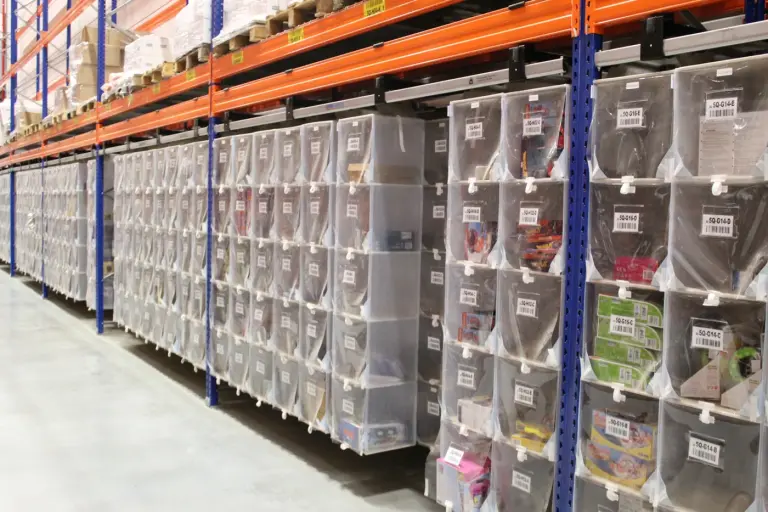
| System | Storeganizer high-density textile pocket columns in existing pallet rack |
| Source | Results as reported by the operation and its Storeganizer manufacturer, KTP conTeyor |
CEVA Logistics’ team at its Daventry site had 90,000 square feet (roughly 8,362 m²) to work with and a customer whose inventory would not cooperate with it. The problem was not total capacity. It was that a wide range of small SKUs sat spread across a significant area of the building, each one occupying a location far larger than the part inside it.
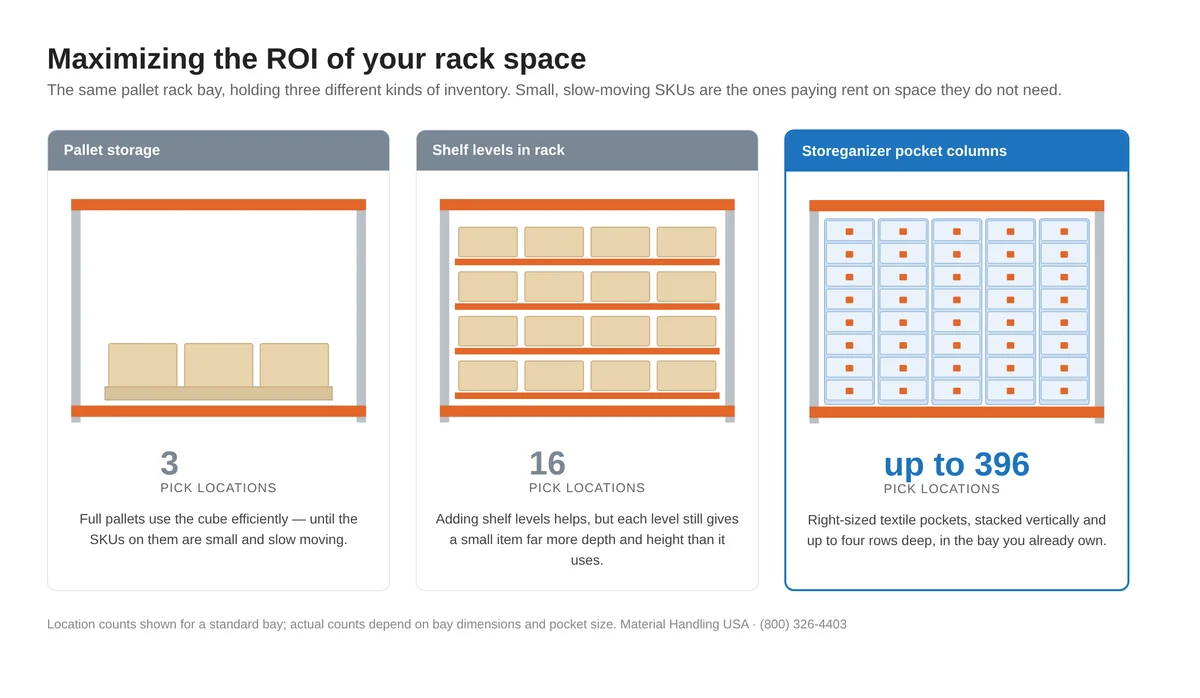
That pattern is the most common reason a 3PL runs out of room while still looking half empty. Pallet positions and shelf levels are sized for cases, so a plumbing fitting stored in one uses a fraction of the space it is charged for. Multiply that by a long tail of SKUs and a customer’s inventory spreads across an area the picking route then has to cover.
What was installed
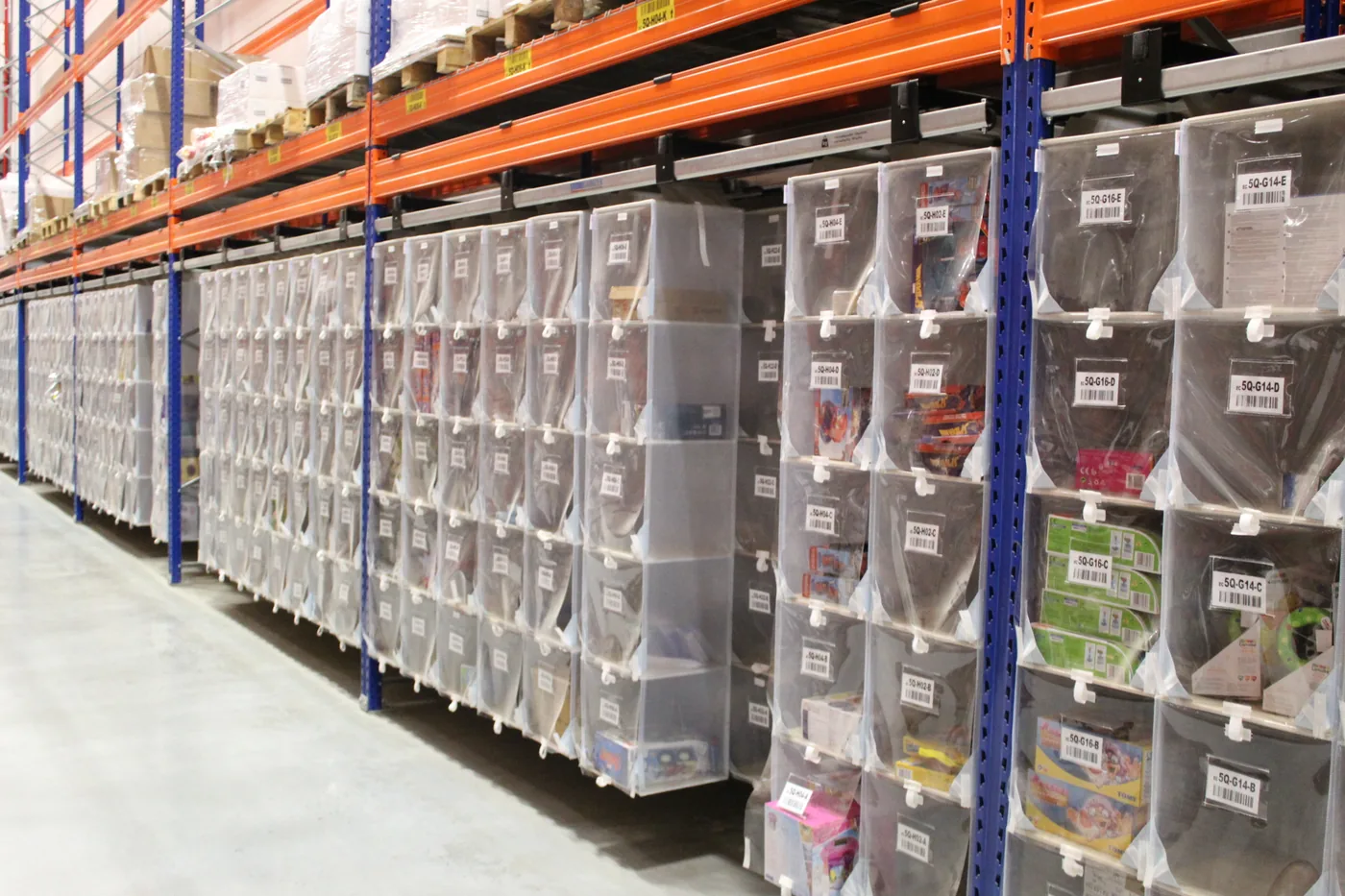
CEVA’s business development team identified Storeganizer and designed a solution around 26 bays fitted with five distinct pocket sizes — a detail worth noting, because it is what makes a consolidation like this work. A single pocket size forces every SKU into the same compromise; five sizes in one design let each group of parts sit in an opening scaled to it.
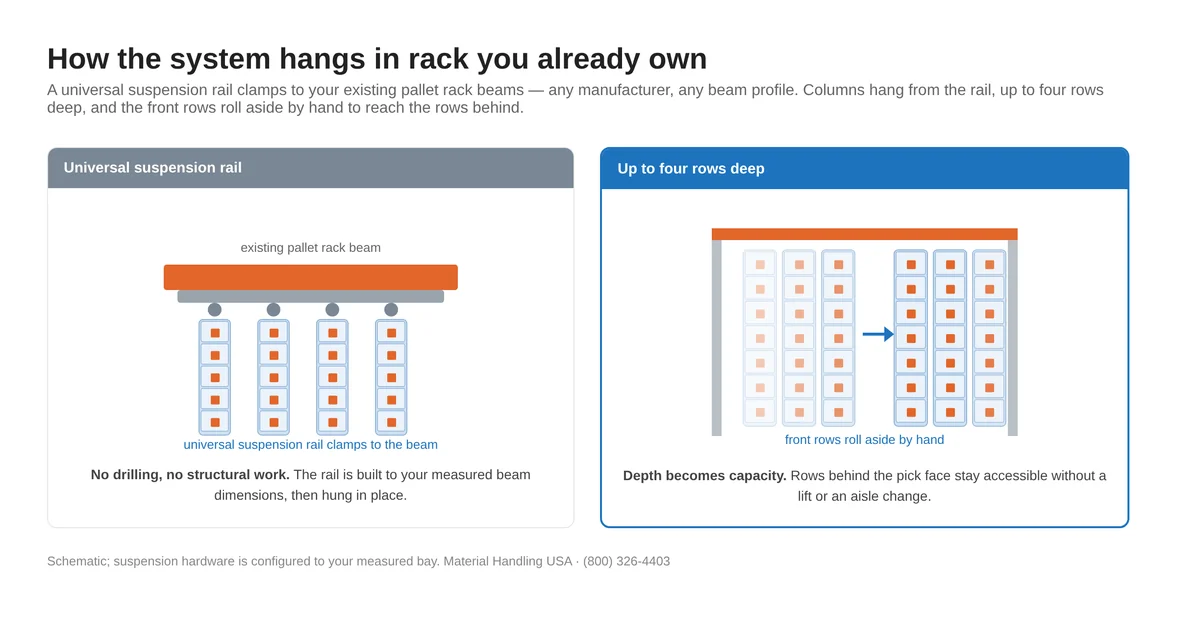
The system used the space below the existing racking rather than adding structure to the building, hanging pocket columns from beams already in place. That kept the conversion inside the existing rack footprint and avoided any construction in an operating warehouse.
Reported results
| Measure | Before | After |
|---|---|---|
| Small-SKU storage | Spread across a significant area of a 90,000 sq ft site | Consolidated into 26 bays using five pocket sizes |
| Pick locations | One address per shelf or pallet position | Multiple right-sized locations within a confined footprint |
| Picking KPIs | Baseline | Improved |
| Picking accuracy | Baseline | Reported at 100% |
“Our picking KPI has improved and our picking accuracy is currently at 100% thanks to Storeganizer.”
The accuracy figure is the one that tends to get a 3PL’s attention, because accuracy is contractual. Mispicks in a small-parts operation are usually an addressing problem rather than a training problem: when several look-alike SKUs share a shelf or a bin, the wrong one eventually goes in the box. Giving each SKU its own labelled pocket removes the ambiguity that causes it.
CEVA reported that following the results of this warehouse design, other CEVA sites and customers expressed interest in adding Storeganizer to their own warehouse configurations — which is a reasonable proxy for whether an installation actually worked.
What this means for a US operation
Every warehouse is different, and a result reported elsewhere is evidence rather than a forecast. These are the transferable parts:
- Design with multiple pocket sizes from the start. Five sizes in one solution is not complexity for its own sake; it is what stops the outlier SKUs going back onto shelving.
- Look under and around the racking you already have. The capacity in a 3PL building is usually not missing, it is badly sized.
- Accuracy is a storage decision. If mispicks are hurting a contract, discrete addressing moves the number more reliably than more training does.
The measured averages behind these cases — around 40% more usable space, 42% less travel time and 26% better picking efficiency — come from independent research at the University of Leuven, Belgium (2013), comparing Storeganizer with conventional rack and shelf. To see what the same arithmetic produces in your own bay, use the Storeganizer Designer or ask us to run the numbers with you.
Why this inventory profile suits pocket columns
The transferable part of any case study is the profile, not the logo. These are the characteristics that made this operation a good candidate — and they are the ones worth checking against your own inventory before you consider a conversion.
How a conversion like this runs
Four steps, and none of them involve construction. The sequence matters: the slotting analysis comes before the measurement, and the count comes before the order.
Profile the SKUs
We look at item size, stock depth and order frequency for the zone in question — the three properties that decide whether a pocket is the right home for a part.
Measure the bays
Inside width, inside depth, clear height and beam profile. The suspension rail is then manufactured to those dimensions.
Configure and count
Pocket sizes are selected per SKU group and the location count is calculated before anything is ordered.
Install and slot
Columns hang from existing beams in an operating warehouse — no drilling, no anchoring, no permit drawing — then stock is slotted in.
We handle all four in the United States, including the install. Because the system is maintenance free — no motors, no controls, no annual service contract — there is nothing scheduled after handover.
Shop Bin Storage Systems Online
Buy select items directly from our online store, or request a quote for volume, custom sizes and freight-rated orders.
Questions about this project
How many bays did CEVA install?
What picking accuracy did CEVA report?
Why use five pocket sizes in one installation?
Can this be done in an operating 3PL warehouse?
Related reading
 Storeganizer for 3PL and e-commerce fulfillmentAbsorb more client SKUs without another lease. Storeganizer pocket columns add hundreds of dense, barcoded pick faces…
 3PL warehouse storage solutionsCall (800) 326-4403 or Email Sales@MH-USA.com Get a Quote Third-party logistics providers face a unique challenge…
 Pallet rack space optimizationRecover the wasted cube in your small-item rack bays. Storeganizer converts half-empty shelving into up to 396 pick…
 All Storeganizer case studies and measured results8,611 sq ft consolidated into 1,335. Picking from 25-30 to 60-80 lines per hour. 4,000 SKUs in 16 bays. Attributed…
 Storeganizer high-density pocket storage overviewStoreganizer turns unused pallet rack into hundreds of small-parts pick faces – 40% more usable space, 42% less…
Could your rack do this?
Tell us the bay dimensions and the SKUs giving you trouble. We will come back with a configuration, a location count and an honest view of whether a conversion is worth it.