
Laboratories / Fume Extraction Systems
Chemical Fume Extraction Systems for Laboratories
Source-capture chemical fume extraction for the lab bench — Nederman exhaust snorkels and benchtop extraction arms that capture fumes, vapor, dust and solder smoke at the source — 2″, 3″ and 4″ arms in Original, ESD/EX and chemical-resistant models, with ceiling, wall, floor and bench mounting. Supplied and installed nationwide from Salt Lake City.

3
Arm models: Original, ESD/EX, CHEM
2″–4″
Arm diameters in stock
30–265
CFM capacity range
90″
Max working radius
Capture Lab Fumes Where They Start

Laboratories handle solvents, acids, powders, adhesives and solder flux every day, and most of that work happens on an open bench rather than inside a fume hood. General room ventilation dilutes those contaminants after they have already passed the operator’s breathing zone. A fume extraction arm does the opposite: it captures the contaminant at the source, before it ever reaches the room.
Material Handling USA supplies, configures and installs Nederman exhaust snorkels — the FX2 BenchTop extraction arm family — along with Movex ESD arms and the fume hoods, casework and lab ventilation that go around them. An arm is a small purchase next to a hood, which is exactly why it gets specified badly: the wrong diameter starves the hood, the wrong model corrodes or discharges static, and a mount in the wrong place means the operator stops using it.
This page covers the three arm models, the diameters and airflows, hood options, mounting and drop-ceiling details, and the questions we ask before quoting a lab. If you already know what you need, send us the bench layout and we will come back with arm part numbers, brackets and installed pricing. Fertility clinics should also see IVF lab snorkels; for a complete exhaust snorkel and laboratory exhaust capture design, see exhaust snorkels from our sister company Labs USA.
Why Laboratories Add Fume Extraction Arms
Source capture solves problems a bigger room fan cannot.
Capture, not containment
Extraction arms are a capture device. They are excellent for point sources at an open bench and they are not a substitute for a fume hood, biosafety cabinet or enclosure when an operation requires containment. We will tell you when your process needs a hood — and we sell those too.
Nederman FX2 Exhaust Snorkel Models
All three models share the same construction: lightweight anodized aluminum tube sections, three adjustable composite friction joints on ball-bearing supported knobs, a built-in damper, an exhaust connection that swivels through 360°, and a mini hood supplied as standard. What changes is the material package — and that is what makes one right for your bench.

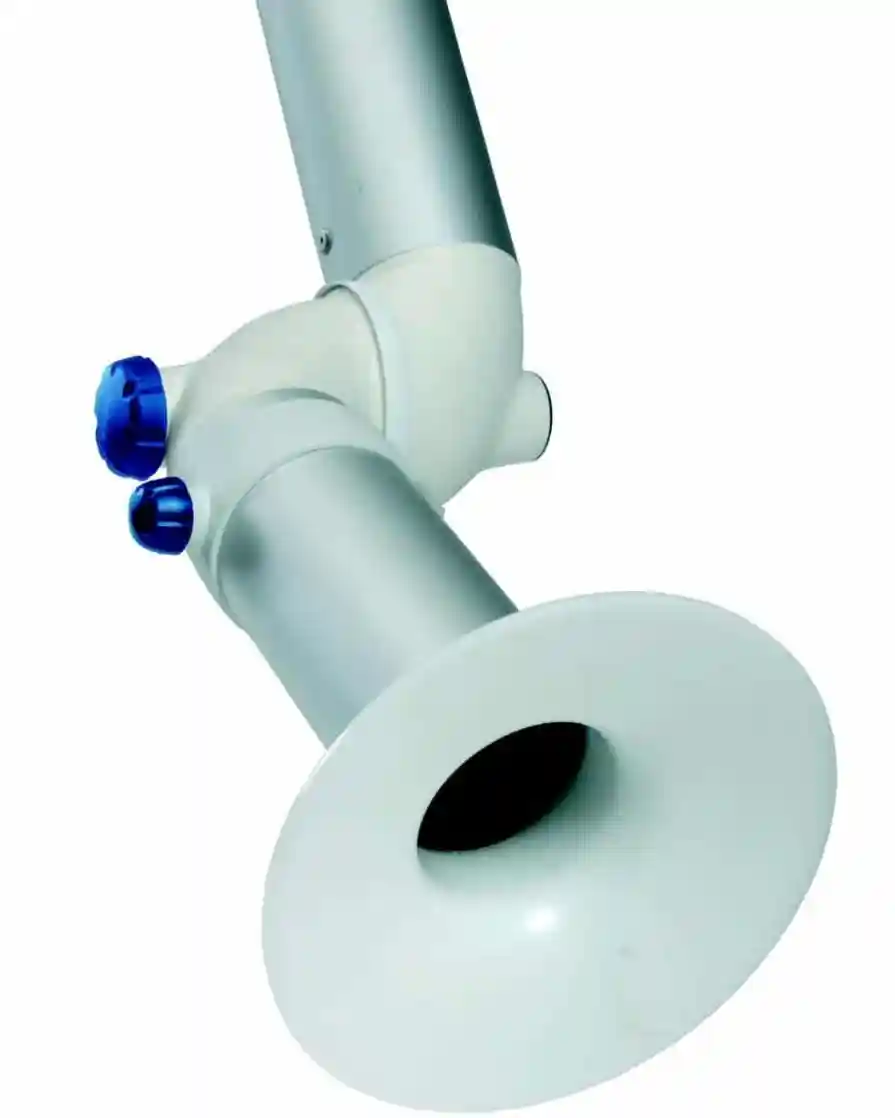 FX2 ORIGINALThe all-round arm for general laboratory and workshop use where there is little risk of electrostatic discharge or attack by aggressive chemicals. Anodized aluminum tubes, three adjustable composite friction joints, mini hood supplied as standard, and a damper on every arm. Available in 2″, 3″ and 4″ (50, 75 and 100 mm) diameters.
 FX2 ESD/EXBuilt from conductive materials so static electricity and sparks cannot build up on the arm — the specification for electronics assembly, soldering, rework and battery work. Supplied with an anodized metal hood. Following a site risk assessment the ESD/EX arm can also be used in certain explosive atmospheres; Nederman lists ESD, CE and EX certifications for this model.
 FX2 CHEM (Chemical Resistant)Double-anodized aluminum profiles for fume extraction in aggressive, corrosive environments — acid digestion, solvent handling, staining and histology benches. Normally supplied with the painted corrosion-resistant metal hood. Offered in 3″ and 4″ (75 and 100 mm) diameters.
Not sure which model your bench needs?
Tell us the chemicals, the process and whether static or corrosion is in play, and we will specify the arm, hood and bracket — usually the same day.
Diameters, Airflow and Reach
Diameter sets the airflow the arm can carry; length sets how far it reaches. Pick the diameter from the process and the hood, then pick the length from the bench.
| Arm | Diameter | Airflow capacity | Typical use |
|---|---|---|---|
| FX32 | 1-1/4″ (32 mm) | One-piece self-supporting flexible arm | Low-volume bench work, single soldering station |
| FX50 / FX2 50 | 2″ (50 mm) | 30–65 cfm (50–110 m³/h) | Soldering, small-scale odor and vapor capture |
| FX75 / FX2 75 | 3″ (75 mm) | 65–140 cfm (110–240 m³/h) | The general-purpose lab arm — most benches and teaching labs |
| FX100 / FX2 100 | 4″ (100 mm) | 120–265 cfm (200–450 m³/h) | Heavier fume loads, larger hoods, longer reach |
Stock Arm Lengths
| Diameter | Arm lengths | Models available |
|---|---|---|
| 2″ (50 mm) | 28″, 44″, 60″ (700 / 1100 / 1500 mm) | Original, ESD/EX |
| 3″ (75 mm) | 44″, 60″ (1100 / 1500 mm) | Original, ESD/EX, CHEM |
| 4″ (100 mm) | 48″, 72″, 96″ (1200 / 1800 / 2400 mm) | Original, ESD/EX, CHEM |
Working Radius — 4″ FX2 Original
Maximum working radius is measured from the mount to the hood with the arm extended. Weights vary with the connection style (Low, PLUS or Through).
| Arm | Arm length | Max working radius | Weight |
|---|---|---|---|
| FX2-ORIG-D100-L1200 | 48″ (1200 mm) | 46.1″ (1170 mm) | 9–13 lb |
| FX2-ORIG-D100-L1800 | 72″ (1800 mm) | 69.7″ (1770 mm) | 11.5–17 lb |
| FX2-ORIG-D100-L2400 | 96″ (2400 mm) | 90.2″ (2290 mm) | 15.2–19.2 lb |

Fume temperature limit
Nederman rates the FX2 arms for fumes up to 158°F (70°C), with tubes in anodized aluminum, glass-fiber reinforced polypropylene joints, an EPDM rubber duct connector and a polypropylene mini hood. If your process runs hotter, say so up front — the arm is not the right device above its rating.
Hood Options
Every arm ships with a mini hood, so no extra nozzle is needed to put it to work. The mini hood also acts as a universal interface: the combi, dome, metal and flange hoods all clip directly to it regardless of arm size, so you can change the capture geometry later without changing arms.

Match the hood to how the contaminant behaves. A dome works when fumes rise and disperse quickly. A combi hood adds screening for anything that drifts sideways — it doubles as a screen hood and stays fully transparent, so the operator never loses sight of the work. A metal hood is the answer for heat, splatter and aggressive vapor that would attack plastic. A flange hood concentrates capture on a small, fixed target.
Reducers (2-1/2″, 3″–3-1/4″, 4″, 5″), white/gray/black ESD hoses and duct connectors are all stock items, which is what lets us adapt a new arm to ductwork that is already in the ceiling.
 Combi Hood — 15″ × 18″Transparent PET-G hood (380 × 460 mm) that works both as a dome hood and as a screen hood. Excellent screening, no optical distortion, and it angles easily to suit the operation. Part 70500144 (ORIGINAL), 70500244 (ESD), 70500344 (CHEM).
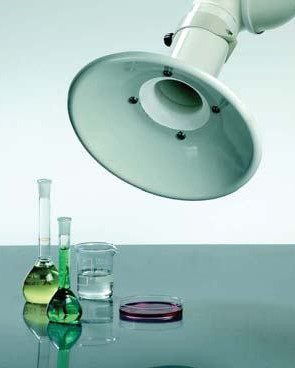
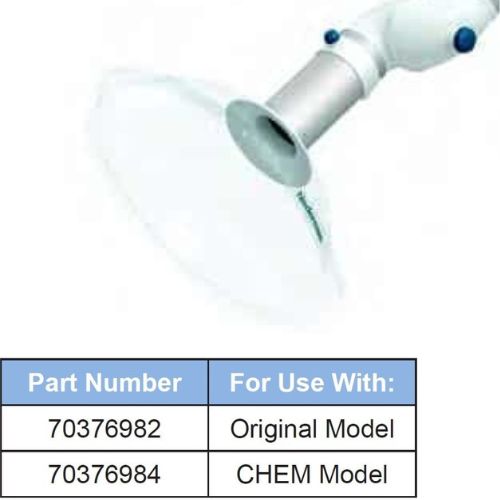 Dome Hood — 16″ diameterTransparent Ø410 mm dome for contaminants that disperse quickly, giving the operator a clear view of the work underneath. Clips straight onto the mini hood on any arm size. Part 70376982 (ORIGINAL).
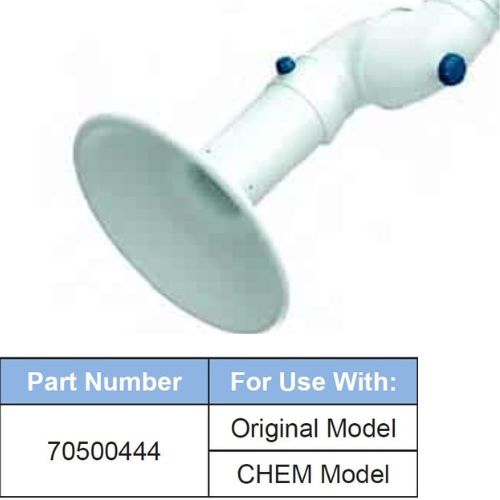 Metal Hood — 11″ diameterPowder-coated aluminum Ø280 mm hood for aggressive fumes, high temperatures, dust and splatter, where a plastic hood would not survive. Part 70500444 (ORIGINAL/CHEM), 70500544 (ESD).
| Hood | Size | Material / use | Part no. (ORIGINAL) |
|---|---|---|---|
| Mini hood | Supplied with every arm | Polypropylene; universal interface for all other hoods | Included |
| Combi hood | 15″ × 18″ (380 × 460 mm) | Transparent PET-G; dome and screen hood in one | 70500144 |
| Dome hood | 16″ Ø (410 mm) | Transparent; high-dispersion contaminants | 70376982 |
| Metal hood | 11″ Ø (280 mm) | Powder-coated aluminum; aggressive fumes, heat, dust | 70500444 |
| Flange hood | 10″ × 13″ (260 × 335 mm) | Transparent PET-G; concentrated capture on a fixed target | 70502844 |
Mounting & Installation
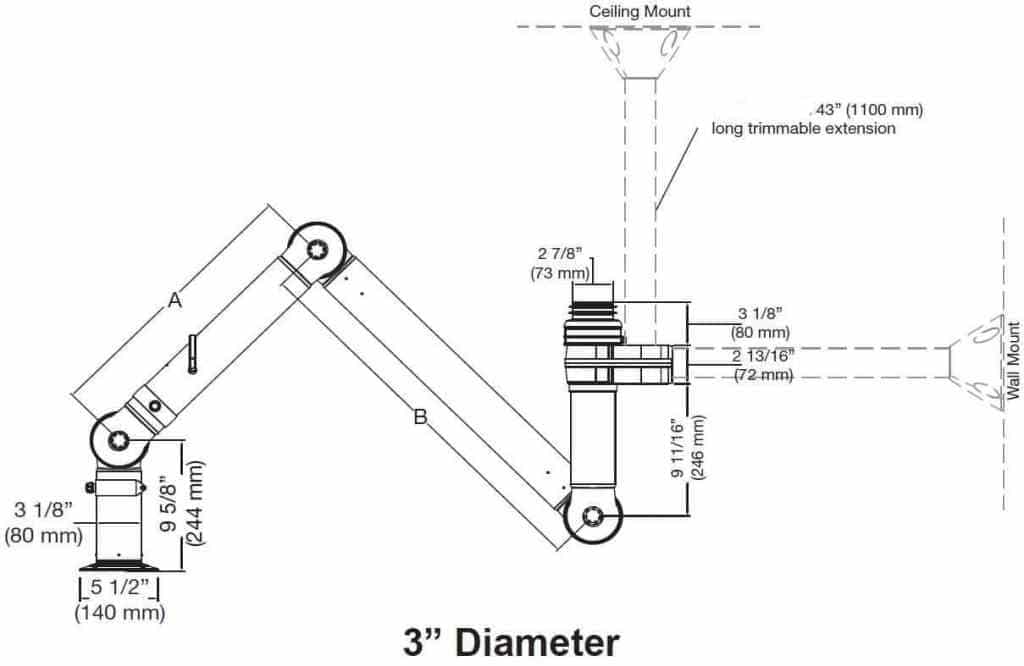
The multi-purpose bracket is the reason these arms fit almost any lab: the same arm can be mounted to a ceiling, wall, floor or benchtop, with the exhaust connection running up or down. Different spring mechanisms are fitted depending on connection direction, so tell us which way the duct runs when you order.
The two outermost joints rotate and swivel through 360°, then lock in position on the friction devices — the hood stays exactly where the technician put it instead of drifting back over the bench. A trimmable cut2fit extension profile raises the mount point, which is how one arm gets shared between adjoining stations and how a ceiling installation lands at the right working height.
Drop ceilings. Cut the 43″ (1100 mm) extension profile to length and finish the tile opening with the ceiling cover plate. Aluminum duct sections in 39″ and 79″ lengths are available where you want a tidier alternative to standard flexible ventilation duct above the arm.
| Accessory | What it does | Part no. |
|---|---|---|
| Bench bracket kit | Clamps the arm to the edge or top of a benchtop | 70501444 |
| Classic bracket | Ceiling, wall, floor or any horizontal surface, used with the extension profile | 70501244 |
| Bracket kit (complete) | Pre-assembled bracket with a 190 mm stub for wall or ceiling | 70501144 |
| Cut2fit extension profile | Trimmable 43″ (1100 mm) extension — also available at 2200 mm | 70501344 |
| Ceiling cover plate | Covers the opening where the extension or duct passes a false/drop ceiling | 70502644 |
| Support collar | Adds support where the arm passes through a ceiling or shelf | 70502744 |
- Confirm the mount surface — ceiling grid, hard ceiling, wall, bench edge or floor stand
- Decide whether the exhaust connection runs up or down (it changes the arm part number)
- Measure from the mount point to the work surface so the extension can be cut correctly
- Check the reach you need at the far corner of the bench, not just straight ahead
- Verify the duct size the arm ties into and order the matching reducer or duct connector
- Have your mechanical contractor confirm the exhaust fan can carry the added airflow
Send us a bench elevation and we will detail the mounts
Mark the ceiling height, bench depth and where the duct runs. We will come back with arm part numbers, brackets, extension lengths and the cover plates your installer needs.
Where Lab Fume Extraction Arms Are Used
The same arm family covers a wide range of work — the model, hood and diameter change with the hazard.
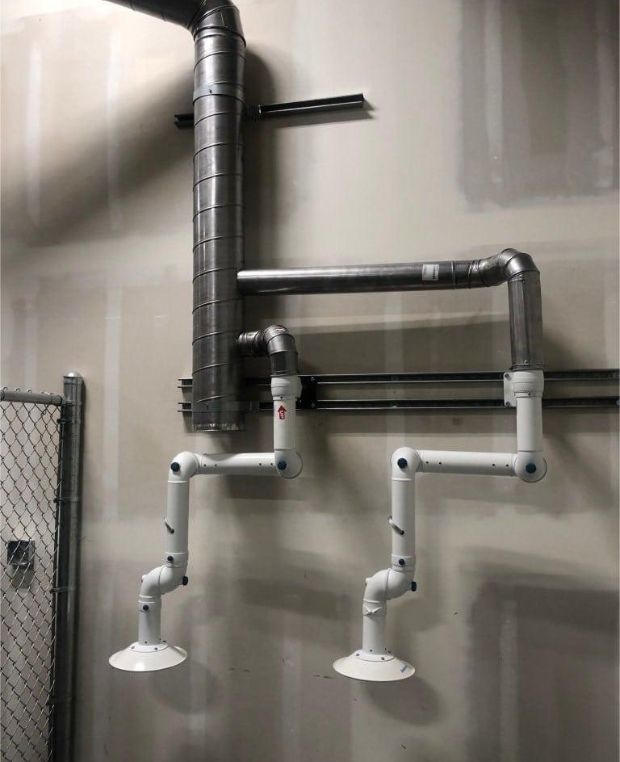 Chemistry & Research LabsSolvent transfers, acid digestion, sample prep and staining benches where a full fume hood is overkill but the operator still needs the vapor pulled away from the breathing zone. CHEM arms with metal hoods are the usual specification.
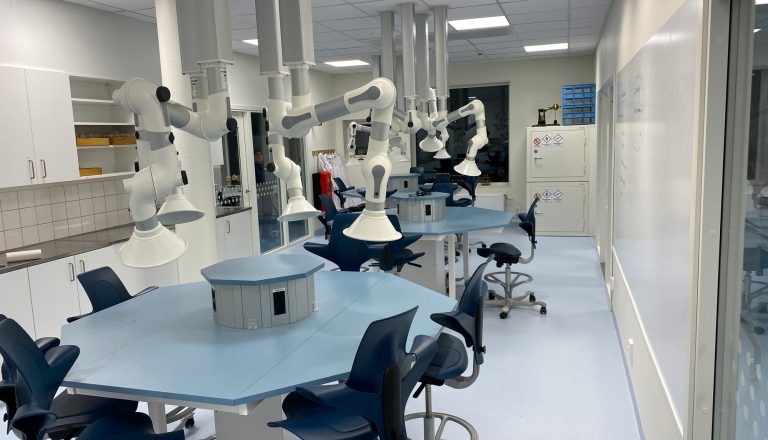 Electronics, Soldering & ReworkSolder flux, adhesives and conformal coating fumes captured at the iron. ESD/EX arms use conductive materials so nothing on the arm can discharge into the assembly being built.
 Pharmaceutical & CompoundingPowder weighing, capsule and tablet handling and reagent prep, where nuisance dust and odor control matter as much as chemical exposure. Combi hoods give screening without boxing the operator in.
 Clinical & Analytical QC LabsBench-level extraction over analyzers, centrifuges and prep stations. A 3″ arm handles most QC benches at 65–140 cfm without disturbing balances or sample plates.
 Schools, Universities & Vocational ProgramsChemistry classrooms, welding and technical shops and teaching labs. Wall-mounted arms serve a demonstration bench and swing back out of the way between classes.
 Cleanrooms, IVF & Medical DeviceCeiling-mounted arms dropped through a suspended ceiling with a cover plate, so the only thing in the clean space is a smooth anodized arm that wipes down.
Recent Exhaust Snorkel Projects
A few representative jobs. Most snorkel orders are small and urgent — a bench is being commissioned, an inspection is coming, or a classroom has to open.
| Client | Location | Sector | What we supplied |
|---|---|---|---|
| Delta Electric | Newark, CA | Chemical lab | Urgent requirement for a chemical-resistant arm. We shipped a CHEM snorkel with a metal hood on an expedited schedule. |
| Brunswick School District | New York, NY | School teaching lab | A contractor needed lab snorkels delivered on a tight construction schedule for a school chemistry room; arms and mounting kits shipped in time for the install. |
| Farley White | Boston, MA | Pharmaceutical labs | Bench-level fume extraction specified alongside fume hoods so day-to-day prep work is covered without tying up hood space. |
Short lead times on stock arms
Original, ESD/EX and chemical-resistant arms in the common diameters are stocked items with mounting kits and hoods, so most orders ship quickly. If you are working to a construction or inspection date, tell us the date — we will confirm availability before you issue the PO.
How to Specify Lab Fume Extraction
1. Describe the source, not the room
What is released, how much, how hot, how often, and from what size of opening? A beaker of solvent on a hot plate, a soldering iron and an acid digestion block all release contaminants differently, and that decides the hood and diameter long before anyone talks about a fan.
2. Pick the model from the hazard
Static risk points to ESD/EX. Corrosive vapor points to CHEM with a metal hood. Everything else is normally an Original arm. Where an explosive atmosphere may exist, the ESD/EX arm can be considered after a documented risk assessment — that assessment is the customer’s and their safety officer’s call, not a catalog line.
3. Size the diameter to the airflow you can actually supply
A 4″ arm pulling 265 cfm is only useful if the exhaust system can give it that. Add up every arm on the branch and take the total to your mechanical contractor before you settle the arm count. Where the building has nothing to tie into, a self-assembly kit with its own fan, filter and speed controller is usually faster and cheaper than new ductwork.
4. Fix the mount so people will use it
The most common reason an arm sits unused is a mount that puts the hood in the wrong place. Stand at the bench, put the hood where the work happens, and set the mount from there — using an extension profile if the ceiling is high. Balance dampers on each arm let you trim flow once the system is running.
5. Plan for verification
Extraction is only protective while it is working. Build a periodic check into your Chemical Hygiene Plan — verify capture at the hood face, confirm dampers have not been closed off, and re-check after any renovation that changes the exhaust system.
Shop Online at MaterialHandling-USA.com
The three stock Nederman exhaust snorkel arms are also listed with published pricing and options on our e-commerce store, along with exhaust and ventilation accessories:
How We Work
Consultation
Tell us the process, the chemicals and the bench. We flag anything that needs a hood rather than an arm before you spend money on the wrong device.
Specification
We select the model, diameter, arm length, hood, bracket and extension, and give your mechanical contractor the airflow numbers they need.
Quote & lead time
Itemized quote with part numbers and installed pricing, plus a confirmed ship date checked against your construction schedule.
Installation & support
Our installers mount the arms, set the extensions and cover plates and coordinate the tie-in with your HVAC contractor.
Laboratory Fume Extraction FAQs
What is a lab exhaust snorkel, and how is it different from a fume hood?
What diameters and airflows are available?
How far will an arm reach?
Can these arms be mounted in a drop ceiling?
Which model do I need — Original, ESD/EX or CHEM?
How hot can the extracted air be?
Are the arms noisy?
Do you connect the arms to our ductwork and exhaust fan?
Can one arm serve more than one workstation?
Related Products & Resources
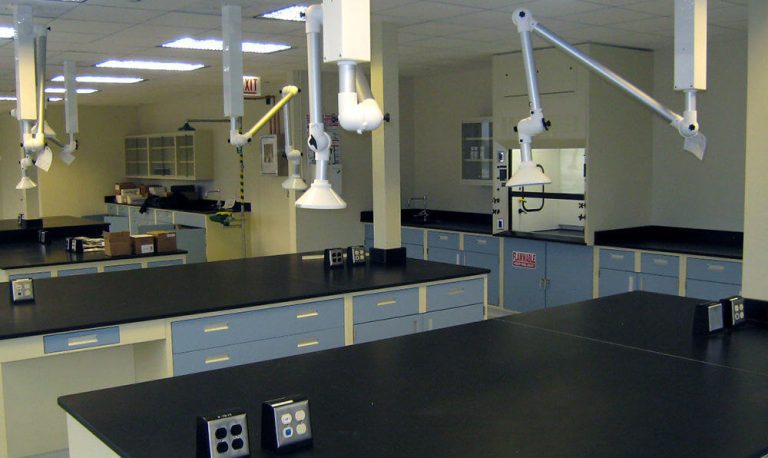 Exhaust Snorkel SpecificationsPublished dimensions, part numbers and configuration details for our exhaust snorkel arms.
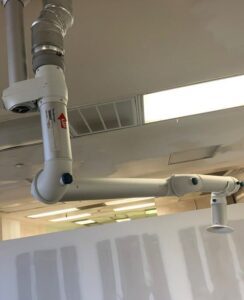 Lab Snorkel Arm Ventilation SystemsPricing and option details for laboratory snorkel arm ventilation, including hood choices.
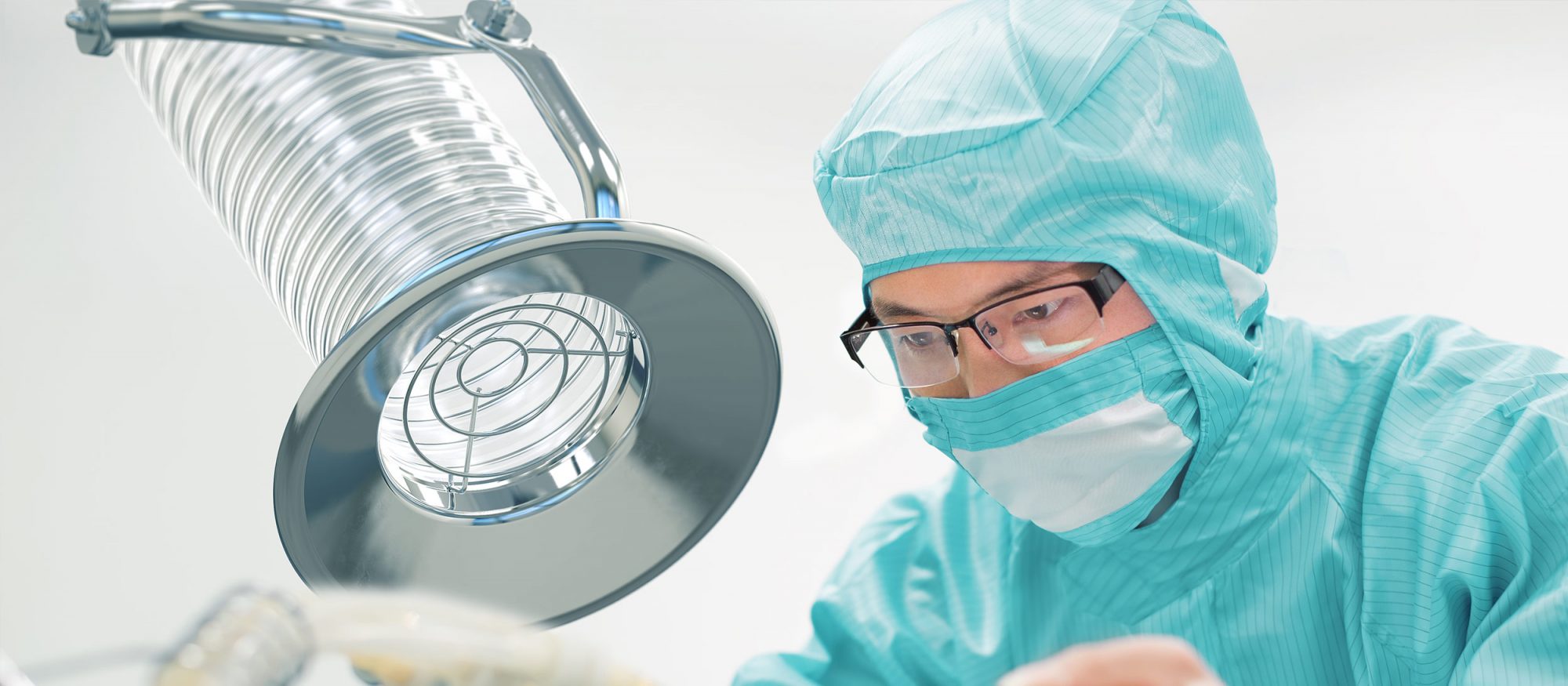 Movex ESD SnorkelsMovex extraction arms for electrostatic-sensitive electronics and industrial workcells.
 Laboratory Fume HoodsWhen an operation needs containment instead of source capture, start with a fume hood.
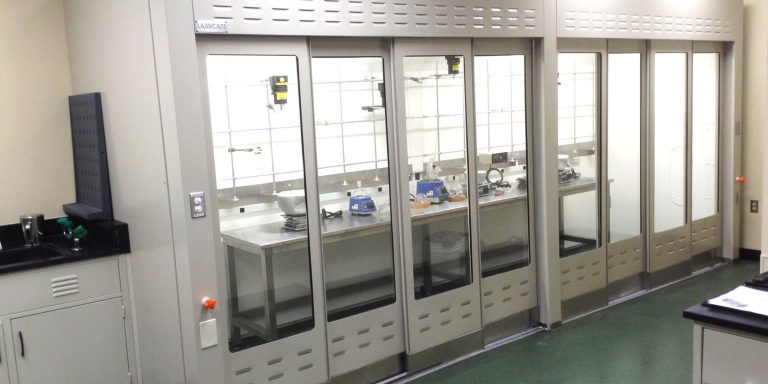 Walk-In Fume HoodsFloor-mounted walk-in hoods for tall apparatus, carts and large-scale setups.
 Lab Layout ConfiguratorLay out benches, hoods and extraction points yourself, then send the plan to our team.
Ready to Specify Your Lab Fume Extraction?
Send us the bench layout, the chemicals and your ceiling height. We will come back with arm part numbers, hoods, brackets and installed pricing — and tell you where a fume hood would serve you better than an arm.