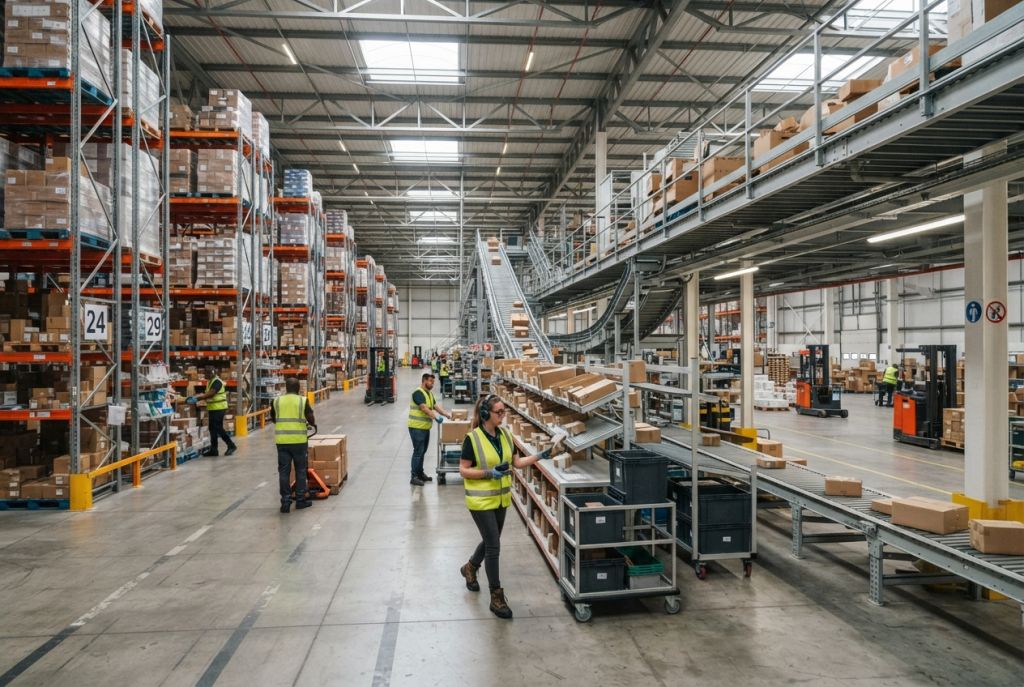
When a 3PL runs out of room, the main problem usually isn't just capacity. It's that storage has stopped matching the work. Fast movers are too far from packing, small picks are mixed with pallet stock, customer inventory lines blur, and every seasonal shift forces a manual reset.
Good 3PL warehouse storage solutions fix that by balancing three things at once: flexibility, clear separation, and fast access. The goal isn't the densest possible layout. It's a storage plan that keeps labor moving, inventory visible, and customer accounts easier to manage as demand changes.
Optimizing Your 3PL for Today's Market
Most third party logistics storage problems start with a layout that was built for yesterday's account mix. One month you're handling steady pallet storage. The next month you're adding e-commerce pick faces, returns, kitting, or a new customer that needs restricted access inventory. If the rack, shelving, and staging plan can't absorb that change, the operation slows down fast.
The better approach is to design around change from the start. That means choosing storage systems that can be reconfigured, building zones that support multiple workflows, and protecting enough open space for staging and account growth. It also means thinking beyond physical equipment. Data visibility, client rules, and system connectivity shape storage decisions every day. Teams evaluating related infrastructure often review resources like Choosing a VPN router for autonomous operations when they're tightening warehouse connectivity for distributed devices and operational systems.
A practical 3PL plan also has to support future process changes. That's why many operators pair physical storage improvements with broader planning around smart warehouse automation design.
Commercial 3PL Warehousing Storage Solutions
Commercial 3PL warehousing storage solutions have to do more than hold product. They have to look organized to a prospective client, scale up when a new contract lands, and scale back when an account leaves, all without a rebuild. In a commercial 3PL, the storage plan is part of the service you sell, so it needs to read as clean, labeled, and easy to audit.
Most commercial third party logistics buildings share a few storage traits:
- Modular by design: Bays, beam levels, and zones can be re-slotted as contracts change, so you are not locked into one client’s profile.
- Clearly bounded accounts: Labeled rack sections, cages, or dedicated aisles keep each customer’s inventory separate for billing and cycle counting.
- Room to grow: Open floor and staging space is protected so a new account does not force a full relayout.
- Audit ready: Consistent labeling and location logic make it easy to walk a client through their stock.
Because a commercial 3PL earns revenue per account, the storage question is really a flexibility question. The best commercial warehouse storage solutions for 3PLs keep the cost of onboarding and offboarding a client low. That usually points toward selective rack, adjustable shelving, and add-on cages over fixed, high-density systems that are hard to change. If you want a floor plan that maps storage systems to your account mix, our warehouse design and layout solutions team can lay it out before you buy.
Why 3PL Storage Is Different from Standard Warehousing
A standard warehouse usually serves one business, one inventory profile, and one set of operating rules. A 3PL warehouse doesn't get that simplicity. It has to serve multiple customers with different SKU counts, different handling needs, and different service expectations, often in the same building at the same time.
That changes the storage question. You're not asking only how many pallet positions fit. You're asking how to store one client's reserve pallets, another client's bin picks, a third client's returns, and still keep each account cleanly separated.

The market size shows why this matters. The global third-party logistics market was valued at $1.03 trillion in 2021 and is projected to reach $1.79 trillion by 2027, reflecting sustained demand for flexible capacity and specialized storage driven by e-commerce expansion and more efficient logistics networks, according to Broad Range Logistics.
Client separation is operational, not cosmetic
In 3PL work, separation protects billing, accuracy, and accountability. If customer inventory gets mixed physically or systemically, the problem reaches beyond housekeeping. It affects cycle counting, order quality, returns handling, and dispute resolution.
That's why layouts often need dedicated zones, labeled rack sections, cage areas, or controlled pick modules by account. The tighter the service agreement, the more that separation matters.
SKU volatility changes the right answer
A 3PL storage plan that works today may not work six months from now. New clients arrive. Existing clients add SKUs. Order profiles shift from bulk replenishment to each-pick fulfillment. A once-slow account may suddenly need more forward pick space than reserve storage.
Practical rule: In a 3PL, the layout with the highest storage density often creates the most friction once re-slotting, travel time, and account separation start increasing.
Many projects go off track when managers focus on total cube and forget how often the operation has to change. That's also why it helps to keep the difference between stock data and physical storage clear. A short explainer on inventory vs warehouse distinctions is useful if your team is aligning system logic with floor layout.
Value added services increase storage pressure
3PLs rarely stop at storage. They also support fulfillment, returns, distribution, and customer-specific handling. That means the warehouse has to make room for more than static inventory. It has to support movement, staging, inspection, and changeovers without constant disruption.
Core Storage Systems for 3PL Flexibility
The best 3PL storage systems work like a toolbox. No single product solves every problem. The operation usually needs a mix of pallet rack, shelving, secure separation, and vertical expansion to handle different customers and order profiles.

Pallet rack for third party logistics warehouses
For many 3PLs, selective pallet rack is the most flexible starting point. It gives direct access to many SKUs, supports mixed customer inventory, and adapts well when accounts grow or shrink. That matters in a dynamic environment where one aisle may hold steady reserve stock while the next aisle turns quickly.
Selective rack is usually the right fit when you need:
- High SKU access: Every pallet location is reachable without moving another load first.
- Client adaptability: Beam levels and bay assignments can be changed as account needs change.
- Mixed storage use: Reserve inventory, overflow stock, and replenishment can sit in the same system with clear labeling.
Dense systems can make sense in the right application, but they aren't automatically better for 3PL pallet rack planning. If the account mix changes often, dense storage can increase slot churn and labor friction.
If you already know the footprint you are working with, you can lay out beams, bays, and uprights yourself with our free online pallet rack configurator, then send the configuration to our team for pricing.
For operations evaluating automation alongside racking, AS/RS for smart warehouse automation may fit selected high-control environments, though many multi-client facilities still need conventional rack for day-to-day flexibility.
Shelving for fulfillment and small item storage
Pallets don't solve small-parts fulfillment. If the building handles each-pick orders, kits, or mixed-carton shipping, you need industrial shelving or bin shelving near packing and shipping.
Warehouse shelving for 3PL work performs best when it supports:
- Fast pick access: Small items stay visible and easy to reach.
- Short replenishment paths: Reserve stock shouldn't be too far from forward pick faces.
- Clean SKU discipline: Slotting by velocity and product family reduces confusion.
A common mistake is forcing small picks into pallet rack because it feels simpler. It usually isn't. Pickers lose time, accuracy gets harder to protect, and replenishment becomes less controlled.
Small-item fulfillment needs pick faces designed for touch frequency, not just storage capacity.
Security cages for customer inventory and restricted areas
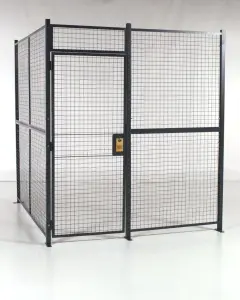
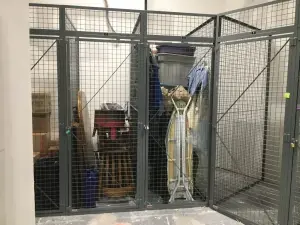
Security cages are one of the most practical tools in third party logistics warehouse design. They create controlled space inside the building without needing a separate room or full construction project. In 3PL work, that's useful for customer-owned inventory, high-value products, returns quarantine, or restricted access materials.
Security cages help when you need:
- Clear account segregation: One client's stock stays visibly and physically separate.
- Controlled access: Only approved staff enter the area.
- Process isolation: Returns, hold stock, or sensitive inventory can be managed without mixing with active picking zones.
If your facility needs dedicated secure zones, wire partition and cage systems are often easier to add than permanent walls and can be planned around changing account needs.
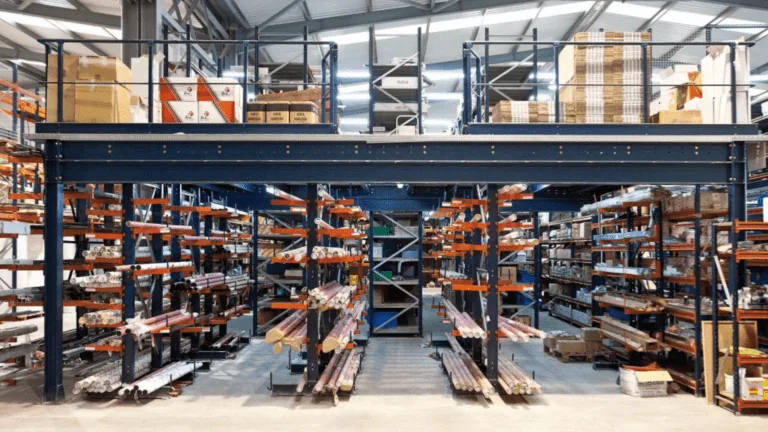
Mezzanines for added storage space
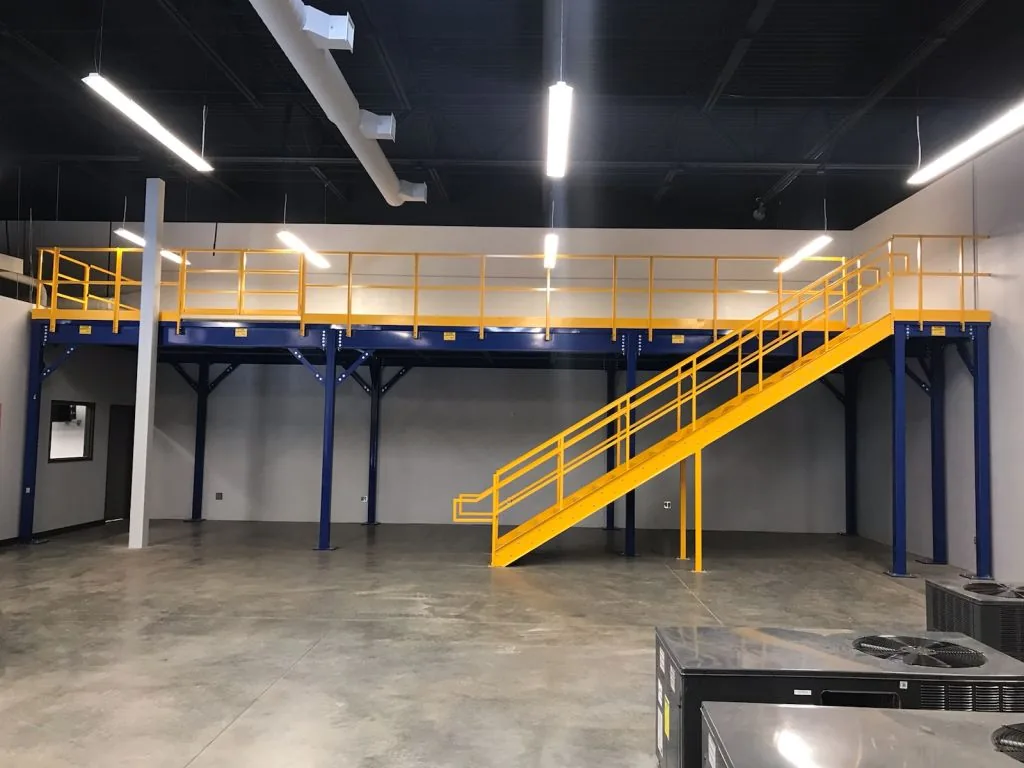
When floor space gets tight, mezzanines can create usable capacity without expanding the building footprint. In a 3PL, that added level is often best used for light storage, pick modules, supplies, offices, or value-added services rather than heavy reserve pallets.
A mezzanine works best when the problem is not just lack of room, but poor use of vertical space. It can separate functions that compete on the main floor and reduce congestion around core shipping lanes.
Good mezzanine planning asks practical questions:
- What activity belongs above the floor and what must stay at dock level?
- Will staff, carts, and replenishment move safely and efficiently?
- Does the second level improve flow or just move congestion upward?
For facilities that need more usable square footage, warehouse mezzanine systems are often part of the answer.
One system rarely solves the whole job
A 3PL rarely succeeds with a single storage type across the whole building. The stronger design usually combines reserve pallet storage, forward pick shelving, secure inventory zones, and staged overflow capacity. Material Handling USA offers these categories as part of broader facility planning, but the right mix depends on your SKU profile, account structure, and labor flow rather than a one-size-fits-all package.
Strategic Layout and Zoning for 3PL Warehouse Throughput
Storage equipment matters, but layout decides whether that equipment helps or hurts. In most 3PL buildings, the biggest gains come from better zoning. You need clear areas for receiving, put-away, reserve storage, forward picking, packing, returns, and staging. Without that structure, fast-moving work gets tangled with slow-moving inventory.

For storage design, 3PLs typically segment inventory into bulk, bin, and pallet zones, with specialized areas for temperature-sensitive goods or cross-dock flow. Matching product form factor to the correct storage mode improves space utilization and turnaround time, as noted by Warehousing Pro.
Fast movers should earn better locations
In a 3PL warehouse layout, not every SKU deserves the same travel distance. Fast movers should sit closer to picking, packing, or outbound staging. Slower inventory can live farther away or higher in the rack. That sounds obvious, but many facilities lose time because they assign locations by open space instead of order behavior.
The same logic applies to customer accounts. Accounts with frequent activity should get easier access than static overflow clients.
Returns and staging need planned space
Returns processing often gets treated like leftover work. In practice, it needs its own zone. The same goes for staging. If staging spills into aisles or in front of pick faces, throughput suffers quickly.
A crowded staging area is usually a layout signal, not just a labor problem.
For teams reworking travel paths and flow logic, lean warehouse layout design is a useful next step.
3PL storage solution comparison
| Storage Solution | Best Use Case | Key Benefit | Planning Notes |
|---|---|---|---|
| Selective pallet rack | Mixed client pallet storage | Direct SKU access | Best when account mix changes often |
| Industrial shelving | Small-item fulfillment | Faster each-pick access | Keep near packing and replenishment |
| Security cages | Customer separation and restricted stock | Controlled access | Useful for high-value, hold, or quarantine inventory |
| Mezzanines | Expanding usable space | Adds storage or work area above the floor | Best for light storage, supplies, or support functions |
3PL Storage for Occasional, Seasonal, and Overflow Needs
Not every storage need is permanent. Some 3PLs take on occasional storage, short campaigns, promotional stock, returns waves, or a client that only ships in a few busy months. The mistake is buying a fixed, dense system for inventory that only shows up part of the year. Occasional and seasonal storage rewards systems you can add, move, or repurpose.
When storage demand comes and goes, these approaches tend to hold up best:
- Protected overflow zones: Keep open floor and extra staging that can absorb a seasonal surge, then clear back out.
- Add-on rack and shelving: Selective rack and adjustable shelving can be extended for a busy season and re-slotted afterward.
- Vertical space you can switch on: A mezzanine or taller rack captures peak volume without expanding the building.
- Cages for temporary holds: Wire partitions give a short-term client or a returns wave a clearly bounded area you can reassign later.
For occasional storage, plan for the peak and the empty. A layout that only works when it is full will choke your throughput in the busy months and waste rent in the slow ones. Match the flexible parts of your storage plan to how often each account actually moves product, and keep the reconfigurable systems close to your main pick and pack lanes.
5 Step Checklist for Planning Your 3PL Storage Project
A good project starts with operating facts, not product brochures. If you skip that step, you'll end up buying storage that fits the building but not the business.

Step 1
Gather current data on SKU count, pallet positions, case picking needs, inventory turnover, and peak season changes. Also review which customers need dedicated separation, restricted access, or special handling. If those variables aren't clear, the design work will drift.
Step 2
Map your operating zones before choosing equipment. Separate receiving, reserve storage, forward pick areas, returns, customer-specific inventory, and staging. This makes it easier to see where pallet rack, shelving, cages, or mezzanine space belong.
Step 3
Choose storage types based on work, not habit.
- Use pallet rack when mixed pallets need direct access.
- Use shelving when small-item picking drives the workflow.
- Use cages when controlandseparation matter.
- Use mezzanines when the building has vertical room but limited floor area.
Step 4
Draft the layout around movement. Place fast movers closer to pack and ship functions. Keep replenishment paths short. Protect aisle access. Leave room for overflow and re-slotting, because static layouts don't hold up well in a growing 3PL.
Step 5
Review the plan with a design partner before installation. A second set of eyes can catch conflicts between storage density, forklift movement, pick access, and customer separation. That's especially useful when planning timelines matter, since earlier design work often gives buyers more options for smoother installation and fewer last-minute changes.
Frequently Asked Questions About 3PL Storage Solutions
What are 3PL warehouse storage solutions
They're the physical storage systems and layout strategies used by third party logistics operations to store, separate, pick, secure, and move inventory for multiple customers. That usually includes pallet rack, shelving, secure areas, mezzanines, staging zones, and a layout plan that supports changing SKU and order profiles.
Why isn't the highest-density layout always the best choice
Because a 3PL doesn't just store product. It also re-slots inventory, separates client accounts, supports picking, handles returns, and adapts to changing order patterns. A denser layout can reduce available access, increase travel friction, and make account changes harder to manage.
What type of pallet rack works best in many 3PL facilities
Selective pallet rack is often the most flexible base system because it gives direct access to many SKUsand supports mixed client inventory well. It's usually a practical fit when customer needs change often and the operation values access over maximum density.
How should a 3PL handle small-item fulfillment storage
Most facilities need a dedicated shelving area for small picks near packing or shipping. That keeps high-touch SKUs easy to reach and avoids forcing each-pick work into pallet storage. The exact shelving style depends on item size, order pattern, and replenishment method.
When do security cages make sense in a 3PL warehouse
They make sense when inventory needs stronger separation or access control. Common uses include high-value stock, customer-owned inventory, restricted materials, returns hold areas, and quarantine space. They're also useful when a client wants a clearly dedicated storage footprint inside a shared warehouse.
Are mezzanines a good fit for fulfillment warehouse storage
They can be, especially when floor space is tight and the building has usable vertical clearance. In most cases, mezzanines are best for lighter storage, supplies, work platforms, or support functions rather than heavy pallet reserve storage.
How important is WMS integration in 3PL storage planning
It's critical. An effective 3PL warehouse setup depends on a WMS-backed workflow that tracks inventory from receiving through put-away, storage, picking, packing, and shipping. 3PL operators commonly use WMS, EDI, and API integration to maintain real-time inventory visibility, as outlined by Buske.
What questions should buyers ask before requesting a storage consultation
Start with these:
- What mix of pallets, cases, and each-pick SKUs do we handle
- Which clients require dedicated or secure inventory areas
- Where do fast movers sit today, and should they move
- How much seasonal overflow or staging space do we need
- Do we need room for returns, kitting, or other support work
- Are we trying to maximize cube, improve access, or both
The right 3PL warehouse storage solutions help you do more than add capacity. They make it easier to separate client inventory, shorten pick paths, support seasonal swings, and reduce the friction that builds when SKU profiles keep changing. If you're planning pallet rack, shelving, cages, mezzanines, or a full 3PL warehouse layout, Contact Material Handling USA for a 3PL warehouse storage consultation, request a free quote, or call 800-326-4403. Earlier planning usually means more layout options, better install timing, and fewer delays when demand is already pushing available space.
Related Solutions