
Mobile Shelving Units on Casters
Freestanding shelving units on wheels that roll where the work is: chrome and black wire, polymer, solid steel, bin and locking security units on swivel and braking casters. Shop common sizes online or ask us to match casters, shelf type and capacity to your floor and load.

Shop Shelving Units on Wheels by Type
Four real catalog categories of shelving on casters, each with its lowest current in-stock price. Click a card to browse every size in that category, or open the example unit. Catalog prices checked October 3, 2026; final price, freight and availability are confirmed on the product page or your quote.
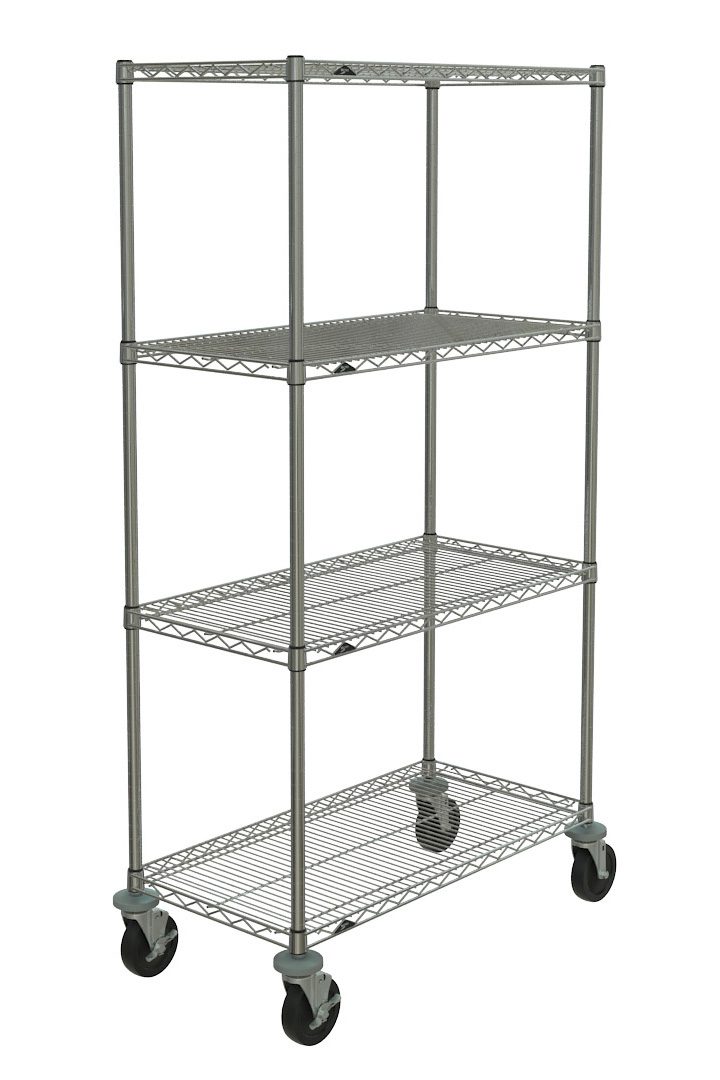
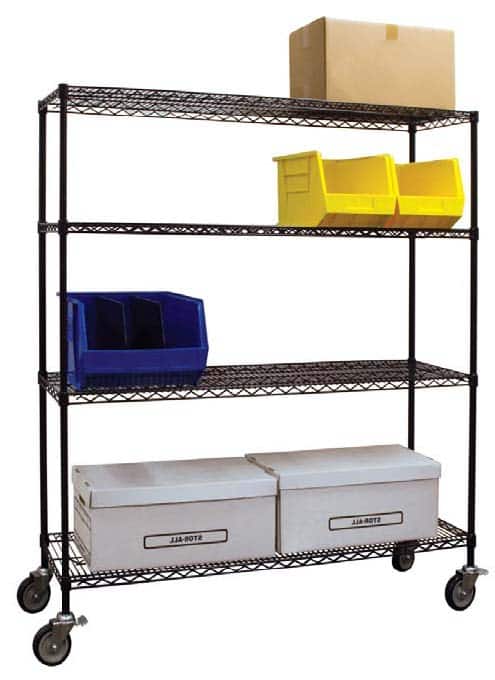
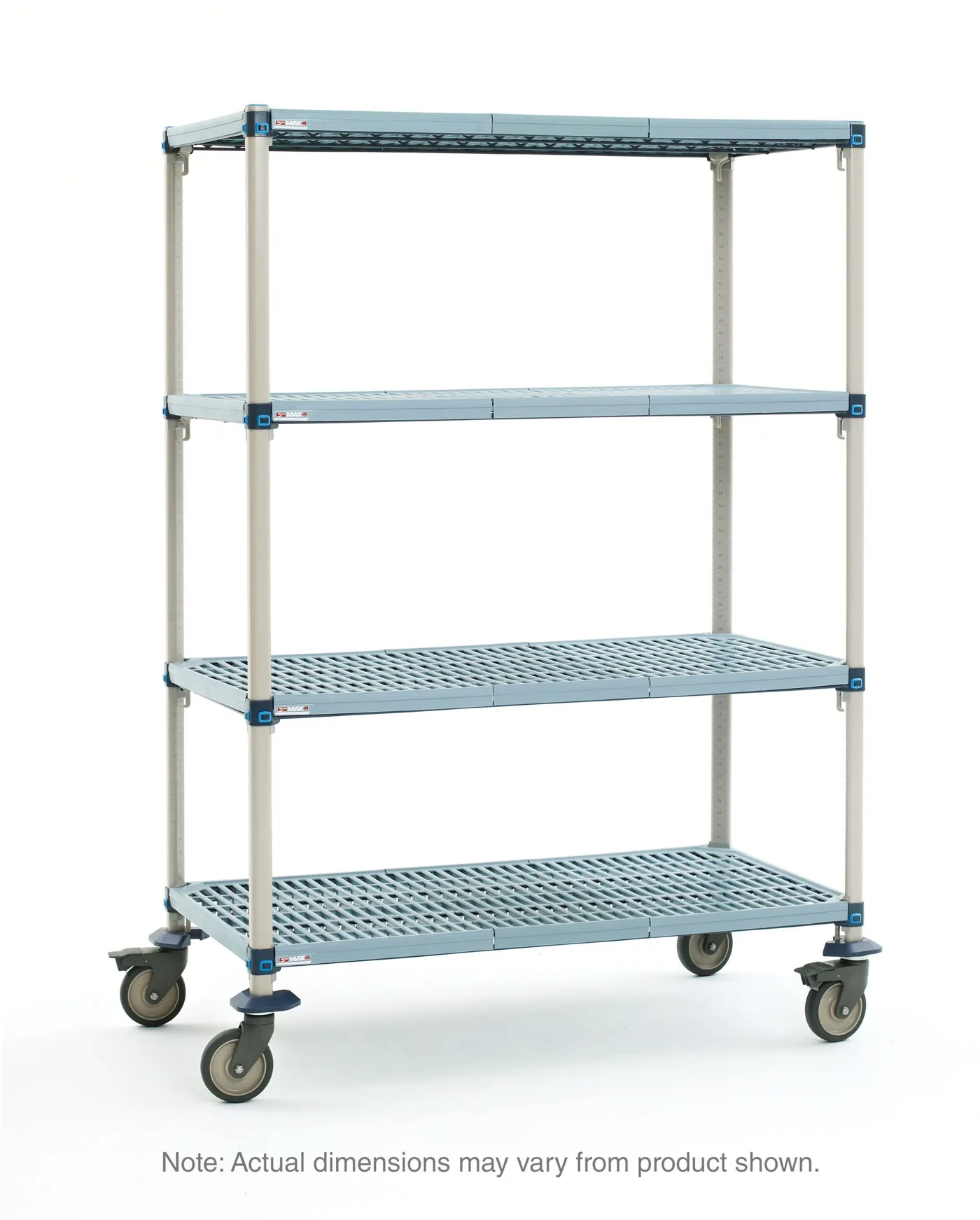
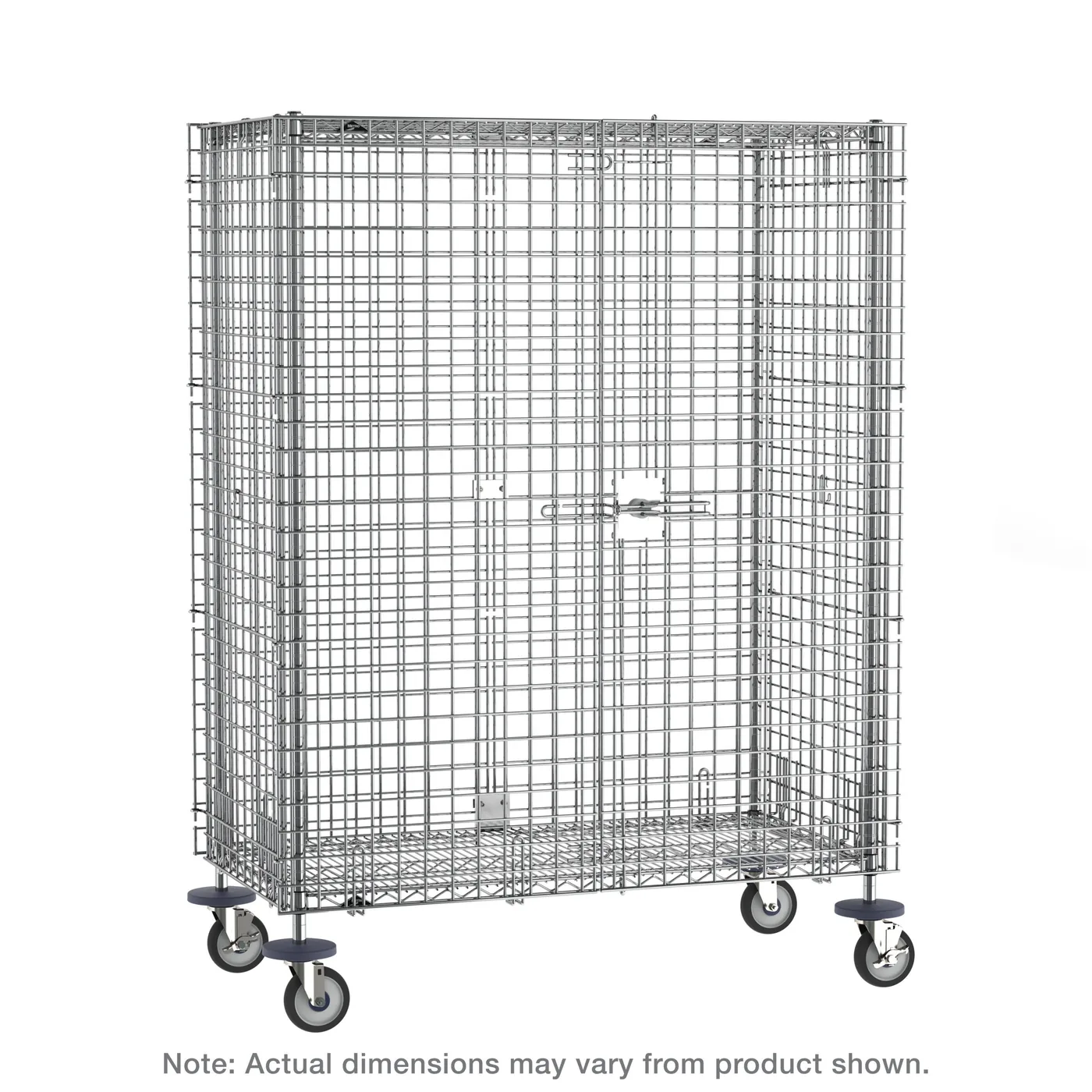
Some common sizes are in stock at select manufacturers, subject to confirmation. MH-USA does not hold warehouse inventory; units ship from the manufacturer or a partner warehouse.
What Is a Mobile Shelving Unit on Casters?
A mobile shelving unit on casters is an ordinary freestanding shelving unit, usually four or five shelves, with a wheel fitted at the bottom of each post instead of a leveling foot. Nothing is bolted to the floor and there is no rail, so one person can push the whole unit, loaded, to a new spot: across a stockroom, into a walk-in cooler, down a hallway to a procedure room, or out of the way so the floor can be washed.
That is a different product from the track-mounted systems on our mobile shelving hub. Track systems put many rows of shelving on carriages that slide sideways along fixed rails to close up aisles. Units on casters do not save aisle space by themselves; what they save is walking, double handling and the time it takes to empty a shelf before you move it.
Buyers search for the same thing under several names: shelving on wheels, rolling shelving units, wire shelving carts, mobile shelving carts and stem caster carts. If you are not sure which family you need, our rolling shelving guide sorts casters from track in a few questions.
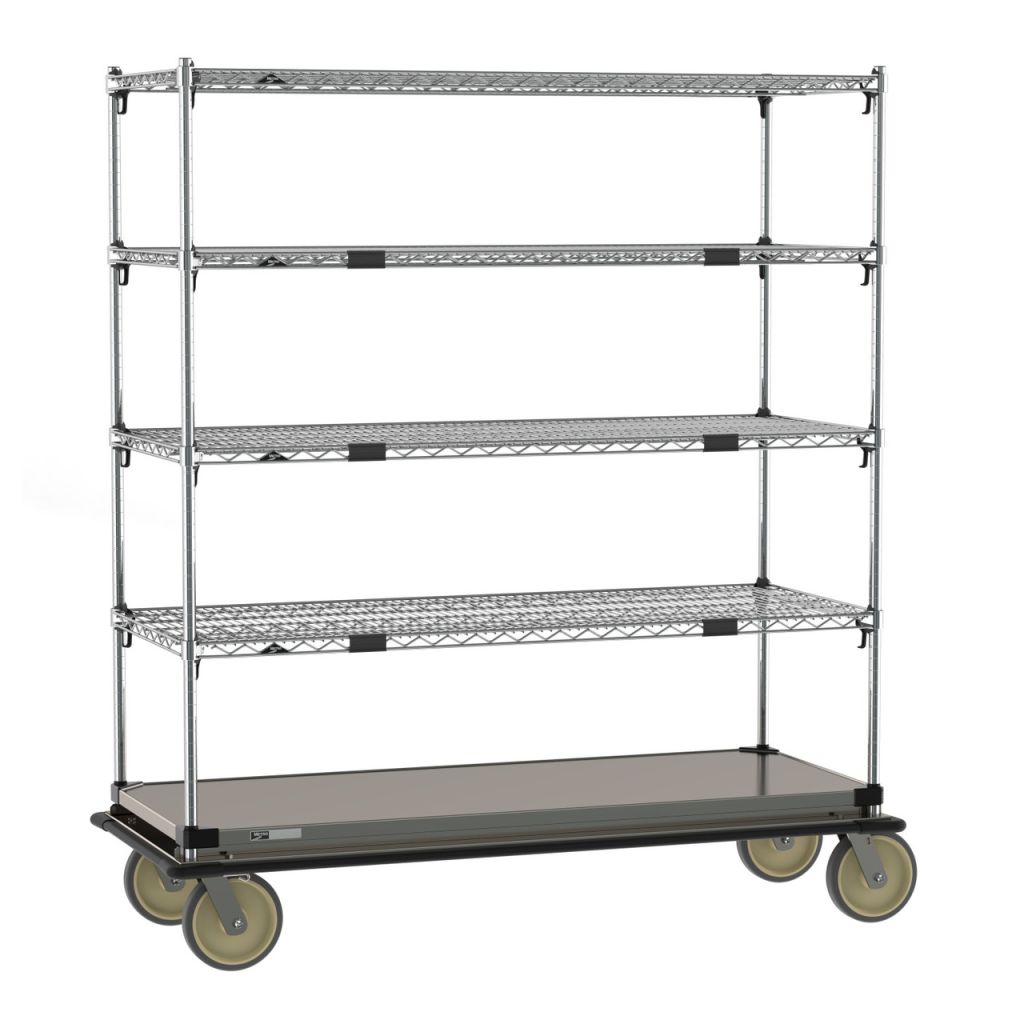
Types of Shelving Units on Wheels
The frame and shelf material decide where a unit can live. The casters decide how it moves. Start with the environment, then pick the shelf type that survives it.
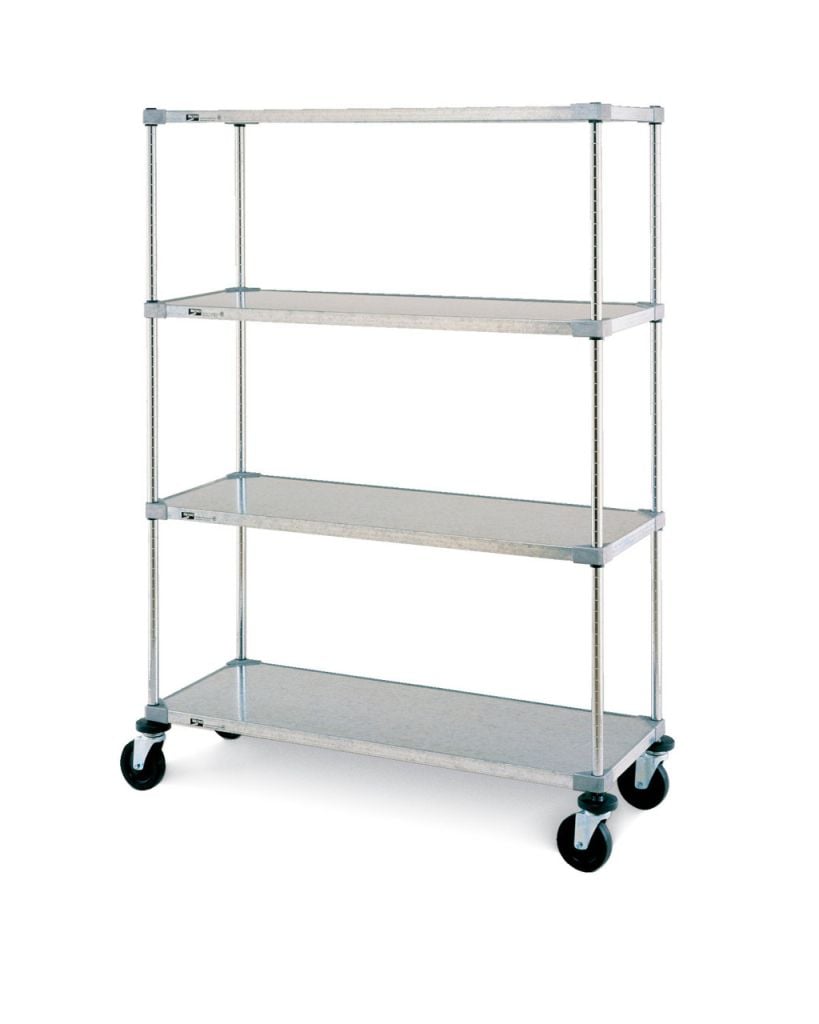
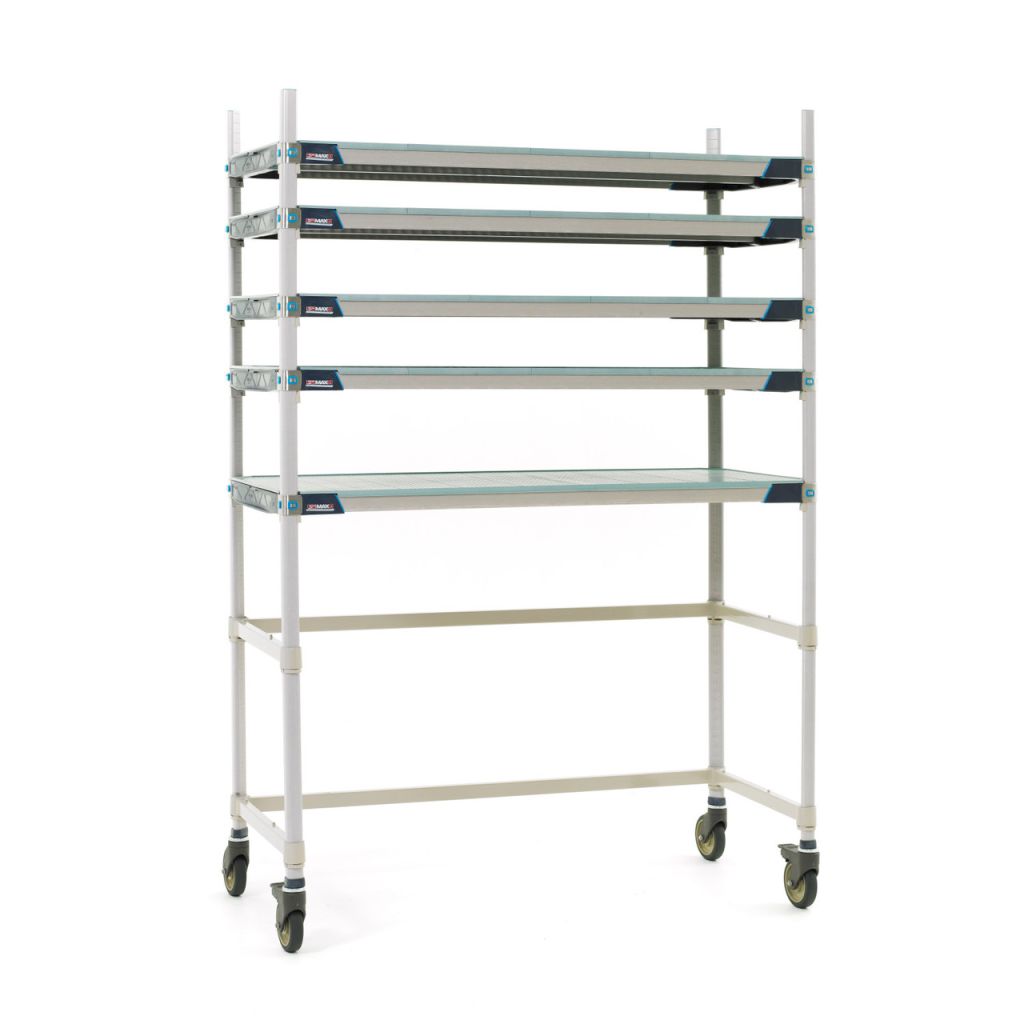
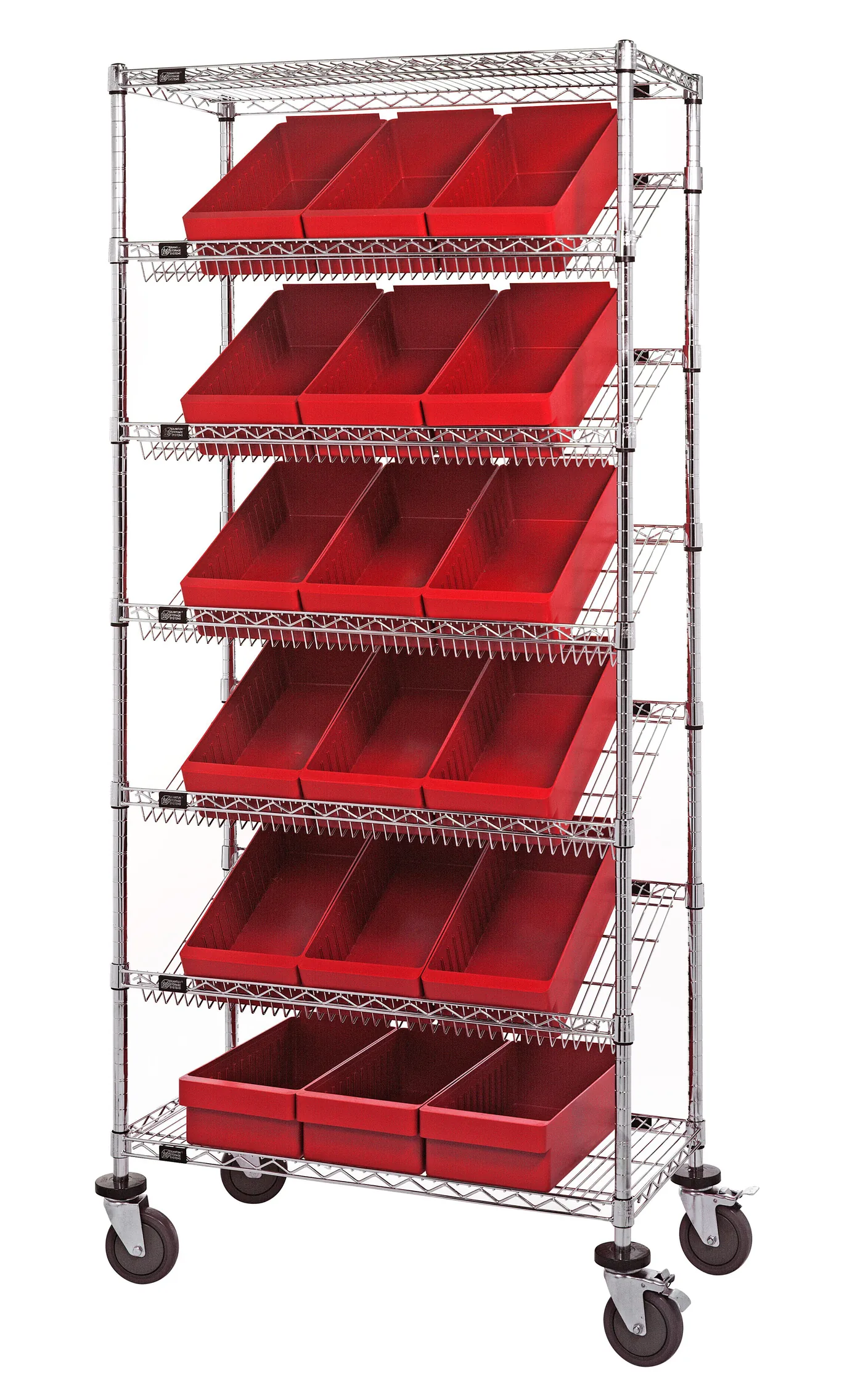
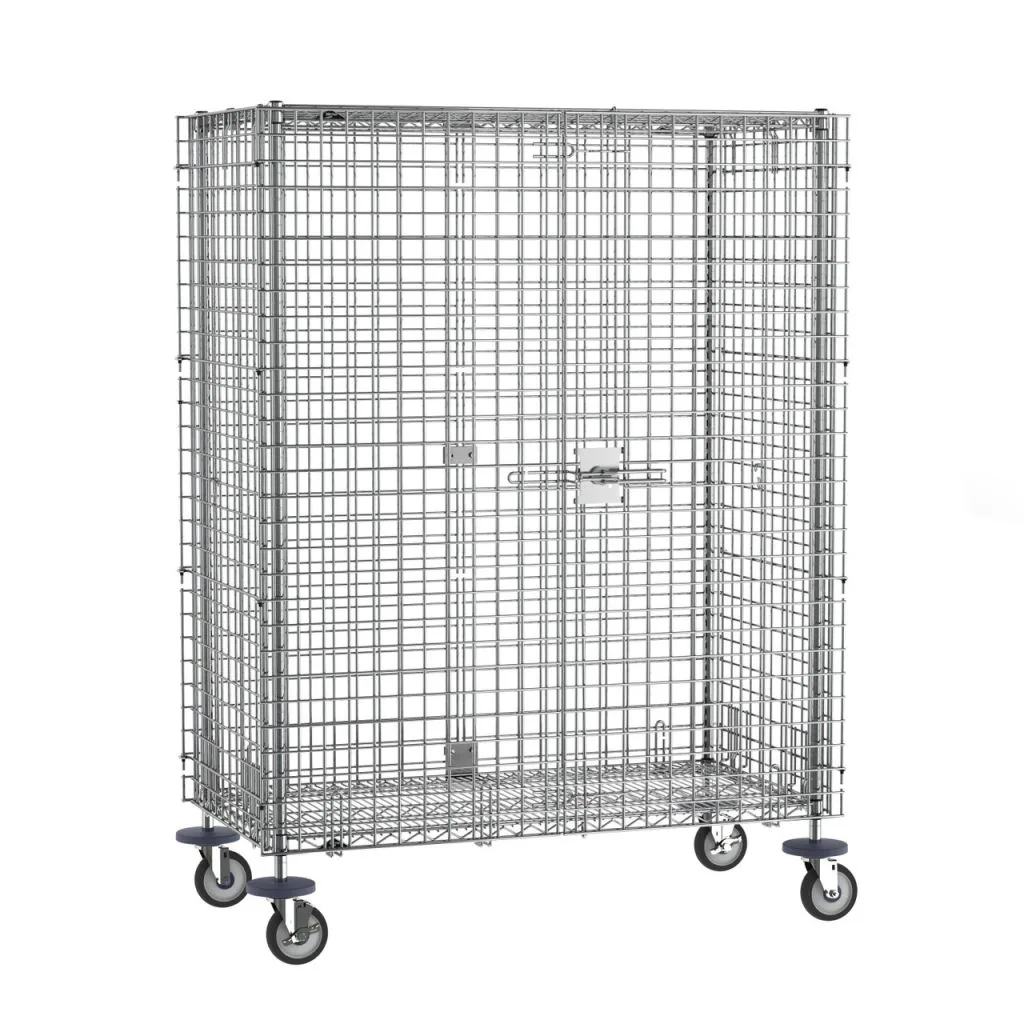
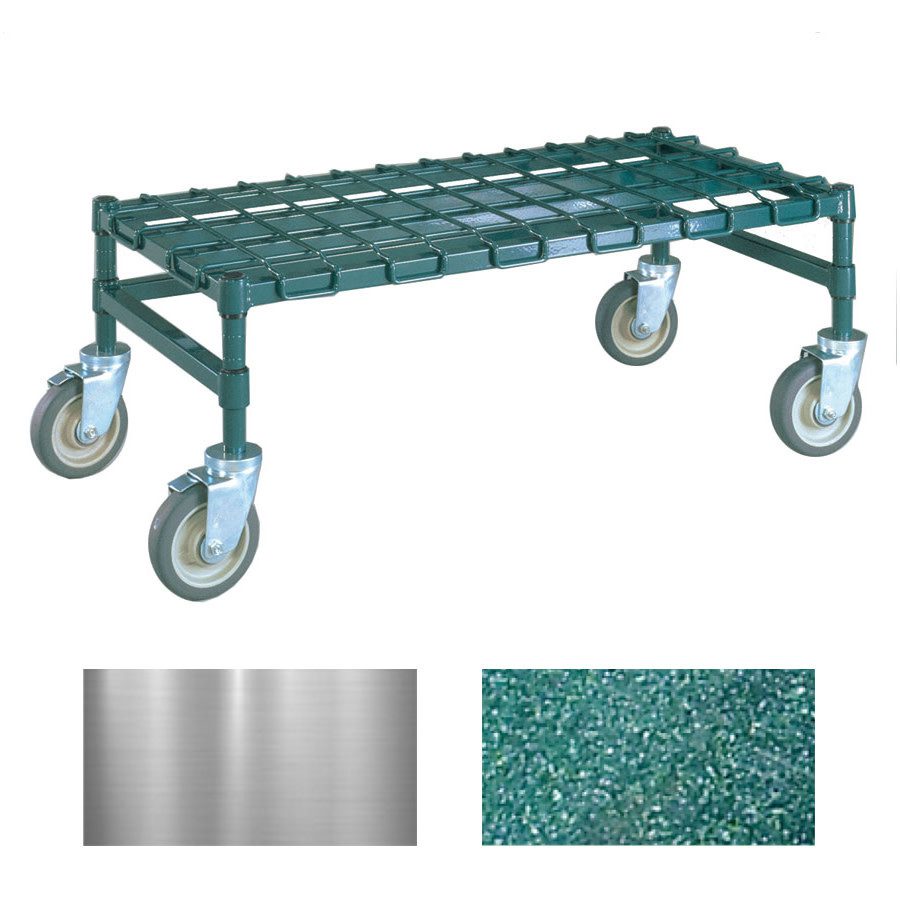
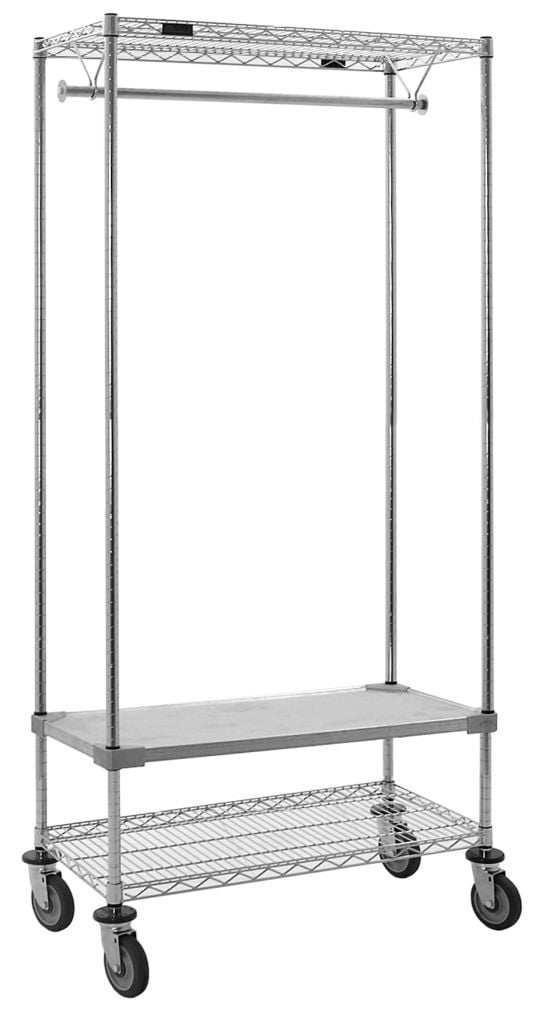
Chrome wire is the default for dry, indoor storage because the open wire lets light, air and sprinkler water through. Black epoxy and gray epoxy finishes add some moisture resistance; stainless and polymer are the choices when washdown, condensation or cleaning chemicals are part of daily life. Our wire shelving page covers finishes in more depth.
How to Choose Casters for Shelving
Stem or plate. Most shelving units on wheels use stem casters that insert or thread into the bottom of each post, so a stationary unit can often be converted by swapping feet for casters. Heavier carts use plate casters bolted to a steel dolly or base frame under the shelving.
Swivel, rigid and brake. Four swivel casters let a unit turn in place; two swivel and two rigid steer more like a cart over longer runs. Specify at least two braking casters so the unit stays put while someone is loading it.
Wheel size. Larger diameter wheels roll more easily over floor joints, door thresholds and elevator gaps. Small wheels are fine on smooth, level floors where units only shuffle a few feet.
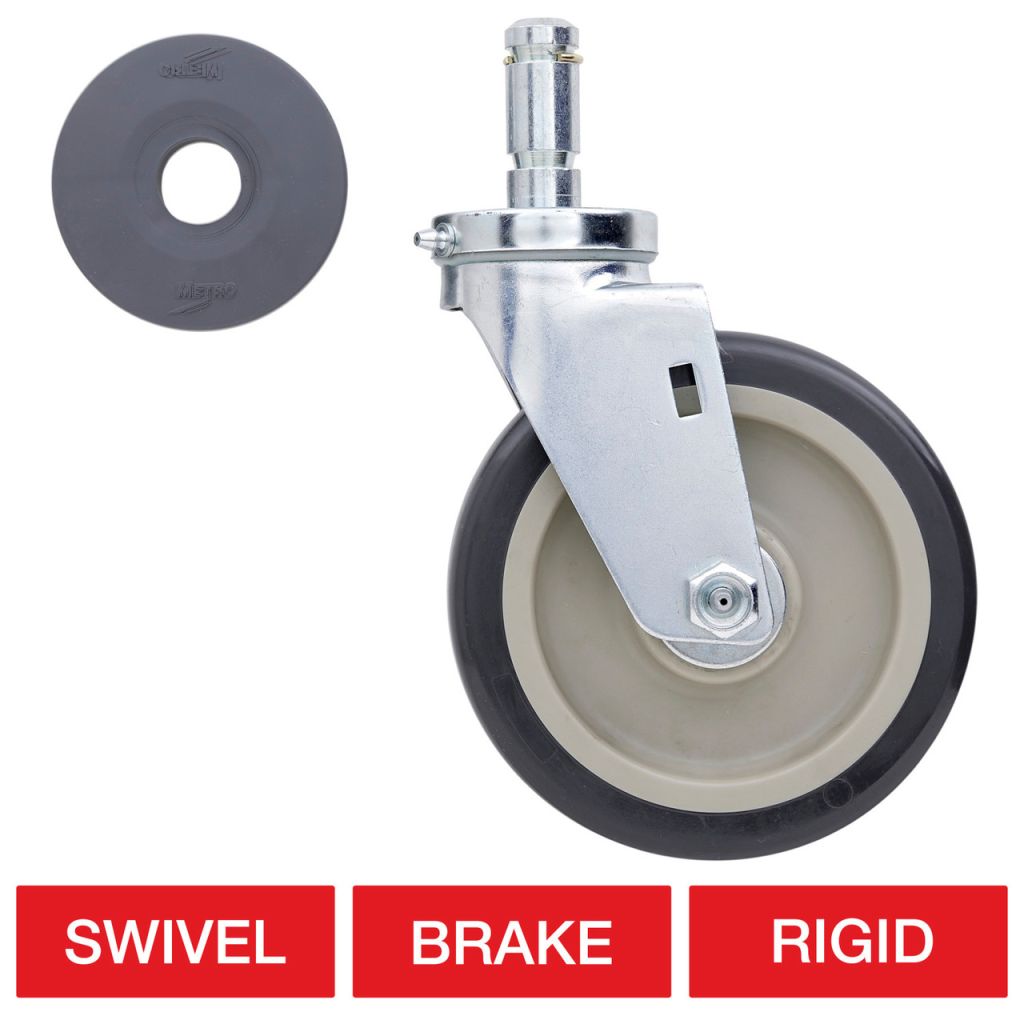
Tread material is the choice most people skip, and it matters as much as size. Match the tread to the floor and the environment:
| Tread / caster type | Where it fits | Watch for |
|---|---|---|
| Polyurethane | General purpose on sealed concrete, tile and vinyl; quiet and non-marking | Prolonged heat |
| Rubber | Cushioned ride for fragile loads and quieter rolling in offices and patient areas | Harder to push under heavy loads |
| Polymer / nylon | Easy rolling on hard floors; resists water and many cleaning chemicals | Noisier, less forgiving on rough floors |
| High-temperature | Units that go through cart washers or sterilizing cycles | Confirm the rated temperature for your process |
| Conductive / ESD | Electronics areas where static must drain to an ESD floor | Only works with a conductive floor path |
| Stainless hardware | Washdown, coolers and corrosive areas | Higher cost than plated steel |
Donut bumpers on the posts protect walls and door frames from rolling units. For units that cross rough or broken floors, ask about larger wheels or a dolly base rather than forcing small stem casters over gaps they were not designed for. The Metro mobile units and stem casters page lists Metro’s own caster families if you are matching an existing fleet.
Capacity and Safe Use of Shelving on Casters
A shelving unit on wheels is almost always rated for less weight than the same shelving standing on feet. The casters, not the shelves, usually set the limit, and a rolling load also puts sideways force on the posts every time it starts and stops. Always read the mobile capacity listed for the unit and caster set you are buying, not the stationary shelf rating.
Floors matter as much as the unit. A slope that feels flat on foot can start a loaded unit rolling, so park units on level ground with brakes set, and avoid leaving them at the top of ramps or near dock edges. Expansion joints, floor drains and rubber mats catch small wheels; if a unit has to cross them every day, step up to a larger wheel diameter. In coolers and freezers, choose casters and grease rated for low temperatures so swivels do not stiffen, and keep tread materials away from standing oil or solvents that soften some rubbers. Finally, label each unit’s mobile capacity on an end post so the next person loading it knows the limit without looking it up.
Track systems have different safety features
Track-mounted mobile shelving uses carriage locks, anti-tip hardware and, on powered systems, aisle sensors. Those are covered in our mobile shelving safety guide; they do not apply to freestanding units on casters.
Shelving on Casters vs Track-Mounted Mobile Shelving
Both are called mobile shelving and both roll, but they solve opposite problems. Units on casters move product to people. Track systems move aisles so more product fits in the same room.
| Units on casters | Track-mounted mobile shelving | |
|---|---|---|
| How it moves | Pushed anywhere on the floor | Carriages glide sideways on fixed rails |
| Main benefit | Mobility, cleaning access, flexible layouts | Removes fixed aisles to fit more storage in a room |
| Installation | None; uncrate and roll | Rails leveled or recessed into the floor, carriages assembled on site |
| Typical buyer | Kitchens, clinics, stockrooms, labs, shops | Records, evidence, archives, parts rooms, collections |
| How to buy | Online by size, or quote for volume | Quoted after a space analysis and layout |
| Where to learn more | This page and rolling shelving | Mobile shelving hub and high-density shelving |
There is a middle ground. Small overhead-track and floor-track kits such as track shelving put standard wire or polymer units on carriages for a storeroom or walk-in. For pallet loads, the same carriage idea is built into mobile pallet racking. If you are weighing casters against track because a room is running out of space, send us the dimensions and we will show both options side by side.
Where Mobile Shelving Units on Casters Work Best
In each of these, the unit earns its keep by eliminating a trip. If staff are carrying product from a fixed shelf to the point of use and back several times a shift, a shelving unit on wheels usually pays for itself in labor faster than any other storage upgrade.
Buying Checklist for Shelving Units on Wheels
Size the unit
Width, depth and height that fit the doors and route, plus how many shelves you need.
Pick the shelf type
Wire, solid, polymer, bin or security, based on what is stored and how it is cleaned.
Match the casters
Stem or plate, swivel and brake mix, wheel size and tread for your floor.
Check mobile capacity
Total load on the unit while rolling, compared with the listed mobile rating.
- Measure the tightest door, hallway and elevator the unit must pass through, loaded.
- Note the floor: sealed concrete, tile, epoxy, rubber mat, or rough and broken surfaces.
- List the environment: dry storage, cooler, freezer, washdown, cart washer or ESD area.
- Decide how many braking casters you want and whether any should be rigid for steering.
- Ask whether shelf mats, bins, dividers, covers or bumpers should come with the unit.
- For more than a handful of units, request a quote; volume pricing and freight are better than piecemeal orders.
Ordering one or two standard units? The category cards at the top of this page link straight to the catalog. Outfitting a whole department, or matching casters to existing shelving? Call 800-326-4403 or request a quote and include a photo of the floor and the route. Some common sizes are in stock at select manufacturers, subject to confirmation; we confirm lead time on every quote.
Get a free quote
Tell us what you are storing, the room size and your timeline. A project specialist will follow up with layout options and pricing. Prefer to talk? Call (800) 326-4403.
Mobile Shelving Units on Casters FAQs
What is a mobile shelving unit on casters?
Can I put casters on my existing shelving?
How much weight can shelving on wheels hold?
Which casters are best for shelving units?
Is rolling shelving the same as mobile shelving?
Does MH-USA keep shelving units on wheels in stock?
Are shelving units on casters safe to move when loaded?
Need Shelving That Moves?
Tell us what you store, the floor and the route. We will match the unit, shelf type and casters and quote one unit or a whole department.