
PPE and Life-Safety Equipment Distribution Security Cage: Petzl America
How a distribution center for climbing, rescue and work-at-height equipment controls lot-traceable inventory, recall holds, returns and demo stock — and what that means for cage design in a modern, automated warehouse.

2019
Year Material Handling USA supplied security cage and wire mesh partition product
Salt Lake Valley
Location of Petzl’s North American headquarters and distribution center
Lot-traced
How life-safety PPE has to be tracked, from receipt through to retirement
Nationwide
MH-USA designs, supplies and installs distribution center enclosures
The project
Petzl America is the North American headquarters and distribution operation of Petzl, the French manufacturer of climbing, mountaineering, caving, rescue and work-at-height equipment and headlamps. The company ran its North American operations from northern Utah for years before designing and building a purpose-built headquarters, warehouse and training facility in the Salt Lake Valley, which also houses the Petzl Technical Institute and a tall indoor training tower.
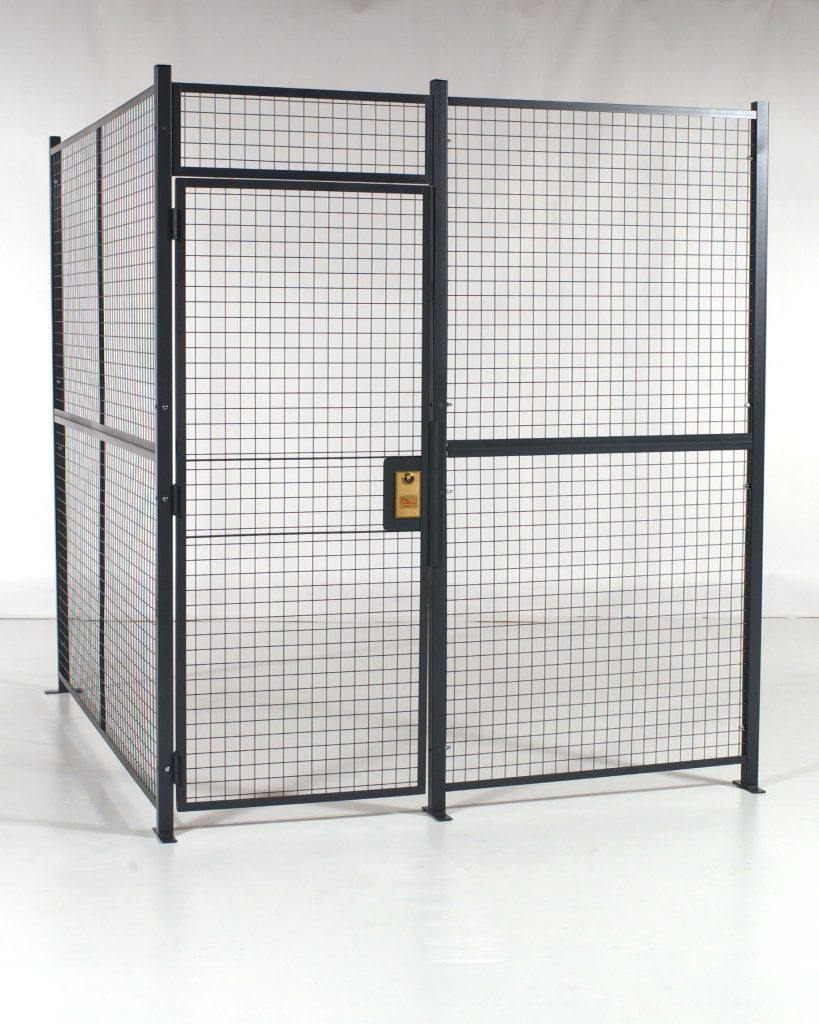
Material Handling USA supplied welded wire security cage and partition product to Petzl America in 2019. This page sits under our security cage hub and describes the general design problem a life-safety equipment distributor faces, and how we approach it. It contains no facility layout, no dimensions, no inventory data and no security detail for this customer.
What makes this application different from a general distribution warehouse is not the value of the goods. It is that a large share of the inventory is personal protective equipment that people trust with their lives. Harnesses, lanyards, connectors, descenders, helmets and rope are governed by manufacturer traceability, inspection and retirement rules. An item whose history cannot be accounted for is not a discounted item — it is an item that must not ship. That single fact drives most of the storage decisions on the floor.
Why PPE inventory is different from ordinary high-value stock
Traceability is a product requirement, not a nicety. Life-safety PPE is manufactured, marked and sold with lot or serial identification so that a specific production run can be traced to the customers who received it. Storage has to preserve that: mixed, unlabeled or informally relocated stock destroys the one thing the traceability system depends on.
A recall or inspection notice is a stop-everything event. When a manufacturer issues a field inspection notice for a component, affected stock has to be located and physically prevented from shipping the same day. Doing that with a spreadsheet flag alone is optimistic; doing it with a spreadsheet flag and a locked, clearly labeled hold area is defensible.
Returned equipment is not sellable stock. Demo gear, event and training equipment, warranty returns and inspection samples come back from the field with unknown histories. They have to be kept physically apart from new inventory until someone competent has assessed them, or they will eventually be picked as new.
The product is desirable. Compact, high-value, brand-name outdoor and rescue gear is attractive to opportunistic theft in a way that pallets of industrial consumables are not, and shrinkage in this category tends to be quiet and internal rather than dramatic.

What a life-safety equipment DC puts behind mesh
As with the distribution warehouses we cover in our distribution warehouse case study, the answer is never “everything”. A few small, well-chosen controlled areas beat one large locked room, because each one can have its own access list and its own purpose:
Regulated categories are a separate matter: laboratory and accredited-sample storage follows its own rules, as our laboratory security cage case study describes. General duties for employer-provided protective equipment sit under 29 CFR 1910.132, and sector-by-sector cage requirements are summarized on our regulations and compliance page.

Designing the quarantine and hold area
The hold area is the part of this application that most warehouses get wrong, and it is worth designing deliberately rather than allocating a corner of the racking to it.
- Physical separation beats a system flag. A hold status in the WMS is necessary but not sufficient. Under time pressure, people override flags; they do not walk through a locked door they have no key to.
- It must be visible. Open mesh means a supervisor, an auditor or a visiting quality manager can see what is in quarantine without unlocking anything. A solid room hides the problem, and hidden quarantine stock has a habit of quietly returning to inventory.
- Label the enclosure, not just the cartons. Signage on the panel itself removes any argument about whether an item was in hold. Mesh panels take permanent signage well.
- Keep the access list to named people. Quality or compliance staff only. This is the one area where a short key list is a feature rather than an obstacle.
- Size it for a bad week, not an average one. Hold areas are sized for routine returns and then overflow the first time a real inspection notice lands. Plan for the enclosure to be extended; bolted wire mesh partitions can be added to without replacing what is there.
- Give it a work surface and power. Assessment happens at the enclosure. If the only bench is elsewhere, stock leaves the hold area to be inspected and does not always come back.
Public recall and safety notices for consumer products — including the kind of manufacturer inspection notice that triggers these holds — are published by the U.S. Consumer Product Safety Commission.
Caged areas inside an automated distribution center
A modern DC with a goods-to-person or automated pick system adds constraints that a conventional warehouse does not have. The enclosure has to respect the machine as much as the process.
- Do not cage what the automation needs to reach. Controlled stock belongs upstream of the automated pick faces — in reserve, receiving or returns — not inside a zone the system replenishes automatically. Otherwise the cage becomes an exception the system cannot handle.
- Guarding and security are different problems. Perimeter guarding around moving equipment is a safety function with its own interlock and access requirements. A security enclosure is an inventory control function. They often use similar panels, and they should still be designed separately.
- Plan for maintenance access. Technicians need to reach drives, motors and controls at odd hours. A cage that forces a maintenance callout to wait for a keyholder will be defeated within weeks.
- Watch the conveyor pass-through. Where product crosses the cage line on a conveyor, the opening is the weak point. Chute guards, roll-down covers or a service window keep the boundary meaningful.
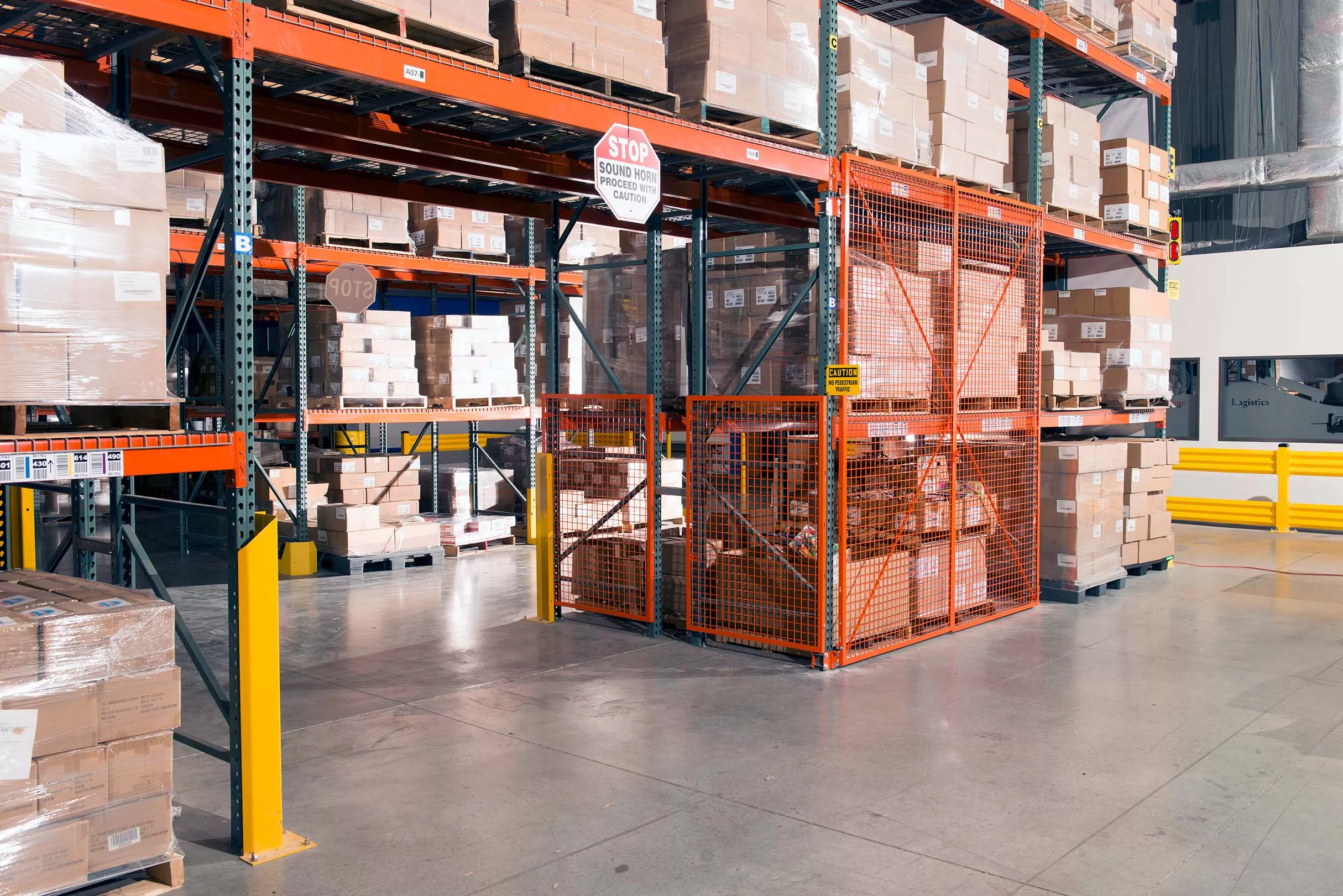
- Integrate with the rack, not around it. Where reserve stock sits in pallet rack, enclosing the rack bays directly is cheaper and tidier than building a room around them — see pallet rack security enclosures and warehouse security enclosures.
Specification and access
The specification for this kind of facility is driven by traceability, visibility and speed — the enclosure has to control stock without adding a step to every transaction.
General storage and passageway requirements at 29 CFR 1910.176 apply inside a caged area exactly as they do in the open warehouse: aisles clear, loads stable, nothing stacked into a sprinkler.
Installing in a live distribution center
A DC never really stops, and in a seasonal business the window between peak seasons is the only sensible time to touch the floor. The sequence matters more than the product.
Field-verify before ordering
Measured openings, clearances, sprinkler and lighting positions, floor condition and anchor viability, plus the widest load that has to pass. Panel layouts get redesigned mid-project far more often because of an obstruction than because of a security requirement.
Agree the process at the same time as the panels
Who holds keys, who issues stock, where quarantine sits, how the record is made. An enclosure handed over without an agreed process is an open room within a month.
Install against the operating calendar
Anchoring is noisy and takes floor space. It is scheduled against the off-peak window, or shift by shift with one area completed and returned to service before the next is opened.
Walk it on a schedule
Latches, hinges, panel fixings and the access list are checked periodically — our cage maintenance and inspection guide covers what to look at and how often.
Installation detail is on the security cage installation page. Material Handling USA designs, supplies and installs distribution center enclosures nationwide and across the Mountain West — see security cages in Utah, or start at the security cages hub.
Shop Pre-Configured Wire Mesh Cage Kits Online
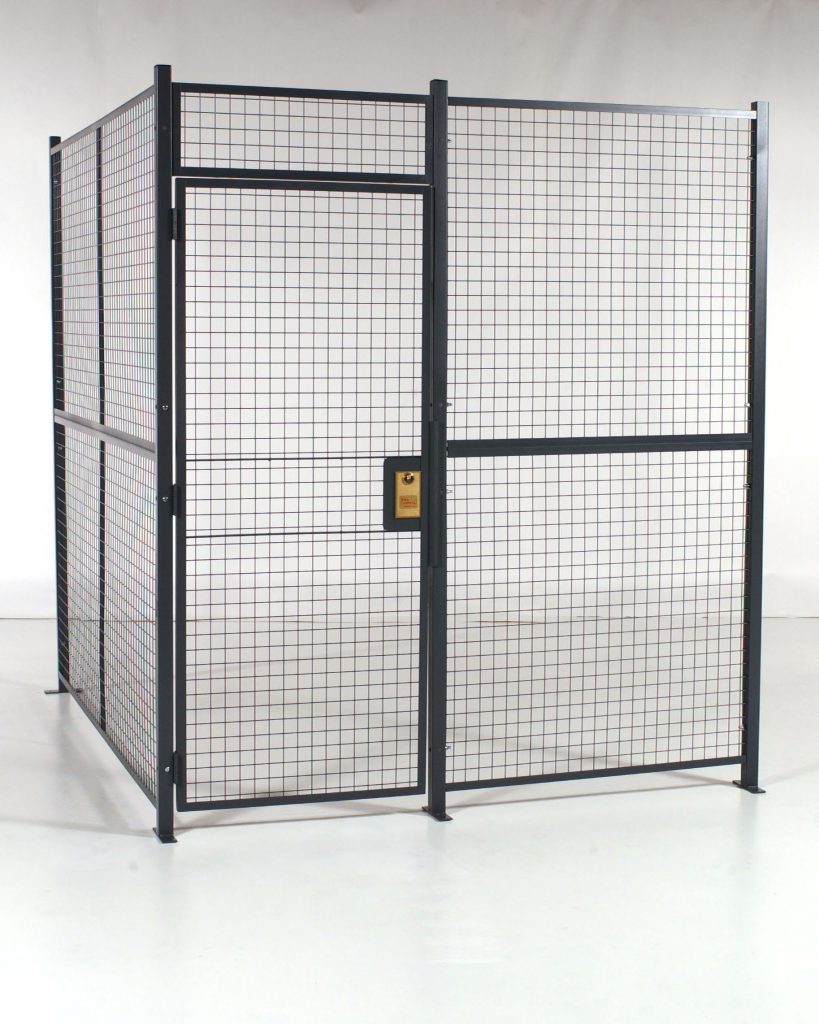
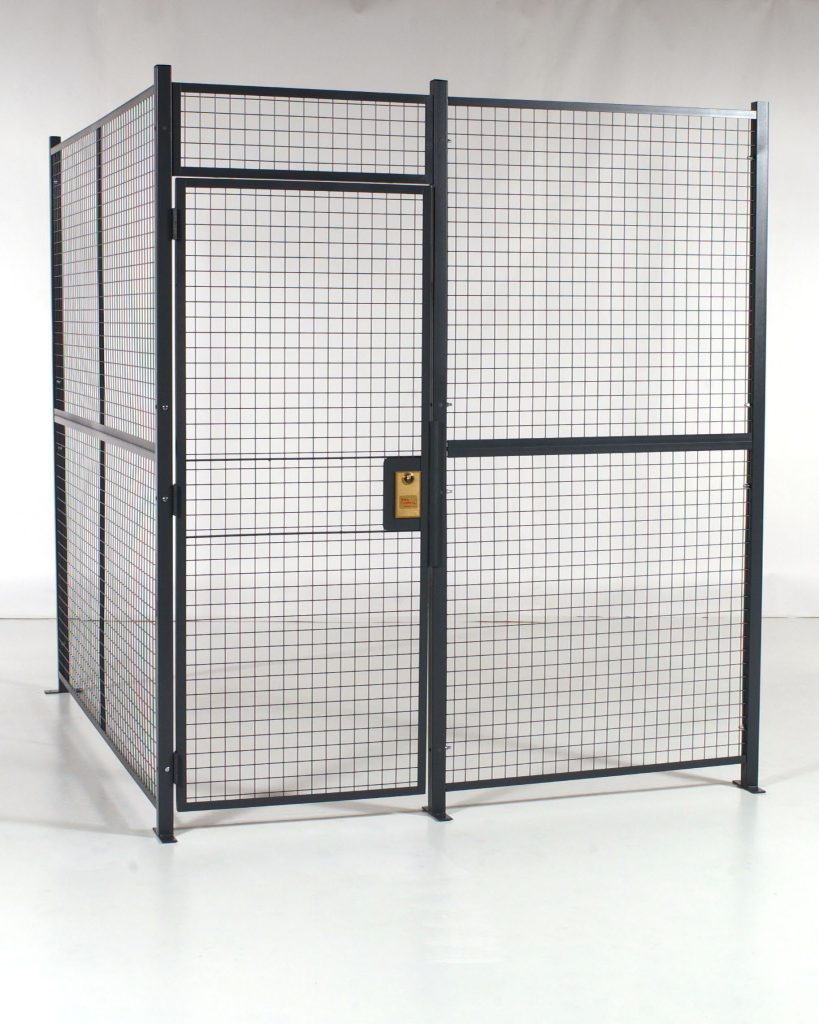
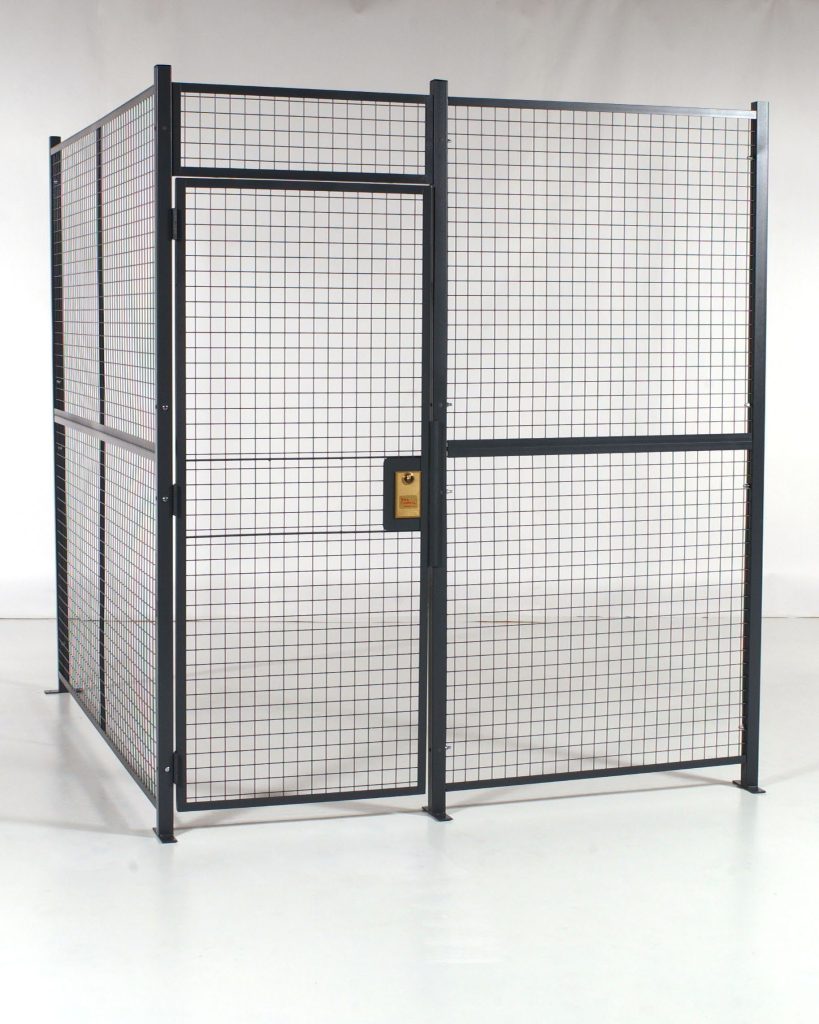
Standard-size welded wire cage kits, priced online, for smaller storage needs. Every kit still needs to be anchored to sound concrete — for tall, braced or engineered enclosures, request a quote with your building location and floor details.
Frequently asked questions
Why does PPE inventory need a security cage rather than a locked cabinet?
What is a quarantine cage used for in a warehouse?
Does a cage interfere with an automated pick system?
Is machine guarding the same thing as a security cage?
How do you stop a controlled area from slowing the operation down?
Can the enclosure be moved when the warehouse layout changes?
Does a mesh ceiling affect fire protection?
Can a security cage tie into our existing badge access system?
Looking for a project like yours? Browse more warehouse, distribution and retail security cage case studies, see all security cage case studies.
Control the stock that cannot ship by mistake
Material Handling USA designs, supplies and installs welded wire security cages, quarantine enclosures and wire mesh partitions for distribution centers nationwide.