
Shipping Container Shelving
Commercial steel and wire shelving for 20 ft and 40 ft shipping containers and conex boxes: sized to the interior, laid out around a usable aisle and anchored so it stays put when the box gets bumped or moved.

20' / 40'
Standard container lengths
~7'8"
Typical interior width
12"–24"
Common shelf depths
1 or 2
Wall runs per box
Shop Shelving for Shipping Containers
Online prices for the shelving families that fit container interiors best, plus bins to keep small items from sliding. Shallow units (12" to 18" deep) leave the widest aisle; check your interior width before you order (see how to measure). Some common sizes are in stock at select manufacturers, subject to confirmation. For a full container layout or several boxes, request a quote.
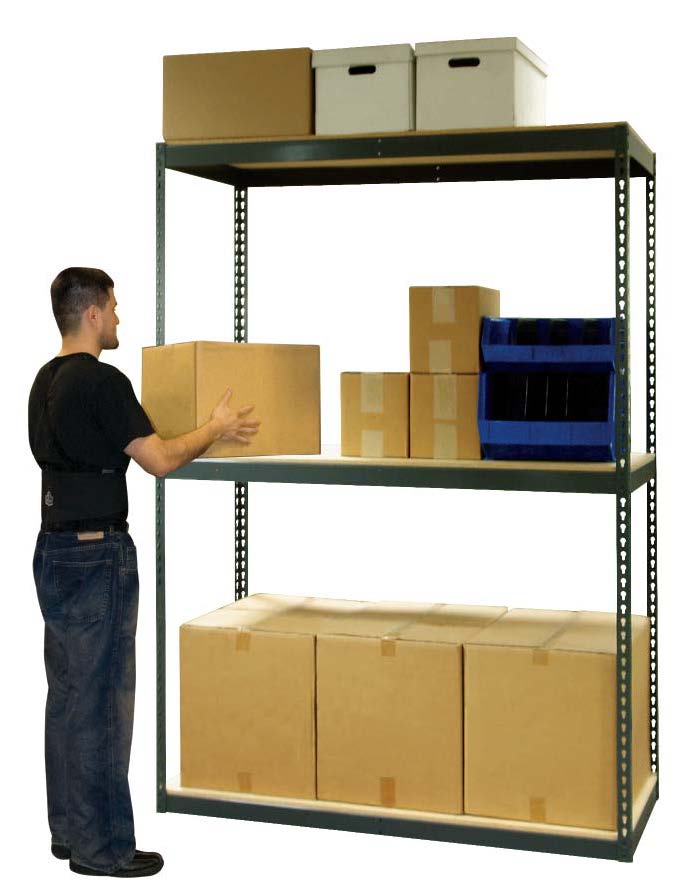


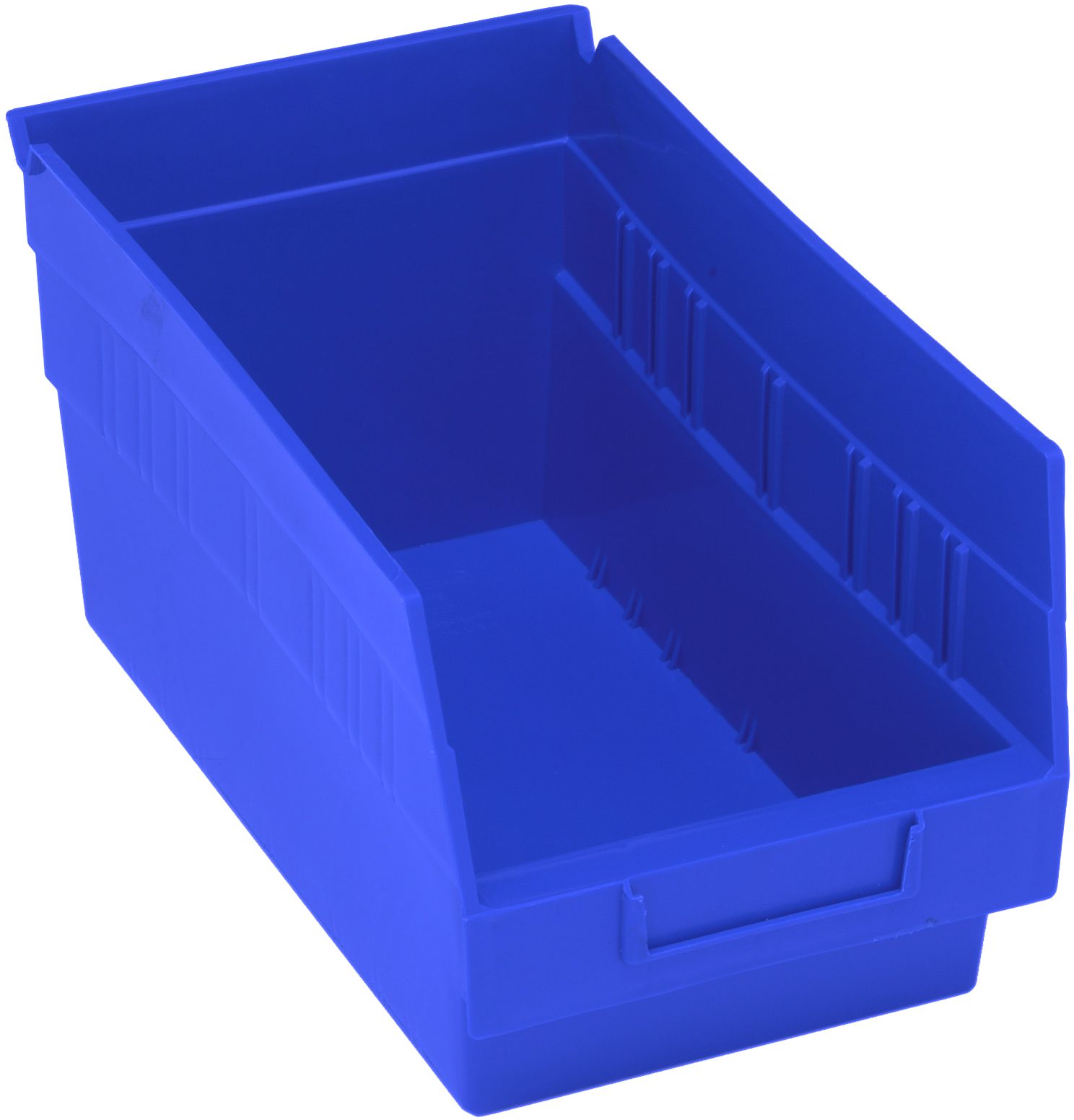
Why Shipping Container Shelving Is Different
A shipping container, conex box or sea can makes a secure, weather-tight storage room you can drop almost anywhere. Putting commercial shelving inside one is not quite the same as shelving a stockroom, though. Four things change the plan:
- Narrow box. Interior width is only about seven and a half feet, so every inch of shelf depth comes out of the aisle.
- Corrugated walls. The side walls are ribbed steel, so shelving never sits flat against them and wall brackets need care.
- Condensation. Steel boxes sweat when temperatures swing, so decks and finishes have to tolerate moisture.
- Movement. Containers get bumped by forklifts, settle on uneven ground and sometimes get moved, so shelving must be anchored and braced.

Get those four right and a container holds a surprising amount: tools and consumables on a job site, seasonal stock behind a store, maintenance parts at a school district yard or a utility substation, or event equipment between shows. This page sits under our shelving solutions hub, which compares every shelving family we supply; here we focus on what changes inside a steel box.
Measure the Container Before You Choose Shelving
Container sizes are standardized, but interiors vary a little between builders, and modified boxes (insulated, lined, with man doors or vents added) lose space. Use the figures below to plan, then tape-measure your actual box at floor level and at shelf-top height before ordering.
| Container | Typical interior length | Typical interior width | Typical interior height | Typical door opening |
|---|---|---|---|---|
| 20 ft standard | about 19'4" | about 7'8" | about 7'10" | about 7'8" W x 7'6" H |
| 40 ft standard | about 39'5" | about 7'8" | about 7'10" | about 7'8" W x 7'6" H |
| 40 ft high cube | about 39'5" | about 7'8" | about 8'10" | about 7'8" W x 8'5" H |
Typical published dimensions for standard dry containers; your box may differ. Always measure.

What to measure:
- Width between the inner faces of the corrugations, not the outer ribs, at the height where shelves will sit.
- Clear height under the roof bows or any lights, vents or insulation.
- Usable length from the front wall back to where the door gaskets and locking bars start.
- Floor condition: soft spots, patches or a slope from the box sitting on uneven ground.
Write the numbers on a sketch, mark any vents or man doors, and send it with your quote request.
Shipping Container Shelving Layouts That Work
Almost every container layout is one of three shapes. Pick by what you store and how people pick it:
Both long walls with a center aisle is the most common. It doubles the shelf space and keeps everything in reach from one walkway. Keep shelves shallow so the aisle stays comfortable.
One long wall leaves the other side open for long items, carts, a ladder, a generator or a pallet you need to get in with a pallet jack.
U-shape adds a short run across the front wall, opposite the doors, for slow movers and bulk overstock.

- Keep the door zone clear: leave room to open, step in and set things down before the first shelf.
- Heavy low, light high: heaviest items on the bottom two levels, especially if the box ever moves.
- Lights and vents: keep the top shelf below lights and vents, and leave air gaps behind the runs.
- Label by bay: number each bay and level so crews can find and return items without a search.
Which Shelving Type Fits a Shipping Container?
Most container installs use freestanding commercial shelving rather than wall-hung brackets, because it can be moved, re-sized or taken to the next box. Three families cover nearly every job:
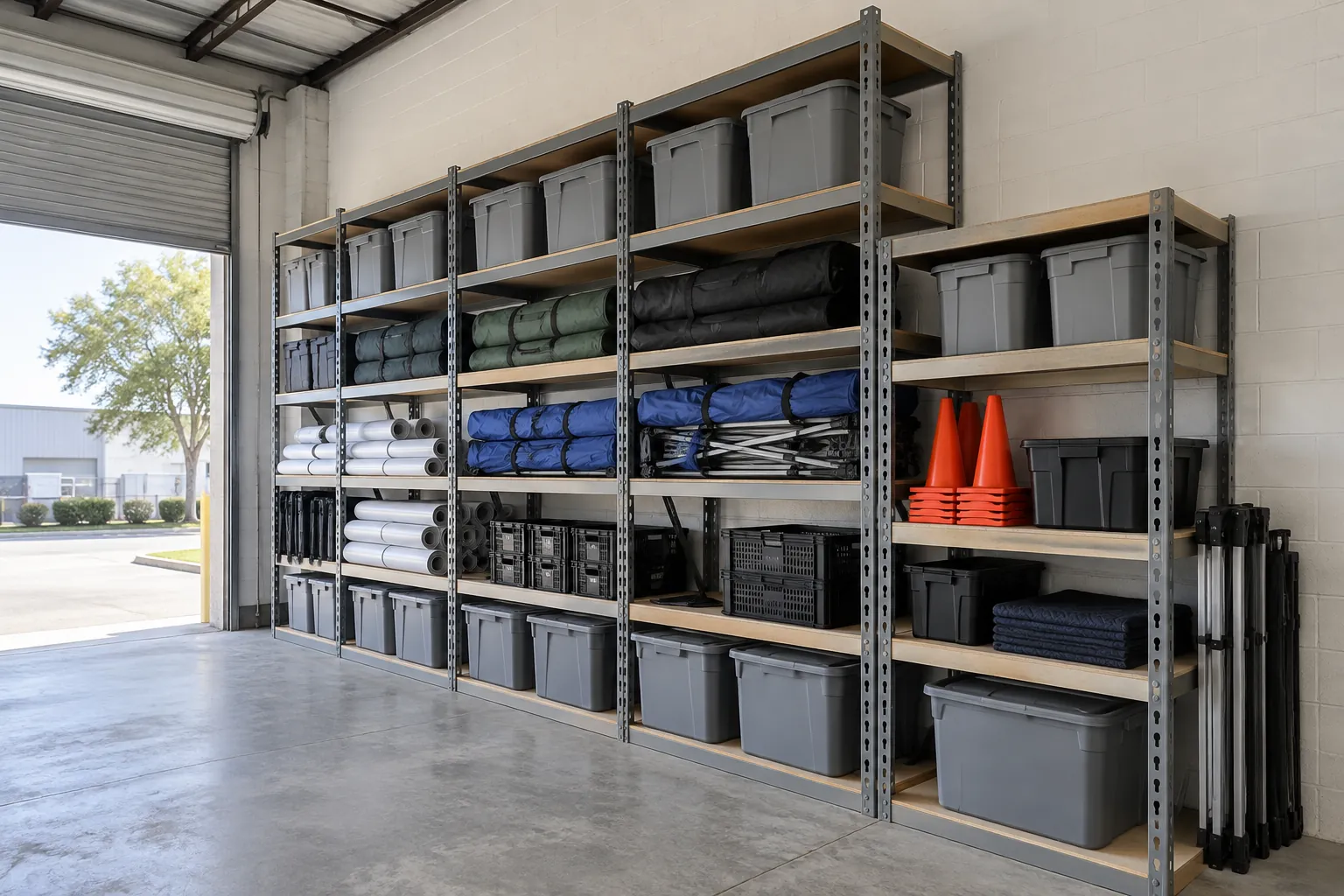 Boltless rivet shelvingFast to assemble with a rubber mallet, open on all sides and strong for totes and cartons. Choose steel or wire decks for containers.
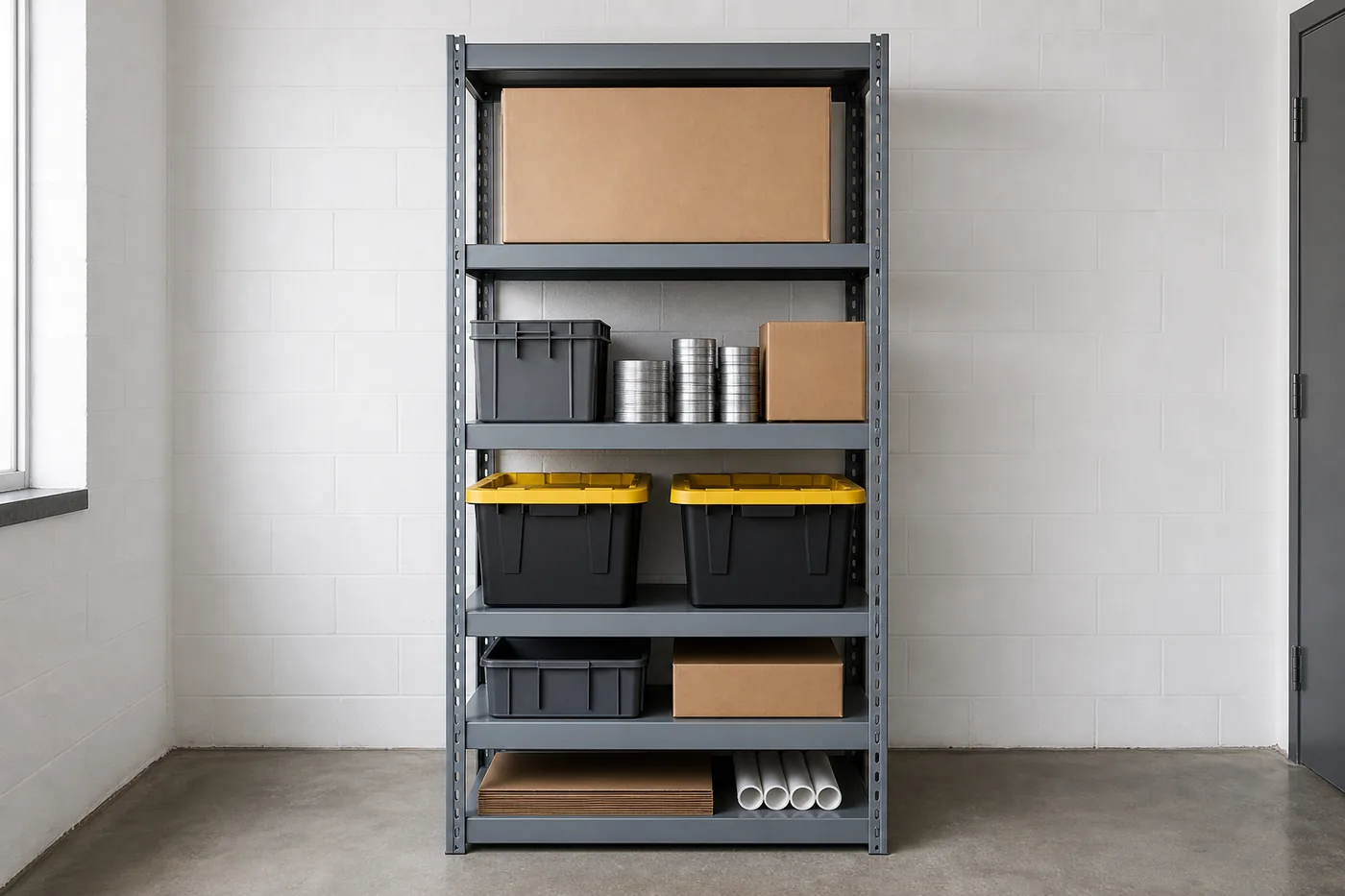 Steel clip shelvingAll-steel shelves with clips and sway braces. Closed sides and backs keep small items in place; levels adjust as the job changes.
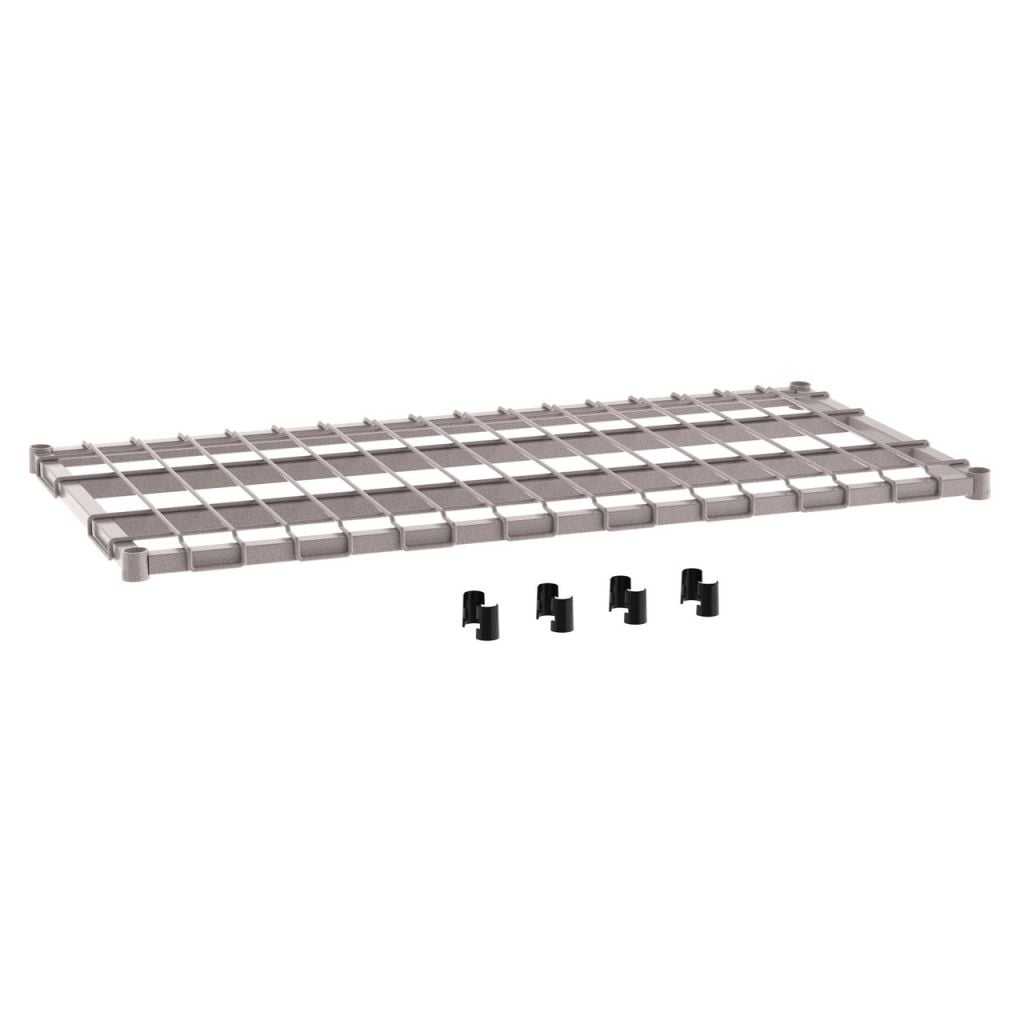 Wire shelvingOpen wire decks let air move and drips fall through, which suits damp boxes. Epoxy or stainless finishes resist rust better than chrome.
| Boltless rivet | Steel clip | Wire | |
|---|---|---|---|
| Typical depths | 12"–24" | 12"–24" | 12"–24" |
| Best decks in a container | Steel or wire (avoid bare particle board) | Steel shelves (standard) | Wire (standard) |
| Assembly | Mallet, no bolts | Clips and bolted braces | Sleeves on grooved posts |
| Small parts | Add bins or dividers | Closed sides help | Add bins or shelf liners |
| Strong points | Heavy totes, cartons, value | Mixed parts, re-configuring | Airflow, damp conditions |
Capacity depends on the shelf, beam span, deck and posts together, so confirm the manufacturer's rating for the exact unit and depth you choose rather than a generic number. For heavier or bulkier items, compare industrial shelving and metal shelving options; for small hardware, bin shelving keeps fasteners and fittings sorted. Already have clip shelving in the box and need parts? See shelf clips and dividers.
Condensation, Rust and Shelf Decks
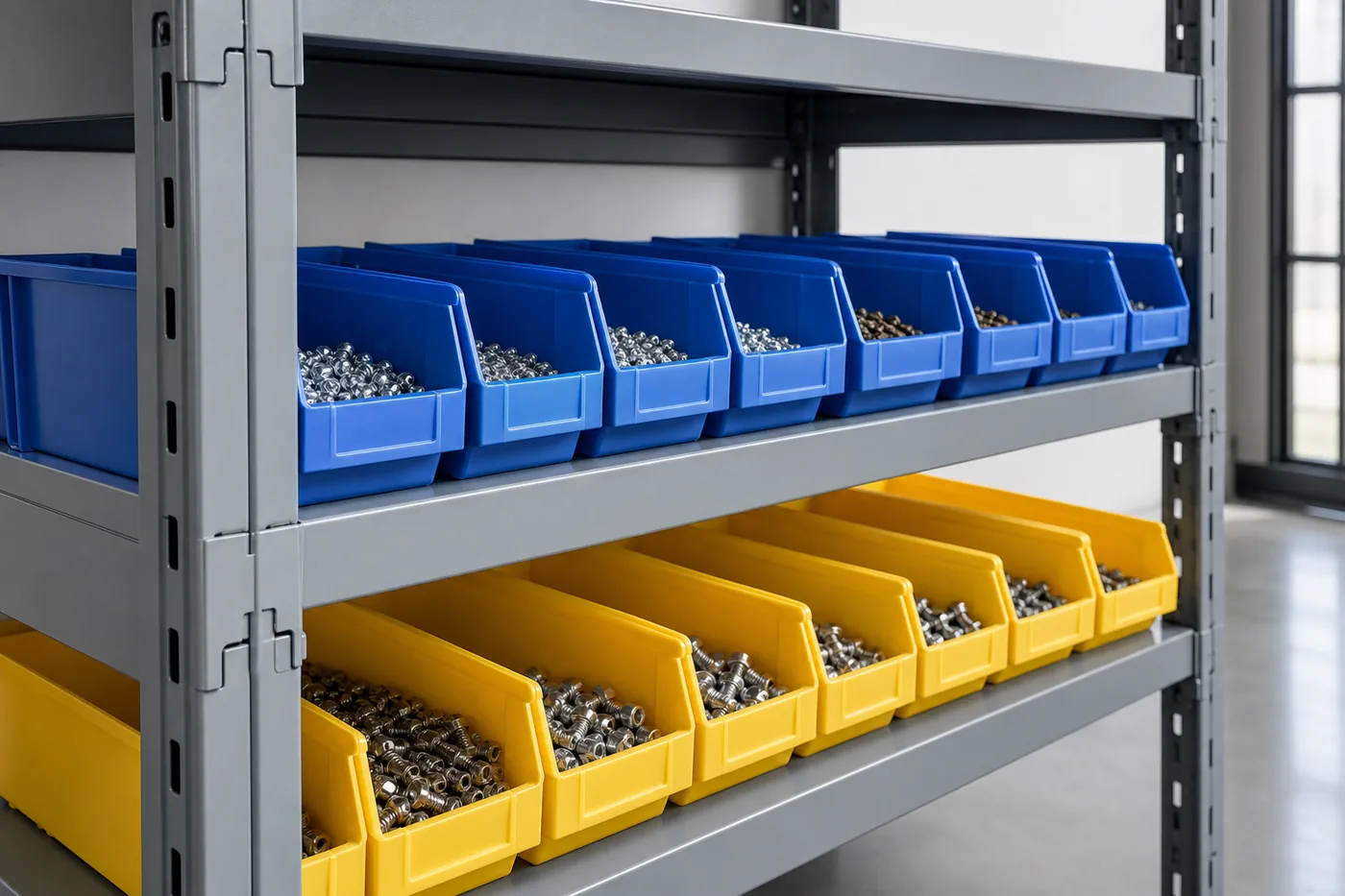
A closed steel box heats up in the sun and cools fast at night, and the moisture in the air condenses on the roof and walls, then drips. That "container rain" is the main reason shelving in containers rusts or decks swell.
- Decks: bare particle board soaks up moisture and sags. Use steel or wire decks, or keep board decks only in insulated, vented boxes. Our particle board shelf decks guide explains when board decks are a good choice.
- Finishes: powder-coated steel, epoxy-coated or stainless wire handle damp air better than bare or chrome finishes. See wire shelving finishes.
- Air gaps: keep shelving a little off the walls and leave the top shelf below the roof so air can move.
Simple steps help the shelving last: keep vents clear, store wet gear only after it dries, use lidded totes or bins for anything that must stay dry, and consider moisture absorbers in boxes that stay closed for weeks. If the container will hold paper records or electronics, talk to us about whether a modular building suits better; our modular buildings vs shipping containers comparison covers the trade-offs.
Anchoring and Securing Shelving in a Container
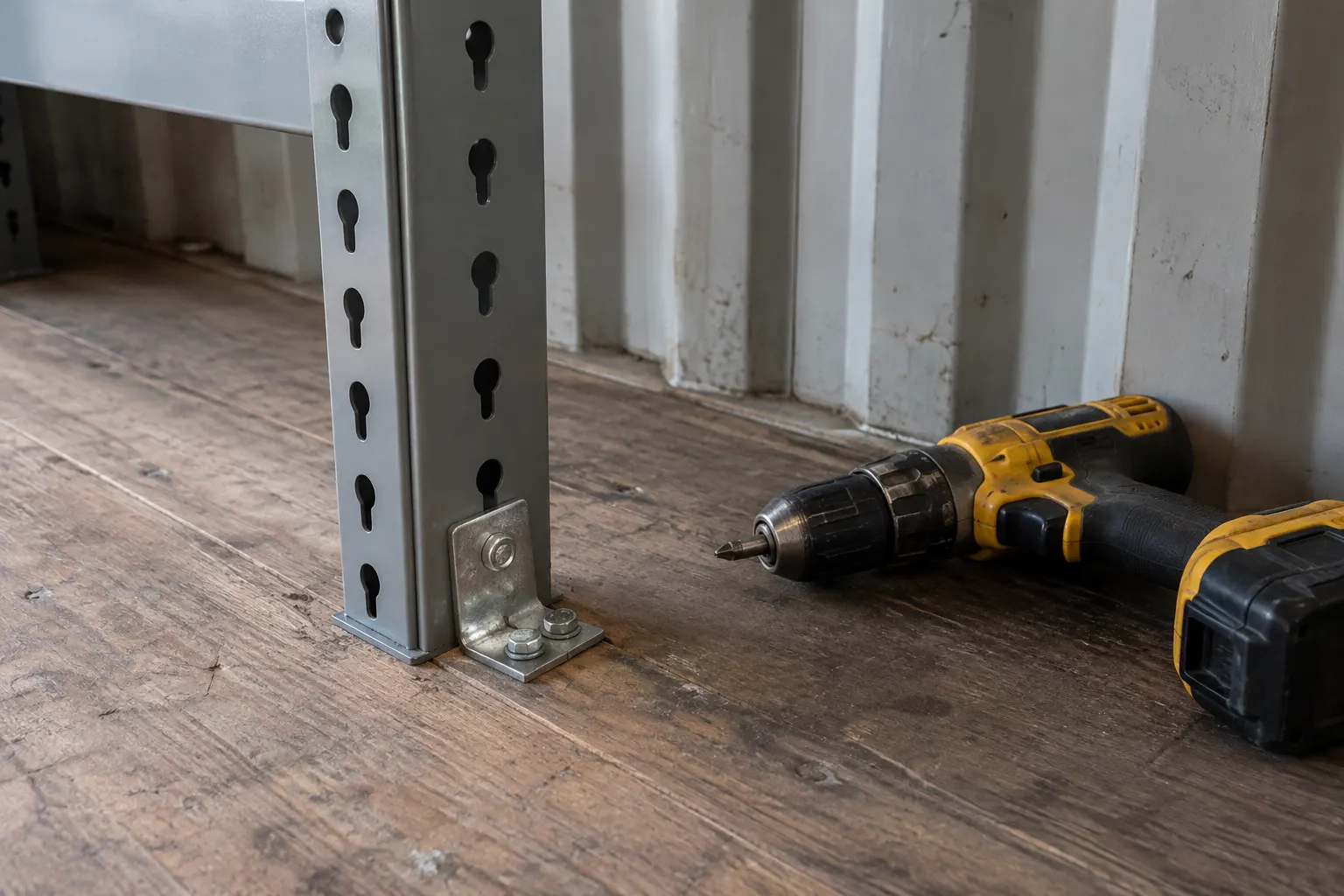
Shelving in a container must be secured. A loaded unit that tips in a narrow aisle has nowhere to go but onto the person in it, and boxes get bumped by forklifts and loaders more often than anyone plans.
Floor: most dry containers have a wooden floor over steel cross members. Shelving feet can be fastened to the floor with floor clips and screws sized for the floor; locate the cross members and avoid drilling through the underside.
Top ties: tie the top of facing runs together across the aisle, or tie each run to the box using existing lashing points or a method your container supplier approves.
Plan the layout
Mark run positions, aisle width and the door landing zone on the floor.
Set and level
Assemble the units, set them in place and shim any low corners so every post bears load.
Anchor the feet
Fasten the post feet to the floor with floor clips and suitable screws.
Tie the tops
Join facing runs across the aisle or tie to approved points on the box.
Load and label
Load heavy items low, check the rating per shelf, then label bays and levels.
- Before moving the box: unload the shelves or strap the contents; anchored shelving is not designed to ride loaded on a truck.
- Don't cut or weld the box yourself to hang shelving; holes in walls or roof invite leaks and rust. Ask the container supplier first.
- Inspect after impacts: a bent post or loose anchor after a forklift bump should be fixed before reloading.
Who Uses Shelving in Shipping Containers
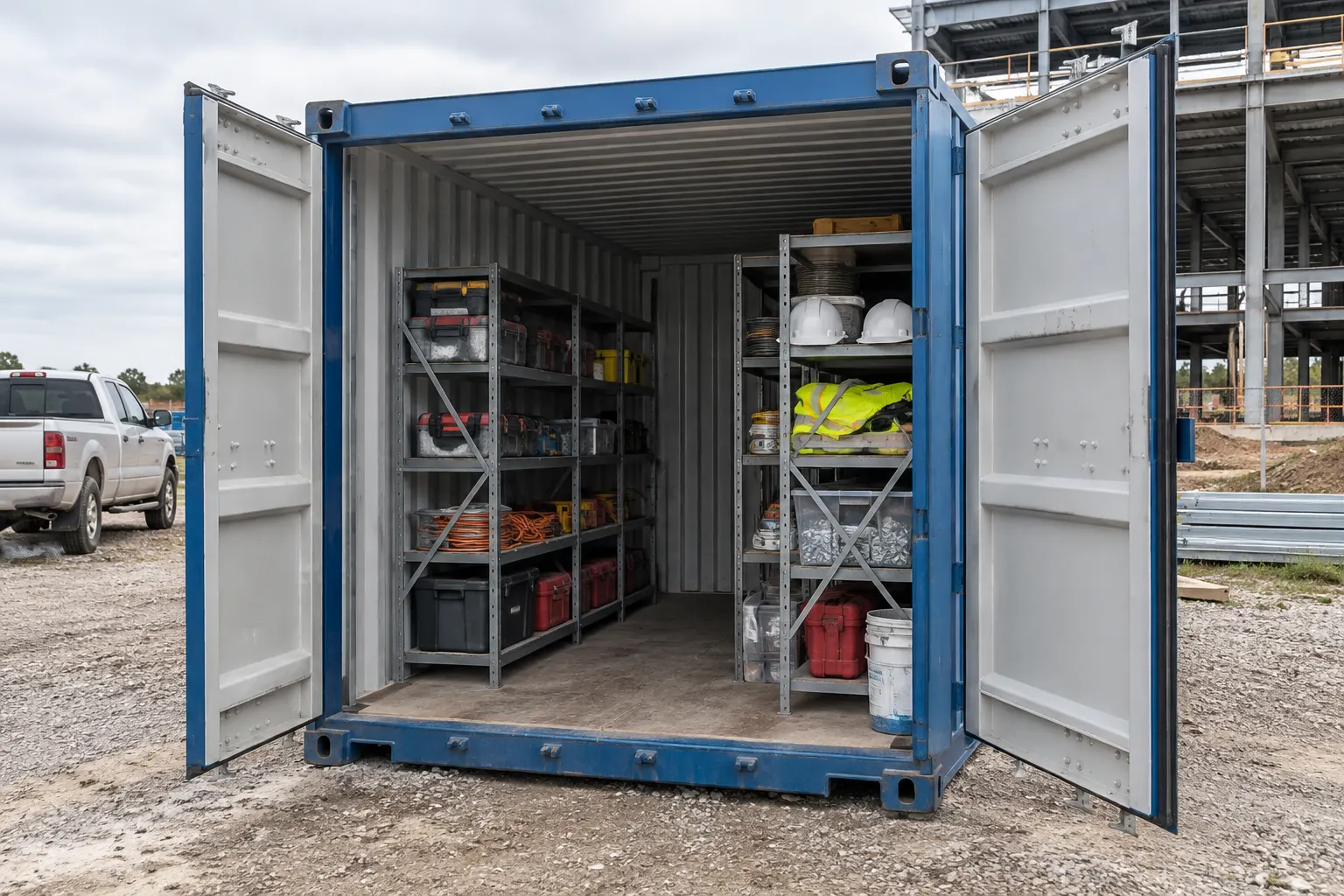
Contractors and job sites are the biggest group. A shelved container becomes the site tool room: hand tools, cords, fasteners, PPE and consumables on labeled shelves, locked at night. Pair it with construction site lockers for crew gear, and see how a tool crib shelving layout organizes the same kind of inventory indoors.
A container that moves from job to job benefits most from anchored shelving and lidded bins, so the box can be unloaded, relocated and set up again quickly.
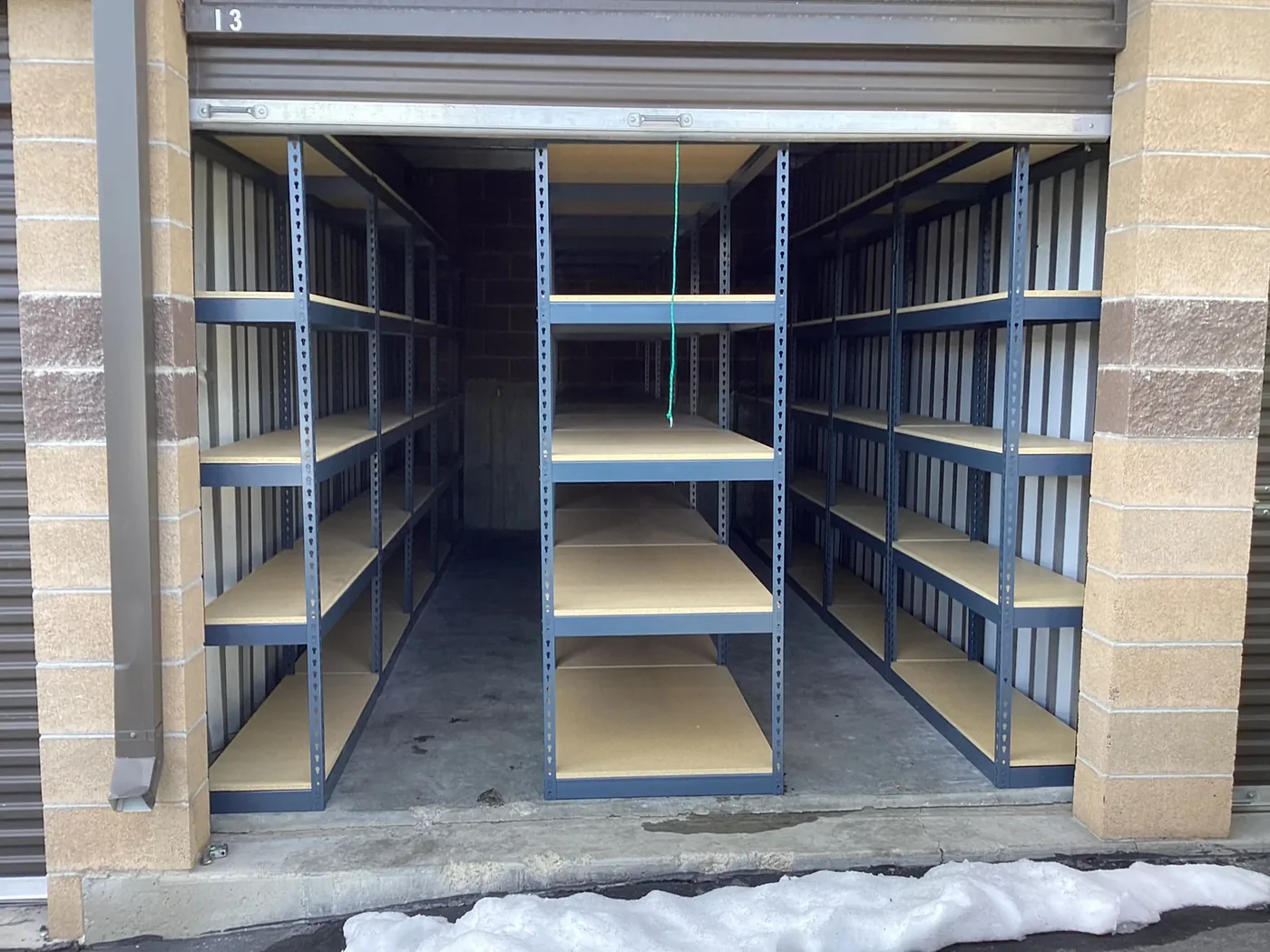
The same planning applies to small enclosed rooms such as self-storage units: shallow open shelving on the long walls, a clear center aisle, and the door zone kept free. Units that can be re-sized and moved make the most sense when the space itself might change.
Need shelving installed? We plan, supply and coordinate installation, and in Utah our team can install directly; see shelving installation in Utah or the Utah shelving hub.
Ordering Shelving for a Container
One container or a fleet of them, the process is the same: measure, choose the layout, pick the shelving family and decks for the conditions, then anchor and label. Standard units can be ordered online above; for several boxes we can kit the shelving per container so each one is set up the same way. Starting from scratch on a storage plan? Compare all options on Shelving Solutions or the broader steel shelving range. Some common sizes are in stock at select manufacturers, subject to confirmation; lead times are confirmed when you order. Call 800-326-4403.
Get a free quote
Tell us what you are storing, the room size and your timeline. A project specialist will follow up with layout options and pricing. Prefer to talk? Call (800) 326-4403.
Shipping Container Shelving FAQs
How do you set up a shipping container for storage?
What size shelving fits in a 20 ft container?
Can you install shelving in a container without drilling?
What is the best shelving for a conex box?
How do I stop condensation damaging shelving in a container?
Can I move a container with the shelving loaded?
Is wall-mounted or freestanding shelving better for a shipping container?
Planning Shelving for a Container?
Send your container size and what you need to store, and we will lay out the shelving, anchors and aisle and quote it.