
Buying a Used Guard Shack in Utah
A used guard booth can save money and weeks of lead time, or it can arrive with a roof rated for Phoenix, a rusted base and no paperwork your building official will accept. Use this checklist before you buy, and compare it against a new quick ship booth.
28+ psf
Minimum ground snow load in Salt Lake City design criteria
3 zones
Utah energy climate zones: 3B, 5B and 6B
Decal
Utah’s state certification for modular units
2–3 wks
Published factory ship window for qualifying new quick ship booths
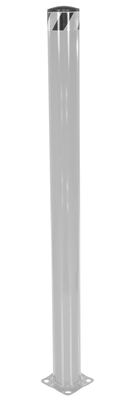
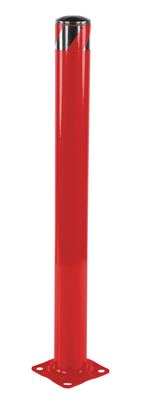
Shop Safety Bollards for Guard Booth Islands
Whether the booth is new or used, a booth beside a traffic lane needs protection from vehicles. These steel bollards are sold in our online store; guard shacks themselves are quoted using the form below.

Why buyers look at used guard shacks
A guard shack is a small, factory-built building for a security officer or attendant at a gate, lane or entrance. Steel and aluminum booths outlive the projects they were bought for, so used units come up for sale all the time: rental fleets retire them, contractors sell them at the end of a job, agencies list them as surplus and dealers refurbish them for resale.
The appeal is simple: a lower purchase price and a booth you can see today. The risk is that a guard shack is a building, not a piece of equipment. Its roof, walls, wiring and paperwork were designed for one place and one code, and Utah is a demanding place to put a building.
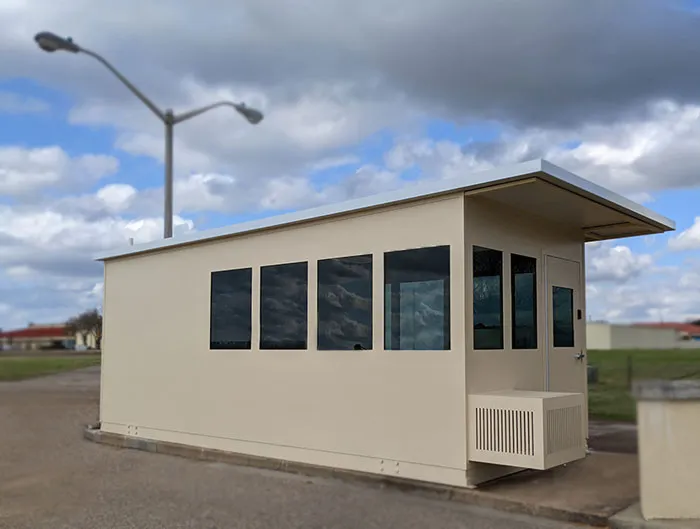
MH-USA sells new guard booths, built to order or from a quick ship program, and we help Utah buyers compare those against used units they find. This guide is the checklist we would run on any used booth before you hand over money. If you have not settled on size or features yet, start with our Utah guard booths overview, then come back here.
Three questions decide most used-booth purchases in Utah: will the booth carry a Utah roof snow load, will your building department accept its documentation, and what will it really cost by the time it is level, anchored, powered and inspected at your gate.
The Utah problem: snow, cold, wind and seismic
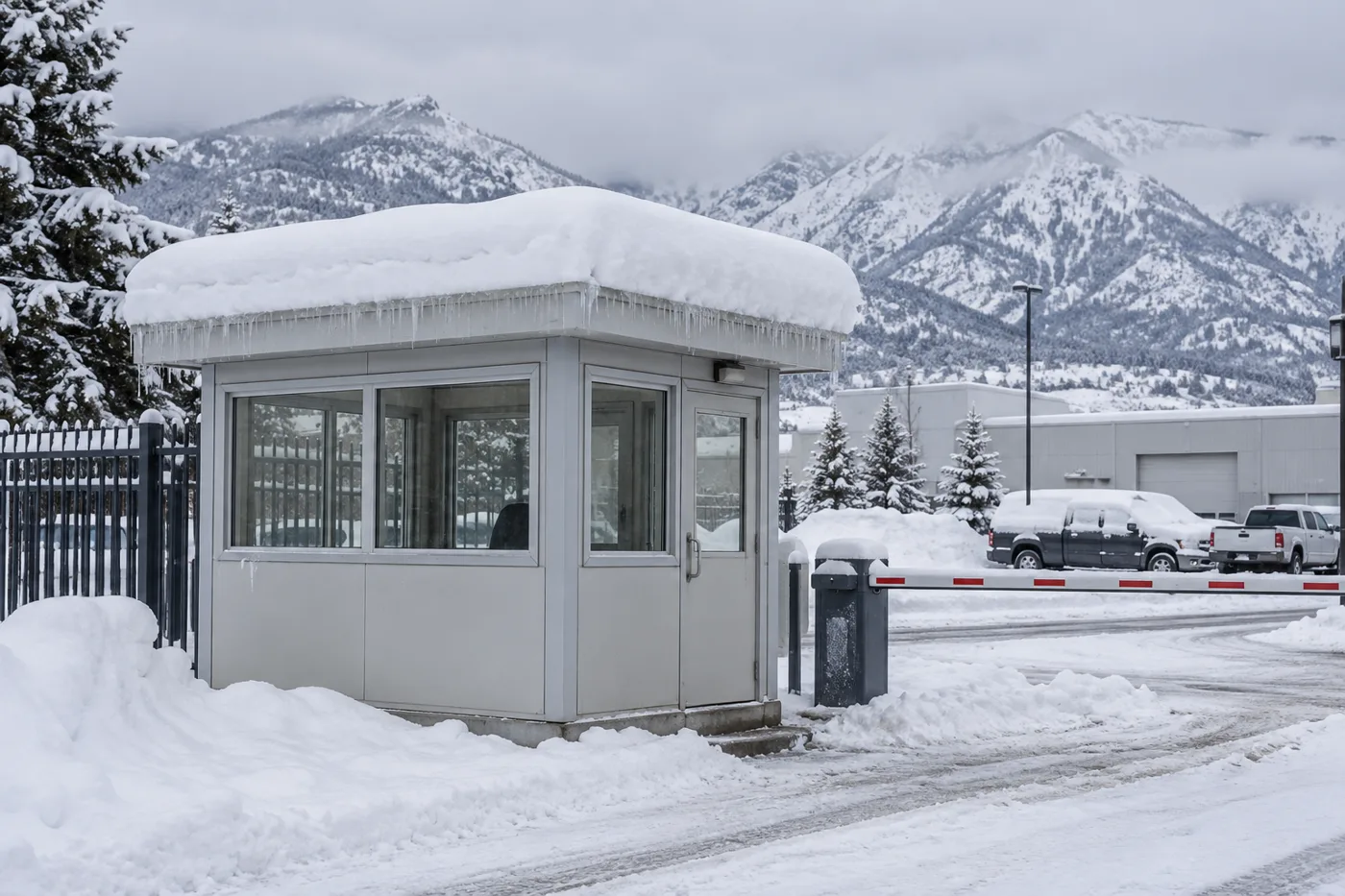
Most used booths on the market were built for somewhere else. A booth designed for a Texas parking lot or a Florida port may have a lightly framed roof and little insulation, which is fine there and a problem on the Wasatch Front.
Salt Lake City design criteria call for a ground snow load of at least 28 psf at elevations up to 4,239 feet, with higher sites designed from the Utah Snow Load Study. Our Utah guard booth permit and code guide covers those numbers, plus wind and seismic criteria, in detail.
| Utah condition | What it means for a used booth | What to ask the seller |
|---|---|---|
| Roof snow load | A roof designed for a low or no-snow region may not be rated for Utah loads, especially in the mountains and northern counties | What roof live or snow load is on the data plate or drawings? |
| Energy climate zones 3B, 5B and 6B | St. George is zone 3B, Salt Lake City 5B and Park City 6B. A thin-walled southern booth can be cold, drafty and expensive to heat | What insulation is in the walls, roof and floor? Single or insulated glass? |
| Seismic design | Commercial sites along the Wasatch Front are commonly designed to Seismic Design Category D, so the anchorage matters | Does the base have anchor clips, and is there an anchorage detail? |
| Wind | Exposed gates in canyons and open valleys see strong gusts; a light booth must be anchored to resist sliding and overturning | What wind speed was the booth designed for? |
| Freeze-thaw and road salt | Salt spray from plowed lanes attacks steel bases, door bottoms and fasteners | Has the base been repainted? Where was the booth used before? |
None of this rules out a used booth. It means the booth’s design ratings need to be known, not assumed. A unit that came out of service in Idaho, Colorado or northern Nevada is often a closer climate match than one shipped from the Gulf Coast.
Paperwork: the data plate and Utah’s modular decal
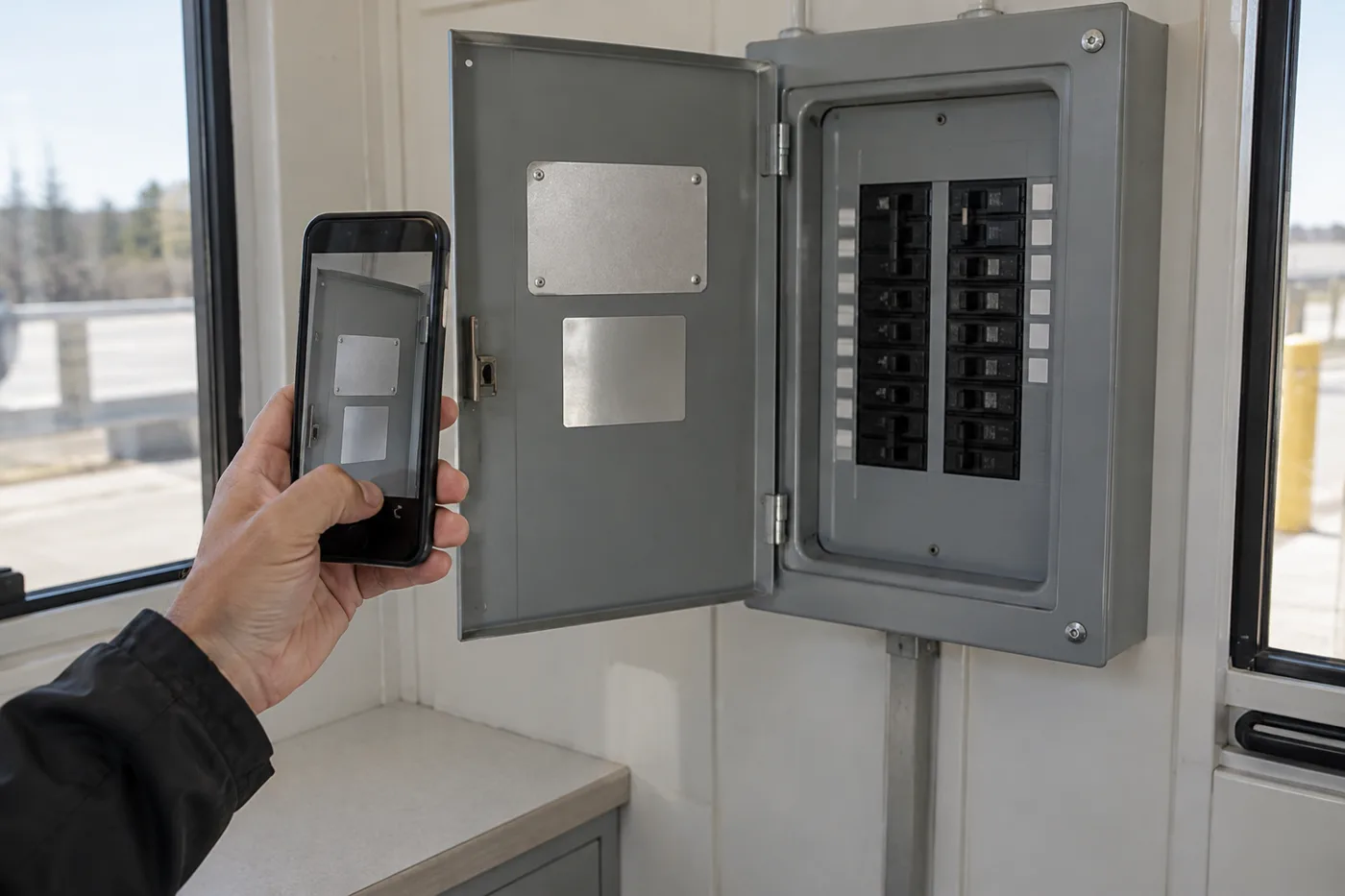
Look for two things before you look at paint: a manufacturer’s data plate and any state certification label. Both are often on the inside of the electrical panel door or near it. Photograph them and send the photos to your building department and to us before you commit.
A data plate normally names the manufacturer, the date of manufacture and the design loads the unit was built for. No data plate and no drawings means nobody can confirm what the roof will carry.
Utah regulates modular buildings through a statewide program run by the Division of Facilities Construction and Management (DFCM). Under Utah Code Title 15A, a DFCM-approved third-party inspection agency reviews the plans and inspects the unit in the factory. It then fixes a state certification decal to the unit before shipment. Local building departments still handle the installation permit and inspections at the site.
| What the booth has | What it usually means | Next step |
|---|---|---|
| Utah DFCM decal plus data plate | The unit was certified for Utah when it was built | Confirm with your building department that it accepts the decal for a relocated unit, then permit the installation |
| Another state’s insignia (for example Florida or Oregon) plus data plate | It met that state’s code when built; the design loads may or may not suit your Utah site | Compare the data-plate loads with your site’s snow, wind and seismic criteria; ask your building official how they treat it |
| Data plate only | Design loads are known, but there is no state certification | Ask your building department whether they need engineering or inspection of concealed work |
| No plate, no drawings | Nobody can confirm the structure, insulation or wiring | Expect an engineer’s evaluation, opened walls or a refusal; this is the biggest used-booth risk |
Rules for relocated factory-built units differ from one jurisdiction to the next, and some small booths are handled only through a local permit. Call the building department for the site address, describe the booth and its paperwork, and get their answer before you buy. It is a five-minute call that can save the whole purchase.
Used guard shack inspection checklist
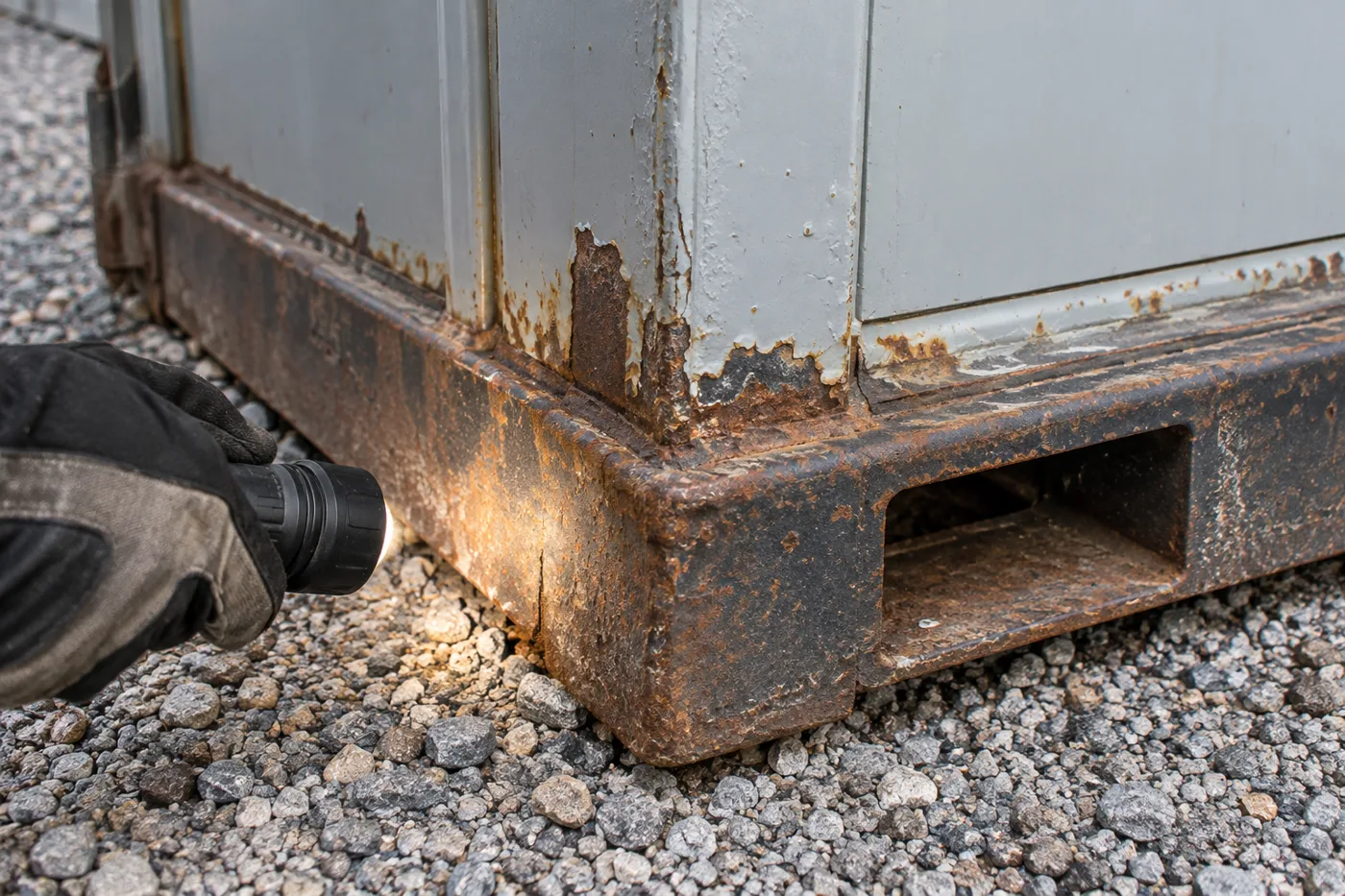
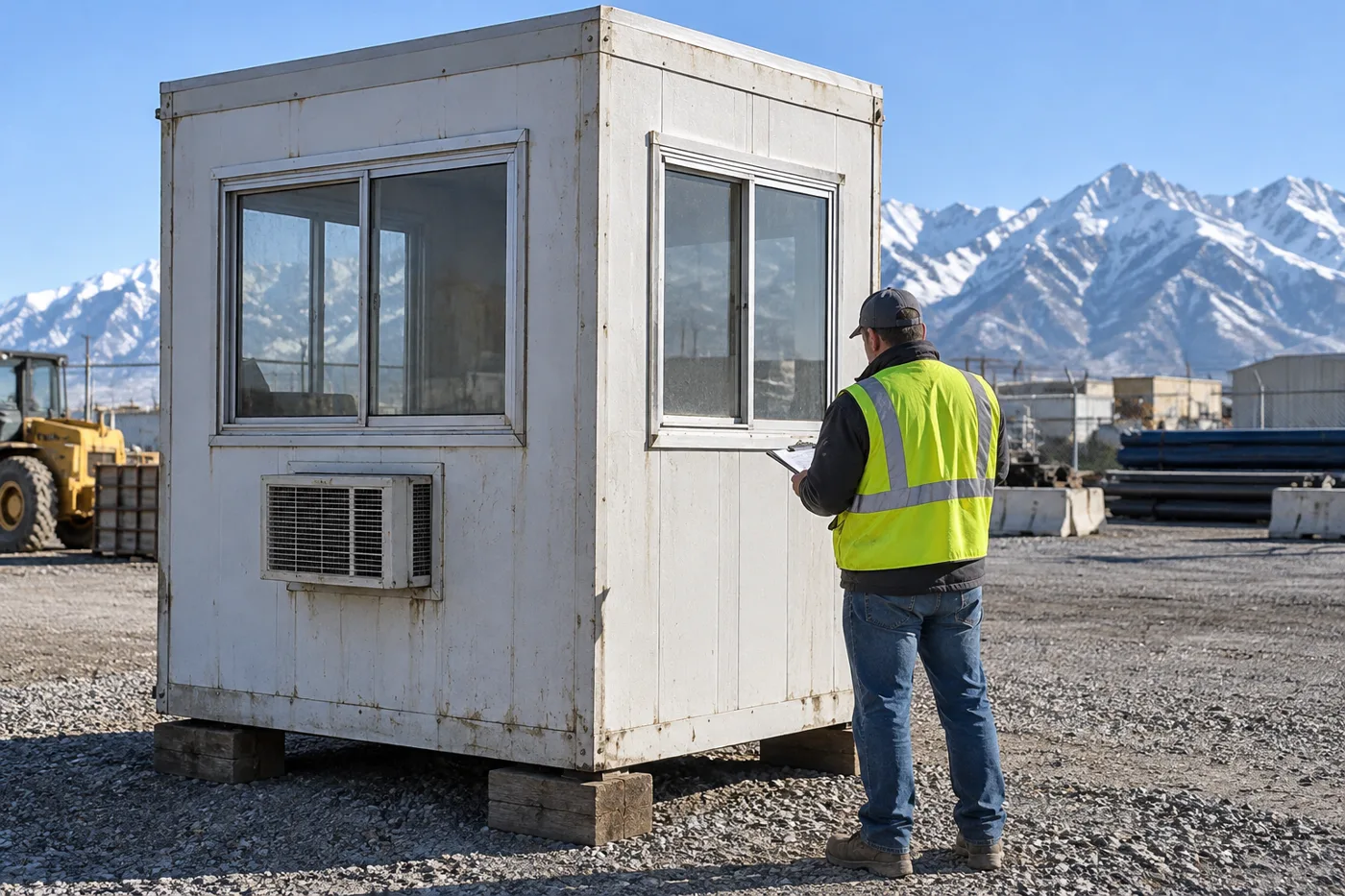
Inspect the booth in person or ask for a detailed photo set and a short video. Start at the bottom: the base and floor take the most abuse from forklifts, water and road salt, and they are the most expensive things to fix.
Bring a flashlight, a level, a tape measure and a phone camera. Open every door and window, run the HVAC and turn on every light and outlet if the seller can power the booth.
| Check | What good looks like | Red flags |
|---|---|---|
| Steel base and fork pockets | Straight, painted base; fork pockets open and undented | Rust scale, holes or bent pockets; base welded or patched |
| Floor | Flat, solid deck with no soft spots | Soft spots, rust stains around the edges, water marks under the mat |
| Walls and corners | Panels flat and tight; sealant intact at seams | Dented or bowed panels, open seams, rust at the corners |
| Roof | No ponding marks, sealed seams, solid overhang | Stains on the ceiling, sagging roof, cracked sealant |
| Windows | Clear glass, sliding sashes that move freely, locks work | Fogged insulated glass (failed seal), cracked glass, missing screens or locks |
| Door | Opens and latches without dragging; the gap is even all round | Door rubs or will not latch: a sign the booth was racked in transport or is out of level |
| Electrical panel | Labeled breakers, intact cover, data plate present | Missing breakers, amateur splices, scorched devices, no panel cover |
| HVAC | Starts, heats and cools; drains outside | Rust inside, no heat mode, old refrigerant (see below) |
| Anchor clips | Welded clips at the corners of the base | Clips cut off or missing; booth was never anchored |
| Ballistic rating, if advertised | A rating label and documentation for the panels and glazing | No label or paperwork; delaminated or cloudy ballistic glass |
| Graphics and signage | Clean panels | Old company logos glued or riveted on; removal can leave marks |
Small dents and faded paint are cosmetic. Structural rust in the base, a soft floor, a racked frame and missing paperwork are not, and any one of them can make a cheap booth cost more than a new one. If a booth is advertised as bullet resistant, treat the claim as unproven until you see the rating documents; our ballistic-rated guard shack page explains what those ratings cover.
HVAC, heat and wiring in a used booth
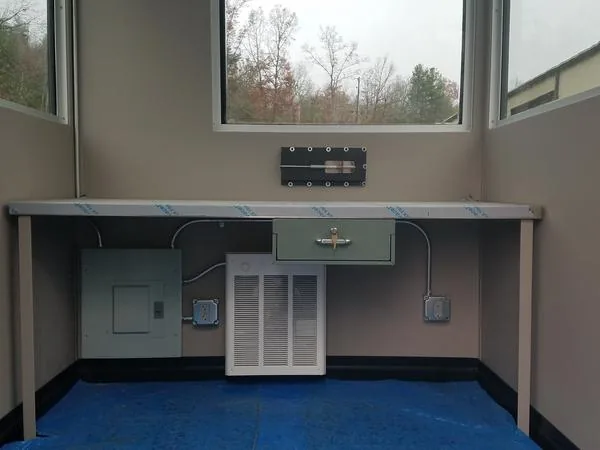
A guard booth in a Utah winter lives or dies by its heat. Many older booths have only a through-wall air conditioner and a small electric heater, which may be enough in St. George and inadequate at a canyon gate in January.
Check the age of the HVAC unit and the refrigerant on its label. Production and import of R-22 refrigerant ended in the United States on January 1, 2020, so an older R-22 unit is expensive to service and is usually replaced rather than repaired.
Also confirm the electrical service the booth needs against what you can bring to the island. Small booths typically use a 100–125 A single-phase load center. Trenching power and data to the site is usually the same cost whether the booth is new or used, so it does not change the comparison much.
Getting a used booth to your Utah site
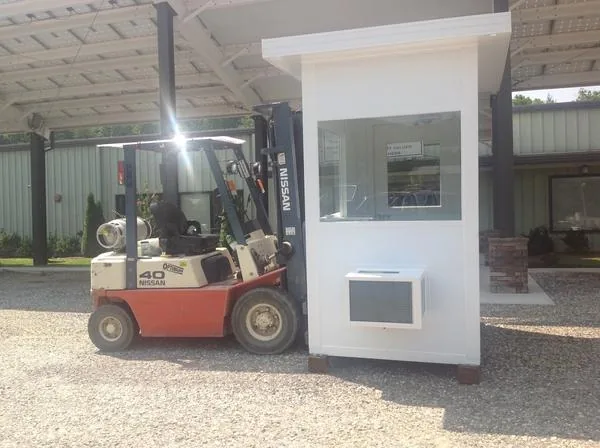
Freight can erase a used booth’s discount. A booth bought out of state needs a truck, loading at the seller’s yard and unloading at yours, and the seller rarely provides equipment to lift it.
Before you buy, confirm the booth’s weight, whether its fork pockets are usable and who will load it. Small booths usually move by forklift; larger booths and guard houses may need a crane.
Plan the route on your end as well: overhead lines, soft ground, gate widths and the path from the truck to the island. In winter, add time for weather on mountain passes and for a level, snow-free pad. A booth set on an out-of-level pad will rack, and doors that do not close are one of the first complaints after a used booth is installed.
If the booth will move around a large site or between job sites, consider a trailer chassis. Our trailer-mounted guard shack page compares chassis options, and the towing and site setup guide explains the difference between road-legal and yard-tow trailers.
Used vs. refurbished vs. new quick ship
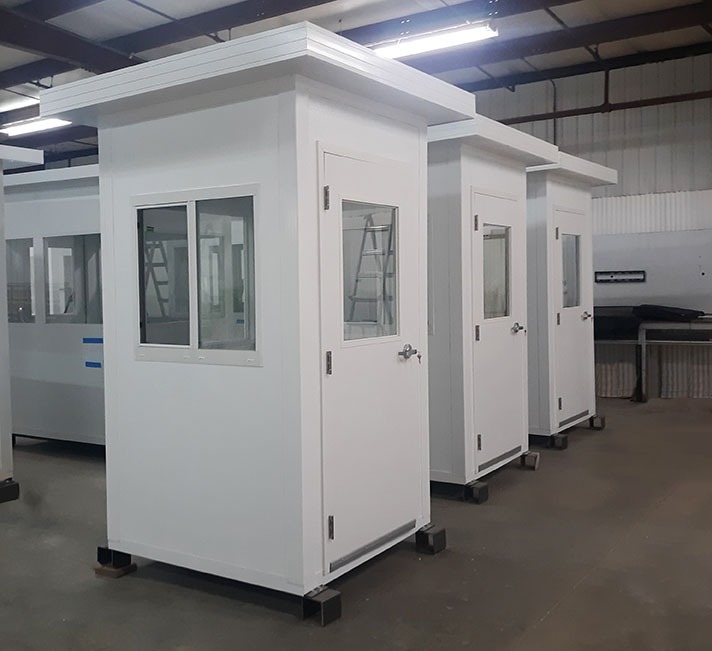
The real choice is rarely used versus fully custom. For standard sizes, a new quick ship booth closes much of the lead-time gap. Our manufacturer partner’s program sheet states that qualifying orders ship within two to three weeks of order placement. That is a factory ship window, not a delivery date.
See quick ship guard shacks for the standard sizes and option menu.
| Factor | Used (as-is) | Refurbished (dealer) | New quick ship | New built to order |
|---|---|---|---|---|
| Availability | Immediate if local | Depends on dealer stock | Published 2–3 week factory ship window for qualifying orders | Longest; depends on options |
| Condition | Unknown until inspected | Repaired to the dealer’s standard | New | New |
| Paperwork | Often incomplete | Varies; ask for the data plate | Drawings and specifications available | Drawings and specifications for your site |
| Utah snow and energy fit | Depends on where it was built | Depends on original build | Confirm loads and options for your site | Specified for your site |
| Size and layout | Take it as it is | Limited changes | Five standard inside sizes, set option menu | Any size, window and door layout |
| Warranty | Usually none | Dealer-specific | Manufacturer warranty | Manufacturer warranty |
A used booth is a good buy when it is local, its data plate shows loads that suit your site, the base and roof are sound and the job is temporary. When any of those is missing, the gap to a new booth narrows quickly.
Count the whole cost, not just the price tag
Compare used and new booths on the same list of line items. The purchase price is only the first row.
| Cost item | Used booth | New booth |
|---|---|---|
| Purchase | Lower | Higher |
| Freight and unloading | Often you arrange it; out-of-state hauls add up | Quoted with the booth |
| Repairs and refurbishment | Paint, glass, door hardware, HVAC replacement | None |
| Engineering or inspection of concealed work | Possible if paperwork is missing | Normally covered by drawings |
| Pad, anchoring and bollards | Same | Same |
| Power and data to the site | Same | Same |
| Permits | May take longer to review | Standard review |
| Resale or redeployment | Lower | Higher |
If the booth is only needed for a few months, renting may beat both. Our rent vs. buy guard booth cost guide works through the break-even math, including rent-to-own and used options.
When a used booth makes sense, and when it does not
Good fit: temporary construction gate
A season or one project, on a site where looks matter less than cost. Our Utah construction site guard booth article covers that setup.
Good fit: indoor or covered post
A dock, lobby or yard-office post under a roof avoids most snow-load and weather questions.
Good fit: local, documented unit
A booth already in Utah, with a data plate and a decal, that you can inspect and move cheaply.
Think twice: permanent main entrance
A booth that will be the face of the site for 15 years usually justifies new construction, the right size and a warranty.
Think twice: mountain or high-elevation sites
Snow loads climb with elevation. Remote sites like mines, quarries and ski areas need a known roof rating; see our mine and quarry guard house article.
Think twice: ballistic or government posts
Ratings need documentation. See guard shacks for government agencies.
A Utah project example
Guard booths in Utah have to handle both extremes. For Utah DNR and the National Park Service at Lake Powell, booths were chosen for intense desert sun and heat. A gate on the Wasatch Front has to carry winter snow instead.
Read the Lake Powell park booths project to see how the booths were specified for that site. Your site’s conditions are the standard a used booth has to meet too.
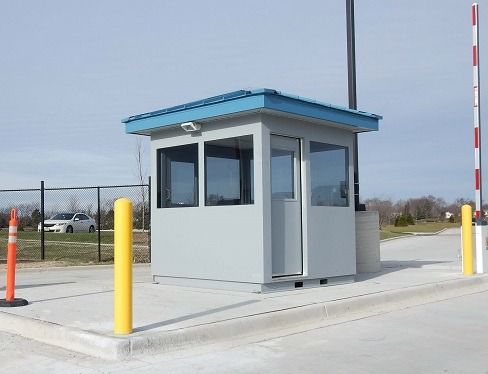
Setting a used booth correctly
Confirm the permit path
Send the data plate and decal photos to the building department for the site and ask what they need.
Prepare the pad
A level concrete pad with a border of about 12 inches beyond the walls is the usual standard. Bring power and data conduit up inside the footprint.
Anchor the base
Bolt the corner clips to the pad with anchors sized for the site’s wind and seismic conditions. Level the booth before final tightening so the doors close.
Protect and connect
Add bollards on any side exposed to traffic, then have a licensed electrician connect the booth and schedule the inspection.
Pad sizes, anchoring and bollard placement are covered in more depth on our small guard shacks and guard shack specifications pages.
Compare a used booth with a new quote
Found a used booth? Send us the listing, photos of the base, roof, panel and data plate, and your site address. We will tell you what to check and quote a comparable new booth so you can compare them side by side. You can also call our Salt Lake City office at (801) 328-8788.
Used guard shack questions
What is a guard shack?
Are used guard shacks worth buying?
What should I check first on a used guard booth?
Does a used guard shack need a permit in Utah?
What snow load does a guard booth need in Utah?
Can a used booth be moved to Utah from another state?
How can I tell if a used guard booth is really bullet resistant?
Is a new quick ship booth much slower than buying used?
Get a side-by-side used vs. new comparison
Send the listing and your Utah site details. We will flag what to check and quote a comparable new booth.