
Fence Contractor Warehouse Racking: Aloha Fence
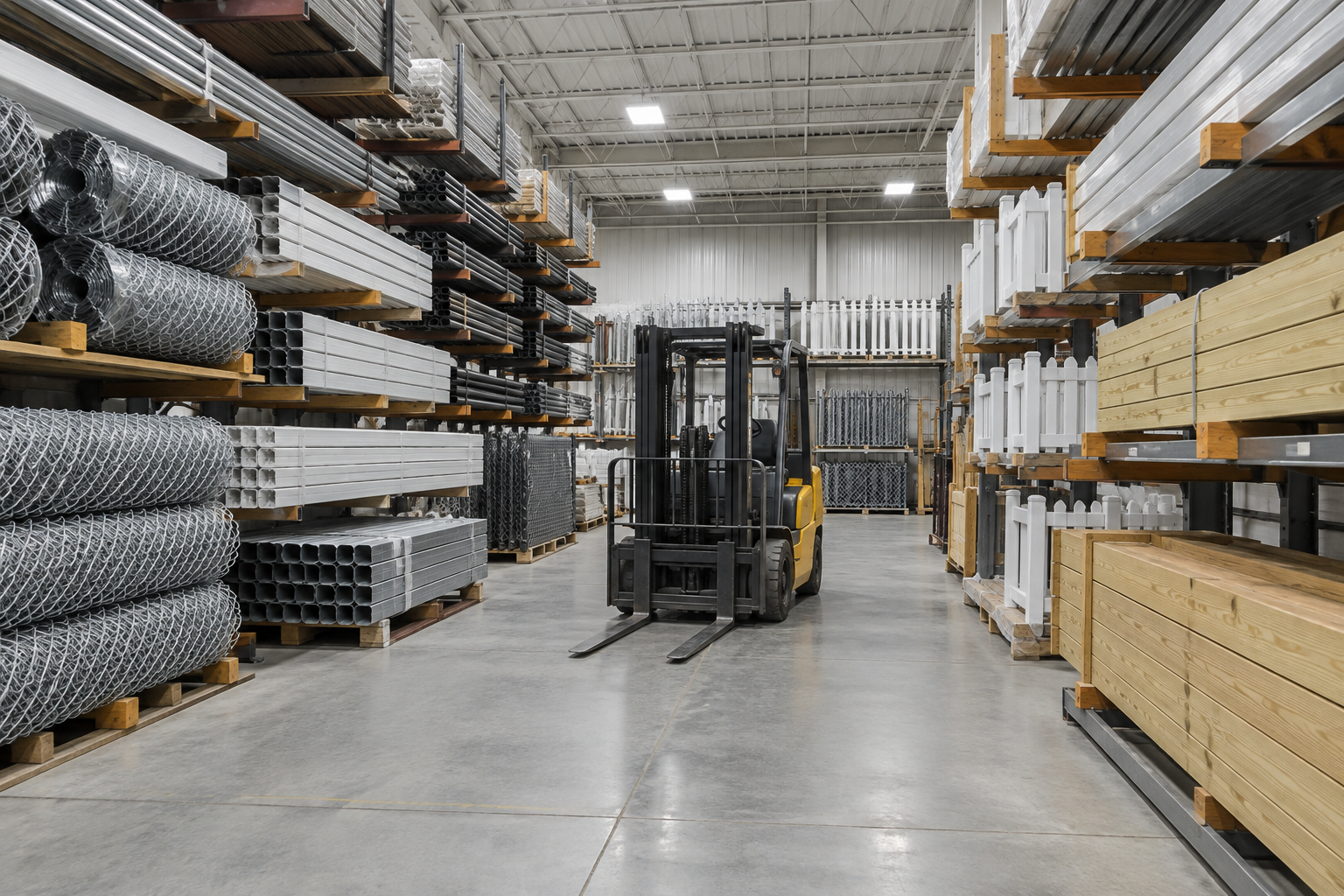
A fencing contractor’s materials warehouse stores a mix no other trade quite matches — rolled chain link fabric, long posts and rails, and full fence panels alongside small gate hardware, each needing its own kind of storage.
Fencing contractor
Client sector
Cantilever rack & pallet rack
Product category supplied
Heber City, UT
Client HQ
Panels, posts, rolls & hardware
Application
Plan your layout before you buy
Configure upright height, beam width, bay count, and load levels in our free 3D Pallet Rack Configurator, then get an instant bill of materials and request a quote.
The project
Aloha Fence is a fencing contractor based in Heber City, Utah, installing chain link, vinyl, wood and aluminum fencing across Summit and Wasatch counties. Material Handling USA supplied cantilever rack and pallet rack systems for the company’s materials warehouse.
This is a genuinely different storage problem from the other contractor and materials-yard case studies in our series. Our lumber yard case study covers dimensional lumber and sheet goods, which stack and band differently than fence stock. A fence contractor’s inventory runs long and linear in several distinct forms — rolled fabric, rigid posts and rails, and finished panels — plus a large volume of small gate hardware that a lumber yard doesn’t carry at all.
Why a fence contractor’s warehouse is different
Fence stock comes in three very different shapes. Rolled chain link fabric, rigid posts and rails, and pre-assembled vinyl or wood panels each need a different kind of support — none of them behave like a boxed or palletized product.
Rolls need horizontal, open-arm storage. Chain link fabric rolls don’t sit stably on a flat shelf or a standard pallet position; they need to rest on open arms where crews can pull a roll without disturbing the rest of the stock.
Panels and long stock need length, not just weight capacity. A 6- or 8-foot vinyl or wood panel needs a bay long enough to support it evenly, not just a rack rated for its weight.
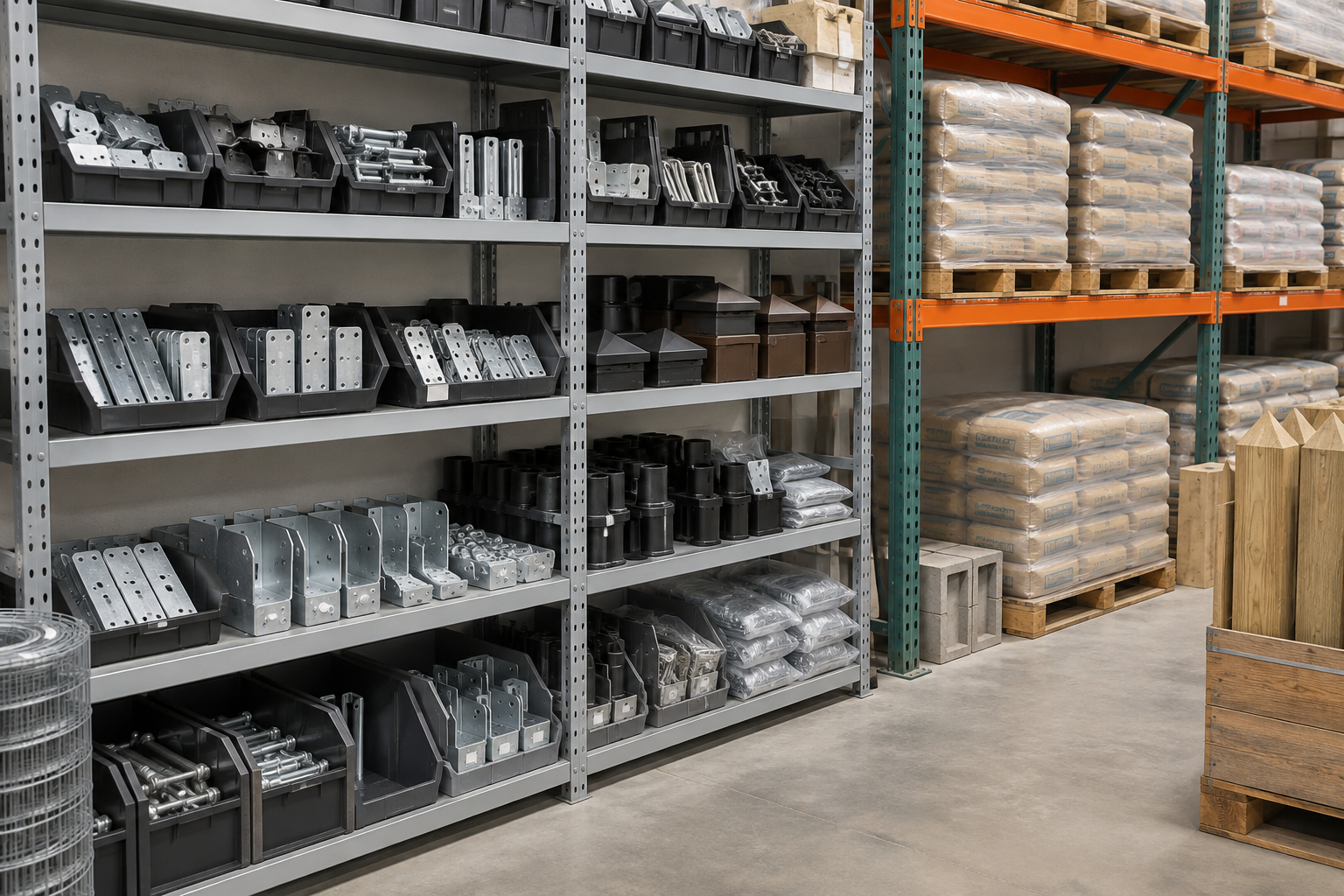
Gate hardware is a completely separate SKU category. Hinges, latches, post caps and brackets are small, numerous, and picked constantly — they need bin shelving near a staging area, not space on the same rack as posts and panels.
What this warehouse stores
Based on the verified project scope, storage here spans several distinct materials, each suited to a different rack or shelving type:
| Material | Storage need |
|---|---|
| Chain link fabric rolls | Rolled wire fabric stored horizontally on open cantilever arms. |
| Posts, rails & pipe | Long rigid stock needing arm-supported length, not a flat pallet position. |
| Vinyl & wood fence panels | Pre-assembled panels stored flat or on edge with full-length support. |
| Gate hardware & fasteners | Hinges, latches, post caps and brackets picked in small quantities. |
| Bagged concrete mix | Palletized post-setting material staged near loading. |
- Chain link rolls, posts, rails and pipe store on cantilever rack, where open arms support long and round loads without a pallet.
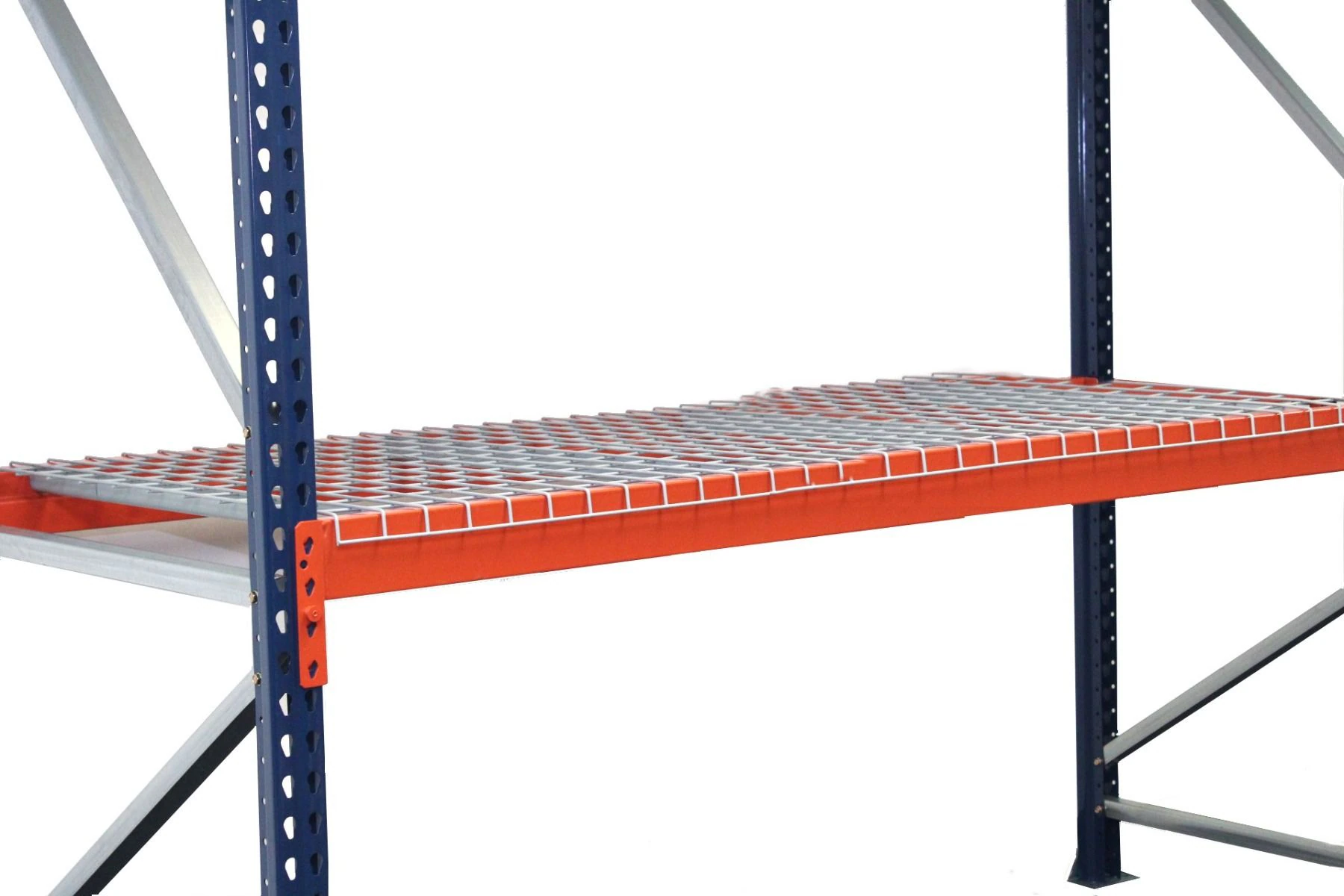
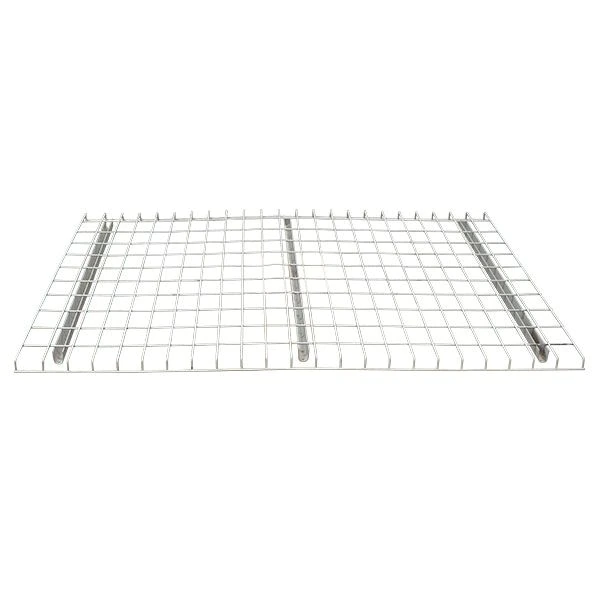
- Vinyl and wood fence panels and bagged concrete mix store on selective pallet rack with wire decking for materials that need support smaller than a full pallet.
- Gate hardware, fasteners and small brackets fit boltless shelving with bin storage, positioned close to staging for fast picking on install day.
Planning storage for a growing fence contractor
Fencing contractors often add product lines — a new fence style, gate hardware brand, or material type — as their business grows. A few planning considerations that come up repeatedly on projects like this:
Leave open cantilever bays for new stock lengths. Adding a new fence panel style or post length is easier when cantilever arm spacing has room to adjust rather than a fully built-out layout on day one.
Separate crew pick-up traffic from bulk receiving. Crews loading trucks each morning move through the warehouse differently than incoming material deliveries; routing those flows apart keeps forklifts moving bulk pallets from crossing paths with crew pickup traffic.
Group hardware by job type, not just by SKU. Bin shelving organized by fence style (chain link hardware, vinyl hardware, wood hardware) lets crews grab a full hardware kit for a job faster than searching by individual part number.
Plan rack layout around seasonal demand. Fencing work is often seasonal in Utah’s mountain valleys; sizing storage for peak-season material volume, with room to consolidate in slower months, avoids overflow storage outside the rack system.
Store materials with their exposure sensitivity in mind. Vinyl panels can warp or discolor with prolonged direct sun and heat, wood posts and rails pick up moisture if stacked without airflow, and steel components can develop surface rust in humid conditions — positioning each material’s storage location relative to dock doors, skylights and HVAC airflow protects material quality as much as the rack itself does.
Installation and safety
A fence contractor’s rack installation follows the same structural design standard as any other pallet rack or cantilever rack project, sized to the actual loads involved rather than a generic assumption.
- Size beam and arm capacity to the real load weights involved — see pallet rack weight capacity guidance; rolled fabric, panel and post loads vary by material and should be verified, not assumed.
- Protect rack uprights with column protectors and end guards in aisles that see forklift traffic moving long stock.
- Inspect racking on a defined cycle — see rack inspection and repair.
- Anchor and install to the ANSI/RMI MH16.1 standard — see our rack installation guidance.
ANSI/RMI MH16.1 is published by the Rack Manufacturers Institute. Utah’s Wasatch Front and mountain valleys sit in a moderate-to-high seismic zone, so rack anchoring and bracing for a Heber City facility get designed for seismic load combinations under the applicable building code, the same as any other pallet rack or cantilever rack installation in the region. We design, supply and install pallet rack, cantilever rack and boltless shelving for contractors and materials yards across the Wasatch Front — see Utah pallet rack for more of our local project work.
Serving Utah fencing and specialty contractors
Material Handling USA has been an industry leader in storage and material handling since 1997, working from Salt Lake City with contractors and materials yards across the Wasatch Front. For Utah projects call 801-328-8788, or see our Utah pallet rack page.
Shop Pallet Rack Products Online
Buy select items directly from our online store, or request a quote for volume, custom sizes and freight-rated orders.
Frequently asked questions
What storage suits a fence contractor’s warehouse?
Why can’t chain link fabric rolls go on standard pallet rack?
How should a fence panel bay be sized?
Should gate hardware be stored on the same rack as posts and panels?
What’s the design standard for the rack itself?
Does seismic design matter for rack in Utah?
Planning storage for a fencing or specialty contractor’s materials warehouse?
We design pallet rack, cantilever rack and boltless shelving layouts for fencing and specialty contractors. Free design consultation.