
Supplement Manufacturing Warehouse Racking: Results RNA
In a dietary supplement plant, the racking is part of the quality system. Where a pallet sits decides whether a lot can be traced, released, held or recalled without guessing. Not every food-sector project involves finished-goods dosing — a food ingredient manufacturer supplying dairy and beverage brands has a different bulk-tote and food-safety segregation problem; see our food ingredient manufacturer warehouse racking case study.

2026
Year Results RNA worked with us
Pallet rack
Product category we supplied
Orem, Utah
Client location
Lot control
What the layout has to protect
Plan your layout before you buy
Configure upright height, beam width, bay count, and load levels in our free 3D Pallet Rack Configurator, then get an instant bill of materials and request a quote.
The project
Results RNA is a dietary supplement company based in Orem, Utah that formulates and bottles liquid health formulas in house. Material Handling USA supplied pallet rack for the company in 2026. The client, the year, the location and the product category are the only project specifics we publish. We do not publish facility layouts, bay sizes, room dimensions or contract values for any customer.
What makes this application worth writing about is that a supplement plant is not simply a small warehouse. It is a manufacturing operation that has to prove where every unit of every lot has been. The pallet rack systems in that building are not just storage — they are the physical structure that makes lot segregation, hold status and first-expiry picking possible or impossible. Below is how we approach racking for supplement, nutraceutical and other quality-controlled production sites.
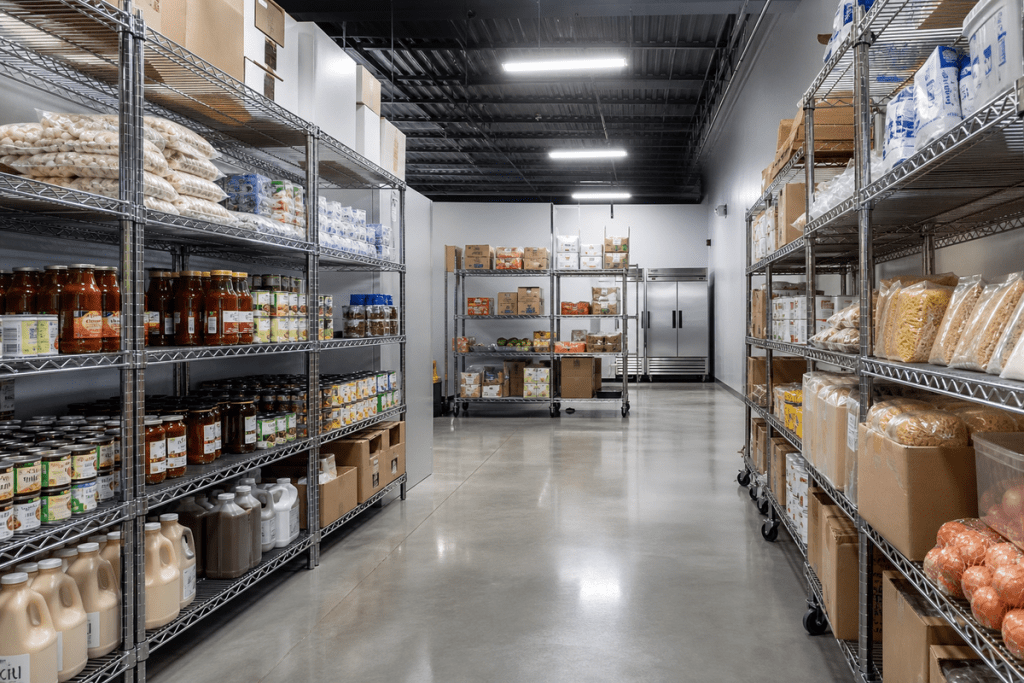
Why a supplement plant is not a normal warehouse
Material has a quality status, not just a location. Incoming raw material is quarantined until it is tested and released. Finished goods may be held pending a certificate of analysis. A rack layout that cannot keep those states physically apart forces people to rely on tape, memory and hope.
Everything has a date. Raw ingredients have retest dates, finished product has an expiry. Storage that makes it easy to pick the newest pallet is storage that quietly writes off the oldest one.
Lots must stay traceable. If a single ingredient lot is questioned, the operation needs to know which finished lots used it and where those pallets are — without opening every carton in the building.
Product is sensitive. Liquids, powders and capsules react to heat, freezing, light and humidity in ways that steel and cartons do not.
The plant is audited. Customers, retailers and regulators walk the same aisles. Damaged uprights, missing safety pins and pallets overhanging into aisles are findings, not just maintenance items.
Zoning by quality status before zoning by product
The first design conversation on a plant like this is not about beam levels. It is about which statuses exist and how far apart they have to be. Once those are agreed, the steel almost designs itself.
| Zone | What it holds | What the racking has to do |
|---|---|---|
| Receiving and quarantine | Incoming raw material and packaging awaiting test and release | Clearly bounded, physically separate bays or a fenced run — never mixed into released stock |
| Released raw material | Tested ingredients, bulk containers, packaging components | Location-controlled positions with clean labelling and access for sampling |
| Work in process | Staged batches, part-used containers, in-line materials | Short, close-to-production positions; heavy floor traffic means impact protection |
| Finished goods on hold | Bottled product awaiting release paperwork | Segregated and unmistakable — the cost of shipping a held pallet is far higher than the rack |
| Released finished goods | Case-picked and full-pallet shipping stock | Density plus first-expiry-out picking; the busiest and most damage-prone zone |
| Returns and reject | Damaged, expired or returned material awaiting disposition | Small, deliberately awkward, physically distinct — not a spare aisle |
In smaller plants the temptation is to run one continuous rack line and use paperwork to separate statuses. It works until the day it does not. Physical separation — a different run, a different aisle, a caged bay, at minimum a different colour label scheme on selective pallet racking — is far cheaper than a mixed-status investigation.
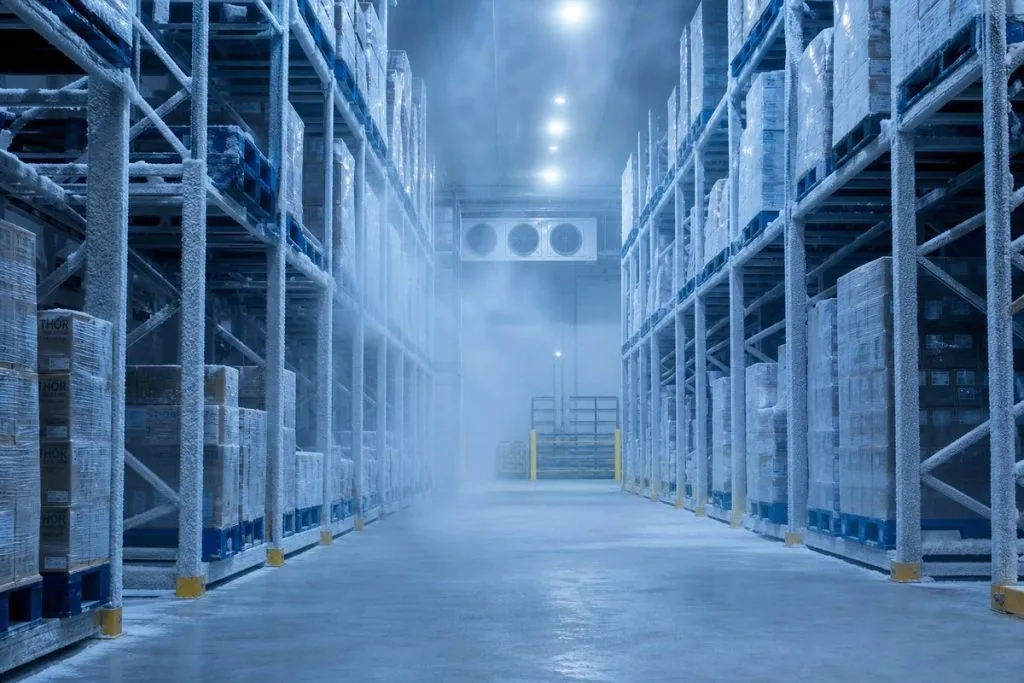
Liquid product: light on the shelf, heavy on the pallet
Liquid supplements change the load maths. A pallet of empty bottles is almost weightless. The same pallet filled and cased can be one of the heaviest things in the building, because water-based product carries roughly 8.3 lb per gallon before you add glass, closures, cartons and the pallet itself.
Rate the rack for the filled pallet, not the average one. Beam capacity is quoted per pair at a stated beam length, and upright frame capacity depends on the vertical distance between beam levels. Adding a level between two existing levels reduces the frame’s capacity even though nothing about the beams changed. Our guide to pallet racking weight capacity explains that relationship in more detail.
Watch the point loads. Drums, totes and pails do not spread their weight like a uniform pallet. Anything concentrated needs decking rated for it — wire decking chosen for the load, or solid steel deck panels where containers can leak or catch.
Plan for leaks. Liquid stored above other product is a contamination path. Keep liquids low, keep them off pallet positions directly above open ingredient, and use decking that can be wiped rather than trapping spill in a mesh.
Lot control, FIFO and expiry: the layout decides the outcome
Every dated-product operation says it runs first in, first out. Most of them run “first-reachable-out”, because the layout makes the newest pallet the easiest one to take.
- One lot per position wherever possible. Mixed-lot pallet positions are where traceability quietly breaks. If two lots must share a bay they need visibly different labels and a physical divider, not an assumption.
- Single-deep for many lots, deep lanes for few. Selective rack gives every pallet its own face, which is what a high-SKU, many-lot operation actually needs. Deep lanes only pay off when a whole lane can be one lot.
- Use gravity where a lane really is one lot. Pallet flow rack loads at the back and picks at the front, so it enforces FIFO mechanically instead of relying on the operator choosing correctly.
- Label the position, not the pallet. Fixed, readable location codes on the beam let a scan prove where a lot is. Labels stuck to stretch wrap leave with the pallet.
- Give short-dated stock a visible home. A dedicated, obvious run for product inside its last window turns a monthly report into something the shift can see.
- Leave room to pull one pallet. If a hold requires digging out four pallets to reach one, the hold takes hours and creates damage.
The same logic drives lot-controlled distribution generally — our medical supply distribution racking case study covers the FIFO and lot-control side from the distributor’s point of view, and the food plant racking case study covers it inside a production building.
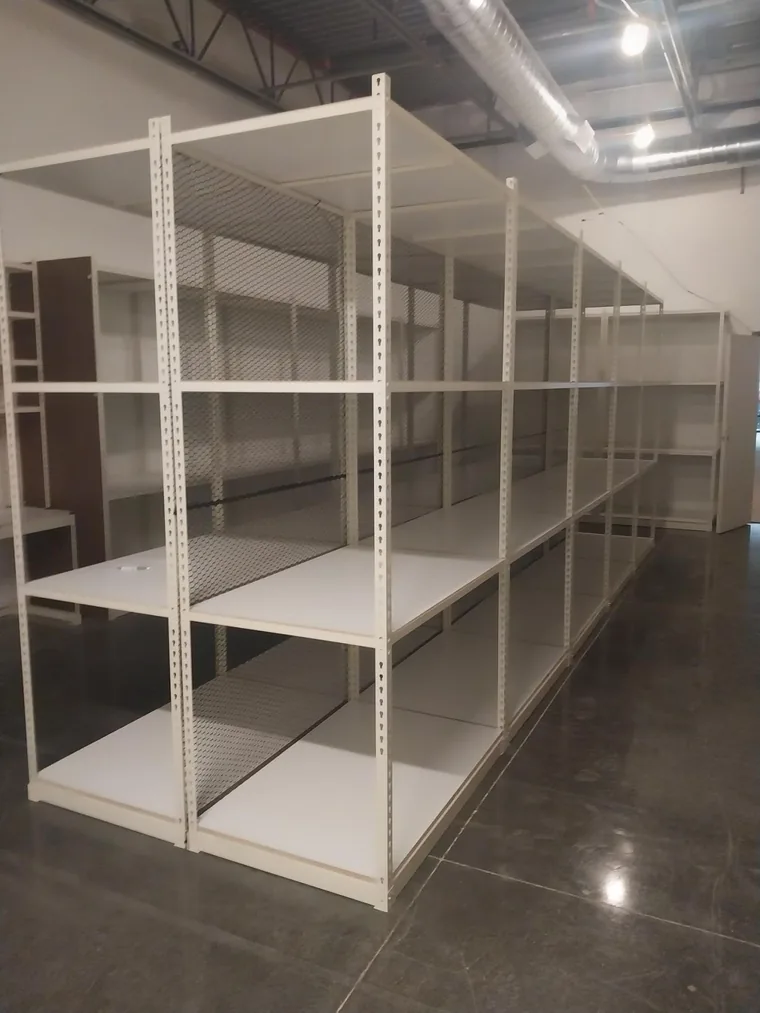
Temperature, light and humidity
Freezing is the quiet risk in Utah. A dock area or an unheated back bay can drop below freezing overnight in winter. Water-based product does not forgive that. Any rack run near a dock door, an outside wall or an overhead door deserves a decision about what is allowed to live there — not a default.
Heat rises, and so does the top beam level. The top of a high bay can run significantly warmer than the floor in summer. If product has a stated storage range, the upper levels are not automatically equivalent to the lower ones.
Light matters for some formulas. Skylights and high-bay lighting reach the top level first. Amber bottles and closed cases help; so does deciding that light-sensitive product does not get stored on the sunniest run.
Humidity is a powder problem. Hygroscopic ingredients clump. Keeping cases off the slab on rack rather than floor-stacked is the cheapest single improvement, since slab moisture and condensation attack the bottom carton first.
Where product genuinely needs a controlled room, see our cold storage racking and food and beverage racking pages for how the steel and the layout change inside a conditioned space.
Cleanability, pest control and the small stuff auditors notice
Most audit findings in a storage area are not structural. They are housekeeping problems that the layout either invites or prevents.
| What auditors look for | How the racking helps or hurts |
|---|---|
| Product stored directly on the floor | Enough pallet positions, plus shelving for part-used and odd-sized items, removes the reason to floor-stack |
| Clear inspection gap at walls and behind rack | Setting rack off the wall with a defined gap makes cleaning and pest monitoring possible; rack tight to a wall creates a permanent blind spot |
| Cleanable surfaces and no debris traps | Solid or open decking selected deliberately; avoid horizontal ledges that collect powder and dust |
| Segregation of chemicals from ingredients | Separate runs for cleaning chemicals and lubricants, never above open or edible material |
| Damaged pallets and broken cases | A defined damage and quarantine area stops a broken pallet becoming a permanent aisle resident |
| Legible location and status labelling | Beam-mounted position labels and a consistent status colour scheme survive daily use |
Small parts, bottle closures, labels and part-used containers do not belong in pallet bays — they belong on heavy duty boltless shelving in a defined storeroom, which also stops the slow creep of loose items onto the bottom rack level.
Rack type selection for a supplement plant
Most plants of this kind end up with two or three storage types, not one.
| Option | Where it fits | Where it does not |
|---|---|---|
| Selective pallet rack | The default: every pallet reachable, every lot visible, easiest to relabel as the plant changes | Lowest density per square foot — wasteful if you truly hold many pallets of a single lot |
| Pallet flow (gravity) lanes | High-volume finished goods where a lane can hold one lot and FIFO must be enforced mechanically | Mixed-lot or slow-moving stock; you cannot get at the middle of a lane |
| Push-back lanes | Two to four deep density for a small number of fast SKUs where last-in-first-out is acceptable | Dated product where sequence matters — LIFO and expiry are a bad pairing |
| Double-deep selective | Denser storage with a reach truck when pallets come in pairs of the same lot | Single-pallet lots; the rear position becomes a place things get lost |
| Shelving and small-parts storage | Packaging components, labels, closures, samples, part-used containers, retained samples | Anything on a pallet — shelving is not rated for forklift-placed unit loads |
For a plant that also runs its own production lines, the wider trade-offs are covered on our manufacturing storage racking page. If you are planning a supplement or nutraceutical facility in Utah, our Utah pallet rack page covers local service, and our earlier Inno-Vita warehouse project in Ogden shows a comparable installation in the same industry.
Safety, code and inspection
Racking in a production building is inspected more often than racking in a warehouse, because more people walk past it. That is an advantage if the system is set up to be inspectable.
- Design to the recognised standard. Industrial steel storage racks in the United States are designed to ANSI/RMI MH16.1, referenced by the International Building Code. Utah is a seismic state, so anchorage and frame design are not optional details.
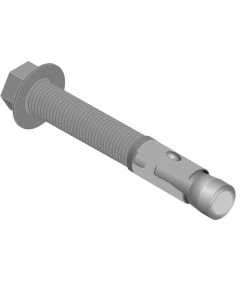
- Anchor every upright. Correct anchor bolts in sound concrete, at the specified embedment, are what keeps a loaded frame standing when it is nudged.
- Protect the uprights people drive past. Aisle ends, door approaches and production crossings need rack guards and column protection.
- Post the load ratings. OSHA expects the rack to be used within its design; a posted plaque per bay stops well-meaning staff from adding a level or overloading a beam.
- Inspect on a schedule and act on damage. Our rack inspection and repair page covers what to look for and when to unload a bay rather than watch it.
- Use qualified installers. Plumb, level, fully pinned and correctly anchored is the difference between a rack system and a pile of steel — see pallet rack installation.
External references worth reading directly rather than second-hand: the Rack Manufacturers Institute for MH16.1, and OSHA for general duty and materials-handling requirements.
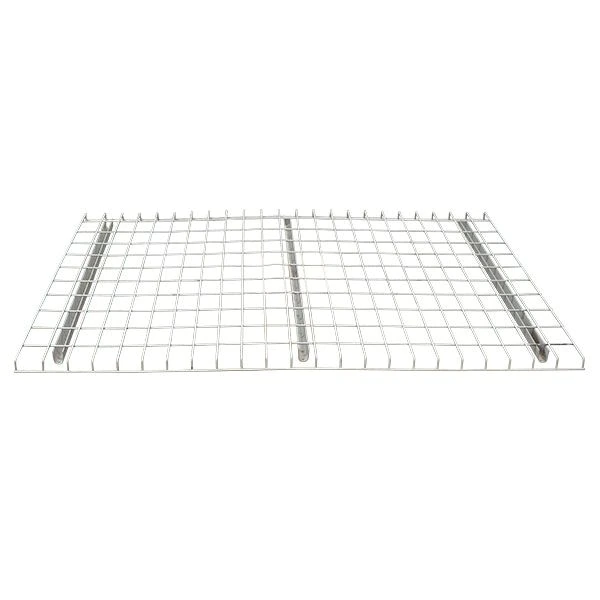
Shop Pallet Rack Accessories Online
Protect and finish your pallet rack installation with these in-stock accessories, or request a quote for custom-sized rack, freight and volume pricing.

Frequently asked questions
Does pallet racking need to be food grade in a supplement plant?
How do you keep quarantined material separate on pallet rack?
What rack type enforces first expiry, first out?
How heavy is a pallet of liquid supplement product?
Can we store liquids above dry ingredients?
Is racking part of a GMP audit?
Do we need engineered drawings for rack in Utah?
Utah pallet rack project: This case study supports our Utah pallet rack design and installation guide and, at the top level, our main pallet rack and pallet racking systems hub.
Planning racking for a supplement, nutraceutical or food production plant?
Our team designs quality-controlled storage layouts across Utah and the Intermountain West.