
Tip-Out Bins: Tilt Bin Storage for Small Parts
Clear tilt-out bins that swing open to 45° so every part is visible, dust-protected and reachable with one hand, on walls, workbenches, louvered panels or mobile floor stands.
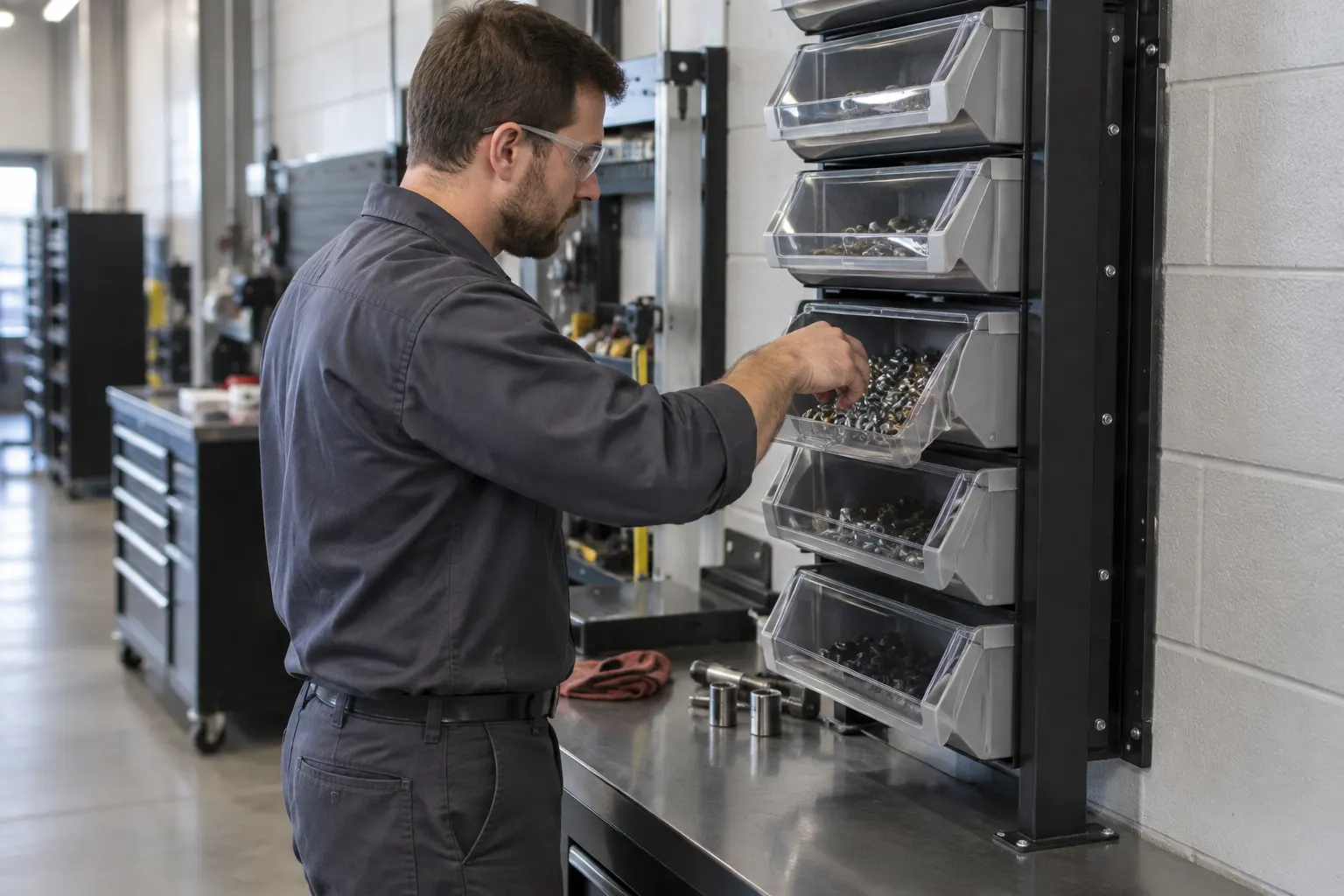
45°
Bins tilt open, then close
1–21
Compartments per bin
4 mounts
Wall, bench, panel, stand
500 lb
Mobile stand capacity
Shop Tip-Out Bins Online
Buy tip-out bins as complete floor stands, a mobile double-sided stand, a portable bench frame, or as individual bins to mount on frames, rails or louvered panels. Online prices are per unit; larger parts-room layouts and freight are quoted by our team.


Browse all tip-out bins, frames and rails → | All tip-out floor stands | Need open shelving instead? bin shelving units
What Tip-Out Bins Are and Why Shops Use Them
Tip-out bins (also called tilt bins or tilt-out bins) are small-parts containers with a clear front cup that pivots forward. Pull the handle and the cup tilts open to about 45°; let go and it swings closed. The housing stays fixed to a wall frame, bench frame, louvered panel or floor stand.
Because the cup closes, parts stay clean and do not spill when a stand is moved. Because the front is clear, you can see the stock level from across the room. Each bin has a label slot in the handle, so the location and part number travel with the bin.

Signs a tip-out bin system fits your parts
- Small parts in open bins collect dust, grinding debris or shop grime before they are used.
- Bench drawers hide stock, so nobody notices a part is running out until it is gone.
- Parts spill when a cart or stand is moved between work cells.
- Wall space is free but floor space is not, around a bench, machine or service bay.
- Many low-count SKUs (fittings, fuses, connectors, O-rings) need their own labeled spot.
For larger quantities of each item, open-front shelf bins on bin shelving hold more per foot. Tip-out bins are the better fit where visibility, dust protection and a small footprint matter more than bulk.
Tip-Out Bin Sizes and Compartment Options
Standard tip-out bins share one 23-5/8″ housing width so they stack in the same frames and stands. What changes is how the width is divided: one wide cup, or two, three, four, five, six, nine or even 21 small cups in the same housing. Single small bins in several colors cover the smallest parts.
 Multi-cup bins (3–9 per bin)The everyday choice for fasteners, connectors and fittings.
 Dividable full-width bin23-5/8″W x 5-1/4″D cup that takes dividers as the part mix changes.
 Single bins, 5-1/4″WOne part per bin, mounted side by side to build a custom layout.
 Mini bins in color2-3/8″W bins in yellow, red, blue or white to color-code by job or line.
| Compartments per bin | Typical parts | Notes |
|---|---|---|
| 1–2 | Larger fittings, filters, gloves, bagged kits | Fewest SKUs per bin, most volume each |
| 3–4 | Fasteners, electrical connectors, hose clamps | The most common mix on floor stands |
| 5–6 | Washers, fuses, terminals, O-rings | Good for repair and service benches |
| 9 | Electronic components, screws, small springs | Many SKUs at eye level |
| 21 | Very small components, sample parts | Tiny cups; best for low-count stock |
Sorting nuts, bolts and screws specifically? Our fastener storage guide covers bolt bins and sorting rules that apply to tip-out bins too.
Mounting Options: Wall, Bench, Louvered Panel or Floor Stand
The same bins move between four kinds of support, so a layout can start on one wall and grow onto a stand later. Each bin mounts with its own hardware kit.
 Wall frames, 24–70″HScrew a steel frame to the wall and stack bins in a column above a bench.
 Rails, 24–70″HA pair of rails mounts to walls, cabinet sides or machine guards.
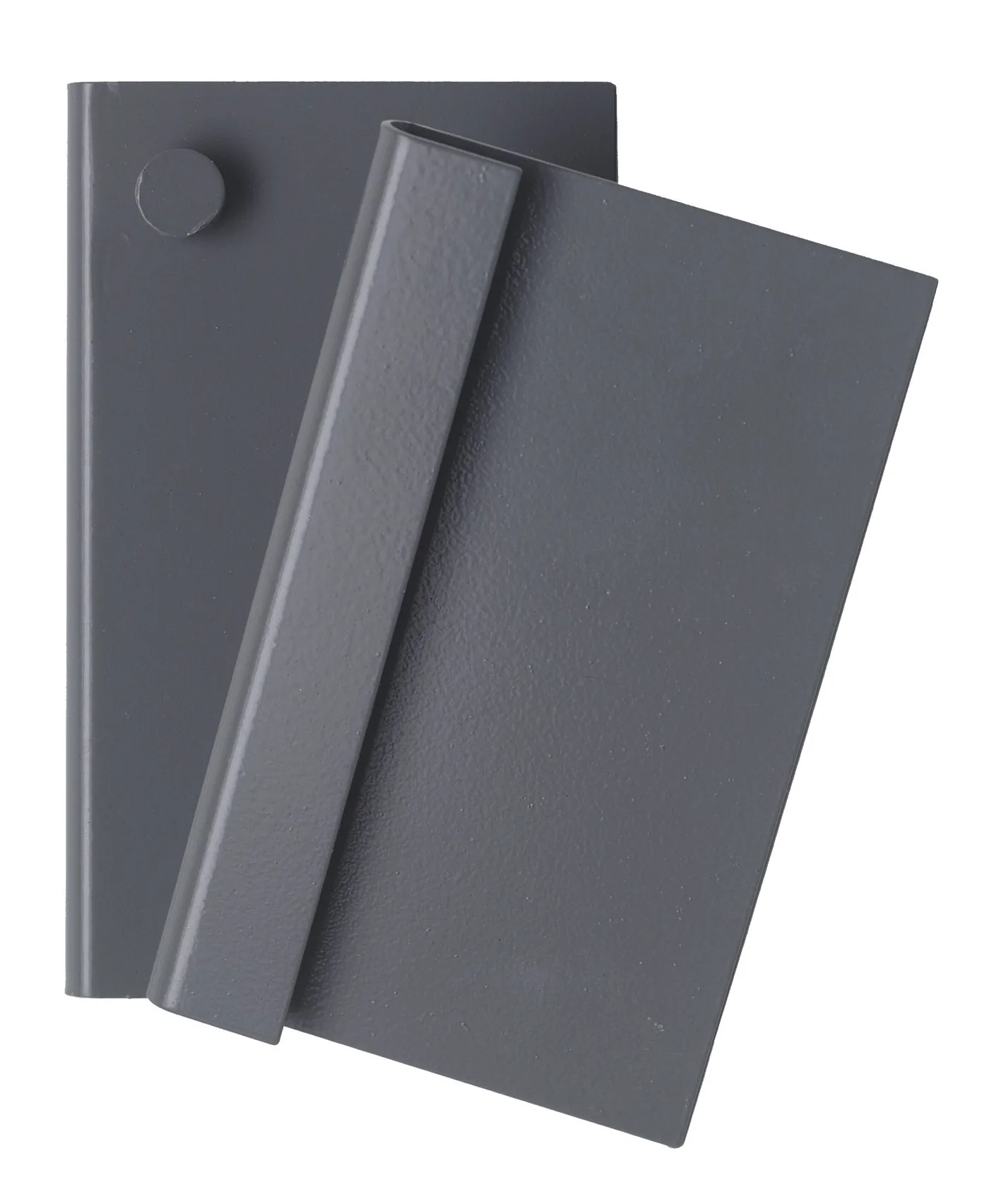 Louvered panel bracketsHang tip-out bins on louvered panels next to hanging bins.
 Floor stands, 28–75″HSingle- or double-sided steel stands; a caster kit fits any double-sided stand.
- Wall frames and rails suit maintenance shops, service bays and assembly lines where floor space is tight. Mount bins so the most-used ones sit between waist and shoulder height.
- Portable bench frames sit on a workbench or travel with a technician, with a carry handle on top.
- Louvered panels mix tip-out bins with hanging bins on one wall; see louvered panels and bin rail systems for panel sizes.
- Floor stands create a free-standing parts point; double-sided stands double the bins per footprint, and a caster kit lets the stand roll to the job.
- Locking tip-out cabinets put the bins behind a door for controlled stock; they are covered on our bin storage cabinets page.
Tip-Out Bins vs. Open Shelf Bins vs. Drawers
| Tip-out bins | Open-front shelf bins | Drawer cabinets | |
|---|---|---|---|
| Visibility | Clear front, stock visible when closed | Open, visible | Hidden until opened |
| Dust and spill protection | Cup closes | None | Good |
| Footprint | Wall, bench or 10″-deep stand | Needs shelving 12–24″ deep | Floor cabinet |
| Best quantity per SKU | Low to medium | Medium to high | Low, high-value |
| Security | Locking cabinet versions | None | Lockable |
| Cost per location | Low to medium | Lowest | Highest |
Many parts rooms combine all three: open small parts storage on shelving for bulk stock, tip-out bins at the benches where parts are used, and drawers or cabinets for controlled items.
Who Uses Tip-Out Bins
- Manufacturing plants: point-of-use hardware at assembly stations and machine cells, alongside pick racks that feed larger components.
- Maintenance and MRO shops: fittings, fuses, clips and seals on the wall above the repair bench.
- Electronics and electrical assembly: connectors, terminals and small components kept clean and sorted.
- Aerospace and defense suppliers: one labeled location per part number for traceable, clean storage.
- Healthcare and laboratories: small supplies kept covered but visible in clinics and labs.
- Fleet and auto service: clips, fasteners and electrical parts at each bay; mobile stands roll to the vehicle.
- Government and municipal shops: vehicle, facilities and utility maintenance spares.
Planning a Tip-Out Bin Layout
- List the parts and how many of each you keep. That sets the compartment count per bin.
- Decide where the parts are used. Put the bins there: on the wall above the bench, on the bench, or on a stand at the cell.
- Measure the wall or floor space and choose frame or stand heights that keep top bins within reach.
- Plan one SKU per compartment and keep look-alike parts apart.
- Label every handle with part number and location; our bin labeling guide shows formats.
- Set a refill point per bin, or run a two-bin inventory system from a central parts room.
Send your parts list
Part counts, quantities and photos or a sketch of the wall, bench or floor area.
We lay out the bins
Bin sizes, compartment counts and mounting (frames, rails, panels or stands) on one plan.
One quote, shipped
Bins, frames, stands and hardware on one quote, delivered nationwide.
Call 800-326-4403 or request a quote. Compare every bin unit type on our bin shelving systems page, browse all storage bins, or work with our Salt Lake City team through Utah bin shelving.
Tip-Out Bin FAQs
What are tip-out bins?
What is the difference between tip-out bins and tilt bins?
How do you mount tip-out bins?
How many compartments can a tip-out bin have?
Are tip-out bins good for dusty shops?
Can tip-out bin stands be mobile?
Planning a Tip-Out Bin Wall or Stand?
Send us your parts list and space for a free layout with bins, frames and stands on one quote.