
Home › Laboratory Furniture › Lab Benches & Workstations
Lab Benches & Laboratory Workstations
Fixed, mobile, wall-hung and height adjustable lab benches — with overshelves, power, lighting, ESD and cleanroom options — specified, quoted and shipped by MH-USA.

30–36″
Seated to standing bench heights
24–36″
Typical bench depths
1997
Serving labs since
50
States shipped
Laboratory Workstations That Match the Work, Not the Catalog
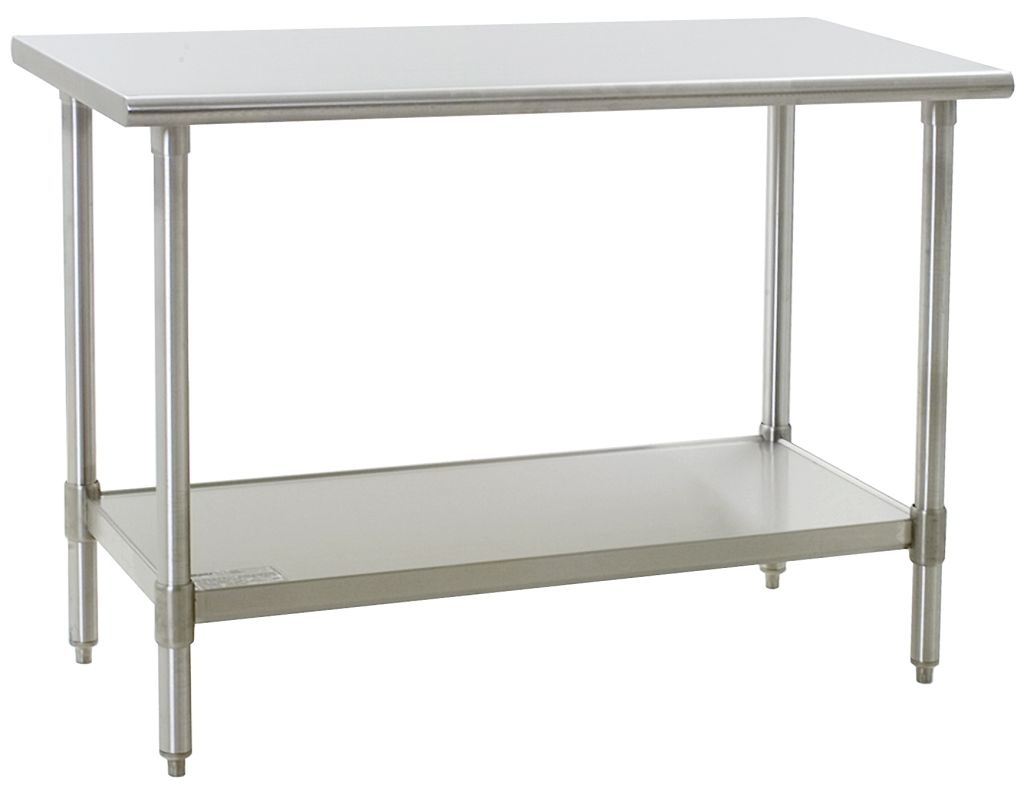
A laboratory bench is the one piece of equipment everyone in the room touches all day. Get it right and nobody notices it. Get it wrong — two inches too tall, six inches too deep, an overshelf where the analyst’s head goes — and you buy the mistake back in fatigue and wasted motion for the next fifteen years.
MH-USA specifies and supplies lab benches and laboratory workstations for research labs, QC labs, clinical and pathology labs, cannabis and pharmaceutical operations, university teaching labs, and industrial test benches. We represent Eagle Group, whose MHC division builds stainless steel lab benches, workstations, casework and lab shelving, and we pair those with mobile bench systems, adjustable workstation frames and ESD-rated surfaces from the other manufacturers we carry.
This page covers how to choose bench type, height, depth, top material, frame and accessories. If you want the wider category first, start with our laboratory furniture overview, or see the whole lab program on our laboratory material handling solutions hub.
Types of Lab Benches and Workstations
Almost every laboratory bench falls into one of six families. The choice is driven by whether the position is permanent, whether services (water, gas, vacuum, drain) are plumbed to it, and how often the room gets reconfigured.
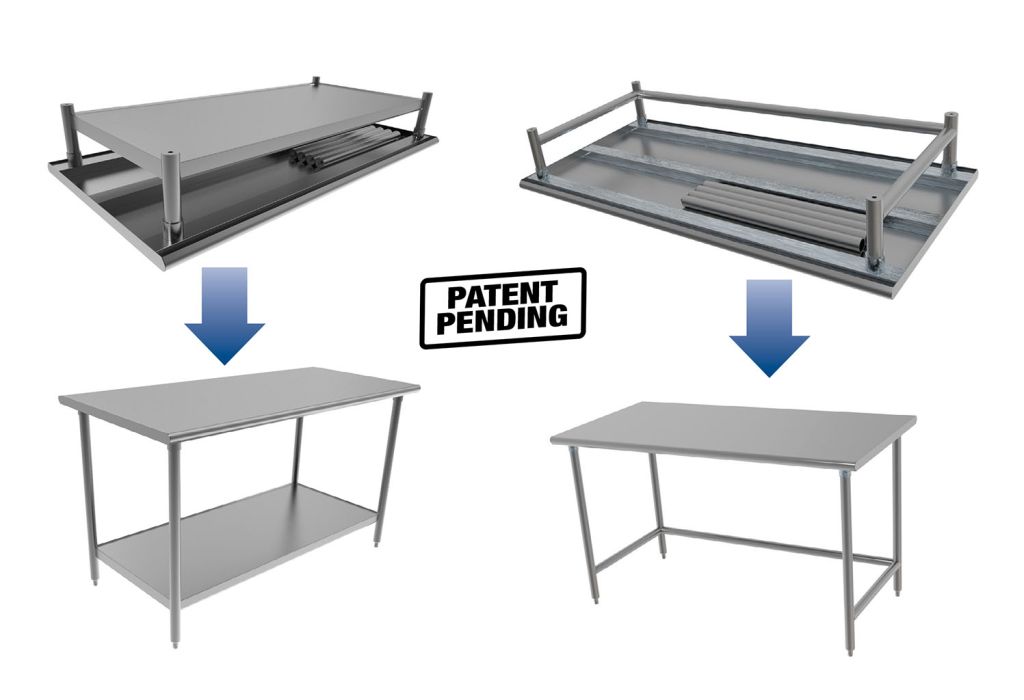 Fixed Freestanding BenchesWelded or knockdown frames with a C-frame tubular base or an undershelf base. The workhorse bench: stable, high capacity, and easy to line up end to end into a continuous run.
 Mobile Bench SystemsThe same bench on locking casters. Right for teaching labs, shared instrument carts, computer stations and any program that reconfigures between projects.
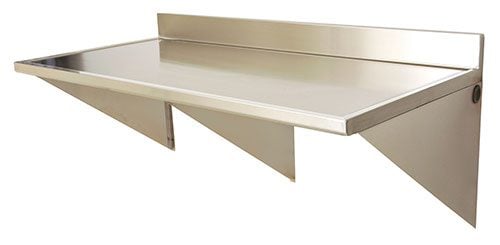 Wall-Hung & Cantilever BenchesBracket-mounted tops with no legs, so floors clean under the bench. Common in washdown rooms and vivariums; capacity is limited by the wall structure and brackets.
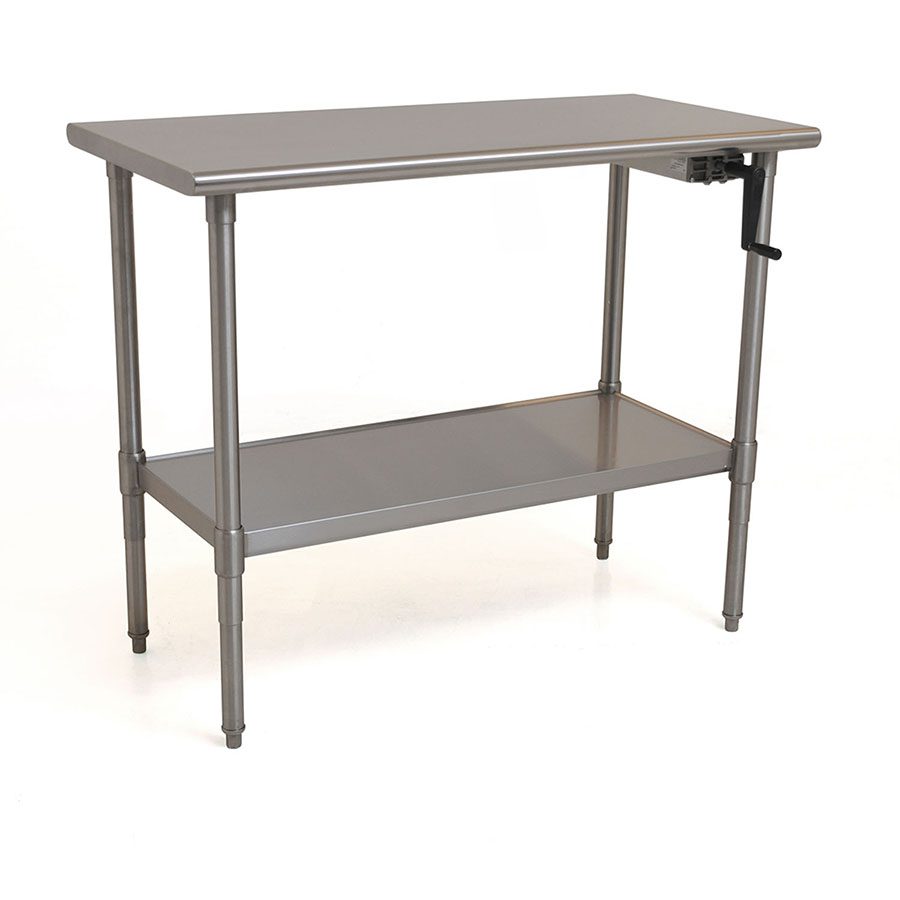 Height Adjustable WorkstationsHand-crank, ratchet or powered frames that move the surface between seated and standing height so one bench serves several technicians and several tasks.
 Task & Instrument StationsBench plus uprights, overshelves, wall grid, lighting and power — a complete position built around one repeated procedure or one instrument.
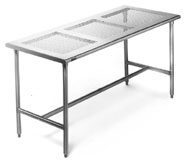 ESD & Cleanroom BenchesStatic-dissipative surfaces and grounding for electronics work; perforated or electropolished stainless and open bases for controlled environments.
Instrument benches are their own category
Balances, microscopes and anything vibration-sensitive should not sit on a long-span bench shared with active work. Use a short, heavily braced bench or a dedicated balance table, keep it off the same span as a centrifuge or a shaker, and locate it away from door swings and HVAC diffusers. Tell us the instrument model and we will size the support to it.
Bench Height, Depth and Reach Zones
Bench height is set by the task, not the room. Standing work is comfortable at roughly 36 inches to the finished top; seated work needs about 30 inches so a task chair and knees fit under the apron. Perch stations land near 34 to 36 inches and require a foot ring — without one the operator’s legs dangle and the position is worse than either extreme.
Precision tasks want a lower surface. Pipetting, dissection, microscopy and fine assembly are done with elbows at or slightly below elbow height — usually 2 to 4 inches below standard standing height. That is the most common ergonomic complaint we hear about laboratory workstations, and the reason adjustable frames sell so well in shared labs.
Depth follows reach. The primary zone — where the hands work without leaning — is roughly the first 16 inches from the front edge. The secondary zone reaches to about 24 inches. Anything beyond that is storage or instrument territory, so a 30-inch bench with an analyzer at the back still gives a full working depth in front of it, while a 36-inch bench without an instrument mostly collects clutter.
Chair height and bench height are specified together. A 30-inch bench takes a standard task chair; a 36-inch bench needs a lab stool with a foot ring and, ideally, a seat that adjusts through at least six inches so more than one person can use the position.
Work Surfaces: Choose by What Gets Spilled
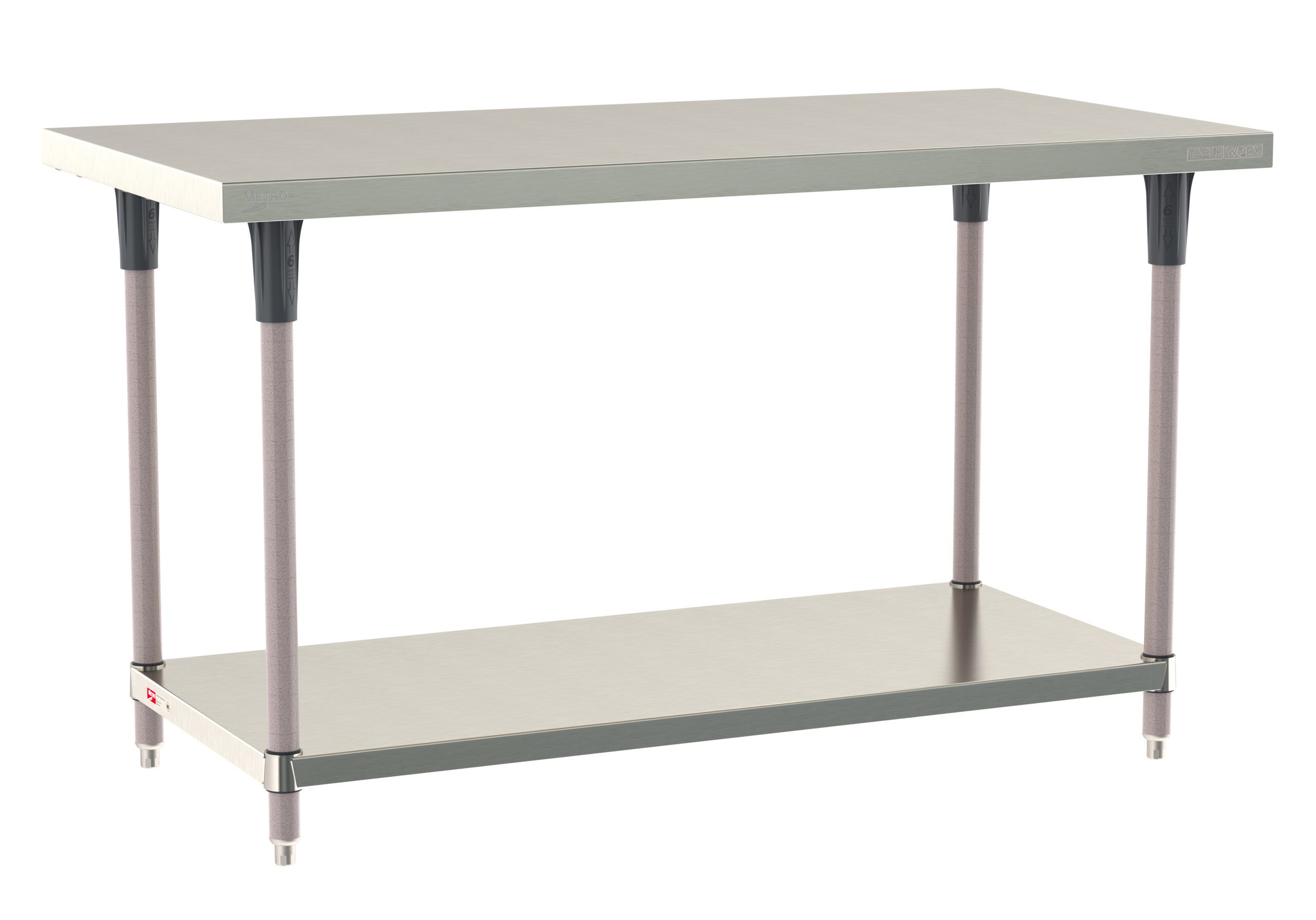
Top material is the decision that costs the most to change later. Stainless steel is the default for wet labs, animal facilities, food and beverage labs, pharmacy compounding and anywhere the bench gets washed down. Eagle’s stainless lab tops are typically 14- or 16-gauge type 304, reinforced underneath with a hat channel so the span does not oil-can, with sound-deadening tape between the channel and the top and left and right ends turned down 90 degrees so benches sit flush end to end in a run.
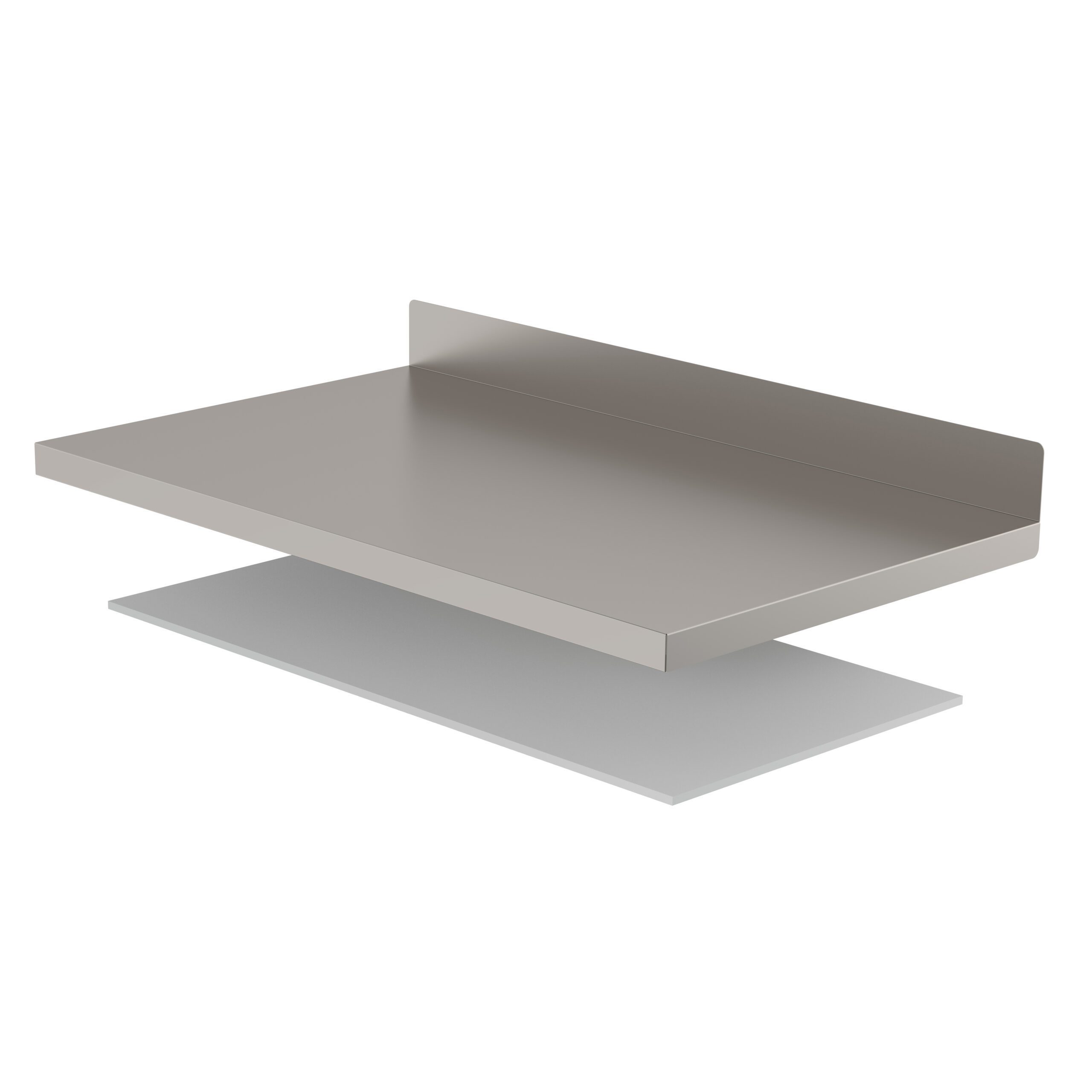
Edge treatment is part of the spec. A bullnose flat top is easiest to wipe into a waste container, a 1½-inch upturn contains small spills, a 5-inch backsplash suits benches against a wall, and marine edges contain a spill on all four sides.
Non-metallic tops still have their place. Epoxy resin handles aggressive reagents and solvents; phenolic is lighter and cheaper for moderate chemical duty; high-pressure laminate is fine for dry benches; static-dissipative laminate belongs on electronics benches; perforated stainless is used under laminar flow.
Frames, Legs and Load Ratings
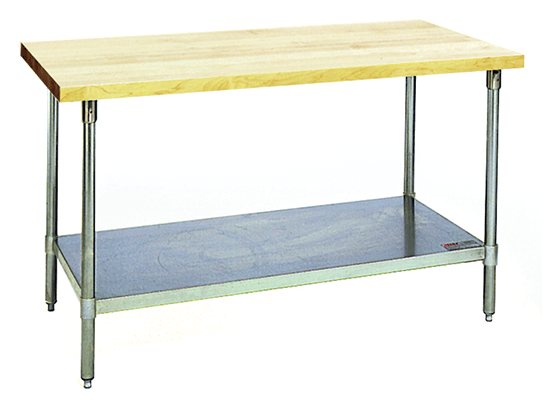
The frame is what determines whether a bench still feels solid in year ten. C-frame and table-frame bases are open underneath, which keeps knee space clear and lets you slide carts, waste bins or mobile cabinets in and out. Undershelf bases add a full-width shelf that doubles storage but blocks seated use — pick one deliberately rather than by accident.
Construction matters as much as material. Eagle’s welded lab tables use a patented gusset system welded into the hat channel to limit lateral movement, with 16-gauge, 1⅝-inch legs and welded cross-bracing. Knockdown frames use machined threaded inserts pressed into the leg sections — welded-base rigidity in a smaller carton, a real freight saving on multi-bench orders.
Leveling feet are not an afterthought. Lab floors are rarely flat, and a bench that rocks will show it in every balance reading and every liquid handling step. Specify adjustable bullet feet on fixed benches, plate casters with brakes on mobile benches, and pre-punched feet where the bench needs to be anchored to the floor in a seismic zone.
Capacity is a function of frame, top gauge and span. Wall-mounted stainless tables carry their load entirely on 14-gauge brackets and are typically rated around 200 lb; floor-supported welded benches carry far more. If a heavy instrument lands mid-span, shorten the span, add a center leg, or step up the frame.
Overshelves, Power, Lighting and Bench Accessories
Accessories are what turn a table into a laboratory workstation. They are also where cost gets added quietly, so specify them against a real task list rather than a wish list.
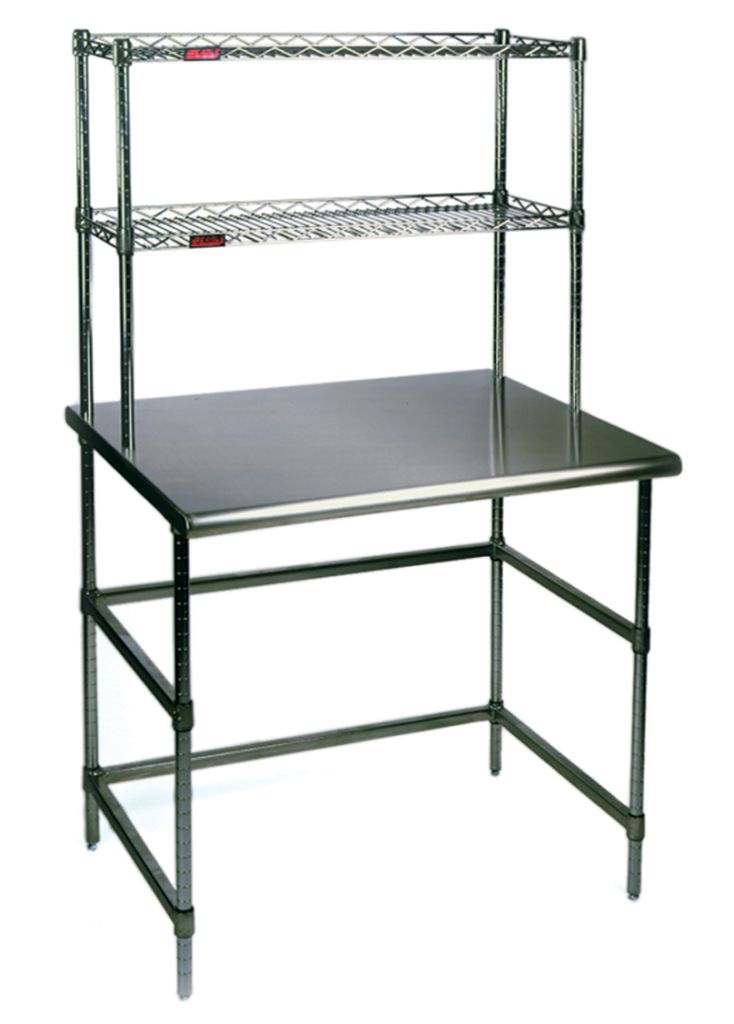
 Overshelf SystemsShelves and utility racks mounted above the bench on posts or brackets. Keep the lowest shelf at least 18–20 inches above the top so the work zone stays open.
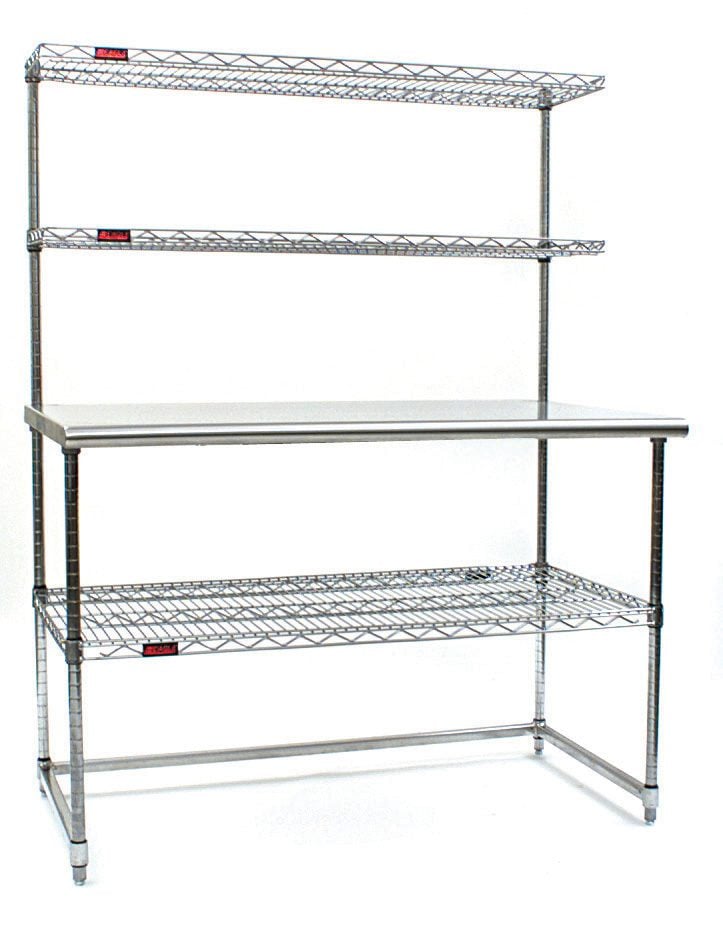 Cantilevered OvershelvesRear-post cantilever shelves put storage overhead with nothing landing on the work surface — the right answer over a bench where every square inch is used.
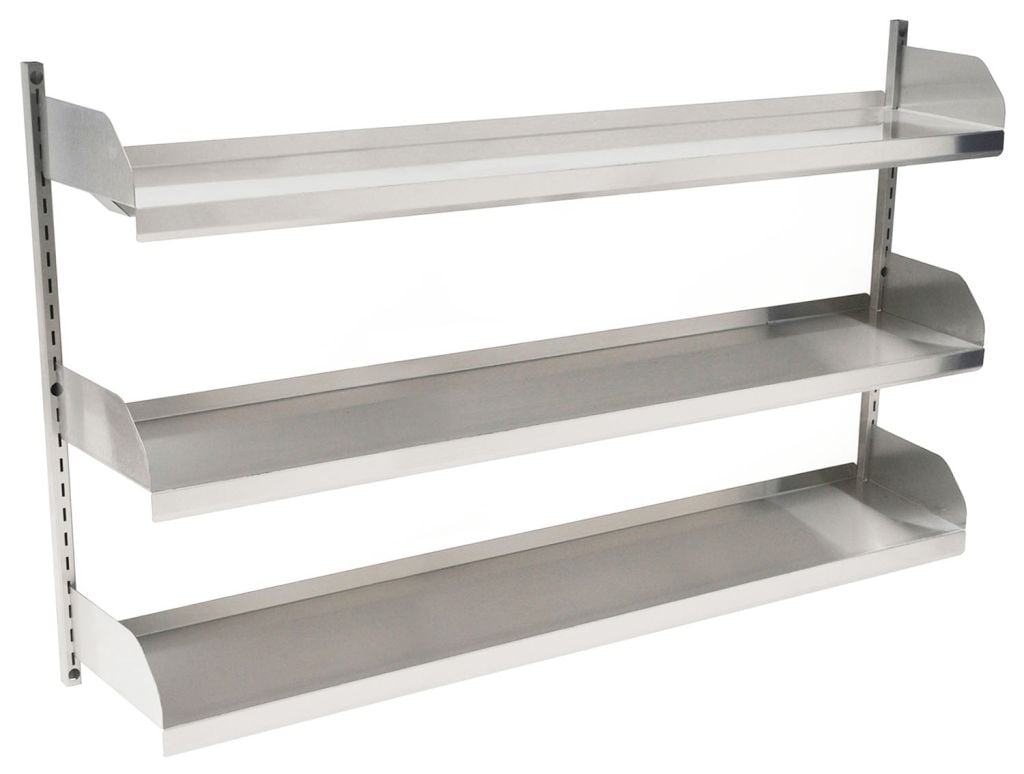 Wall Shelves16-gauge stainless wall shelves with a reinforcing center hat channel, rear upturn and adjustable mounting increments; optional bookends and front retaining ledge.
 Power, Lighting & Monitor ArmsManager and utility stations add drawers, a wall grid, power strip, overhead task light, monitor arm and bin holders on a single upright frame.
 Bench-Side Data StationsModular desk workstations with 18-gauge stainless tops, chrome cantilever wire shelves and a rear wall mat for documentation next to the wet bench.
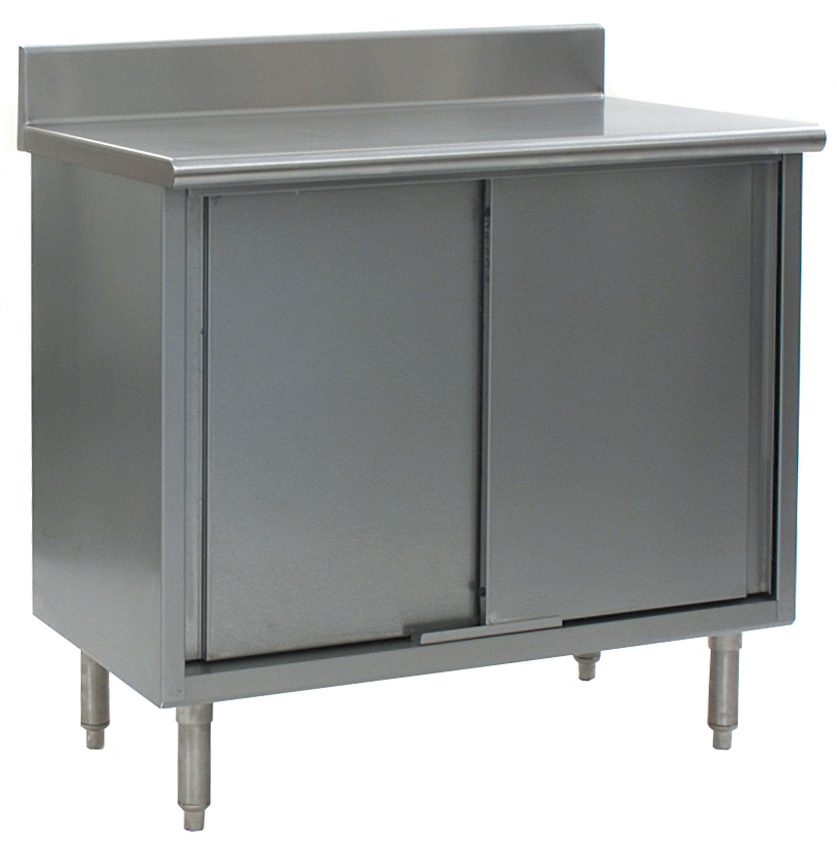
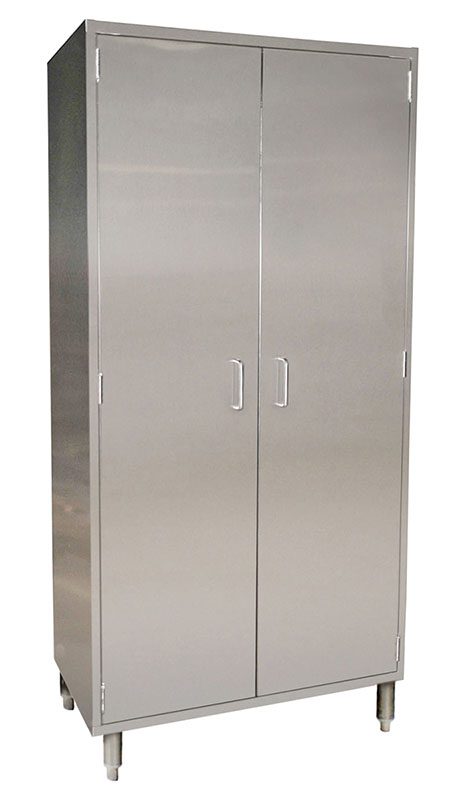 Under-Bench & Adjacent StorageMobile cabinets that roll under an open-base bench, plus enclosed stainless storage cabinets with adjustable shelves and locking handles for the bench run.
Plan the reach heights before you buy the shelf
Overhead storage that a 5’2″ technician cannot reach becomes dead space within a month. Set the lowest overshelf so its front edge is no higher than about 60 inches from the floor for seated stations and 70 inches for standing ones, and put the items used hourly at bench level, not overhead.
ESD, Cleanroom and Controlled-Environment Benches
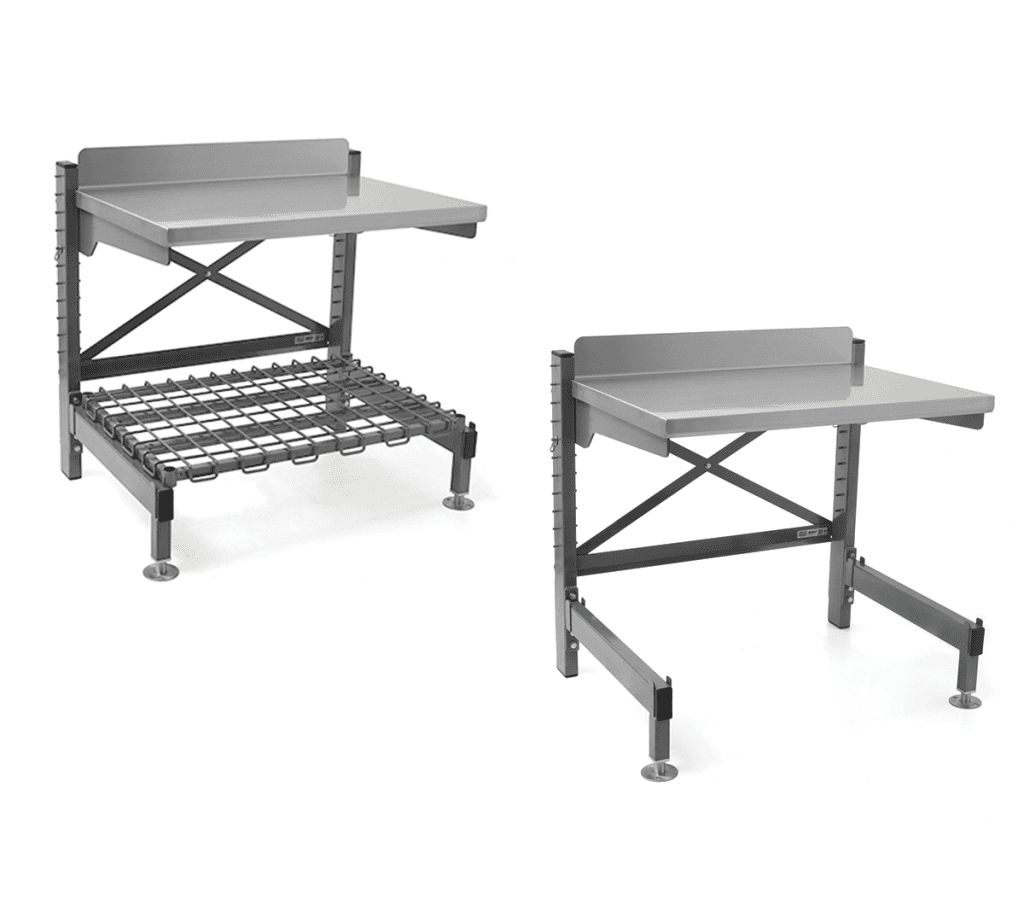
Controlled environments change the bench spec in three ways: surface, base and finish. Surfaces go perforated or electropolished stainless so particles have nowhere to settle. Bases go open rather than enclosed, so no cavity collects particulate. Finishes go smooth and continuous, with welds ground and rounded edges instead of residue-trapping corners.
Cleanroom-destined benches can be alcohol-wiped and bagged before shipping so they arrive ready to pass through the airlock. Ask for that on the purchase order; it is easy to miss and expensive to fix on site.
Electronics work adds the static problem. ESD benches use static-dissipative surfaces, grounding points, wrist-strap connections and conductive casters — and they only work as a system, so surface, mat, strap and ground path are specified together.
Product listings, ratings and standards compliance vary by model and configuration. We do not publish blanket claims: send us the models you are considering and we will confirm in writing what each one actually carries. Gowning rooms are a separate product family — see our cleanroom gowning benches page for the benches used at the change-of-state line.
Lab Bench Comparison: How to Pick
Use this as a first-pass filter, then send us the room and the task list so we can confirm the details.
| Bench type | Typical height | Typical depth | Best for | Watch out for |
|---|---|---|---|---|
| Fixed freestanding bench | 30″ seated / 36″ standing | 24″–30″ | Permanent positions, heavy instruments, continuous bench runs | Hard to reconfigure; confirm the run length before ordering tops |
| Mobile bench system | 30″–36″ (caster height adds ~5″) | 24″–30″ | Teaching labs, shared instruments, project-based work | Caster height raises the surface — order the frame accordingly |
| Wall-hung / cantilever bench | Set by bracket mounting height | 24″–30″ | Washdown rooms, vivariums, floors that must clean under the bench | Capacity is limited by wall structure; typically around 200 lb |
| Height adjustable workstation | Adjustable ~28″–42″ | 24″–36″ | Shared positions, mixed seated and standing tasks, ergonomic retrofits | Cable and hose management has to travel with the surface |
| Task / instrument station | 30″–36″ plus uprights | 24″–30″ | One repeated procedure, documentation stations, kitting and QC | Overshelf height must suit the shortest operator, not the tallest |
| ESD / cleanroom bench | 30″–36″ | 24″–30″ | Electronics, controlled environments, laminar flow work | Grounding is a system; perforated tops are not for liquid handling |
| Balance / instrument table | 30″–34″ (task-dependent) | 24″–30″ | Analytical balances, microscopy, vibration-sensitive instruments | Keep off shared spans; avoid door swings and air diffusers |
Bench and Workstation Brands We Represent
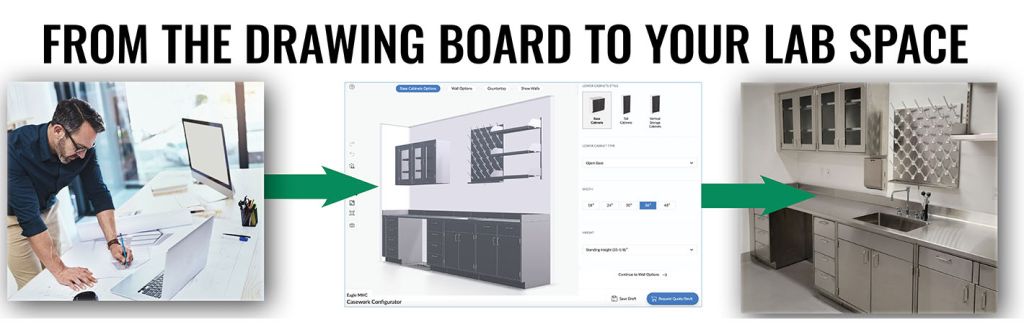
We are a distributor, not a single-line dealer, so we specify the bench that fits the room instead of the one line we happen to stock. For stainless lab benches, casework, lab shelving and cleanroom tables, we represent Eagle Group — founded in 1947 in Clayton, Delaware, with a dedicated MHC division for laboratory and controlled-environment products, a published CAD and Revit library, and SpecFAB custom fabrication for benches that do not exist in the catalog. Eagle states its stainless inset casework is built to SEFA 8M metal standards; we confirm specifics per configuration in writing.
For technical and ESD workstation systems, modular bench frames and industrial workbench programs, see our Treston line. For Eagle’s lab-specific catalog, see Eagle lab products, and for controlled-environment furniture see Eagle cleanroom products. Where a bench belongs to a broader ergonomic program — packing stations, assembly lines, inspection positions — our adjustable workstations page covers the industrial side of the same problem.
Custom is normal here: sink cut-outs, non-standard lengths, service chases and end panels are routine fabrication requests. Send a sketch with field dimensions and we will quote it.
Specifying a Bench Run Without Rework
Design your bench layout, then let us quote it
Our free Lab Bench Configurator lets you configure bench runs, heights, overshelves and accessories on screen. Build the layout, send it over, and we will return an itemized quote with model numbers, lead times and freight. Prefer to talk it through? Call 800-326-4403.
Open the Lab Bench Configurator Request a Quote Call (800) 326-4403
Shop Lab Benches & Workstations Online
Buy select bench and workstation components directly from our online store, or request a quote for full bench runs, custom sizes and freight-rated orders.


Get a free quote
Tell us what you are storing, the room size and your timeline. A project specialist will follow up with layout options and pricing. Prefer to talk? Call (800) 326-4403.
Lab Bench & Workstation FAQs
What is the difference between a lab bench and a laboratory workstation?
What height should a lab bench be?
How deep should a laboratory bench be?
Can lab benches be moved or reconfigured later?
What work surface material should I choose?
Do you offer ESD or cleanroom bench options?
How much weight will a laboratory bench hold?
Can I design a bench layout before I order?
Get a Lab Bench & Workstation Quote
Send a floor plan, a sketch or a Lab Bench Configurator layout. We will specify the benches, check the heights, spans and accessories, and return an itemized quote with freight and lead times. Call 800-326-4403.