
Installed Indoor Cantilever Rack: Little Giant Ladder Systems, Springville, UT
A Utah ladder manufacturer ordered a 16-ft, four-level cantilever row as a complete job: freight, inside delivery, installation crew and lift equipment. What that scope covered, and how to plan your own installed row.
Springville
Utah project site
16 ft
Column height
4 levels
24 arms on 6 columns
3 weeks
Quote to final invoice
Shop Cantilever Rack Parts
These are the cantilever parts we stock online. For a tall structural row delivered and installed like the project below, call us for a quote and an install date.


The Project: One Tall Row, Delivered and Installed
Little Giant Ladder Systems designs and builds ladders in Springville, Utah. In the fall of 2017 the company asked our team (then operating as NationWide Shelving) to supply a cantilever rack row for its Utah facility and to handle the whole job, not just ship parts. The quote went out on September 28, 2017, the purchase order to the rack distributor followed the next day, and the final invoice for the installed row is dated October 18, 2017.
Most of the cantilever projects we have written about were material-only orders that the customer stood up with its own crew. This one is the opposite: freight, inside delivery, a professional installation crew and the lift equipment were all part of the price. That makes it a good reference for anyone weighing a full-service cantilever rack install against doing it in-house. For palletized storage in the same building, see our pallet rack range.
One honest limit: the order records list the rack parts and the services, not what goes on each arm. Little Giant makes ladders, but we do not claim what is stored on this row, and nothing below depends on it.
| Project detail | From the order records |
|---|---|
| Client | Little Giant Ladder Systems (Springville, UT) |
| Industry | Manufacturing, ladders |
| Year | 2017 (quote September 28, final invoice October 18) |
| Layout | One single-sided row, arms on one face, five bays |
| Columns | Six 192-in (16-ft) columns, each on a 48-in base |
| Arms | Twenty-four 48-in arms with a 4-in face, four levels per column |
| Bracing | Five bays at 60 in, each with one X-brace and one strut brace |
| Scope | Material, freight, inside delivery, installation crew, forklift and scissor lift rental |
What a Full-Service Cantilever Quote Includes
The customer quote broke the job into seven lines. Leaving the dollar amounts out, here is what each line covered and why it matters when you compare quotes for an installed row.
| Quote line | What it covered | Why it matters |
|---|---|---|
| 16-ft upright frames, including bases | Six columns, each bolted to a 48-in base | Sets the height, footprint and capacity of the row |
| 4-ft x 4-in arms | Twenty-four arms, four per column | Sets the number of levels and how deep a load can be |
| 5-ft brace sets | Five sets, one per bay | Ties the columns together; required, not optional |
| Hardware | Bolts and nuts for the whole row | Easy to forget on a parts-only quote |
| Freight and inside delivery | Truck to the site and parts moved inside | Long, heavy columns need a plan to get off the truck |
| Installation by our staff | A professional crew assembled the row | Plumb, braced and anchored to the drawings |
| Forklift / scissor lift rental | Equipment for standing columns and bolting the top levels | Without it, the crew cannot work safely at 16 ft |

Two lines on that list are the ones buyers most often miss when they compare a parts price to an installed price: inside delivery and the lift rental. A 16-ft column does not come off a truck or stand up by hand, and the top arm on a column that tall is out of reach from a ladder. On a full-service job, those problems belong to the installer.
Compare that with the OrePac building-materials yard in Boise, which took 16-ft cantilever as a material-only delivery and installed it with its own crew, or the Gator Kennels expansion, which grew over four freight-only orders. Both approaches work. The difference is who owns the equipment, the labor and the risk.
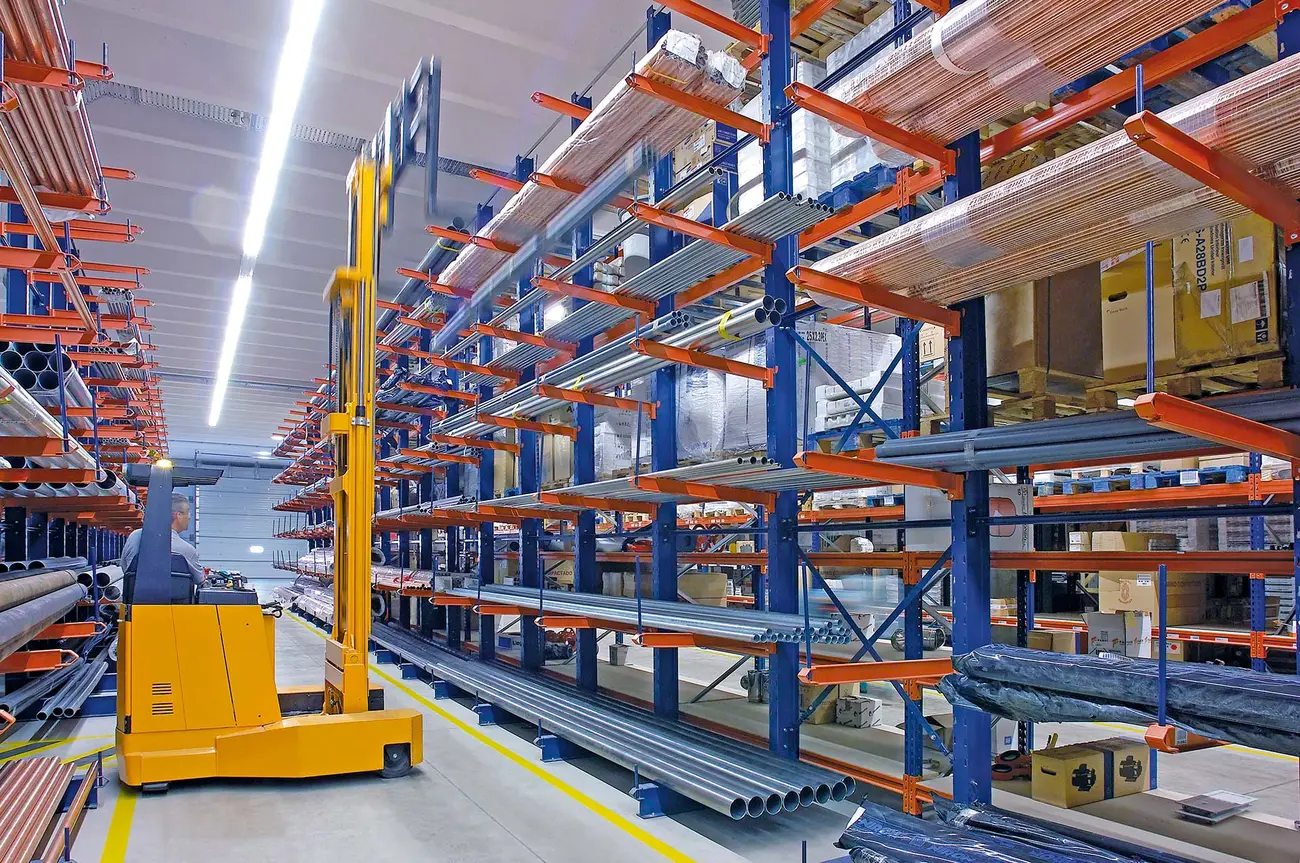
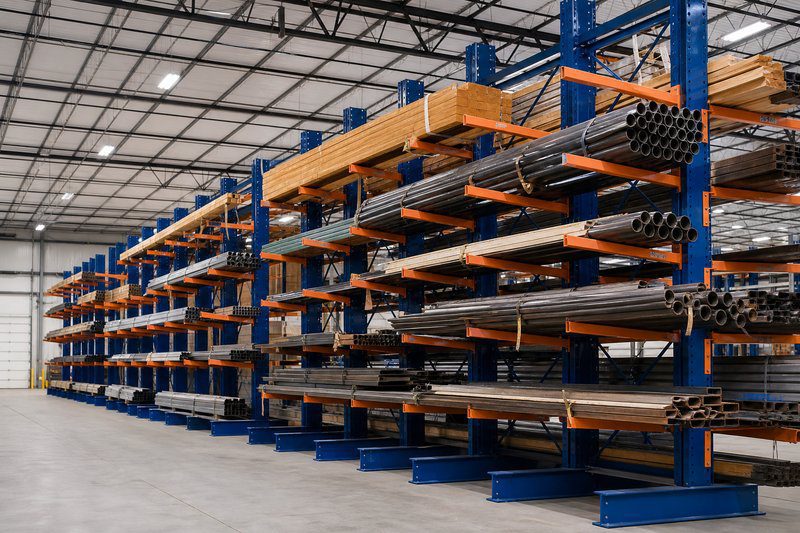
Photo: Interlake Mecalux (authorized use). Representative image, not the customer’s installation.
Why 16-ft Columns With Four Levels
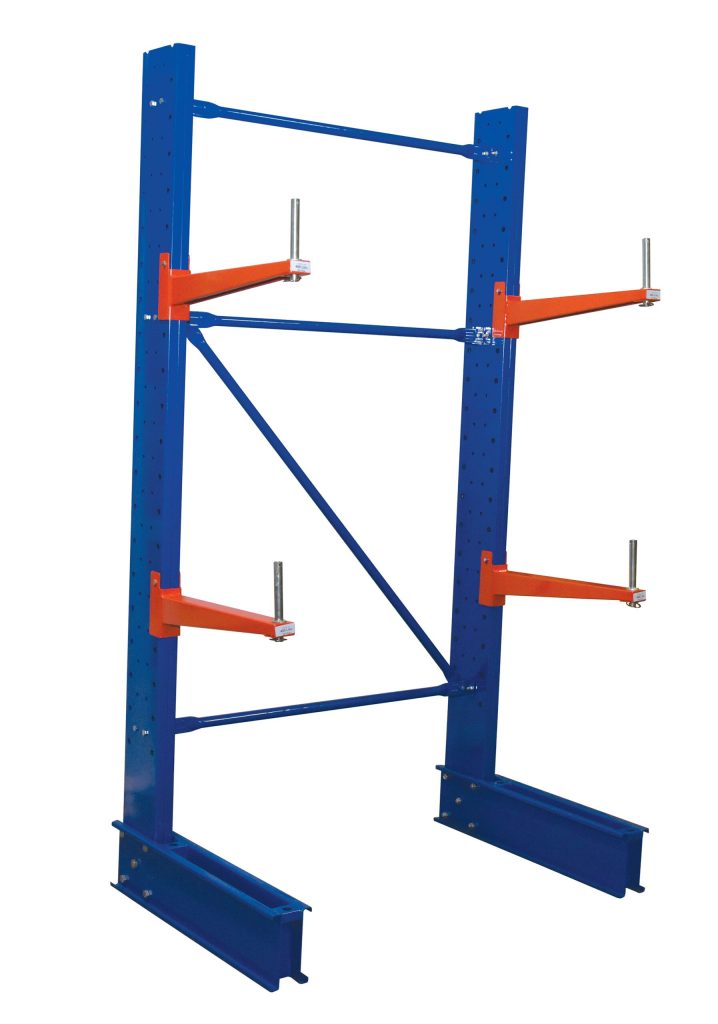
Twenty-four arms on six columns is four arms per column, so every level runs the full length of the row on six matching arms. The drawing shows the four levels spread evenly up the 16-ft column, which leaves generous clear height between levels for bundles and makes each level easy to see and reach with a forklift.
Fewer, taller openings are a deliberate trade. More levels on the same column would store more lines of material, but each opening would be shorter and every arm would carry less height of stock. When a row holds bundles rather than single pieces, four well-spaced levels on a tall column is a common, practical choice. Structural arms bolt to the column, so the spacing can be changed later as the material mix changes.
Arm length follows the base: here both are 48 in, so the load sits inside the footprint the column was designed around. A 48-in arm carries its own published capacity at that length, and the column has a separate total rating. Our guide to cantilever load capacity by arm length explains how to read both numbers, and the cantilever rack design guide covers how to size column height to your ceiling and equipment.
60-in Bays and the Bracing That Holds Them
The five brace sets were 60 in, which sets the columns about 5 ft apart. Bay spacing is the distance a load spans between arms, so it decides how many arms a given length of material rests on. Six columns at that spacing means a long bundle can sit across several arms at once, and shorter stock can still reach two arms within a single bay.
The working rule from the rack industry is simple: a load should rest on enough arms that it does not sag between them, and it should not hang far past the end arm. Stiff material tolerates wider bays. Thin or flexible stock needs closer arms or decking. For a row that has to handle a mix of lengths, a moderate spacing like this one keeps the options open.
Each bay got one X-brace and one horizontal strut brace, which is what the distributor’s parts list shows for these 16-ft columns. The X-brace is the long diagonal pair; the order lists its flat length at 85 in for a 60-in bay. The strut is the horizontal member between columns.
Bracing is part of the engineered system. It is what keeps a tall single-sided column from racking sideways under load, and the manufacturer sets the pattern by column height and bay width. Never leave braces out to open up a bay. Our cantilever rack components guide shows how columns, bases, arms and braces fit together.
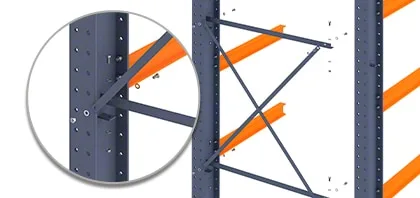
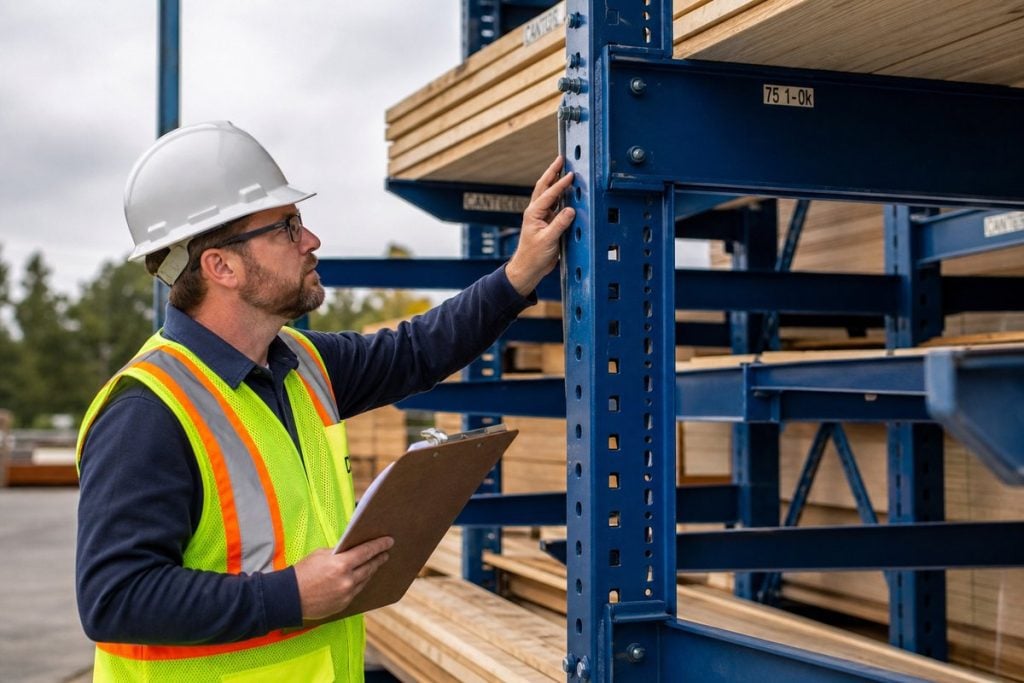
Image: Interlake Mecalux (authorized use).
| Part (from the sales order) | Quantity | Shipping weight on the order |
|---|---|---|
| Cantilever column, 192 in | 6 | 1,661 lb total |
| Cantilever base, 48 in | 6 | 436 lb total |
| Cantilever arm, 48 in x 4 in | 24 | 756 lb total |
| X-brace, 60 in (85 in flat) | 5 | 235 lb total |
| Strut brace, 60 in | 5 | 79 lb total |
| Bolt with nut, 3/4 in x 2 in | 167 | 99 lb total |
| Whole order | 3,266 lb |
Freight: Getting 16-ft Columns Into the Building
The rack was picked up from a distributor warehouse in Southern California, scheduled ready on October 6, 2017, and moved as a full truckload arranged through a freight broker. At 3,266 lb on the order, the steel itself is not a huge load. The length is the issue: 16-ft columns need a trailer long enough to carry them flat and a forklift at the far end to unload them safely.
Inside delivery was on the quote, which means the parts did not stop at the dock door. On an installed job the crew stages the columns, bases, arms and braces near where the row will stand, then checks the count against the parts list before anything goes up. A missing brace or a short bolt count found on day one costs far less than one found halfway up a column.
- Ask how the order ships. Long structural parts usually travel as a dedicated or full truckload, not small-parcel LTL.
- Confirm the unloading plan. Who supplies the forklift at delivery, and is there room to swing a 16-ft column?
- Count before you build. Check columns, bases, arms, braces and the bolt count against the packing list.
- Keep the paperwork. Part numbers on the order make adding arms or a bay years later a simple repeat.
Installing a Tall Row Inside a Working Plant
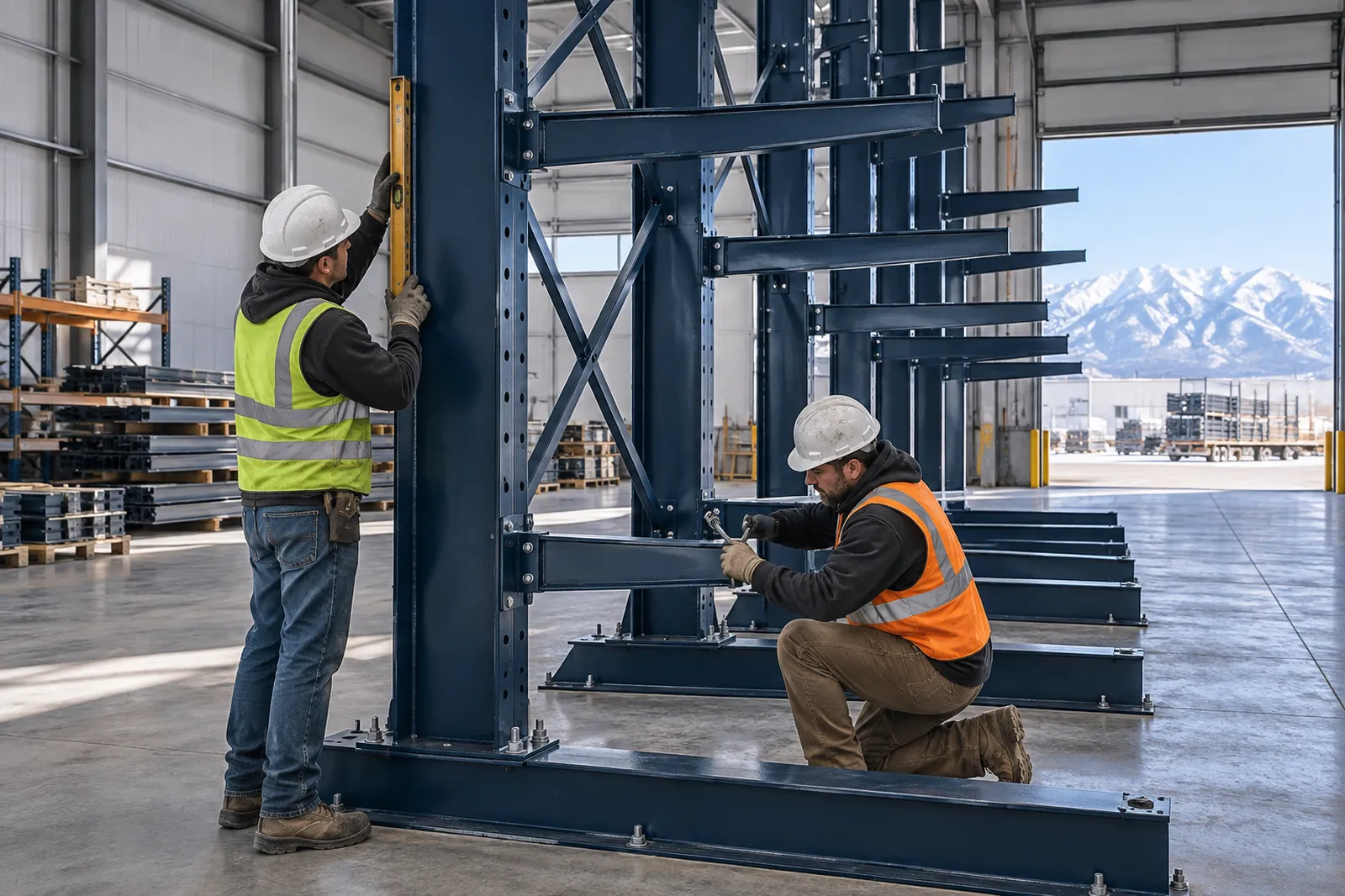
Installing cantilever in an operating factory is mostly about sequence and equipment. The forklift stands each column on its base and holds it while the crew bolts in the first brace set; the scissor lift puts an installer at the top of a 16-ft column to bolt the upper braces and hang the top arms. With both machines on site, a crew can work down the row bay by bay, plumbing and anchoring each column before the next one goes up.
The quote estimated delivery and installation at about two to three weeks, and the final invoice landed three weeks after the quote. For a plant, that kind of predictable window is what makes a full-service install worth it: production can plan around a short, defined disruption instead of a project that drags on in spare hours.
Mark the row
Snap the column lines on the slab and keep the aisle clear of work-in-progress and traffic.
Stand and brace the first bay
Two columns on their bases, then the X-brace and strut, so the first bay is stable on its own.
Plumb and anchor
Shim each column plumb and anchor the base into sound concrete per the drawings.
Work down the row
Add one column and one brace set at a time until all five bays stand.
Hang the arms
Install arms level by level from the lift, checking every arm is seated and locked.
Final check and handover
Confirm plumb, anchors and arm locks, post capacities, and walk the customer through loading.
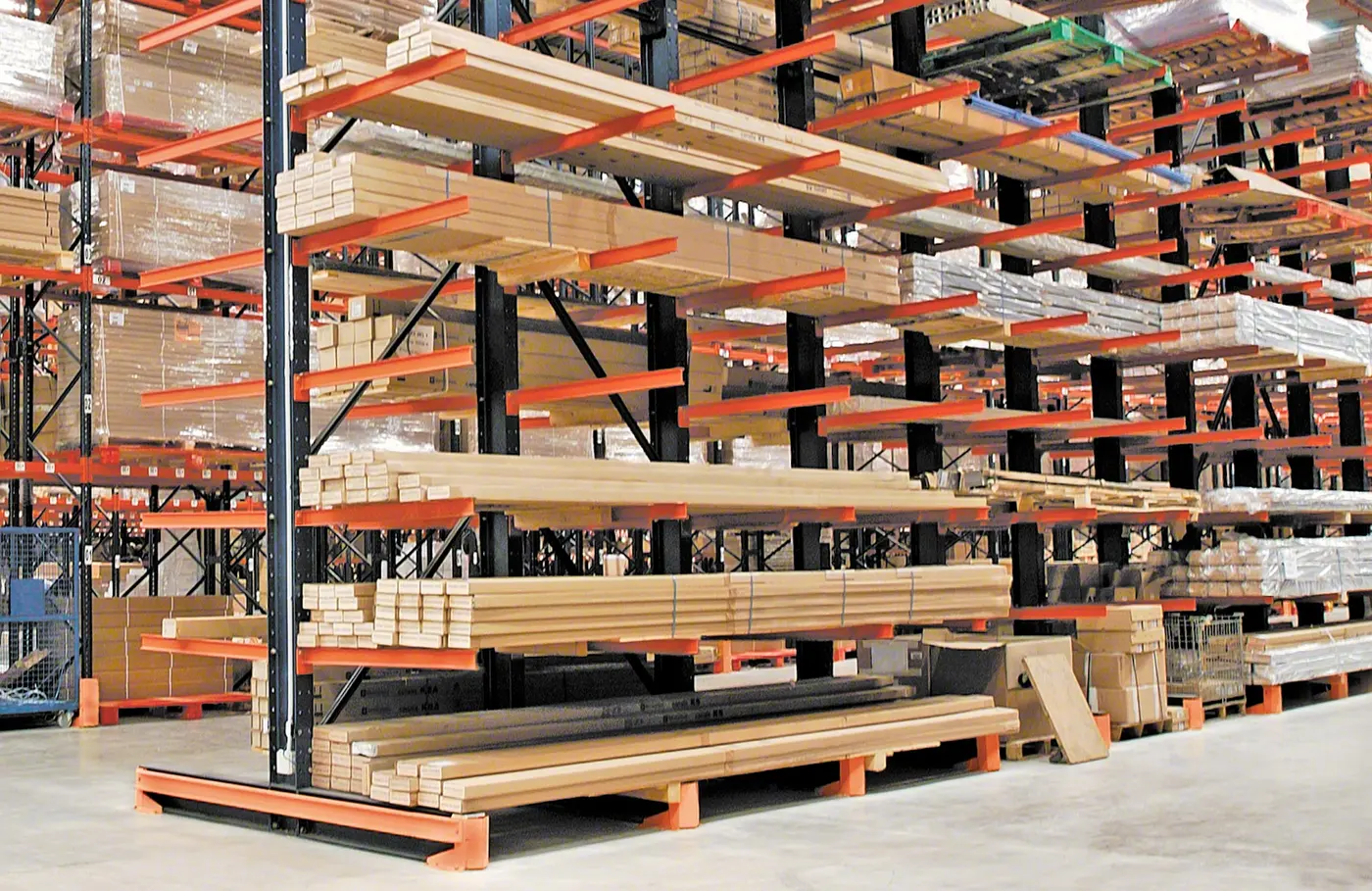
Inside a plant, the row also needs protection from the trucks that will load it. Base ends that face the aisle take the most hits, so many indoor rows add guards at the base tips and keep a marked clearance zone. Arms should be loaded from the front with the forks level, never by dragging stock along the arms.
OSHA’s material storage rule, 29 CFR 1910.176, requires stored material to be stable and secure against sliding or collapse. The Rack Manufacturers Institute’s best practices for cantilevered storage racks add load signs, inspection and how to handle damaged arms. Our cantilever rack installation guide for Utah covers permits, anchoring and inspection step by step.
Photo: Interlake Mecalux (authorized use). Representative image, not the customer’s installation.
Planning an Installed Cantilever Row: Checklist
If you want your row delivered and installed the way this one was, these are the questions to settle before the order is placed.
| Decide before ordering | Why it matters |
|---|---|
| Column height and number of levels | Sets the lift equipment, the reach of your forklift and the storage per foot of row |
| Arm length and base length | Arms should match the base and the depth of your bundles |
| Bay spacing | Decides how many arms each length of material rests on |
| Single- or double-sided | Single-sided suits a wall or perimeter run; double-sided needs aisle access on both faces |
| Delivery access and unloading | Long columns need the right truck and a forklift at the dock |
| Slab, anchors and permit | Tall rows are anchored into sound concrete; some cities require a permit |
| Install window | Agree the dates so production can plan around the crew |
Indoor rows like this one avoid the weather questions that come with a yard. If your rack will live outside, read how a builder’s yard in Ogden set cantilever on concrete footings, or our guide to cantilever rack with a roof in Utah. For palletized stock alongside your cantilever, see Utah pallet rack.
 Cantilever Rack Installation in UtahPermits, anchoring, assembly order and inspection.
 Cantilever Rack in Salt Lake CitySupply, delivery and installation along the Wasatch Front.
 Cantilever Rack ComponentsColumns, bases, arms and braces, and how they fit together.
Planning your own row? Sketch it in our free 3D cantilever rack configurator, browse every arm, upright and brace in the cantilever rack shop, or call us for an installed quote anywhere in Salt Lake City and Utah.
Installed Indoor Cantilever Rack: FAQs
Does MH-USA install cantilever rack in Utah?
What does a full-service cantilever install include?
How long does it take to get cantilever rack installed?
Why does a 16-ft cantilever install need a lift rental?
How many arms does a cantilever column need?
What bay spacing should I use?
Is single-sided cantilever right for an indoor row?
Want Your Cantilever Rack Delivered and Installed?
Tell us your column height, arm length, number of levels and where the row will stand. We will quote the rack, freight, crew and lift equipment as one job. Call 801-328-8788.