
Home › Storeganizer › Sustainability
Sustainability and Carbon Reduction — Storing More Without Building More
The greenest square foot of warehouse is the one you do not lease. Independent research measured around 40% carbon reduction from converting existing rack into high-density pocket storage — here is why the mechanism is real.

~40%
carbon reduction (Leuven, 2013)
0 kW
operational energy
>90%
manufacturer-reported recyclable materials
Relocatable
reused, not scrapped
Where the carbon in a storage decision actually sits
When a warehouse runs out of room, the sustainability consequence is rarely in the storage product. It is in the decision the shortage forces: lease more building, erect more steel, or spread the operation out and walk further. Each of those carries more embodied and operational carbon than the shelving argument being had at the time.
Three avoided things, in order of size
- Avoided floor area. Building, heating, lighting and occupying additional square footage is normally the largest single line.
- Avoided steel. Racking and shelving are steel-intensive; manufacturing less of it is an embodied-carbon saving.
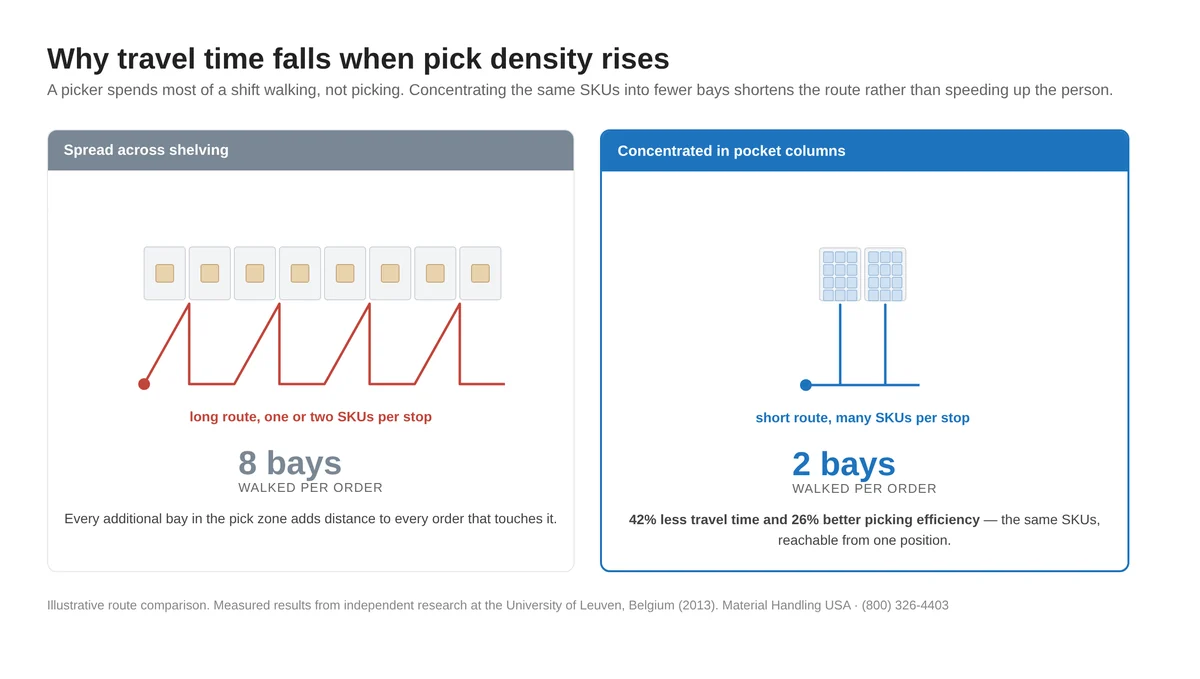
- Avoided travel. Shorter picking routes mean less equipment movement and, in larger operations, fewer powered units running.
Independent research at the University of Leuven (2013) measured approximately 40% carbon reduction along with around 40% more usable storage, about 42% less travel time and roughly 26% better picking efficiency. Those four figures are related: the carbon number is largely a consequence of the space and travel numbers, which is why it is credible rather than decorative.
Avoided space is the biggest lever
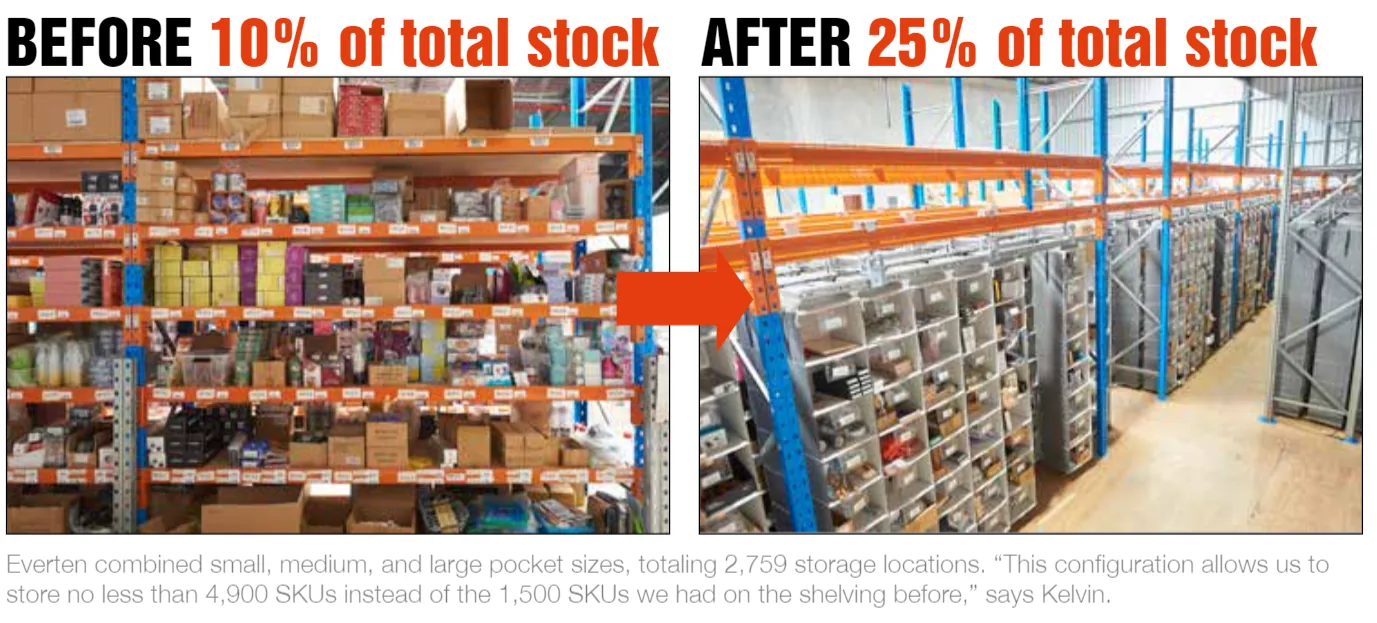
The clearest illustration we have is commercial rather than environmental, and it is more useful for it. Everten Supplies was actively exploring a move out of its 1,056 m² warehouse. Instead it converted about 50 m² into 2,759 pick locations across 18 bays, and postponed the relocation. No new building was fitted out, heated or lit — which is a carbon cost avoided rather than a saving claimed.
| Response to running out of room | Carbon consequence |
|---|---|
| Convert existing bays to pocket storage | Product materials only. No new envelope, no new heating or lighting load, no new steel structure. |
| Lease and fit out additional space | Fit-out, new racking, and years of heating, cooling and lighting the additional envelope. |
| Add more shelving across more floor | New steel manufactured, and a longer picking route walked every day thereafter. |
| Spread the operation across two sites | Inter-site transport added permanently — usually the worst outcome on both carbon and cost. |
Read the full write-up: Everten — e-commerce growth without relocating. The commercial version of the same argument is on cost and ROI.
Avoided steel, and the rack you already own
Reuse before purchase
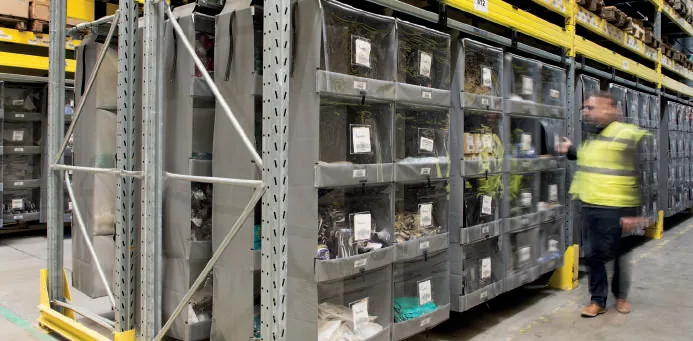
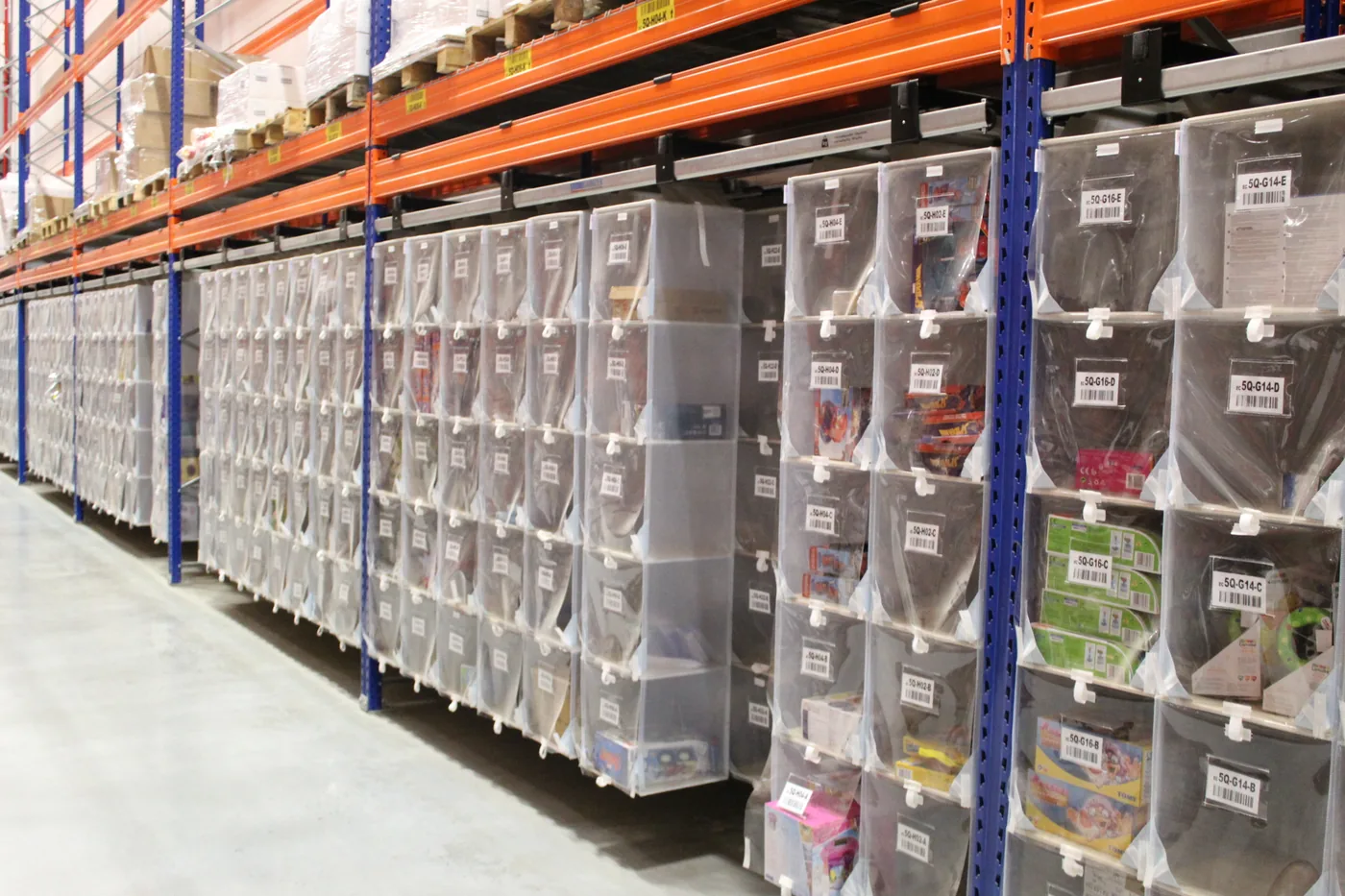
The system’s central premise is that the structure is already there. Pocket columns hang from a suspension rail fitted to the beams of pallet rack you have owned for years, in the vertical space between beam levels that has never held anything.
That is an embodied-carbon argument as much as a cost one. No new uprights are rolled, no new beams are manufactured, no concrete is drilled and no anchors are set. The heaviest carbon component of a conventional storage expansion — the steel — is simply not bought.
See pallet rack space optimization for how much of a typical bay is unused today, and how Storeganizer works for the suspension detail.
Nothing to power, nothing to service
This is where pocket storage separates cleanly from automated small-parts systems on lifetime footprint. A carousel or vertical lift module will out-pick pocket columns in the right application and deserves serious consideration — our alternatives comparison sets out where. But it draws power every year it operates, and pocket columns draw none.
Materials, durability and end of life
What the manufacturer publishes
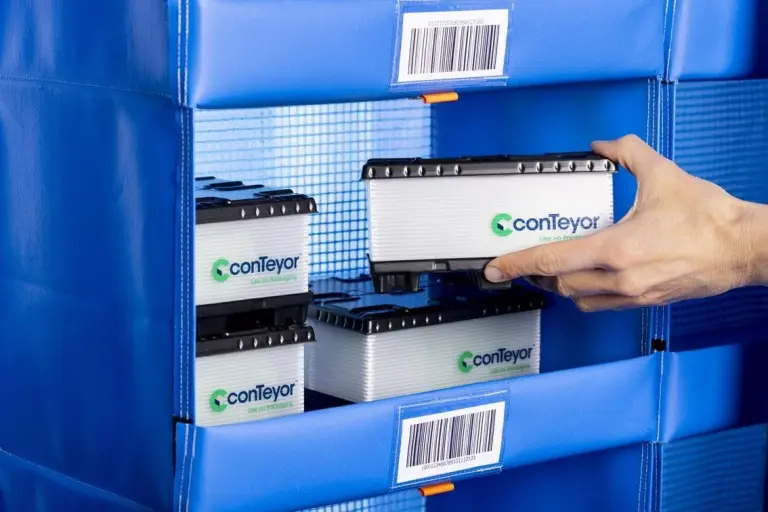
- More than 90% of product materials are recyclable, as reported by the manufacturer, conTeyor.
- A warranty of up to 10 years against rips and cracks in the textile — durability is itself a sustainability property.
- Steel suspension hardware recycles through ordinary channels at end of life.
- The system relocates. A move does not scrap it, so the replacement is never manufactured.
- Reconfigurable in place. Pocket sizes and column layouts change as the range changes, instead of being replaced.

conTeyor’s wider business is reusable packaging, which is the same principle applied to transport rather than storage — background on the manufacturer.
What we will not claim
Sustainability marketing is where storage suppliers overreach, so here is the boundary. We do not have a published third-party life-cycle assessment or an environmental product declaration to hand you, and we are not going to imply that the Leuven percentages are a certified per-project result. They came from one independent study of the system, and your outcome depends on what your conversion actually avoids.
What is verifiable, and what we are happy to put in writing for a submission: the system uses no operational energy, requires no servicing, adds no structure, is manufacturer-reported as more than 90% recyclable, and is relocatable rather than disposable. If your reporting framework or an assessor needs something specific from the manufacturer, ask and we will request it rather than fill the gap ourselves.
Quantify your own avoided footprint
Configure a representative bay in the Storeganizer Configurator, compare the location count with what the bay holds today, and multiply by the bays available. The square footage that difference lets you avoid leasing is the number worth putting in a sustainability case.
Sustainability and carbon reduction — FAQs
Where does the 40% carbon reduction figure come from?
Why would a storage system reduce carbon at all?
Is the system recyclable?
Does it use any energy in operation?
What happens if we move buildings?
Can this support our reporting or LEED work?
Related reading
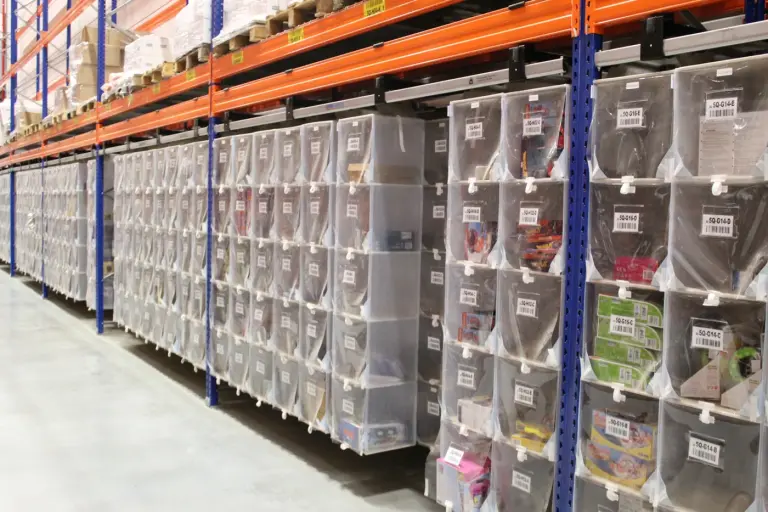 Storeganizer high-density pocket storage overviewStoreganizer turns unused pallet rack into hundreds of small-parts pick faces – 40% more usable space, 42% less…
 How Storeganizer worksHow Storeganizer high-density pocket storage works: universal rack suspension, up to four rows deep, pocket sizes…
 Pallet rack space optimizationRecover the wasted cube in your small-item rack bays. Storeganizer converts half-empty shelving into up to 396 pick…
 Storeganizer cost and ROIWhat drives Storeganizer cost, why cost per pick location beats cost per square foot, how it compares with leasing…
 Storeganizer vs shelving, bins, flow rack, carousels and VLMsAn honest comparison from a distributor that sells all of them – density, weight, cost profile, install time, and…
 Everten — growth without relocatingHow online kitchenware retailer Everten Supplies created 2,759 storage locations in 18 Storeganizer bays, halved its…
Put a number on the space you would avoid leasing
Send bay dimensions and your current location count. You will get a configured comparison, and the avoided square footage that goes with it.