
Airport Queue Management: Stanchions, Panels and Signs from Check-in to Gate
An airport is not one queue but five: check-in and bag drop, the security checkpoint, customs, the gate and the operational closures behind them. Each has a different peak, a different load of luggage and a different owner. This page sets out the layout that works in each zone and the Visiontron posts, panels and signs to build it, with live prices from our store.
Free airport lane layouts from your terminal drawings · sales@mh-usa.com
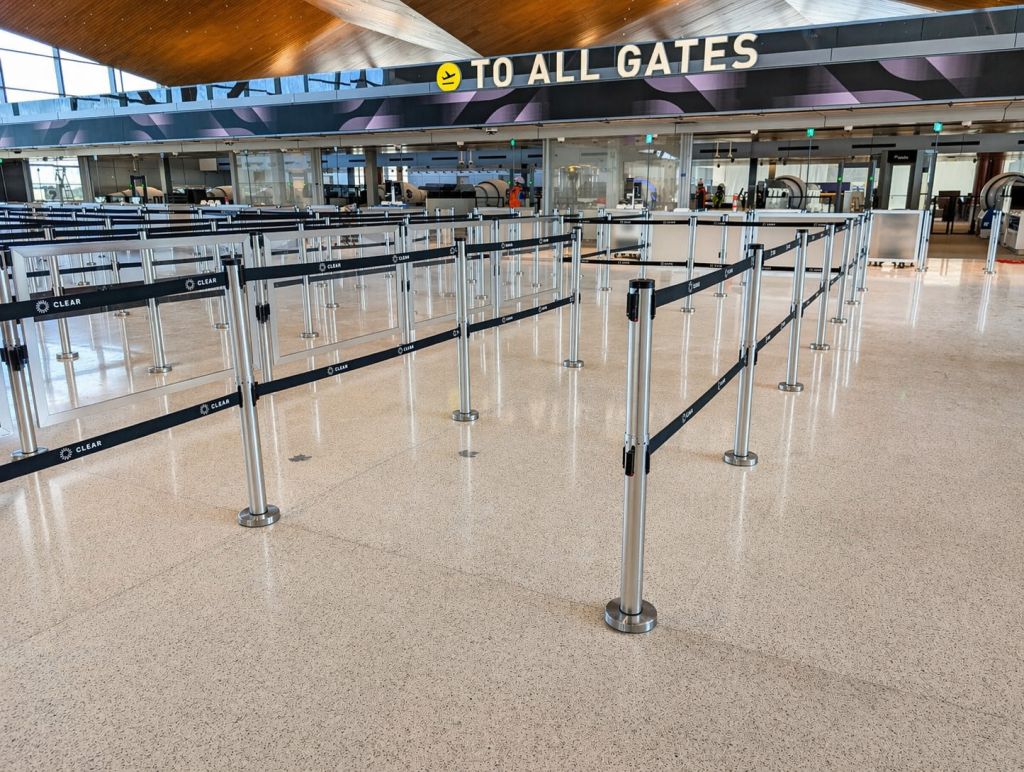
5 zones
Check-in, security, customs, gate, closures
15 ft
Long-span belts for big halls
48–60 in
Lane widths with luggage
65 ft
Longest stand-mount belt we sell
Airport Queues Are Five Different Lines
The mistake we see most often is buying one kind of post for the whole terminal. A check-in hall, a checkpoint and a gate fail in different ways, so each zone gets its own mix of barrier, lane width and signage.
| Zone | What goes wrong | Barrier that fits | Typical lane width |
|---|---|---|---|
| Check-in & bag drop | Long peaks before banks of departures; carts and checked bags | 15 ft long-span belt posts, branded belts, sign towers | 48–60 in |
| Security checkpoint | Line jumping, lanes that must open and close fast, staff visibility | Panel systems at the entrance and divest area, belt posts in the switchback | 42–54 in |
| Customs & immigration | Very long waits, separate lanes by passenger type, secure perimeter | Panels and top beams on the perimeter, dual-line posts on accessible lanes | 48–60 in |
| Gate boarding | Group crowding at the door, families, strollers | Short belt lanes, freestanding zone signs, light panels | 36–48 in |
| Closures, ramp & back of house | Out-of-service counters, jet bridges, ramp walkways | Wall mounts, magnetic mounts, 30–65 ft long-span belts | n/a |
Airport lines are also owned by different people. The airport authority usually controls the public hall and the customs area, airlines control check-in and their gates, and the security operator controls the checkpoint. That matters when you buy: one finish and one belt connector across the terminal lets lanes be lent, moved and repaired across owners without mixing parts. All the RETRACTA-BELT posts on this page use Visiontron’s universal belt end, so a belt from a 300 Series post connects to a 320 Series long-span post, a dual-line post or a wall mount.
Before you lay out any zone, size it. The method in our guide How Much Floor Space Does a Queue Need? — people at the peak × lane length per person, folded into lanes — applies to every zone below. With luggage, plan about 3 to 4 feet of lane per traveler.

Check-in and Bag Drop: Long Lanes, Few Turns
Check-in halls have the space and the luggage, so they reward long, straight lanes and long-span belts.
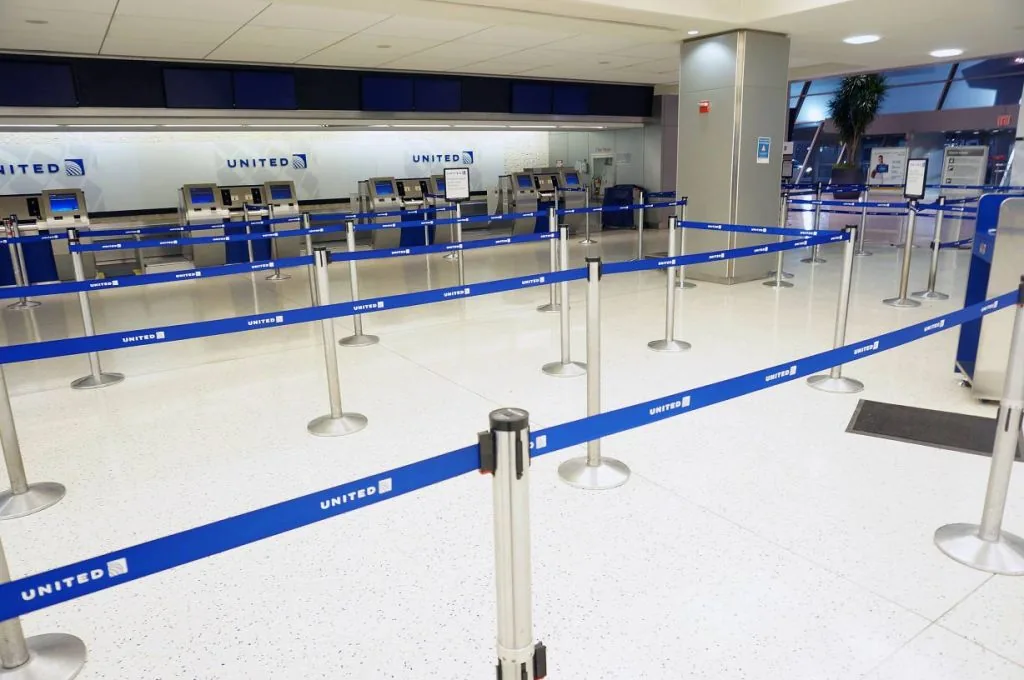
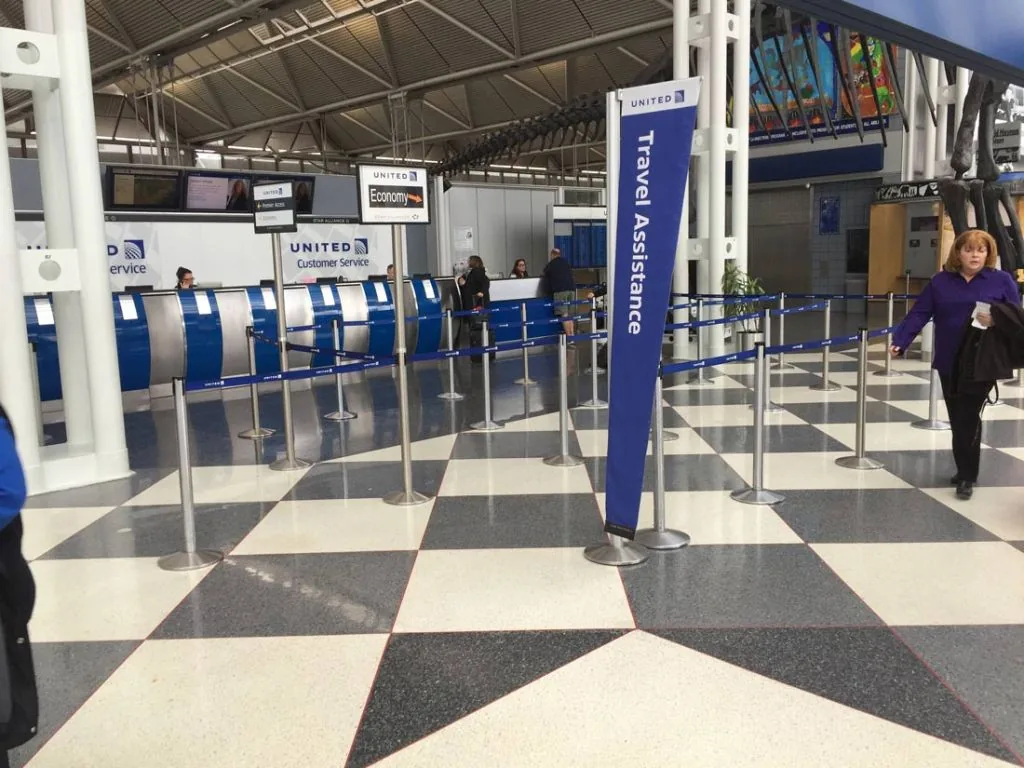
A check-in queue holds travelers with carts, checked bags and children, so the lane is wider and each person uses more of it than in any other zone. Plan 48 to 60 inches between belts and make the turns at each lane end wider still — that is where a cart with two bags has to swing around. Where the hall allows, run lanes 30 to 40 feet long. Fewer turns move people faster and cut the post count.
Long-span posts change the budget. A 15 ft belt set at 12 to 13 ft spacing needs roughly a third fewer posts than 10 ft belts in the same layout. In a big hall that is dozens of posts, less setup time each morning and fewer bases for bags to hit. Keep a few 10 ft posts for the tight turns near the counters.
Separate the lines by service, not by guesswork. Premium, general, bag drop and special assistance lines should each start with a sign at the entrance and end at a clear landing in front of the counters, 6 to 10 ft deep, so the next traveler can see every open agent. Branded or color-coded belts make the split obvious from across the hall.
Bag drop is a different line. Travelers who checked in online arrive with bags but no questions, so a bag drop lane is shorter, faster and should not share an entrance with full-service check-in. A tall sign tower at its entrance, visible over the crowd, pulls the right people out of the main queue before they join it. Self-service kiosks need their own standing space in front of each unit; keep belt lines at least 4 ft back from kiosk screens so a traveler with a cart can stand square to the machine.
Security Checkpoints: Rigid Where It Matters, Flexible in the Switchback
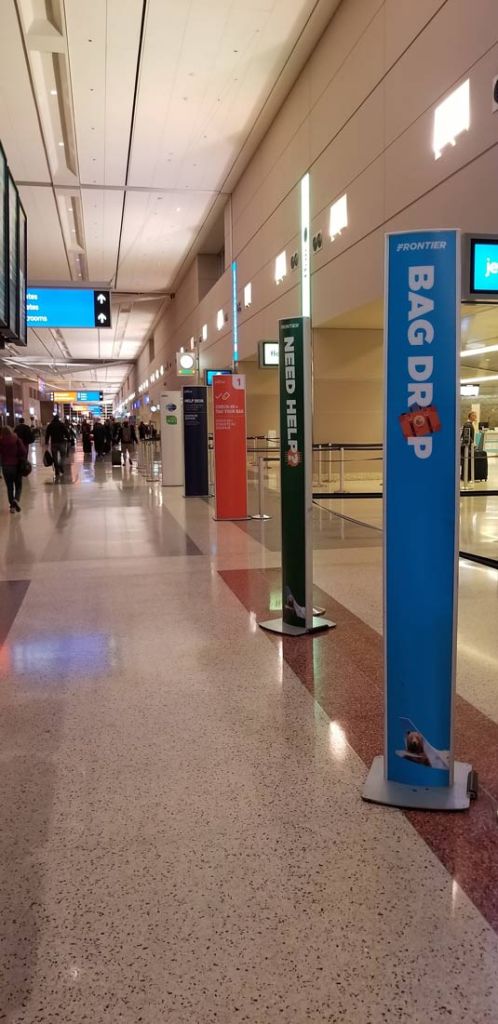
The checkpoint is where queue barriers do security work as well as customer-service work.
A checkpoint queue has to stop people from slipping under a belt into a faster lane, let staff open and close lanes in seconds and keep sightlines open so officers can see the whole line. The common answer is a mix: rigid panels at the entrance, along the perimeter and at the divest area where the line must not be breached, and retractable belt posts in the switchback, where lanes change with every wave of departures.
Panel systems slide into belt-post channels, so the same posts carry a panel on one side and a belt on the other. A post-top beam joins posts into a rigid line without a panel where you want a firm edge but an open view. Ask the security operator and the airport authority for their own requirements before you finalize a checkpoint layout — they vary by airport and change over time. The same rigid panels can also enclose an indoor animal relief room; see our airport pet relief area guide.

- Use panels where line jumping or a breach would matter: the checkpoint entrance, the merge into screening lanes and the exit side
- Keep the switchback in belt posts so lanes can be opened or closed with one belt, not by moving panels
- Leave a clear staff path along one side of the queue for officers and wheelchair assistance
- Give the merge point at the head of the line extra room — that is where travelers stop to find boarding passes and IDs
Customs, Immigration and International Arrivals
International arrivals bring the longest waits in the building, often after a long flight, so comfort and clear lane assignment carry more weight here.
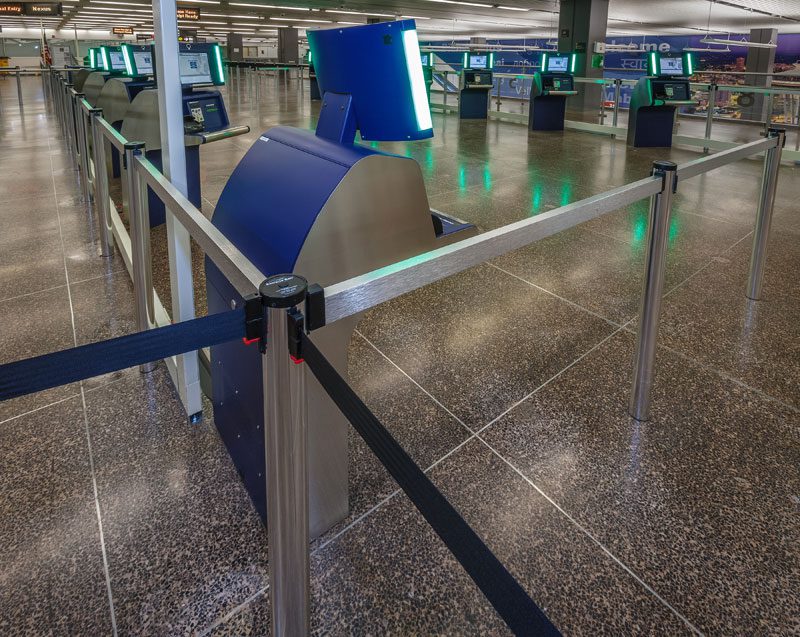
Arrivals queues are typically split by passenger type — citizens, visitors, crew, families and travelers needing assistance — and the split has to hold for an hour or more as several flights land together. That points to a perimeter that does not move (panels or post-top beams) around a switchback that does (belt posts). Wide lanes help: travelers are tired, carrying hand luggage and often in groups.
In permanent halls, posts can sit in floor sockets so the layout stays exactly where it was drawn and the bases do not crowd the lane. Visiontron makes removable socket systems for this; tell us if your layout needs them and we will quote them with the posts. Plan accessible lanes from the start: our ADA queue guide covers widths, turning space and dual-line barriers that cane users can detect.
Gate Boarding: Short Lanes and Clear Group Signs
Gate areas are tight, carpeted and full of seated passengers, so the boarding queue has to appear at boarding time and stay out of the way the rest of the day.
Most gate crowding comes from uncertainty: travelers stand up early because they cannot tell where their group lines up. Two or three short belt lanes in front of the podium, each with a freestanding zone or group sign, settle that faster than any announcement. Keep the lanes 36 to 48 inches wide, leave a separate pre-boarding path for families and travelers needing assistance, and keep the jet bridge door clear of the queue.
Light panel sections on belt posts work well between the boarding lanes and the seating area: they read as a wall, so people do not cut through, but they move in a minute when the gate changes airline. Freestanding sign posts with changeable inserts let one gate switch between boarding groups, flight numbers and baggage-size reminders without new printing for every flight.

Closures, Exit Lanes and the Ramp
Some of the most useful barriers in an airport never hold a queue at all.
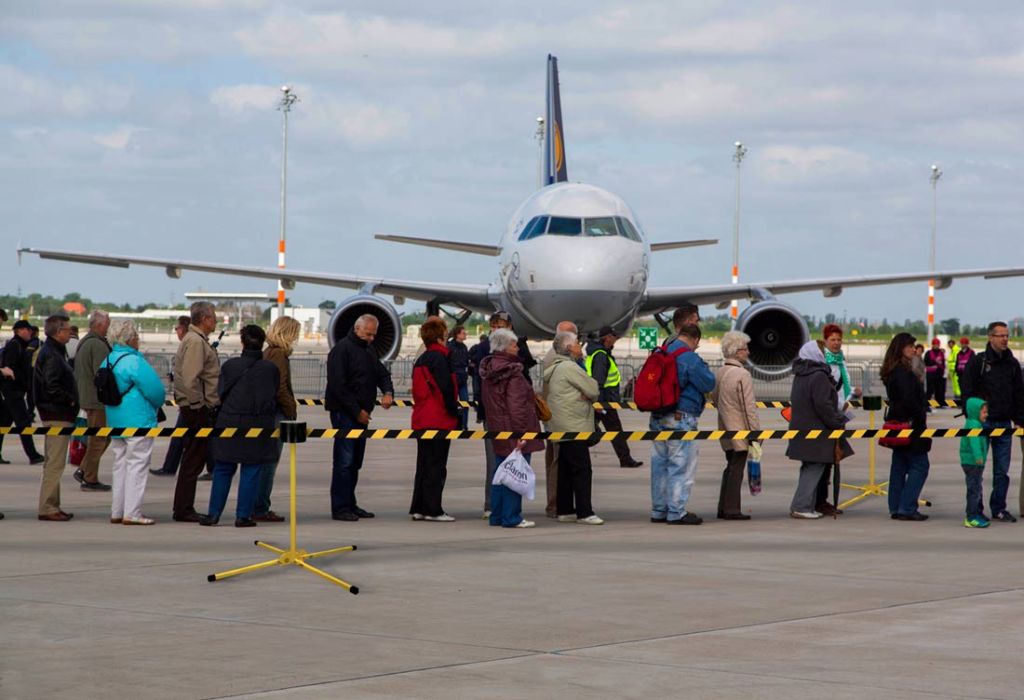
Counters close, escalators go out of service, jet bridges need to be blocked and walkways on the ramp need a visible edge. Wall-mounted retractable belts handle these jobs without a post on the floor: a WM412 unit on a column or wall, a receiving end on the other side, and the belt is out when needed and gone when not. Magnetic versions attach to steel counters, doors and frames without drilling, which matters in leased airline space.
Longer gaps need longer belts. The PM412 post mount and SM6500 stand mount run belts up to 30 and 65 feet. Ground crews use the long ones to mark a safe walking route for passengers boarding from the tarmac and to close off service roads and baggage areas.
Exit lanes and controlled doors. Where a corridor leaves the secure area, the barrier is usually part of the building: full-height glass or metal panels and doors, often with monitoring, are a construction and security-operator decision. Queue barriers still help on the public side — a short panel run or belt line keeps people from standing in front of the exit doors and waiting for arriving passengers in the wrong place.

Signage and Wayfinding Inside the Queue
In a terminal the queue sign does two jobs: it tells people which line is theirs from a distance and it tells them what to have ready when they reach the front. Use tall sign towers and 6 ft sign posts for the first job — they read over a crowd — and post-top frames at the lane entrance and the landing for the second. Keep messages short and consistent from zone to zone so travelers learn them once.
Freestanding signs need their own floor space outside the lane so they do not narrow it; post-top frames sit inside the footprint and take no space at all. For what to say and where, see planning for signage in queues and our VERSA-STAND sign and tower page.
Accessibility, Families and Assistance Lanes
Every zone needs a route that works for a wheelchair, a stroller and a traveler with a cane. In practice that means lanes at least 36 inches clear (most airport lanes are wider anyway because of luggage), generous turning space at lane ends, and a barrier a cane can find. Dual-line posts carry a second belt low on the post so there is no open gap under a single belt. Use them on the accessible lane, on the perimeter of each zone and anywhere a queue crosses a walkway. Assistance lanes should start at the same entrance sign as the general line, so nobody has to know in advance where to go. Details are in our ADA-compliant queue guide; confirm the final layout with the accessibility reviewer for the project.
The Airport Product Mix, Zone by Zone
These are the Visiontron items we quote most for terminals. All are listed in our online store with live prices; quantity pricing, printed belts and custom finishes are by quote.
Belt Posts for Check-in and the Switchback
 Visiontron 320 Series Long Span Retractable Belt Satin Stainless Steel Stanchion, 15′ Belt – VI-320-3320 Series 15 ft long-span post in satin stainless for check-in halls.$343.19 · View product →
 Visiontron 320 Series Long Span Retractable Belt Black Stanchion, 15′ Belt – VI-320-2320 Series long span in black for large switchbacks.$263.69 · View product →
 Visiontron 300 Series Crowd Control Satin Stainless Steel Stanchion, 10′ Belt – VI-300-1300 Series 10 ft post in satin stainless for turns near counters.$292.83 · View product →
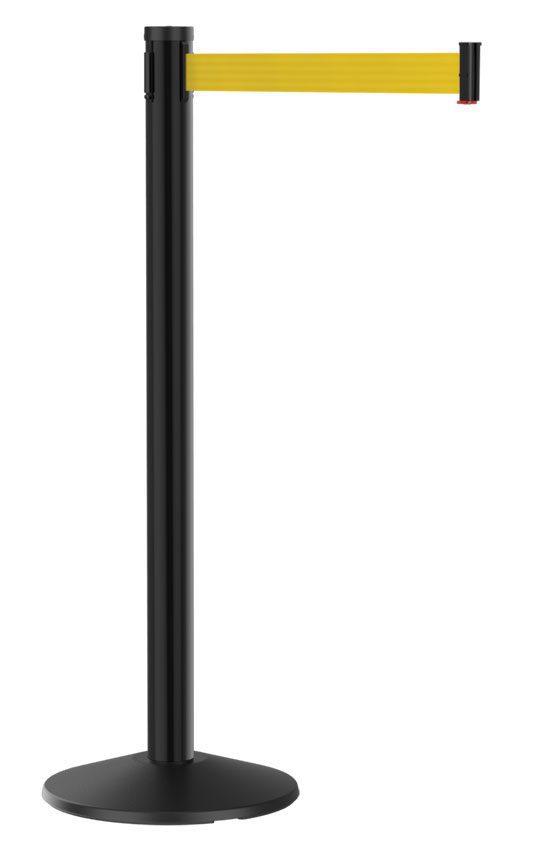 Visiontron 300 Series Crowd Control Black Stanchion, 10′ Belt – VI-300-3300 Series 10 ft post in black, the everyday lane post.$201.40 · View product →
Shop all retractable belt stanchions →
Panels and Beams for Checkpoints and Customs
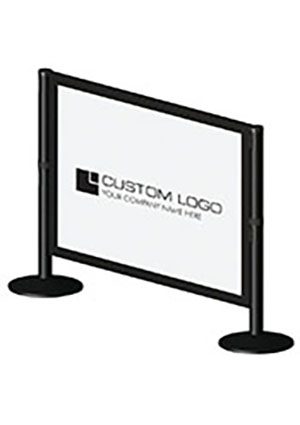 Visiontron Heavy Duty Panel System – VI-PNLHeavy Duty panel system for firm checkpoint and perimeter lines.$418.70 · View product →
 Visiontron Top Beam Panel System – VI-PNLTBTop beam panel system: panel and rigid top rail in one.$229.23 · View product →
 Visiontron Stanchion Post Top Beam – VI-BEAMPost-top beam joins posts into a rigid, open-view line.$125.89 · View product →
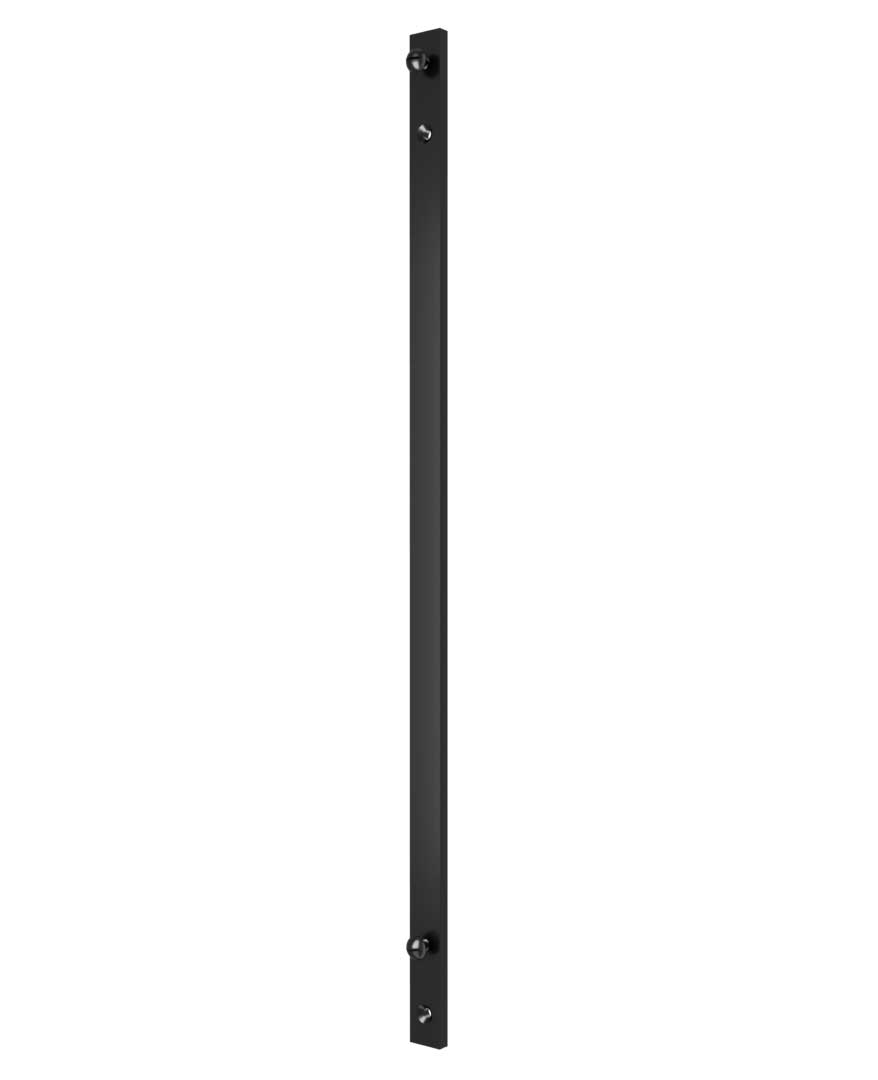 Visiontron Receiving End for Panel SystemsReceiving end that lets a belt latch onto a panel run.$35.79 · View product →
Dual-Line Posts for Accessible Lanes
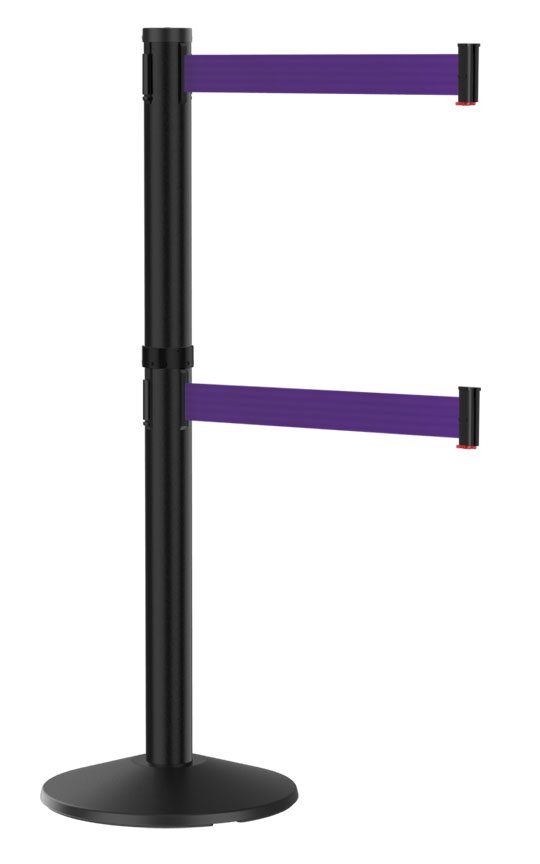 Visiontron Dual Line 300 Series Crowd Control Black Post, 10′ Belt – VI-300D-1Dual-line 300 Series post in black, second belt set low for cane detection.$299.46 · View product →
 Visiontron Dual Line 300 Series Crowd Control Satin Stainless Steel Post, 10′ Belt – VI-300D-3Dual-line 300 Series post in satin stainless for public halls.$414.73 · View product →
 Dual Line Visiontron Retractable Belt Bundle, 10′Dual-line bundle for building a full accessible lane.$1,012.50 · View product →
Signs for Lane Assignment and Gates
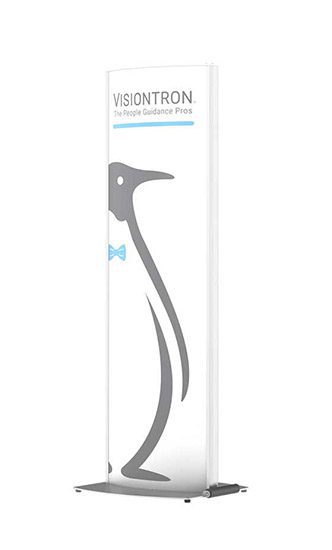 Visiontron Versa-Stand Sign Tower – VI-VSTVERSA-STAND sign tower, readable over a crowd.$650.59 · View product →
 Visiontron Versa-Stand Weatherproof Sign Stand – VI-VSHDVERSA-STAND weatherproof sign stand for curbside and ramp.$564.64 · View product →
 Visiontron 6′ Tall Retractable Belt Sign Post – VI-3606 ft tall sign post with a built-in belt for lane entrances.$333.90 · View product →
 Designer Series Visiontron Sign Frame Holder 8.5 x 11 with Adapter – VI-FRDS-8×11Designer Series 8.5 × 11 in post-top frame for landing signs.$113.96 · View product →
Closures, Ramp and Storage
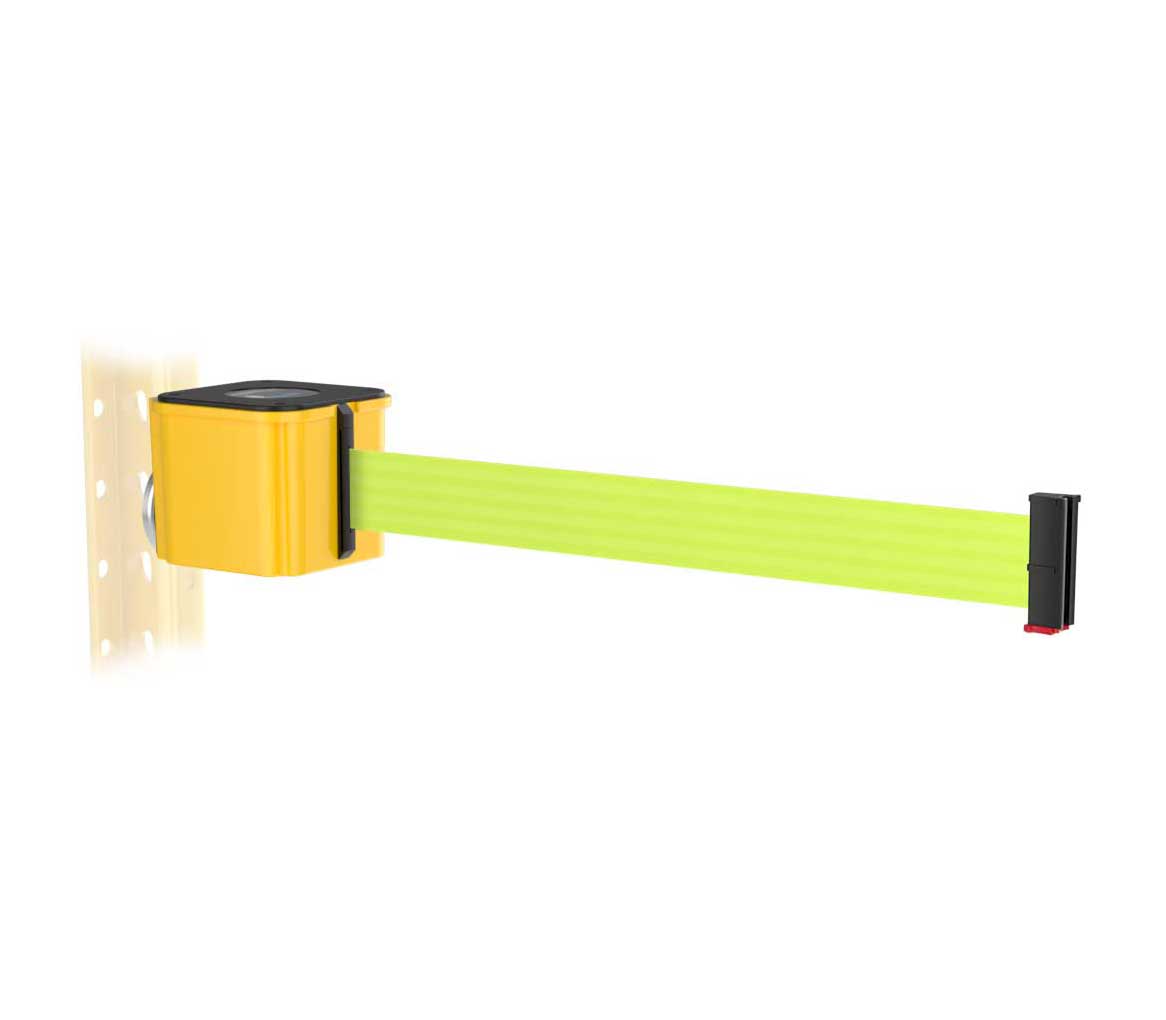 Visiontron Magnetic WM412 Series Crowd Control Wall Mounted Barrier, 30′ Belt – VI-WM412M-30Magnetic WM412 wall mount, 30 ft belt, for steel counters and frames.$251.76 · View product →
 Visiontron WM412 Series Crowd Control Wall Mount Barrier, 20′ Belt – VI-WM412-20WM412 wall mount, 20 ft belt, for closing counters and corridors.$125.89 · View product →
 Visiontron SM6500 Series Extra Long Span Outdoor Retractable Stand Mount, 65′ Belt – VI-SM6500SM6500 stand mount with a 65 ft belt for ramp walkways.$1,220.33 · View product →
 Visiontron Horizontal Post Stanchion Storage CartHorizontal storage cart for moving and storing posts.$673.10 · View product →
Shop all wall-mounted barriers →
Belts wear out long before posts in a busy terminal. Replacement cassettes swap in without tools, such as the 320 Series 15 ft replacement assembly, so a damaged belt is a five-minute fix rather than a new post.
Some common items are in stock at the manufacturer, subject to confirmation; printed belts, custom panels and special finishes are made to order. Prices shown were read from our online store when this page was built.
Planning an Airport Queue Project
Map the zones and owners
Mark check-in, bag drop, checkpoint, customs, gates and closures on the terminal plan, and note who owns each one.
Size each zone
Peak travelers waiting × 3–4 ft of lane each, folded into lanes that fit; add the landing and entrance space.
Choose barrier by job
Long-span belts in halls, panels where breaches matter, dual-line on accessible lanes, wall mounts for closures.
Standardize parts
One finish and belt connector across the terminal so lanes can be moved and repaired across owners.
Add signs and storage
Towers for lane assignment, post-top frames for instructions, carts for overnight storage.

A worked example. A check-in hall expects 120 travelers waiting at the morning peak. At about 3.5 ft of lane each, that is 420 ft of lane. Folded into lanes 38 ft long, it needs 11 lanes at 60 inches wide — a block about 55 × 48 ft with the landing. Built with 15 ft long-span belts at 12–13 ft spacing it takes about 50 posts, against about 70 with 10 ft belts. Add dual-line posts on the accessible lane, 4 to 6 sign towers or stands and wall mounts to close lanes when the bank of flights has gone.
Send us the terminal drawing, the peak numbers per zone and the finishes you already own. We return a lane layout, a post-by-post parts list and freight to the airport, and we can match existing Visiontron equipment so new lanes connect to the old ones.
Shop the Airport Queue Essentials
The 320 Series 15 ft long-span post for check-in halls, the dual-line post for accessible lanes, the Designer Series panel for checkpoints and public halls, and the VERSA-STAND sign post for gate and zone signs. Request a quote for terminal quantities, printed belts or a drawn layout.


Airport Queue Barrier FAQs
What stanchions do airports use?
How wide should airport queue lanes be?
Should I use 10 ft or 15 ft belts in a terminal?
When should I use panels instead of belts?
How do I close a check-in counter or jet bridge without posts?
Do airport queues need dual-line posts?
Can you match the stanchions we already have?
Is airport equipment in stock?
Related Guides and Product Families
Get an Airport Queue Layout and Quote
Send the terminal drawing and the peak travelers per zone. We return lane layouts, a post-by-post parts list with finishes and belt printing, and freight to your airport.