
Heavy Duty Mobile Shelving for Oilfield Tool and Parts Storage
A Gulf Coast project services company needed one storeroom to hold what two rooms used to hold. Here is what was specified, why it was built that way, and what it means for any heavy industrial parts room.

2026
Project completed
Galliano, LA
Gulf Coast project location
Reinforced
Shelf specification
One aisle
What a high-density room shares
The customer: Milestone Project Services
Milestone Project Services is an energy sector project and construction management company founded in 2013 and based in Louisiana, working across the Gulf of Mexico on turnarounds, platform refurbishment, decommissioning and major capital projects. Work of that kind lives or dies on readiness. A crew heading offshore does not get a second trip because a fitting could not be found, and a turnaround schedule has no slack for a part that is somewhere in the building but nobody knows where.
Material Handling USA supplied and engineered a high-density mobile shelving system for the company’s Gulf Coast facility in Galliano, Louisiana, in 2026. This page describes the storage problem, the specification that answered it, and the parts of the decision that transfer to any heavy industrial parts room.
Why the application is demanding
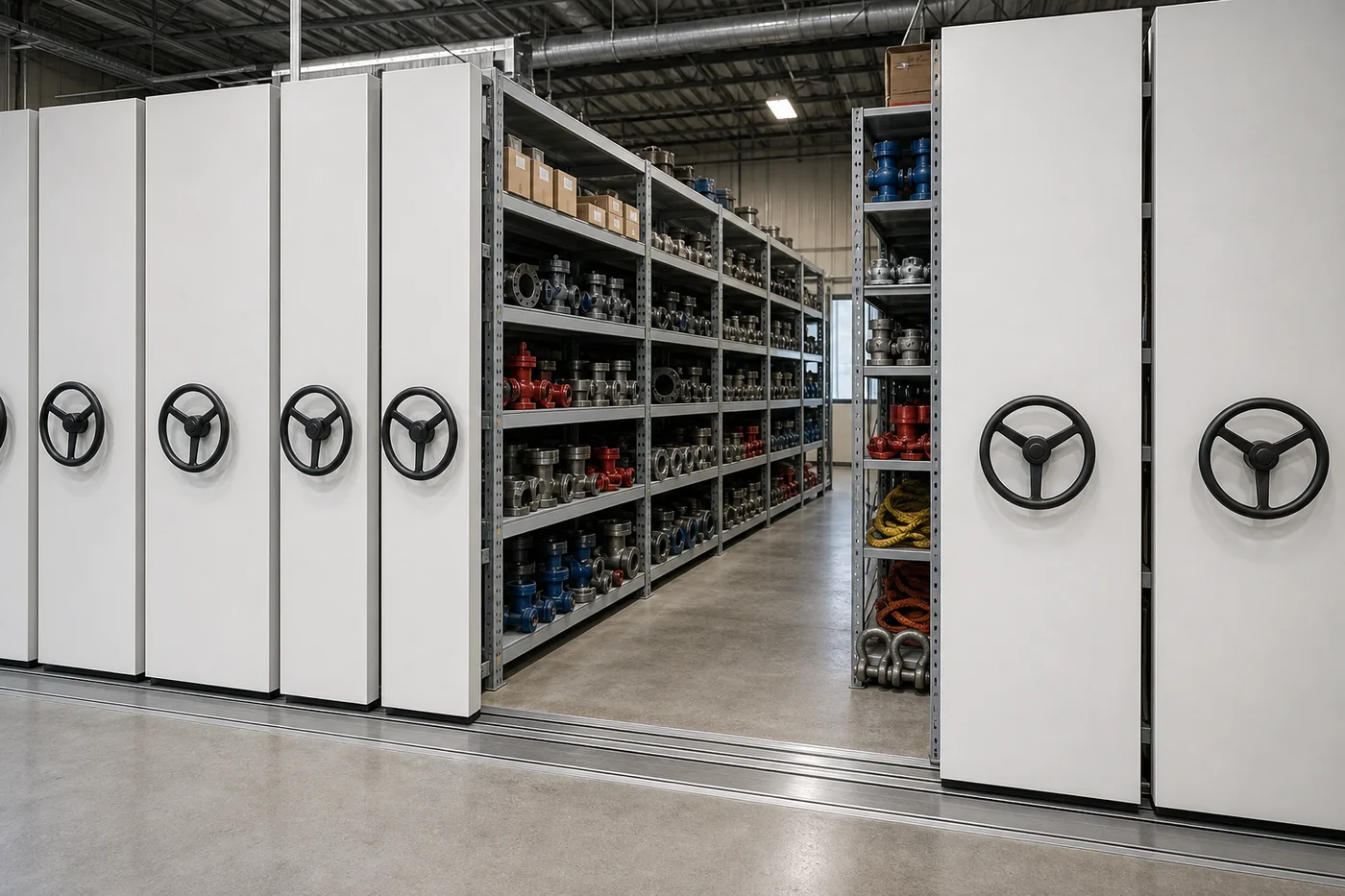
The inventory is dense and heavy. Valves, flanges, fittings, rigging hardware and instrument spares weigh far more per cubic foot than the paper and cartons most high-density shelving is sold for.
Demand is spiky. A storeroom can be quiet for weeks and then be picked hard for a week while a job is kitted, so the layout has to survive its worst day, not its average one.
The building is the building. Coastal industrial property is not expanded casually, so the practical options were to store less or to store the same volume in less floor area.
The storage problem behind almost every one of these projects
Static shelving spends most of its floor area on aisles. A room laid out with a walking aisle between every row gives up roughly half its footprint to air that exists so a person can reach a shelf. That is a fair trade when space is cheap and inventory is small. It stops being fair the moment the room is full and there is no more building to give.
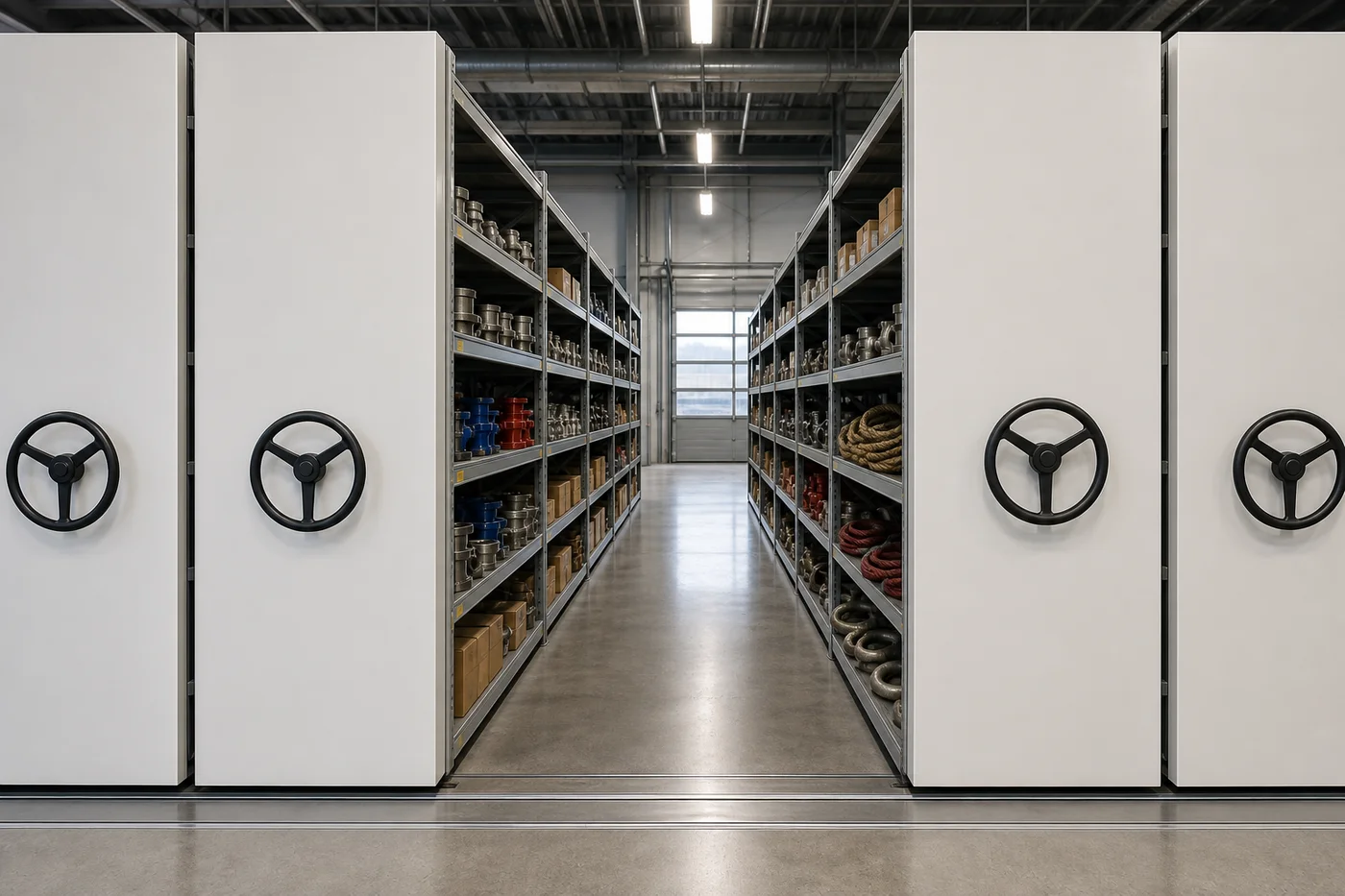
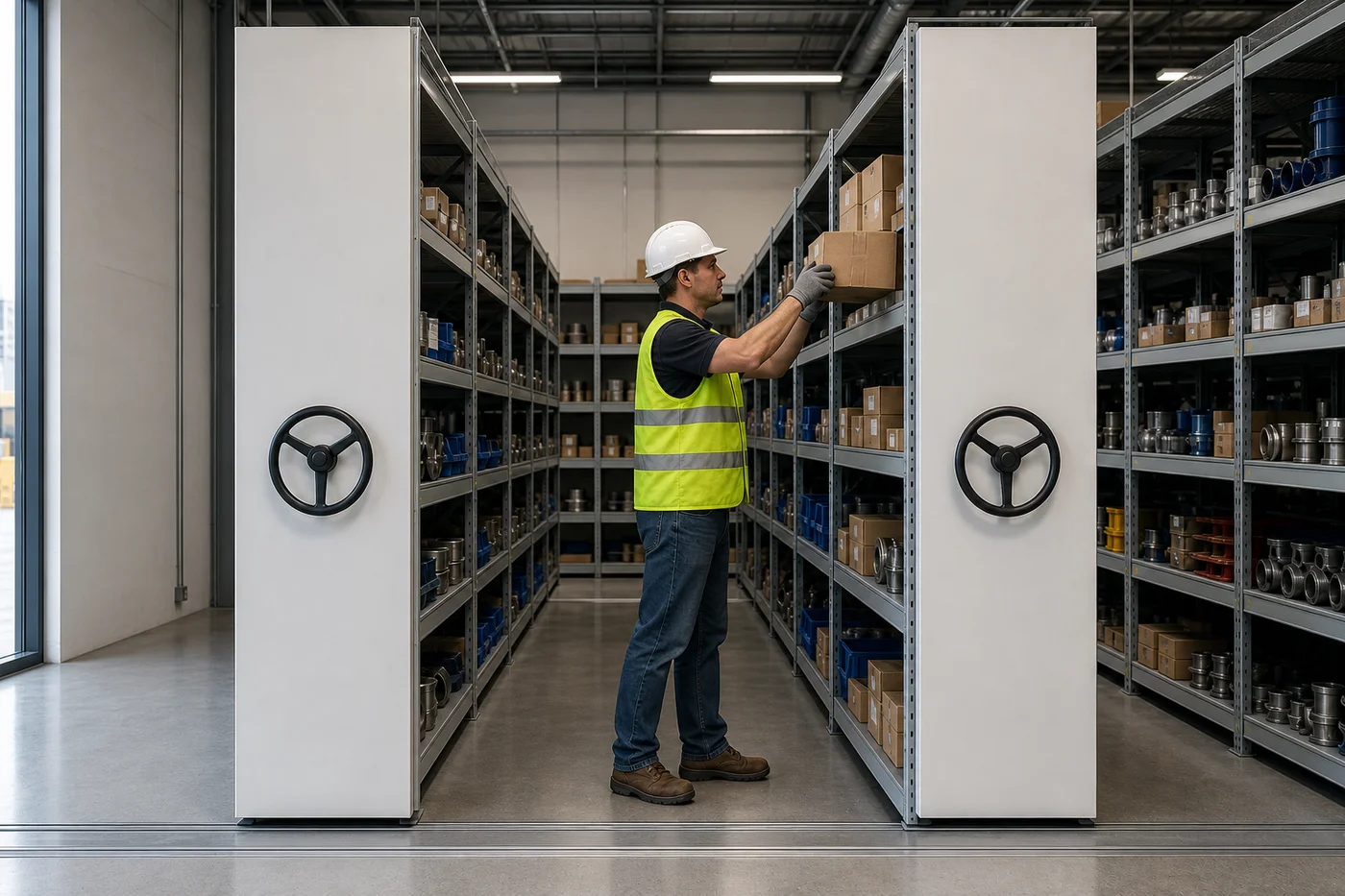
High-density mobile shelving removes the standing aisles. The shelving ranges are mounted on wheeled carriages that roll on floor rails, and the room keeps one moving aisle that opens wherever it is needed. Everything that was aisle becomes storage. In a heavy industrial storeroom the practical effect is either a large increase in what the existing room holds, or the ability to bring inventory back in from a second building, a container or a covered yard where it should not be sitting.
The catch is that all of that weight now sits on rolling carriages instead of standing on the slab, and it moves. That is the whole reason a system like this has to be specified as a structure rather than picked from a catalog.
What heavy duty actually means in a mobile shelving system
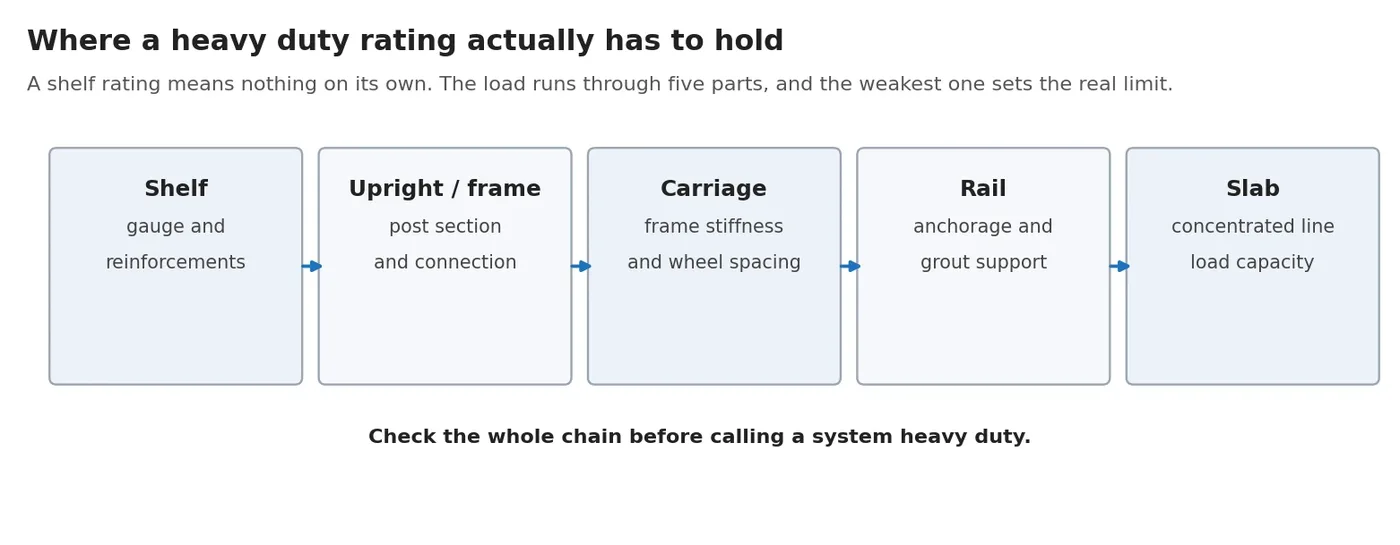
“Heavy duty” is the least regulated phrase in the storage industry. It is printed on shelving that holds paint cans and on shelving that holds gearboxes. In a mobile system it is worth being precise about, because the load has to travel through five separate components and the weakest of them sets the real capacity of the room.
The five links, and what to ask about each
| Component | What decides capacity | What to ask the supplier |
|---|---|---|
| Shelf | Steel gauge, shelf width and depth, and the number of reinforcements under the pan | The published rating for this exact shelf size and reinforcement count, not a range |
| Upright or frame | Post section and how the shelf connects to it | The rated column load with every shelf above it loaded |
| Carriage | Frame depth, wheel spacing and torsional stiffness | The rated carriage capacity for the range length being quoted |
| Rail and anchorage | Rail section, anchor pattern and continuous grout support | The concentrated line load the rail transmits to the floor |
| Concrete slab | Slab thickness, reinforcement and subgrade | Whether the existing slab has been checked against that line load |
The last row is the one that gets skipped. A supplier can honestly rate everything they manufacture and still leave the buyer with a floor that was never assessed. Our mobile shelving floor load guide covers how that check is made and what to do when a slab comes up short.
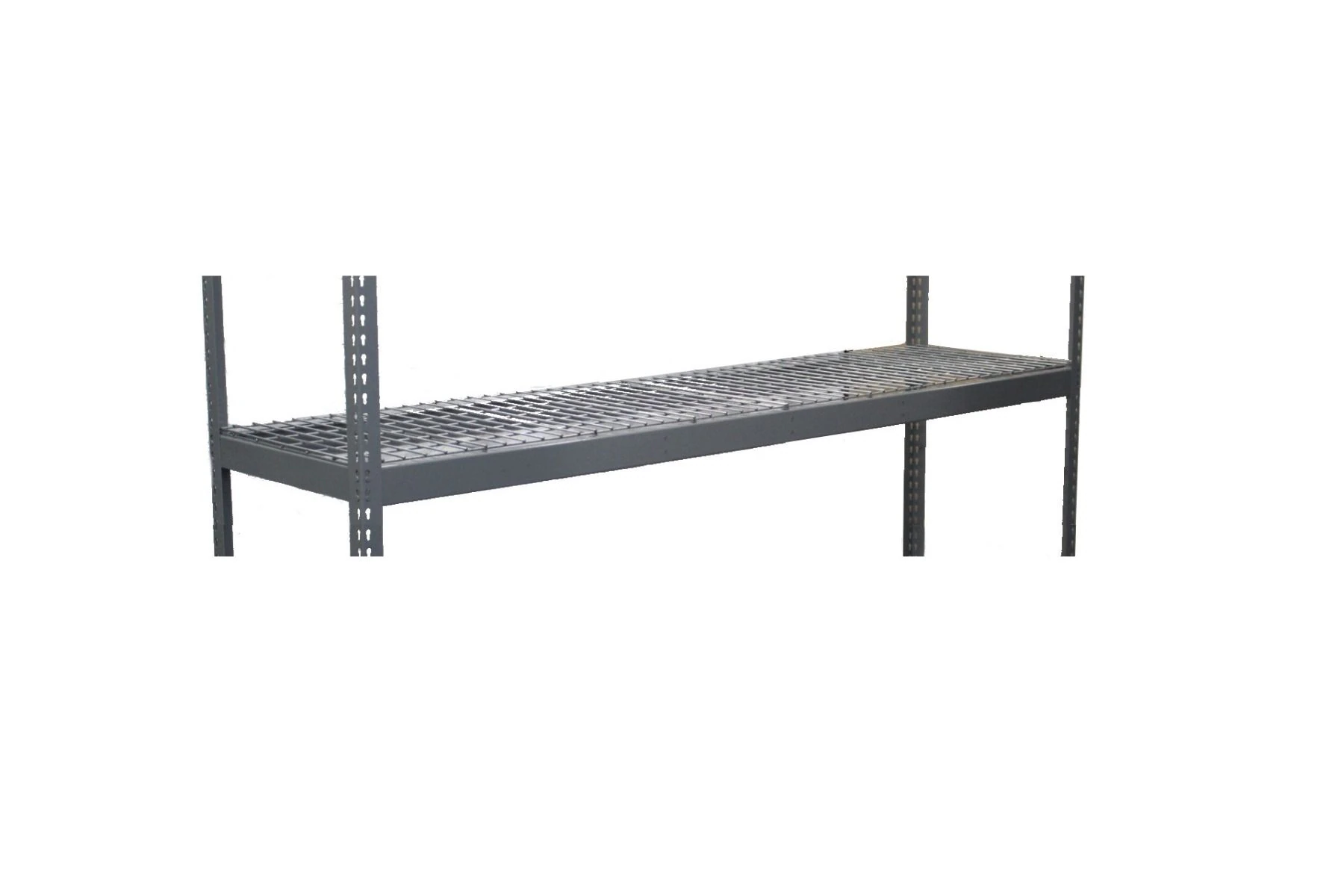
One more distinction matters on a heavy system. A shelf rating almost always assumes an evenly distributed load. Real storerooms produce point loads, because a single heavy item sits in the middle of a shelf that is otherwise holding small boxes. Reinforcements exist to control deflection under exactly that condition, which is why they were specified here rather than treated as an upgrade.
What was supplied for this project
The system was engineered to a drawing set rather than assembled from stock parts. The core of the specification was straightforward and each element answered a specific condition in the room.
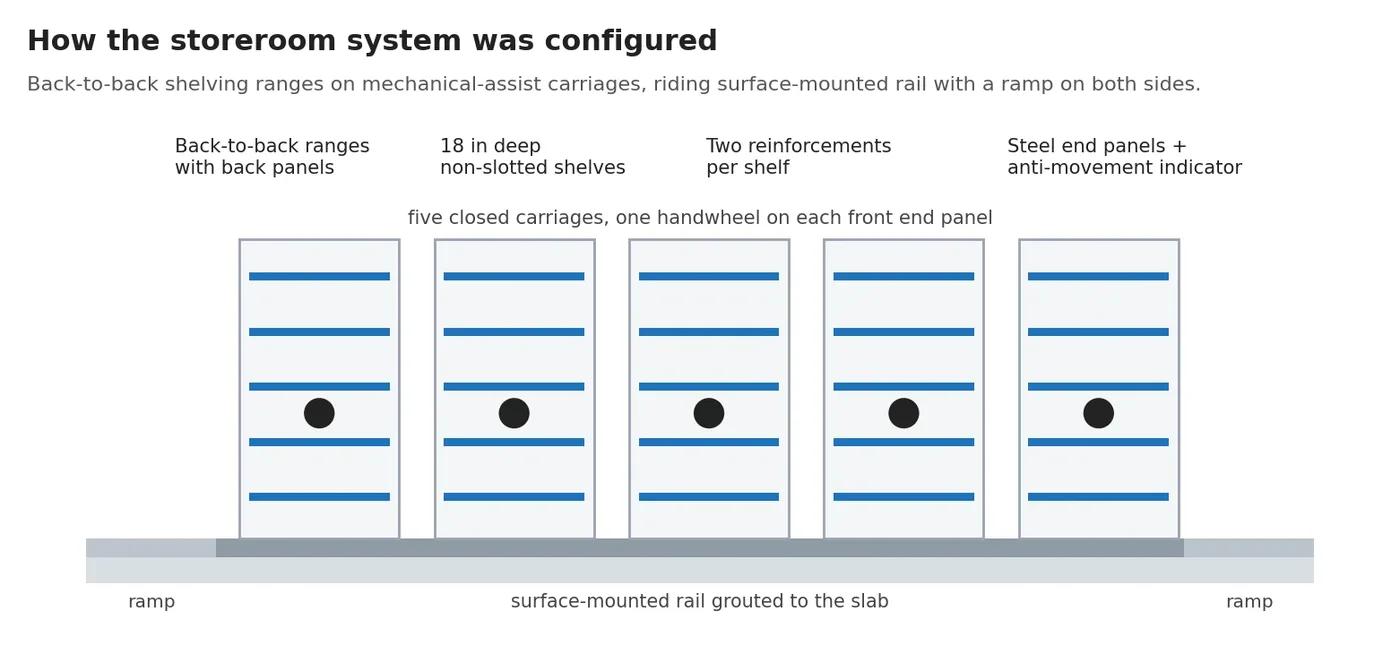
Everything above is a product configuration decision. The commercial terms, the room dimensions and the internal layout are not published here. The point of the list is that each item is a response to a condition: weight, item shape, traffic, staffing and safety.
Choosing between open wire decks and solid shelf pans is its own decision with real trade-offs on cleaning, lighting and small parts, and it is covered in the wire versus solid shelf deck guide.
Rail, ramps and the floor
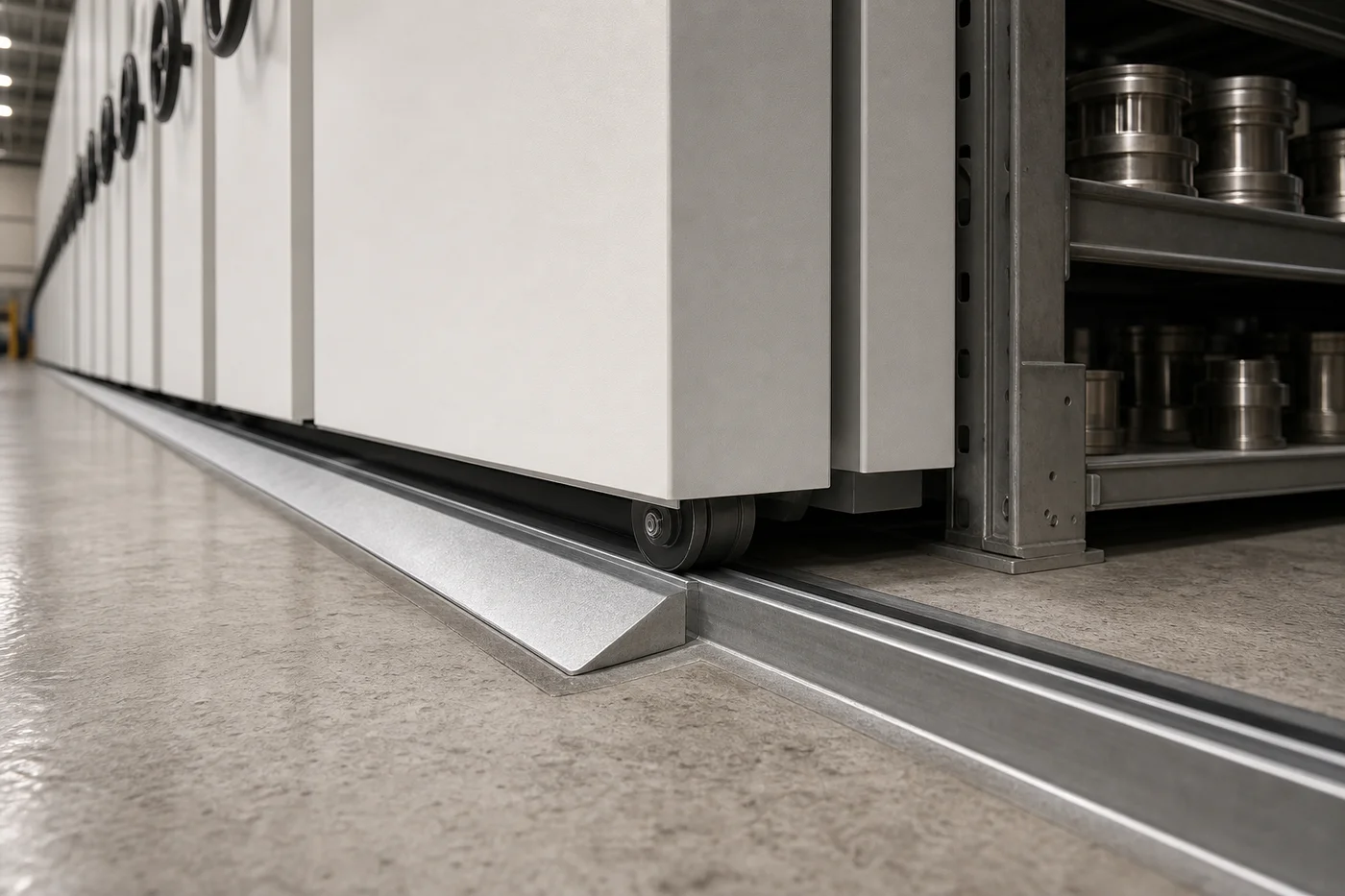
Mobile shelving rails can either be recessed into the slab, giving a flush floor, or surface mounted and grouted on top of it with ramps at the ends. This project used the surface mounted approach with a ramp on both sides of the system.
In an industrial building that is usually the right call. Saw cutting an existing slab is disruptive, it takes the room out of service for longer, and it permanently commits the floor to one layout. A surface mounted rail goes down faster, keeps the slab intact, and can be lifted and reset if the room is ever repurposed. The ramps let carts and hand trucks roll onto the system instead of stopping at a curb.
What surface mounting does not do is remove the floor work. The rail still has to be shimmed and grouted to a true plane along its whole length, because a mobile system amplifies floor error. A range that is out of level either rolls on its own or needs more force to move than it should. Grout is not a finishing detail on this kind of installation, it is the structural bed the whole system rides on.
The full comparison, including when a flush floor is worth the disruption, is in our guide to recessed versus surface mounted rail.
Why a mechanical assist drive suited this room
There are three ways to move a loaded range: push it by hand, turn a geared handwheel, or press a button on a powered system. The right answer depends on how heavy the ranges are, how often they move, and how tolerant the site is of things that need electricity.
| Drive type | Where it fits | What it costs you |
|---|---|---|
| Manual push | Short, light ranges moved occasionally | Effort rises quickly with load and range length |
| Mechanical assist | Heavy ranges in a working storeroom, moved daily | A handwheel on every carriage front and a fixed gear ratio |
| Powered | Very long or very heavy ranges, or programmed access control | Power supply, controls, service intervals and behavior during an outage |
A Gulf Coast facility has a specific reason to prefer the middle option. Storm season means power is not guaranteed, and a storeroom that cannot be opened during an outage is a storeroom that cannot support a mobilization. A geared handwheel works in the dark with no power, which is why it is the default for heavy industrial parts rooms rather than a downgrade from a powered system. The trade-offs across all three are set out on the manual, mechanical assist and powered comparison page.
Storing steel and hardware on the Gulf Coast
Humidity and salt air are real considerations in south Louisiana, but they are usually blamed for damage that comes from something else. A few practical rules cover most of it.
- Specify a quality factory finish. A good powder coat on shelving lasts for decades indoors, and a cheap finish fails at the edges and fastener holes first.
- Keep the envelope closed. Most corrosion in coastal warehouses starts with condensation on cold steel after a door has been open in humid air, not with the air itself.
- Do not shelve wet items. Rigging and tools that come back from a job wet should dry before they go back into a closed range where air movement is limited.
- Keep the rail clear. Grit, sand and dropped hardware in the wheel path do more damage to a mobile system than humidity ever will.
- Protect what needs protecting. Instrument spares, seals and electronics belong in closed bins or enclosed sections, not open on a shelf.
A closed range also has a genuine advantage here. When the system is parked, most of the inventory is inside a block of shelving with paneled ends and backs rather than exposed to the open room, which reduces dust and airborne salt deposition on stored items compared with open static racking.
What belongs on mobile shelving and what does not
High-density shelving is expensive per square foot of floor and cheap per item stored, which means it pays only when the right inventory goes on it. The split below is the one that works in industrial storerooms.
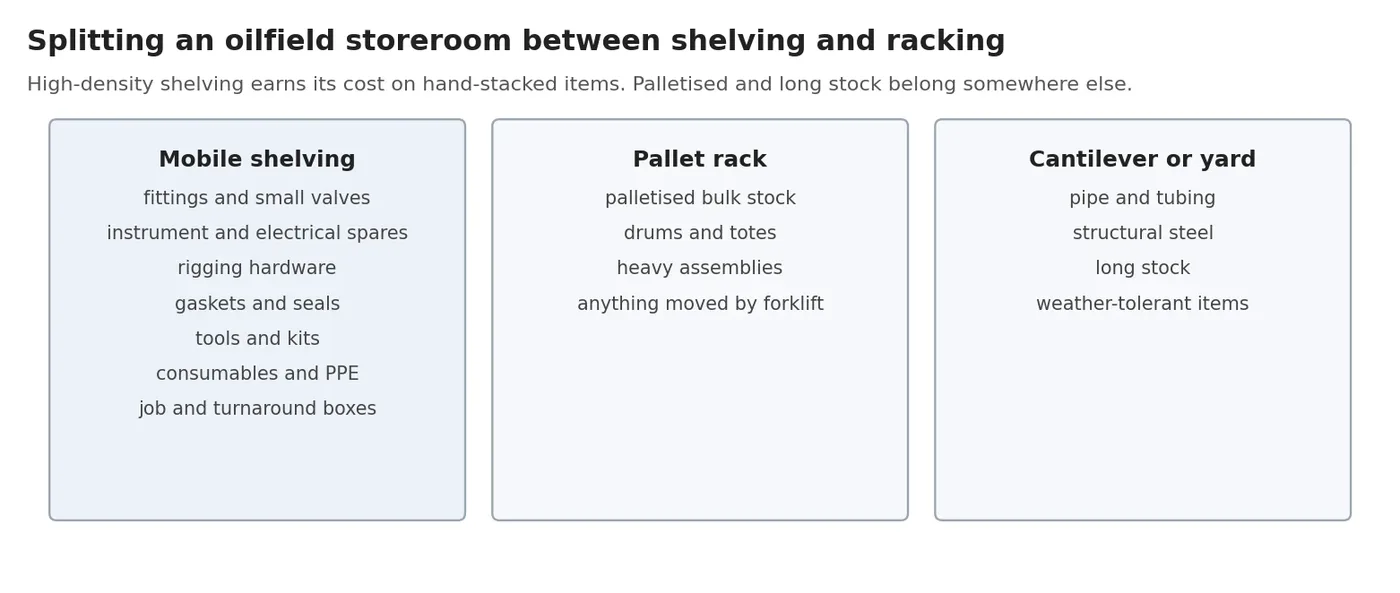
The test is simple. If a forklift has to place it, it does not belong in a mobile shelving range, because forklift traffic and moving carriages do not mix and the aisle is not designed for it. Palletized bulk belongs on pallet rack. Long stock belongs on cantilever or in the yard. What remains, which in an oilfield storeroom is the large majority of the line items, is exactly what a dense system is for.
Getting the split right also depends on knowing how much you actually have. The method for converting an inventory into linear feet, then into carriages, is on the capacity and sizing page, and the location coding that keeps a dense room findable afterwards is covered in the labeling and location coding guide.
For a plant maintenance storeroom, the same split applies with a reliability twist: critical and rotating spares need care while they wait on the shelf. Our guide to mobile shelving for maintenance and MRO spare-parts storerooms covers which spares belong on carriages, rotating-spares care, range-based location codes and the receiving-to-issue flow.
What transfers from this project
Every storeroom is different, but the reasoning that produced this specification is portable.
Size the problem before the product
Count what is stored, in linear feet and by weight class, before anyone draws a layout. Most rooms are storing a different mix than management believes.
Check the floor early
The slab decides whether a dense system is possible at all. Finding that out after the layout is approved is the most expensive order to do it in.
Specify for the heaviest shelf
Reinforcements, shelf gauge and carriage rating should answer the worst shelf in the room, not the average.
Choose the drive for the site, not the brochure
Power availability, staffing and how often ranges move matter more than the drive technology itself.
Plan the split with other storage
Decide what stays on pallet rack, cantilever or the yard before sizing the dense system, or it will be sized for inventory that should never go on it.
Label and maintain from day one
A dense room is only faster if items can be found, and only stays safe if the rail and carriages are serviced on a schedule.
If you are working through the same decision, the specification and submittal checklist lists what a complete quote should contain, the installation process page covers site readiness and sequence, and the maintenance intervals guide covers what happens after the system is in. For the wider category, start at the high-density shelving overview.
Frequently asked questions
What makes mobile shelving heavy duty rather than standard?
How much weight can a reinforced shelf hold?
Can a mobile system go into an existing metal building on a slab?
Do we have to cut the floor to install the rail?
Is a mechanical assist drive better than a powered one for a parts room?
What should not go on mobile shelving in an oilfield storeroom?
How does high humidity and salt air affect a steel shelving system?
How long does a system like this take to get and install?
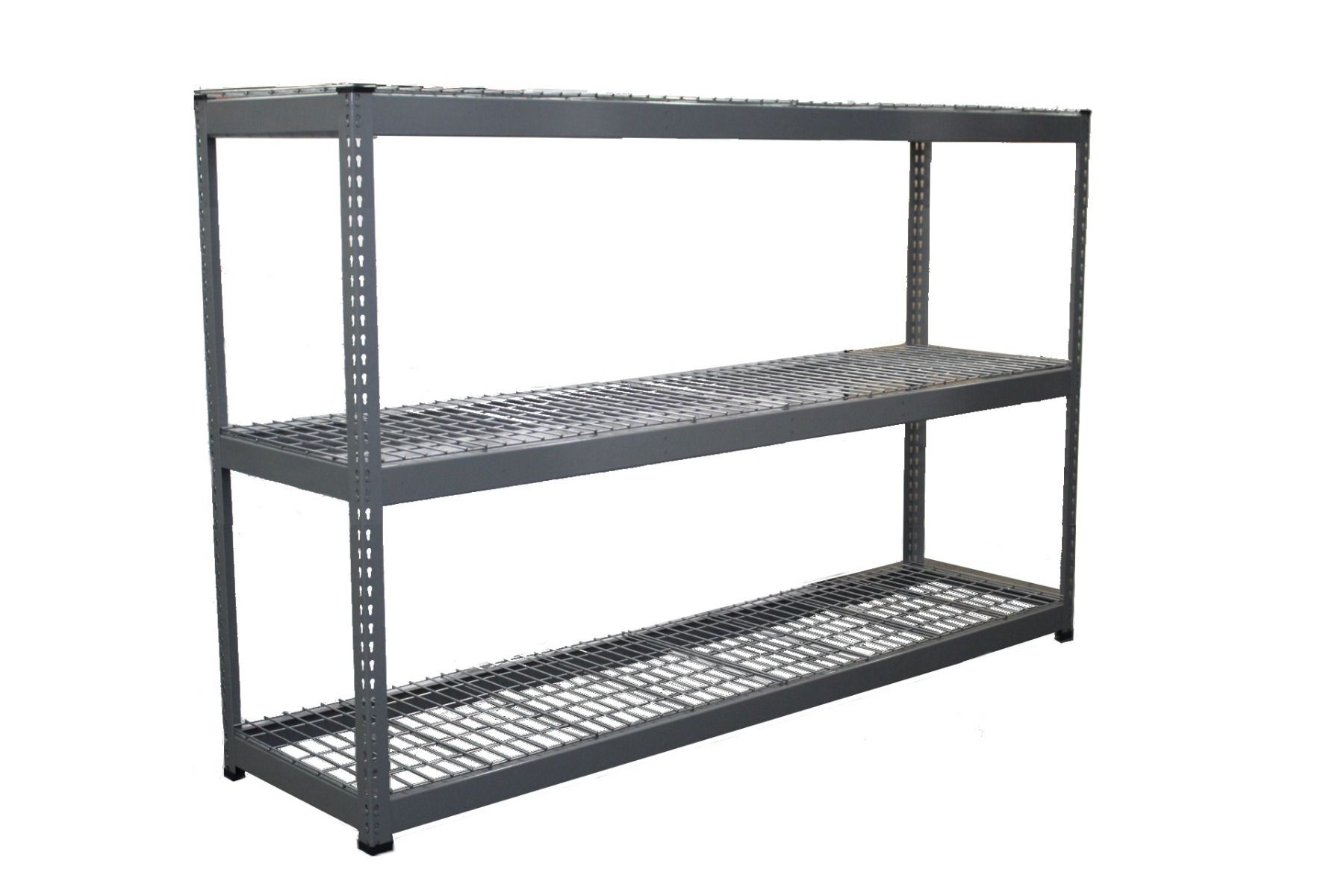
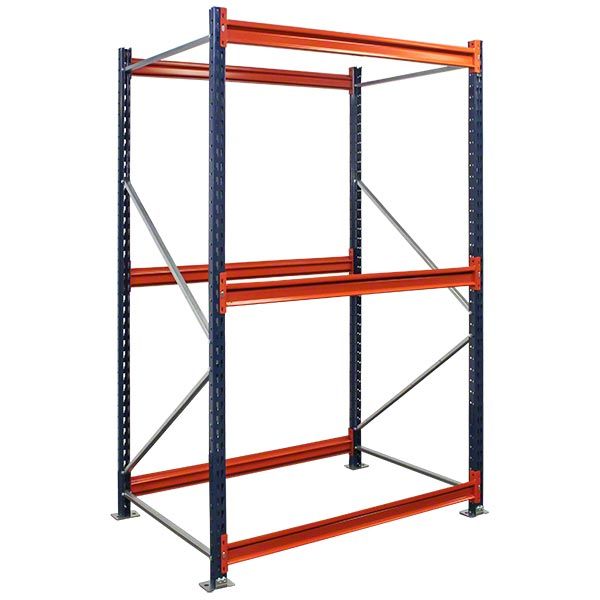
Shop Heavy Duty Industrial Shelving Online
Stock units you can buy directly. Engineered high-density mobile systems like the one on this page are quoted to a drawing.
Planning a Heavy Duty Storeroom Project?
Material Handling USA designs, supplies and installs high-density mobile shelving for industrial parts rooms nationwide. Call 800-326-4403 to talk through your room, your floor and your inventory.