
Composite Manufacturing Security Cage: DPS Skis Case Study
How a carbon composite ski factory controls prepreg and raw material, tooling, prototypes and finished goods on one floor — and why a small number of caged areas beats one locked stockroom in a build-to-order plant.
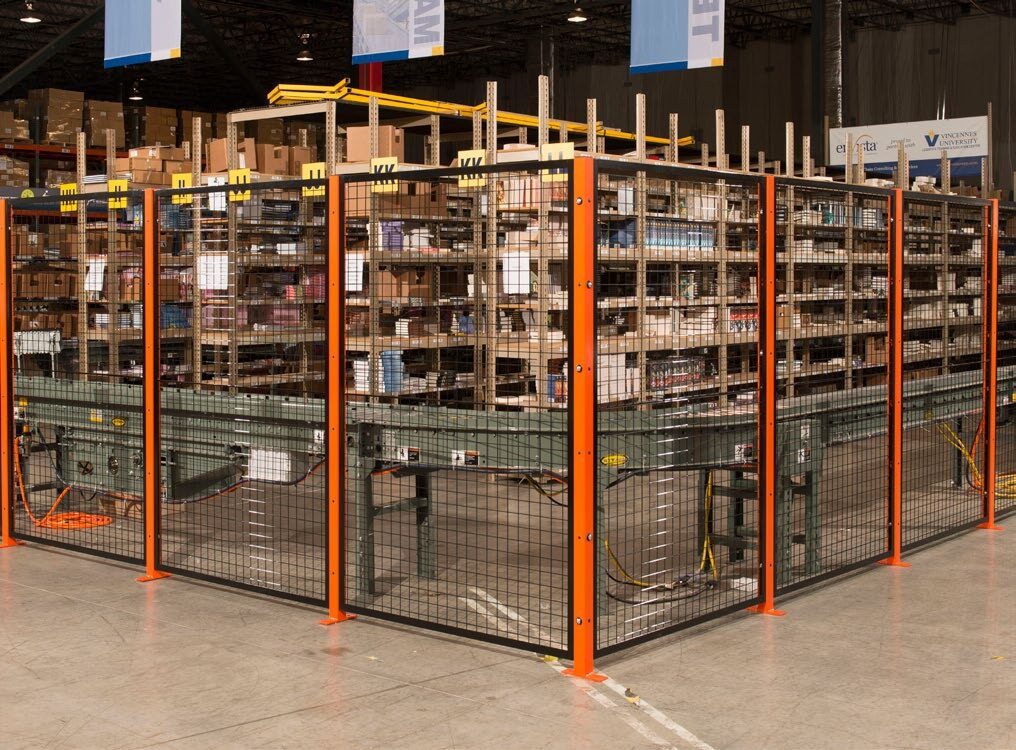
2015
Year Material Handling USA supplied security cage, partition and shelving product
Salt Lake City
Where DPS designs, presses, finishes and tests its skis under one roof
2005
Year DPS Skis was founded; it moved manufacturing to Utah in 2013
Seasonal
Demand pattern that decides when a factory floor can actually be changed
The project
DPS Skis was founded in 2005 and moved its manufacturing to Salt Lake City in 2013, becoming the first brand to build full-carbon skis in volume. The company designs, presses, finishes and tests its skis in the same building, minutes from the Wasatch terrain the products are built for — a setup that lets it go from a design idea to a tested prototype in days rather than seasons.
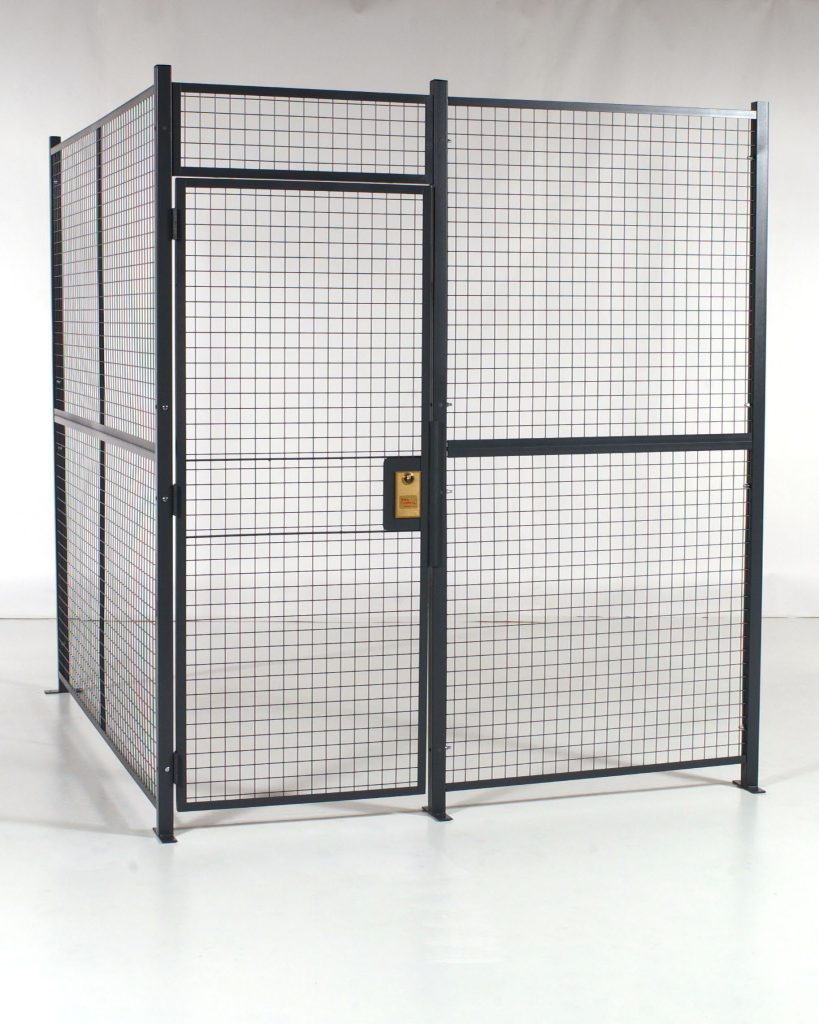
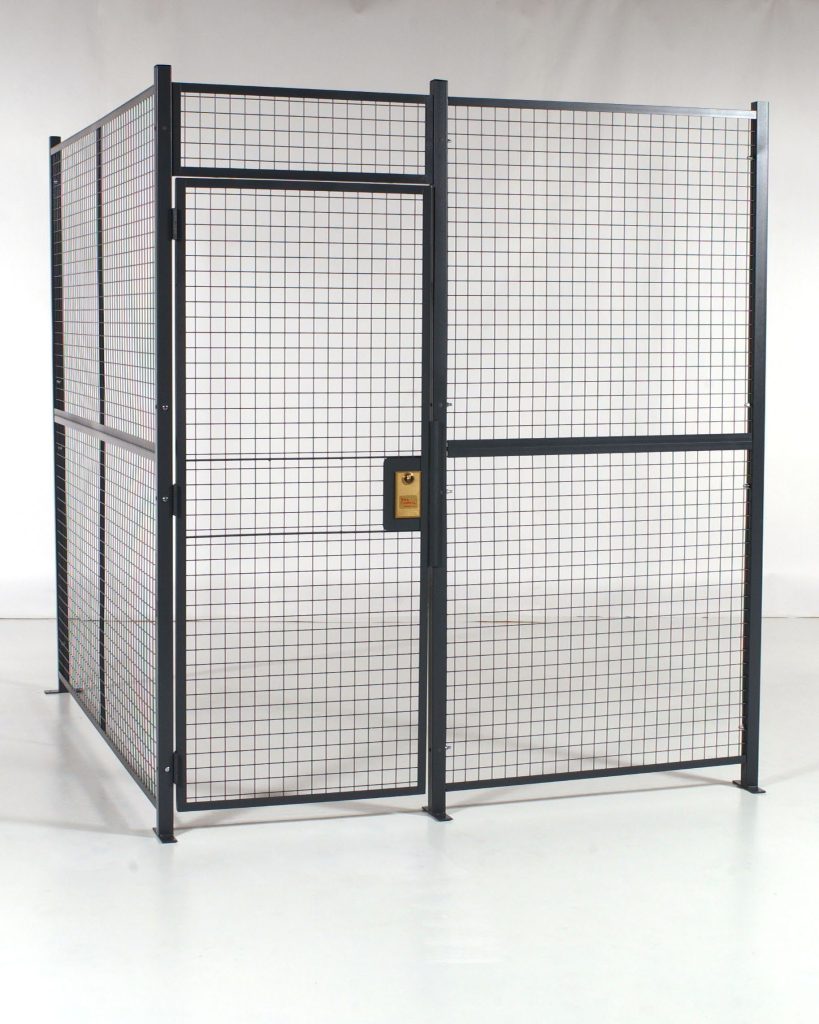
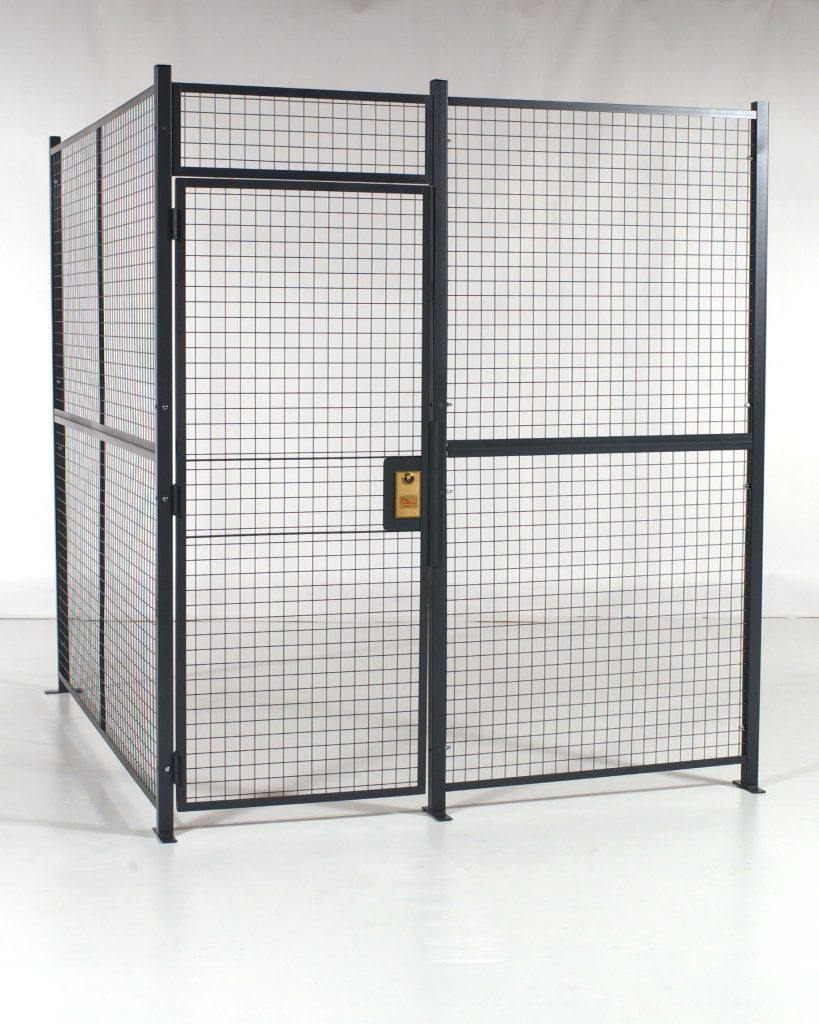
Material Handling USA supplied welded wire security cage, partition and shelving product to DPS in 2015. This page sits under our security cages hub and describes the general storage control problem a composite manufacturer faces, and the approach we take to it. It contains no plant layout, no dimensions, no process detail and no security specifics for this customer.
A factory like this is not a warehouse with machines in it. Product, tooling, raw material and work in progress all move through the same floor on a short cycle, and the expensive material is not necessarily the material that gets stolen — it is the material that gets used up quietly, consumed on the wrong job, or found out of date at the moment it is needed.
Why a composite plant is different
Raw material has a clock on it. Resin-impregnated fabrics and films — the prepreg that gives a carbon layup its properties — are supplied with a frozen shelf life and a much shorter working life once they come up to room temperature. Material that sits out because nobody could see it, or that goes back into the wrong place, is scrap with an invoice attached.
Small consumables drive big cost. Edges, bases, inserts, adhesive film, release film, bagging consumables and abrasives are individually cheap, easy to walk off with, and impossible to run a press day without.
Tooling is unique and irreplaceable on short notice. Moulds, press plates, fixtures and templates represent development work rather than purchase price. Their control problem is location and condition, not theft.
Prototypes are confidential. A build-to-test cycle means unreleased shapes and constructions sit on the floor in plain view. That is an intellectual property and pre-launch exposure issue as much as a security one, and it is the reason visibility control matters here.
Finished goods are consumer-desirable. Premium skis are compact, valuable and easy to resell. Finished goods, seconds, warranty stock and demo gear all need to be separated from each other, because “seconds” that leak into the market are a brand problem, not an inventory one.

What a factory like this puts behind mesh
The workable pattern is a handful of small controlled areas with different access lists, each solving one problem — not a single locked stockroom that everyone needs and therefore nobody keeps locked:

Raw material, shelf life and issue control
Controlling composite raw material is mostly a records problem that a physical boundary makes possible. The enclosure is not there to stop a burglar; it is there to force every issue to happen at one place.
- One issue point, always the same one. A service window or a dutch door lets a stores person hand out material while the enclosure stays closed. Everything leaves through the same opening, so the record is a byproduct of the transaction.
- First expiry, first out — visibly. Open mesh lets anyone see the state of the store without unlocking it, which is what makes date rotation self-policing.
- Design around the cold store rather than into it. Freezer and refrigerated storage is its own equipment; the caged area normally sits alongside it to control the thawing, staging and return of material, and to keep out-time logging honest.
- Keep chemicals out of the mesh. Resins, solvents and adhesives are governed by hazard communication and flammable storage requirements — approved cabinets or a rated room, not a wire enclosure. See 29 CFR 1910.1200.
- Expect the area to grow. Material ranges expand faster than floor space. Bolted wire mesh partitions can be extended or subdivided later without replacing the original run.
Prototypes, seconds and finished goods
The back half of the plant has a different problem from the front. Nothing here is consumed — it is graded, and grading decisions are what the enclosure protects.
- Separate sellable from not-sellable physically. Seconds, warranty returns, test skis and demo stock all look like product. If they share a rack with finished goods, some of them will ship as finished goods.
- Control visibility for unreleased product. Where a prototype area is in view of visitors or a tour route, screening panels or a solid backer on part of the run does the job without building a room.
- Cage the rack, not the room. Where finished goods sit in pallet rack, enclosing the bays directly is faster and cheaper than partitioning a floor area — see pallet rack security enclosures.
- Plan for the seasonal spike. A ski plant’s finished goods position swings enormously across a year. The enclosure is sized for the peak and used for something else in the trough, which argues for a movable partition system rather than fixed construction.
- Keep aisles legal. Peak stock is exactly when aisles get narrowed. The storage and passageway requirements at 29 CFR 1910.176 do not relax in November.
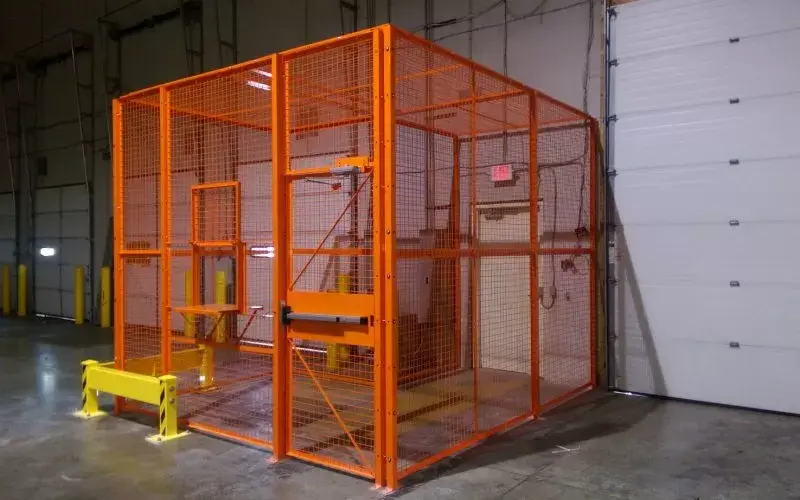
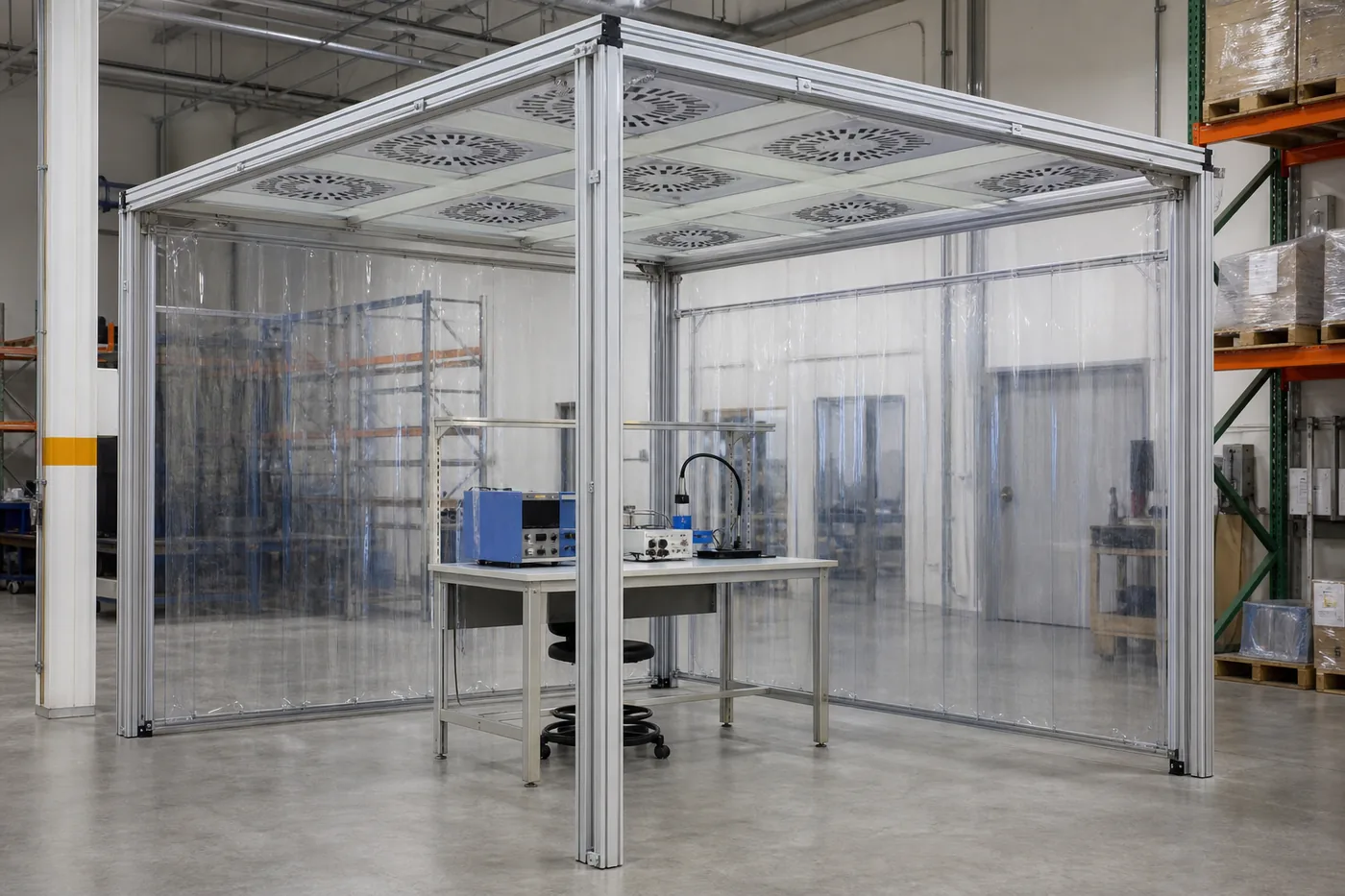
Where mesh is the wrong barrier
Part of specifying an enclosure well is knowing where it does not belong. In a composite plant there are three places a wire cage is the wrong answer:
- Contamination-sensitive work. Layup, bonding and finishing areas need a barrier against dust and overspray, not against people. A softwall enclosure, curtain wall or modular room does that; mesh does not.
- Flammable and hazardous chemicals. Solvents, resins and adhesives belong in approved storage designed for the hazard class, with the ventilation and separation the code requires.
- Machine guarding. Fencing around a press, trim table or robot is a safety system with interlock, reach-distance and access requirements of its own. It often uses similar panels and it is a different design exercise — see machine guarding and safety fencing.
Sector-by-sector requirements are summarized on our cage regulations and compliance by industry page.
Specification and layout
On a production floor the specification is driven by traffic and change, not by the highest possible security level.
Installing around production
A single-building factory has no spare floor to work in and no second line to run while you install. The sequence is the whole job.
Field-verify and pre-clear the design
Measured openings and clearances, sprinkler and lighting positions, floor condition and anchor viability. Obstructions cause more redesigns than requirements do.
Pick the window in the season
In a seasonal manufacturer there is one sensible time to change the floor. Installation is scheduled against the production calendar, not the other way round.
Work area by area
One enclosure completed and returned to service before the next is opened up, with a clean route for material in and packaging out that does not cross a layup or finishing area.
Hand over the process with the panels
Key list, who issues material, where seconds go, how the record gets made. Then walk it periodically using the cage maintenance and inspection guide.
Installation detail is on the security cage installation page. Material Handling USA designs, supplies and installs manufacturing enclosures nationwide and throughout the Mountain West — see security cages in Utah, or start at the security cages hub.
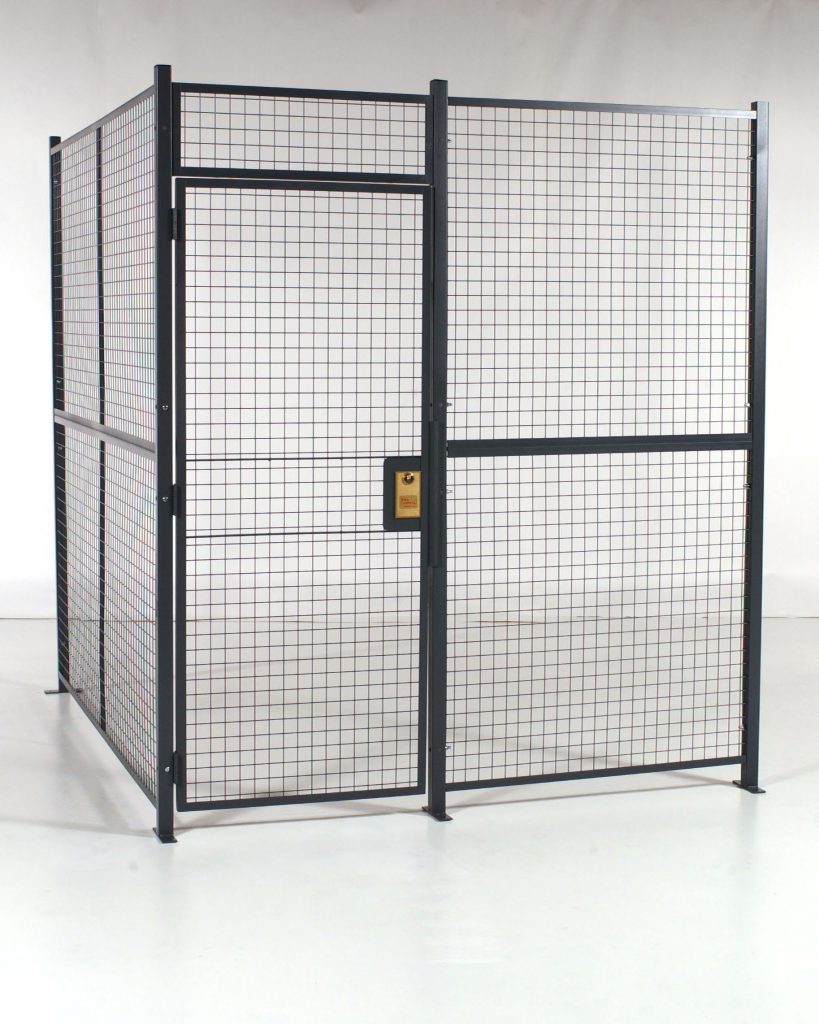
Shop Pre-Configured Wire Mesh Cage Kits Online
Standard-size welded wire cage kits, priced online, for smaller storage needs. Every kit still needs to be anchored to sound concrete — for tall, braced or engineered enclosures, request a quote with your building location and floor details.
Frequently asked questions
Can prepreg and composite raw material be stored in a wire mesh cage?
Should chemicals go inside a security cage?
What is the difference between a tool crib and a stockroom cage?
How do you keep prototypes confidential without building a room?
Is machine guarding the same as a security cage?
Will a cage slow down a production floor?
Can the enclosure be reconfigured when the plant changes?
Does a full-height cage need a sprinkler review?
Looking for a project like yours? Browse more manufacturing and tool crib cage case studies, see all security cage case studies.
Control material, tooling and finished goods on one floor
Material Handling USA designs, supplies and installs welded wire security cages, tool cribs and wire mesh partitions for manufacturers nationwide.