
Vertical Lift Module for Utah Aerospace and Defense Suppliers
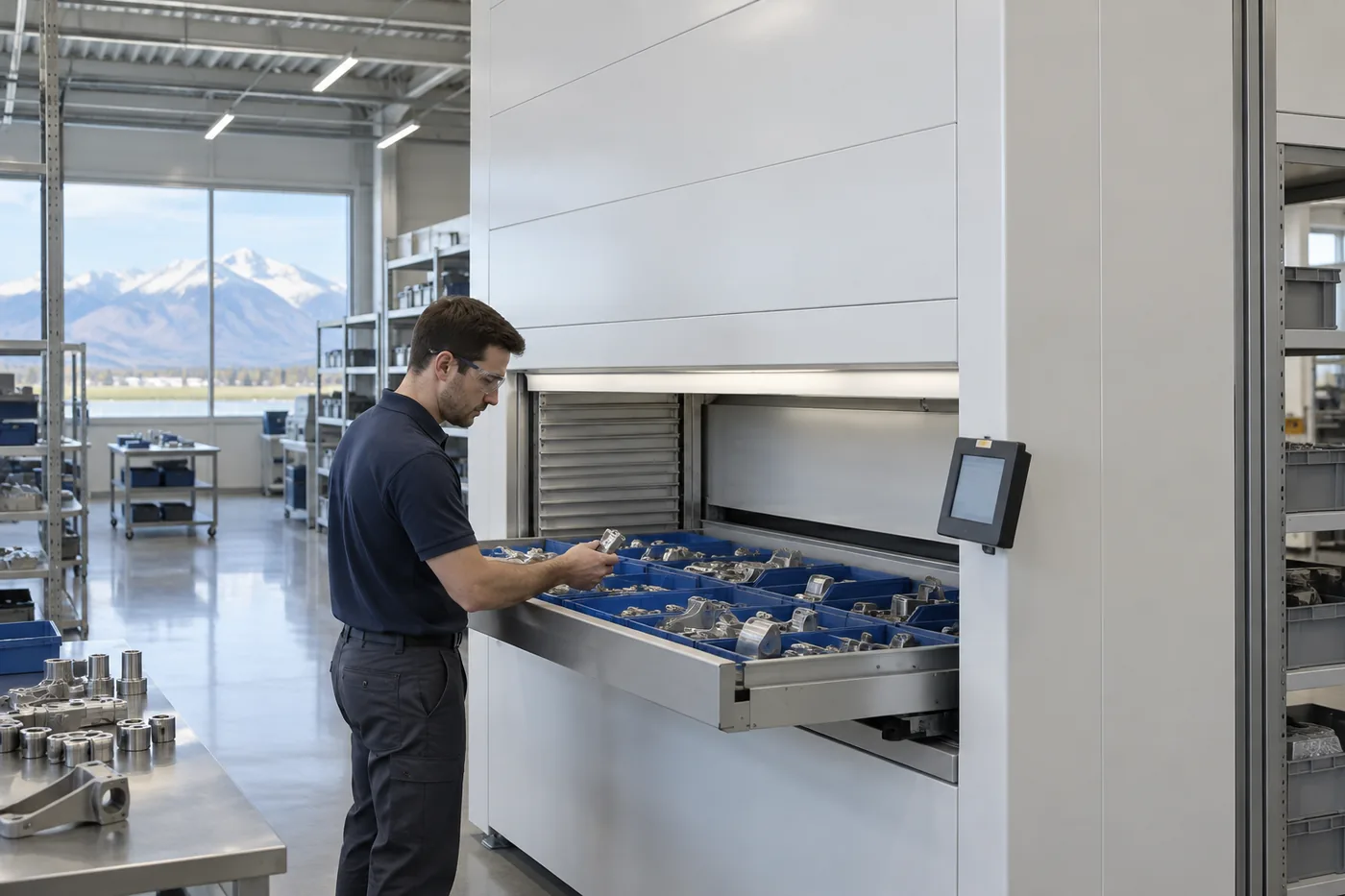
Vidir Lift Modules supplied and supported from Salt Lake City: enclosed, login-controlled tray storage that puts kitted parts, tooling and high-value components at working height on a footprint about the size of two parking stalls.
Up to 85%
Floor space Vidir says a VLM recovers vs. shelving
600 / 1,000 lb
Tray capacities, 96.5 x 32.5 in trays
9’10” to 28’6″
Standard model heights, 37 to 165 trays
SLC based
Local sizing, delivery coordination and support
Who Uses a Vertical Lift Module in Utah’s Aerospace Corridor
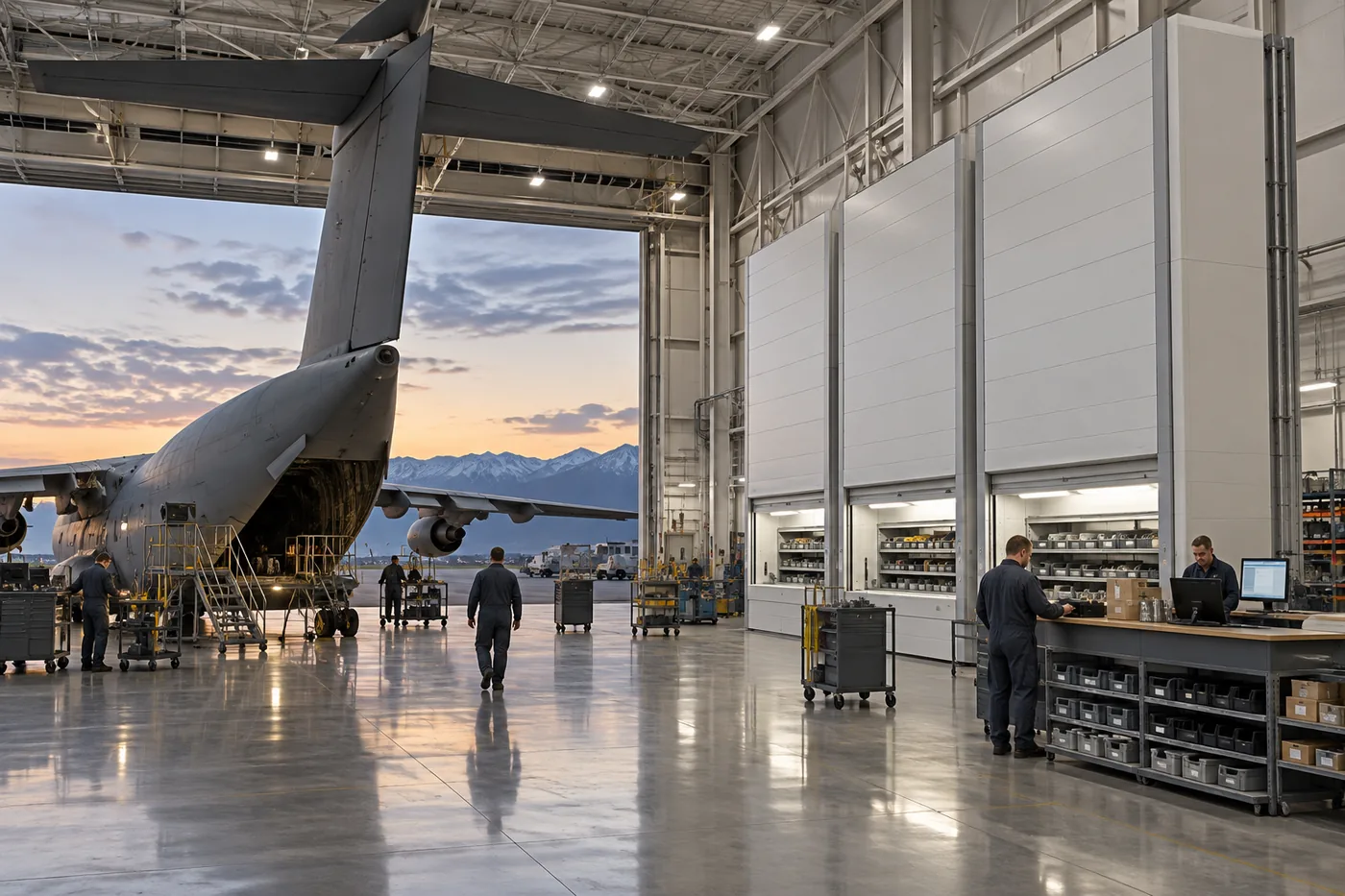
Northern Utah has one of the densest aerospace and defense supply chains in the Mountain West. Hill Air Force Base and its depot maintenance work anchor Davis and Weber counties; composite structures, propulsion, avionics and precision machining suppliers line I-15 from Ogden and Clearfield down through Salt Lake City, West Valley and into Utah County. Most of them share the same stockroom problem: thousands of small, expensive, lot-controlled items that must be found fast, kept clean and handed out only to the people authorized to touch them.
The Vidir Lift Module (VLM) is the machine Material Handling USA supplies for that problem. Trays live in two enclosed towers; a center elevator brings the requested tray to a waist-height opening, the operator picks or stocks, and the tray goes back. This page is written for the Utah buyers we talk to most often:
- Tier 1 to tier 3 suppliers and machine shops storing kitted hardware, fixtures and finished parts awaiting inspection or shipment.
- MRO and depot-level maintenance operations issuing rotables, consumables and calibrated tooling from a controlled crib.
- Avionics and electronics assembly cells that want components stored by lot in a single, enclosed system.
- Composite and propulsion plants holding tooling inserts, fasteners and small sub-assemblies close to the line.
If you are still weighing lifts against carousels, shelving or a mezzanine for a mixed inventory, start with the Utah vertical storage overview. If small parts, tooling and traceability are the issue, keep reading.
Why Open Shelving Runs Out of Control in an Aerospace Stockroom
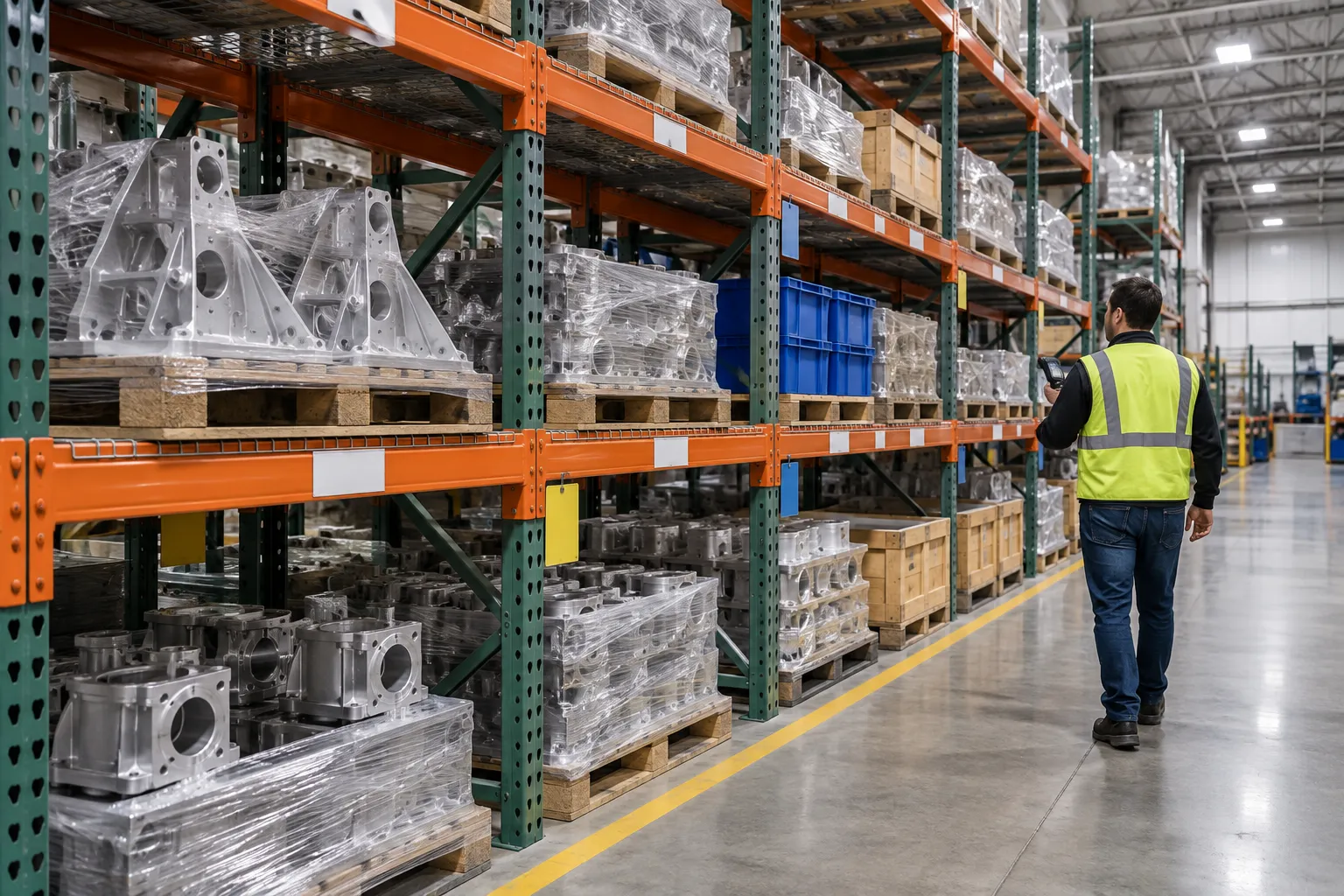
Shelving and bin rack are cheap and fast to put up, which is why most stockrooms start that way. Trouble arrives with the part count. Aerospace inventories are wide and shallow: many part numbers, few of each, many with a lot, heat, cure date or serial attached. On open shelving, every additional part number is another bin location a person has to walk to, read, and put back correctly.
The costs show up in four places: search time, put-away errors, exposure of open bins to dust and foreign objects, and floor area. A fully racked stockroom in a Utah plant often gives up 1,000 to 2,000 square feet of floor that production would happily take back. Racking is still the right answer for palletized material; our Triumph Gear Systems racking project is a Utah example. But for the small, high-value items, the shelving itself is the bottleneck.
How the Vidir Lift Module Works
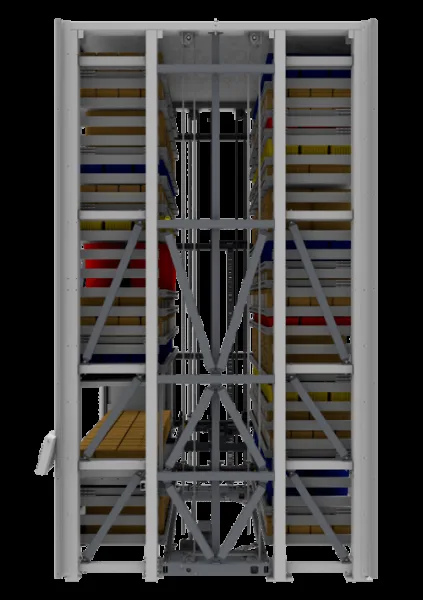
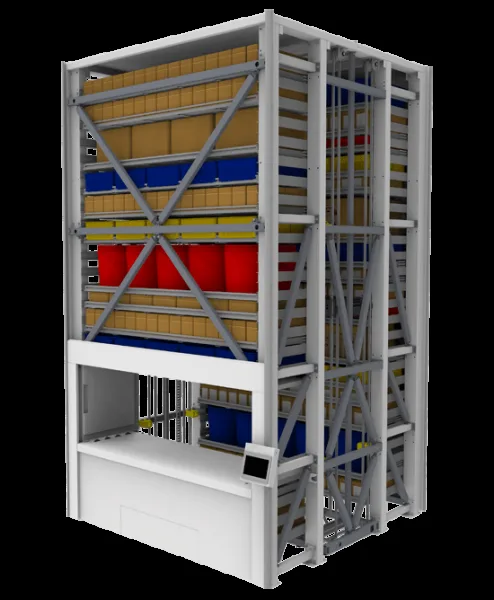
A VLM is two tray towers, one in front and one in back, with an elevator running up the middle. Trays are steel, one piece, 96.5 inches wide by 32.5 inches deep, and hold items up to 30 inches tall. When an operator loads a tray at the access opening and confirms the store command on the 12-inch touchscreen, the tray is pulled onto the elevator and passes a set of height sensors. The controller measures the tallest item on the tray, calculates the tightest free slot in either tower, and slides the tray into it.
That is the important difference from a shelf or a carousel: tray spacing is variable. Vidir’s triple tray supports and multi-positional rails allow storage heights in roughly 1.2-inch increments, so a tray of flat brackets takes a thin slot and a tray of fixtures takes a tall one. Nothing is reserved for air. Retrieval runs the same way in reverse: call the tray by part number or tray ID, and it arrives at the opening at an ergonomic height.
Load and confirm
The operator places parts on the tray at the access point and confirms the store command on the touchscreen HMI.
Measure
As the tray is drawn onto the elevator, height sensors scan the load and record the storage height it needs.
Choose the slot
Vidir’s software selects the most efficient available position in the front or back tower.
Travel
The servo-driven elevator moves to that position at up to 1.67 feet per second vertically.
Store or present
The tray slides into its slot, or on a retrieval, slides out and is presented at the opening behind the light curtain.
Speed figures are Vidir’s published maximums
Vidir lists a maximum vertical lift speed of 1.67 feet per second and a horizontal feed speed of 0.83 feet per second. Actual cycle times depend on machine height, tray position and how the inventory is slotted; we do not quote picks-per-hour for a machine that has not been configured.
Published Vidir VLM Specifications
The figures below come from Vidir’s VLM sales package (document VLM-SP-2020R05) that we keep in our literature library. Every VLM-3296 model shares the same tower footprint and tray size; the model number changes with height, and height sets the tray count. The standard package includes the full enclosure, light curtains, variable height sensors, the touchscreen controller and a two-year manufacturer’s warranty. Confirm the current revision with us before designing a room around any of these numbers.
| Item | Vidir published value |
|---|---|
| Tray size | 96.5 in W x 32.5 in D, items up to 30 in tall |
| Load per tray | 600 lb or 1,000 lb options, monitored per tray in software |
| Total load capacity | Up to 132,000 lb per machine |
| Tower footprint | 9 ft 9 in W x 9 ft 7 in D (machine footprint 122 in W x 118.25 in D) |
| Standard heights | 9 ft 10 in (37 trays) to 28 ft 6 in (165 trays), in 7-in steps |
| Storage increment | Approx. 1.2 in, variable tray spacing with automatic height sensing |
| Drives | 10 HP vertical servo motor, 2 HP horizontal servo motor, chain drive |
| Speeds | Vertical max 1.67 ft/s; horizontal max 0.83 ft/s |
| Electrical | 480/460 V, 3-phase, 20 A, fed from the top right of the machine |
| Controls | 12-in touchscreen HMI, left or right side mount; auto retrieval tray control |
| Safety | Light curtains at the access opening, full enclosure, dual redundant DC power |
| Finish | Textured white standard; RAL color change available |
Selected model heights
| Model | Height | Max trays | Storage volume |
|---|---|---|---|
| VLM118-3296 | 9 ft 10 in | 37 | 238 cu ft |
| VLM160-3296 | 13 ft 4 in | 61 | 388 cu ft |
| VLM202-3296 | 16 ft 10 in | 85 | 538 cu ft |
| VLM244-3296 | 20 ft 4 in | 109 | 688 cu ft |
| VLM286-3296 | 23 ft 10 in | 133 | 838 cu ft |
| VLM342-3296 | 28 ft 6 in | 165 | 1,038 cu ft |
Intermediate models exist at every 7 inches between these rows. A typical Utah tilt-up industrial building with 24 to 28 feet of clear height can take a machine from the upper half of the range; older brick or block buildings along the Wasatch Front often land in the 13 to 17 foot models. The full model list is on the Vidir Vertical Lifts product page, and the generic vertical lifts hub compares the VLM with Vidir’s bar stock and sheet metal lifts.
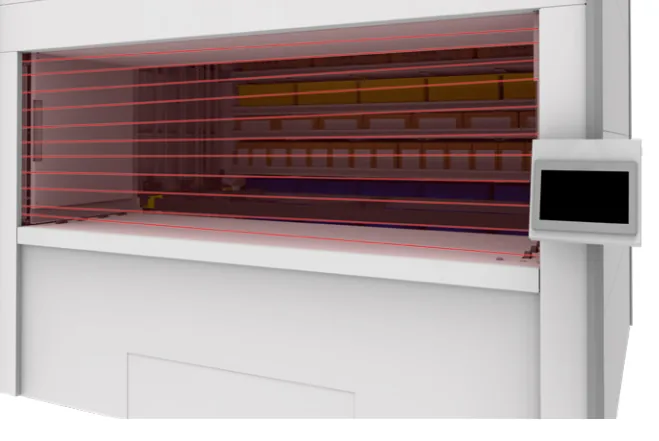 Light curtainsElevator motion stops automatically when the curtain at the access opening is broken.
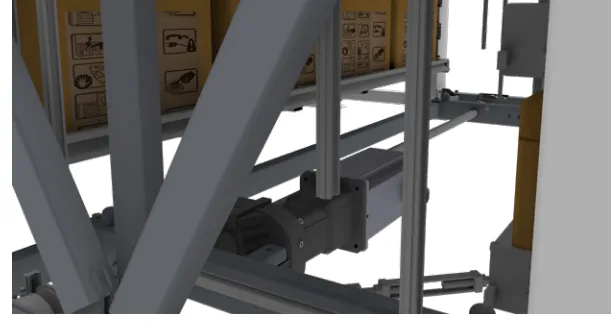 Servo drives10 HP vertical and 2 HP horizontal servo motors for positioning accuracy without constant recalibration.
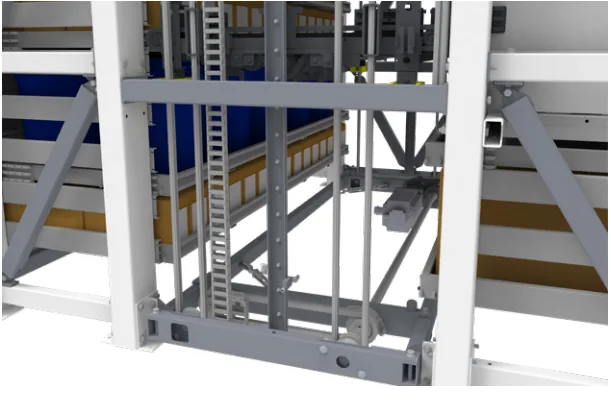 Chain driveVidir uses a chain drive on the elevator for durability and service life.
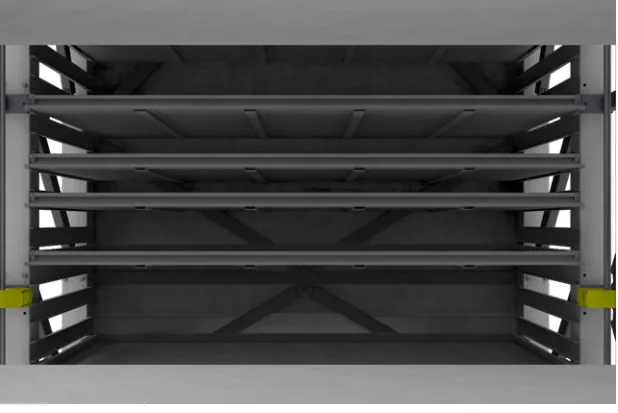 Variable tray spacingHeight sensing stores each tray in the tightest slot that fits its tallest item.
Inventory Control and Access for Regulated Work
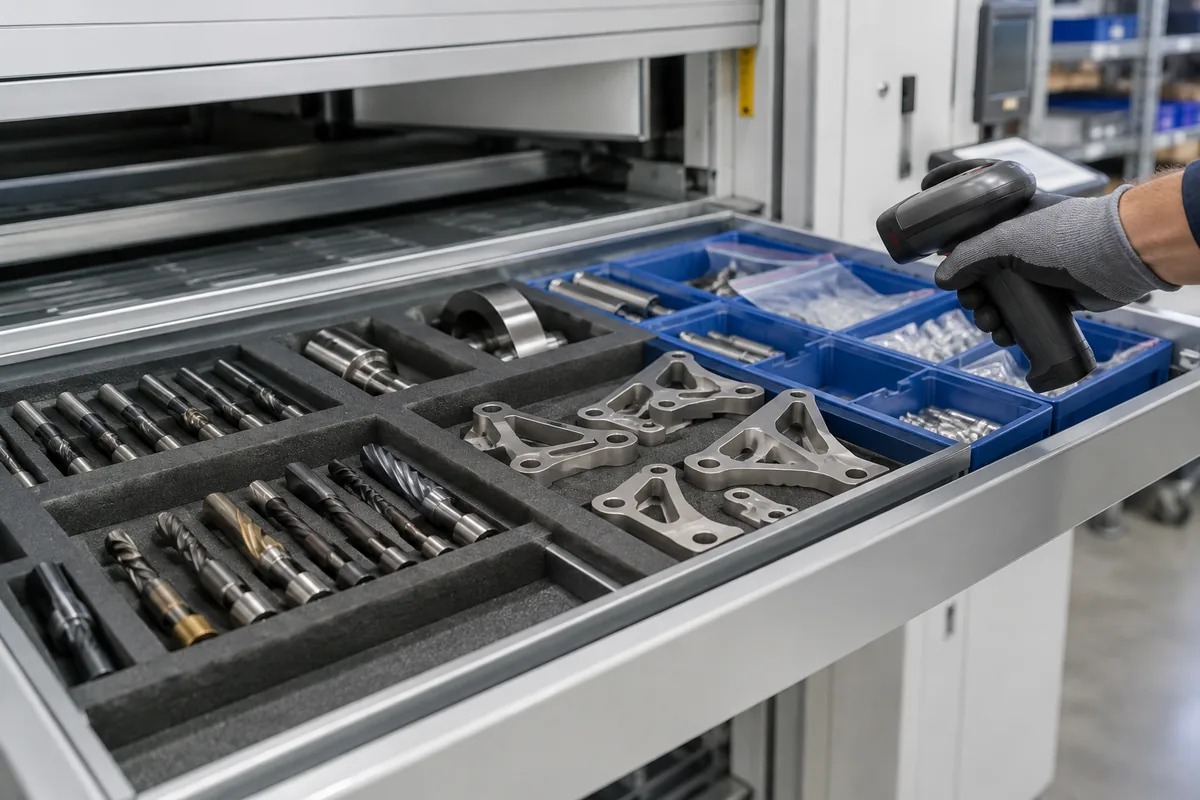
Aerospace and defense stockrooms are judged on traceability as much as on space. Vidir’s standard controller runs pick and stock lists, tracks tray contents and prints reports from any connected PC; the Full Inventory Control System (VIP) extends that to part-level tracing, and Vidir publishes ERP integration so the machine can take orders from your own system. A badge reader option ties every transaction to a logged-in user, and a bar code scanner option confirms the part being picked or stored. Pic-to-Lite, a horizontal LED strip across the opening, points to the tray position holding the item.
Trays themselves can be fitted with dividers, partitions and containers sized to the parts, so a tray of fasteners, a tray of foam-nested cutting tools and a tray of machined brackets each get a layout that prevents mixing. Every tray capacity is monitored in the software, so an overloaded tray is refused rather than stored.
Two access options matter to Utah shops with a crib window. The Tray Transporter lets a tray be pulled out of the machine and wheeled to a work cell, with the software noting the tray is out so tracking is not lost. Fold-out external tray access arms extend the tray in front of the machine for lift-assist loading of heavier fixtures.
A word on compliance. An enclosed, login-controlled storage machine with a transaction log is a strong physical and procedural control. Whether it satisfies a specific contract clause, export-control handling rule, FOD program requirement or quality-system audit is a decision for your quality, security and compliance staff, not for a storage vendor. We supply the machine and the documentation; you map it to your program. Ongoing controls and wear-part support is described on our Vidir parts and service support page, and Vidir’s remote service can diagnose software issues over a connection you authorize.
Utah Site Checklist Before You Order
Most VLM project delays trace back to the building, not the machine. These are the items we work through with Utah customers before a quote is finalized.
- Power. Vidir specifies 480/460 V 3-phase at 20 A, fed from the top right of the machine. Many Utah shops have 480 V at the panel already; confirm the run and who pulls it.
- Clear height. Measured to the lowest obstruction, sprinkler heads and ducts included, with photos. This picks the model and therefore the tray count.
- Floor. A level slab in sound condition. Vidir lists a seismic-ready design; Utah adopts the International Building Code with state amendments and sits in a seismic region, so your engineer or the local building department may want to review anchorage for a 10 to 28 foot machine. Ask before delivery, not after.
- Fire protection. Dense enclosed storage changes the picture for your sprinkler contractor and fire marshal. The full enclosure is standard; whether in-rack protection or other measures are required is their call.
- Delivery route. Dock or drive-in door size, the path to the final location, and a forklift on site with the capacity to handle the crated towers.
- Parts data. A part list with dimensions, weights, quantities on hand and turn rate. This sets tray count, tray capacity (600 or 1,000 lb) and the divider layout.
- Controls and integration. Standalone touchscreen, VIP inventory control, badge and scanner options, or an ERP integration. Decide before the slotting plan is fixed.

A typical Utah project path
Part data and site survey
You send the parts list, ceiling measurement and photos; we review them from Salt Lake City and visit the plant when a dimension is in doubt.
Configuration and drawing
A VLM model, tray capacity, tray layout and options are proposed and shown on a drawing for your review.
Building prep
Power, floor, anchorage and fire-protection questions are settled with your electrician, engineer or local authority while the machine is built.
Delivery and installation
The machine is delivered to your dock and can be set, anchored and commissioned by a qualified crew.
Slotting and training
Trays are configured and loaded to the plan, and operators are walked through storing, retrieving and the safety features.
Installation scope is quoted plainly: supply only for plants with a capable rigging and install team, or supply and installation. Our vertical storage installation services page describes what a full install involves. Hill Air Force Base and other secured sites have their own access and escort rules for delivery crews; tell us early so they are built into the schedule.
Lift Module or Vertical Carousel for an Aerospace Stockroom?

Both machines bring stored items to the operator and both use the building’s height. The choice usually comes down to how uniform the inventory is. A vertical carousel rotates a fixed set of carriers, so it excels when items are similar in height and the whole inventory turns at a similar rate. A VLM stores each tray at its own height and retrieves any tray directly, so it is the better fit for the wide, uneven inventories typical of aerospace cribs: a few tall fixtures, many trays of flat hardware, and a long tail of slow movers.
Utah plants with wire, cable and hookup spools should also look at the Utah wire spool carousel page; it is a different Vidir machine for a different inventory. The full head-to-head is on our vertical carousel vs. vertical lift module guide, and the generic vertical carousels hub covers the carousel family.
| Vidir Lift Module (VLM) | Vidir vertical carousel | |
|---|---|---|
| Best inventory | Wide range of item heights; many slow movers; heavy trays | Uniform item heights; steady, even turn rate |
| Storage principle | Each tray stored at its own measured height in two towers | Fixed carriers rotate past one opening |
| Load per position | 600 or 1,000 lb per tray (Vidir) | Depends on carousel model |
| Access control | Login, badge reader, transaction log, enclosed | Enclosure and controls available, simpler by default |
| Adding capacity later | Add trays within the tower’s tray count | Fixed carrier count per machine |
| Typical Utah use | Aerospace cribs, avionics, tooling, MRO rotables | Wire spools, tires, uniform bins |
Aerospace and Utah Projects Worth Reading
Material Handling USA has supplied Vidir vertical storage to aerospace and space customers around the region and racked out aerospace manufacturing warehouses in Utah. A few examples relevant to a Utah stockroom project:
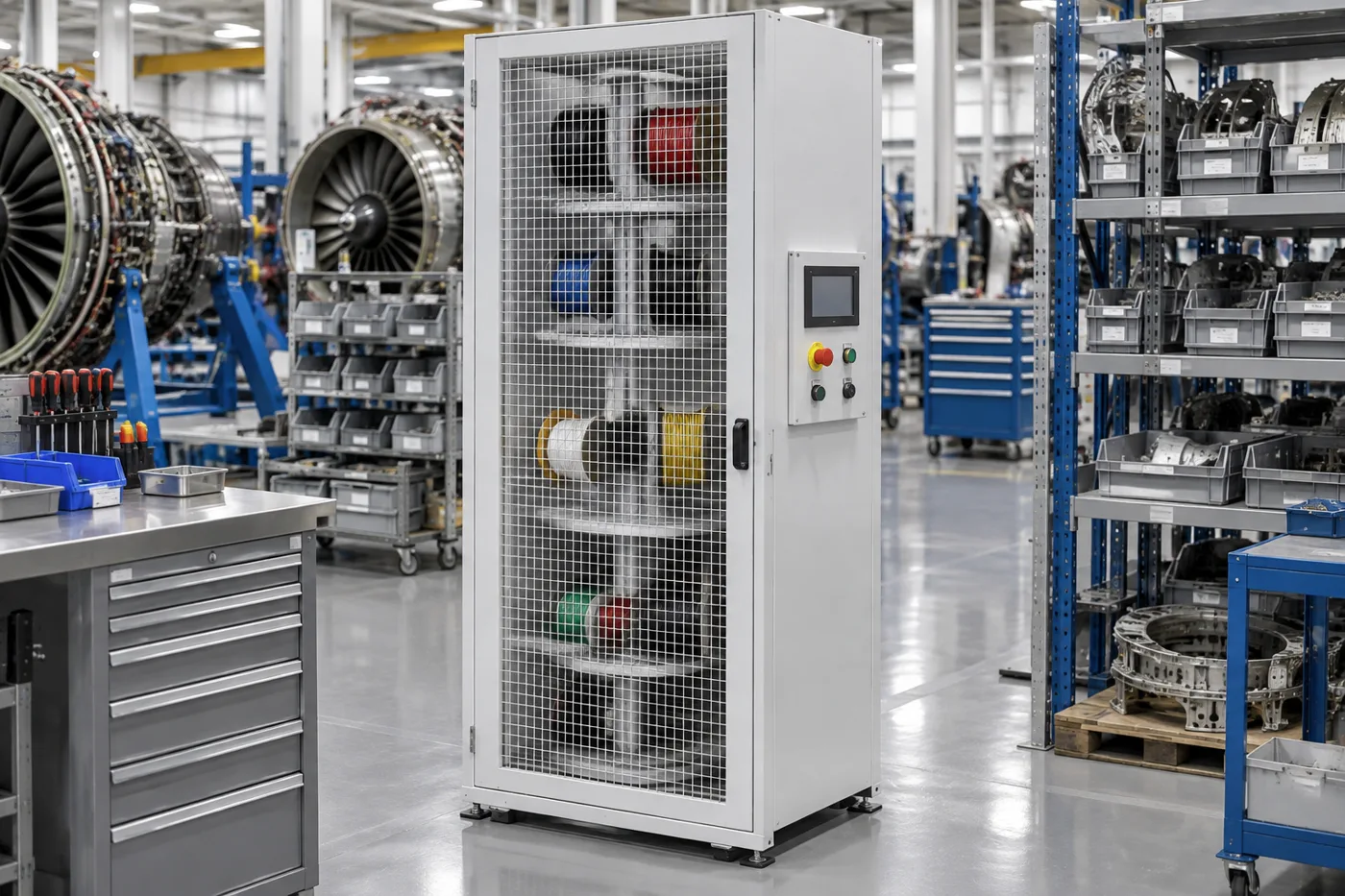 Honeywell Aerospace, PhoenixA Vidir carousel for wire and cable spools in an aerospace engine operation.
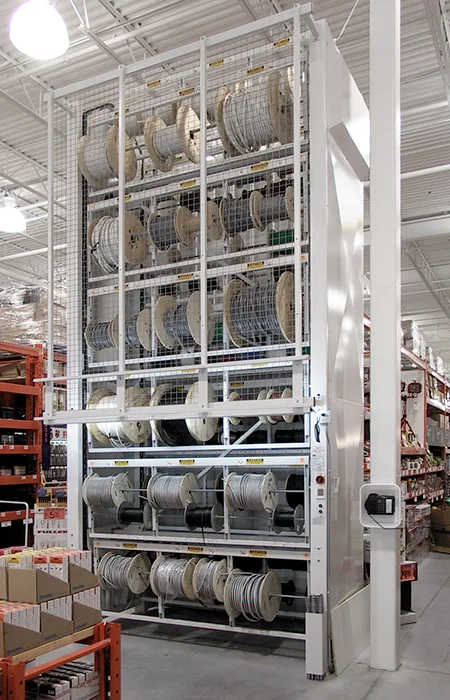 ABL Space Systems, El SegundoA Vidir Wire Carousel for a launch vehicle manufacturer’s harness and cable stock.
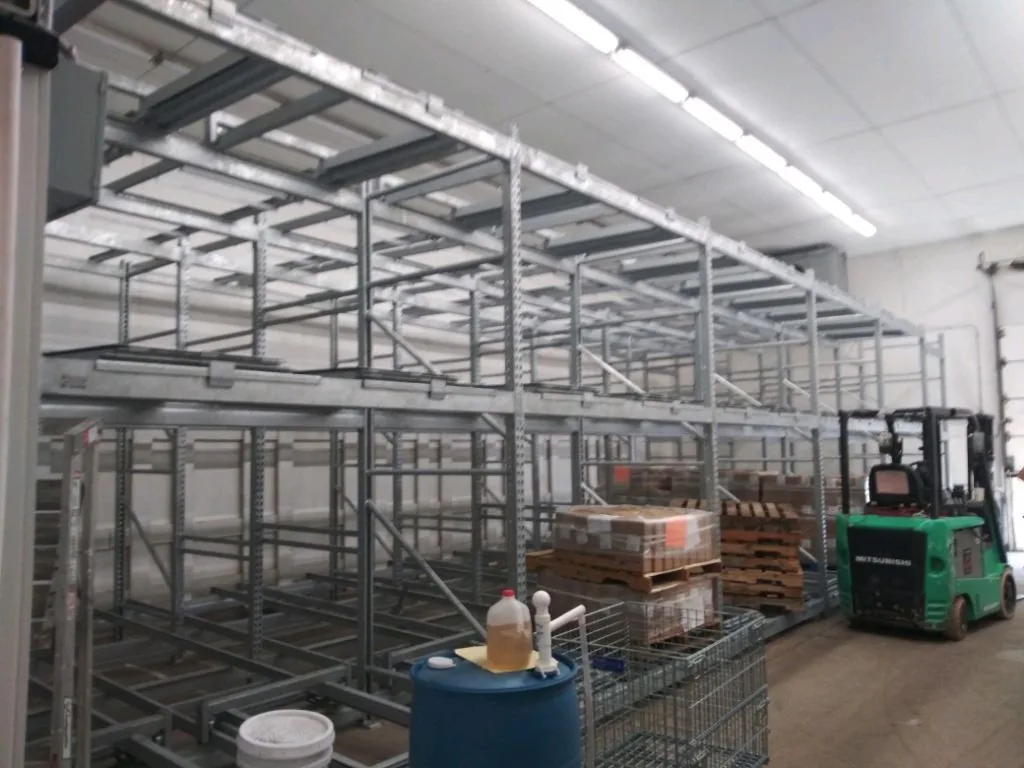 Triumph Gear Systems, UtahWarehouse racking for an aerospace gear manufacturer along the Wasatch Front.
For the national view of Vidir equipment in this sector see vertical storage for aerospace and aviation MRO, and for depot and government work the military and government hub. Utah dealerships with a tire problem rather than a parts problem should read the Utah tire carousel page. Most Utah plants pair a VLM with conventional Utah pallet rack for palletized material, and our tier 1, 2 and 3 aerospace supplier page covers the rest of the plant.
Shop Tray Bins & Containers Online
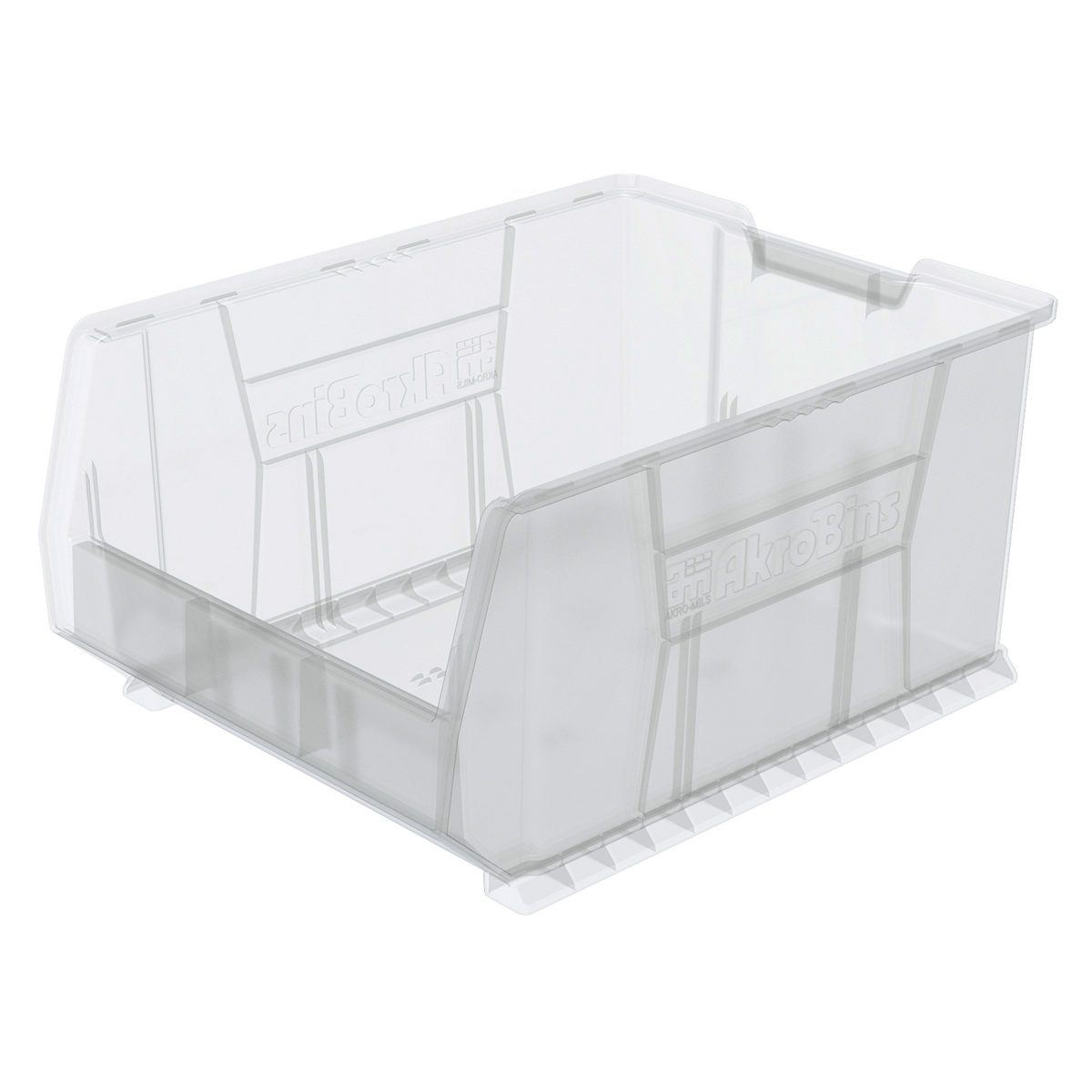
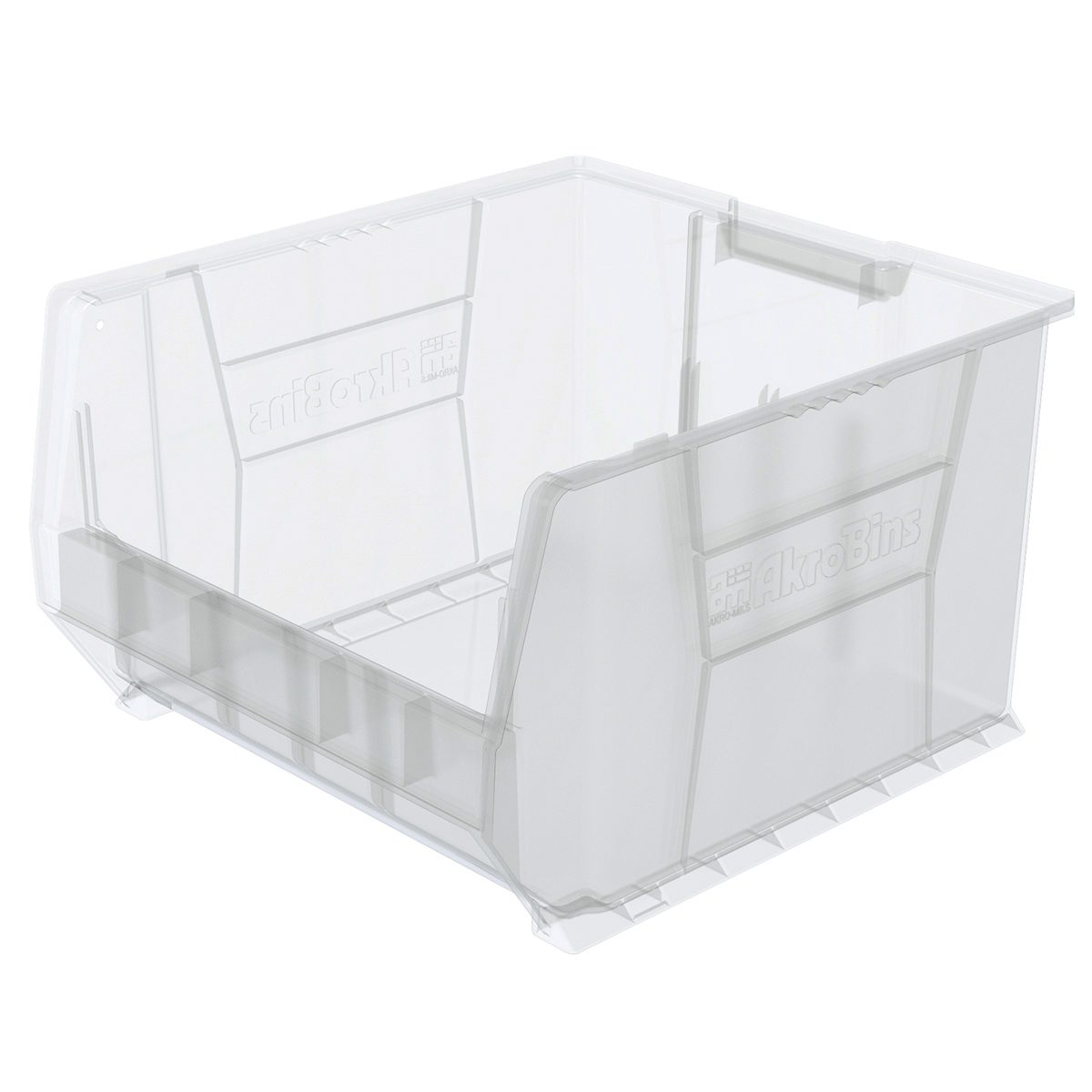
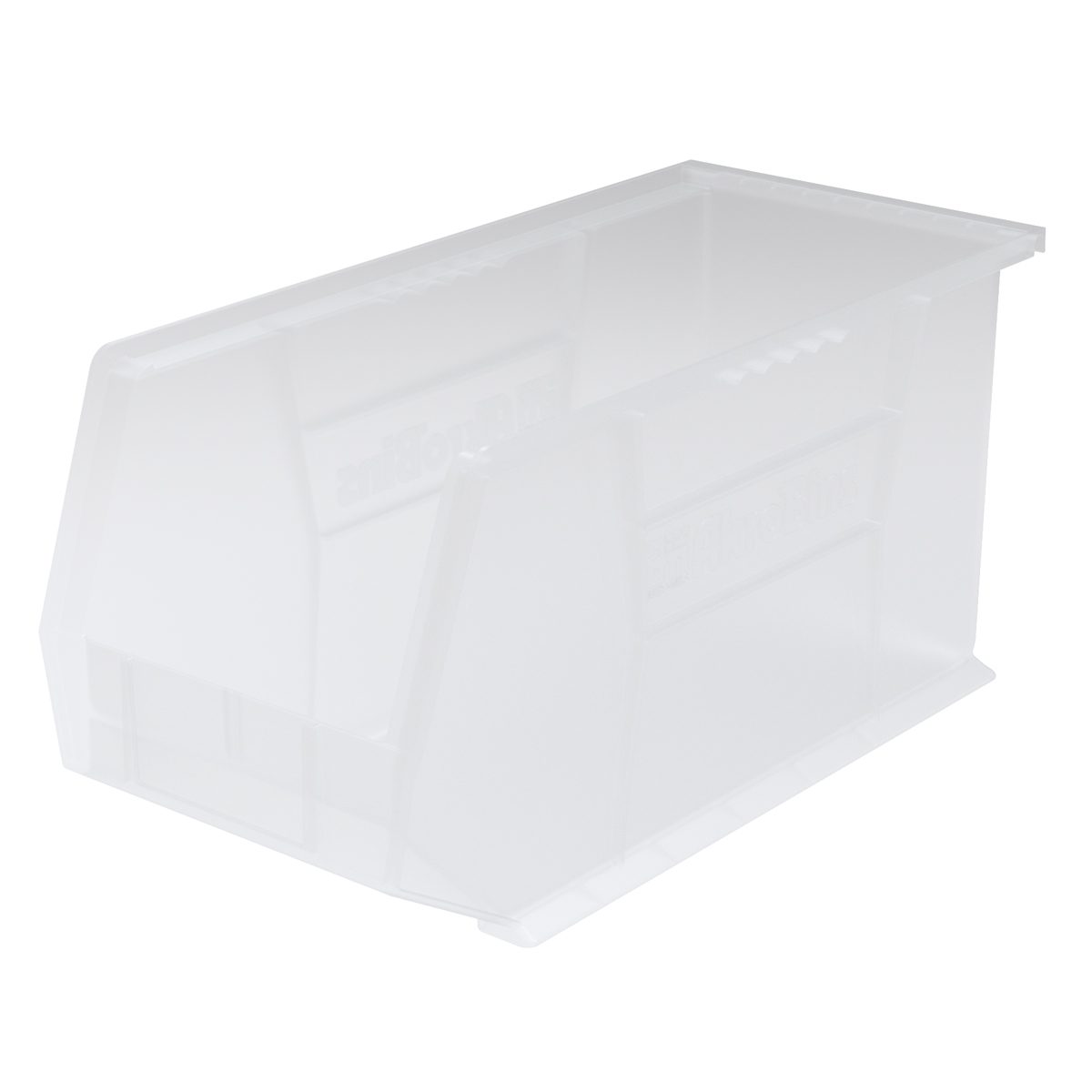
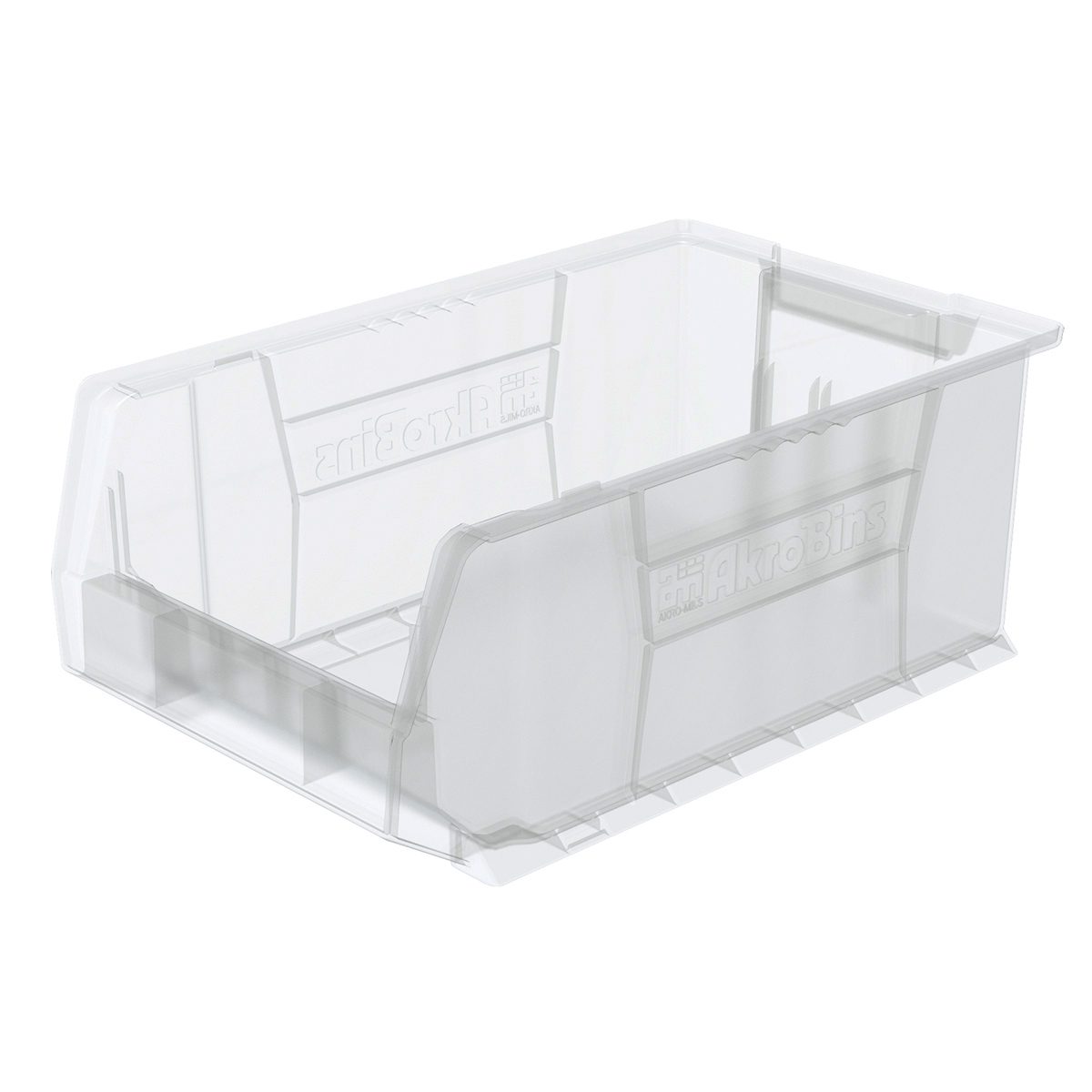
Vidir Lift Modules are quoted to order, not sold from the online store. These are real stacking supply bins from our catalog, the kind used to subdivide VLM trays for loose parts (items up to 30 in tall fit a standard tray); they are not the machine itself.
Utah Aerospace VLM FAQs
Does Material Handling USA supply Vidir Lift Modules in Utah?
How much floor space does a VLM take?
How tall is a Vidir Lift Module?
What can each tray hold?
What power does it need?
Can it control who accesses parts and record transactions?
Do we need a permit or engineering review in Utah?
Planning a Parts Crib or Tool Room for a Utah Aerospace Plant?
Send us your parts list and ceiling height. We will size a Vidir Lift Module, propose the tray layout and access options that fit your program, and quote supply or supply and installation.