
High-Density Pallet Rack Systems for Maximum Warehouse Storage Capacity
Drive-in, push-back, pallet flow, double-deep, very narrow aisle and mobile pallet racking — engineered, installed and RMI-compliant systems that raise storage capacity per square foot of warehouse floor.
Talk with a pallet rack specialist. Call (800) 326-4403 or Email Sales@MH-USA.com
What High-Density Pallet Rack Systems Are
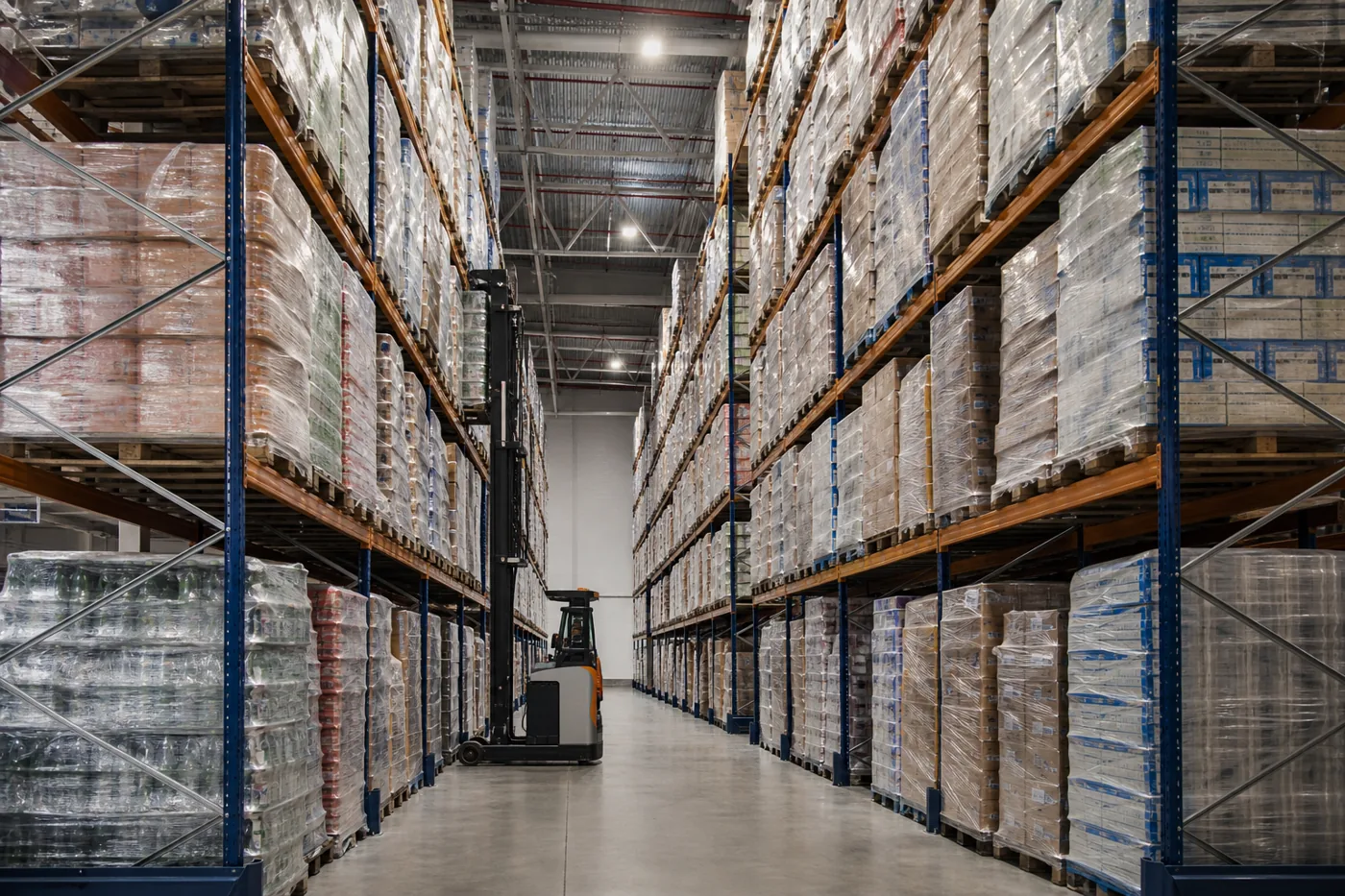
High-density pallet rack is any racking configuration engineered to store more pallets per square foot than single-deep selective rack. It does that in one of two ways: by storing pallets multiple positions deep in a lane, or by removing fixed aisles from the layout entirely. Both approaches convert floor area that a conventional layout spends on forklift travel into revenue-carrying pallet positions.
The measure that matters is storage cube utilization — the share of the building envelope actually occupied by product. A conventional selective layout with 12-foot aisles typically dedicates about 45 percent of the floor to storage. High-density systems push that figure to between 60 and 80 percent, and mobile pallet racking can exceed it. The trade-off is always the same: as density rises, direct access to any individual pallet falls. Choosing a system is an exercise in buying the most density your SKU profile and throughput can tolerate.
Storage Capacity by Pallet Rack System Type
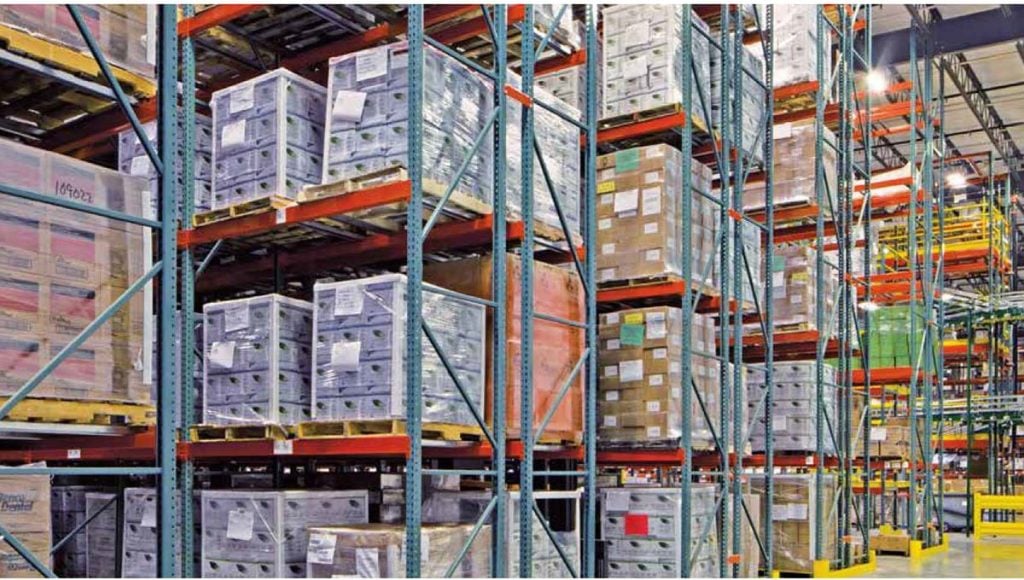
Density, selectivity and rotation for each engineered system MH-USA supplies. Figures are typical design ranges for standard 48×40 pallets; a site-specific layout produces the exact pallet-position count.
| Rack System | Lane Depth | Typical Floor Utilization | Density vs Selective | Selectivity | Rotation |
|---|---|---|---|---|---|
| Selective rack | 1 pallet | ~45% | 1.0x (baseline) | 100% — every pallet | FIFO or LIFO |
| Double-deep rack | 2 pallets | ~60% | 1.6x–2.0x | 50% of positions | LIFO |
| Push-back rack | 2–6 pallets | ~65% | 3x–5x | One SKU per lane, all lanes at the aisle | LIFO |
| Pallet flow rack | 5–20 pallets | ~70% | 4x–6x | One SKU per lane, separate load/pick faces | FIFO |
| Drive-in / drive-through | 5–12 pallets | up to 75% | 4x–6x | Lowest — lane entry required | LIFO (FIFO if drive-through) |
| Very narrow aisle | 1 pallet | ~65% | 1.4x–1.8x | 100% — every pallet | FIFO or LIFO |
| Mobile pallet rack | 1–2 pallets | 80%+ | 2x–2.5x | 100% once the aisle is opened | FIFO or LIFO |
Reading the table
Deep-lane systems (drive-in, pallet flow, push-back) deliver the largest capacity gains but need SKU depth to fill the lanes. A warehouse with hundreds of low-quantity SKUs usually gets more real capacity from very narrow aisle or mobile racking, which keep full selectivity while shrinking the aisle module.
Deep-Lane Systems: Drive-In, Push-Back and Pallet Flow
Drive-in and drive-through rack
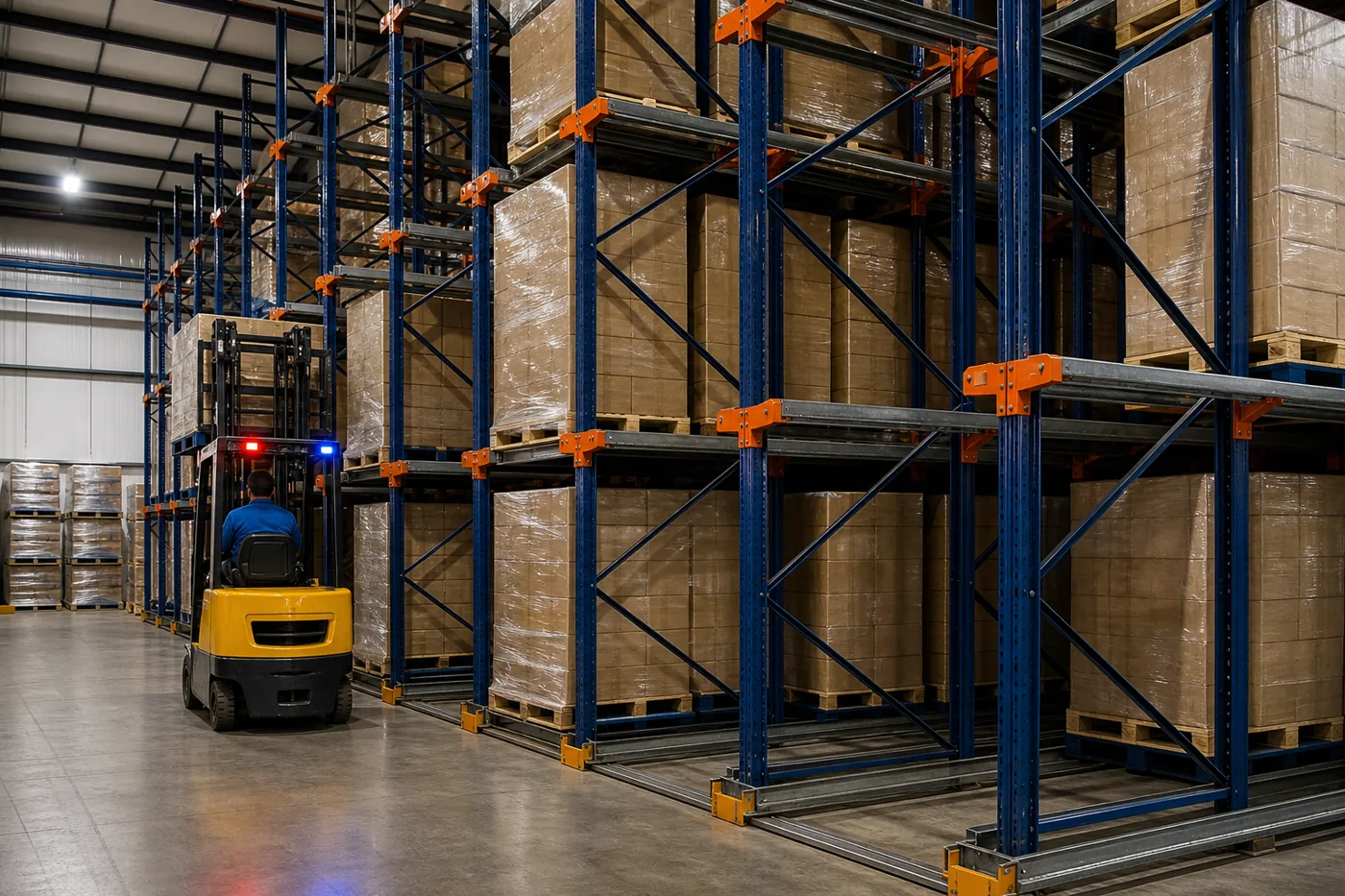
Drive-in racking removes the aisles between bays and replaces them with continuous storage lanes of structural steel, typically five to twelve pallets deep and two to five levels high. Forklifts drive inside the lane and set pallets on continuous rails. Because the truck operates within the structure, drive-in systems are built from hot-rolled structural channel rather than roll-formed steel, and floor guide rails keep the mast centered. Drive-in is loaded and unloaded from a single face (LIFO); drive-through has an open face at each end and rotates FIFO.
Push-back rack
Push-back racking stores two to six pallets deep on nested carts riding inclined rails. A loaded pallet pushes the pallet behind it up the incline; when a pallet is removed, gravity returns the rest to the aisle face. Every lane remains accessible from the aisle, so a push-back system with twenty lanes offers twenty SKU faces while storing up to six deep in each. That is why push-back is generally the best density-to-selectivity ratio of any deep-lane system, and why it suits distribution centers with moderate SKU counts and full-pallet picking.
Pallet flow rack
Pallet flow rack uses gravity roller or wheel conveyor set on a slope, with speed controllers metering pallet travel. Product is loaded at the high end and picked at the low end, giving true FIFO rotation across lanes that can run five to twenty pallets deep. Food, beverage and pharmaceutical operations with date-coded stock get both the highest practical density and the rotation discipline their product requires. Lane depth and roller specification are engineered to pallet weight and pallet-bottom condition, since a damaged stringer will not travel reliably.
Aisle-Reduction Systems: Very Narrow Aisle and Mobile Racking
Where deep-lane systems trade selectivity for density, aisle-reduction systems keep every pallet directly accessible and take the space out of the aisle instead. They are the right answer for high-SKU, low-quantity inventory profiles.
Very narrow aisle (VNA)
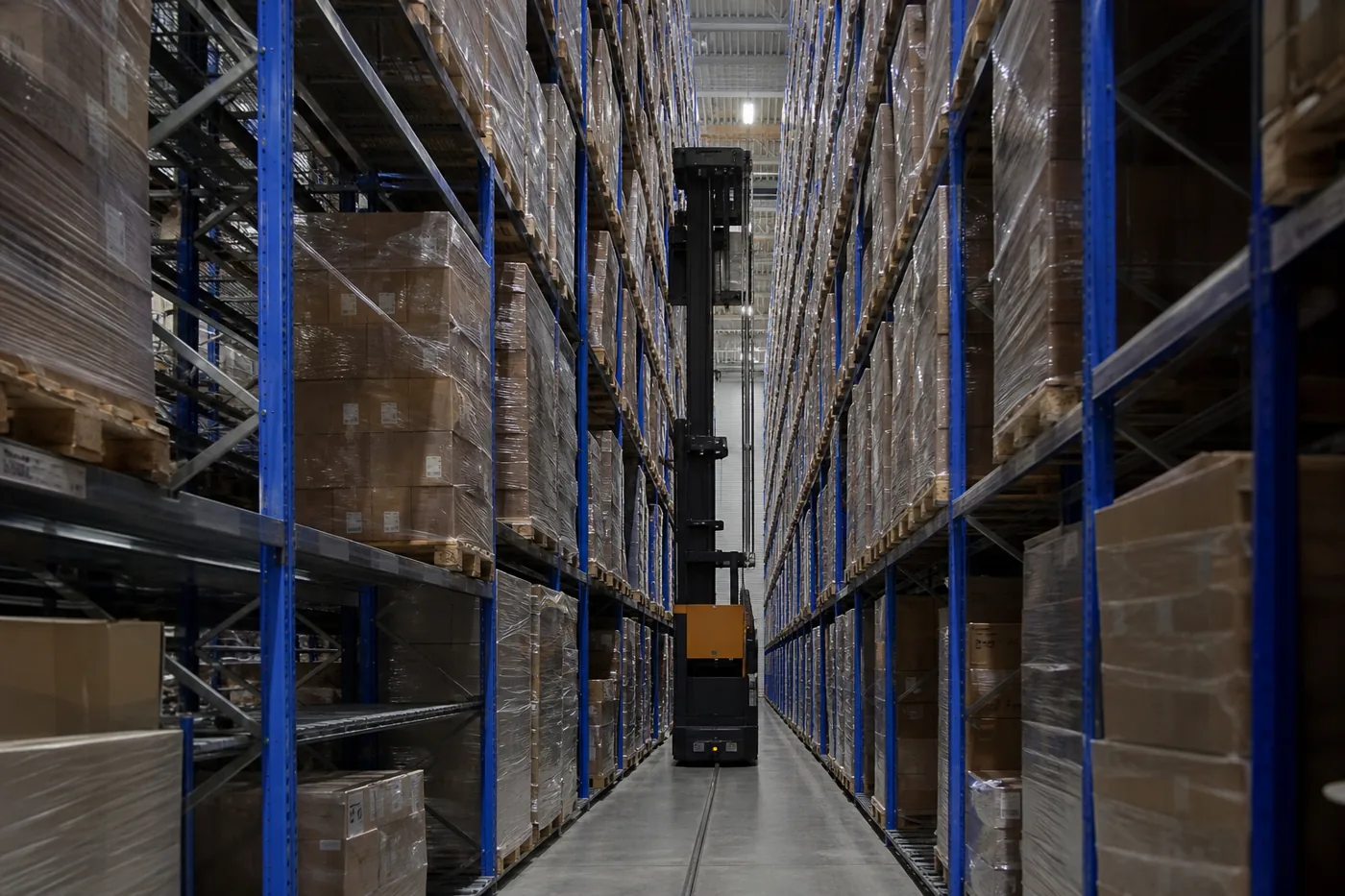
A conventional counterbalanced truck needs an aisle of roughly 12 to 13 feet. A reach truck works in 8 to 10 feet. A guided turret or swing-reach truck operates in 5 to 6 feet and lifts to 40 feet or more. Narrowing the aisle module from 12 feet to 6 feet across a building adds rows of racking without touching the walls — commonly 40 to 80 percent more pallet positions. VNA requires wire guidance or rail guidance in the floor, tighter floor flatness tolerances, and rack engineered for the reduced clearances.
Mobile pallet racking
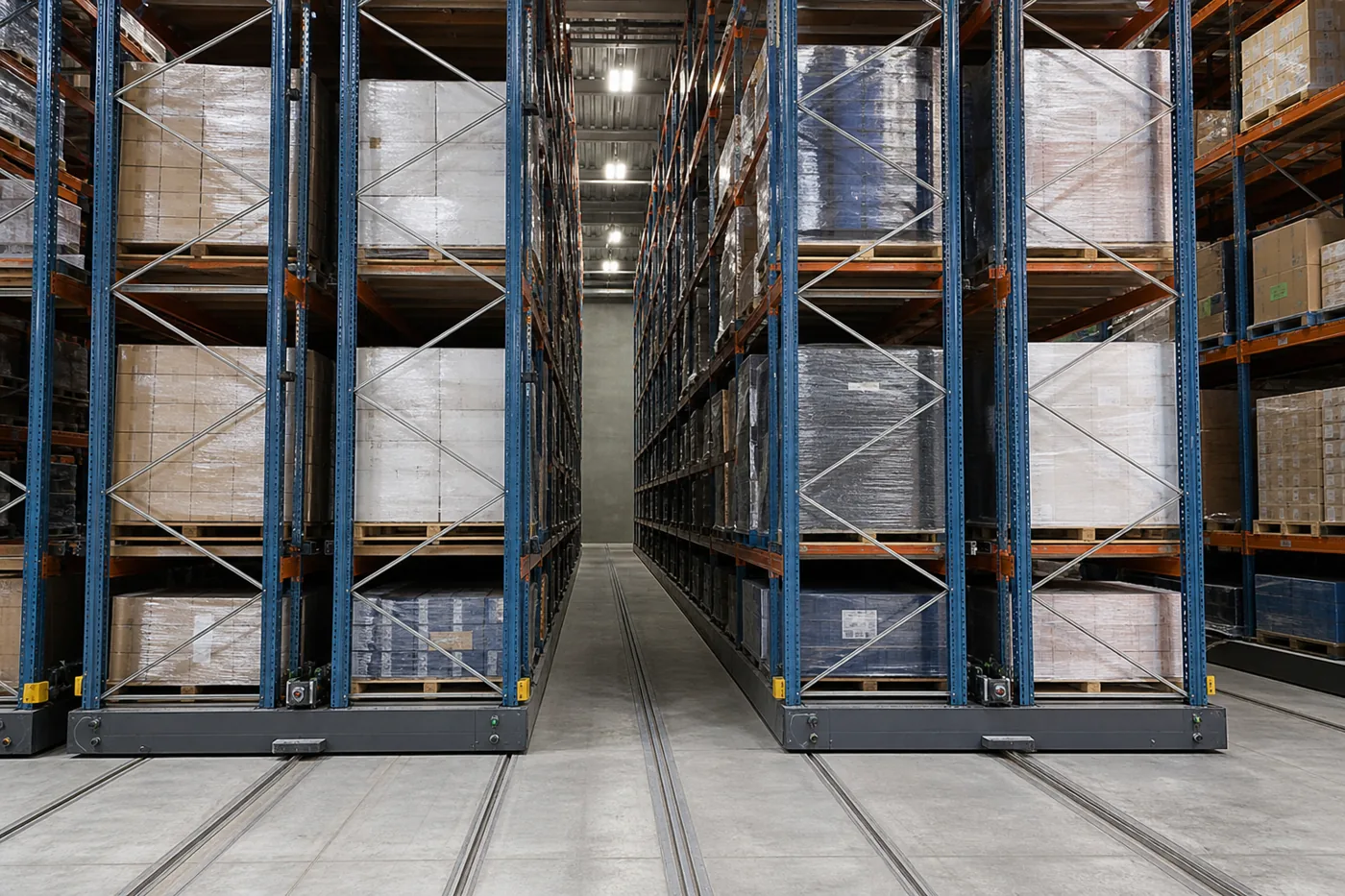
Mobile pallet racking mounts rack rows on powered carriages that travel on rails embedded in the floor. The system holds a single open aisle and moves it to whichever row is being served, so a bank that would need six fixed aisles needs one. Floor utilization above 80 percent is achievable, and every pallet stays selective. Mobile racking is common in cold storage, where refrigerated cube is the single most expensive square footage in the building, and in facilities where throughput is moderate but space is fixed.
How Storage Capacity Is Engineered
Pallet-position count is the output of a calculation, not a catalog number. Every high-density layout MH-USA produces works through the same variables:
| Design Input | Why It Determines Capacity |
|---|---|
| Usable clear height | Beam levels are set from the lowest obstruction — sprinkler heads, lights, building steel — not from the roof deck. Clear height often yields one additional beam level that a layout drawn to nominal height misses. |
| Load height and pallet overhang | Level spacing equals load height plus pallet height plus operating clearance. Standardizing load heights across SKUs is one of the cheapest ways to add a level. |
| Lane depth vs SKU depth | A six-deep lane holding two pallets wastes four positions. Deep-lane systems only pay off when average on-hand quantity per SKU fills the lane. |
| Aisle module | Determined by the lift truck, not the rack. Changing the truck class changes the aisle, which changes how many rack rows fit across the building. |
| Flue space and sprinkler design | Transverse and longitudinal flue spaces are fire-protection requirements, not slack. In-rack sprinklers may be required for deep-lane and high-bay configurations. |
| Seismic design category | Anchoring, base plates and frame capacity are engineered per ANSI MH16.1 for the site’s seismic category. Deep-lane and mobile systems concentrate load and are calculated individually. |
Capacity math, briefly
Positions per bay = beam levels × pallets per level. Positions per lane = positions per bay × lane depth. Building total = positions per lane × lanes per row × rows that fit within the aisle module, minus cross-aisle and flue allowances. MH-USA runs this on your building dimensions and delivers the engineered drawing before a quote is issued.
Selecting a High-Density System
| Operating Profile | Recommended System | Reason |
|---|---|---|
| Few SKUs, high volume per SKU, LIFO acceptable | Drive-in rack | Maximum density per dollar when full lanes of one SKU are the norm |
| Date-coded or perishable stock, FIFO required | Pallet flow rack | Gravity lanes enforce rotation without double handling |
| Moderate SKU count, 2–6 pallets per SKU | Push-back rack | Deep storage while keeping every lane at the aisle face |
| Many SKUs, low quantity each, full selectivity needed | Very narrow aisle | Density comes from the aisle, so selectivity is untouched |
| Fixed building, expensive cube, moderate throughput | Mobile pallet rack | Highest floor utilization of any selective system |
| Incremental gain, minimal change to operations | Double-deep rack | Roughly doubles selective density using existing rack components plus a double-reach truck |
Cost per pallet position, not cost per bay, is the correct comparison. A drive-in lane costs more per bay than selective rack but far less per pallet position stored. Mobile racking carries the highest component cost of any system here and still wins when compared against the cost of leasing or building the square footage it saves. Current component and installed pricing for every system above is on the pallet rack cost and pricing page.
High-density systems also change what the rack must survive. Deep-lane structures absorb forklift contact inside the lane, so structural steel rack is standard for drive-in, and column protection is specified at lane entries. Where levels are decked, wire decking is selected for the flue and sprinkler design rather than by default.
Installation, Compliance and Service
MH-USA engineers, supplies and installs every system on this page. Projects include a stamped layout where required, seismic calculations to the site’s design category, anchoring specification, permit-ready drawings, installation by our own crews, and post-installation inspection. Load capacity plaques are provided per ANSI MH16.1 so operators know the rated capacity of each configuration — a requirement that matters more in deep-lane systems, where a single lane may hold six pallets on one continuous rail pair.
Existing rack is assessed before anything new is quoted. Many buildings already own the clear height, the floor slab or the frame capacity to support a denser configuration, and reusing serviceable uprights and beams lowers the cost per added pallet position substantially.
Get a free quote
Tell us what you are storing, the room size and your timeline. A project specialist will follow up with layout options and pricing. Prefer to talk? Call (800) 326-4403.
High-Density Pallet Rack FAQ
A high-density pallet rack system is any racking configuration that stores more than one pallet deep per lane, or that removes aisles altogether, so a larger share of the building’s floor area holds product instead of forklift travel space. Drive-in, drive-through, push-back, pallet flow, double-deep and mobile pallet rack are all high-density systems. Standard single-deep selective rack is the low-density baseline they are measured against.
Selective rack typically converts about 45 percent of a building’s floor area into storage. Double-deep raises that to roughly 60 percent, push-back and pallet flow to about 65 to 75 percent, drive-in to as much as 75 percent, and mobile pallet rack to 80 percent or more. In pallet-position terms that is commonly 1.6x to 4x the positions of a selective layout in the same footprint.
Push-back rack has the best selectivity per unit of density because every lane stays accessible from the aisle face while storing two to six pallets deep. Pallet flow offers similar density with FIFO rotation. Drive-in rack is the densest aisle-eliminating option but the least selective, since a forklift must enter the lane and the whole lane usually holds one SKU.
Drive-in rack needs a counterbalanced or reach truck the operator can drive inside the lane, plus floor guide rails. Very narrow aisle layouts require guided turret or swing-reach trucks and a wire or rail guidance system. Push-back, pallet flow, double-deep and mobile rack are all loaded from the aisle; double-deep needs a double-reach truck, the others use conventional lift equipment.
Capacity is calculated from usable clear height, beam levels, bay dimensions, pallet size, lane depth and the aisle module the chosen lift truck requires. Multiply positions per bay by lanes per row by rows per building, then subtract flue space, sprinkler clearance and cross-aisle requirements. MH-USA runs this calculation as part of every engineered rack layout.
High-density systems are engineered to ANSI MH16.1 (the RMI specification) and to the seismic design category of the installation site. Deep-lane and mobile systems concentrate load, so anchoring, base plate sizing and frame capacity are calculated for the specific configuration rather than taken from a generic capacity chart.
Buyer Resources
Get an Engineered High-Density Rack Layout
Send us your building dimensions and pallet profile. We’ll return a pallet-position count for each system that fits your operation, with installed pricing.