
Industrial Distributor Service Center Racking: Applied Industrial Technologies
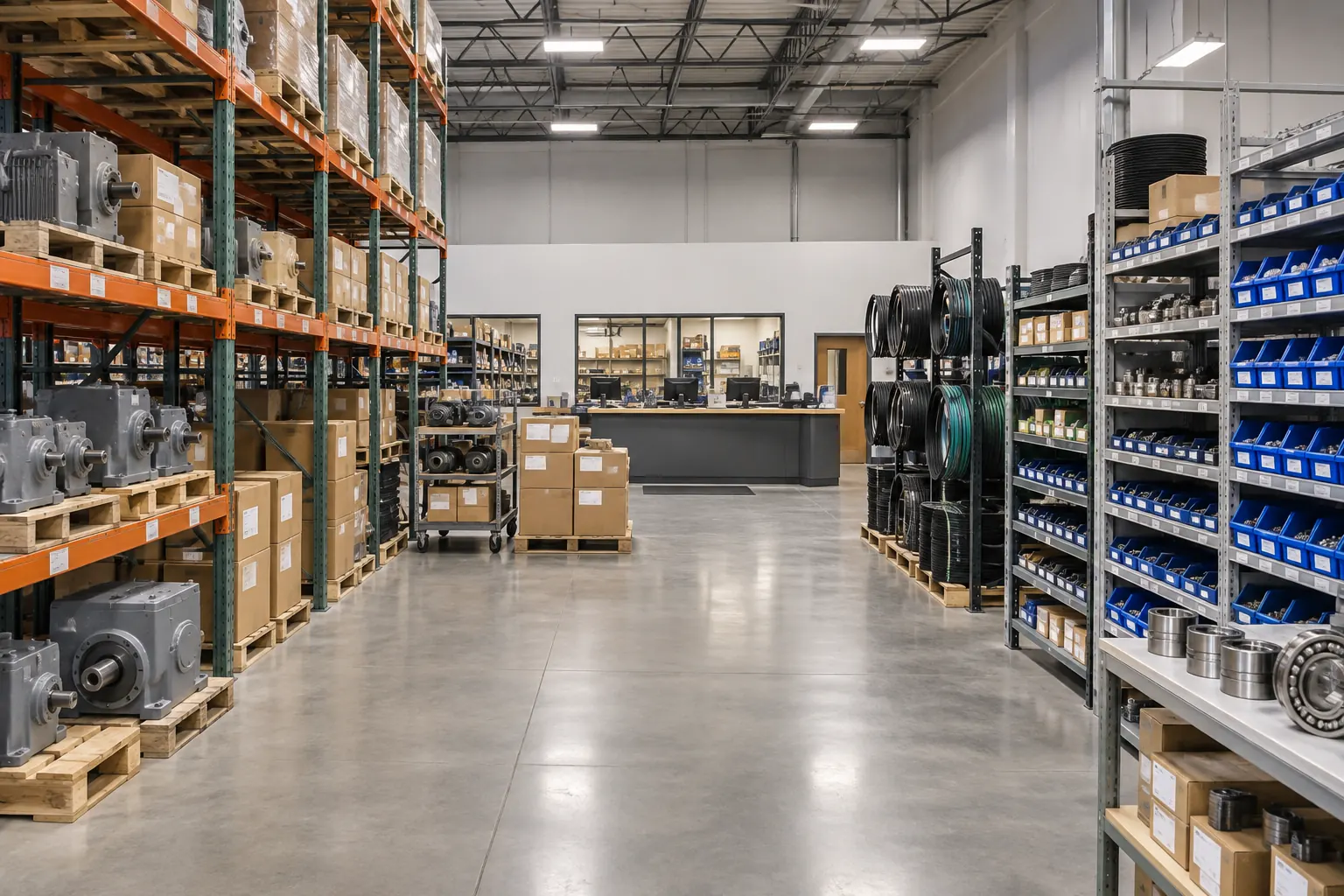
A bearings and power transmission distributor stores heavy, dense, high-SKU parts and long hose stock in one building — and has to pick from all of it at counter speed.
Industrial MRO distribution
Client sector
Pallet rack
Product category supplied
Salt Lake City, Utah
Service center location
2025
Most recent project
Plan your layout before you buy
Configure upright height, beam width, bay count, and load levels in our free 3D Pallet Rack Configurator, then get an instant bill of materials and request a quote.
The project
Applied Industrial Technologies is a national industrial distributor whose public product scope covers bearings, mechanical power transmission components, hydraulic and pneumatic products and hose, supplied to manufacturers, processors and maintenance departments. Material Handling USA supplied pallet rack systems for the company’s Salt Lake City, Utah service center, a project closed in 2025 with a repeat customer.
The work sits inside our Utah project base — see Utah pallet rack for the regional design, supply and installation program these branch projects belong to, which in turn supports our main pallet rack systems resource.
An industrial MRO distributor’s own service center is a genuinely different storage problem from the warehouses we have covered before. It is not a bulk distribution center shipping full pallets, and it is not a manufacturer’s raw-material store. It is a hybrid: a dense, high-SKU parts room that also carries very heavy single items, long stock and a fabrication bench, all feeding a counter where customers and service trucks expect parts in minutes.
Why a distributor service center stores differently
Weight is concentrated in small packages. A single mounted bearing, gear reducer or hydraulic cylinder can weigh more than a whole pallet of light consumer goods while occupying a fraction of a shelf. Capacity planning has to follow the actual part weights, not the cube.
SKU count is very high and demand is unpredictable. Branches carry thousands of part numbers so a customer’s line can restart today, which means many small, clearly labeled positions rather than a few large ones.
Several material shapes share one roof. Boxed bearings, palletized reducers, coiled hose, lengths of shafting and reels of belting do not store well on the same equipment.
Everything is measured in counter minutes. The storage plan is judged by how fast a counter or inside-sales pick can be completed accurately, which pushes fast movers close to the counter and slow, heavy stock into rack further back.
What a bearings and power transmission branch stores
Using only the client’s own publicly stated product scope, an industrial distributor service center typically has to store these categories — each with a different storage answer:
| Material category | Storage characteristics | Typical storage answer |
|---|---|---|
| Ball, roller and mounted bearings | Boxed, small footprint, heavy for their size, very high SKU count. | Bin and small-parts shelving close to the counter; heavier sizes on decked rack levels. |
| Gear reducers, motors, pumps and cylinders | Single heavy units, often palletized or crated, awkward to hand-carry. | Selective pallet rack at or near floor level so a lift truck can reach them. |
| Sheaves, sprockets, couplings and bushings | Dense metal parts in many sizes, moderate weight, frequently picked. | Shelving with reinforced levels or decked rack beams rated for the real load. |
| V-belts, timing belts and conveyor belting | Coiled or reeled, bulky but light, easily damaged by crushing. | Dedicated shelving or rack levels where coils hang or rest without deforming. |
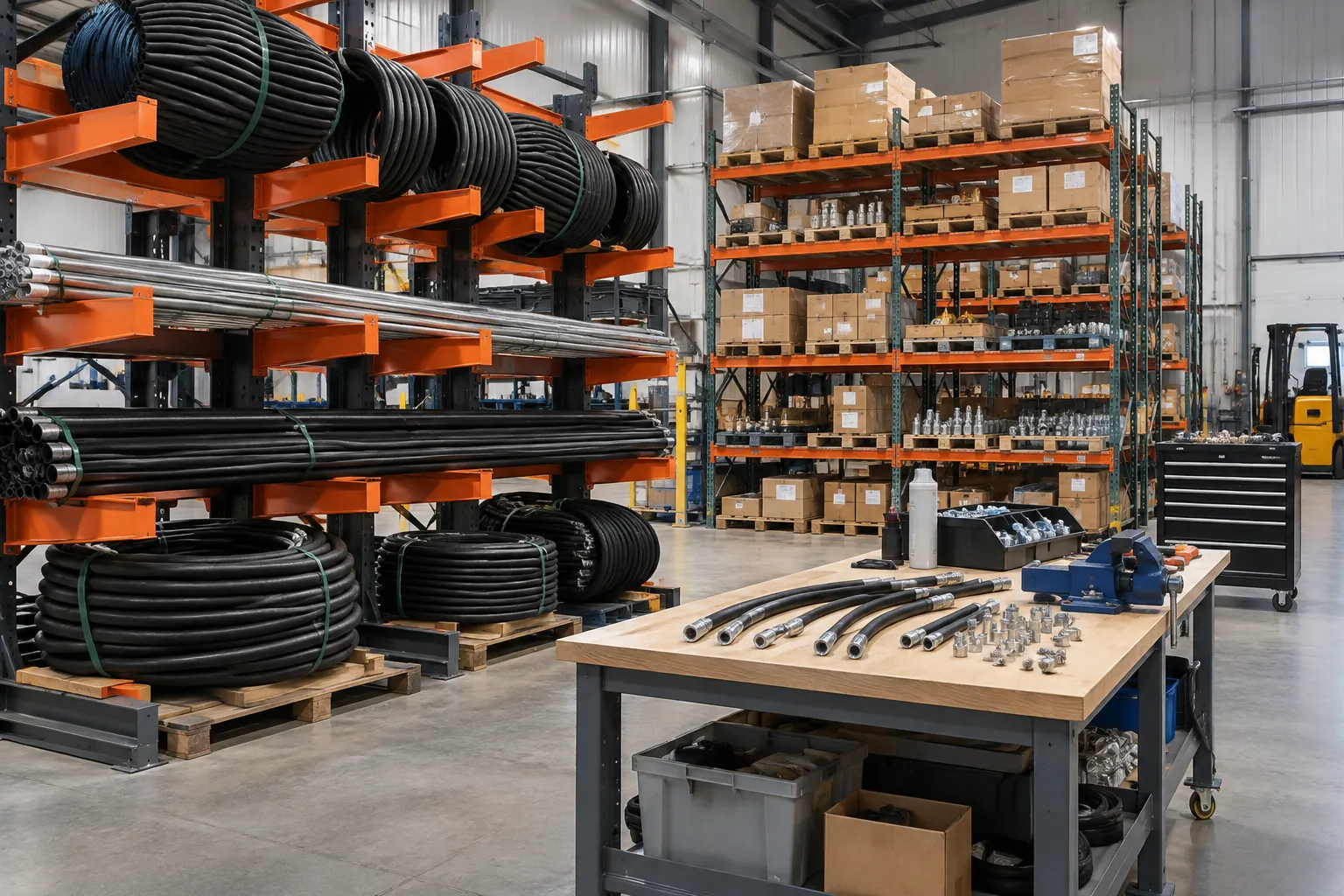
| Hydraulic hose, tubing and shafting | Long stock, cannot be stored across standard rack beams safely. | Cantilever rack or vertical stock racks near the fabrication bench. |
| Fittings, seals and adapters | Very small, extremely high piece count, easily mixed up. | Bin shelving with disciplined labeling, sized for pick speed not density. |
Rack and shelving selection by material type
A branch like this rarely needs a single rack type. The productive layouts combine three or four systems, each doing the job it is designed for:
- Selective pallet rack for palletized reducers, motors, drums of lubricant and reserve stock of fast movers — every pallet position directly accessible, which matters when any of a thousand part numbers can be the next order.
- Cantilever rack for hose coils, tubing, shafting and other long stock, so nothing overhangs a beam or leans against a wall.
- Boltless (rivet) shelving with bins for bearings, fittings and seals — the high-SKU, high-frequency picking core of the branch.
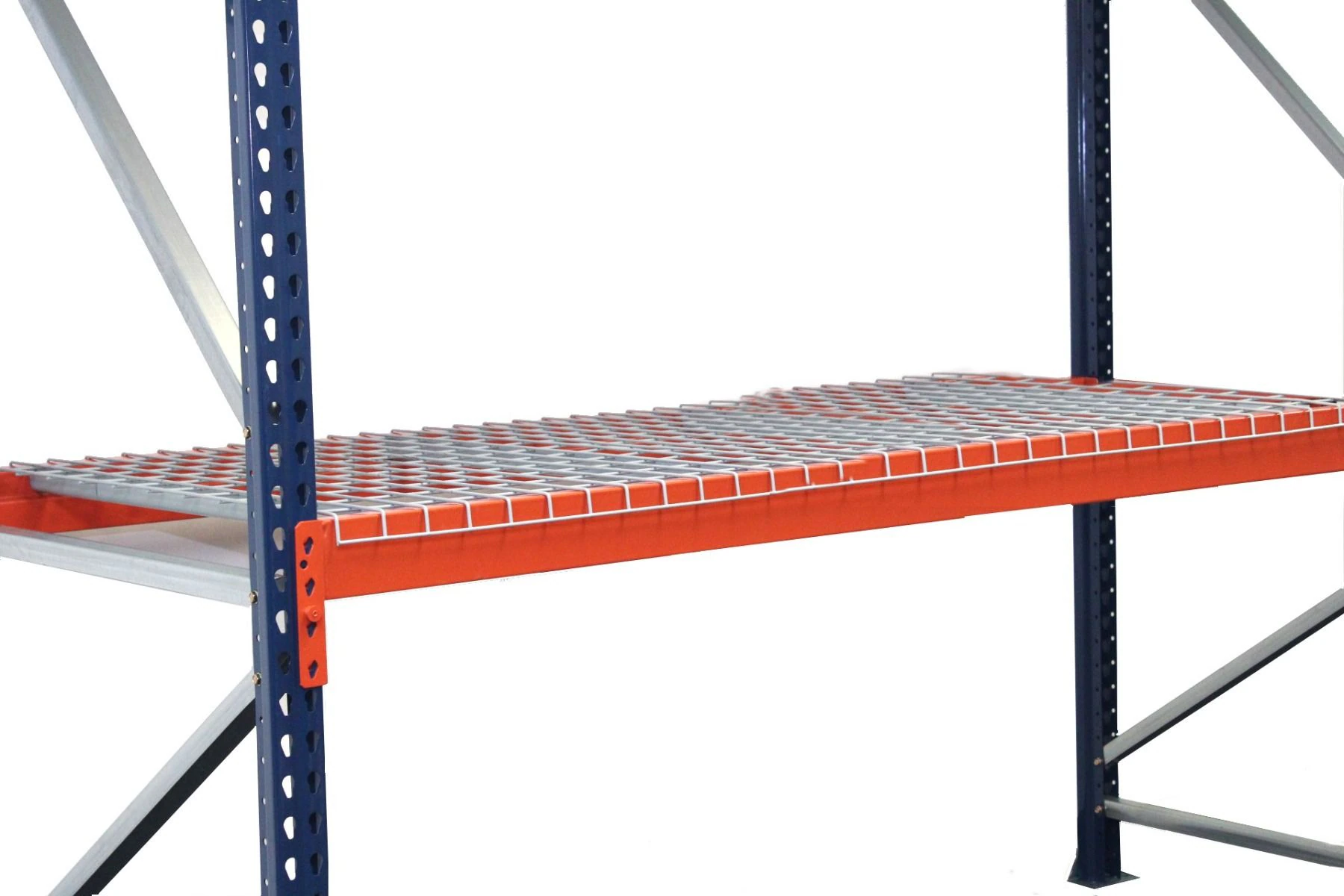
- Wire decking on rack levels wherever loose boxes, non-palletized parts or small containers are stored, so nothing can fall through the beams.
- Reserve levels above the pick face for backup stock of the same part number, which keeps replenishment inside the same aisle instead of across the building.
Density-oriented systems — drive-in, push-back and pallet flow — are usually the wrong answer for a branch like this. They trade selectivity for cube, and selectivity is exactly what a distributor sells. Density systems earn their place where a few SKUs move in volume, not where thousands of part numbers each move occasionally. Our equipment dealer parts warehouse project covers the same trade-off from the dealership side.
Load and capacity: dense parts break assumptions
The single most common design mistake in an industrial parts warehouse is rating storage on volume rather than weight. Shelving and rack that looks half empty can be loaded well past its rated capacity when the material is solid steel.
Rate each level for the heaviest realistic load, not the average. One shelf full of mounted bearings or couplings can weigh several times what the same shelf holds in boxed light goods. Our guide to pallet rack weight capacity explains how beam and upright capacities interact.
Watch upright capacity, not just beam capacity. Beam ratings are per level; the upright frame carries the sum of every level above the floor, so a rack with many heavily loaded levels can reach its frame limit before any single beam is overloaded.
Keep the heaviest items low. Gear reducers, motors and pumps belong at floor or second level for both handling safety and frame loading.
Do not assume shelving can carry rack loads. When part weights climb, the correct answer is often decked rack beams rather than adding more shelf levels — the capacity gap between shelving and structural rack is large. Our fastener distribution case study looks at the same shelving-versus-rack decision for high-density fastener stock.
Counter and will-call workflow
Branch storage exists to serve a counter. A layout that stores efficiently but picks slowly makes the branch worse, so the workflow drives the plan:
Velocity zoning from the counter outward. The parts a branch sells daily belong in the closest bays; slow-moving and reserve stock belongs at the back of the building or on upper levels. Re-checking that zoning annually matters, because the mix of what moves changes.
A staging area that is not an aisle. Will-call orders, service-truck kits and outbound freight need their own floor positions or a dedicated staging rack, or they end up parked in aisles where they block picking and get damaged.
Returns and cores need a defined home. Distributors handle warranty returns, exchanges and cores; without a labeled zone these become a permanent pile of unsellable inventory mixed into good stock.
Label positions, not just products. Location labeling on every rack and shelf level is what allows a new employee to pick accurately — and what makes cycle counting realistic in a branch with thousands of part numbers.
Hose and belting fabrication areas
Many industrial distributor branches also fabricate — cutting and crimping hydraulic hose assemblies, cutting belting to length, or building simple drive assemblies. Storage around a fabrication bench has its own requirements:
- Store long hose and tubing stock on cantilever or vertical stock rack within a few steps of the bench, so cut-to-length work does not become a two-person carry.
- Keep fittings and crimp collars in bin shelving at the bench, separated by series and size — a mis-picked fitting is a failed assembly, not just a picking error.
- Leave clear floor space around the bench for uncoiling. Hose fights back, and a cramped bench area is where struck-rack damage happens.
- Protect rack uprights near the bench and its traffic path with column protectors and end-of-aisle guards.
- Keep finished assemblies on a staging shelf or rack level, tagged, rather than on the bench where they can be mixed with work in process.
Code, seismic and site constraints
Rack in a Utah branch is designed under the same structural rules as any other pallet rack installation, and the local seismic environment is a real design input rather than a formality.
Seismic design. Utah’s Wasatch Front sits in a moderate-to-high seismic region, so rack anchoring, bracing and frame selection are designed for seismic load combinations under the applicable building code in addition to day-to-day static loads.
Storage height and fire protection. Rack height, flue spaces and the commodities stored interact with the building’s sprinkler design; lubricants and other flammable or combustible liquids carry their own storage requirements that should be settled with the local fire authority before a layout is finalized rather than after.
Existing building limits. Branch buildings are usually leased, with fixed column grids, dock positions, lighting layouts and clear heights. Good branch layouts work with those constraints — aisles aligned to existing columns, rack runs sized to the real clear height under sprinklers and lighting.
The Rack Manufacturers Institute publishes ANSI/RMI MH16.1, the design standard for industrial steel storage racks; OSHA general-industry rules cover the housekeeping, material-handling and load-security side of daily operation.
Installation and safety
A working branch cannot close while its storage is replaced, so installation sequencing matters as much as the rack selection.
- Phase the installation aisle by aisle where possible, so the counter keeps operating while rack is set and loaded.
- Anchor every frame and install to the ANSI/RMI MH16.1 standard — see our pallet rack installation guidance.
- Post load-capacity signage per level and keep it accurate after any beam is moved, which happens often in a branch as the product mix shifts.
- Put rack guards and column protectors at aisle ends and anywhere a lift truck or cart turns near a frame.
- Inspect racking on a defined cycle and repair damaged frames rather than working around them — see rack inspection and repair.
Serving Utah industrial distributors
Material Handling USA has been an industry leader in storage and material handling since 1997, designing, supplying and installing pallet rack, cantilever rack and boltless shelving for distribution branches across the Wasatch Front. See our related work for an energy and industrial MRO supply branch. For Utah projects call 801-328-8788, or see our Utah pallet rack page.
What we publish. We name clients with permission and describe the engineering thinking behind a project. We do not publish facility layouts, room dimensions, storage capacities or contract values for any customer.
Shop Pallet Rack & Shelving Online
Buy select items directly from our online store, or request a quote for volume, custom sizes and freight-rated orders.


Frequently asked questions
What racking suits an industrial bearings and power transmission distributor?
Why not use drive-in or pallet flow rack in a distribution branch?
How do you set shelf capacity for bearings and other dense parts?
Where should hydraulic hose stock be stored?
How should a branch organize its will-call and staging area?
Does a Utah branch need seismic rack design?
Can rack be installed without closing the branch?
Planning storage for a distribution branch or parts warehouse?
We design pallet rack, cantilever rack and boltless shelving layouts for high-SKU industrial distributors, sized to real part weights and counter workflow. Free design consultation.
Based near the Wasatch Front? See our pallet racking Salt Lake City page for local delivery and install details.
Want a starting layout before the consultation? Use our free pallet rack configurator to plan bays and generate a parts list.