
Pharmacy Shelving for Hospital, Retail and Central-Fill Pharmacies
How to choose pharmacy shelving for each zone of the pharmacy: dispensing shelves with dividers and bins, high-density mobile shelving for back stock, and the controlled, hazardous and cold storage that sits beside them.
Dispensing
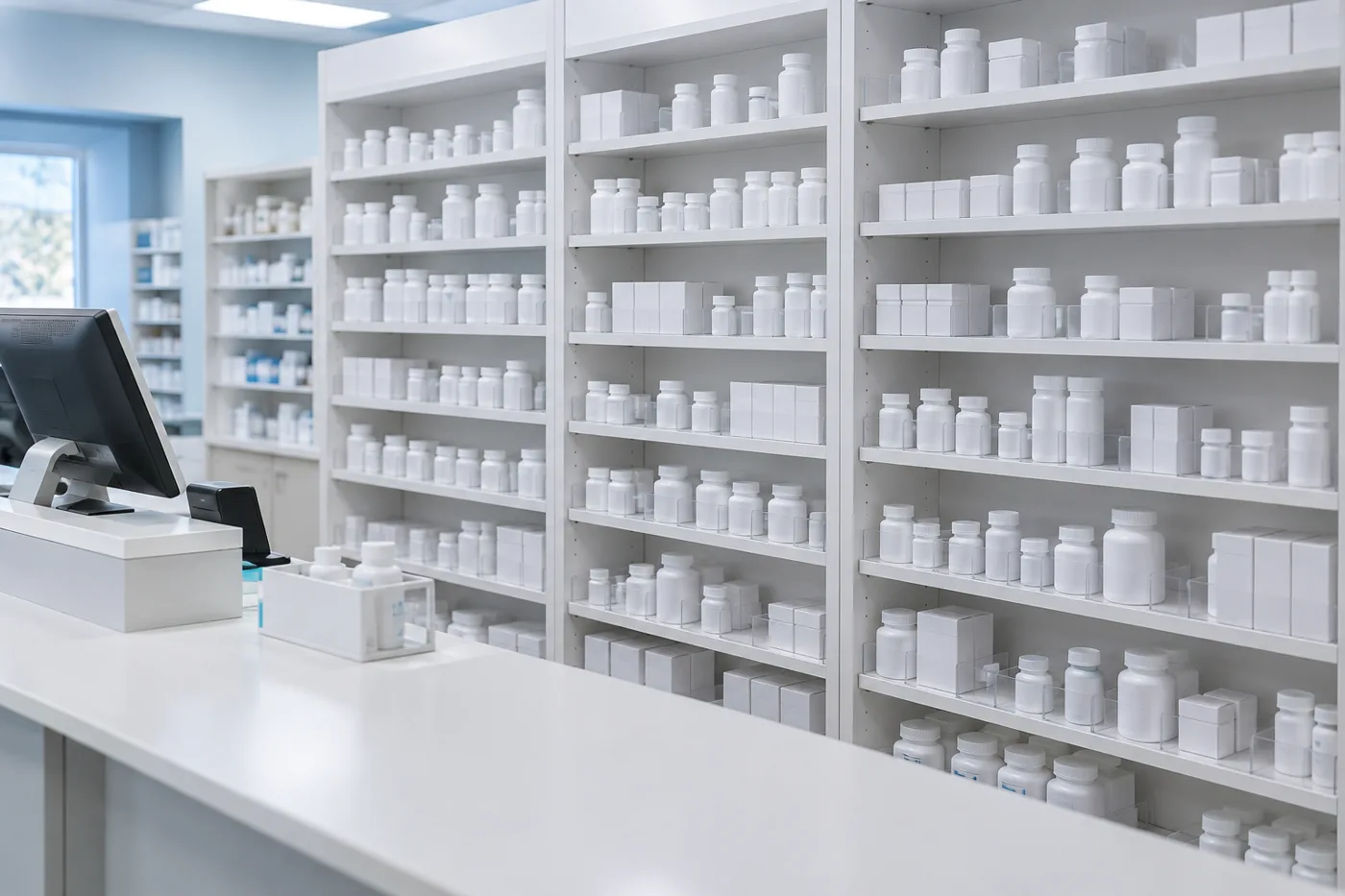
Narrow adjustable shelves, dividers and bins at the fill station
Back stock
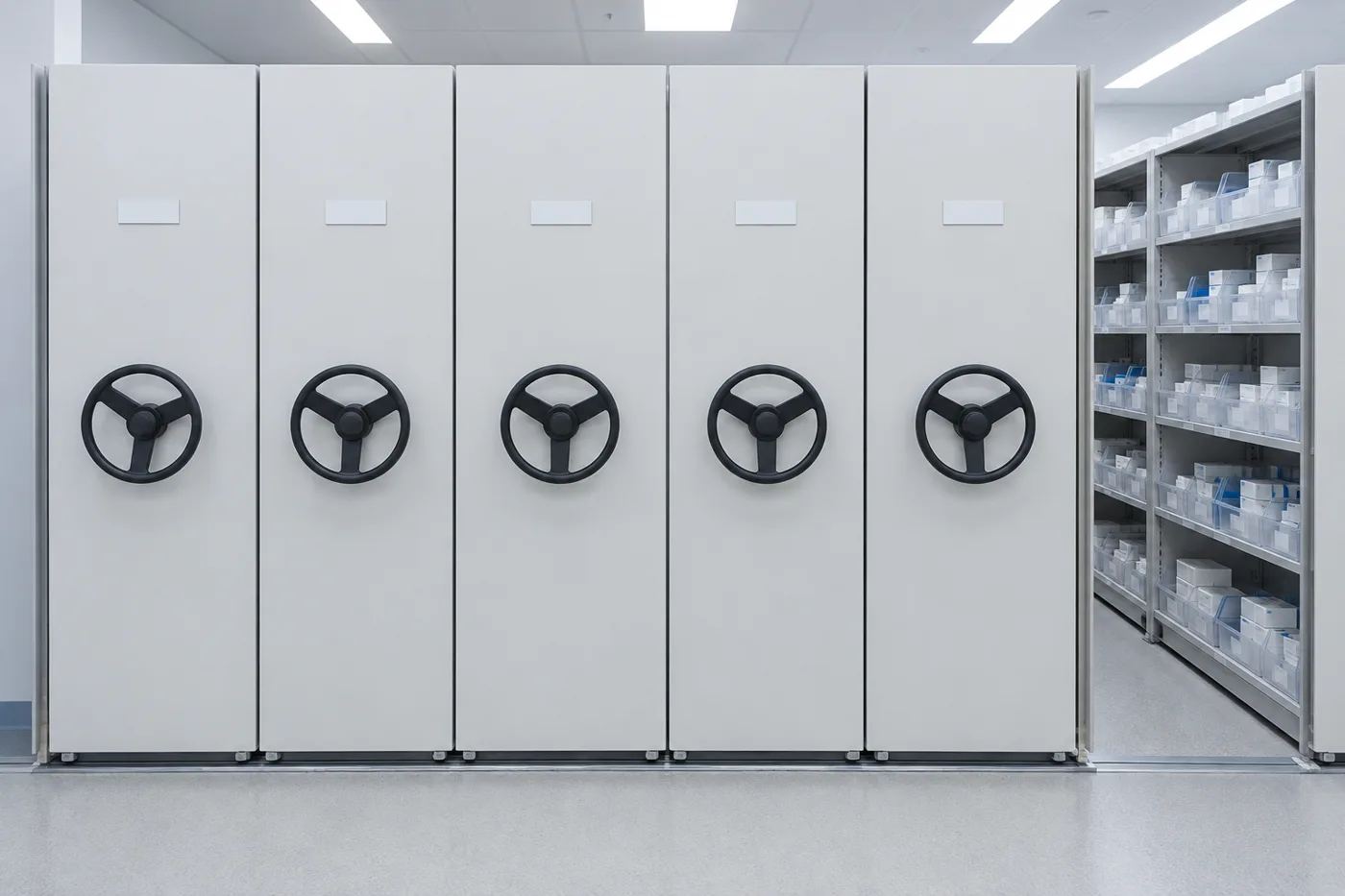
High-density mobile shelving that shares one moving aisle
Special storage
Controlled substances, hazardous drugs and refrigerated items handled apart
Who it is for
Hospital, outpatient, retail, long-term care, mail-order and central-fill pharmacies
What pharmacy shelving has to do
Pharmacy shelving looks simple from the counter: rows of white shelves holding bottles and boxes. Behind that is one of the most demanding small storage rooms in any building. A typical pharmacy carries thousands of different items, many of them small, many of them packaged almost identically, and every one has to be found quickly, picked correctly and counted accurately. Mistakes are not just lost time; picking the wrong strength or the wrong drug from the shelf is a patient-safety event.
Good pharmacy shelving does three jobs at once. It puts the fastest-moving items within easy reach of the fill station, it holds back stock and bulk cases densely so the room does not overflow, and it keeps special categories (controlled substances, hazardous drugs, refrigerated products, recalled or quarantined stock) separate and controlled. Most pharmacies outgrow their shelving long before they outgrow their building, which is why mobile shelving and high-density storage shows up so often in pharmacy back rooms.
This guide is written for the people who plan and buy pharmacy storage: pharmacy directors and managers, hospital facilities and supply-chain teams, retail store planners, and architects working on a pharmacy renovation. It is general planning guidance. Your state board of pharmacy, your accreditor and your own policies set the rules for your site, and they can be stricter than anything summarized here.
The three storage zones in a pharmacy
Planning gets easier once you stop thinking of “the pharmacy shelving” as one thing. Nearly every pharmacy, from a retail store to a hospital central pharmacy, has the same three zones, and each wants a different kind of storage.
A layout that mixes these zones forces staff to walk past bulk cases to reach a fast mover, or leaves controlled stock sitting in an open aisle. Sorting the inventory into the three zones first, and then choosing shelving for each, avoids both problems.
Types of pharmacy shelving
These are the main options. Most pharmacies use two or three of them together.
| Shelving type | How it works | Best zone | Trade-offs |
|---|---|---|---|
| Static Rx shelving | Four-post or gondola-style units with narrow adjustable shelves, dividers and label strips | Dispensing | Every row needs its own aisle, so it uses the most floor |
| Wire shelving | Open chrome, epoxy-coated or polymer wire units, often on posts or casters | Bulk, receiving, IV and supply rooms | Small items fall through without bins or liners |
| High-density mobile shelving | Shelving on carriages that roll on floor rails so several rows share one aisle | Back stock, overflow, records | Floor check and one aisle open at a time |
| Rotary cabinets | Shelving that rotates inside a cabinet to present each face | Dispensing in tight footprints, lockable stock | Fixed capacity per cabinet |
| Vertical lift modules and carousels | Automated trays or shelves delivered to the operator | High-volume picking, secure stock | Higher cost, power and service needs |
| Locked cabinets and cages | Lockable steel cabinets or wire-mesh rooms | Controlled and high-value stock | Access has to be managed and logged |
For the automated and cabinet options, see our pages on rotary pharmacy cabinets and the Vidir VLM Mini for pharmacies and hospitals. The rest of this guide focuses on shelving: the dispensing shelves and the high-density back stock that make up most pharmacy storage.
Dispensing shelves, dividers and bins
The dispensing area is where shelving choices affect accuracy most. A few principles hold across retail and hospital pharmacies:
- Shallow, adjustable shelves. Bottles and unit-of-use boxes are small, so deep shelves hide stock behind stock. Shallow shelves set close together put more faces in view per foot of wall.
- Dividers or bins for every item. A lane per product stops bottles from drifting into the next product’s space, which is one of the ways a wrong item ends up in a fill.
- Label every location. Shelf-edge label holders or bin labels tied to the pharmacy system make picking and cycle counts faster.
- Separate look-alike, sound-alike drugs. ISMP recommends storing error-prone look-alike and sound-alike products in separate locations rather than side by side, so strict alphabetical order is not always the right layout.
- Fast movers in the golden zone. The highest-volume items go between knee and shoulder height nearest the fill station; slow movers go high, low or to back stock.
Shelf organization that holds up

Dividers and bins are cheap compared with the shelving itself, and they do most of the work of keeping a pharmacy organized. Clear bins let staff see stock levels at a glance; colored bins can mark zones such as high-alert medications or refrigerated returns waiting to be put away. Tilt or open-front bins keep small boxes upright and pickable from the front.
When you plan the shelving, plan the organization with it. Shelf depth, spacing between shelf levels and the bin sizes all have to agree, or bins will overhang the shelf edge or waste the space above them. It is worth listing the items that need lanes, the ones that live in bins and the ones that sit as cases before anything is ordered.
Surfaces should be easy to wipe down. Painted steel, epoxy-coated or chrome wire and polymer shelving are all common in pharmacies; open wire needs liners or bins under small items. Keep the lowest shelf off the floor so the floor beneath can be cleaned.
Mobile pharmacy shelving for back stock
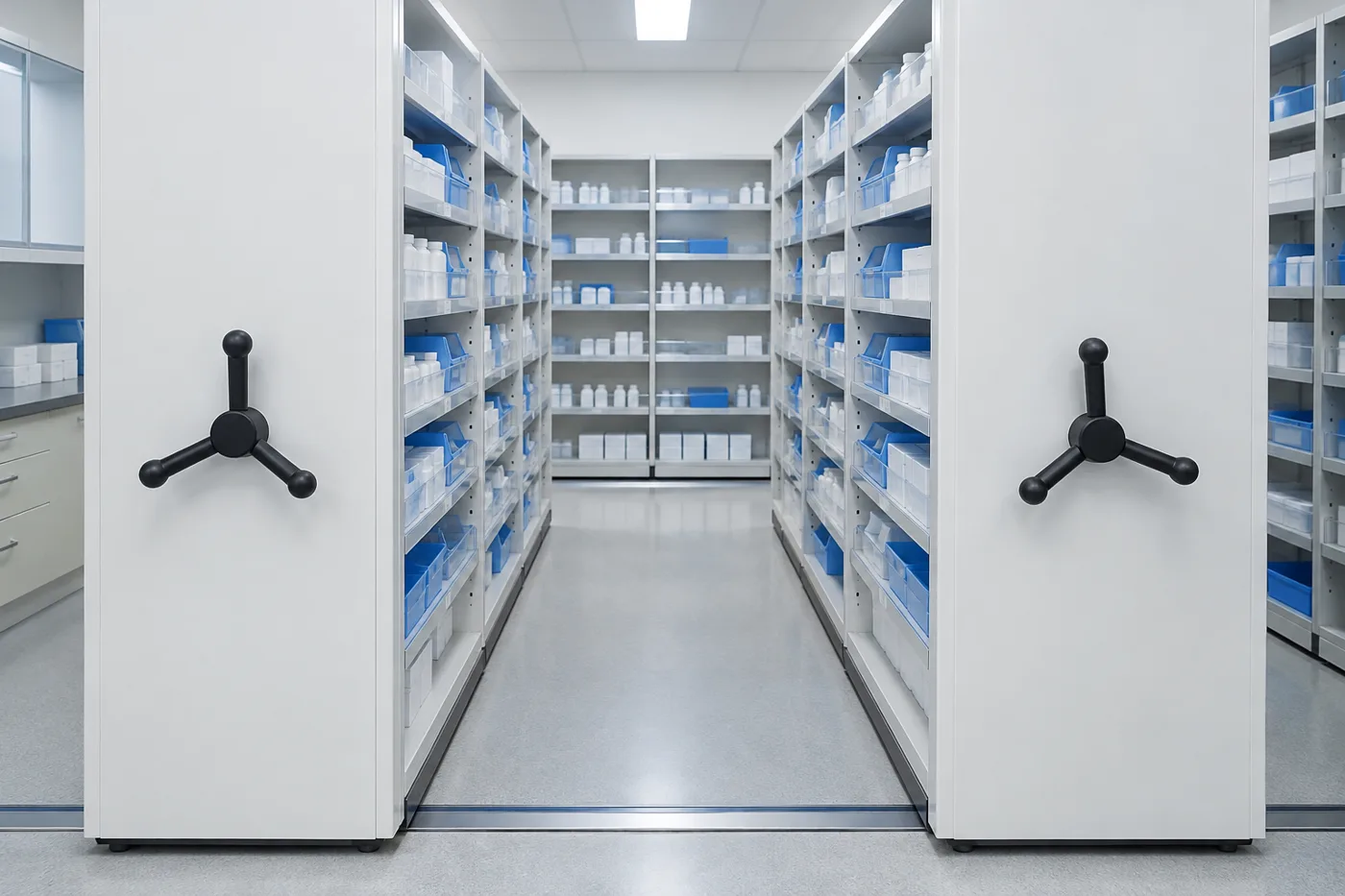
Back stock is where most pharmacies run out of room. Static shelving spends a large share of a small room on walkways, so the shelves fill up while the floor is still half aisle. Mobile shelving mounts the shelving on carriages that roll along floor rails. Several rows share one moving aisle; turn a handwheel and the aisle opens where you need it. The same room typically holds far more shelving, or the same shelving fits in a smaller room and frees space for a clean room, a workstation or a second fill line.
Pharmacy back rooms suit mobile shelving because most back stock is touched a few times a day, not every minute. The dispensing shelves stay static and open; the overflow, bulk cases, IV fluids and program stock move to the mobile bank behind them. Mechanical-assist handwheels move loaded carriages with little effort, and carriages can lock so a range is closed when the room is unattended.
One example: a community hospital in Arizona added high-density mobile shelving in its existing pharmacy storage room without sub-floor construction. Read the Globe, Arizona hospital pharmacy case study for how that project was laid out, with color-coded zones and dividers for small boxed items.
Controlled substances, hazardous drugs and cold storage
Special storage is shaped by regulation and by your own policies. Shelving does not make a pharmacy compliant on its own, but the layout either makes the rules easy to follow or makes them hard. Settle these points with your pharmacy leadership before choosing shelving:
- Controlled substances. Under 21 CFR 1301.75(b), Schedule II through V controlled substances are to be kept in a securely locked, substantially constructed cabinet, though pharmacies and institutional practitioners may instead disperse them throughout the stock of noncontrolled substances to obstruct theft or diversion. Many pharmacies and state rules go further for Schedule II items, using locked cabinets, safes, automated dispensing or a secure cage. Decide which approach you use before the layout is drawn; see our guide to a controlled substance storage cage.
- Hazardous drugs. USP General Chapter 800 says hazardous drugs must be stored in a manner that prevents spillage or breakage if a container falls, and not on the floor (summarized in the Indian Health Manual chapter on hazardous drugs). Per the USP 800 FAQs, antineoplastic hazardous drugs that need manipulation are stored separately in an externally vented, negative-pressure area with at least 12 air changes per hour. Shelving for that room needs lips, bins or front rails and cleanable surfaces.
- Temperature. Most medications are labeled for controlled room temperature, so back-stock rooms need the same HVAC as the dispensing area. Refrigerated and frozen items go in pharmaceutical refrigerators and freezers, with shelving for overflow cases nearby, not inside unconditioned storerooms.
- Quarantine and returns. Expired, recalled and returned items need their own clearly marked shelf or locked section so they cannot be picked by mistake.
Mobile shelving can also be locked by range. See mobile shelving security and access control for locking options.
After-hours security for dispensing shelving
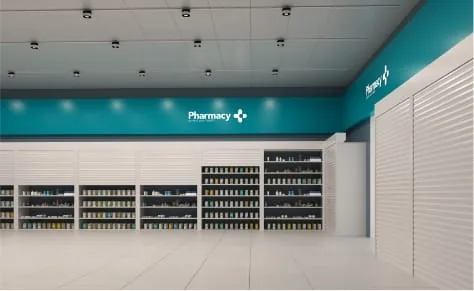
Many pharmacies sit inside a larger store, clinic or hospital that stays open after the pharmacy closes. The dispensing shelving has to be fully open while staff are filling prescriptions and locked when the pharmacist leaves. Gates across the counter and locked rooms are the usual answer. A roll-up shutter mounted directly on the shelving gives a second layer and keeps the shelves open during the day.
Shutters on the shelving itself
Pentagon Shutters lists pharmacies as a typical use for its TambourGuard storage shutters, which it says keep medicine enclosed and protected. The curtain rolls into a compact housing above the shelving and locks at the bottom bar, or it can be motorized and run by key switch, remote or app. Pentagon offers solid aluminum curtains and a clear polycarbonate curtain series. A clear curtain lets staff see stock levels with the shutter closed. Shutters can also be fitted to mobile shelving used for back stock.
Photo: Pentagon Shutters
Shutters do not replace the locked cabinet or safe that the DEA and state boards require for controlled substances. Use them for general dispensing stock and after-hours separation, and check your state board rules for the rest. Counter shutters for the pickup window are covered on our roll-up security shutters page.
Bulk, receiving and supply rooms
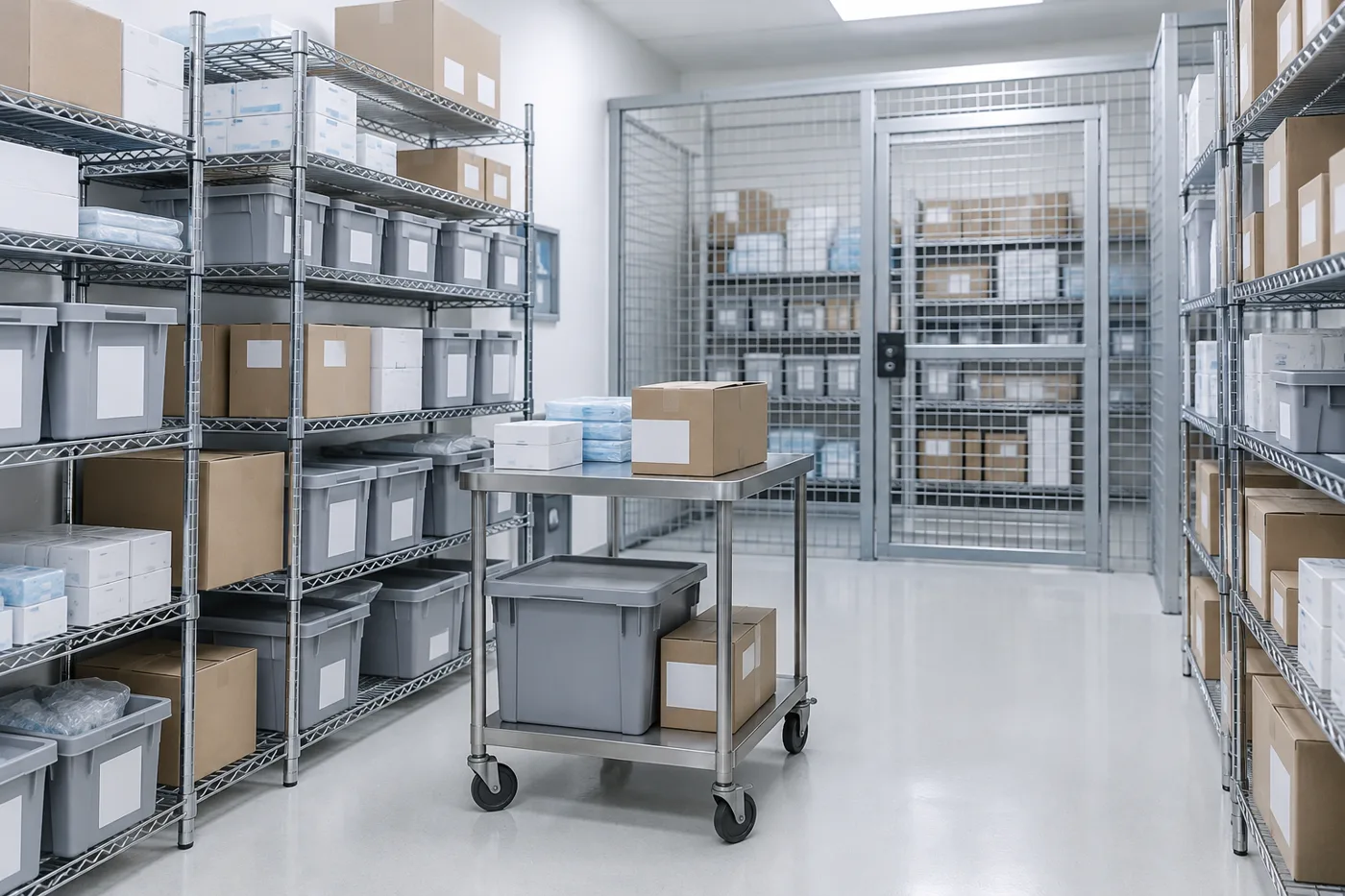
Hospital pharmacies also run a receiving and bulk room: wholesaler totes arriving daily, sealed cases, IV fluids, compounding supplies and packaging. This room is usually best served by open wire or solid steel shelving sized for full cases, with clear floor space for carts and a staging shelf for totes waiting to be checked in.
Heavy cases such as IV fluids belong on lower shelves with solid or reinforced decks. If the room also holds controlled stock or high-value items, a locked wire-mesh enclosure inside the room keeps it separate without building a second room. When the bulk room is the bottleneck, it is often the best candidate for mobile shelving, because cases are picked a few times a day and density matters more than instant access.
How to size pharmacy shelving
Start from the inventory, not the floor plan. A rough but honest count gives a far better layout than guessing from the old shelving.
Our capacity sizing guide explains how mobile shelving capacity is calculated, and the shelf depth and level spacing guide covers how depth and spacing affect what fits.
Static or mobile shelving in the pharmacy?
| Question | Static Rx shelving | Mobile shelving |
|---|---|---|
| Floor use | One aisle per row | Several rows share one moving aisle |
| Access | Every item reachable at any time | One aisle open at a time |
| Best zone | Dispensing and fast movers | Back stock, bulk, overflow, records |
| Security | Lock via cabinets or cages | Ranges can lock closed |
| Building work | None | Floor load and rail installation to check |
Many pharmacies combine both: a static dispensing wall facing the fill stations and a mobile bank behind it for everything else. Before choosing mobile, check the floor; see mobile shelving floor load requirements and compare drive types in manual, mechanical-assist and powered mobile shelving.
How a pharmacy shelving project gets specified
Helpful references: cost and budget drivers, the specification and submittal checklist and retrofitting mobile shelving in an existing building.
Related pages
See the hospital pharmacy mobile shelving case study, rotary pharmacy cabinets, the Vidir VLM Mini for pharmacies and medical carts. For records rooms in the same hospital, see mobile shelving for medical records. Browse every option on our mobile shelving and high-density storage hub.
Shop Pharmacy Shelving Components
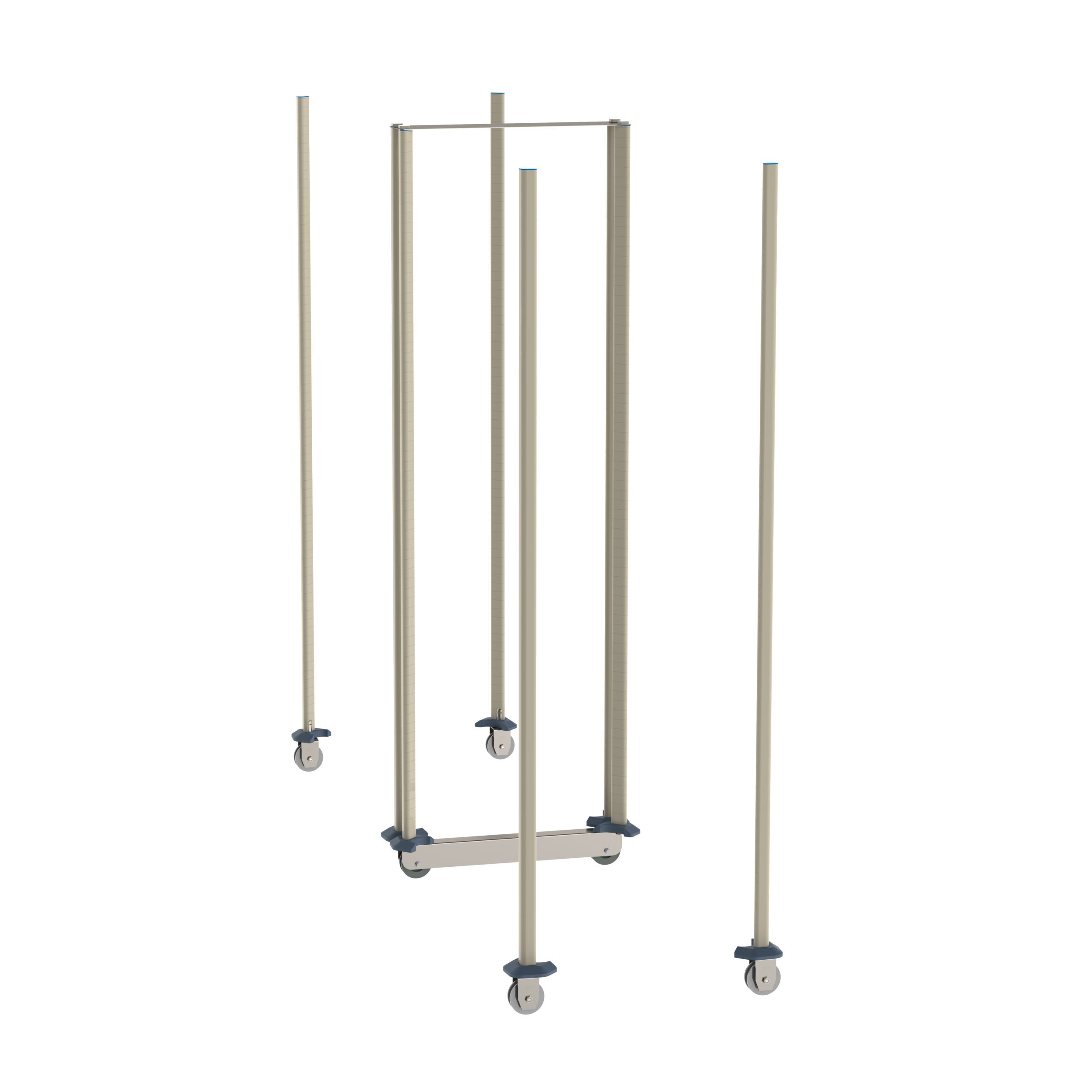
Basket shelving for small-item picking, a lockable security shelving unit, shelf bins with divider slots and a track-mounted mobile shelving kit, sold online. Full pharmacy shelving and mobile shelving systems are laid out and quoted to your rooms and inventory.


Get a free quote
Tell us what you are storing, the room size and your timeline. A project specialist will follow up with layout options and pricing. Prefer to talk? Call (800) 326-4403.
Frequently asked questions
What is pharmacy shelving?
What shelving is best for a hospital pharmacy?
Do controlled substances have to be in a locked cabinet?
Can hazardous drugs go on regular pharmacy shelving?
Is mobile shelving a good fit for a pharmacy?
How much does pharmacy shelving cost?
Planning a pharmacy storage project?
Send us your room dimensions, ceiling height, door and sprinkler locations, and a rough count of items by zone. We will lay out dispensing shelving, mobile back-stock shelving and secure storage, size it for growth and flag the floor and locking questions to settle. Call (800) 326-4403 to start.