
Electric Utility Materials Warehouse Racking: PacifiCorp
An electric utility’s materials warehouse supports crews working across a whole service territory — poles, crossarms, hardware, meters and tools all need storage built for a different mix of shapes, weights and turnover than a typical industrial plant.
Electric utility
Client sector
Pallet rack
Product category supplied
Mountain West service territory
Coverage area
Poles, hardware & tools
Application
Plan your layout before you buy
Configure upright height, beam width, bay count, and load levels in our free 3D Pallet Rack Configurator, then get an instant bill of materials and request a quote.
The project
PacifiCorp is an electric utility serving customers across the Mountain West and Pacific Northwest, operating in Utah, Idaho and Wyoming under the Rocky Mountain Power brand. Material Handling USA supplied pallet rack systems for one of the company’s regional materials and tool-crib warehouses.
This is a different storage problem from the electrical CONTRACTOR angle already in our case-study series — our electrical contractor warehouse racking case study covers a contractor’s own wire and reel storage for job staging. A utility company’s materials warehouse instead supports its own line crews and substation work directly: poles, crossarms, hardware, meters and tools that get issued out to crews working across a whole service territory, not staged for a single job at a time.

Why a utility materials warehouse is different
Materials range from long and heavy to small and countable. Wood and composite poles and crossarms need open-arm support, while meters, connectors and hardware need bin-level organization — the same warehouse stores both extremes.
Crews check materials in and out constantly. Unlike a plant that pulls stock for its own production line, a utility warehouse issues materials out to field crews on trucks, which puts a premium on clear location labeling and fast staging.
Some inventory is safety-critical and needs traceable storage. Meters and certain hardware carry lot or serial tracking requirements, so bin and shelf organization has to support that, not just bulk capacity.
Regional warehouses serve a whole territory, not one site. Storage has to support routine restocking as well as storm and outage response, when materials need to move out fast.
What this warehouse stores
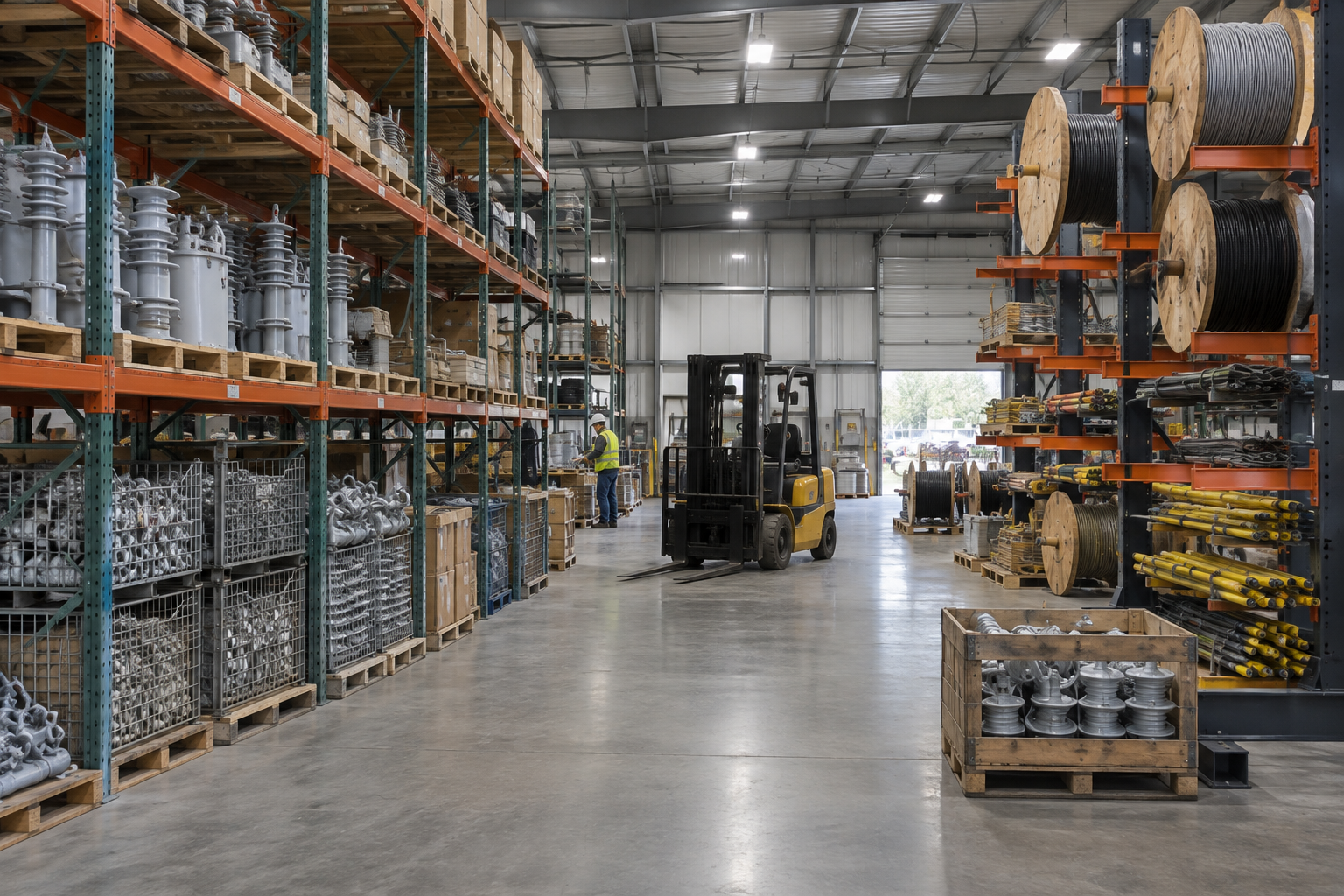
Based on the verified project scope, storage here spans several distinct materials, each suited to a different rack or shelving type:
| Material | Storage need |
|---|---|
| Poles & crossarms | Long, heavy stock needing open-arm support, not pallet positions. |
| Hardware & connectors | Small parts needing bin-level organization for fast crew pulls. |
| Meters | Traceable, lot- or serial-tracked storage separate from bulk hardware. |
| Tools & crew equipment | Issued and returned frequently; needs clear, labeled locations. |
- Poles, crossarms and similar long stock store on cantilever rack, where open arms support the load without needing a pallet footprint.
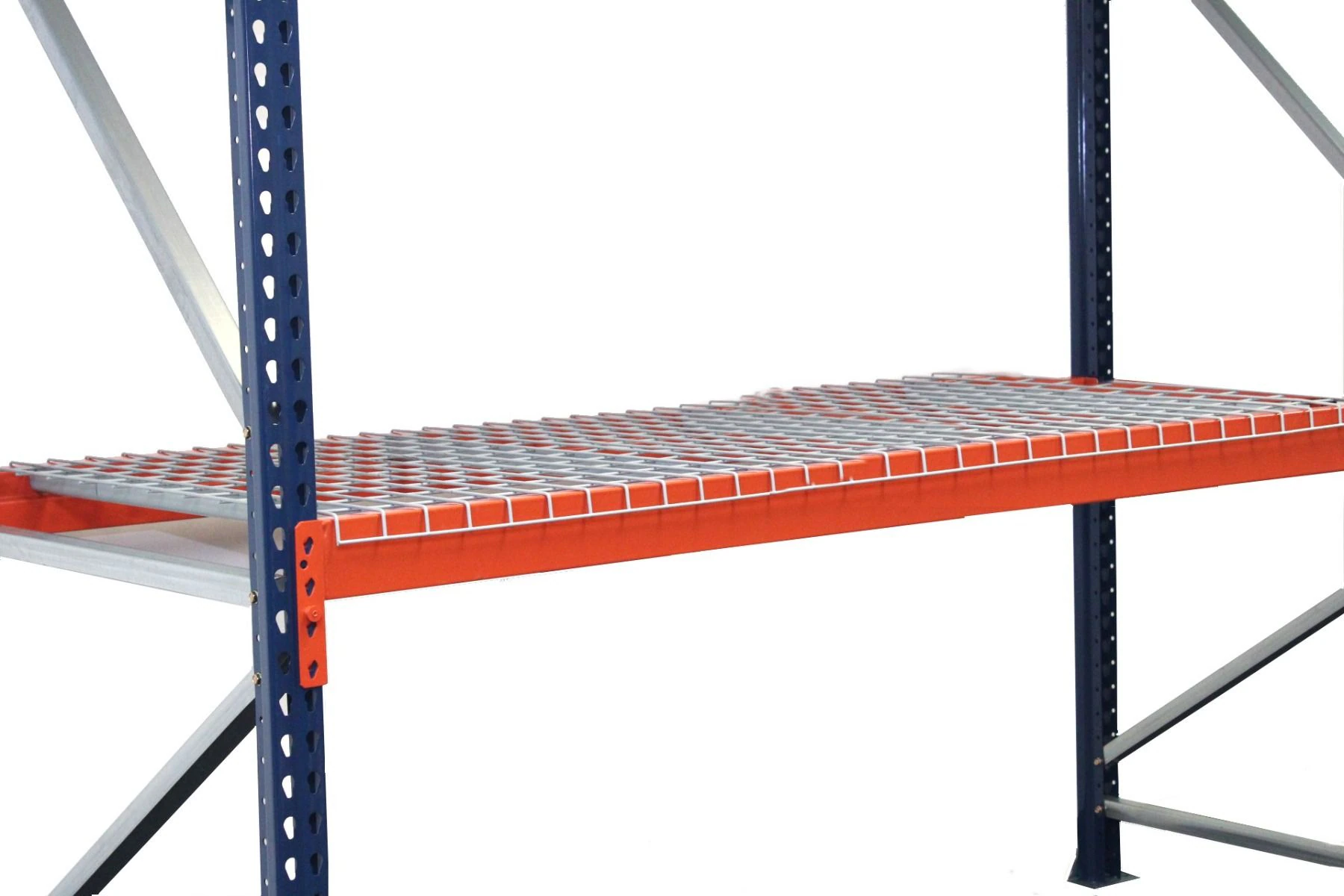
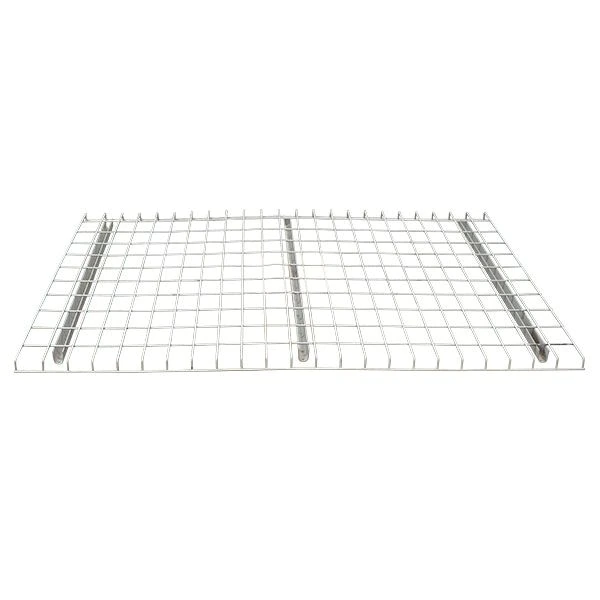
- Boxed hardware and palletized bulk materials store on selective pallet rack with wire decking for cartons that would otherwise sit unsupported on a beam.
- Meters, connectors and small hardware fit wire shelving or boltless shelving, both suited to open, ventilated, easy-to-inventory bin storage.
Weight, turnover and crew access
A utility materials warehouse gets designed around how crews actually pull and return inventory, not just how much it can hold.
Aisle widths match crew traffic, not just forklift paths. Crews load trucks directly from staging areas near cantilever and pallet rack bays, so clear aisle access matters as much as raw storage density.
High-turnover items sit at accessible heights. Frequently issued hardware and tools belong at grab-height on shelving, while bulk and reserve stock can sit higher on pallet rack or deeper in cantilever bays.
Storm and outage response needs fast staging space. A materials warehouse supporting utility crews benefits from keeping some floor area clear for rapid load-out during high-demand events, rather than filling every bay to capacity.
Serving multiple regional warehouses and outage response
A few planning considerations come up repeatedly for utility materials warehouses of this type:
Design for consistent layout across regional facilities. A utility operating several district or regional warehouses benefits from a repeatable rack layout — the same cantilever bay sizing for poles, the same shelving system for hardware — so crews transferring between locations or covering a mutual-aid outage response find materials in familiar locations.
Separate returned and damaged materials from released stock. Poles, hardware and equipment returned from job sites need inspection before they go back into active storage; a dedicated staging area, distinct from released inventory, keeps damaged or unverified materials from mixing back into the pool crews draw from.
Plan for seasonal and outage-driven demand swings. Storm season and planned capital projects can spike demand for specific materials well above baseline; leaving some flexible floor space near fast-moving cantilever and pallet rack positions makes it easier to stage a surge of materials without disrupting the rest of the warehouse.
Coordinate rack layout with vehicle and equipment access. Line trucks, bucket trucks and trailers often load directly from warehouse bays; aisle widths and dock layout need to account for that traffic in addition to standard forklift paths.
Installation and safety
Rack for a utility materials warehouse follows the same structural design standard as any other pallet rack or cantilever rack installation, sized to the real loads and traffic patterns involved.
- Size cantilever arm and beam capacity to real pole and hardware weights — see pallet rack weight capacity guidance rather than assuming a standard rating covers utility materials.
- Protect rack uprights with column protectors and end guards in aisles that see frequent crew and forklift traffic.
- Inspect racking on a defined cycle — see rack inspection and repair — with extra attention to cantilever arms handling heavy pole loads.
- Anchor and install to the ANSI/RMI MH16.1 standard — see our rack installation guidance.
ANSI/RMI MH16.1 is published by the Rack Manufacturers Institute. We design, supply and install pallet rack, cantilever rack and shelving for utility, contractor and industrial-plant warehouses across the region.
Regional design and installation
Material Handling USA has been an industry leader in storage and material handling since 1997, designing pallet rack and cantilever rack systems for utility and industrial materials warehouses across the Mountain West. Call 801-328-8788 for a design consultation, or see our pallet rack systems page.
Shop Pallet Rack Products Online
Buy select items directly from our online store, or request a quote for volume, custom sizes and freight-rated orders.
Frequently asked questions
What storage suits an electric utility’s materials warehouse?
Why can’t utility poles go on standard pallet rack?
How is this different from an electrical contractor’s warehouse?
Does meter storage need anything special?
What’s the design standard for the rack itself?
Can a materials warehouse be designed for storm response?
Planning storage for a utility, contractor or industrial materials warehouse?
We design pallet rack, cantilever rack and shelving layouts for utility and industrial materials warehouses. Free design consultation.