
Tire Hotel Racking for Seasonal Tire Storage
Storing customers’ off-season tires is a service business with a rack inside it. Here is how to size tire hotel racking by sets, keep every set findable and survive the changeover peak.
4 tires
One set, one location
2 peaks
Spring and fall changeover
At peak
How to size the rack
6 ft
Where fire rules can start
What a tire hotel is, and why the rack is the easy part
A tire hotel is a seasonal tire storage service. The customer leaves their winter or summer set at the changeover, the business records its condition, stores it in an assigned location and has it ready for the next swap. Tire shops, dealerships and quick-lube stores run them in a back room; larger operators run them from a dedicated warehouse and deliver sets to stores before each appointment.
The steel itself is ordinary. The same shelf-style racks that hold retail stock in our tire storage rack guide hold customer sets, and taller programs use tire levels on standard pallet rack systems. What makes a tire hotel work or fail is everything around the rack: counting sets rather than tires, a location system that cannot drift, a clean intake record and a plan for two very busy weeks a year. This page is for businesses starting a storage program or outgrowing the one they have.
Tire Racks for Seasonal Storage Rooms
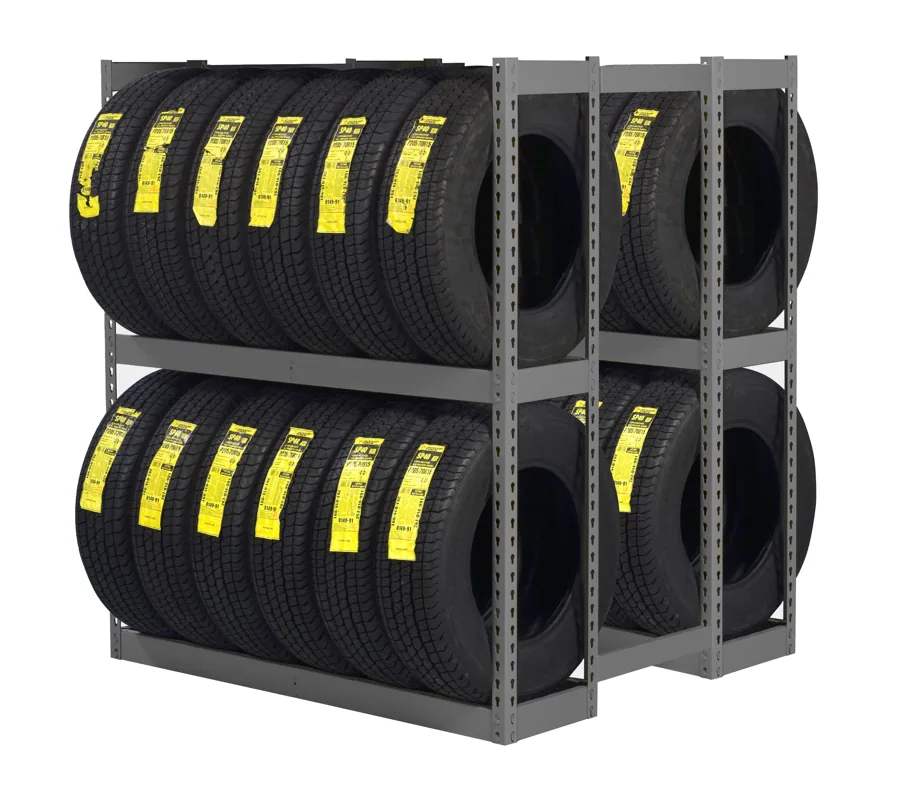
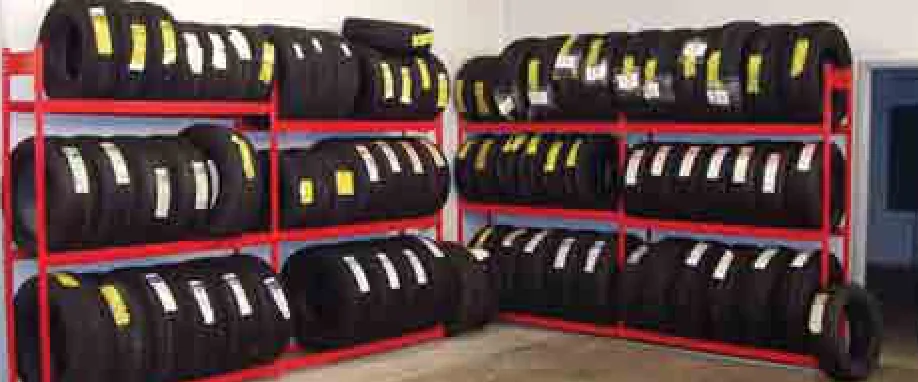
Single-entry racks line the walls of a storage room and double-entry racks make islands with an aisle on each side. Each line ships with freight quoted to your address. Some common sizes are in stock at select manufacturers, subject to confirmation.


Size the racking by sets, at the peak
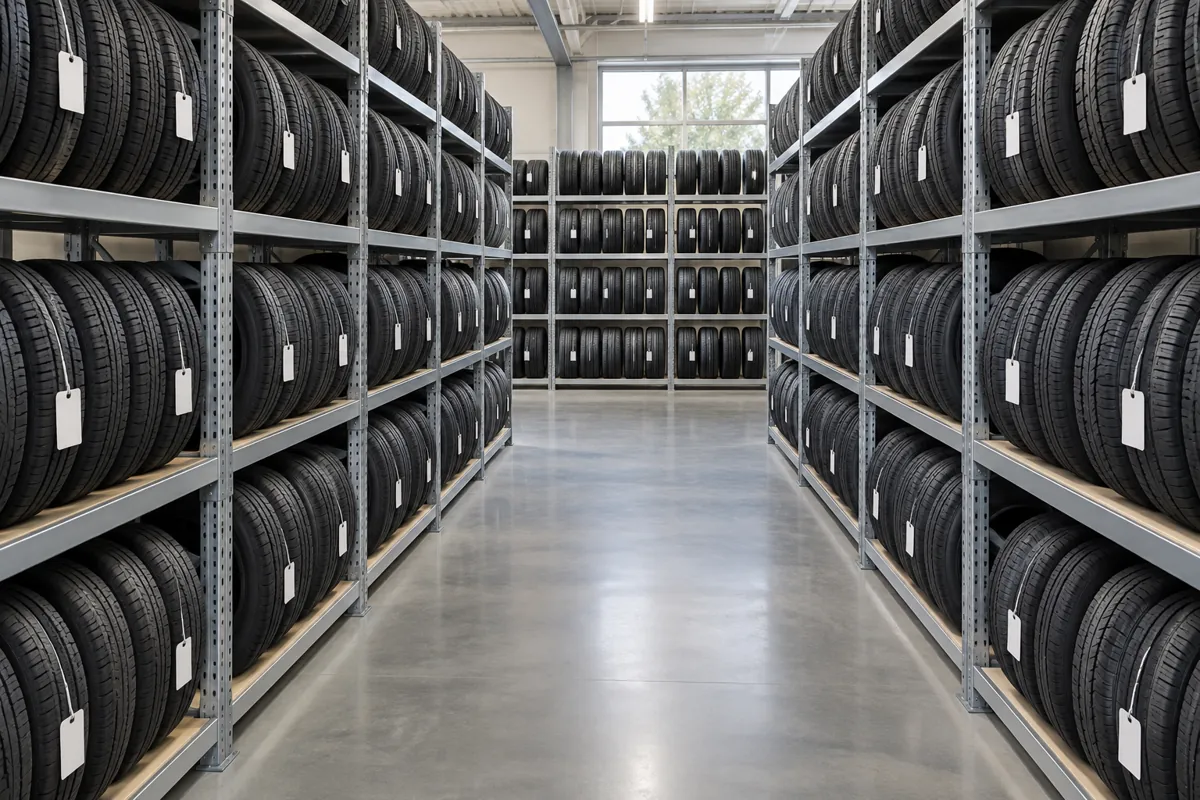
A tire hotel stores sets, so count sets. The number that matters is the most sets you will hold at one time, which usually lands a few weeks after the fall changeover, not the number of customers you serve in a year. Add a margin for growth and for sets that are not collected on time.
Then work out how many sets one level holds. A set of four standing on the tread needs about four tire widths plus a little space to lift each one out. The figures below are rough planning examples only; measure your own tire mix and confirm level lengths and ratings with the rack you choose.
| Tire type (example) | Approx. tire width | Shelf length per set of 4 | Sets per 96 in level |
|---|---|---|---|
| Compact or small passenger | about 7.5–8 in | about 32–36 in | about 2 |
| Typical passenger or crossover | about 8.5–9.5 in | about 36–42 in | about 2 |
| SUV and light truck | about 10–12 in | about 42–50 in | 1 to 2 |
| Mounted wheel sets | tire width plus clearance | measure the assembly | check weight rating first |

A worked example
A store expects to hold 300 sets at the fall peak. If its racks hold two sets per level and four levels per bay, each bay holds eight sets, so it needs about 38 bays before any growth margin.
If the room only takes 25 bays, the choice is clear early: go taller with more levels, add double-entry islands, move slow sets overhead or off site, or cap the program. Better to know that before you sell the service.
Our Tire Rack Builder lays out bays for a measured room and sends the bill of materials to our team, which is a quick way to test how many sets a space can really hold.
Intake and check-out: the routine that protects you
At drop-off
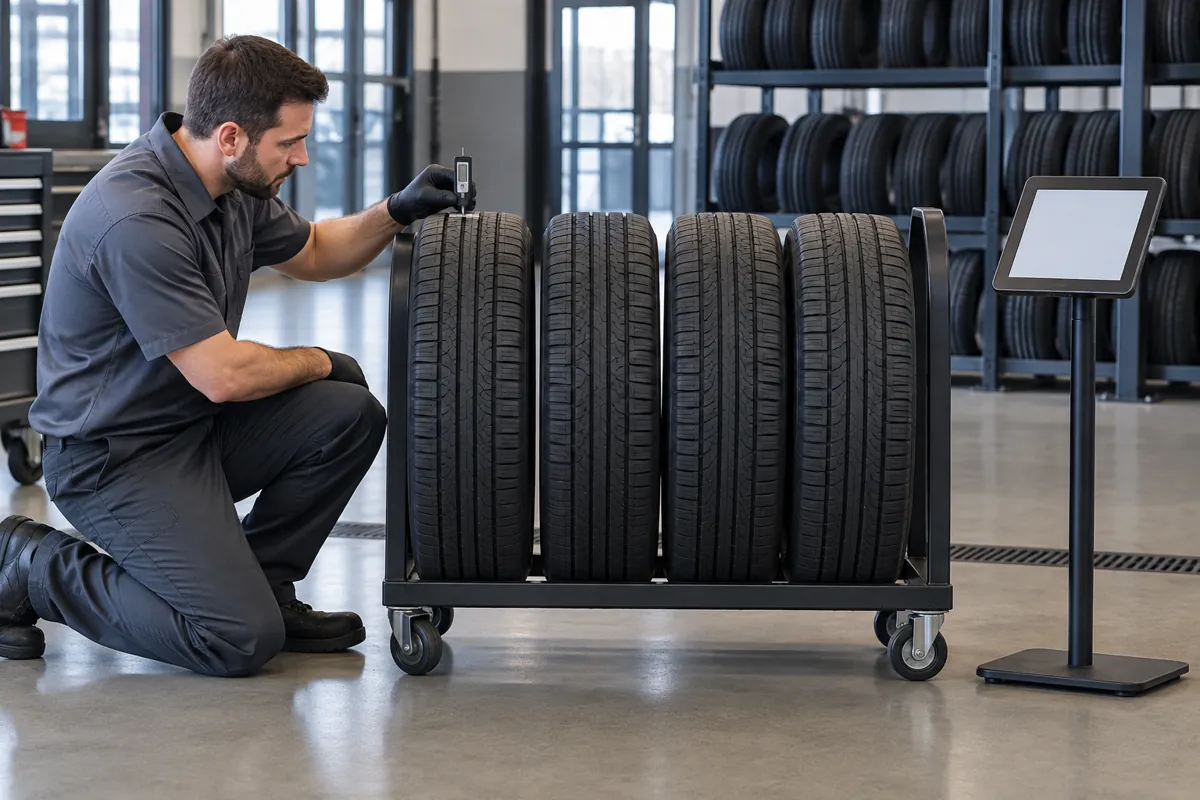
Record the condition. Tread depth on each tire, existing damage, wheel scuffs and sensor notes, with photos. A stored-tire dispute is settled by what you wrote down on day one.
Tag the set, not the tire. One identifier for all four, tied to the customer and vehicle, with wheel position marked if the customer wants it kept.
Clean and dry before storing. Wet or dirty tires go to a holding area first, not straight onto the rack.
- Every set gets a fixed location: room, bay, level and position, recorded in the booking system
- Location labels on the beams, so a location can be found without memory
- Never split a set across two locations to save space
- Customer sets kept physically separate from stock for sale
- Retrieval list printed or pulled the day before each appointment
- Written terms for uncollected sets, so abandoned tires do not hold your best positions
The same location discipline is described for stores in our tire shop storage racks and dealership tire storage guides. A tire hotel simply runs it at a larger scale and as a service someone is paying for.
Plan for the changeover peak
Twice a year, sets arrive faster than they leave. Swapping a customer’s tires means one set comes out of the rack and another goes in, often within the same hour, and the first frost or spring warm spell can bring weeks of appointments into a few days.
What busy programs do
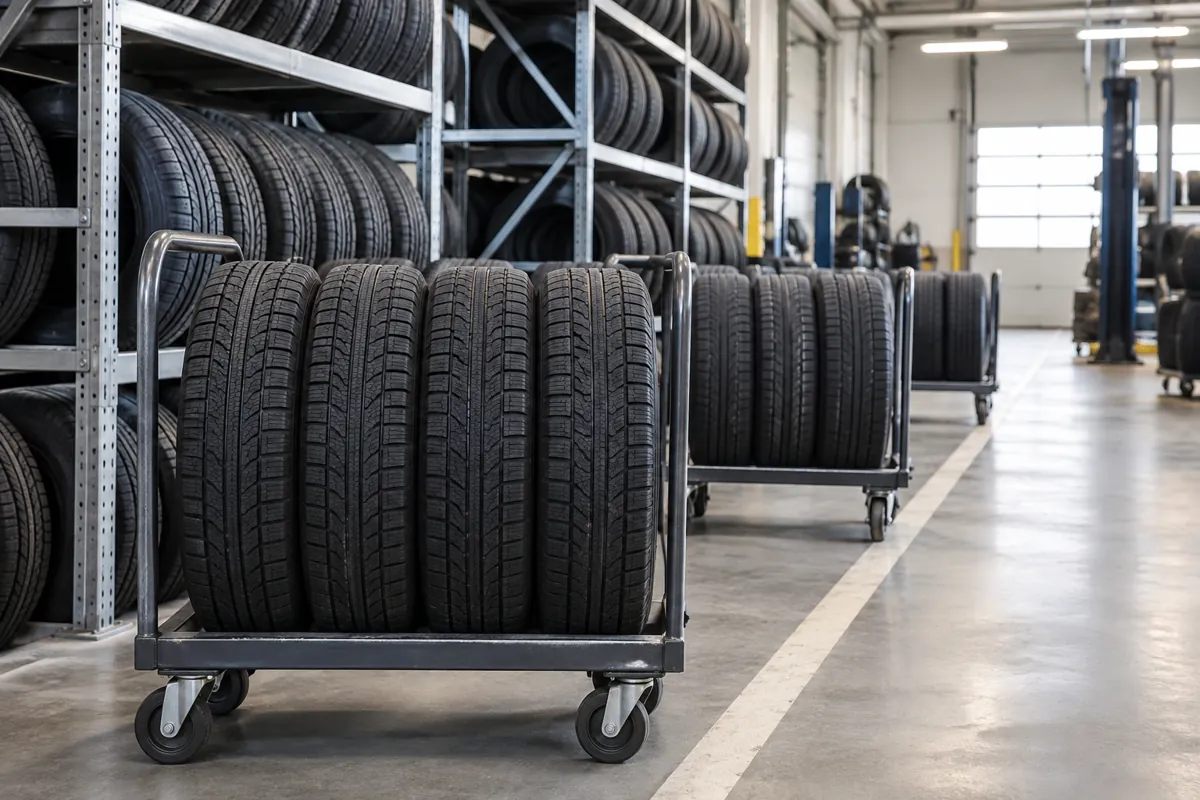
Stage by appointment. Pull tomorrow’s sets the evening before onto carts in a marked lane, so technicians never wait on the storage room.
Rack in pickup order. Put sets due first nearest the door and the lane.
Add surge capacity that goes away. Stackable tire racks and rolling tire racks absorb the overflow for six weeks without taking floor space all year.
Room, building or overhead: where the sets live
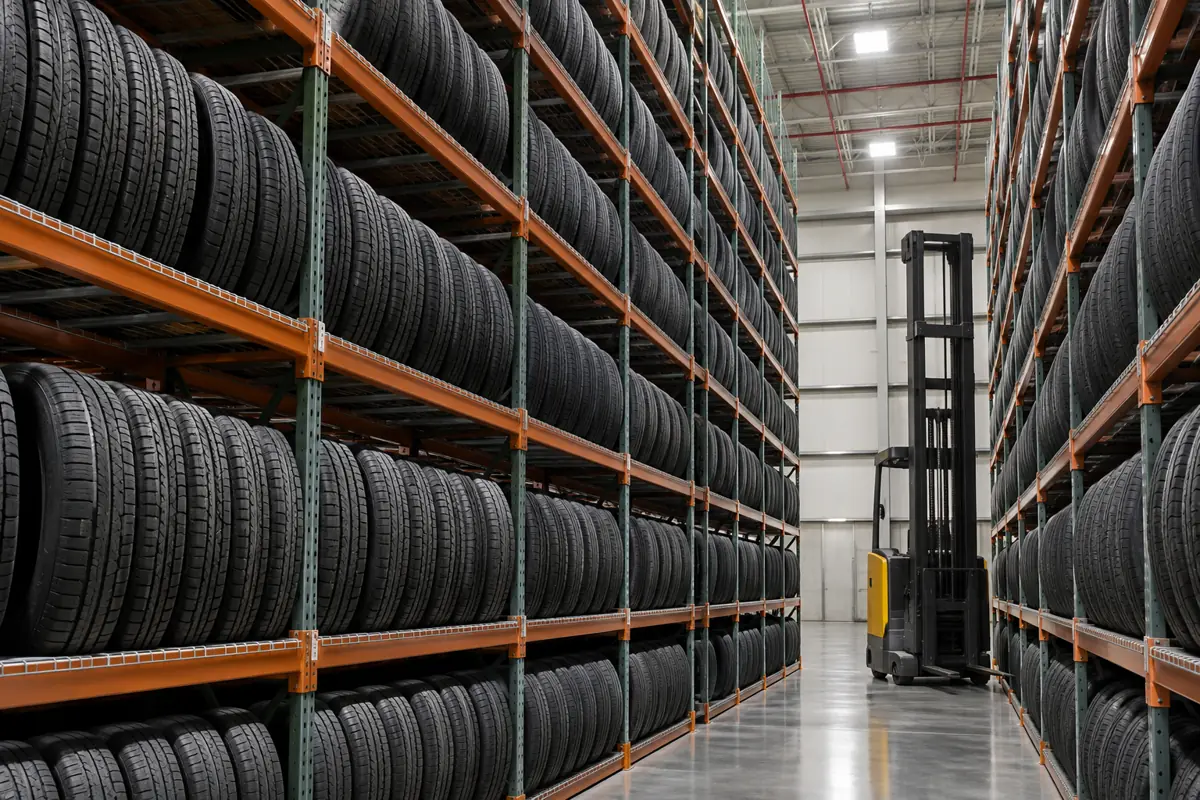
When a separate building makes sense
Once stored sets start taking the space your service lane needs, moving them out frees the store for paying work. A dedicated building lets you go taller and denser, with selective pallet rack and tire levels, and run deliveries to several stores on a schedule. It also turns storage into a building project: floor, lighting, security, sprinklers and permits all need planning. Our wholesale tire racks page covers buying racks for several sites at once, and tire warehouse and distribution center racking covers warehouse layout.
Using the space above the bays
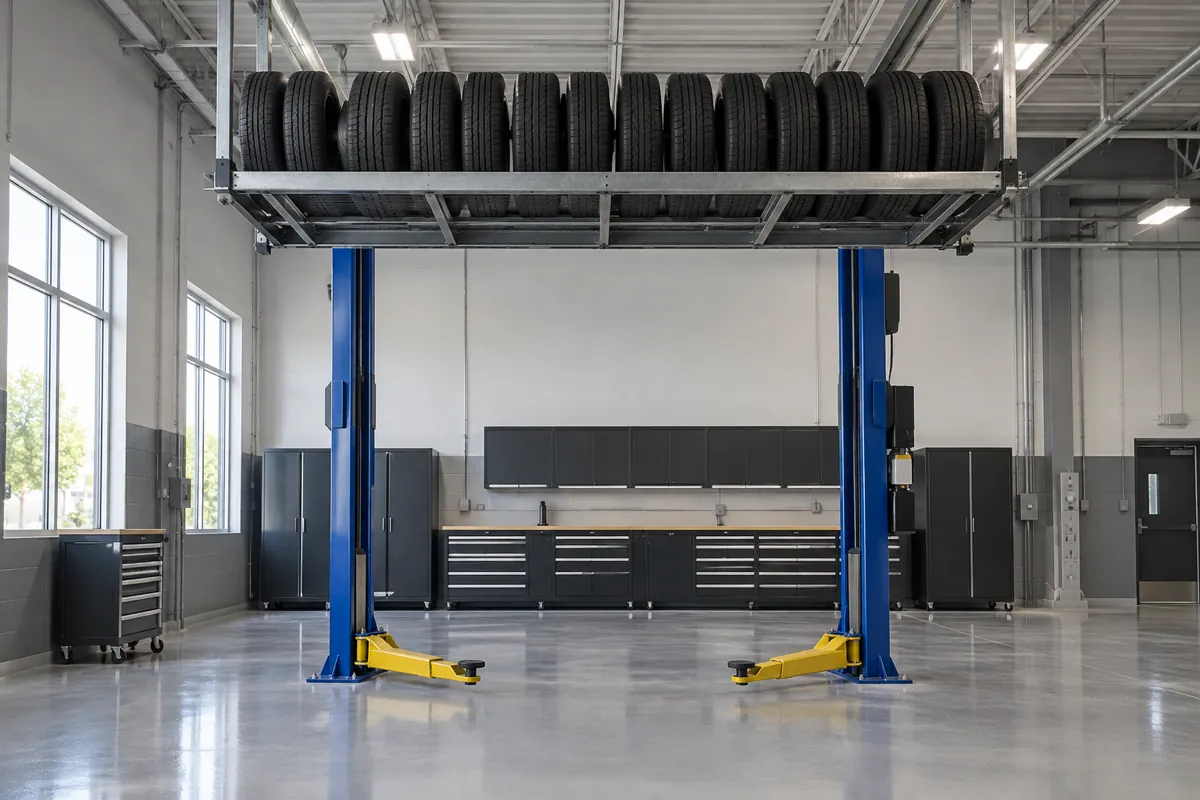
Stored customer sets are touched twice a year, which makes them the right load for overhead storage. A ceiling-mounted lift lowers to working height for loading and rises above the vehicles when it is not in use. Keep fast-moving retail sizes on floor racking. Our dealership tire storage page explains where overhead lifts fit in a service drive.
Storage conditions customers expect
People pay to store tires because they expect them to come back in the condition they left. The USTMA tire storage recommendations describe what that takes: a clean, cool, dry, well-ventilated indoor space, out of direct sunlight and away from ozone sources such as electric motors, generators and welding equipment, and clear of fuels, oils and solvents.
Practical rules for a storage room
Store on the tread, not the sidewall. Bare tires stand upright on the tread on a smooth level surface. Flat stacks crush the bottom tires and are slow to retrieve.
Keep heat and light down. Cover windows, avoid space heaters next to racks and keep compressors and motors out of the room.
Keep it dry. A damp room means damp sets. Our how to store tires guide has the full checklist, including mounted sets and bags.

Fire code, permits and liability
A room full of stored sets is a lot of rubber. Model fire codes treat rubber tires as a high-hazard commodity, and storage where the top of the tires is above about 6 feet can fall under high-piled storage rules, with permits, sprinkler review and aisle requirements. Taller racks may also need anchoring and engineering. Our tire rack installation, anchoring and permits guide covers the Utah process, and our Denver tire storage racks page covers Denver’s rules for seasonal storage.
Confirm locally
Fire and building codes are adopted and amended locally. Confirm storage height, permit and sprinkler requirements with the fire code official, the building department and, where sprinklers change, a fire-protection engineer. Ask your insurer how customer property in your care is covered. We lay out racks to your approved storage height; we do not certify code compliance.
For a large room or a separate building, our pallet rack installation crews assemble and anchor to the approved layout.
Starting or expanding a tire hotel: four steps
Count the peak
Sets held at the busiest point, split into bare tires, mounted sets and truck tires.
Measure the space
Wall lengths, doors, columns, ceiling and sprinkler height, and any overhead space.
Set the routine
Intake record, set tags, location labels and the booking-system field that holds them.
Plan the surge
Staging lane, retrieval timing and the temporary racks that absorb the changeover.
Send us the set count and room measurements and we will lay out the racks, count bays against your peak and quote the steel. Quick-lube and express stores with small rooms should also read our service station and quick lube tire storage guide.
What a layout includes
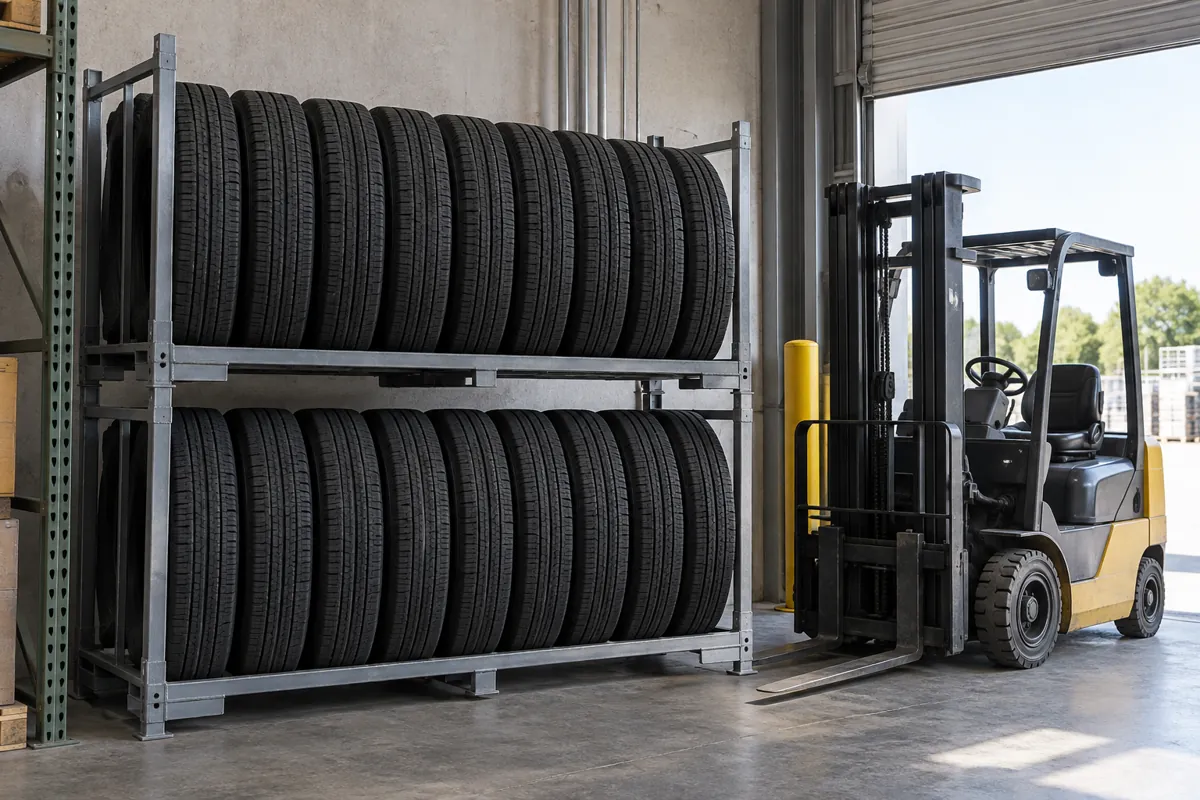
A room plan with bays, levels and aisles, the number of sets it holds at your tire mix, a bill of materials, freight to your address and installation as an option. For permitted projects, the drawings your reviewer asks for can be added.
Get a free quote
Tell us what you are storing, the room size and your timeline. A project specialist will follow up with layout options and pricing. Prefer to talk? Call (800) 326-4403.
Frequently asked questions
What is a tire hotel?
Is offering seasonal tire storage worth it for a shop?
How much should a shop charge for tire storage?
How many tire sets fit in one rack bay?
How do you stop flat spots on stored tires?
Should mounted wheel sets be stored differently from bare tires?
Can a tire hotel go in a separate building?
Do tire storage racks need a permit?
Starting or growing a seasonal tire storage program?
Send your peak set count and room measurements, and we will lay out the racks, count bays against the peak and quote the steel. Call 800-326-4403.