
Tire Storage Racks for Service Stations and Quick Lube Shops
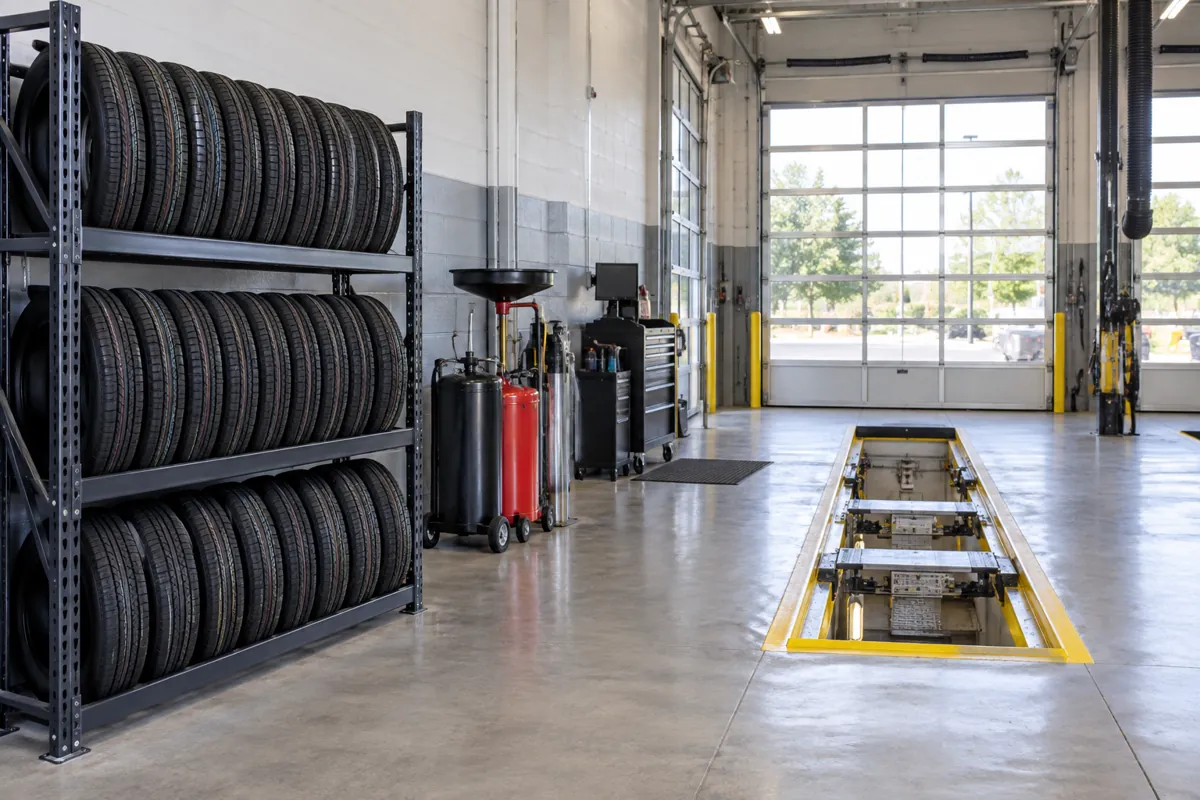
Express service buildings have two or three bays, low clear height and no spare floor. Here is how to store fast-moving tire sizes and customer seasonal sets without narrowing the lane you make money in.
2-3 bays
Typical building
Single-deep
Wall-run layout
Tread-up
Storage orientation
Re-pitchable
Beam levels
Why quick lube and service station tire storage is its own problem
An express service building is not a small tire store. It is a lane with one or two lifts or a pit, a compressor, a fluid room and a customer door, and almost every square foot of it is either drive lane or working space around a vehicle. Tires arrive in that building anyway: fast-moving sizes fitted the same day, customer sets held over a season, and take-offs waiting for collection. The storage question is therefore never “how many tires could we hold”, it is “where can a run of racking live without costing us throughput”.
That constraint flips the usual design order. In a warehouse you fill the cube and then plan the aisles. In a service station you protect the lane and the working envelope around each vehicle first, then give the racking whatever is genuinely left. Get that order wrong and the storage becomes something staff work around — which is how tires end up leaning on walls three months after new racking was installed.
What usually goes wrong
Boxes-first shelving. Shelf units carried over from the parts room waste depth on a round load and cannot be re-pitched when the fitment mix changes.
One compromise level pitch. Averaging every tire into a single spacing overpays clearance on small passenger sizes, and clear height is the one thing a low building cannot spare.
No home for take-offs. Unassigned tires quietly consume the positions bought for stock, then spill into the lane.
Storage placed where there was room, not where the work is. Every extra step is paid on every job, all day.
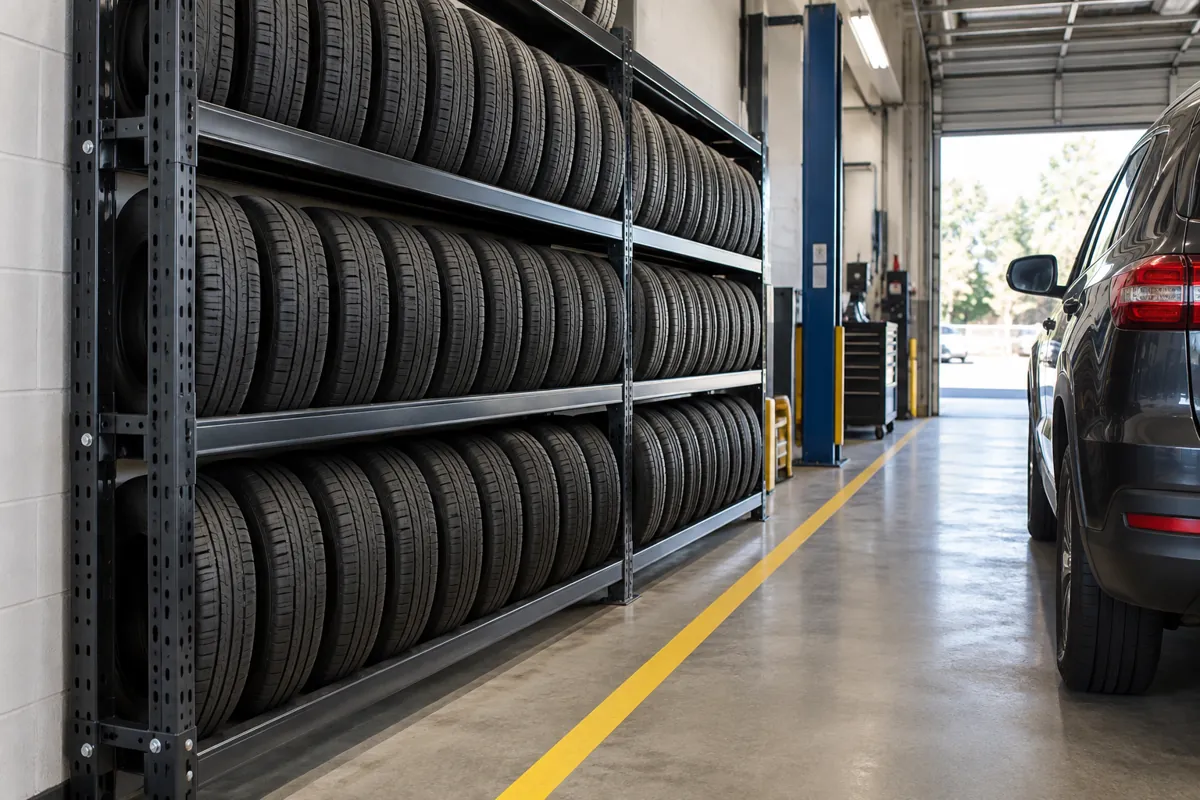
Shop Service Bay Tire Racks Online
Genuine tire racks you can order online. Prices are current store prices for the lowest-priced in-stock starter unit in each line; add-on bays, other sizes and freight are in each category. Some common sizes are in stock at select manufacturers, subject to confirmation. Larger rooms on pallet rack are quoted.

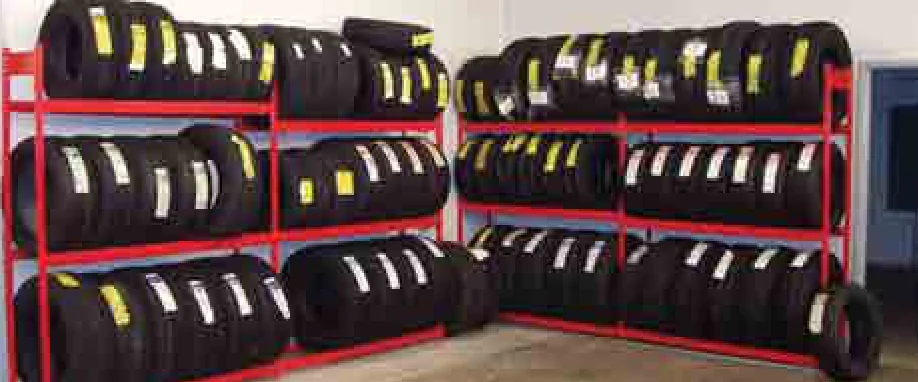

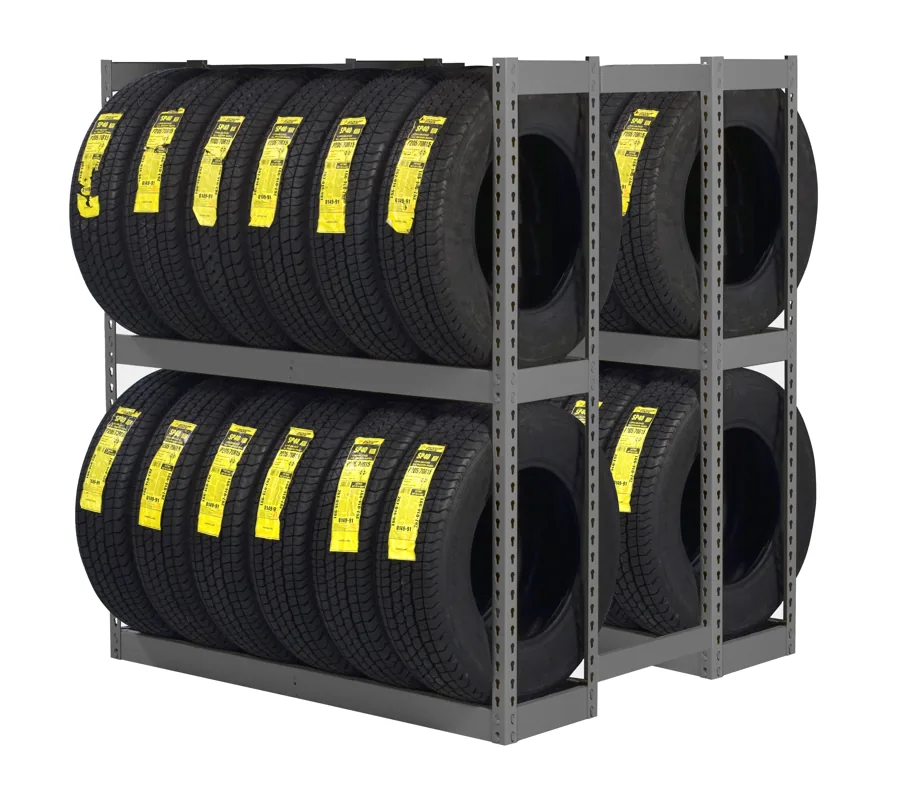
Start with the lane, then the wall
Five checks decide whether a tire run belongs in an express bay at all, and they are all measurements you can take yourself before anyone quotes steel.
- Clear drive lane. Measure the width your longest customer vehicle needs with doors open on both sides, plus the space a technician uses walking a tire past it. That number is fixed; the racking gets what remains.
- Usable wall length. Look for a continuous line, not scattered gaps. Runs planned as runs can be extended with add-on bays later; separate islands of shelving cannot.
- Honest clear height. Not ceiling height — the lowest obstruction over the run, including lighting, overhead door tracks and hardware, unit heaters, and any overhead fire protection arrangement.
- Travel from the lift or pit. Steps per job is the metric that matters at this size. A short run within reach of the bay beats a bigger room at the back of the building.
- Door and delivery path. How tires come in, and where the empty packaging and scrap go out, decides which end of the run should hold fast movers.
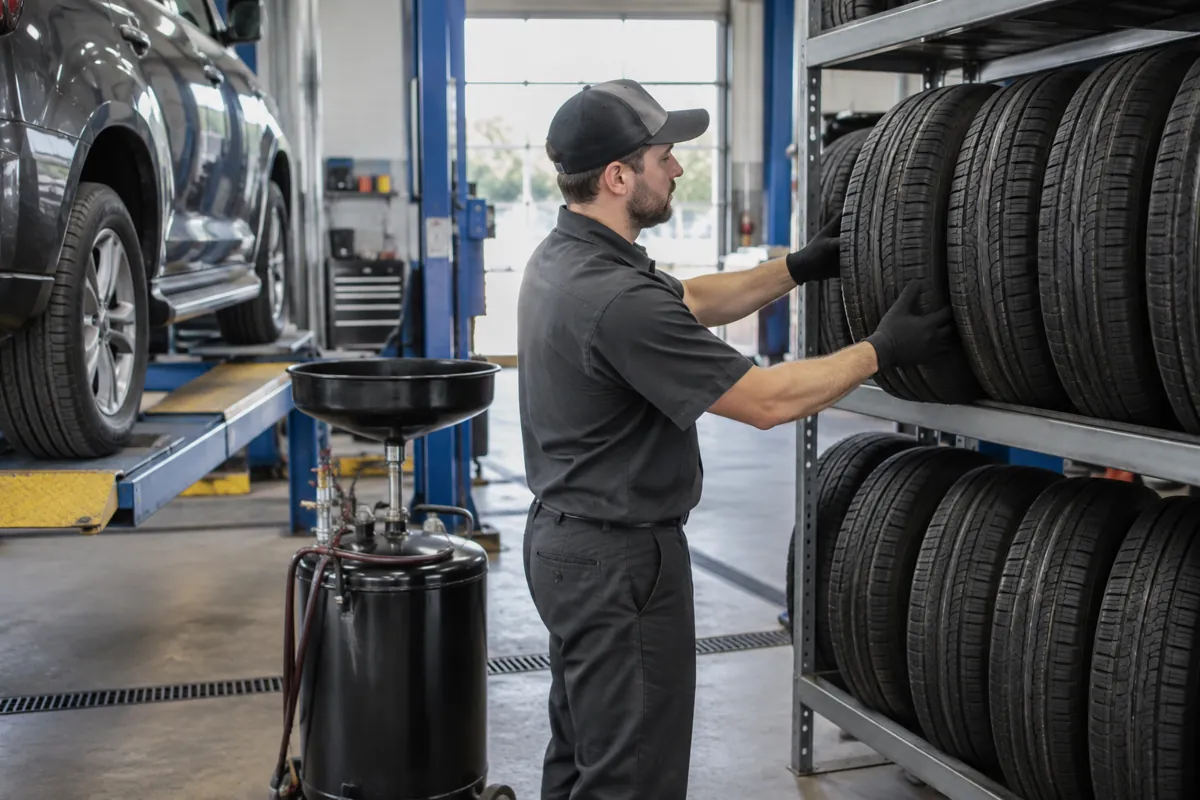
Reach heights, not just positions
Put the fast movers between knee and shoulder height. The sizes fitted several times a day should never require a step or an overhead lift.
Push slow and seasonal stock high. Held customer sets are touched twice a year, so they are the right load for the top level.
Keep one level easy to re-pitch. Fitment mixes move. Beam levels that can be moved with hand tools mean the same steel absorbs that change.
Specifying the run: a five-step method
The design work is genuinely an afternoon. Doing it before the quote is what separates a run that still works in year three from one that is full on the day it is loaded. It is the same method we apply on larger automotive projects such as dealership tire storage and retail tire shop storage racks, scaled down to an express building.
Count populations, not tires
List them separately: fast-moving fitment stock, customer sets held over a season, take-offs awaiting collection, and anything on the floor today. Floor stock is unmet demand you already have.
Band the sizes and measure
Group what you actually fit into two or three bands and measure the widest and tallest common tire in each. Two numbers per band is all a layout needs.
Fix the lane, then divide the wall
Subtract the protected drive lane and working envelope, then split the remaining wall length into bays. One starter per run, add-on bays after that.
Pitch levels per band, top level last
Set each level from the tallest tire it will hold plus handling clearance, and let the lowest overhead obstruction — not the ceiling — set the top level.
Label positions and set a removal schedule
Positions by band and population, plus a standing schedule for take-offs and scrap. Without the schedule the racking silently fills with tires nobody owns.
 Fast movers at working heightThe handful of sizes fitted daily belong in the easiest positions, close to the bay. Everything else can afford a step or a walk.
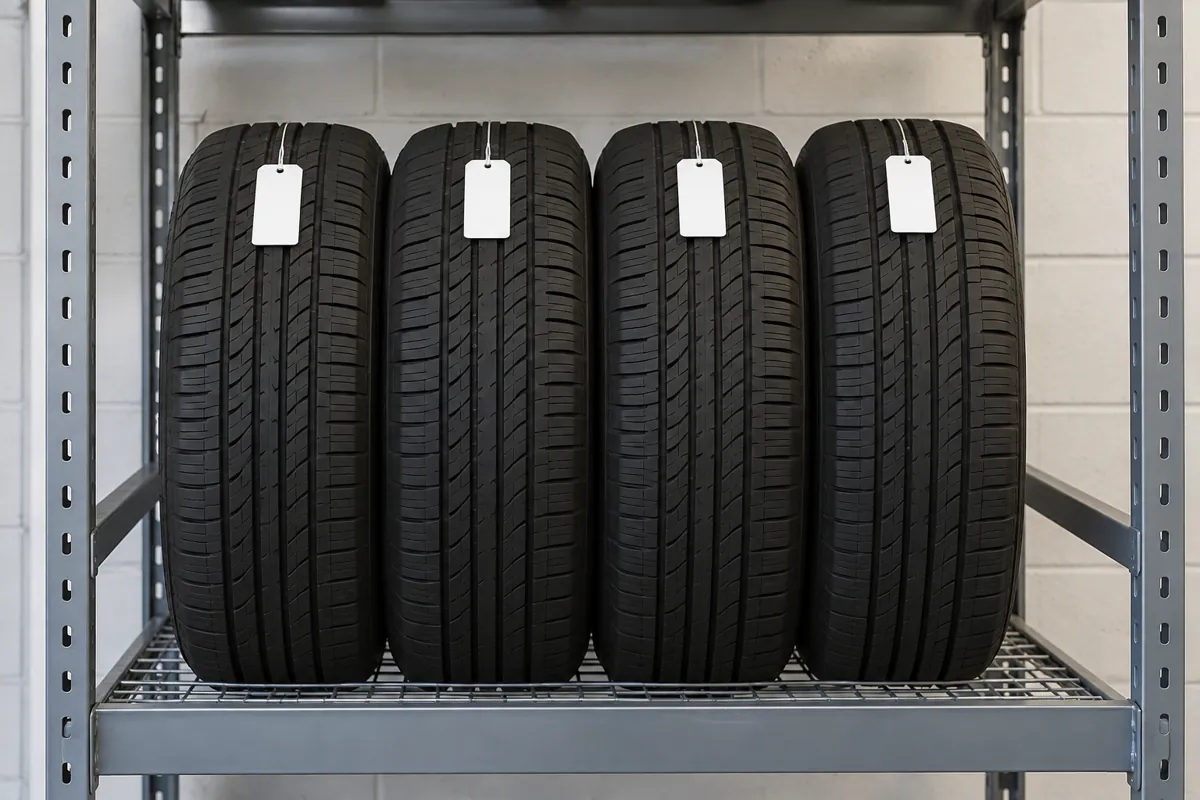 Customer sets kept togetherA held set is one unit: four tires, one position group, one tag. Splitting sets across levels is what turns a five-minute changeover into a search.
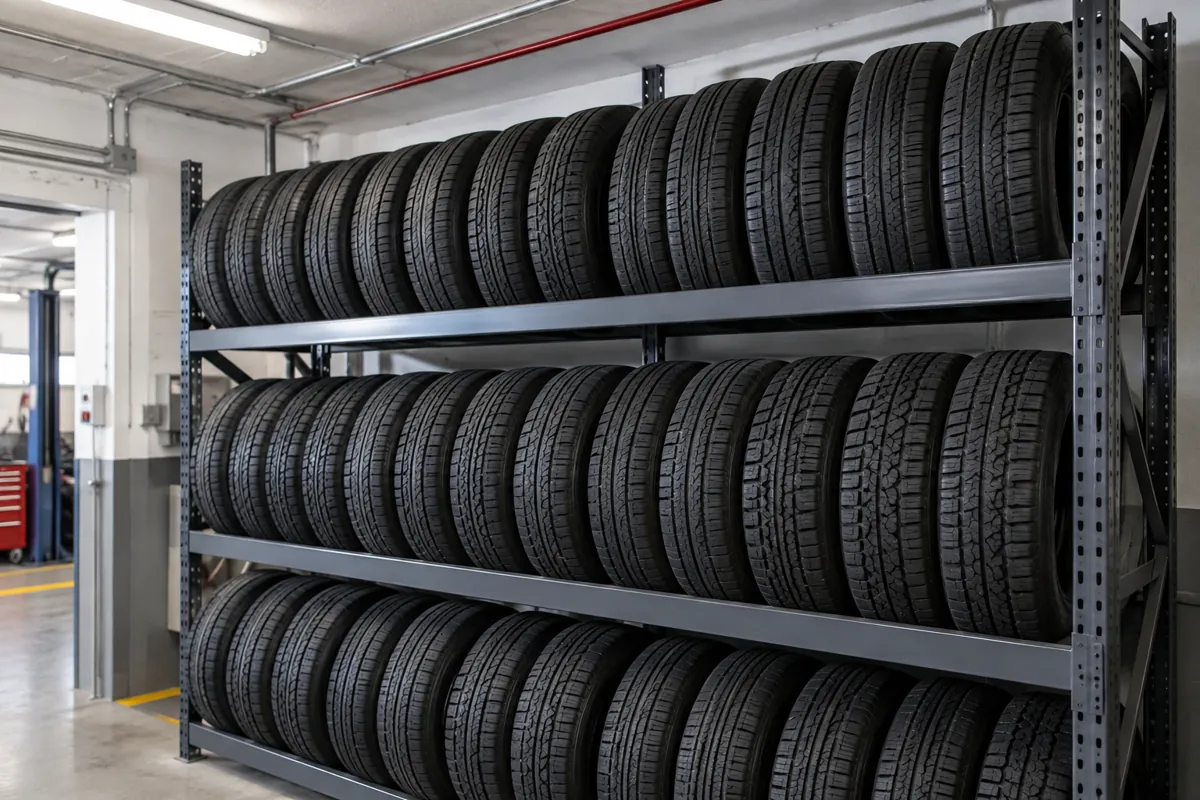 Top level under the real limitLighting, door hardware, heaters and overhead fire protection set the ceiling for the top beam level. Confirm the arrangement locally before you plan the height.
 Repeatable across sitesSize the run for your busiest express building, then repeat the bay count, pitch and labelling at the next location instead of redesigning it.
Count at peak, not on an average week
Seasonal changeover, a tire promotion and a slow collection of take-offs can land in the same fortnight. Size the run for that peak, because the alternative is that the overflow lives in the drive lane during your busiest weeks of the year.
Want your bay measured up properly?
Send the usable wall length, the lowest overhead obstruction and your peak tire counts by size band. We will lay out the run, pitch the levels and show what it holds before anything is quoted.
Which rack type fits an express building
Most service stations need conventional selective racking pitched for tire diameters and nothing more exotic. The other formats earn their place only in specific situations, and our commercial tire storage racking hub compares all of them side by side.
- Fixed starter and add-on bays — the default for an express bay. Best value, every
position directly picked, levels re-pitchable as the fitment mix moves. - Stackable and portable tire racks — for absorbing a seasonal
changeover surge without committing wall space year round. - Mobile and rolling tire racks — where sets are wheeled to the
lift all day rather than picked from a wall, or where the run has to clear out for a shop deep clean. - Tire and wheel assembly racking — once you store mounted
assemblies, the wheel finish becomes the thing you are protecting and the level specification changes. - High density tire storage — when the building genuinely cannot
hold the population and better organisation will not close the gap. - Heavy-duty truck tire racks — for stations that also service light trucks, pickups with oversize tires, or local fleets, where the tires are too heavy and too large in diameter for a standard passenger-tire level.
The fluid, filter and parts side of the same building — counter stock, will-call and warranty retention — is covered in our automotive storage solutions section, and both sit on the same pallet rack platform so a single order can cover the whole shop.
Seasonal changeover is the stress test
Two short windows a year decide whether your storage is adequate, because held customer sets arrive faster than they leave.
Plan the surge separately. Portable or stackable racks that appear for six weeks are usually cheaper than permanent bays sized for the peak.
Tag on intake, not later. A set without a tag becomes a set nobody can release, and it occupies a position all year.
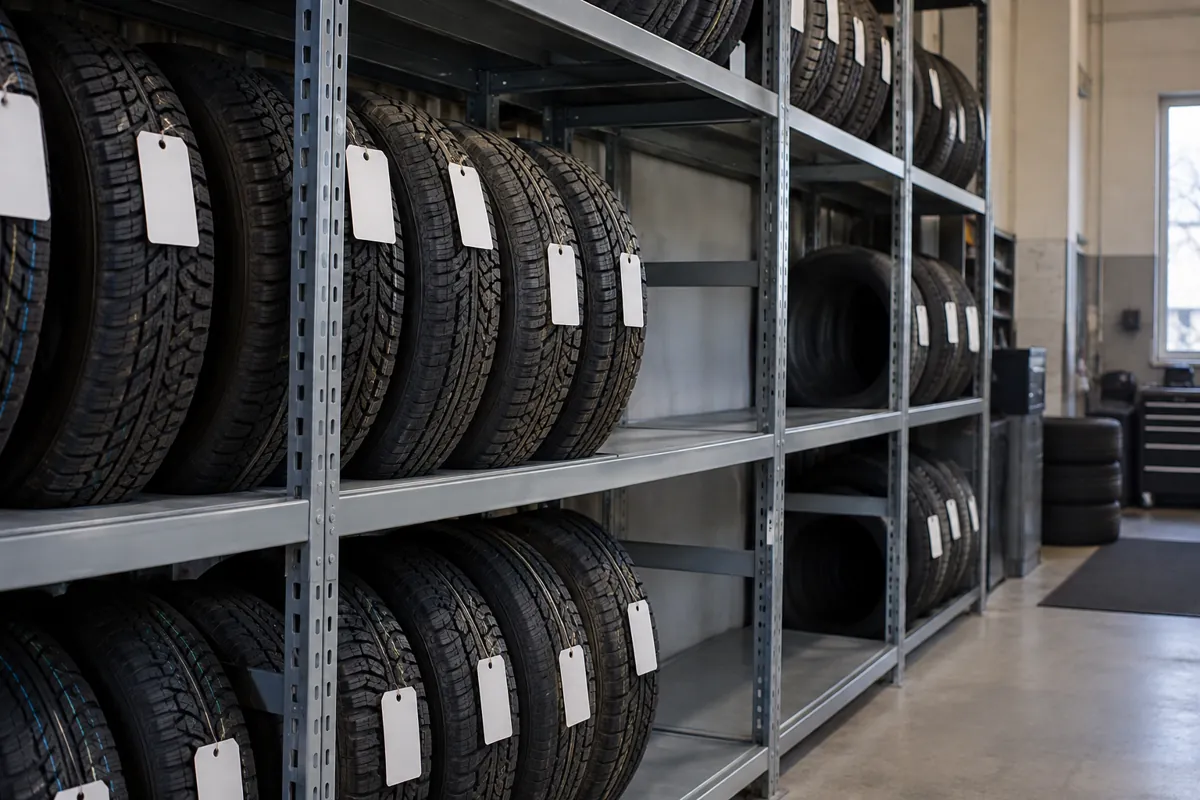
Installation, anchoring and housekeeping
A tire run in a service lane takes knocks a warehouse row never sees, because it lives beside vehicle traffic, lifts and air lines. None of the following is onerous, and all of it is cheaper designed in than retrofitted.
What we will and will not tell you
We will size the racking, pitch the levels to your size bands, lay out the run against your real lane dimensions and say plainly where a storage idea is likely to collide with fire protection or with how your shop moves. We will not certify that an arrangement is compliant in your building. That determination belongs to the fire protection engineer of record and the authority having jurisdiction.
Sizing a run for your shop
Whether you run one express bay or thirty, the inputs are the same three numbers per site: usable wall length, lowest overhead obstruction, and peak tire counts by size band. Send those and we will come back with a bay count, a level pitch per band and what the run actually holds — before there is a price attached to anything.
For the full technical comparison of every format, start at the tire storage rack hub. If the same building also needs bulk storage, fluids or parts capacity, the wider pallet rack systems range is where that gets planned, and both can be quoted together.
Get a free quote
Tell us what you are storing, the room size and your timeline. A project specialist will follow up with layout options and pricing. Prefer to talk? Call (800) 326-4403.
Frequently asked questions
How much tire storage does a two-bay quick lube actually need?
Can tire racking fit in an express lane without blocking the drive-through?
What beam level pitch works under a low service-station ceiling?
Should customer seasonal tire sets be stored on the tread?
Is shelving or racking better for a quick lube shop?
How do you keep tires from taking over the lube bay?
Can one configuration be repeated across several locations?
Do I need anything special for wheels that are already mounted?
Planning tire storage for a service station or quick lube bay?
Send your usable wall length, lowest overhead obstruction and peak tire counts by size band, and we will lay out the run and pitch the levels before anything is quoted. Call 801-328-8788.