
Building Products Distribution Racking: L&W Supply
Drywall, insulation, ceiling grid and steel studs are stored by three completely different rules — and one of them is not a rack problem at all.
2022 & 2023
Years L&W Supply worked with us on rack
Building products
Drywall, insulation, ceiling and framing Mechanical distributors face the same split between boxed equipment and long stock — see our HVAC distribution warehouse racking case study.
Cantilever & pallet rack
Product categories we supplied
Sheet, roll, bundle
Three load shapes in one building
Plan your layout before you buy
Configure upright height, beam width, bay count, and load levels in our free 3D Pallet Rack Configurator, then get an instant bill of materials and request a quote.
The project
L&W Supply is a distributor of interior building products. Material Handling USA supplied cantilever rack and pallet rack in 2022 and again in 2023. The client, those years and the product categories supplied are the only project details we publish.
Interior building products deserve separate treatment from a lumber yard or a general construction supply yard, because the flagship product — gypsum board — behaves unlike anything else in distribution. It is heavy, fragile at the edges, damaged by moisture, and shipped in stacks that are handled by boom truck rather than by pallet jack. This page covers how we approach pallet rack systems and cantilever storage for a building products branch: what goes on rack, what stays on the floor, and where the damage costs come from.
Three load shapes, three systems
Nearly everything in an interior products branch falls into one of three shapes, and each has one correct storage answer.
Sheet and board goods — gypsum board, cement board, sheathing, hardboard. Stored flat in stacks, mostly at or near floor level, moved with a boom truck or a sheet handler. Racking these overhead is the exception, not the rule.
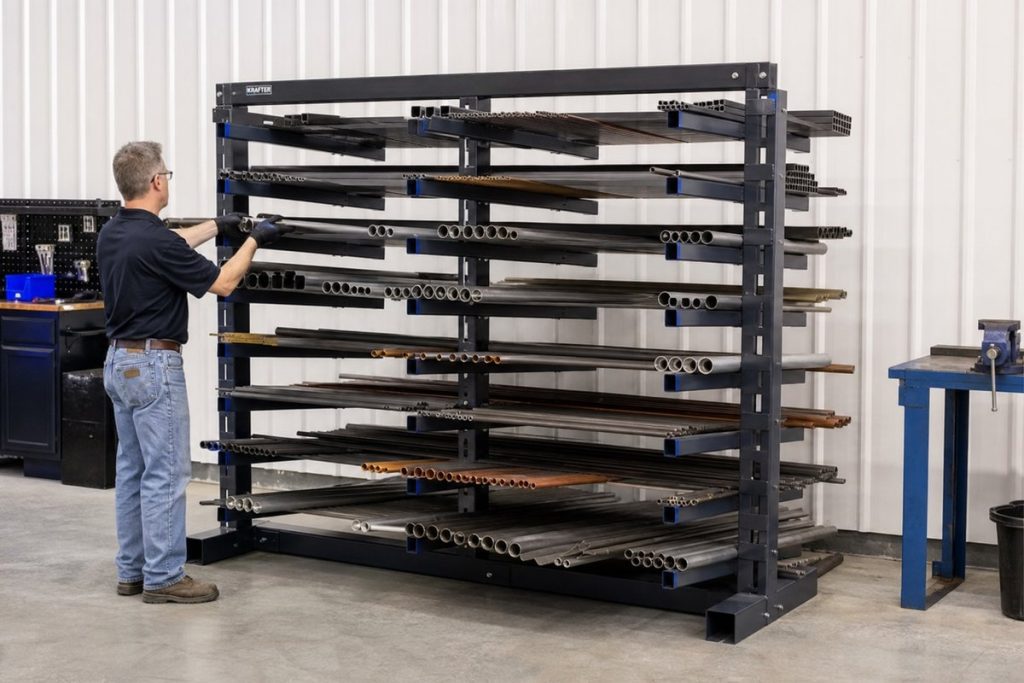
Long stock — steel studs and track, ceiling grid, corner bead, trim, joint tape rolls and lath. Ten to sixteen feet long, light per piece but heavy per bundle. This is cantilever territory.
Boxed, bagged and palletized goods — joint compound, fasteners, insulation bags, adhesives, tools and accessories. Conventional pallet rack and shelving.
The failure mode in this sector is treating all three as one storage problem and buying a building full of identical selective bays. Half the inventory then lives on the floor because nothing fits, and the aisles disappear.
Damage is the real cost line
In building products the storage system is judged on damaged product, not on cube. Chipped board edges, crushed grid, bent track and wet insulation are pure loss, and they come overwhelmingly from handling and from storing an item in a system that was never shaped for it.
Board and sheet goods: mostly a floor problem
Gypsum board is the product that most often gets stored wrongly, usually by someone trying to put it on rack because rack is what the building has.
| Requirement | Why | Design response |
|---|---|---|
| Flat, fully supported stacks | Board sags and cracks when supported at intervals rather than continuously | Store flat on a level, dry floor or on full-width supports — never spanning open beams |
| Dry storage | Gypsum core and paper facing are damaged permanently by moisture and by ground contact | Keep stacks off slab contact where the floor sweats, well inside the drip line, and away from doors where wind-driven rain reaches |
| Edge protection | Damaged edges make a sheet unsaleable even when the board is otherwise perfect | Wide, clear handling lanes and dedicated sheet-handling equipment; keep forks and pallet corners away from stack edges |
| Access by product and length | Multiple thicknesses, types and lengths look nearly identical from ten feet away | One stack position per product and length, marked clearly on the floor as a location, not just as a paint line |
| Load reach | Board is loaded to trucks by boom or by sheet handler, not by pallet jack | Design lane widths and stack orientation around the loading equipment, and keep the boom approach clear |
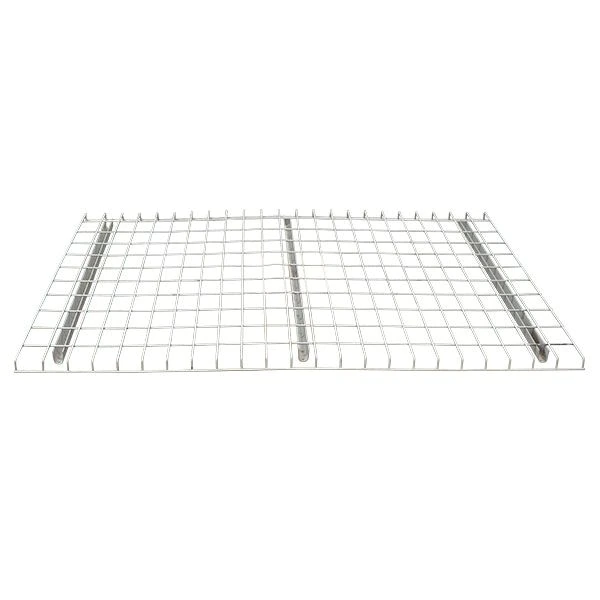
Where board does go on structure, it is on purpose-built decked bays sized for the full sheet with continuous support, not on standard beams. Otherwise the correct answer is a well-marked, well-drained floor plan with the rack built around it — which is exactly why a building products branch cannot be laid out with a rack drawing alone.
Long stock on cantilever racking
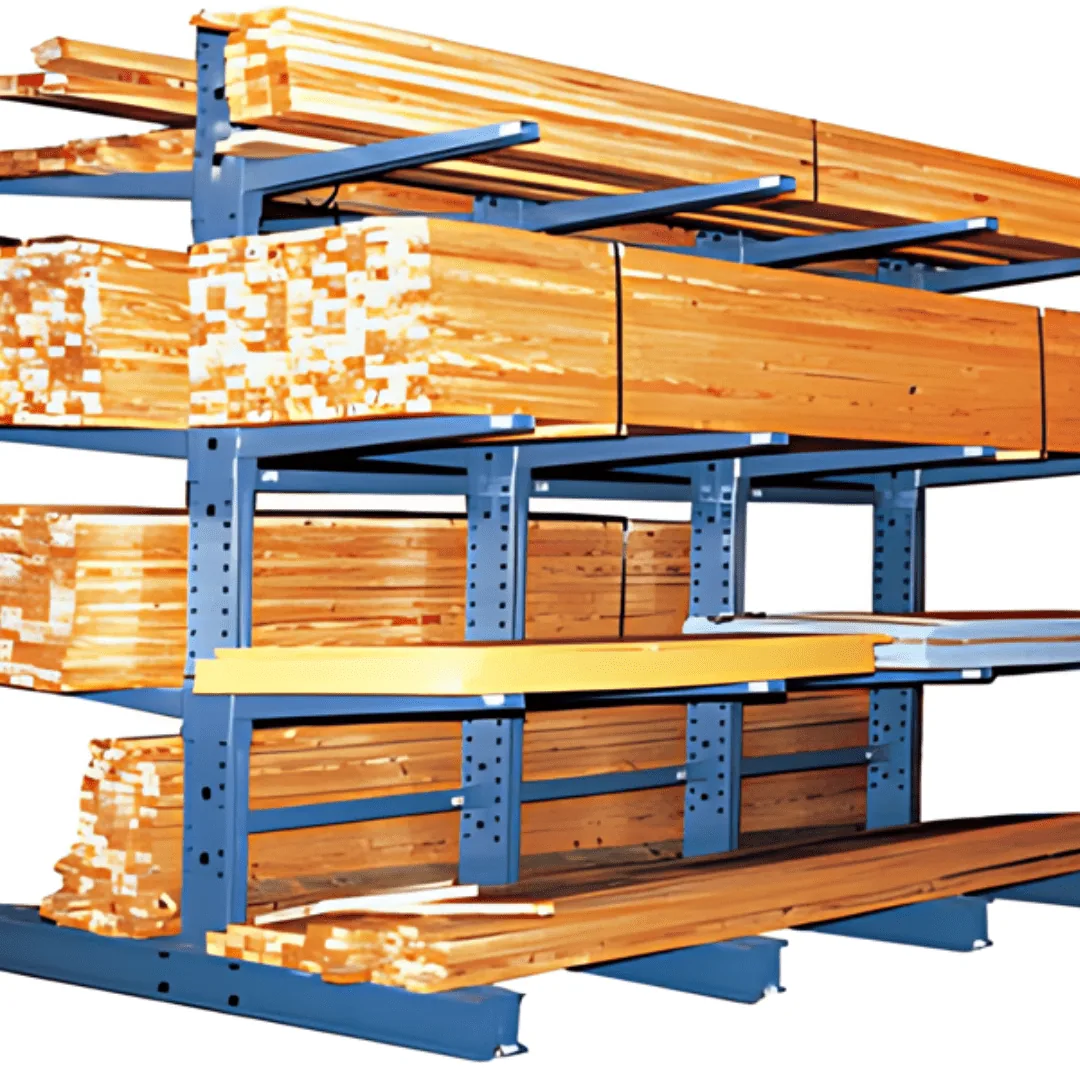
Studs, track, grid, bead and trim are what cantilever racking exists for. With no front columns, a bundle can be placed or drawn from the side without fighting an upright, and arm spacing can be set for the bundle rather than for a pallet.
Specification points that matter in this sector:
- Medium duty is usually right. Studs and grid are long but light per foot; heavy-duty structural cantilever is often over-specified here. Match the arm and column to the real bundle weight and let the savings buy more arm levels.
- Arm length must exceed the bundle depth. Overhang beyond the manufacturer’s allowance is where cantilever failures begin.
- Closer arm spacing for flexible material. Long, light bundles sag between arms. Grid and trim need more support points than lumber of the same length.
- Lipped or inclined arms for loose lengths. Loose pieces roll; banded bundles do not. Specify to how the product actually arrives.
- Column height is set by the aisle, not the ceiling. A tall single-sided run against a wall needs anchoring and bracing designed for the overturning moment, and a truck that can reach the top arm safely.
Our lumber yard racking case study covers the heavy-timber version of the same problem, and the construction supply yard case study covers bagged goods and will-call counters.
Pallet rack for boxed, bagged and palletized goods
The pallet rack half of a building products branch looks conventional but carries two specific demands: heavy compound pallets, and fast selective access for will-call and truck loading.
Yard, dock and boom truck loading
Building products branches load differently from almost any other distributor: much of the outbound volume goes onto boom trucks and flatbeds rather than through a dock door, and a good share of it is delivered to a jobsite the same day.
- Design the loading lane first. A boom truck needs a straight approach, overhead clearance and room to swing. Rack that blocks that approach costs more in loading time than it saves in storage.
- Keep same-day product nearest the loading lane. The branch’s throughput is set by how fast a truck can be built, not by how much is stored.
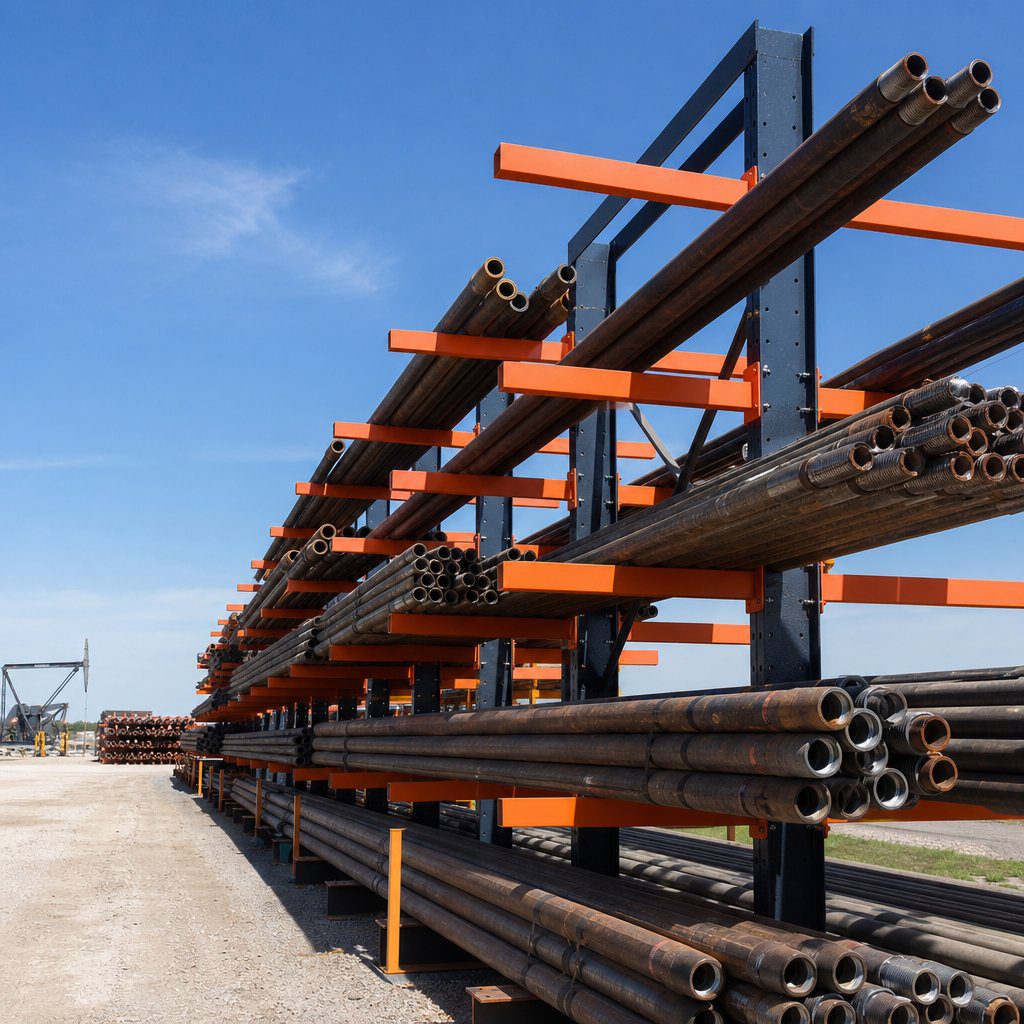
- Protect outdoor steel properly. Yard cantilever needs a galvanised or otherwise protected finish, base details that tolerate standing water and freeze–thaw, and drainage that does not undercut the footings.
- Separate people from the loading area. Contractor foot traffic in a branch that is also loading boom trucks is a serious hazard; mark and physically separate the will-call route.
- Plan for the returns flow. Unused jobsite material comes back damaged, mixed and unlabelled. A defined receiving and inspection position stops it becoming a permanent pile.

Capacity, protection and inspection
Beam and frame ratings are not one number. Beam capacity is published for a uniformly distributed load; a dense compound pallet or a banded bundle set down at mid-span is not that. Frame capacity depends on the number of levels and their spacing, so moving a beam changes the rating. Ask for the manufacturer’s load table for the exact span and spacing you are buying, and keep the load application drawing — pallet racking weight capacity and pallet rack uprights cover the detail.
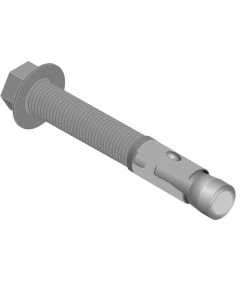
Anchor everything, and protect what gets hit. Anchors are part of the engineered design. Aisle ends, door-side runs and cantilever base plates take the impacts; column protectors and rack guards are far cheaper than frame replacement and the downtime around it.
Inspect on a schedule and after every impact. A struck upright or a bent cantilever arm reduces capacity until it is repaired — see rack repair and inspection. In a branch where forks pass within inches of steel all day, this is not an annual formality.
Install to the drawing. Plumb, square, anchored and braced as designed; that is what every rating assumes. Our installation teams handle the engineering-relevant details as well as the steel.
Relevant references: ANSI MH16.1 for industrial steel storage racks and OSHA 1910.176 on securing stored material against collapse. Neither replaces a stamped design for your building, your seismic category and your loads.
Shop Pallet Rack Accessories Online
Protect and finish your pallet rack installation with these in-stock accessories, or request a quote for custom-sized rack, freight and volume pricing.

Building products racking FAQs
Can drywall be stored on pallet racking?
What is the best racking for steel studs and ceiling grid?
How is a building products branch different from a lumber yard?
Does outdoor cantilever racking need a special finish?
How much aisle width does a building products branch need?
What is the fastest improvement in an existing branch?
Utah pallet rack project: This case study supports our Utah pallet rack design and installation guide and, at the top level, our main pallet rack systems hub.
Racking Shaped Around Board, Bundles and Pallets
Send us your product list, bundle lengths and building dimensions and we will design a branch layout that cuts damage and speeds truck loading.