
Medical Device Manufacturing Warehouse Racking: Utah Medical Products
A medical device manufacturer’s warehouse doesn’t just hold finished product waiting to ship — it feeds a production line, with components tracked by lot from receiving through assembly.
Medical device manufacturing
Client sector
Pallet rack
Product category supplied
Midvale, UT
Client HQ
Lot-tracked components
Application
Plan your layout before you buy
Configure upright height, beam width, bay count, and load levels in our free 3D Pallet Rack Designer, then get an instant bill of materials and request a quote.
The project
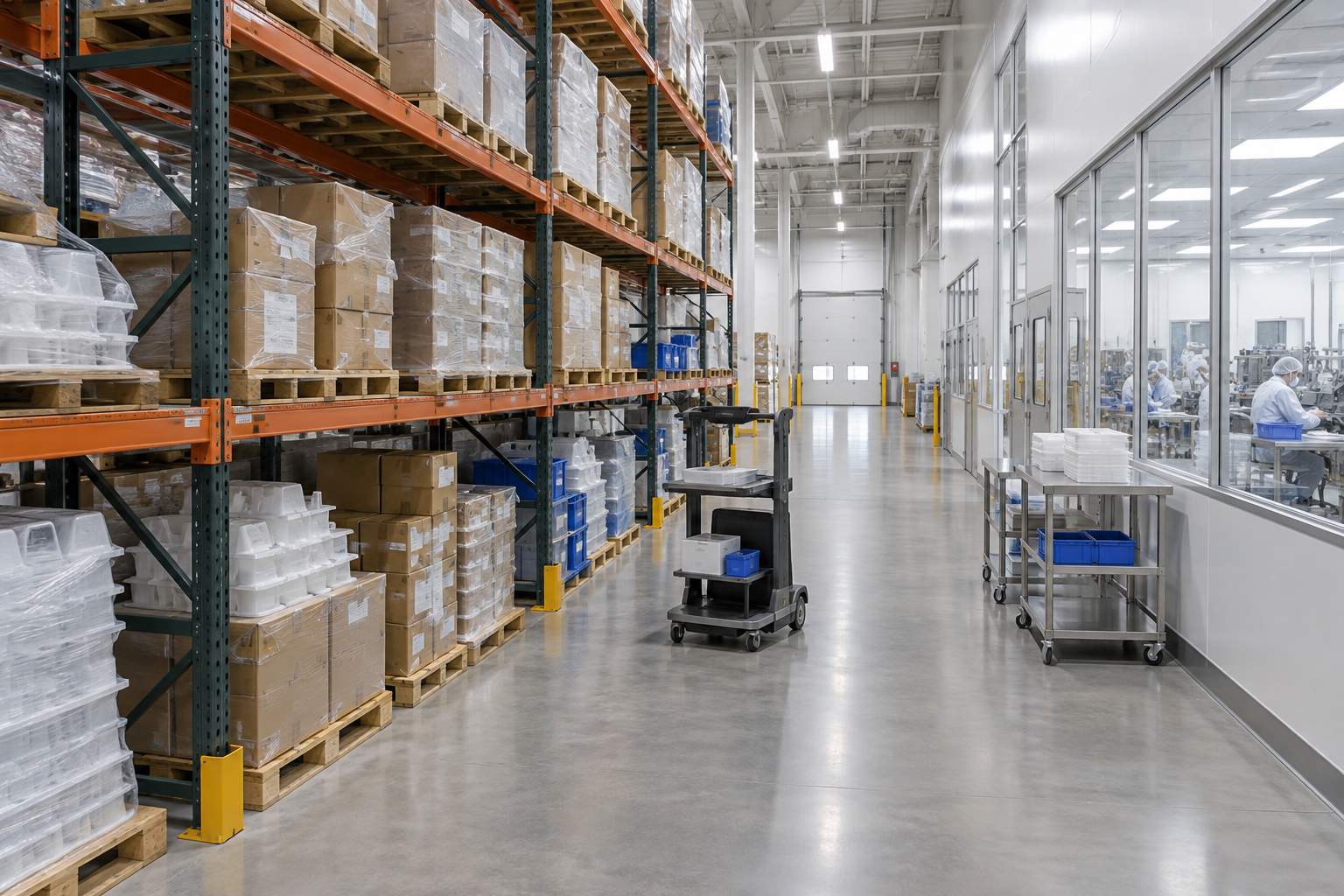
Utah Medical Products, Inc. is a medical device manufacturer headquartered in Midvale, Utah, designing and building obstetric, gynecologic, urology, neonatal and vascular access devices. Material Handling USA supplied pallet rack systems for the company’s component and parts storage warehouse feeding its manufacturing operations.
This is a different storage problem from the distribution side of medical logistics — our medical supply distribution case study covers a distributor’s FIFO and lot-control warehouse moving finished product out to customers. Utah Medical Products is instead the manufacturer: its warehouse stores the raw components, molded parts and packaging that feed an active production line, not finished goods staged for outbound shipment.
Why a device manufacturer’s warehouse is different
Inventory is a production input, not just a sales unit. Components move from receiving, into storage, and out to an assembly or cleanroom-adjacent area on a manufacturing schedule — storage has to keep pace with production, not just hold stock until an order ships.
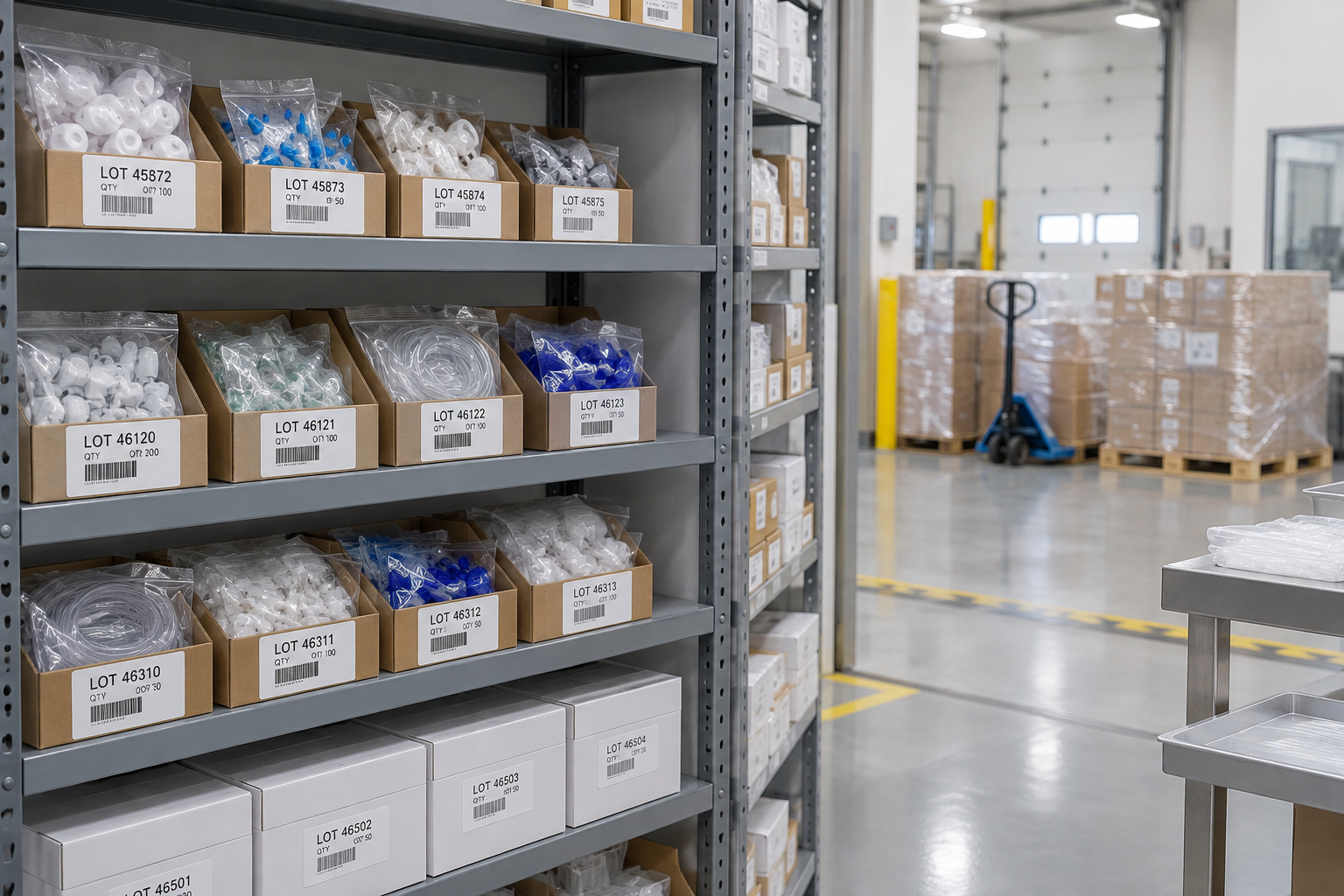
Lot and date tracking matters at the component level. Individual boxes and bins of components carry their own lot numbers that have to stay legible and organized for traceability, well before those components ever become part of a finished, labeled device.
Component sizes vary widely within the same warehouse. Bulk packaging materials and larger molded parts arrive palletized, while small precision components and hardware move in much smaller unit quantities — a single storage type rarely suits both.
Proximity to production drives layout. Fast-moving components need to sit close to the assembly or cleanroom-adjacent area they feed, which shapes where different rack types go relative to a standard bulk-storage layout.
What this warehouse stores
Splitting storage by component size and pick frequency, not just by part number, is what keeps a device manufacturer’s inventory organized and traceable.
| Group | Examples | Storage that suits it |
|---|---|---|
| Bulk packaging and larger molded parts | Cartons of packaging materials, larger molded plastic or rubber components | Selective pallet rack with wire decking, palletized and slotted by receiving date |
| Small precision components | Fittings, connectors, small molded parts, hardware, individually lot-numbered cartons | Boltless shelving near the assembly or cleanroom-adjacent area for fast, frequent picks |
| Bulk raw material stock | Resin, tubing stock and other bulk material inputs on pallets | Selective pallet rack, separated from finished-component staging to avoid mixing lots |
| Finished sub-assemblies awaiting the next process step | Completed sub-assemblies staged between manufacturing steps | A clearly marked, separated staging area, not mixed in with incoming raw component storage |
Rack choices for lot-tracked components
The right mix for a device manufacturer separates bulk palletized inputs from the small, fast-moving components a production line pulls from constantly.
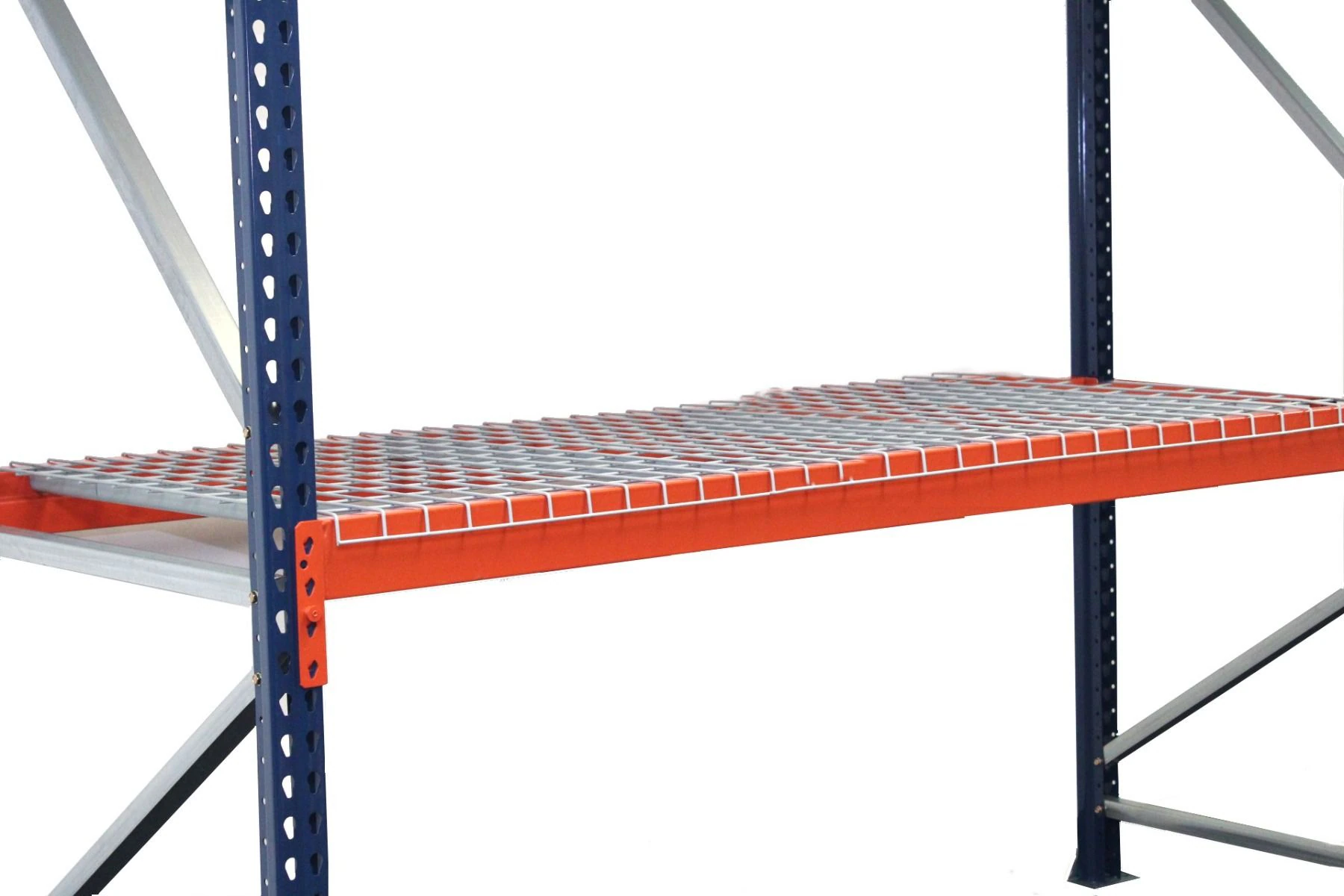
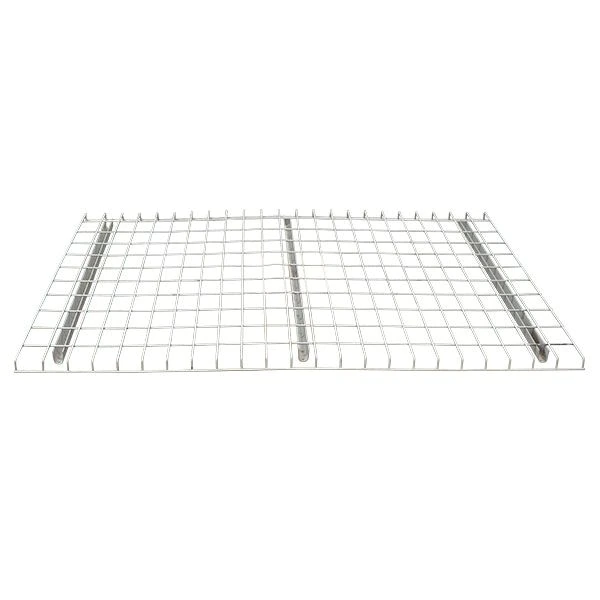
- Selective pallet rack with wire decking for bulk inputs. Packaging materials, larger molded components and bulk raw material stock store efficiently on standard selective rack, with wire decking keeping smaller cartons from falling through to the level below.
- Boltless shelving for small, lot-tracked components. Small parts and hardware move faster and stay easier to inventory on open shelving near the production area than off a full pallet position.
- Consistent labeling and lane assignment across every rack type. Assigning a fixed location by lot or part number, and keeping labels legible at every level, does more for traceability than any single rack choice on its own.
- Clear separation between raw input storage and staged sub-assemblies. Keeping incoming components physically apart from work-in-process reduces the chance of mixing lots across different stages of assembly.
Model bay counts, shelving runs and aisle widths for your own layout in our 3D pallet rack designer before ordering.
Capacity, cleanliness and traceability
A device manufacturer’s warehouse design has to balance load capacity with the cleanliness and traceability standards production areas expect.
- Design rack capacity around actual carton and pallet weights. Bulk packaging and molded-part cartons vary widely in density — confirm real weights rather than assuming a standard load profile.
- Choose rack finishes and shelving materials that are easy to keep clean. Storage areas adjacent to cleanroom or controlled-environment production benefit from smooth, easy-to-wipe rack and shelf surfaces that don’t shed debris.
- Keep aisle widths consistent with the material-handling equipment actually in use. Narrower carts and hand trucks common in component storage areas need different aisle widths than a forklift-served bulk-pallet area.
- Plan location capacity for growth, not just current lot sizes. Adding shelf or rack levels later is far more disruptive in a production-adjacent storage area than at initial installation.
Installation and safety
A medical device manufacturer’s warehouse gets the same structural design standard as any other rack installation, with extra attention to cleanliness and lot-tracking workflow.
Seismic design applies in Utah. Utah sits in a moderate-to-high seismic zone along the Wasatch Front, so rack anchoring, base plate design and bracing need to account for seismic load combinations under the applicable building code — not just static and live loads — the same way any other pallet rack or shelving installation in the region does.
- Design rack capacity for actual load weights — see pallet rack weight capacity guidance rather than assuming a standard beam rating covers every carton type.
- Protect rack uprights with column protectors and end guards in aisles that see cart and hand-truck traffic near production areas.
- Inspect racking on a defined cycle, and immediately after any impact — see rack inspection and repair, with extra attention to shelving near high-traffic pick locations.
- Anchor and install to the ANSI/RMI MH16.1 standard — see our rack installation guidance, coordinated with the site’s cleanroom-adjacent access and housekeeping procedures.
ANSI/RMI MH16.1 is published by the Rack Manufacturers Institute. We design, supply and install pallet rack and shelving for medical device manufacturers and controlled-environment warehouses across the region — see Utah pallet rack for more of our local project work.
Serving Salt Lake Valley medical device manufacturers
Material Handling USA has been an industry leader in storage and material handling since 1997, working from Salt Lake City with medical device manufacturers, distributors and industrial plants across the Wasatch Front. For Utah projects call 801-328-8788, or see our Utah pallet rack page.
Shop Pallet Rack Products Online
Buy select items directly from our online store, or request a quote for volume, custom sizes and freight-rated orders.
Frequently asked questions
What storage suits a medical device manufacturer’s component warehouse?
How is this different from a medical supply distribution warehouse?
Why does lot tracking matter for rack and shelving layout?
What’s the design standard for the rack itself?
Does seismic design matter for rack in Utah?
Planning storage for a medical device manufacturing or controlled-environment warehouse?
We design pallet rack, shelving and lot-tracked component storage layouts for medical device manufacturers and industrial-plant warehouses. Free design consultation.