
Security Equipment Warehouse Racking: Stone Security
A security systems integrator doesn’t stock parts to sell — it stocks parts to finish tomorrow’s install jobs, and the warehouse either keeps up with the schedule or slows it down. Not every security-sector warehouse belongs to an installer — an access-control hardware manufacturer stores raw electronic components and boxed finished goods for shipment to dealers nationwide, a different mix that calls for its own storage plan; see our access-control hardware manufacturer warehouse racking case study.
2024
Year we worked with Stone Security
Boltless shelving + pallet rack
Product categories supplied
Security systems integration
Client sector
Job-kit based issue
The organizing principle
Plan your layout before you buy
Configure upright height, beam width, bay count, and load levels in our free 3D Pallet Rack Configurator, then get an instant bill of materials and request a quote.
The project
Stone Security is a security systems integrator — a company that designs and installs cameras, access control and alarm systems for other businesses. Material Handling USA supplied boltless shelving together with pallet rack for the company in 2024. Client, year and product categories are the only project facts we publish — no layouts, quantities, capacities or values.
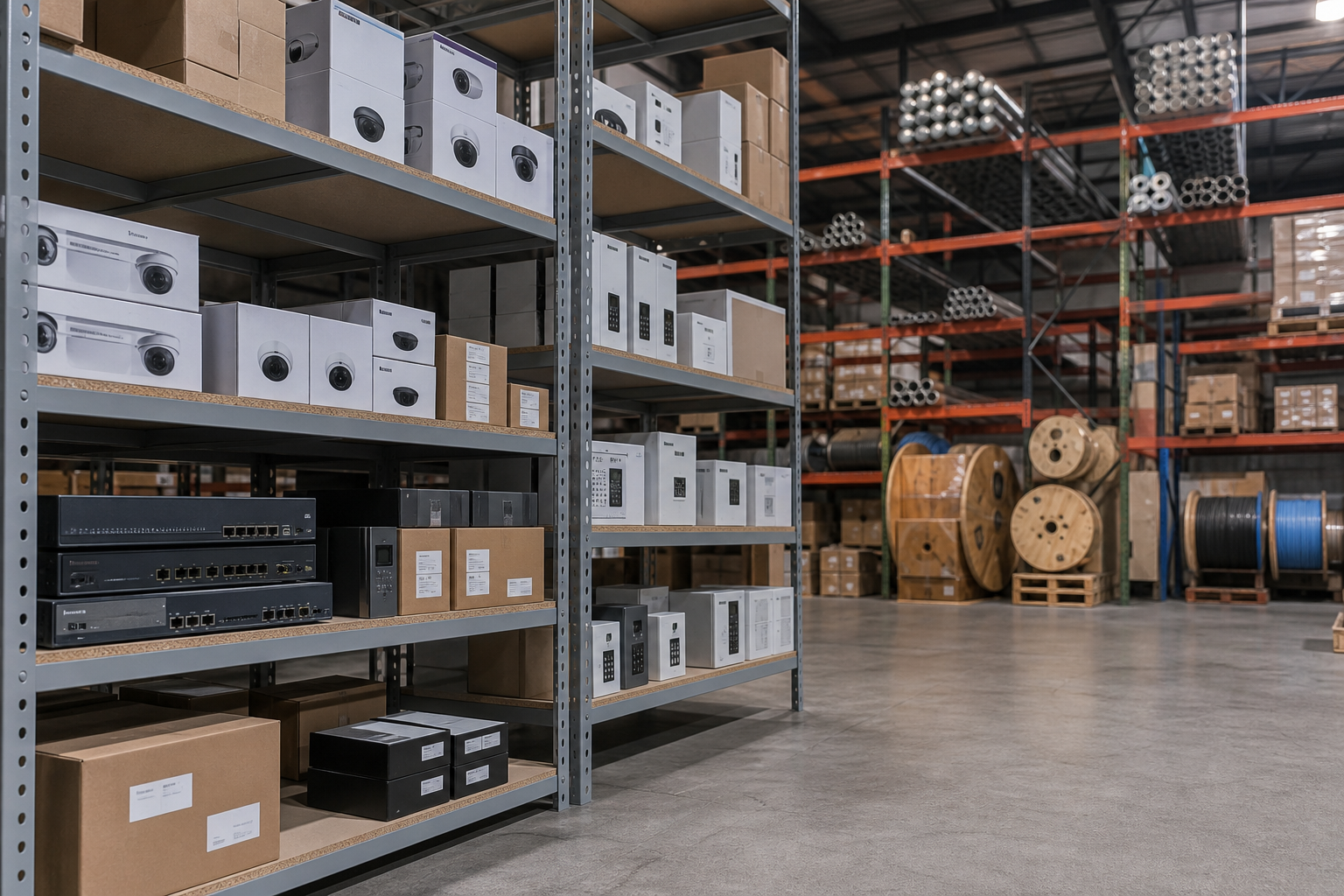
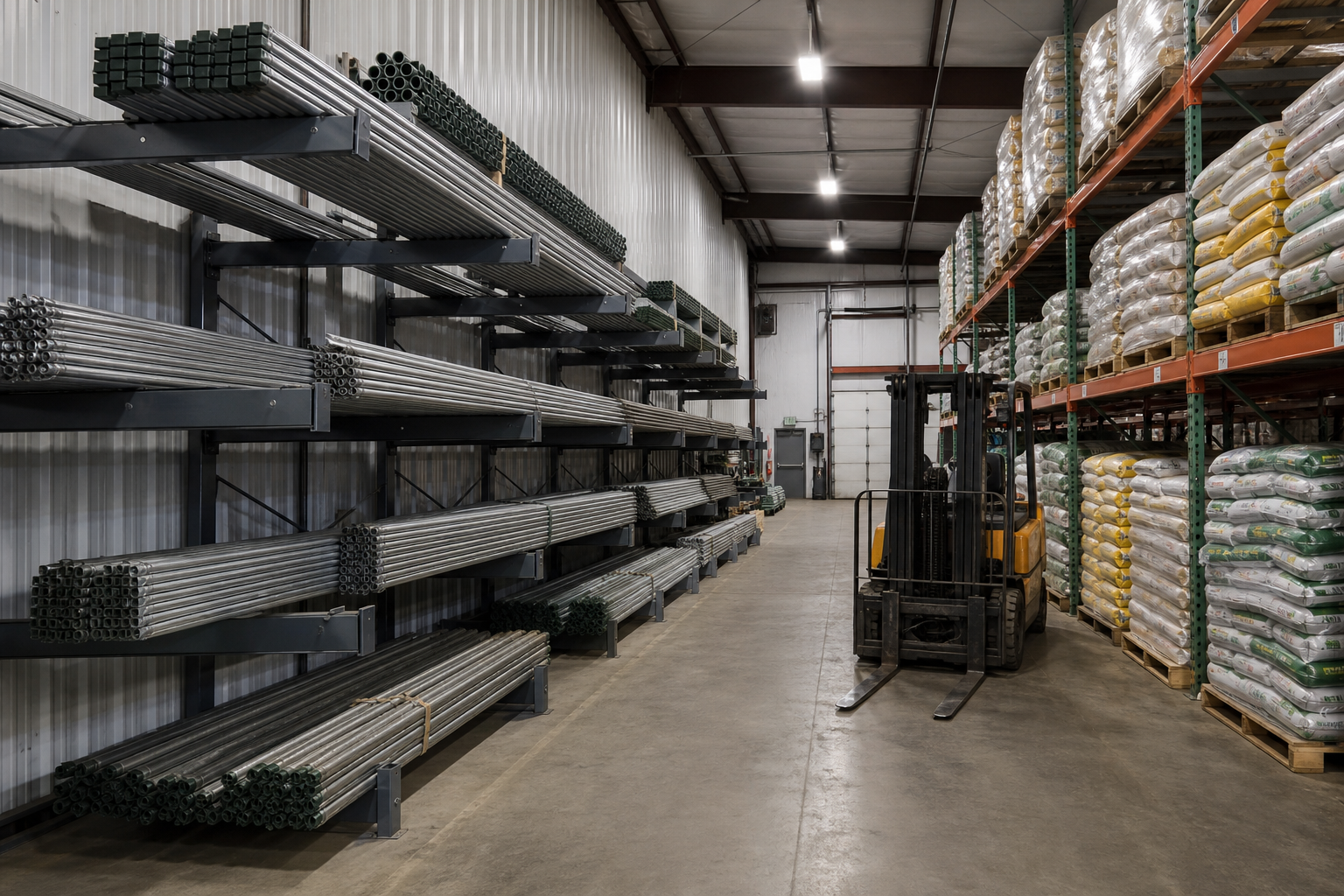
This is not a distribution warehouse selling product to customers. It’s the integrator’s own back-of-house: the building that stages every job before a technician leaves for a site. That distinction drives the whole layout. The inventory is a long tail of small, serialized electronics that need boltless shelving, plus bulk conduit, cable reels and packaging that need engineered pallet rack systems.
The nearest comparison on this site is our electrical contractor warehouse racking case study — another trade contractor mixing reels, conduit and small parts — but a security integrator adds a layer that most contractors don’t have: a meaningful share of the inventory is attractive to thieves and needs to be controlled, not just organized.
Why an installer’s warehouse is different
The unit of work is a job, not a SKU. A distributor’s customer might order anything; an integrator’s technician needs exactly the parts for one specific install, known in advance.
Inventory is small, numerous and expensive. Cameras, access-control readers, door controllers and networking gear are compact, high value per item, and there are hundreds of part numbers to track.
Bulk material still needs real racking. Conduit, cable on reels, mounting hardware and packaging materials arrive by the pallet and need proper storage, not just shelving.
The morning schedule is unforgiving. A missing part doesn’t get discovered until a technician is on-site, which makes pre-staged, verified kits far more valuable than a fast pick.
Some of what’s in the building has a resale market of its own. Cameras, controllers and readers are small, valuable and easy to move, which most conventional shelving doesn’t address.
What a security integrator stores
Sorting the inventory by physical behaviour rather than by product family is what makes the layout obvious.
| Group | Examples | Storage that suits it |
|---|---|---|
| Cameras and sensors | Boxed IP and analog cameras, motion and door sensors | Boltless shelving with fixed, labeled locations — picked by hand many times a day |
| Access control hardware | Card readers, controllers, electric strikes, keypads | Boltless shelving, ideally in a controlled or caged section given resale value |
| Networking and power gear | Switches, NVRs, power supplies, battery backups | Shelving for small units; low pallet rack levels for boxed larger units |
| Conduit, cable and reels | EMT and PVC conduit, low-voltage cable on reels, wire | Pallet rack or cantilever arms for conduit bundles; dedicated reel storage so reels can’t roll |
| Mounting hardware and fasteners | Brackets, junction boxes, anchors, fasteners | Bins at the kitting bench — these are the parts that stop a job if they’re missing |
| Packaging and consumables | Boxes, labels, wire ties, wall plates | Bulk pallet positions on standard selective rack, restocked on a normal cycle |
Shelving versus rack for this inventory
The rule of thumb: if it’s handled by a forklift it belongs in rack, and if it’s handled by a person it belongs on shelving. An integrator’s warehouse needs a deliberate boundary between the two.
- Selective pallet rack for bulk conduit, cable and packaging. Anything arriving on a pallet as a unit load, restocked on a normal delivery cycle.
- Boltless rivet shelving for the electronics tail. Cameras, readers, controllers and small hardware are picked by hand constantly; shelving with labeled, fixed locations beats hunting through a pallet position.
- Bins at the kitting bench. Fasteners, brackets and connectors that stop a job belong within arm’s reach of where kits are assembled, not back in bulk storage.
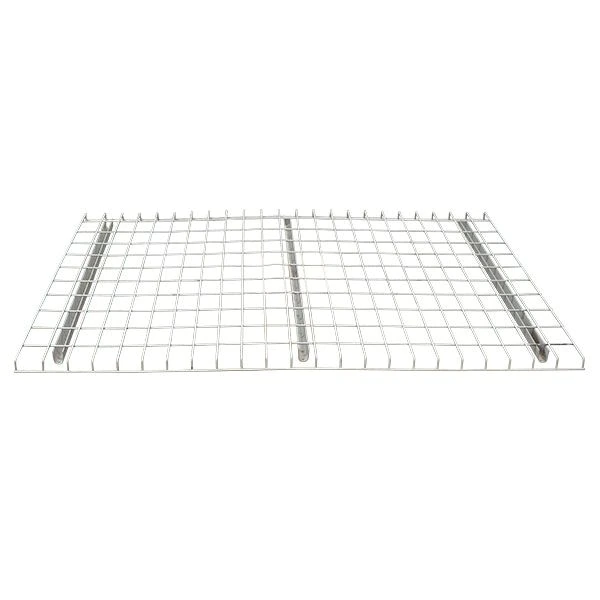
- Decked low rack levels for reels. Cable and wire reels should sit on a level with a stop or rail so a reel can’t roll off the bay — see wire decking.
- Leave room to reconfigure. Product lines in security electronics change fast; shelving and rack that can be rearranged are worth more than squeezing out the last few inches of density.
To test bay counts and shelving runs against your actual inventory before ordering, try our 3D pallet rack configurator.
Kitting jobs before the van leaves
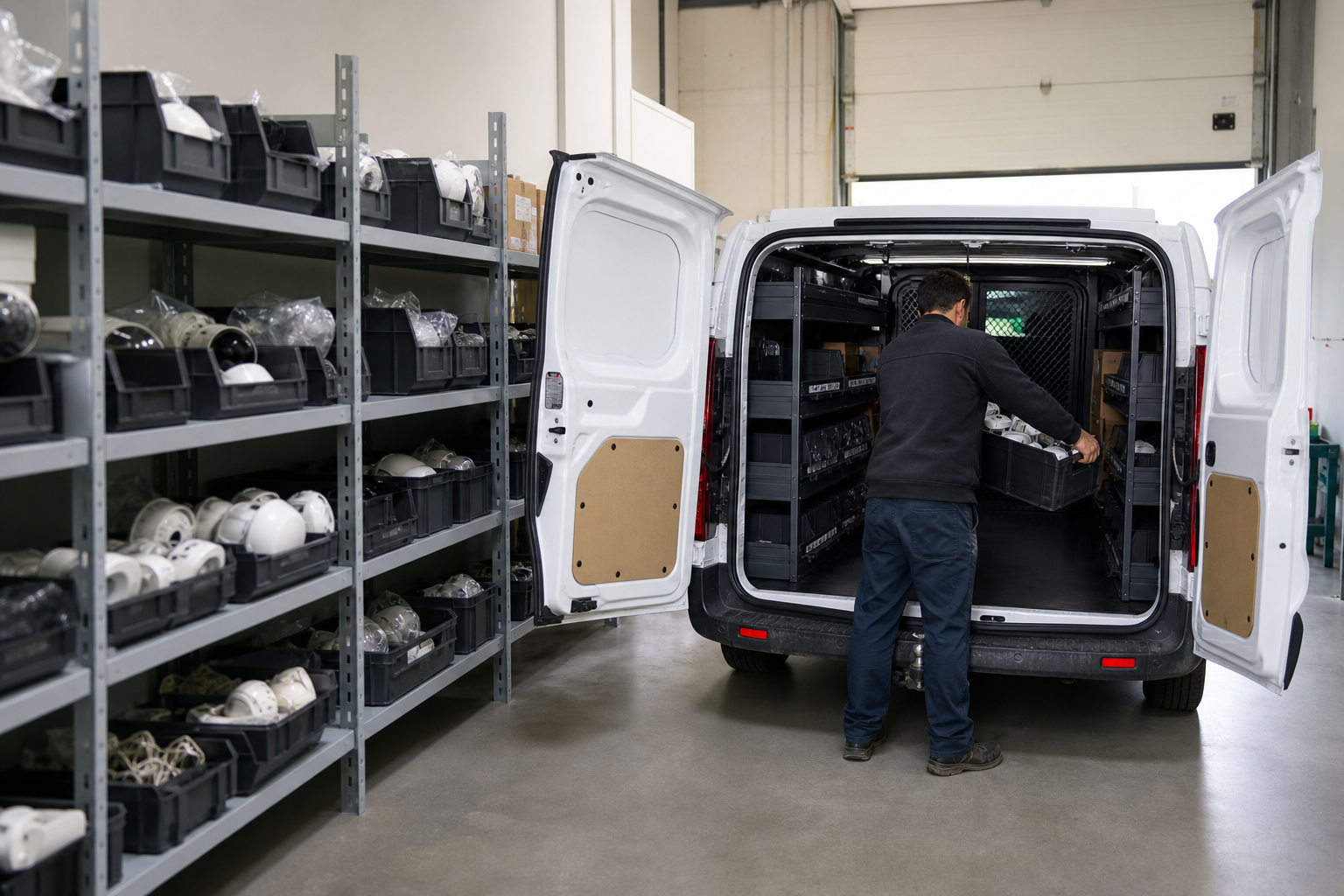
The single biggest productivity lever in an installer’s warehouse is building the job kit the day before, not the morning of.
Pull from a job ticket, not a memory. A defined parts list per job, checked off at the kitting bench, catches a missing part while there’s still time to source it.
Stage kits by technician and by day. A labeled bin or cart per job, sorted by the next day’s schedule, turns a chaotic morning into a load-and-go task.
Keep common consumables separate from job-specific parts. Fasteners, wire ties and wall plates get pulled by every job and belong in a conventional, always-stocked area.
Reconcile the van at the end of the day, not just the start. Vans that are restocked after every job, rather than raided before the next one, keep the warehouse count honest.
Track serialized gear by job. Cameras and controllers have serial numbers for a reason — recording which job a serialized unit went to protects both the warranty and the inventory count.
Controlling high-value, easily resold stock
Security integrators hold an unusual concentration of small, valuable, easily resold electronics under their own roof — a fact worth planning around, not ignoring.
| Risk | Practical control |
|---|---|
| Cameras and controllers walk | A caged or otherwise access-controlled area with a check-out record — see security cages |
| Serialized gear loses its paper trail | Log serial numbers against the job at issue, not just at receiving |
| Returns and defective units get mixed with good stock | A defined, physically separate returns and RMA area with a labeling rule |
| Small parts disappear into the wrong bin | Fixed, labeled shelving locations with regular cycle counts, not open bulk bins |
| Vans left overnight are a soft target | Reconcile and restock vans indoors at day’s end rather than leaving picked kits in an unattended vehicle |
Installation and inspection
Integrators are often in leased industrial or flex space, which puts a premium on getting the engineering right at the outset.
- Design to real pallet and shelving loads. See pallet rack weight capacity and have the layout engineered to what the warehouse actually stocks.
- Check the slab before anchoring. Leased buildings vary; anchorage design depends on the actual slab thickness and condition.
- Protect columns from forklift and cart traffic. Busy kitting areas see more foot and cart traffic than typical bulk storage — column protectors and end guards earn their keep.
- Inspect on a cycle and after any impact. Bent beams and deformed columns reduce capacity immediately — see rack inspection and repair.
- Use an installer who works to the standard. The design standard is ANSI/RMI MH16.1 — practical guidance is on our rack installation page.
ANSI/RMI MH16.1 is published by the Rack Manufacturers Institute. We design, supply and install racking and shelving for contractors and service companies across the region — see Utah pallet rack.
Shop Pallet Rack Accessories Online
Protect and finish your pallet rack installation with these in-stock accessories, or request a quote for custom-sized rack, freight and volume pricing.

Utah pallet rack project: This case study supports our Utah pallet rack design and installation guide and, at the top level, our main pallet rack systems hub.
Frequently asked questions
What storage suits a security systems integrator’s warehouse?
How do you stop parts from getting lost before a job?
Why does serialized equipment need special handling?
How do you secure high-value electronics in an open warehouse?
Do cable and wire reels need special rack treatment?
What’s the design standard for the racking itself?
Organizing a service or installation company’s warehouse?
We design combined shelving and pallet rack layouts for security, electrical and other trade contractors staging job kits. Free design consultation.