
Telecommunications Contractor Warehouse Racking: Anchor Com
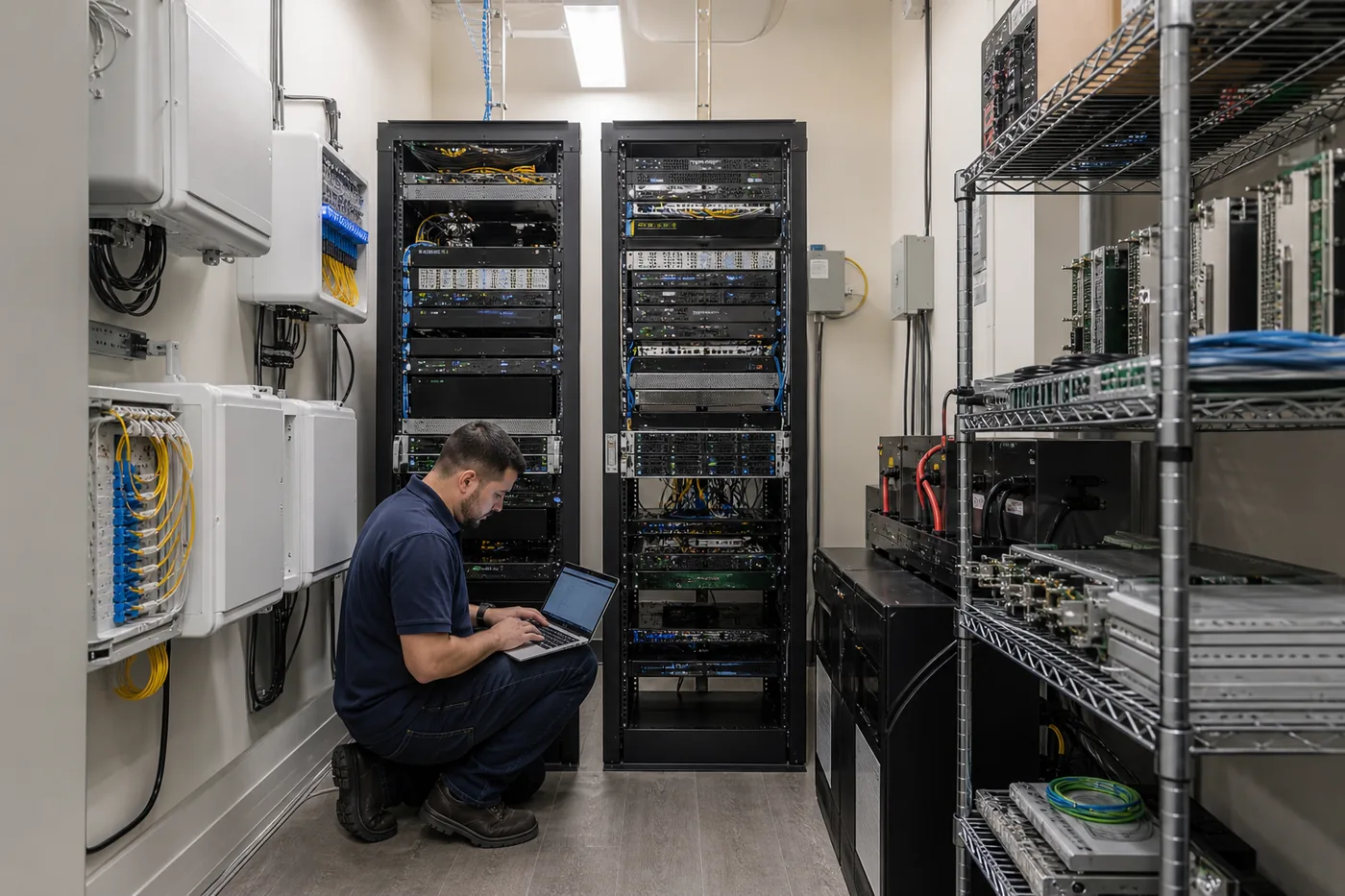
A DAS and low-voltage telecom contractor’s warehouse holds cable reels, antennas, remote units and job kits for crews deploying to a different building or job site every day.
2026
Year we worked with Anchor Com
Telecom / DAS contractor
Client sector
Pallet rack
Product category supplied
Cable, antenna & job-kit staging
Application
Plan your layout before you buy
Configure upright height, beam width, bay count, and load levels in our free 3D Pallet Rack Configurator, then get an instant bill of materials and request a quote.
The project
Anchor Com, LLC is a North Salt Lake, Utah telecom contractor providing Distributed Antenna Systems (DAS), Emergency Responder Communication Enhancement Systems (ERCES), low-voltage cabling and telecom engineering to commercial buildings. Material Handling USA supplied pallet rack systems for the company’s equipment and materials warehouse.
A telecom infrastructure contractor doesn’t stock finished product for resale — it stocks the raw materials and hardware for building-specific installations: cable on reels, antennas, remote units, head-end equipment, batteries, conduit and mounting hardware. Every job is a little different, which means the warehouse has to support fast, accurate kitting as much as bulk storage. That’s a similar underlying challenge to our electrical contractor warehouse racking case study, though an electrical contractor’s inventory skews toward wire and conduit while a DAS contractor’s mix adds a lot of electronics, batteries and antenna hardware that needs its own handling.
Why a telecom contractor’s warehouse is different
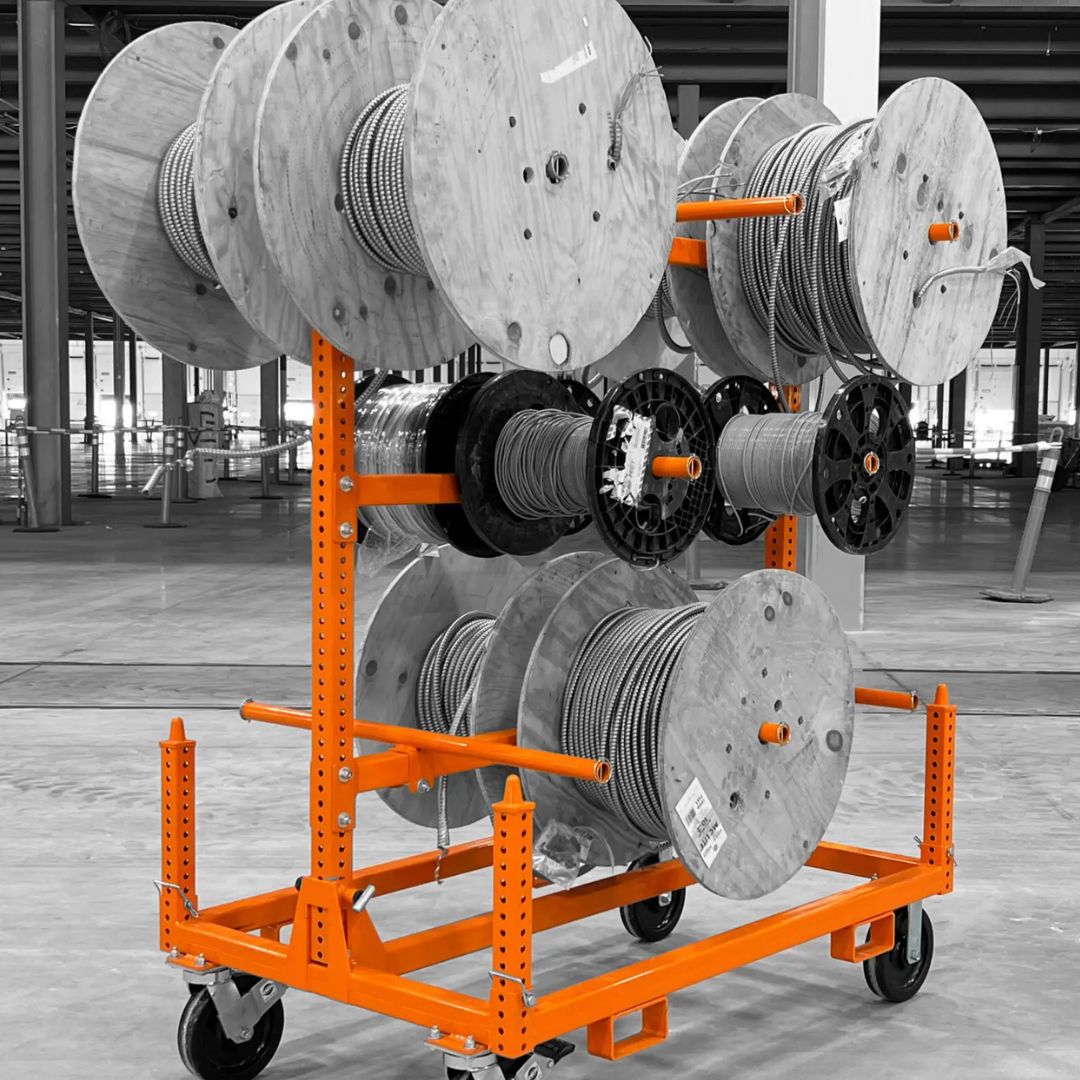
Cable comes on reels, not pallets. Coax, fiber and Cat6 cable ships on wooden or plastic reels of varying diameter and weight, which don’t stack or palletize the way boxed goods do.
Electronics need a controlled, damage-free environment. Remote radio units, head-end equipment and battery backup systems are sensitive to impact and need dedicated, organized storage separate from bulk cable and conduit.
Every job site is different. Unlike a distributor restocking the same SKUs, a telecom contractor pulls a custom kit of cable, hardware and equipment for each building, so pick accuracy and location discipline matter more than raw storage density.
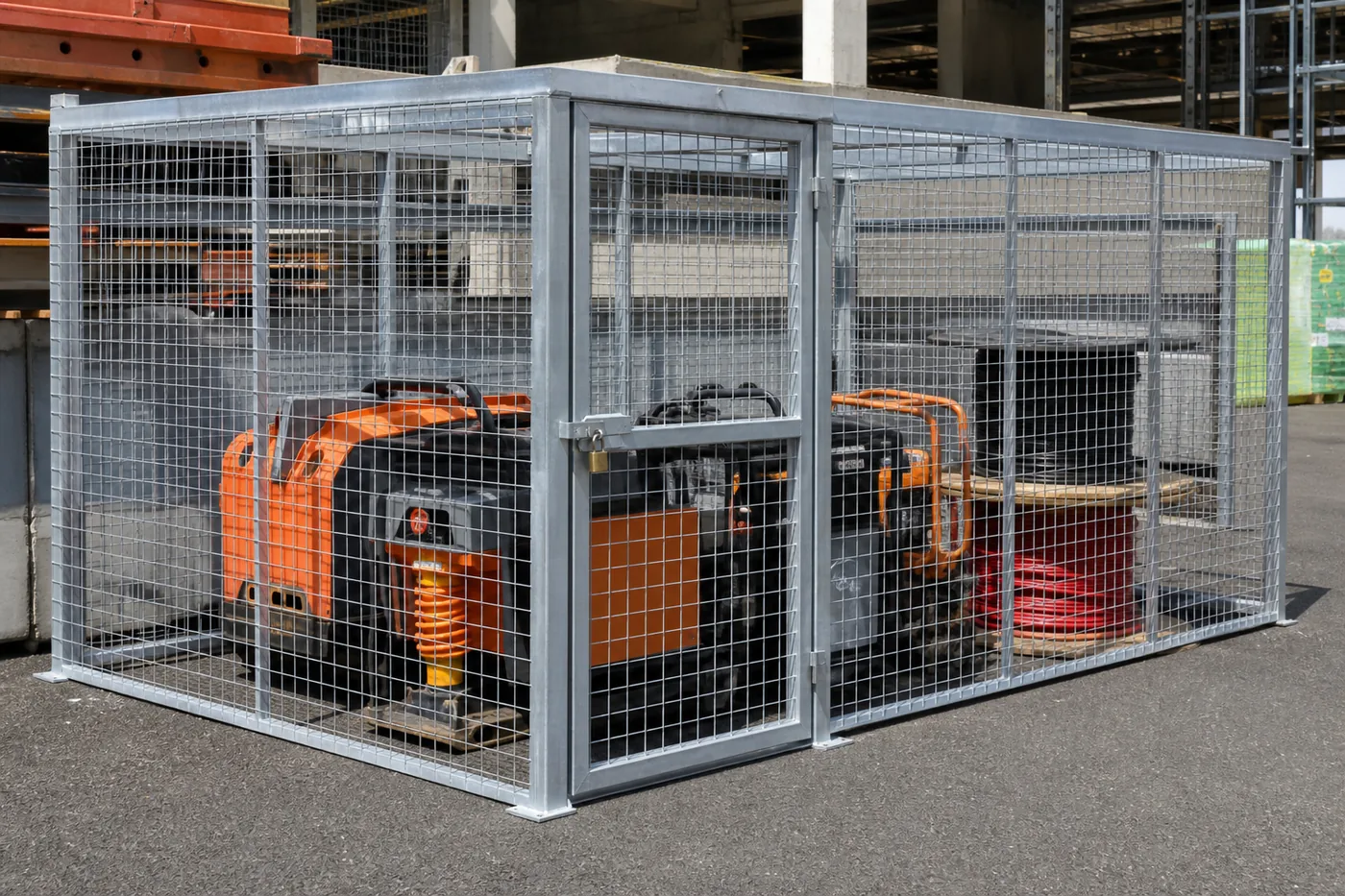
High-value equipment needs secured storage. Antennas, remote units and specialty tools represent real capital investment and are natural theft targets if left in open bins.
What a DAS/telecom contractor stores
Sorting by physical handling need, rather than by job or vendor, is what makes the layout work for a telecom contractor’s mixed inventory.
| Group | Examples | Storage that suits it |
|---|---|---|
| Bulk cable on reels | Coax, fiber optic, Cat6/Cat6a cable on wooden or plastic reels | Dedicated cable reel racks with a spindle bar, kept off general pallet positions |
| RF and DAS hardware | Antennas, remote units, head-end equipment, signal boosters | Boltless or wire shelving with fixed, labeled locations to protect sensitive electronics |
| Batteries and power equipment | Backup battery cabinets, power supplies for ERCES systems | Rack positions rated for the unit weight, in a stable, low-vibration area |
| Conduit and mounting hardware | EMT and rigid conduit, brackets, cable tray, mounting hardware | Cantilever rack for long conduit runs, bin shelving for small hardware |
| Job kits and consumables | Connectors, patch cords, zip ties, labels, small tools | Bin shelving near a kitting bench, organized by job or by part type |
| High-value tools and test equipment | Signal analyzers, sweep test kits, specialty installation tools | Locked wire mesh security cages, separate from general storage |
Rack and shelving choices for cable and equipment staging
The right storage for a telecom contractor separates by handling method first: what rolls, what racks, and what needs to be locked up.
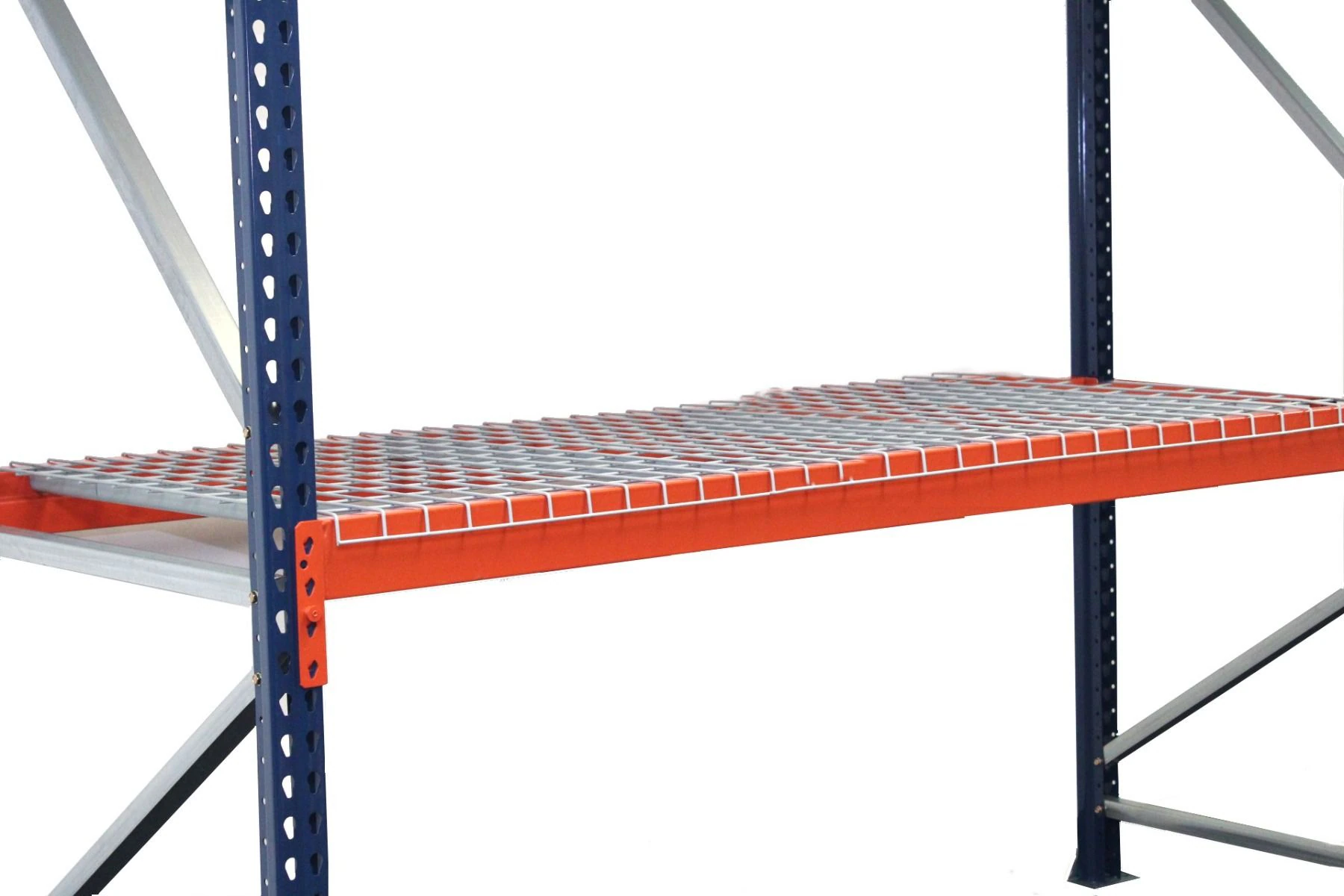
- Selective pallet rack for palletized bulk material. Boxed conduit, bulk connectors and vendor-packaged equipment that arrives on a pallet.
- Dedicated cable reel racking for coax and fiber spools. A rack built around a spindle bar keeps reels off the floor and lets a crew pay out cable without unracking the whole spool.
- Cantilever rack for conduit and long stock. EMT, rigid conduit and cable tray need open arms rather than a shelf that forces awkward stacking.
- Wire shelving or boltless shelving for electronics and small parts. Open-wire construction ventilates battery storage areas, while boltless shelving handles bin-and-tote hardware storage at low cost.
- Wire mesh security cages for high-value tools and test equipment. A locked cage inside the warehouse protects sensitive test gear without needing a separate room.
To size rack runs and cable reel storage against a real equipment inventory before ordering, try our 3D pallet rack configurator.
Job-kit staging for crews
A telecom contractor’s warehouse output isn’t a shipped order — it’s a kitted job packed into a crew’s van or trailer.
Stage by job, not just by part. A kitting area near the shelving lets a warehouse lead pull an entire job’s cable, hardware and equipment into one staged location before a crew loads out.
Keep fixed locations for repeat-use hardware. Connectors, brackets and common mounting hardware get picked constantly — a fixed, labeled bin location beats a general parts area for pick speed and accuracy.
Separate return and RMA equipment. Unused or defective equipment coming back from a job site needs its own clearly marked area so it doesn’t get mistaken for ready-to-issue stock.
Track high-value equipment by serial number, not just by bin. Antennas, remote units and test equipment are expensive enough that a location-plus-serial tracking habit pays for itself the first time something goes missing.
Staging for multi-site rollouts
A telecom contractor rarely works one building at a time. DAS, ERCES and low-voltage projects often roll out across a portfolio — a hospital campus, a stadium, a chain of commercial buildings on the same carrier contract — and the warehouse has to support several jobs staged in parallel without mixing them up.
- Assign each active job its own staging footprint. A shared kitting bench works for one job at a time; concurrent jobs need separated staging areas so crews don’t accidentally pull from the wrong pile.
- Batch common hardware across sites, but keep site-specific gear separate. Connectors, brackets and cable can be pulled from shared bulk stock; antennas and remote units configured for a specific building should be tagged and staged individually.
- Plan rack capacity for the busiest phase of a rollout, not the steady state. A multi-building rollout can bring in several jobs’ worth of equipment at once even though it ships out over weeks — sizing storage for that peak avoids a warehouse overflow mid-project.
- Keep a return lane for site punch-list items. Equipment coming back for rework or warranty needs a clear, separate location so it isn’t mistaken for ready-to-issue inventory on the next site.
Installation and safety
A telecom contractor’s own warehouse gets the same structural standards as any other pallet rack installation.
- Design rack for actual reel and equipment weights — see pallet rack weight capacity rather than assuming a generic level rating covers an oddly shaped reel or battery cabinet load.
- Protect end-of-aisle uprights with column protectors and end guards in an active kitting and staging area with frequent cart and forklift traffic.
- Inspect racking on a defined cycle and after any impact — see rack inspection and repair.
- Anchor and install to the ANSI/RMI MH16.1 standard — see our rack installation guidance.
ANSI/RMI MH16.1 is published by the Rack Manufacturers Institute. We design, supply and install racking and shelving for electrical, telecom and other specialty trade contractors across the region — see Utah pallet rack and our wire reel storage system guide for a closely related electrical-supply application.
Utah pallet rack project: This case study supports our Utah pallet rack design and installation guide and, at the top level, our main pallet rack systems hub.
Shop Pallet Rack Products Online
Buy select items directly from our online store, or request a quote for volume, custom sizes and freight-rated orders.
Frequently asked questions
What storage suits a telecom or DAS contractor’s warehouse?
Why can’t cable reels just go on standard pallet rack shelving?
How does this differ from an electrical contractor’s warehouse?
Why do job kits need a staging area separate from general shelving?
What’s the design standard for the racking itself?
Planning storage for a telecom or specialty trade contractor’s warehouse?
We design pallet rack, cable reel storage and shelving layouts for telecom, electrical and other trade contractors, built around real job-kitting workflows. Free design consultation.