
Warehouse Storage Cages for an HVAC Distribution Branch: Lennox Case Study
How a heating and cooling parts branch cages refrigerant, copper and controls without turning the counter into a bottleneck — and which items actually justify a boundary.
2018
Year Material Handling USA supplied security cage and wire mesh partition product to Lennox
HVAC
Lennox manufactures heating and cooling equipment and distributes parts and supplies
Branch model
Parts and supply branches combine a contractor counter with a working warehouse
Copper
Line sets, coils and wire are the most resale-attractive stock in the building
The project
Lennox is a manufacturer of heating, ventilation and air conditioning equipment and one of the largest wholesale distributors of residential HVAC products in North America, serving contractors through a network of branch stores across the United States and Canada. Material Handling USA supplied welded wire security cage and partition product to Lennox in 2018.
This page sits under our security cage and wire partition hub and describes a problem class rather than one customer’s building: how a distribution branch that serves trade customers over a counter organizes secure storage in the warehouse behind it. It contains no facility layout, no dimensions, no inventory values and no security detail specific to this customer.
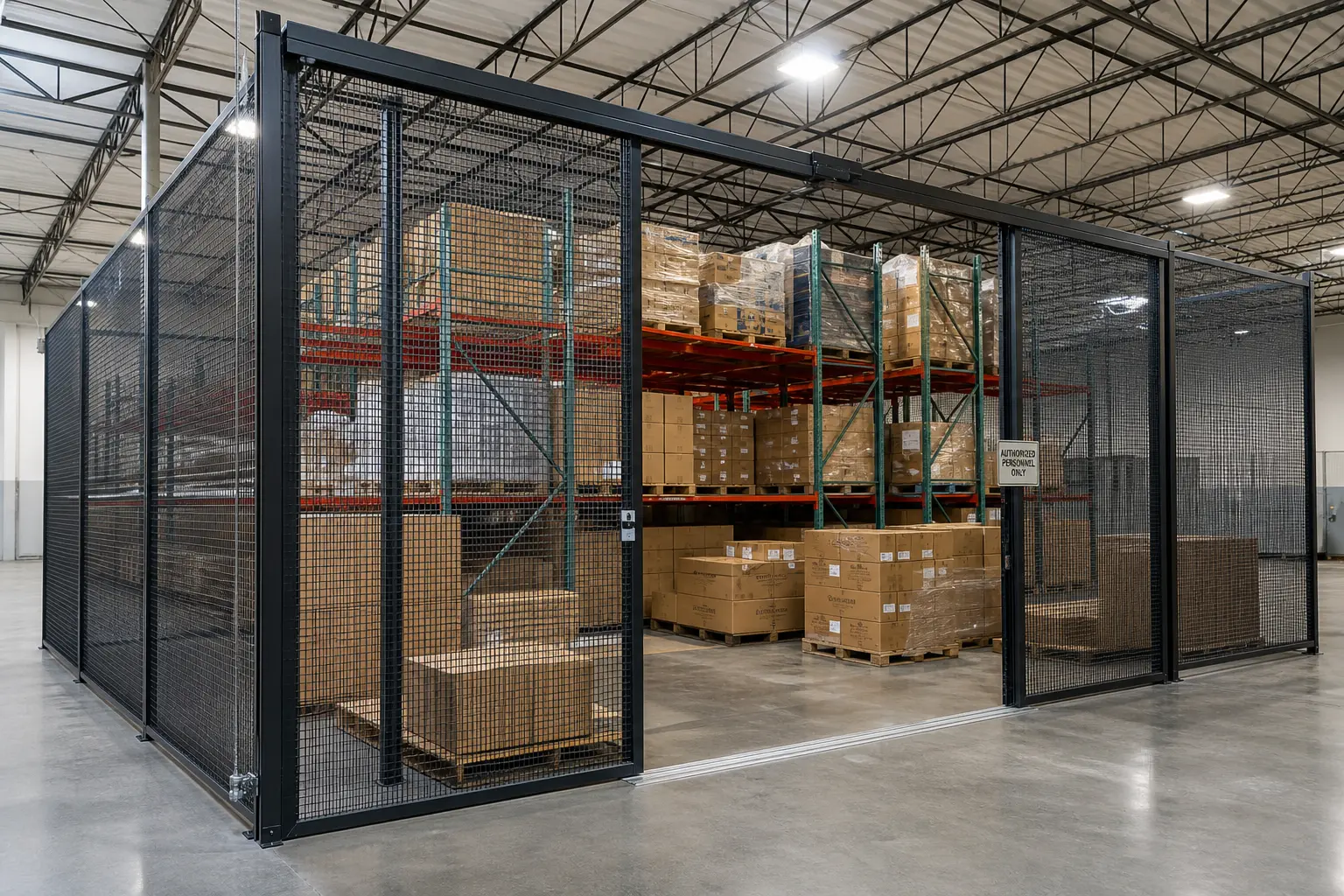
A parts and supply branch is a hybrid. Half of it is retail: contractors walk in early, want specific items fast, and leave. The other half is a working warehouse taking pallet deliveries, staging orders and loading trucks. The stock is a mix of bulky equipment nobody can pocket and small components with an immediate resale market. Warehouse storage cages exist in that building to draw the line between the two.
Why distribution branches end up caging part of the warehouse
Trade customers are inside the building. Unlike a closed distribution center, a branch invites non-employees in every morning. Most are exactly who they say they are; the boundary exists so nobody has to make that judgment call.
Metal has a market. Copper line sets, coils, wire and brass fittings convert to cash quickly and anonymously. That is a different risk profile from a crated condensing unit.
Small and expensive. Controls, thermostats, boards, motors, capacitors and specialty tools carry high value in a small package and are the classic branch shrink category.
Restricted-sale items. Some inventory has rules attached to who may buy it, and keeping it out of general reach is simpler than policing it at the counter.
Multiple shifts and a busy dock. Deliveries, will-call staging and truck loading run at the same time. Open floors with mixed traffic are where inventory quietly disappears.
Branches are leased. Permanent construction is a poor investment in a leased unit that may be reconfigured or relocated. Bolted mesh comes apart and moves.
What actually goes behind the mesh
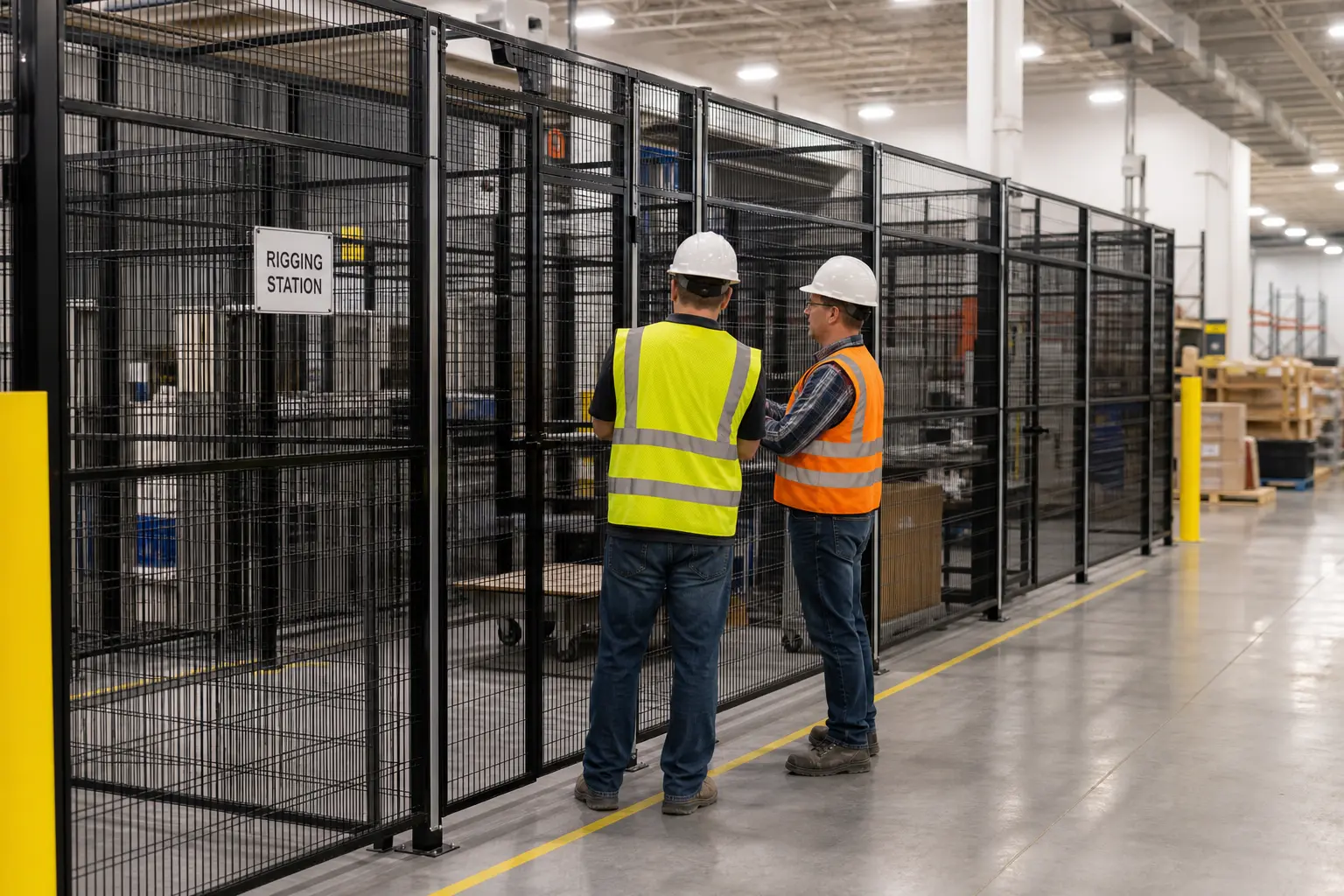
The instinct to cage everything is expensive and slows every transaction. The categories that repay a boundary in a supply branch are consistent:
What generally stays outside the boundary: crated equipment, sheet metal, ductwork, filters, insulation and packaging. Bulk items that take two people and a lift truck to move do not need a locked door, and putting them behind one guarantees the door gets propped.
Refrigerant, cylinders and the limits of a cage
Refrigerant is the item branch managers ask about first, and it is where a wire enclosure has to be understood precisely.
The sales rule is a records rule. Under EPA’s Section 608 program, most refrigerants may only be sold to certified technicians, and distributors have to keep documentation verifying the purchaser is or employs one. EPA’s refrigerant sales restriction guidance sets out what wholesalers must retain. A controlled storage area supports that discipline by making the counter the only route to a cylinder.
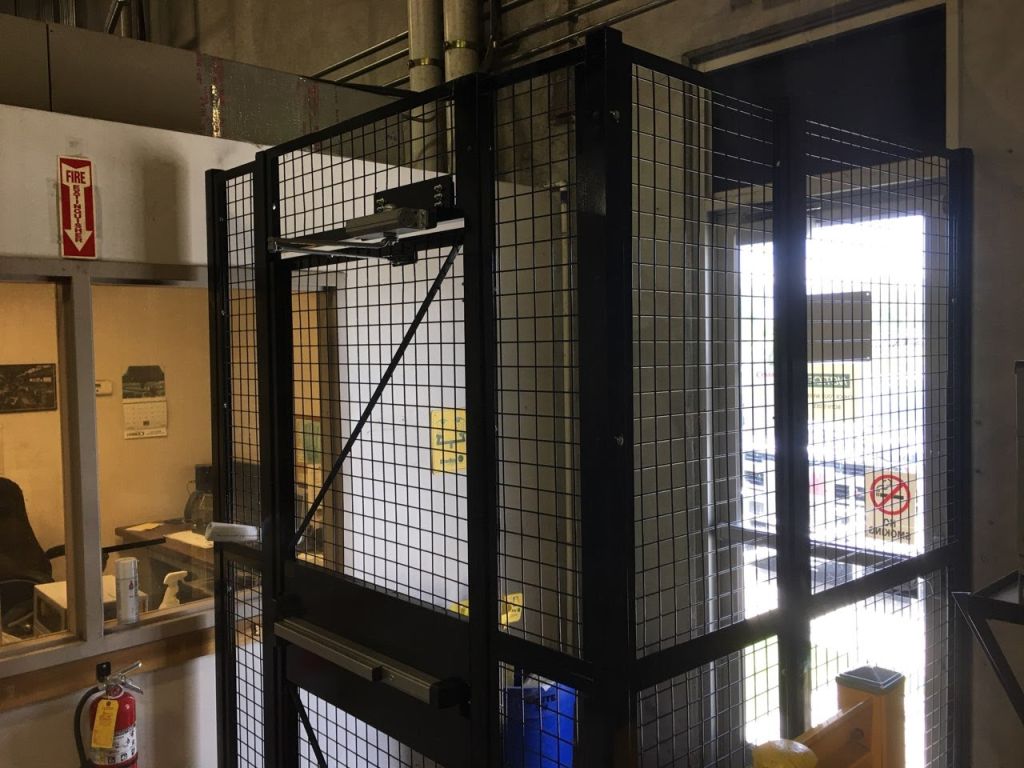
Ventilation governs the enclosure type. Compressed gas guidance is consistently against storing cylinders in unventilated lockers and cupboards; OSHA’s requirements at 29 CFR 1910.253 call for well-protected, well-ventilated, dry storage away from combustibles. An open wire mesh enclosure keeps the area ventilated while still restricting access, which is precisely why mesh is used for cylinders where a solid locker would not be acceptable.
Restraint is separate from security. Cylinders still need to be secured upright against falling, in racks or with chains. Fencing the area does not satisfy that.
Nothing gets a rating from wire. Flammable refrigerants and any chemical with specific storage requirements follow the fire code and the safety data sheet, not the cage layout. The site’s fire code official has the final say.
Counter, warehouse and cage: the flow decides the design
A cage in the wrong place in a branch does not reduce shrink; it just adds walking. The layouts that hold up have a few things in common:
- Counter staff never wait for the cage. The highest-turn caged items sit at the end of the enclosure nearest the counter, on the shortest possible route.
- One controlled opening for people, one for pallets. A personnel door for picks and a wide sliding or double door for palletized movement. Trying to serve both with one door is why doors end up chained open.
- A service window where traffic is heavy. Handing items through a window rather than opening the enclosure keeps the boundary intact during the morning rush. See our service windows page.
- Customers never pass the boundary. The public side of the counter and the caged area should not share an aisle, even when the branch is busy.
- Staging outside, secure stock inside. Orders staged for pickup can sit in a separate low-security area so the controlled enclosure is not opened for every collection.
- Sightlines kept. Mesh lets a manager see the whole warehouse from the counter; a stud wall creates the blind spot that shrink likes.
Specifying warehouse storage cages for a branch
Branch specification is a balance: enough enclosure to be a real boundary, light enough to move when the lease or the layout changes.
| Decision | Typical branch answer | Why |
|---|---|---|
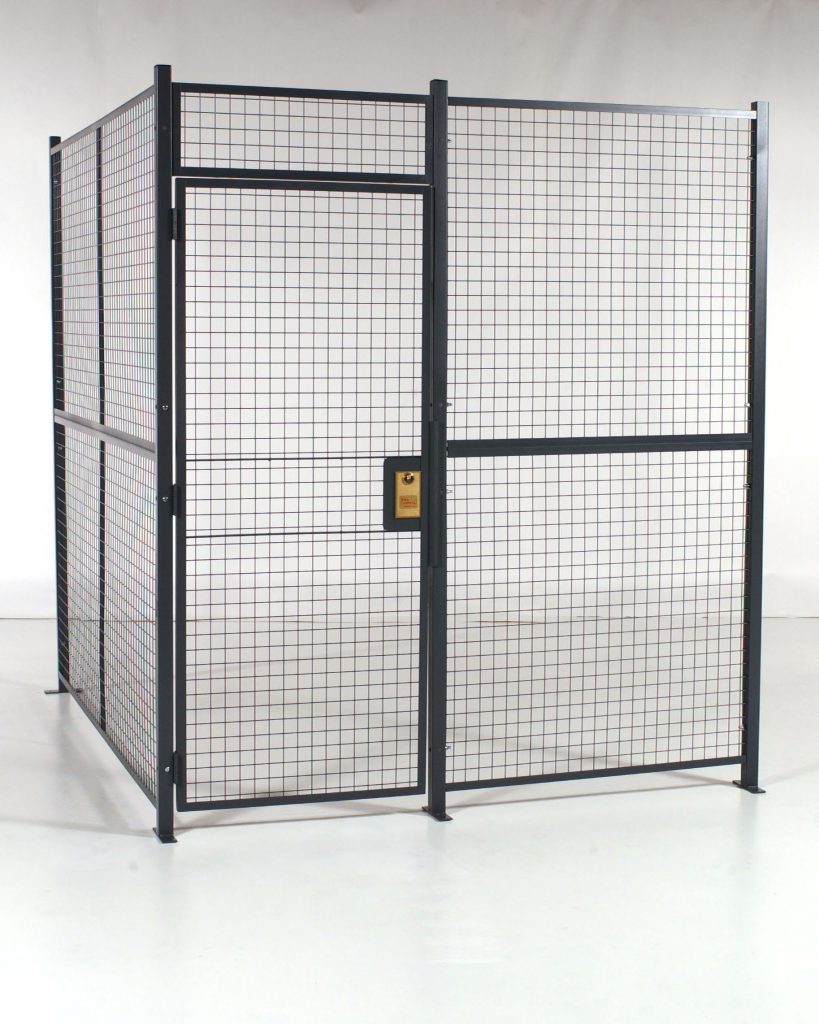
| Panel type | Welded wire mesh partition panels in a bolted steel frame | Fast to install, open to light and sprinkler discharge, and removable at lease end |
| Mesh opening | Smaller openings where fittings and controls are stored | Reach-through, not cutting, is the realistic risk in a staffed building |
| Height | Full height to structure, or partial height with a mesh top | A partial-height enclosure next to racking can be climbed or reached over |
| Doors | Personnel door near the counter plus a wide door for pallets | Separating people traffic from material movement prevents propped doors |
| Hardware | Keyed or keypad for a small branch team; credentials where accountability matters | Access control should match how many people legitimately need entry |
| Impact protection | Guard rail or bollards at exposed corners and door jambs | The first failure of any warehouse enclosure is a lift truck strike |
| Ventilation | Open mesh construction where cylinders are stored | Cylinder storage guidance is against unventilated enclosures |
Panel and gauge choices are compared on our wire mesh panel options page. Where the requirement is to enclose existing rack bays instead of building a room, see pallet rack security enclosures, and for a broader view of warehouse boundaries, warehouse security enclosures.
Code and site constraints to check before ordering
Branches are usually leased space in multi-tenant buildings, which adds a landlord to the usual list of constraints:
- Sprinkler coverage and clearance. A mesh top or added shelving changes how water reaches storage below; NFPA 13 and the building’s fire protection design govern. OSHA has addressed the familiar 18-inch clearance to sprinkler deflectors in its interpretation of 29 CFR 1910.159(c)(10).
- Egress and exit routes. The enclosure must not block a required exit route or door swing, and doors on egress paths must open without special knowledge.
- Cylinder storage rules. Separation from combustibles, ventilation and restraint are set by the fire code and OSHA, not by the enclosure supplier.
- Fire equipment access. Extinguishers, hose stations, panels and disconnects keep their required clear access.
- Lease terms. Anchoring into the slab, penetrations and removal obligations at lease end are agreed with the landlord before installation.
- Overheads and seismic anchorage. Lighting, unit heaters, ductwork and sprinkler mains set the achievable height; where local code requires it, anchorage is engineered.
Compliance notes by industry are collected on our security cage regulations page.

Installation and multi-branch rollout
Branches cannot close, and a chain that likes a design in one location usually wants it in several. Both facts shape the install.
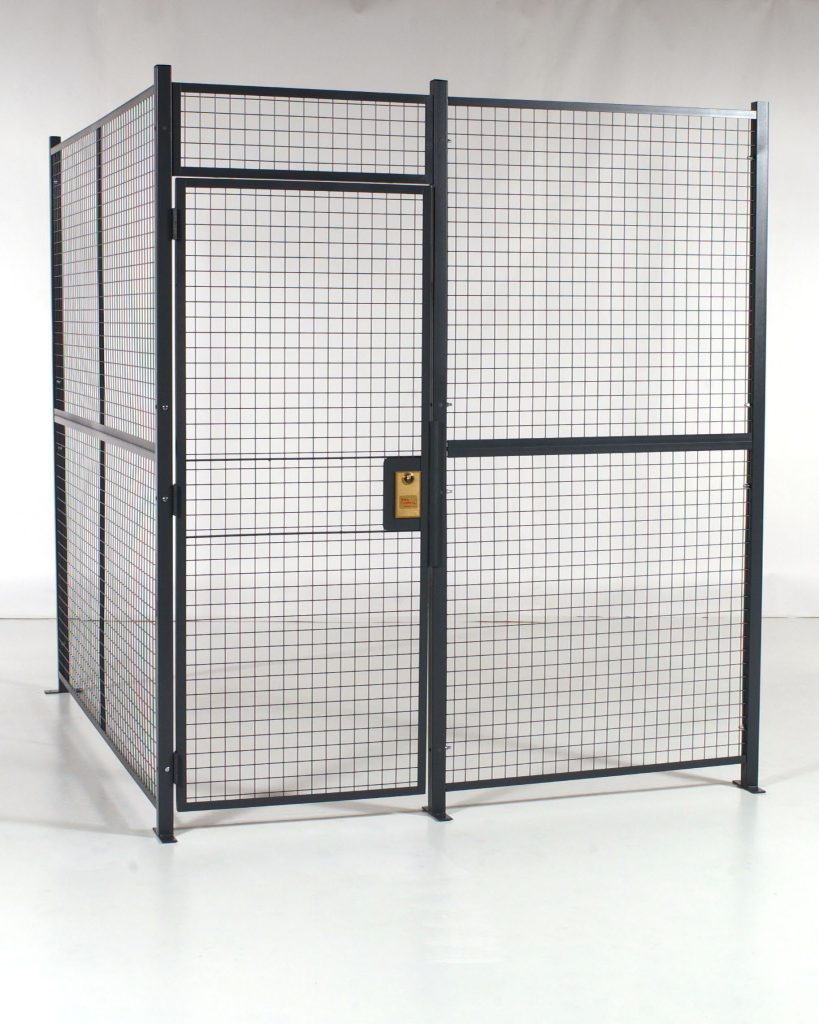
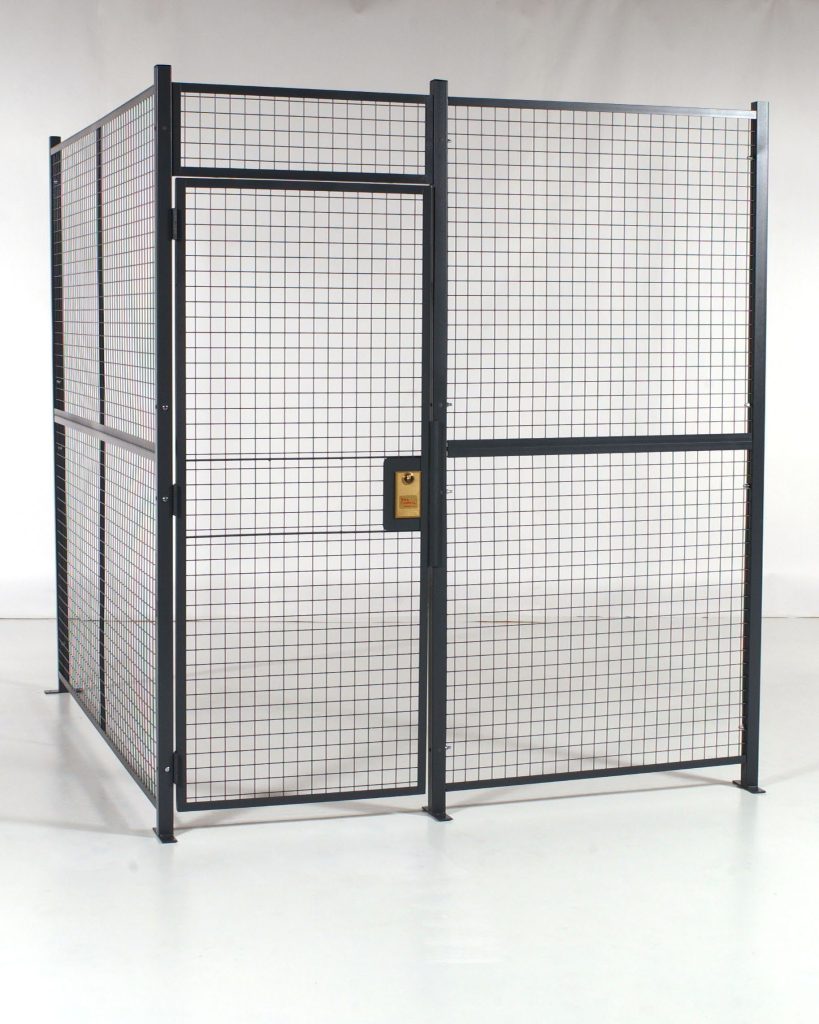
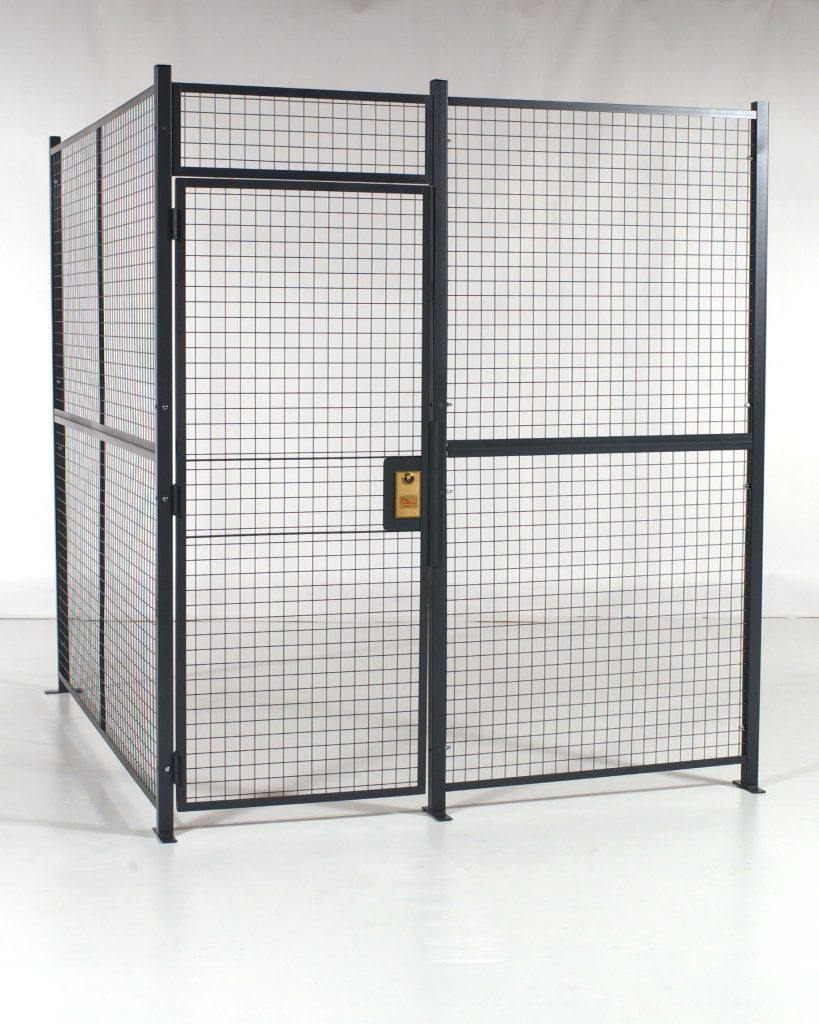
Shop Pre-Configured Wire Mesh Cage Kits Online
Standard-size welded wire cage kits, priced online, for smaller storage needs. Every kit still needs to be anchored to sound concrete — for tall, braced or engineered enclosures, request a quote with your building location and floor details.
Frequently asked questions
What is a warehouse storage cage?
What should a distribution branch keep in a storage cage?
Can refrigerant cylinders be stored in a wire cage?
Does a cage help with refrigerant sales rules?
Will a storage cage slow down the counter?
Is wire mesh better than a stud wall for a leased branch?
How tall should a warehouse storage cage be?
Can the cage be extended if the branch grows?
Looking for a project like yours? Browse more warehouse, distribution and retail security cage case studies, see all security cage case studies.
Draw the line between the counter and the copper
Material Handling USA designs, supplies and installs welded wire storage cages, warehouse partitions and counter enclosures for distribution branches nationwide.