
Industrial Laundry & Linen Service Warehouse Racking: Alsco
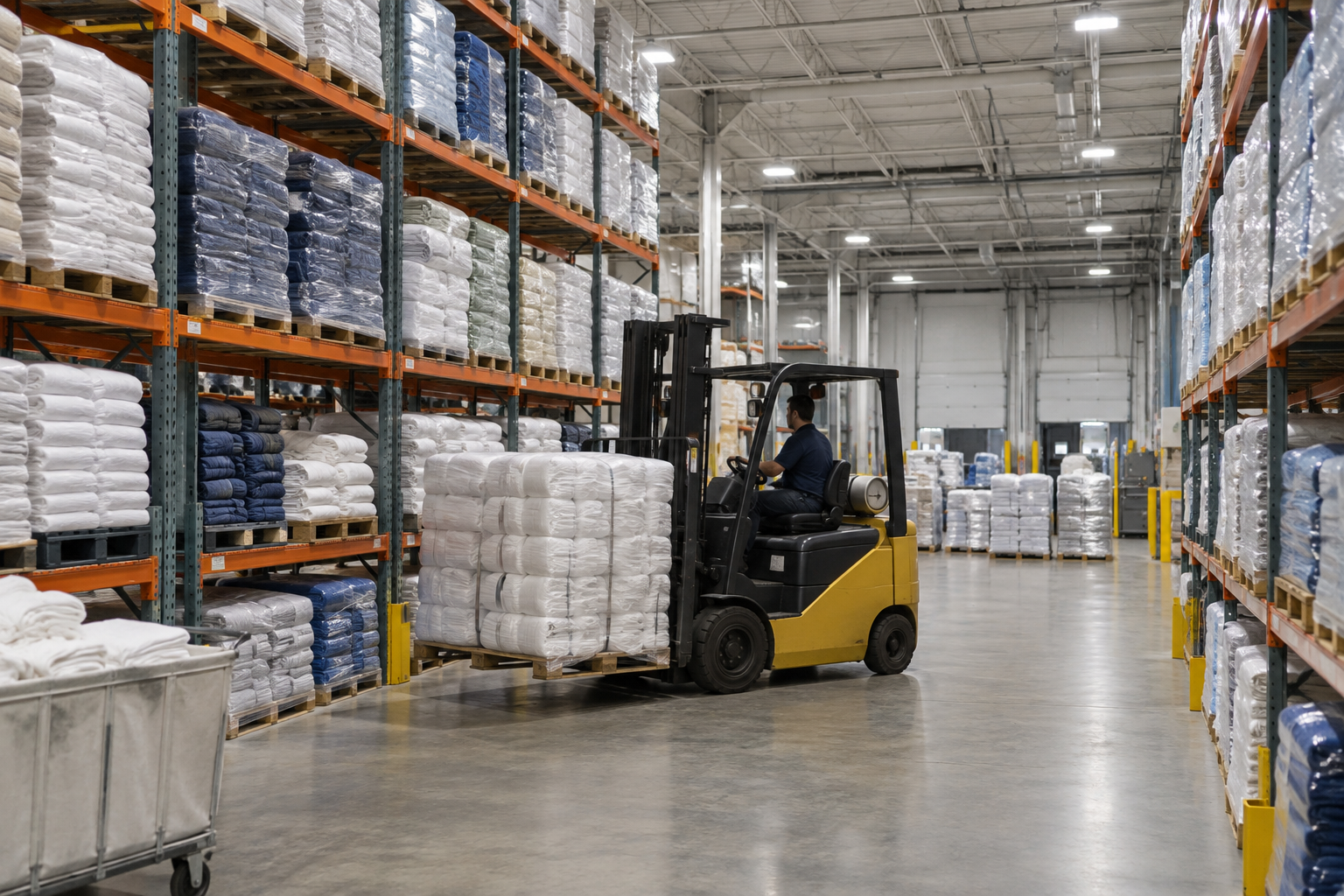
A commercial linen and uniform service facility moves bulky, soft-sided bale product and high-turn folded goods through the same building — storage has to fit both without slowing route loading.
Industrial laundry / linen service
Client sector
Pallet rack
Product category supplied
Linen bales & folded goods
Application
Utah
Project location
Plan your layout before you buy
Configure upright height, beam width, bay count, and load levels in our free 3D Pallet Rack Configurator, then get an instant bill of materials and request a quote.
The project
Alsco operates industrial laundry and linen/uniform rental service facilities that process, store and route clean linens, uniforms and reusable textile products for commercial customers. Material Handling USA supplied pallet rack systems for one of the company’s Utah service warehouses.
A commercial laundry and linen service warehouse doesn’t store product the way a typical distributor does. Clean linens and uniforms often move through the building as large wrapped bales before being broken down into folded, bin-sorted stock for individual customer routes — two very different handling profiles under one roof. That’s a different underlying storage problem than the FIFO/lot-control medical distribution challenge we covered in our medical device distribution case study, or the bulky-goods handling in our roll-format case studies: here, the core issue is a soft, compressible bale product at one end of the process and a high-SKU-turn, route-picked bin product at the other.
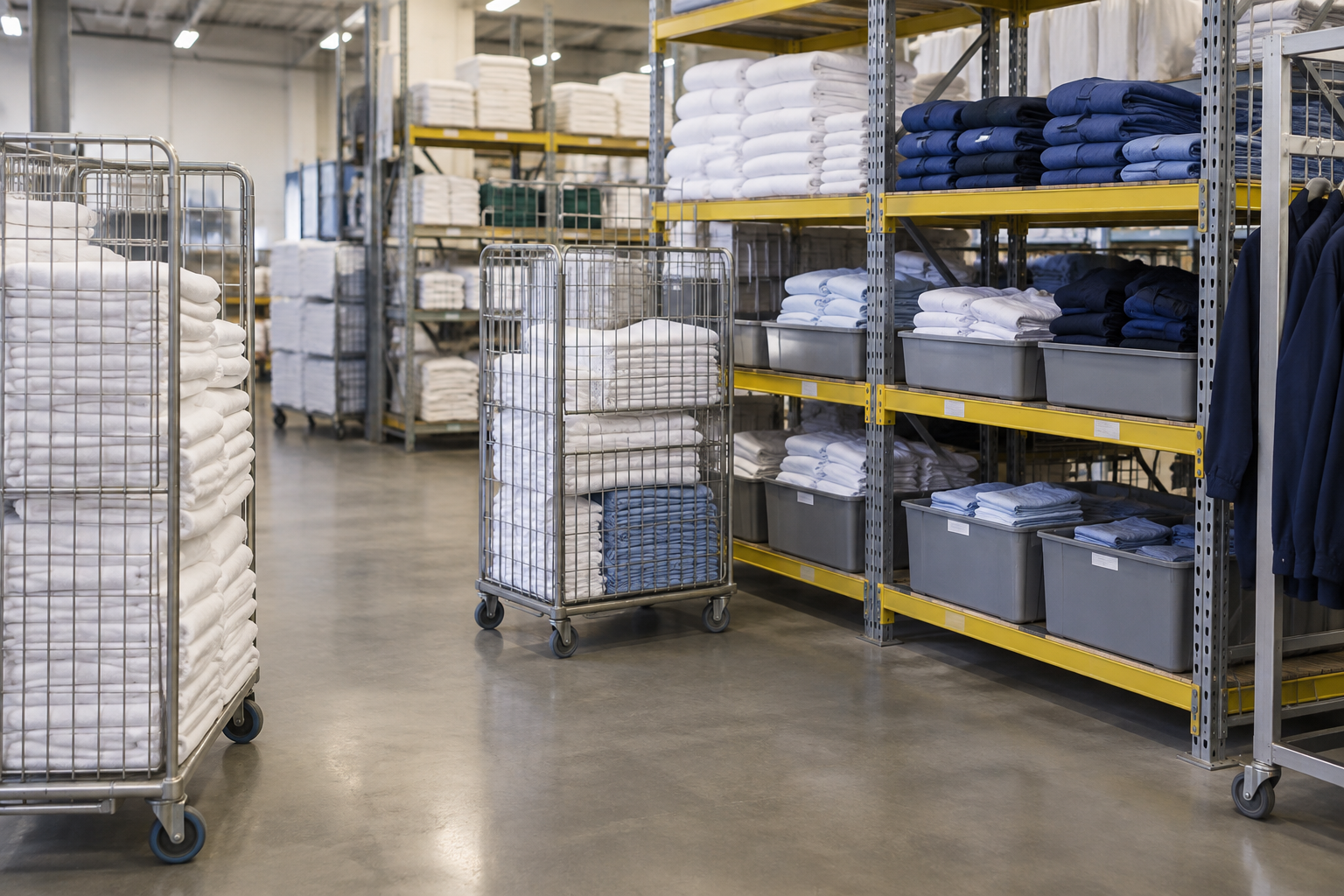
Why a linen service warehouse is different
Bale product is bulky and soft-sided. Clean linen and uniform bales are wrapped for transport but don’t have the rigid footprint of a boxed pallet load, so a rack position sized for a standard case pallet can waste space or leave a bale unstable on the beam.
Folded, sorted stock turns over fast. Once linens and uniforms are broken down for individual customer routes, that stock needs frequent, accurate picking — slow or error-prone picking here delays route loading every single day, not just occasionally.
Wire carts and bins move constantly between processing and storage. A linen service floor has rolling wire carts and route bins in near-continuous motion, so aisle widths and rack clearances have to account for cart traffic, not just forklift traffic.
Supply inventory (detergent, packaging, spare cart parts) still needs its own space. Bulk chemical and packaging supply for the plant itself competes for the same building footprint as finished-goods storage.
What a laundry service facility stores
Sorting by handling stage — bulk bale, sorted folded stock, or plant supply — is what makes a linen service layout work, more than sorting by customer or textile type.
| Group | Examples | Storage that suits it |
|---|---|---|
| Bulk clean linen and uniform bales | Wrapped bales of sheets, towels, uniforms staged after processing | Selective pallet rack sized to the bale footprint, with wire decking to support an irregular, soft-sided load |
| Folded, route-sorted stock | Bins of folded linens and uniforms staged by customer or route | Boltless shelving near the loading area for fast, accurate route picking |
| Wire linen carts and rolling stock | Empty and loaded wire transport carts | Dedicated staging lanes, not rack positions — keep carts out of pick aisles |
| Bulk chemical and packaging supply | Detergent, poly wrap, tags and packaging materials for the plant | Selective pallet rack in a separate zone away from clean-goods storage |
| Reject and repair stock | Damaged linens and uniforms pulled for repair or disposal | A small, clearly labeled shelving section so reject stock never re-enters route bins by mistake |
Rack choices for bale and bin storage
The right rack mix for a linen service facility separates by load shape and pick frequency, not by textile type.
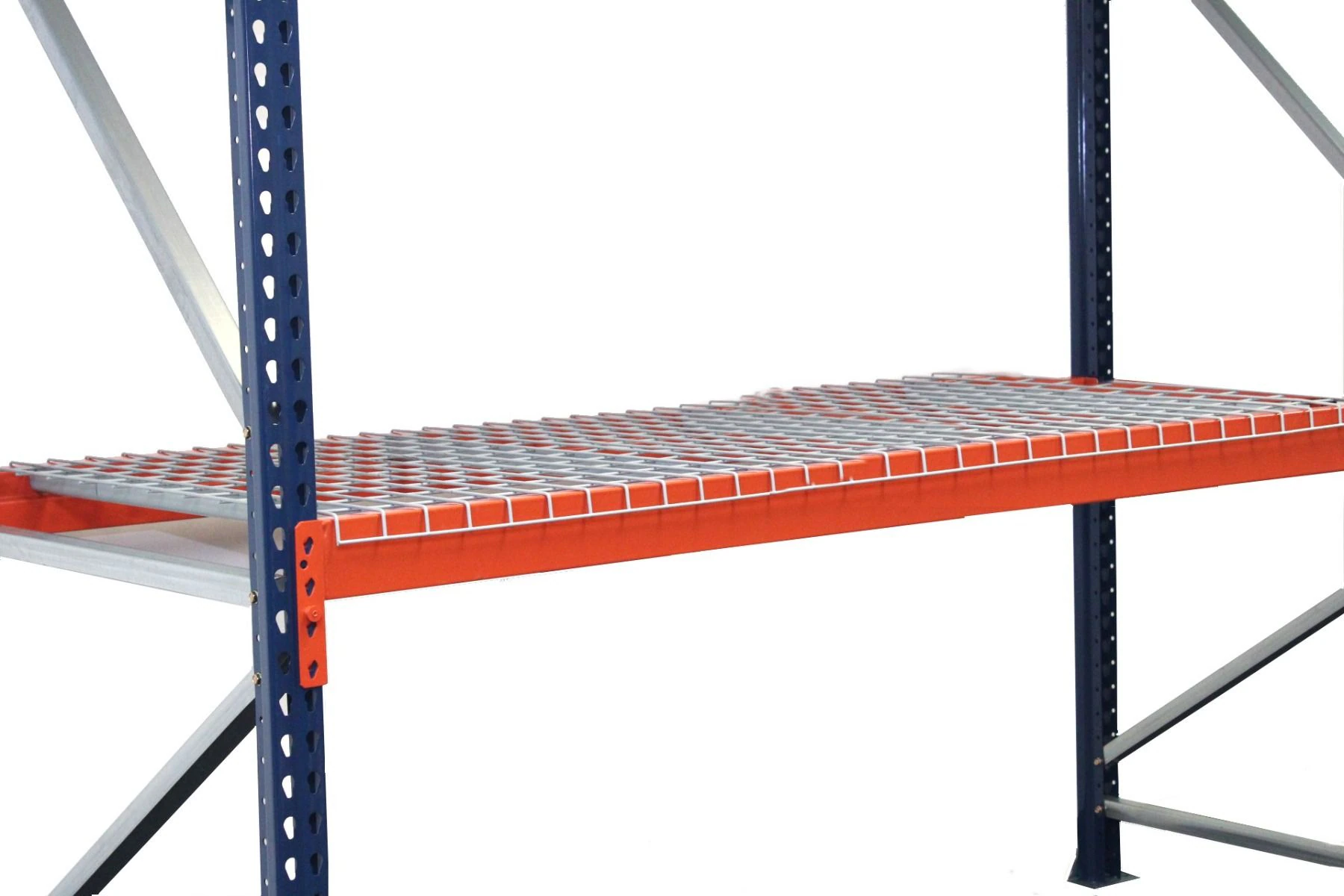
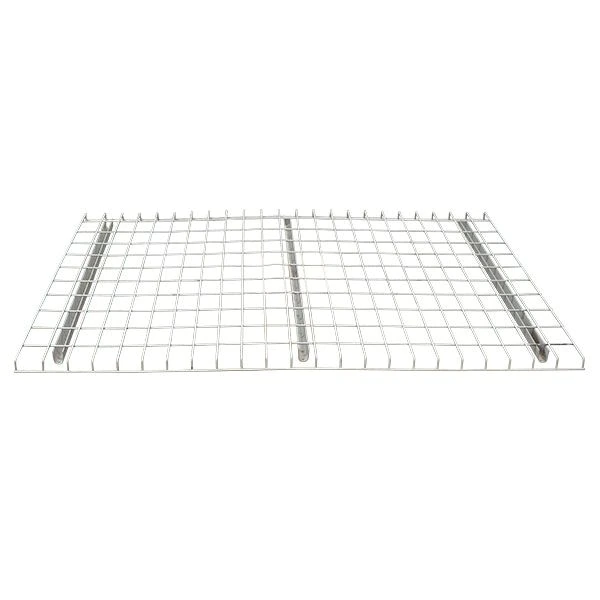
- Selective pallet rack with wire decking for bale storage. Wire decking supports a soft-sided bale that a standard solid deck or open beam span wouldn’t hold as securely, while keeping the position accessible from either aisle.
- Boltless shelving for route-sorted bins. Frequent, small-quantity bin picks for customer routes move faster off open shelving than off a full pallet position, and shelf height can be tuned to bin size.
- Utility carts and dedicated cart lanes for in-process linen. Rolling wire carts belong in their own staging lanes, separate from rack aisles, so cart traffic never blocks a picker or forklift.
- A physically separated zone for chemical and packaging supply. Keeping bulk detergent and packaging on its own selective rack run away from clean-goods storage reduces cross-contamination risk and simplifies inventory counts.
Model bale footprint, bin dimensions and aisle widths for cart traffic in our 3D pallet rack configurator before finalizing a layout.
Route loading and turnover
A linen service warehouse runs on a daily cycle tied directly to delivery routes, and storage design has to support that rhythm rather than fight it.
- Stage route-day stock at the loading dock end of the layout. The bins and shelving for the day’s outbound routes should be closest to the dock, not buried behind bulk bale storage.
- Keep processing-to-storage travel short. Linens move from the finishing process to storage constantly through the day; a layout that puts folding/sorting close to shelving cuts unnecessary cart travel.
- Separate incoming soiled linen flow from clean storage completely. Clean and soiled linen handling should never share aisles or equipment paths, both for sanitation and for avoiding mixed-up stock.
- Plan for route-count growth without re-racking. Adding delivery routes usually means more bins, not more floor space per bin — open shelving with adjustable levels absorbs that growth better than fixed pallet positions.
Sanitation and clean/soiled separation
Industrial laundry and linen service operations run under health and sanitation expectations from their commercial customers — hospitality, healthcare-adjacent and food-service accounts in particular — and storage layout plays a direct role in meeting them.
- Physically separate clean-goods rack aisles from soiled-linen receiving. Clean storage, whether bale rack or route-bin shelving, should never share an aisle, cart path or equipment with incoming soiled linen handling.
- Use dedicated, labeled equipment for each side of the operation. Wire carts, forklifts and even hand trucks used for soiled linen shouldn’t cross into clean storage areas without a cleaning step in between.
- Keep bulk chemical storage away from both clean and soiled linen zones. A separate selective rack run for detergent and processing chemicals reduces the chance of chemical odor or contact contamination reaching stored linen.
- Design pick paths so clean stock never re-crosses the soiled side of the building. A route bin picked for delivery should have a straight path to the loading dock that never passes back through the soiled-linen receiving area.
Installation and safety
A linen service facility’s racking gets the same structural standards as any other pallet rack installation, with extra attention to load stability for irregular bale product.
- Design beam capacity and deck support for actual bale weight and footprint — see pallet rack weight capacity guidance rather than assuming a standard case-pallet rating covers a soft-sided bale load.
- Protect end-of-aisle uprights with column protectors and end guards where wire carts and forklifts share the same aisles.
- Inspect racking on a defined cycle, and immediately after any impact — see rack inspection and repair guidance.
- Anchor and install to the ANSI/RMI MH16.1 standard — see our rack installation guidance.
ANSI/RMI MH16.1 is published by the Rack Manufacturers Institute. We design, supply and install pallet rack and shelving for industrial laundry, linen and uniform service operations across the region — see Utah pallet rack for our regional coverage.
Utah pallet rack project: This case study supports our Utah pallet rack design and installation guide and, at the top level, our main pallet rack systems hub.
Shop Pallet Rack Products Online
Buy select items directly from our online store, or request a quote for volume, custom sizes and freight-rated orders.
Frequently asked questions
What storage suits an industrial laundry or linen service warehouse?
Why doesn’t standard pallet rack work well for linen bales?
How should a linen service facility lay out storage for daily route loading?
Can a linen service warehouse add delivery routes without re-racking?
How do linen service facilities keep clean and soiled linen storage separate?
What’s the design standard for the racking itself?
Planning storage for an industrial laundry, linen or uniform service facility?
We design pallet rack and shelving for laundry, linen and uniform service warehouses that combine bulk bale storage with high-turn route picking. Free design consultation.