
Flow Racks: Gravity Flow Rack Systems for Pallets and Cartons
How flow racks work, when pallet flow or carton flow is the right choice, and what goes into lane pitch, brakes, depth and safety. Free layout and quote from MH-USA, an authorized Interlake Mecalux distributor.

Since 1997
Storage systems experience
FIFO
Built-in first-in, first-out
Free
Layout design and quote
Nationwide
Delivery and installation
Plan your layout before you buy
Sketch the surrounding selective rack in our free 3D Pallet Rack Designer, then send it to us. We size the flow lanes, pitch and brakes for your loads and add them to the quote.
Shop Flow Racks Online
Ready-to-ship Vestil carton flow racks and gravity flow shelves that drop into standard pallet rack, with current online prices. Full pallet flow systems are engineered for your pallets and loads, so request a free quote for those.


What are flow racks?
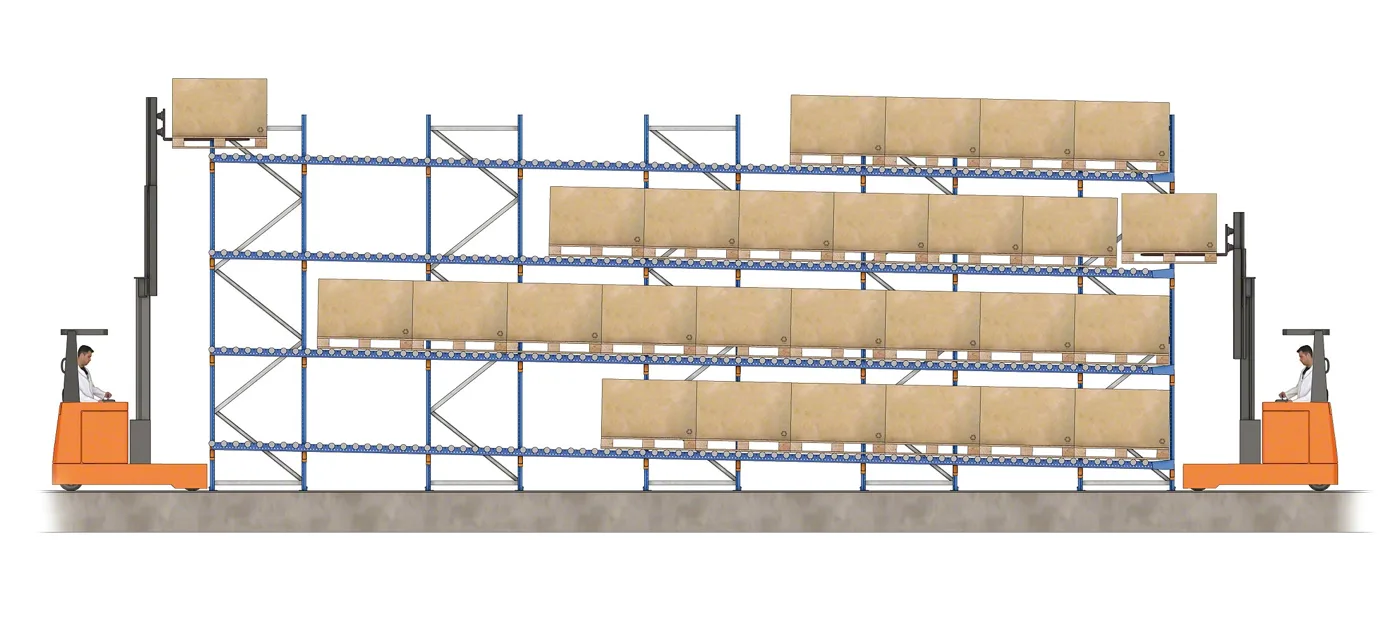
Flow racks (also called gravity flow racks or flow racking) are storage racks with sloped lanes of rollers or wheels. Product is loaded at the high end, rolls slowly downhill on its own, and stops at the low end, where it is picked. The next pallet or carton then moves forward to take its place. No motors or power are needed. Gravity does the moving and brakes keep the speed under control.
Most flow racks are built from the same uprights and beams as other pallet rack systems, with flow lanes installed in place of flat beam levels. That means flow lanes can share a building, and sometimes a single rack run, with selective rack, push-back or carton flow pick levels.
How a flow lane works
Each lane holds one product. A lift truck or stocker loads it from the load aisle at the back, and pickers or a second truck take product from the pick aisle at the front. Because the first unit loaded is always the first one to reach the pick face, flow racks give you first-in, first-out (FIFO) rotation automatically.
Separating the two aisles also keeps replenishment traffic away from pickers, which is one of the main safety and productivity reasons operations choose flow rack.
Illustration: Interlake Mecalux (authorized use)
Pallet flow vs. carton flow racks
There are two main families of flow rack. Both use gravity and give FIFO rotation, but they handle very different loads and suit different jobs. We have a full guide to each: pallet flow rack systems and carton flow rack systems.
| Pallet flow rack | Carton flow rack | |
|---|---|---|
| What moves | Full pallets, usually 1,000 to 3,000 lb each | Cases, totes and cartons, usually under about 50 lb |
| Lane hardware | Heavy steel rollers or wheel rails, with speed controllers (brakes) | Light plastic or steel wheels or rollers on tracks or full-width beds |
| Typical depth | 2 to 20+ pallets deep | Usually 4 to 12 ft deep |
| Who picks | Lift trucks take full pallets, or people pick cases from a pick tunnel | People pick cases or pieces by hand |
| Best for | Fast-moving SKUs with many pallets each, date-coded goods, staging | Order picking of many SKUs, kitting, line-side parts |
| Where it lives | Bays of structural or roll-formed pallet rack | Lower levels of pallet rack, standalone flow units or pick modules |
Pallet flow: density plus rotation
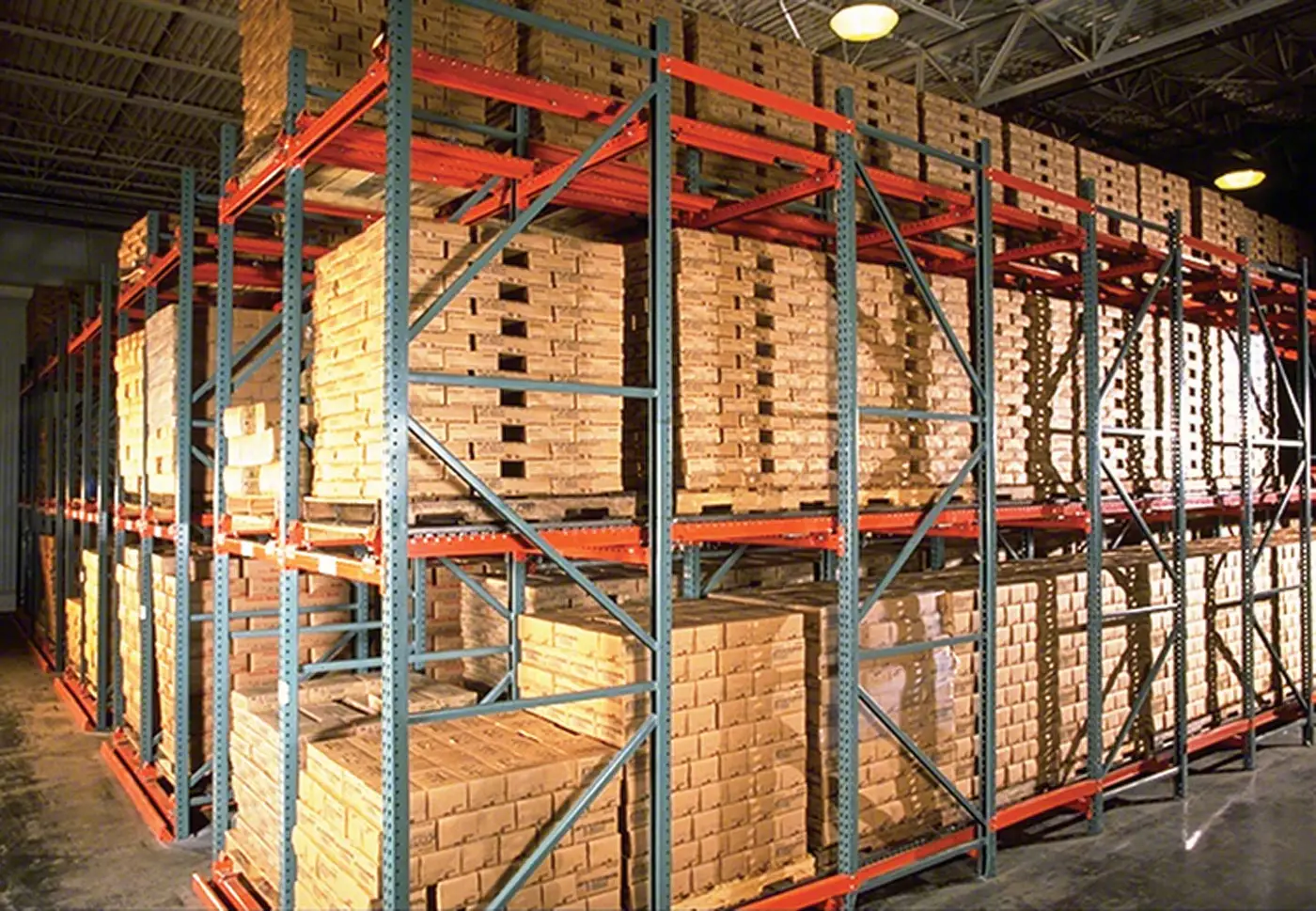
Pallet flow stores the same SKU many pallets deep, so one lane can replace several bays of selective rack and most of their aisles. The trade-off is that each lane holds only one SKU, so it pays off for products with several pallets on hand at a time.
See our pallet flow rack page for roller types, speed controllers and pallet separators.
Photo: Interlake Mecalux (authorized use)
Carton flow: faster picking
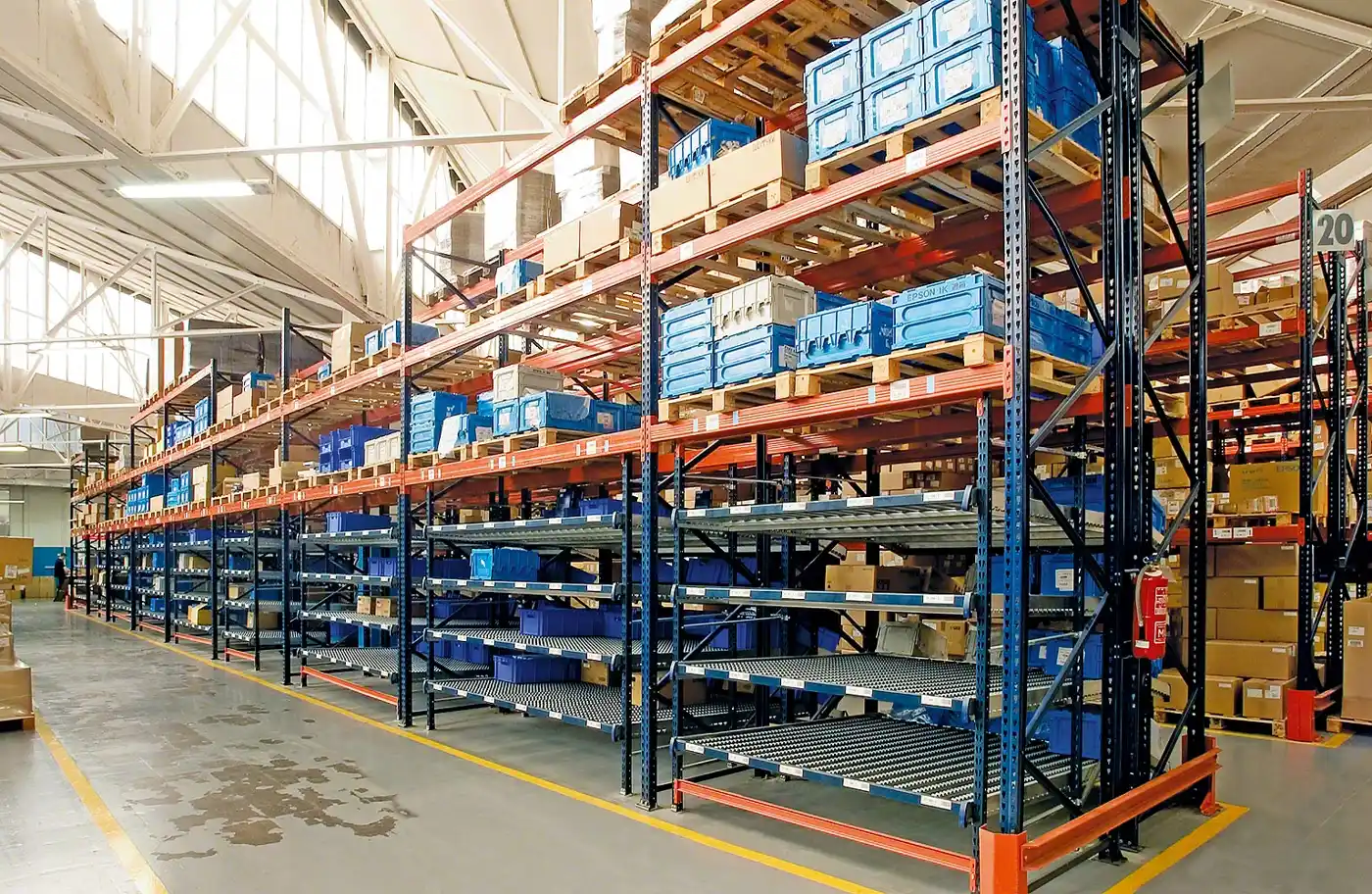
Carton flow puts many SKUs within arm’s reach. Each lane holds one item with backup stock behind it, so pickers walk less and never wait for replenishment. Carton flow shelves are often installed on the lower one or two levels of pallet rack, with reserve pallets stored above.
See our carton flow rack page for wheel beds, full-width rollers and lane dividers.
Photo: Interlake Mecalux (authorized use)
Other flow rack layouts
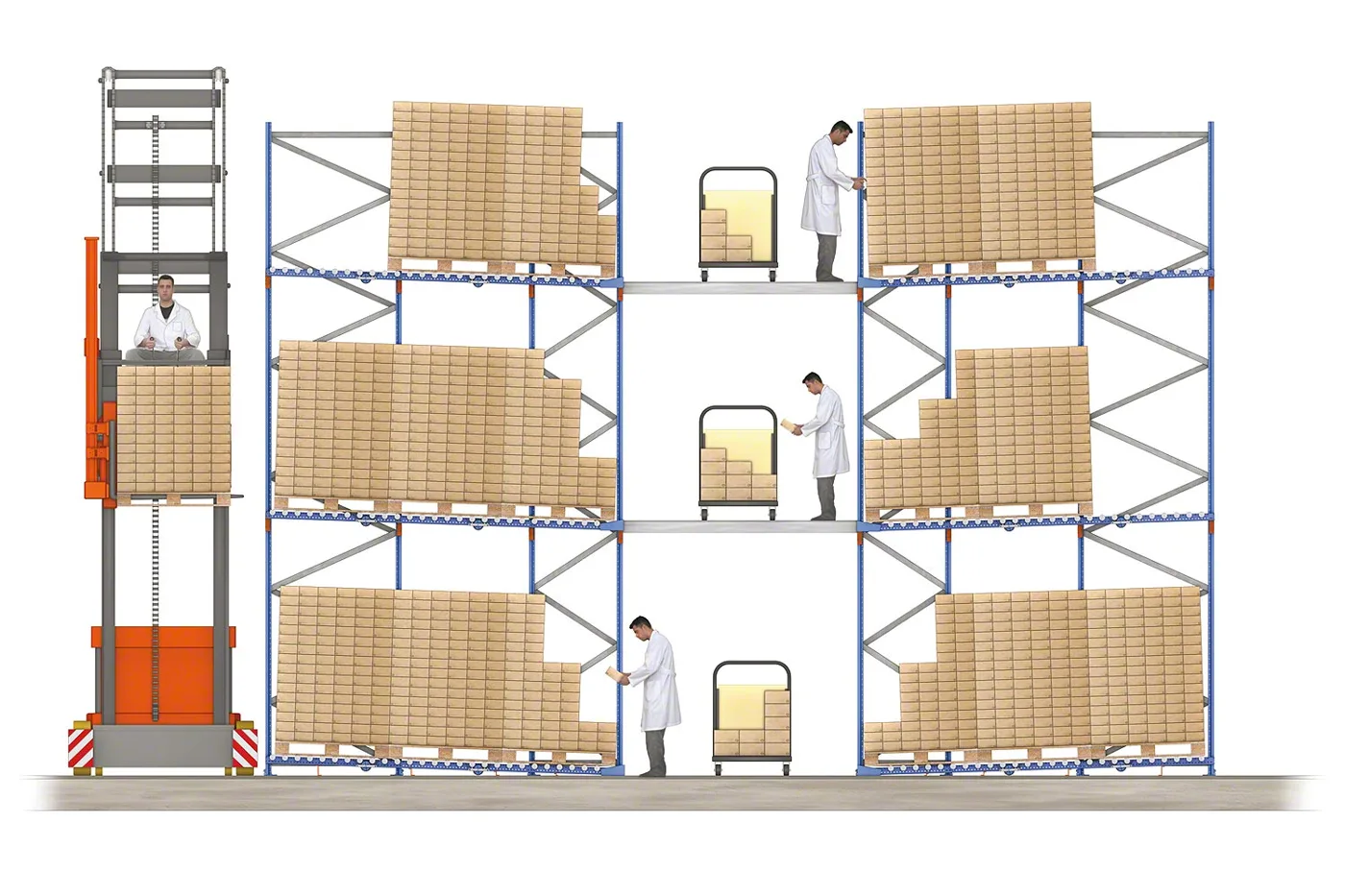
- Pick tunnels. Pallet flow on the upper levels feeds carton flow or a walkway through the bottom of the rack, so people pick cases from the tunnel while lift trucks replenish from outside.
- Gravity flow shelves in pallet rack. Drop-in flow beds sit on existing beams and turn a bay into a pallet or case flow position without a new structure.
- Standalone carton flow units. Self-contained flow racks for packing benches, kitting areas and assembly lines.
- Pick modules. Multi-level structures that combine carton flow, pallet flow and conveyor. See our warehouse pick modules guide.
Multi-level pick aisle example
Here two blocks of pallet flow lanes face a central pick aisle. Order pickers work from walkways at each level and take cases straight from the pallets at the pick face, while a lift truck loads the lanes from the outer aisle. Replenishment and picking never share the same aisle.
Illustration: Interlake Mecalux (authorized use)
When do flow racks make sense?
Flow rack costs more per position than selective rack, so the question is whether the extra speed, density or rotation pays back in your operation. These are the signs that it usually does:
- Product must ship in date order. Food, beverage, dairy, pharmaceuticals and anything with a lot code or shelf life.
- A small number of SKUs move a large share of volume. Fast movers with several pallets on hand fill flow lanes well.
- Space is expensive. Cold rooms, high-rent buildings and full warehouses get the most from removing aisles.
- Pickers and lift trucks get in each other’s way. Separate load and pick aisles solve that.
- Pick faces run empty. Flow lanes keep the next unit at the pick face, so pickers stop waiting for replenishment.
Flow rack is usually not the right fit for slow movers with one pallet per SKU, for very mixed or poor pallets, or where every pallet must be reached directly. In those cases selective pallet rack or double-deep rack is often a better buy.
| System | Rotation | Density | Access | Good fit |
|---|---|---|---|---|
| Selective rack | Any order | Low | Every pallet | Many SKUs, few pallets each |
| Push-back rack | Last-in, first-out | High | One SKU per lane, front only | Dense storage without date codes |
| Drive-in rack | Last-in, first-out | Very high | One SKU per lane | Large lots of few SKUs, freezers |
| Pallet flow rack | First-in, first-out | High | One SKU per lane, load and pick sides | Fast, date-sensitive pallets |
| Carton flow rack | First-in, first-out | Medium | Many SKUs at the pick face | Case and piece picking |
Flow rack design factors
Flow rack only works when it is designed around your actual loads. These are the details we confirm before quoting, and the reasons each one matters.
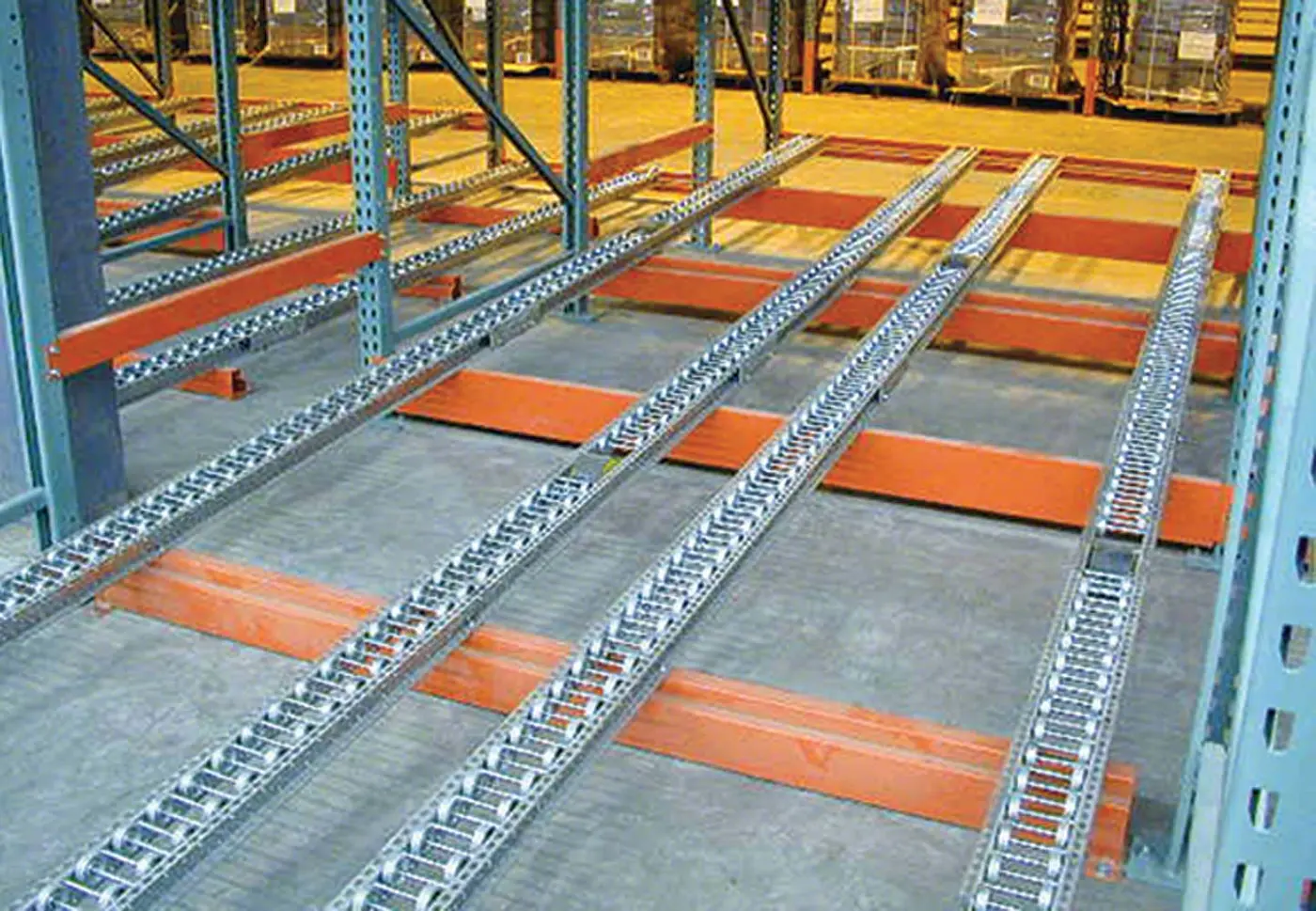
Your pallets and cartons
Pallet size, weight range and bottom-board style decide the roller type, spacing and lane width. A lane set up for 48 x 40 in. wood pallets may not run plastic pallets, half pallets or pallets with broken bottom boards, which can snag or stall. For carton flow, smooth, rigid bottoms flow best. Soft bags or wrapped bundles may need trays or totes.
Bring us the lightest and heaviest loads, not just the average. Light loads can stall and heavy ones can run fast on the same pitch.
Photo: Interlake Mecalux (authorized use)
Rollers, wheels and brakes
Pallet flow uses heavy steel rollers or wheel rails. Speed controllers (brakes) are placed along the lane to hold pallets to a safe walking speed, and pallet separators at the exit hold back the pallets behind the front one so it can be lifted out without the full lane pressing on it.
Carton flow uses lighter wheels or rollers, with dividers to keep cartons in their lane and an exit stop or tilted pick tray at the front.
Photo: Interlake Mecalux (authorized use)

Pitch, depth and lane count
- Pitch (slope). Pallet flow lanes drop only a little per foot, enough to start a pallet moving but not enough to let it run away. Carton flow is pitched more steeply because cartons are light. The right pitch depends on load weight, the rollers and lane depth, and it is set by the flow manufacturer and checked with your real loads. Getting it wrong is the most common reason flow lanes stall or slam.
- Lane depth. Deeper lanes store more per SKU but take longer to empty, so depth is set by how many units you hold of each SKU and how fast it turns.
- Lane count. One SKU per lane, so you need at least one lane for every SKU you want in the system, plus room to grow.
- Height loss. The slope uses vertical space. A deep pallet flow lane can lose several inches from back to front, which affects how many levels fit under your sprinklers.
The building and equipment
- Lift trucks. Load and pick aisles must suit the trucks you run. Flow rack can also reduce how many aisles you need.
- Floor and anchors. Flow rack concentrates heavy loads in deep bays, so the slab and anchors are checked. See our anchor bolt guide.
- Clear height and sprinklers. The top load must stay below the required sprinkler clearance, which is often 18 in. or more.
- Integration. Pick-face height, conveyors and any pick-to-light or scanning hardware are planned with the lane layout.
Flow rack codes, permits and safety
Flow rack is storage rack, so the same rules that apply to other industrial rack apply here. In the U.S., steel storage rack design is governed by the ANSI MH16.1 specification published by the Rack Manufacturers Institute (RMI), which building codes reference. RMI also publishes free rack safety resources at rmiracksafety.org.
- Permits and engineering. Many cities require a building permit and stamped calculations for rack over a set height, and seismic areas add bracing and anchoring requirements. See our rack permits and engineering and seismic compliance guides.
- Fire protection. Deep flow lanes can block flue spaces between loads, which sprinklers rely on. Tall or deep systems may need in-rack sprinklers. The fire protection engineer and fire official decide this. See our warehouse fire safety and flue space guide.
- Load signs. Post the lane and level capacities where operators can see them, and never exceed them.
- Protection. Pick and load aisles see a lot of lift-truck traffic. Add column protectors and end-of-aisle guards. See our rack guards page.
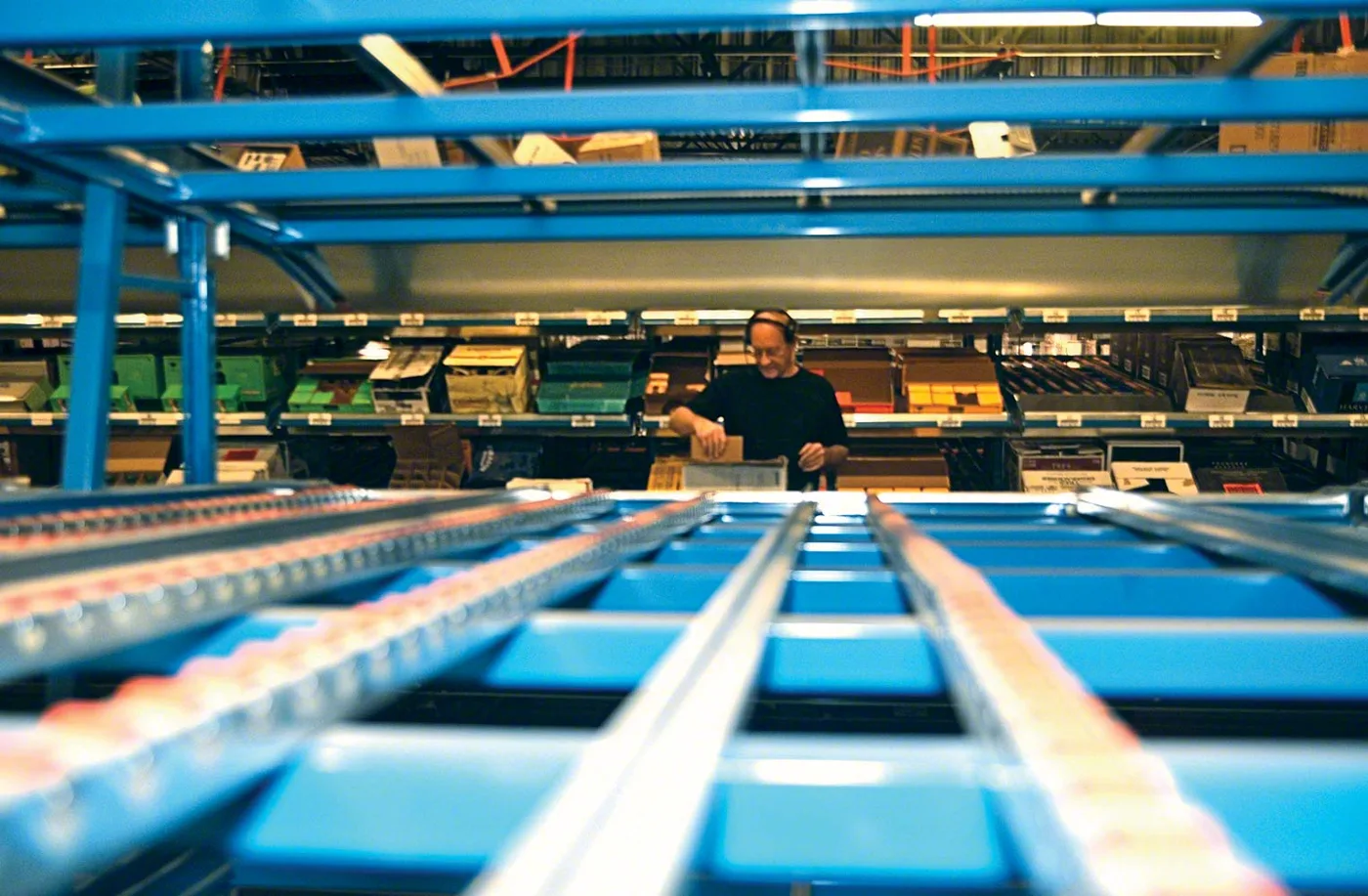
Safe loading and picking
Train operators to set pallets down gently at the load end, never drop or push them into the lane. Pickers should never climb into or walk on flow lanes to free a stuck pallet. Stop the lane and call maintenance instead.
At the pick face, lift each pallet straight out with the separator holding the rest of the lane back. For carton flow, keep heavy cartons on waist-high levels to cut reaching and lifting.
Photo: Interlake Mecalux (authorized use)
Flow rack applications
These are the operations where we see flow racks earn their keep most often.
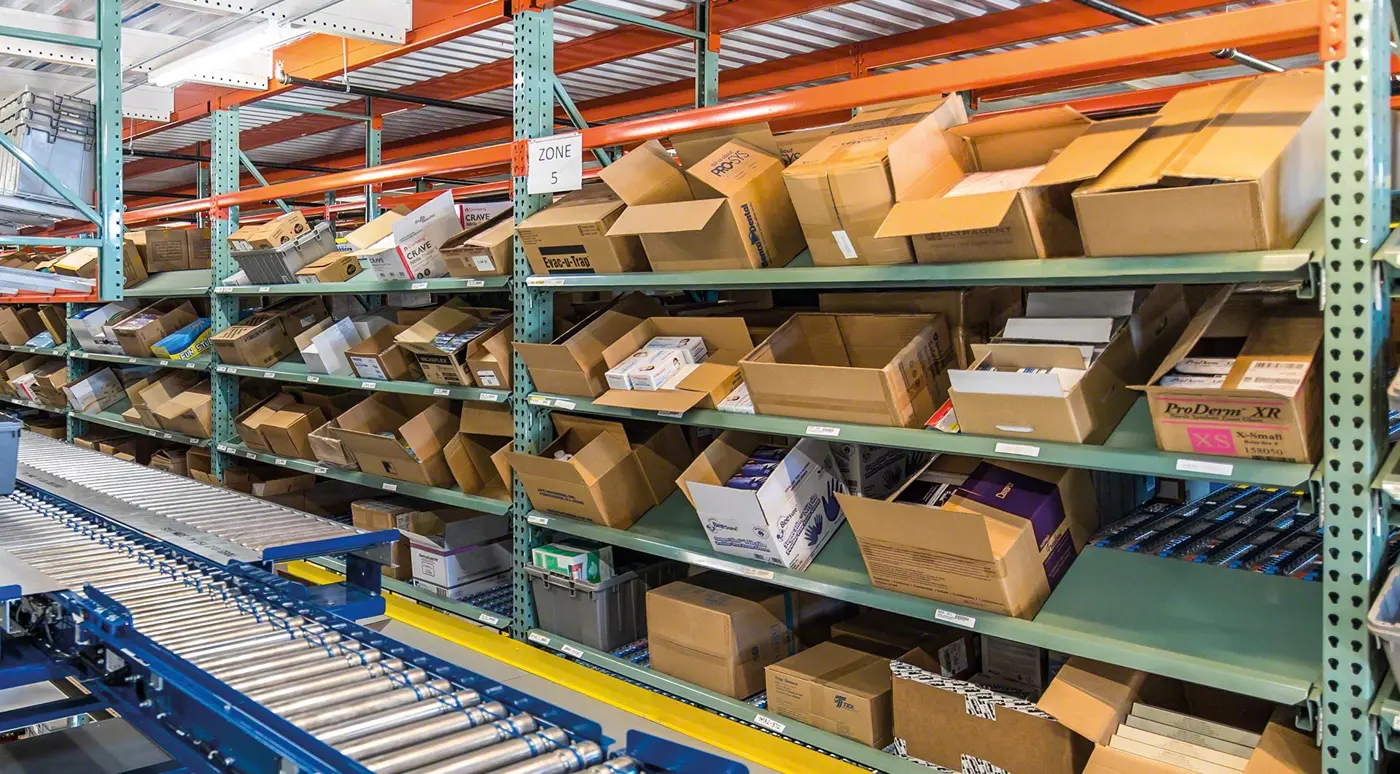
Flow rack with conveyor
In busy pick areas, carton flow lanes often feed a takeaway conveyor at the pick face. Pickers take cases from the lanes and place them straight onto the conveyor, while stockers refill the lanes from behind. Our pick module and warehouse layout teams plan both together.
Photo: Interlake Mecalux (authorized use)
Flow rack maintenance checklist
Flow rack has few moving parts, but those parts do the work. A short weekly or monthly check keeps lanes running and catches damage before it causes a jam.
- Rollers and wheels: look for stuck, bent, cracked or missing rollers and wheels. Each should spin freely.
- Brakes and separators: confirm speed controllers slow pallets and that separators hold back the lane at the pick face.
- Debris: clear stretch wrap, strapping, broken pallet boards and dust from lanes. Debris is the most common cause of stalls.
- Lane alignment: check that tracks and guides are straight and secure, so pallets and cartons don’t drift and hang up.
- Rack structure: inspect uprights, beams and anchors for lift-truck damage, and report any damage right away. See our rack repair and inspection page.
- Load signs: make sure capacity signs are in place and readable.
How a flow rack project runs
Share your products
Load sizes, weights, pallet types, SKU counts and how fast each moves.
Layout and quote
We draw the lanes, levels and aisles around your building and lift trucks, free.
Engineering and permits
Stamped drawings and permits where your city requires them.
Install and test
Our crews install the rack and lanes and test them with your real loads.
See our pallet rack installation page for what to expect on site.
New vs. used flow racks
Used pallet flow and carton flow does come up for sale, but it needs more care than used selective rack.
Used savings are usually used up by installation. Rack that has been taken down rarely goes back together cleanly. Bent parts need replacing and connectors may not seat well. Used flow lanes add worn rollers, tired brakes and a pitch set for someone else’s pallets, so lanes often need new parts or re-tuning before they run safely. The installer time to straighten, fit and adjust used parts often costs more than the price difference, so new is frequently cheaper once it is installed.
Reusing flow rack you already own can work, especially for a straight move of a known system. Call our sales team with pictures and we’ll tell you honestly whether it’s worth installing. See used vs. new pallet rack and pallet rack cost and pricing.
Get a flow rack layout
Send us your products and building details. We’ll lay out pallet flow, carton flow or a mix with your selective rack, free.
Request a Free Quote Open the Rack Designer Call (800) 326-4403
Get a free quote
Tell us what you are storing, the room size and your timeline. A project specialist will follow up with layout options and pricing. Prefer to talk? Call (800) 326-4403.
Flow rack FAQs
What is a flow rack?
What is the difference between pallet flow and carton flow?
Are gravity flow racks FIFO or LIFO?
How steep is a flow rack lane?
Can flow lanes be added to my existing pallet rack?
Do flow racks need brakes?
Do flow racks need a permit?
Is used flow rack cheaper?
Related pages: Pallet flow rack · Carton flow rack · Push-back rack · Warehouse pick modules · All pallet rack
Planning a flow rack system?
Free layout design for pallet flow and carton flow, with delivery and installation nationwide.