
Top 10 Questions About Pallet Rack
Straight answers on rack types, load capacity, sizing, safety features, maintenance and cost — the questions every warehouse manager asks before specifying a pallet racking system.

10
Questions Answered
5
Common Rack Types
20+ yrs
Typical Lifespan, Well Maintained
8–16 wks
Lead Time, Custom Systems
Ten Questions Every Warehouse Manager Asks About Pallet Rack
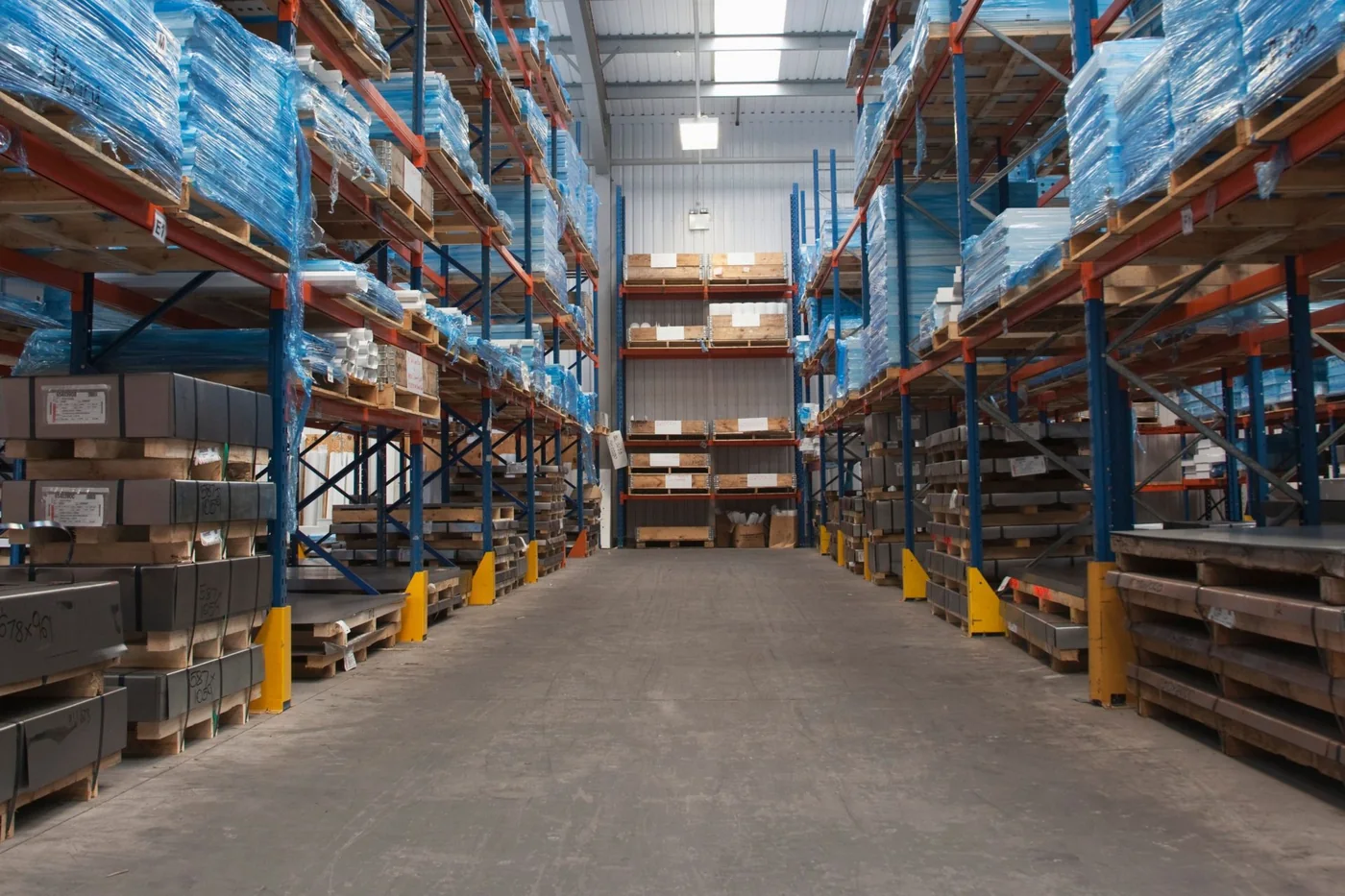
Selecting the right pallet rack system is one of the most consequential decisions a warehouse or distribution center makes. A well-designed system maximizes storage density, keeps forklift traffic moving, and keeps the people working around it safe. The number of rack types, capacity ratings and code requirements involved can be overwhelming — this page answers the ten questions we hear most often, in plain language, with the standards cited so you can verify anything yourself.
Don’t settle for a one-size-fits-all system or work through this alone. Call (800) 326-4403 and talk to someone who will size the system to your pallets, your building and your budget — not the other way around.
Not sure where to start?
Tell us your pallet sizes, ceiling height and forklift type and we will recommend a rack type and a real lead time — no obligation.
Question #1: What Type of Pallet Rack Should I Use?
The right system depends on your inventory, space, budget and rotation method. Here are the five types warehouses use most, each linked to a full page on how it works.
 Selective Pallet RackThe most common and versatile system. Every pallet is directly accessible, which suits high SKU counts with lower quantities per SKU. Affordable and fast to install.
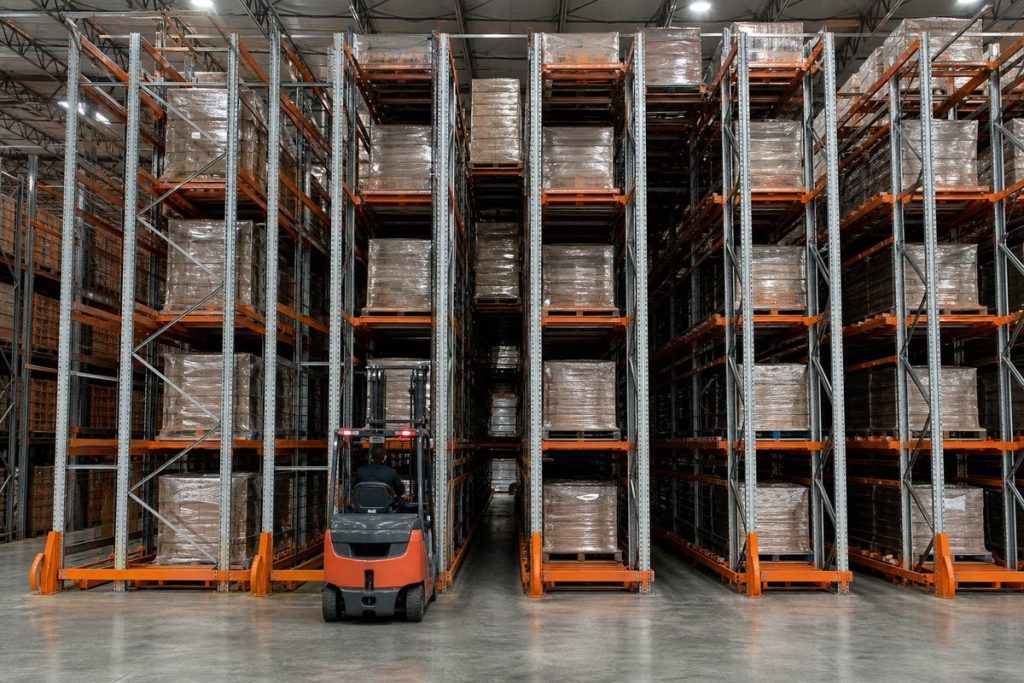 Drive-In / Drive-Thru RackForklifts drive directly into the rack structure for very high storage density. Works on a Last-In, First-Out (LIFO) basis and suits large quantities of one SKU.
 Push-Back RackA high-density LIFO system where pallets sit on nested carts riding inclined rails (or, as with Spring-Rail, spring-loaded horizontal tracks). Better SKU selectivity than drive-in because every lane can hold a different product.
 Pallet Flow RackA high-density First-In, First-Out (FIFO) system. Pallets load at the high end and flow down rollers to the pick face — the standard choice for perishables and dated stock.
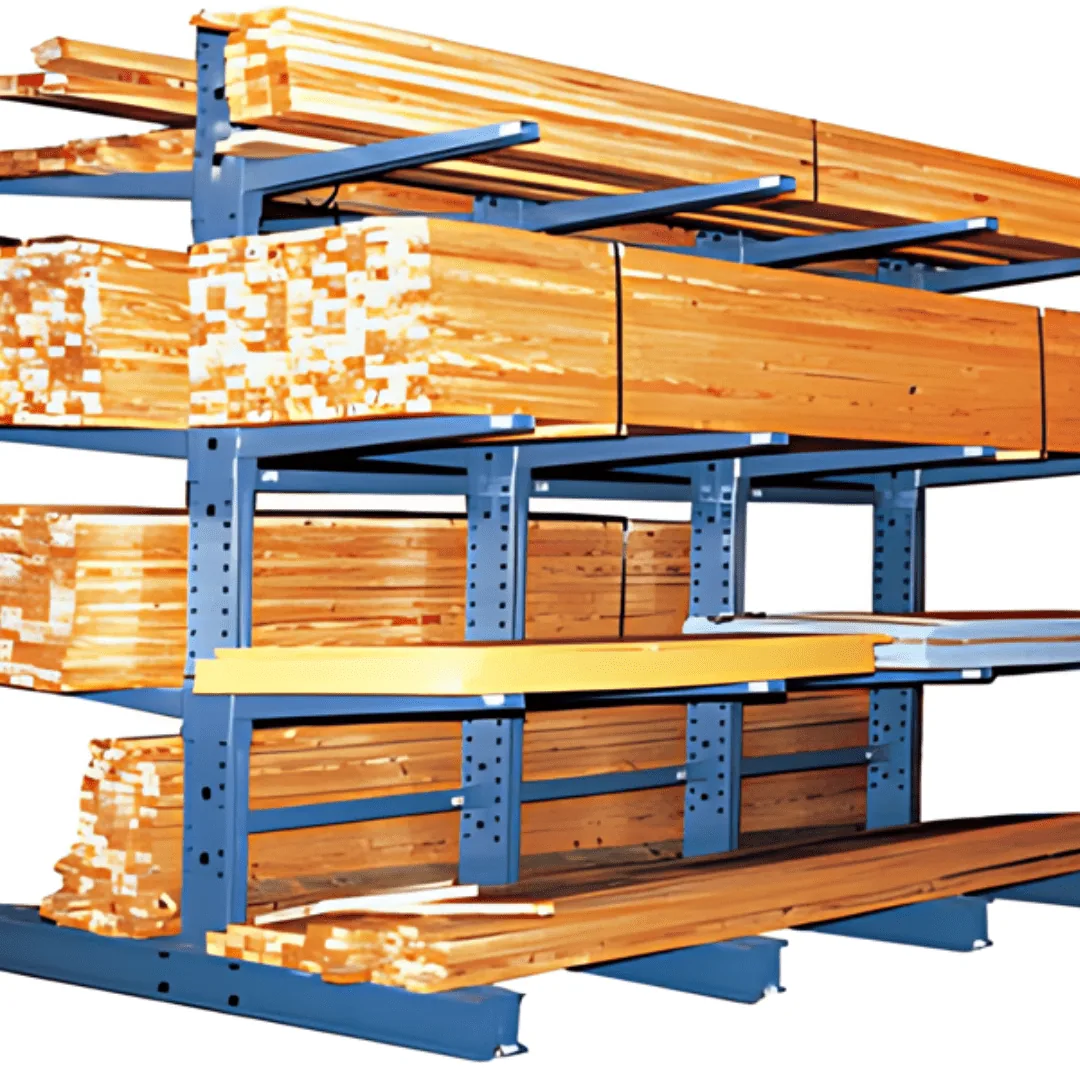 Cantilever RackBuilt for long, bulky or irregular loads like lumber, pipe and furniture. Arms instead of shelves give unobstructed horizontal storage with no upright in the way.
| Type | Rotation | Selectivity vs. Density | Best For |
|---|---|---|---|
| Selective | Single | Highest — every pallet reachable | High SKU count, frequent picking |
| Drive-In / Drive-Thru | LIFO | Lowest selectivity, highest density | Few SKUs, large quantities each |
| Push-Back | LIFO | Better than drive-in, worse than selective | Moderate SKU count, dense storage |
| Pallet Flow | FIFO | Low selectivity, high density | Perishables, dated or rotating stock |
| Cantilever | N/A — open arms | Depends on arm spacing | Lumber, pipe, bar stock, panels |
Question #2: How Much Weight Can a Pallet Rack Hold?
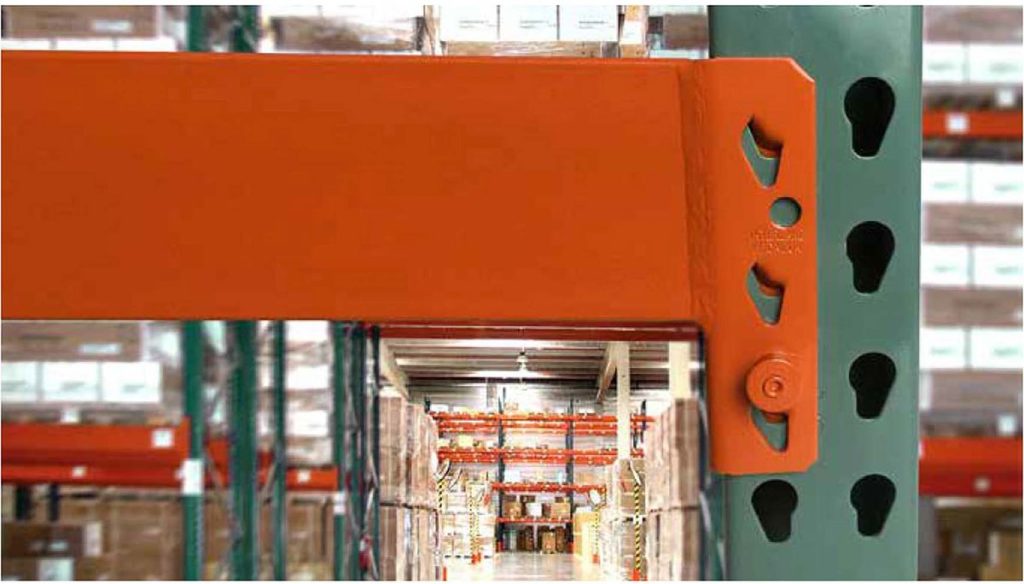
Pallet rack capacity is not a single published number — it is a calculation based on the rack’s design, material gauge, and how the beams are arranged. There are two ratings that matter:
Beam capacity is the maximum uniformly distributed weight a pair of beams can support, stated per pair. Upright frame capacity is the maximum weight a single frame can support, calculated by adding the weight on every beam level in a bay and multiplying by the number of bays that frame supports.
OSHA does not publish its own pallet rack capacity standard; it defers to the consensus standard maintained by the Rack Manufacturers Institute (RMI), a product group of MHI: ANSI MH16.1-2023, Specification for the Design, Testing, and Utilization of Industrial Steel Storage Racks. That standard requires a legible capacity plaque on every installed system — never exceed what it says.
| Item | What It Means |
|---|---|
| Beam capacity | Maximum uniformly distributed load a pair of beams can carry, stated per pair of beams at a given beam length and level spacing. |
| Upright frame capacity | Maximum load the frame can carry, found by adding the weight on every beam level in a bay and multiplying by the number of bays the frame supports. |
| 16-gauge upright (light/regular duty, representative) | Commonly published in the mid-teens of thousands of pounds per frame — always confirm the number on your capacity plaque. |
| 14-gauge upright (heavy duty, representative) | Commonly published in the low-to-mid twenties of thousands of pounds per frame — always confirm the number on your capacity plaque. |
Never guess a capacity
The gauge-and-weight figures above are representative published ranges, not a number for your specific rack. Read the capacity plaque on your system, or if it is missing or illegible, call us before loading it — we will get you the manufacturer’s engineering data for your exact frame and beam.
Question #3: How Do I Size Pallet Rack for My Warehouse?
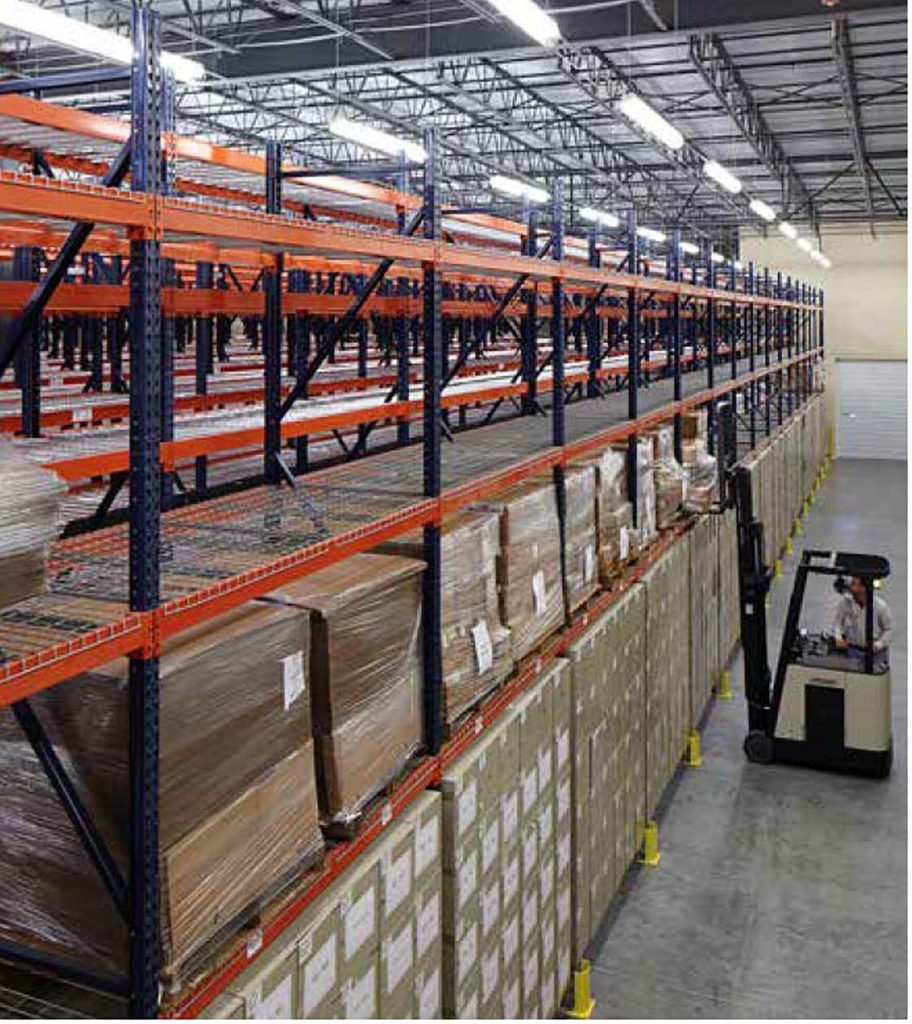
Properly sizing a system involves more than measuring the floor. Four things drive the layout:
Pallet and product dimensions — rack depth and beam length must fit your largest pallet with a few inches of clearance on each side.
Building specifications — maximum rack height is limited by clear ceiling height, and you need adequate clearance below fire-sprinkler deflectors (commonly at least 18 inches — confirm the exact figure with your local fire code official and sprinkler engineer).
Forklift specifications — aisle width is set by your truck ’s turning radius. Standard counterbalance forklifts typically need 12+ feet, while reach trucks and turret trucks can operate in much narrower aisles.
Beam levels — the vertical distance between levels equals your pallet load height plus the beam’s own height plus 4–6 inches of lift clearance.
Get help laying out your aisles and bays
Send us your pallet sizes, ceiling height and forklift type. We will lay out the system and quote it together.
Question #4: What Are the Essential Safety Features for Pallet Rack?
Safety is not an accessory line item — it is part of a code-compliant installation. These four categories protect the racking and the people working around it.
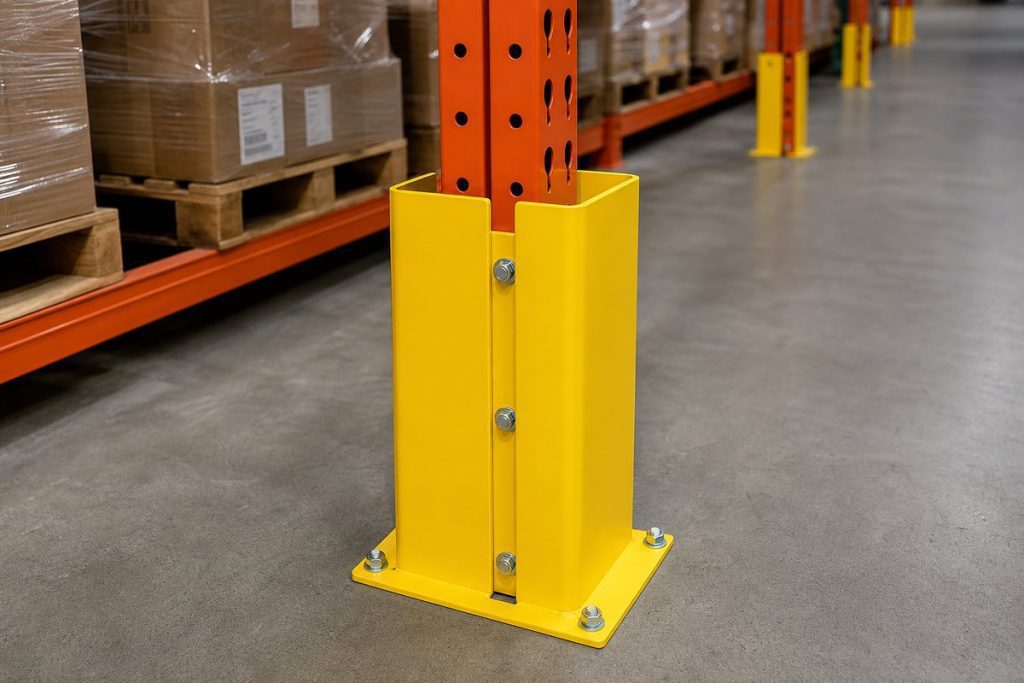 Column ProtectorsSteel guards bolted around the base of upright frames to absorb forklift impacts before they reach the column and compromise the frame’s rated capacity.
 Floor AnchorsEvery upright must be anchored to the concrete slab per the manufacturer’s engineering data to resist tipping and horizontal load — seismic zones typically require heavier anchors and base plates.
 Wire Mesh DeckingSits on the beams to create a load-bearing shelf surface, stops pallets and loose items from falling through, and improves sprinkler and lighting penetration versus solid decks.
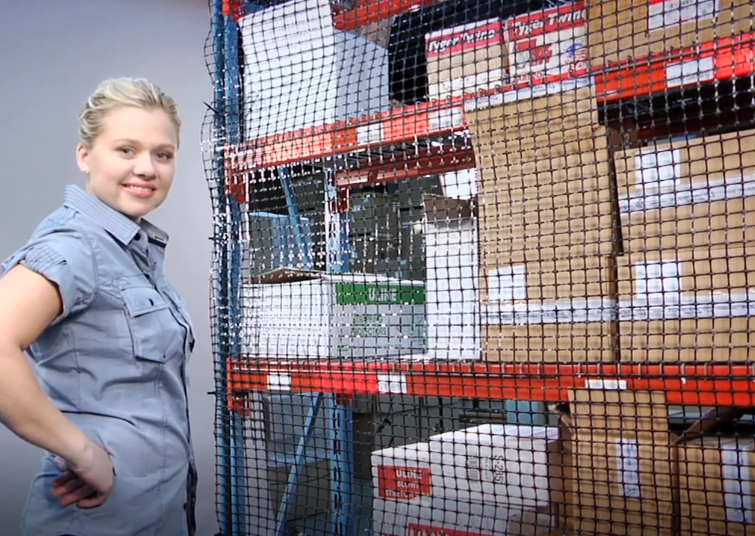 Safety NettingA flexible barrier hung on the back or sides of a rack row that catches product pushed or knocked off the far side before it reaches an aisle, walkway or neighboring rack.
Questions #5–8: Customization, Installation, Maintenance & Lifespan
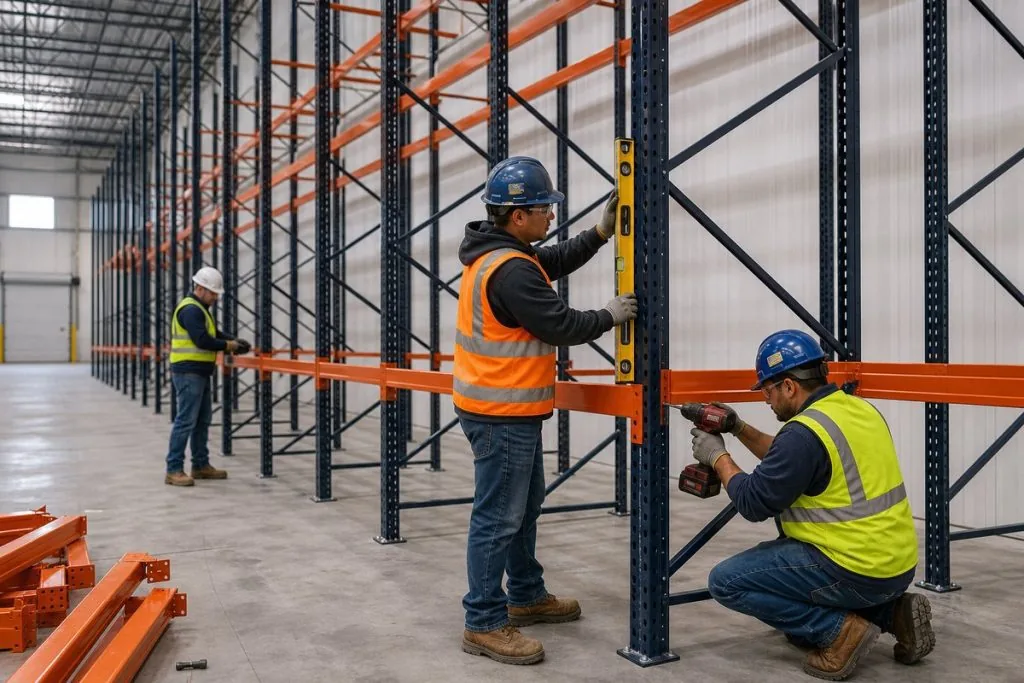
Can pallet rack be customized? Do I need a professional installer?
Modern pallet rack is fully modular — upright height, frame depth, beam length, beam capacity and finish color are all specified per project, and bolt-together beam connections make later reconfiguration straightforward.
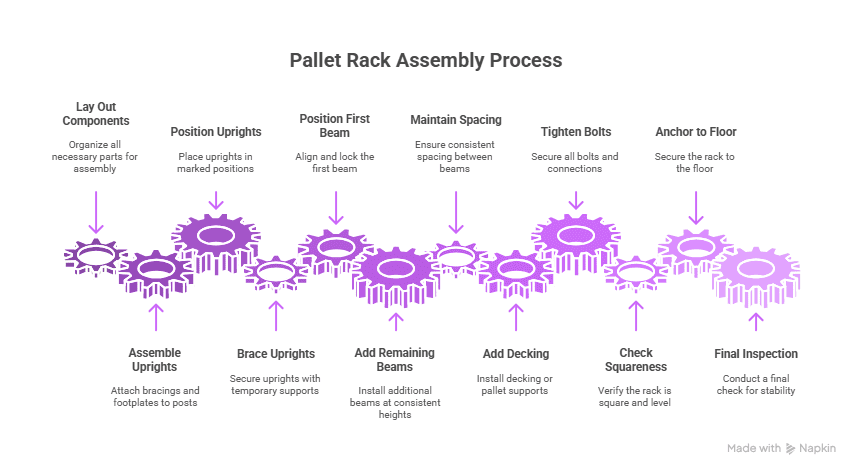
Small, simple systems can sometimes be installed in-house, but professional installation is recommended for most projects. Installers assemble to the manufacturer’s specifications, get frames plumb and level, anchor correctly, and know the local building and seismic requirements that often require a permit.
- Professional installers assemble to the manufacturer’s stamped specifications
- Frames set plumb and level before beams and decking go in
- Anchoring completed per the engineered anchor schedule, not by eye
- Local building and seismic permit requirements confirmed before work starts
How do I maintain it, and how long will it last?
A high-quality system that is properly maintained and not subjected to repeated impact can last 20 years or more — condition matters far more than age. Regular inspection is what protects that lifespan.
- A qualified person walks the racks on a regular schedule looking for dents, bent beams and missing safety clips
- Any damaged component is unloaded immediately and reported for repair or replacement
- Forklift operators are trained to report impacts the same shift they happen
- Capacity plaques stay legible and in place — replace one before it disappears, not after
Need a rack inspected or repaired?
We inspect existing systems, replace damaged components, and can recommend the protection to prevent the same damage from happening again.
Request an Inspection See Repair & Inspection Call (800) 326-4403
Specs & Standards That Govern Pallet Rack

Beyond the beam and frame capacity ratings covered above, a few other published standards and hardware options come up on almost every project:
ANSI MH16.1-2023 is the design, testing and utilization standard maintained by the Rack Manufacturers Institute; it is the reference OSHA points to when a rack’s structural adequacy is in question.
Seismic base hardware — in higher seismic zones, upright frames are often fitted with full-depth base channels or engineered isolators between the column and the floor, in addition to standard anchor bolts, to control how the frame moves during an earthquake.
Row-end and column guards — protect the most impact-exposed uprights (row ends and aisle intersections) with heavier-duty guards than a mid-row column typically needs.
 Row-End & Aisle GuardsHeavier-duty protection at the ends of a row and aisle intersections, where impact frequency is highest.
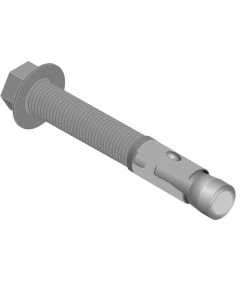 Anchor Bolts & Base PlatesSized to the manufacturer’s engineering data and the floor slab’s condition — not a generic hardware-store bolt.
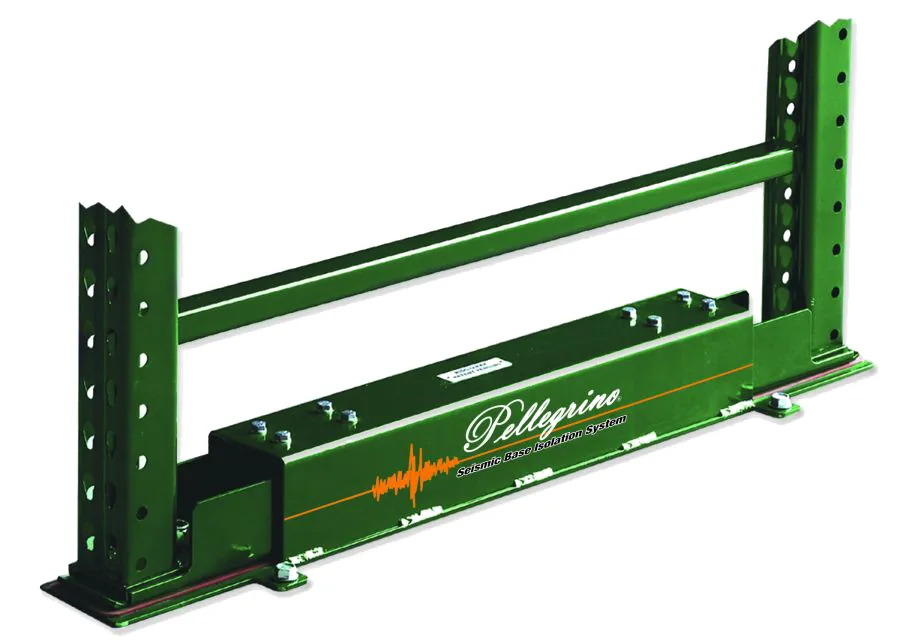 Seismic Base IsolationEngineered isolators or full-depth base channels used in higher seismic zones to control how the frame responds during an earthquake.
What we won’t do
We will not tell you your rack meets a wind, seismic or fire code requirement without engineering data for your exact building and load. We provide the rack, the manufacturer’s specifications and the capacity data — final code sign-off stays with your local building official and engineer of record.
Questions #9–10: Lead Time and Cost
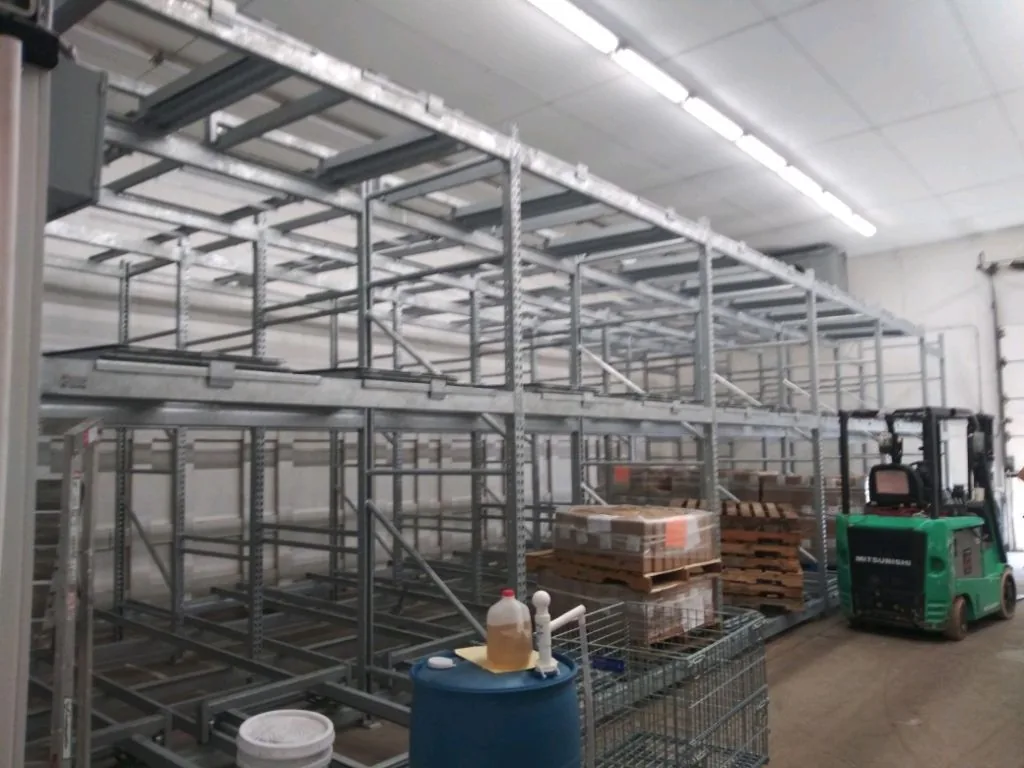
Lead times vary widely by product. Common, in-stock sizes and types can often ship within a few business days to a couple of weeks. Large projects, custom-engineered systems, or specialty racks commonly run 8–16 weeks once engineering and permitting are factored in.
Cost depends entirely on type, dimensions, capacity and quantity — there is no flat per-bay price that holds across projects. The most reliable way to get a real number is a quote built from your actual layout and load requirements, including materials, delivery and professional installation.
| Order Type | Typical Lead Time |
|---|---|
| Common/in-stock sizes and types | A few business days to a couple of weeks |
| Custom-engineered systems | 8–16 weeks, project dependent |
| Large multi-bay or seismic-zone projects | Often longer — engineering and permitting add time |
Get a real number, not a guess
Send us your layout, pallet sizes and target dates. We will quote materials, delivery and installation together and tell you the lead time up front.
Request a Quote See Cost & Pricing Guide Call (800) 326-4403
Pallet Rack FAQs
What type of pallet rack should I use?
How much weight can a pallet rack hold?
How do I size pallet rack for my warehouse?
What safety features does pallet rack need?
Can pallet rack be customized?
Do I need a professional for installation?
How do I properly maintain my pallet rack?
How long does pallet rack last?
What is the typical lead time for pallet rack orders?
How much does pallet rack cost and how can I get a quote?
Related Products & Resources
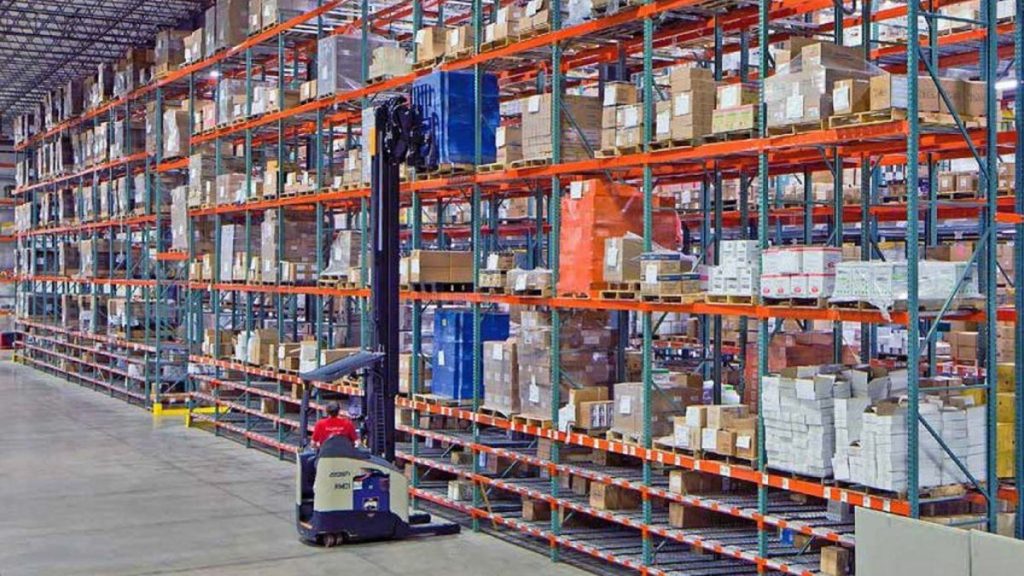 Pallet Rack SystemsThe full pallet rack line — selective, drive-in, structural, cold storage and more — in one hub.
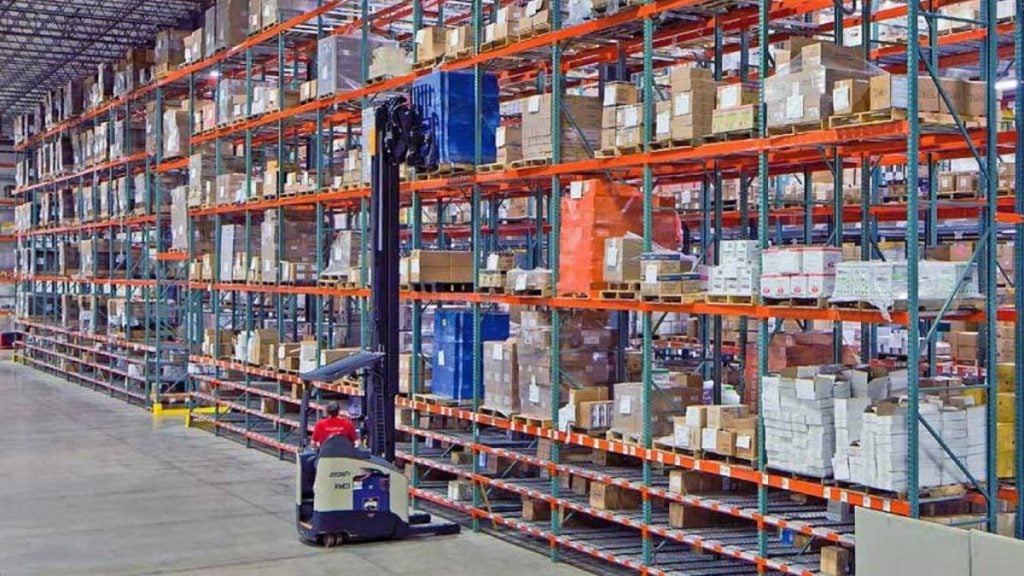 Selective Pallet Rack SystemsThe most common configuration, with direct access to every pallet position.
 Structural Pallet Rack SystemsHeavy-duty bolted steel channel construction for the toughest applications.
 Pallet Rack Cost & Pricing GuideWhat actually drives pallet rack pricing, and how to compare quotes.
 Pallet Rack Repair & InspectionInspection programs and damaged-component replacement to keep an existing system safe.
 Pallet Rack Anchor BoltsAnchoring requirements and seismic base options explained.
Ready to Spec Your Pallet Rack System?
Tell us your pallets, your building and your budget. We will recommend a rack type, confirm the capacity you actually need, and quote materials, delivery and installation together. Free design consultation.
Ready to configure your pallet rack system?
Use our guided configurator to choose the right configuration, review your parts and submit it for checkout or a formal quote.