
Fitness Equipment Warehouse Racking: Utah Home Fitness Moves Its Pallet Rack to West Valley City
How a Utah fitness specialty retailer stores heavy boxed treadmills, ellipticals and home gyms on selective pallet rack, and how we planned the teardown and reinstall when the warehouse moved from Salt Lake City to West Valley City.
Fitness specialty retailer
Client sector
Salt Lake City to West Valley City
Warehouse move
16-ft frames, step beams, row spacers
System relocated
2020 supply, 2026 move
Project timeline
Plan your layout before you buy
Configure upright height, beam width, bay count, and load levels in our free 3D Pallet Rack Configurator, then get an instant bill of materials and request a quote.
The project
Utah Home Fitness is a fitness specialty retailer that sells treadmills, ellipticals, bikes, rowers, home gyms and strength equipment to Utah households. Its Salt Lake City and Sandy stores opened in 2008, and the company runs a design center that plans home gyms and sends professional installers to deliver and set up the equipment. Every one of those deliveries starts in a warehouse full of large, heavy cartons.
This project is part of our Utah pallet rack program, which covers design, supply and installation for warehouses along the Wasatch Front. It also supports our main warehouse pallet racking guide, which explains rack types, capacities and planning in more depth.
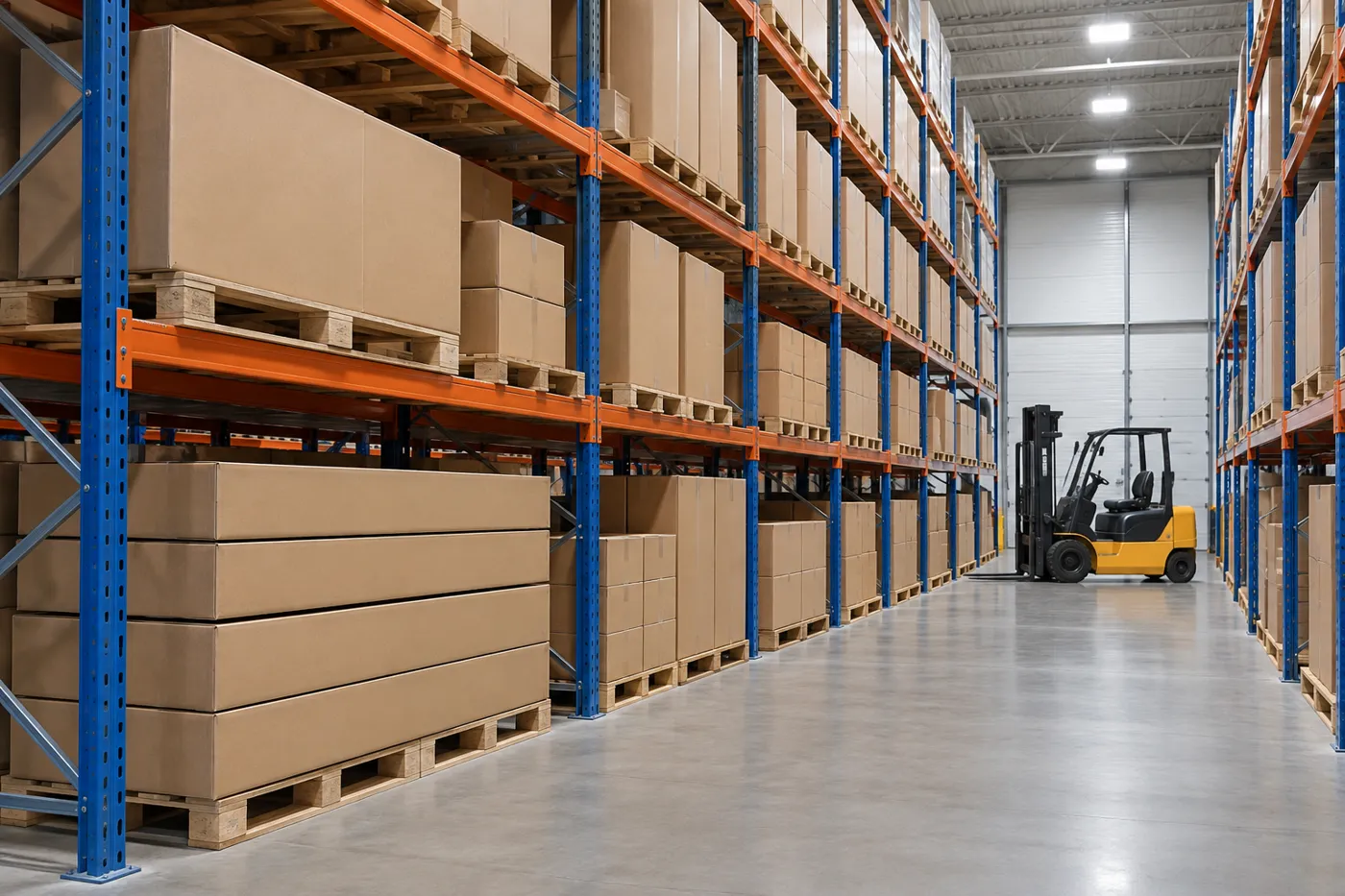
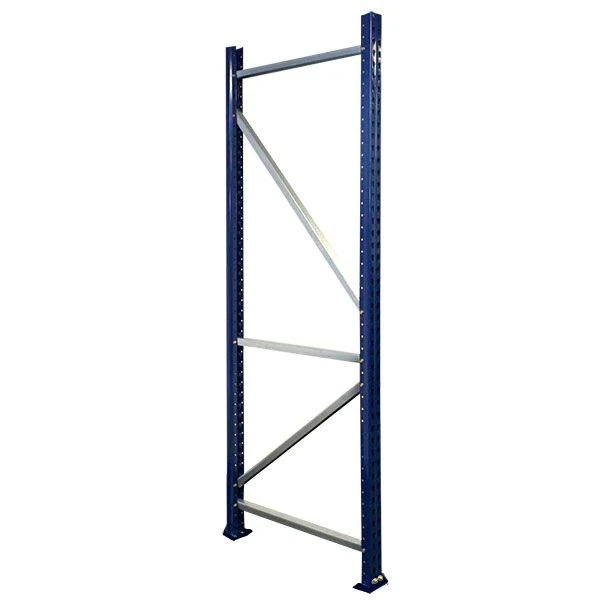
We first supplied selective pallet rack to Utah Home Fitness in 2020. In 2026 the company moved its warehouse from Salt Lake City to West Valley City and asked us to move the rack with it. In late August 2026 we quoted a teardown and relocation, and the retailer approved it in September. The system was built from 42-inch-deep upright frames 16 feet tall, 10-foot (120-inch) step beams and row spacers that tie back-to-back rows together.
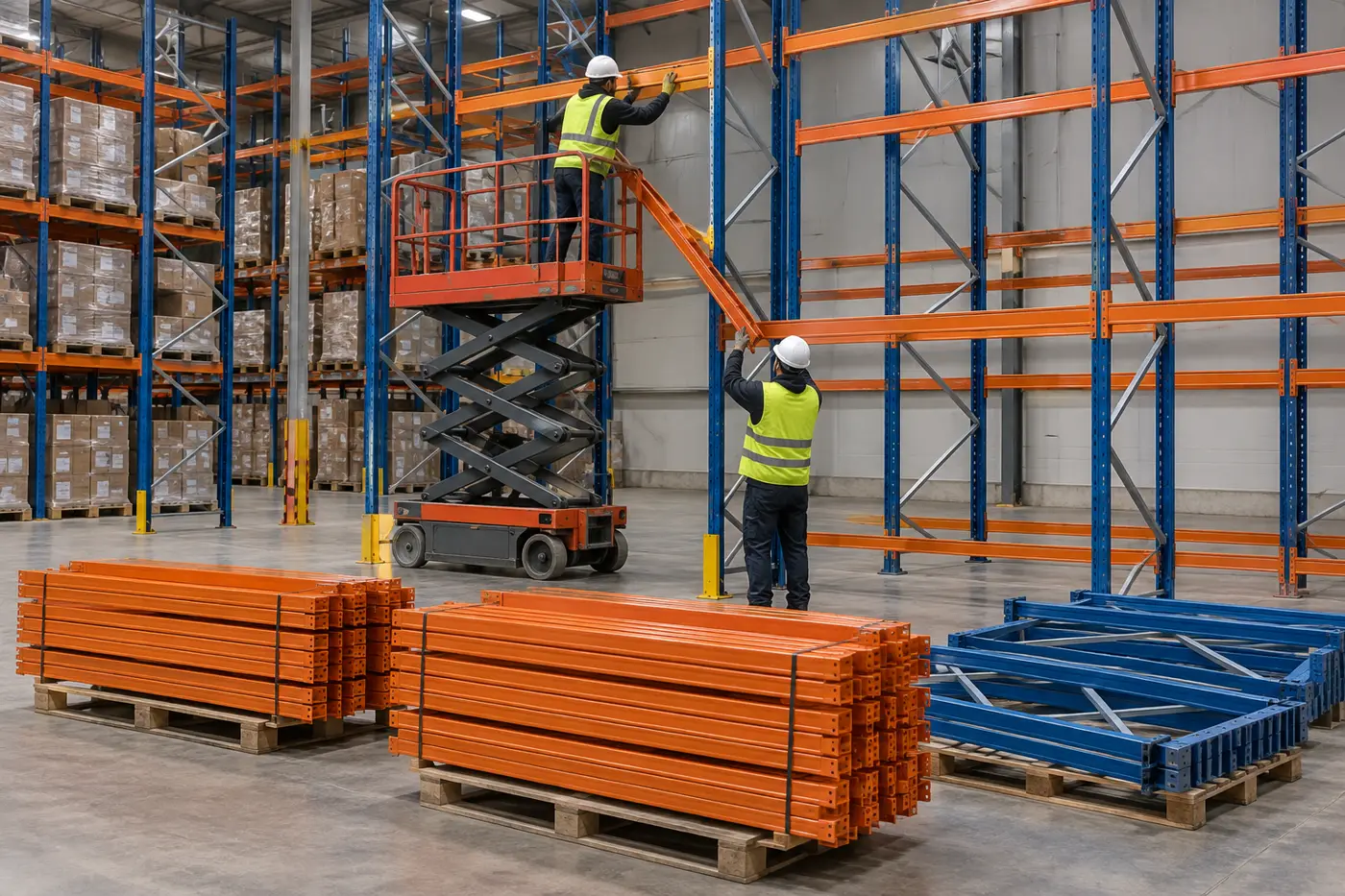
The plan was simple. Our crew would take the rack down on a Saturday and reinstall it at the new building the following week, working from the original 2020 layout drawing. Utah Home Fitness supplied the lift equipment. At the new site, the frames and row spacers went back up but the top beam levels were left off, so the reinstalled system carries fewer levels than it did before.
This case is useful for any retailer, distributor or installer that stores big, heavy boxed goods, and for any business moving a working pallet rack system to a new warehouse.
What a fitness equipment warehouse stores
A fitness retailer’s warehouse doesn’t look like a parts room or a grocery DC. The inventory is a few hundred model numbers in cartons that are large, heavy and awkward to handle:
Treadmills. Long, flat cartons that commonly weigh 150 to 250 pounds or more. They are usually moved with a forklift or a heavy-duty hand truck, not by hand.
Ellipticals, bikes and rowers. Tall or long cartons with a lot of empty space inside and one heavy end where the flywheel sits.
Home gyms and strength machines. Often shipped as several cartons per unit. Every box in the set has to leave on the same truck, or the install stalls.
Weights and plates. Small cartons, very dense. They weigh more per square foot than anything else in the building.
Accessories. Mats, benches, bands and small parts that move in smaller quantities.

Delivery-and-install shapes the building
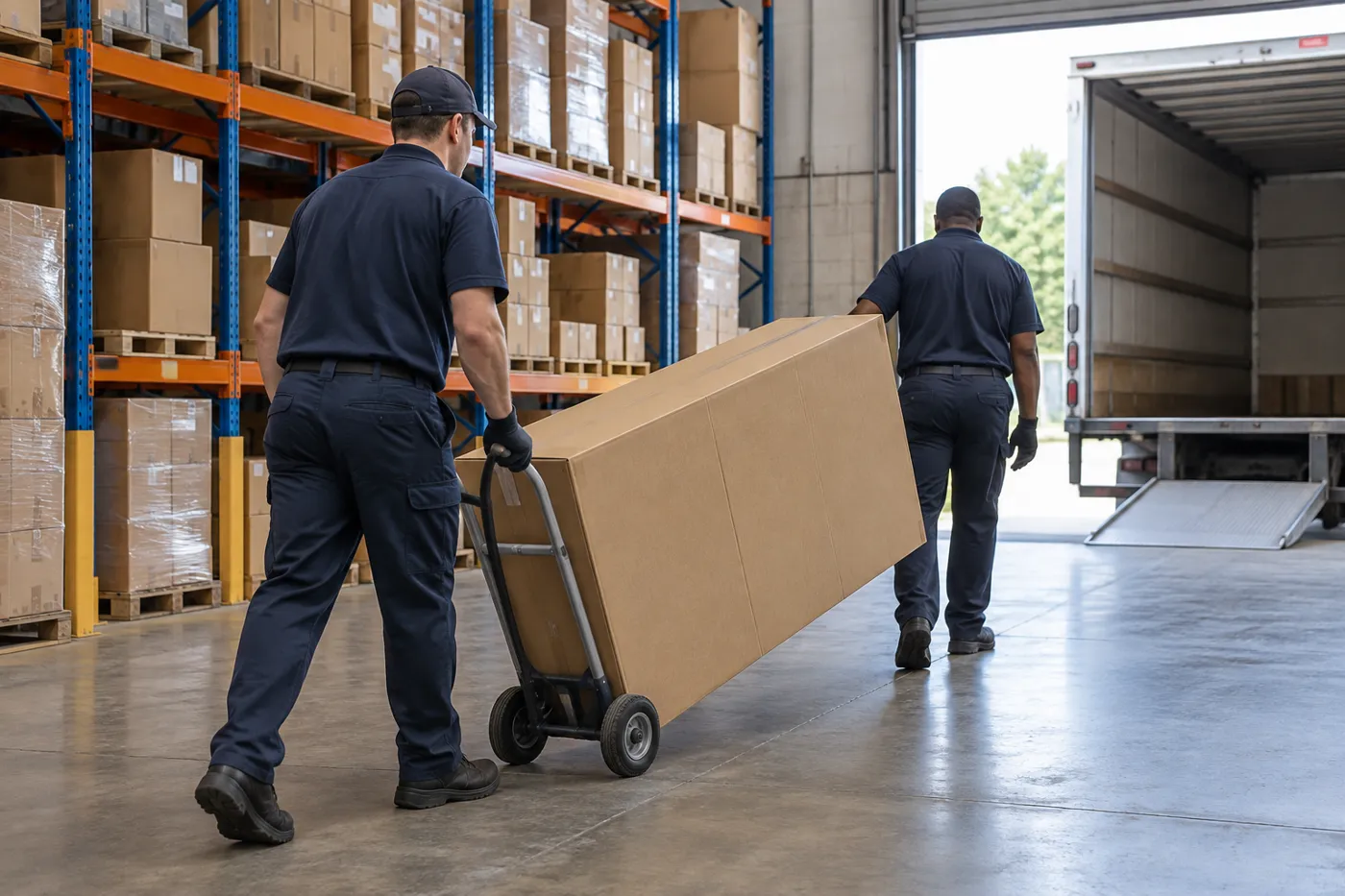
Retailers that deliver and install their own equipment run a daily outbound cycle. Orders are picked the day before, staged by route, and loaded onto trucks early the next morning. A few habits keep that cycle smooth:
Keep a staging lane near the dock. Tomorrow’s orders need a clear spot of floor, not an aisle.
Keep multi-box sets together. Store every carton of a home gym in the same bay, or label them so the picker can find the whole set.
Put the busiest models low. Fast-selling treadmills and bikes belong on the floor level and first beam level, where a lift truck reaches them quickly.
Plan for returns and floor models. Units coming back from stores or customers need a holding area before they go back into stock.
Rack selection for heavy boxed fitness equipment
High-density systems like drive-in or push-back rack make sense when a warehouse holds deep stacks of the same item. A fitness retailer usually has the opposite problem: many models, a few units of each, and every order needs one specific carton. That is why selective pallet racking is the standard choice for this kind of building, and it’s what Utah Home Fitness uses.
| Product | How it’s usually stored on selective rack |
|---|---|
| Treadmill cartons | On a full-size pallet on the beams, one carton per pallet or stacked as the manufacturer allows, busy models on the lower levels |
| Ellipticals, bikes and rowers | On pallets, with the heavy end toward the aisle so drivers can see it, and upper levels spaced tall enough for the cartons |
| Multi-box home gyms | All boxes of a unit in one bay or on one pallet, so the set ships together |
| Weights and plates | Floor level or the first beam level only, spread across the full pallet footprint |
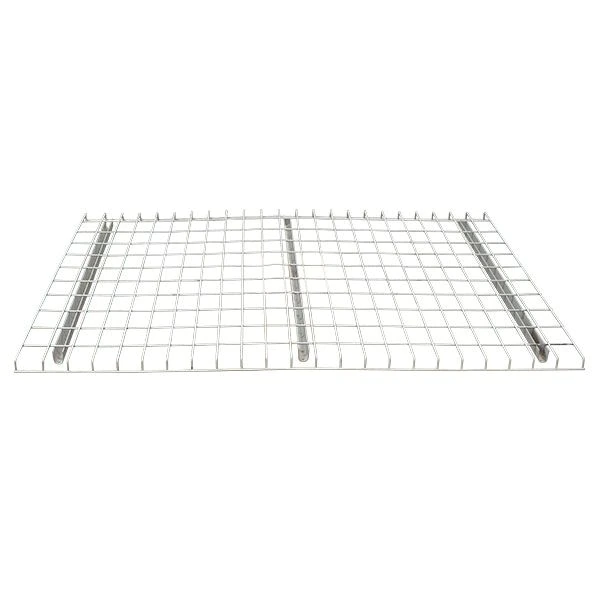
| Accessories and small parts | Levels with wire decks, or nearby shelving, instead of loose on beams |
Why 42-inch frames and 10-foot beams work. A 42-inch-deep frame holds a standard 48-inch-deep pallet with about 3 inches of overhang front and back. A 120-inch beam takes two standard 40-inch-wide pallets side by side with room to place and pull them. That is the most common selective bay in North America, and it’s what the Utah Home Fitness system uses. Standard sizes also make it easier to add bays or buy matching parts later.
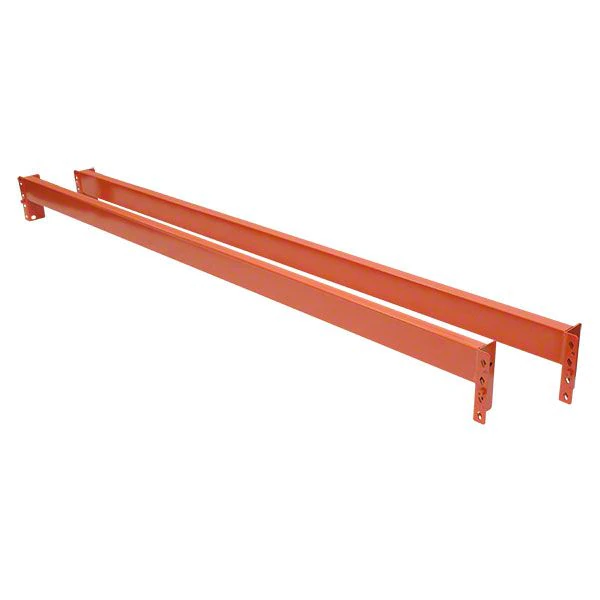
Step beams. The step on the inside edge of each beam gives wire decks and pallet supports a seat. The same beam works for full pallets or for decked levels holding smaller cartons.
Retail neighbors. Specialty retail warehouses vary a lot. Compare this project with our Daddies Board Shop specialty retail warehouse, where boards and apparel drive the design, and our Cariloha bulky-light product project, where cartons are big but light. Fitness equipment is the heavy end of the same problem. If your back room is in a store rather than a warehouse, our retail stockroom design guide covers that side.
Loading heavy, awkward cartons on pallet rack
Most rack problems in a fitness warehouse come from how the cartons sit on the rack, not from the rack itself. These rules keep a level safe:
- Put cartons on pallets or decks, never across bare beams. A carton spanning two beams with nothing underneath can sag, tear or drop through. Use a pallet, pallet support bars or a wire deck.
- Know the beam rating. Beam capacity is per pair, per level, for a load spread evenly along the beams. A treadmill dropped hard on one end concentrates weight where the rating assumes it is spread out.
- Mind the heavy end. Flywheels and motors put most of the weight at one end of the carton. Center the pallet on the beams and don’t let heavy ends hang over the front.
- Keep dense stock low. Weights, plates and strength stacks go on the floor level or the first beam level.
- Leave lift clearance. Plan each level’s height for the tallest carton plus room for forks to lift and back out, usually several inches.
- Post the numbers. Capacity signs at each bay tell drivers what a level can hold. Our pallet racking weight capacity guide explains how beam and frame ratings work together.
Moving pallet rack to a new warehouse
When a business moves buildings, its pallet rack can usually move too. Good-condition selective rack from a known manufacturer is worth relocating, and it’s often cheaper and faster than buying new. For Utah Home Fitness the job had two halves: a teardown in Salt Lake City and a reinstall in West Valley City.
Start from the drawing. The original 2020 layout drawing showed exactly which rack was coming and how it had been built. That made the quote simple, and it gave the crew a reference at both ends of the move.
Separate what moves from what stays. Not everything in a building has to move. The installer’s scope listed only the system being relocated, so nothing was pulled down by mistake.
Agree who supplies the lifts. Here the customer supplied the lift equipment, which is common when a business already has forklifts on site. It keeps the price down but has to be agreed in writing before the crew arrives.
Survey and quote
Confirm the brand, frame size, beam length and quantity from the drawing and a site look, then quote teardown, transport and reinstall.
Empty the rack
The customer clears stock from the rack before the crew arrives. Loaded rack is never taken down.
Tear down and bundle
Beams come out first, then spacers and frames. Parts are sorted and bundled by type so nothing gets lost in transit.
Inspect the parts
Check every column, beam connector and base plate. Bent or damaged parts are replaced, not reinstalled.
Lay out the new building
Mark the row lines on the new slab and check them against the fire sprinklers, doors, columns and the aisle width the lift trucks need.
Stand, anchor and load
Stand and anchor frames, fit spacers, set beams with safety pins, post capacity signs and hand the rack back for loading.
For the full process and pricing factors, see our pallet rack relocation, teardown and reinstall service page. Our guide to permits and engineering for relocated rack covers the paperwork side, and our used vs. new pallet rack guide helps decide which parts are worth moving.

Why reinstall with fewer beam levels
At the new West Valley City building, the top beam levels were left off. Relocated rack often goes back up differently from how it came down, and there are good reasons for it:
The new building is different. Clear height, sprinkler layout and light fixtures change from building to building. The highest level that worked in one warehouse may not fit under the sprinklers in the next.
The product mix changed. Taller cartons need taller openings. Fewer levels means more height per level.
Reach and safety. Keeping heavy cartons at heights the site’s lift trucks handle easily reduces the risk of dropped loads.
Frame capacity has to be checked. Changing the number of levels changes the vertical spacing between beams, and frame capacity depends on that spacing. Wider spacing can lower the rated frame capacity, so check the manufacturer’s load charts before loading.
The beams that don’t go back up can be kept as spares. If the business needs another level later, matching beams are already on hand. Our upright extensions and adding beam levels guide covers changing the height or level count of existing rack.
Back-to-back rows and row spacers
The Utah Home Fitness system uses row spacers, which tells you it’s built as back-to-back rows: two lines of frames standing behind each other with an aisle on each outside face.
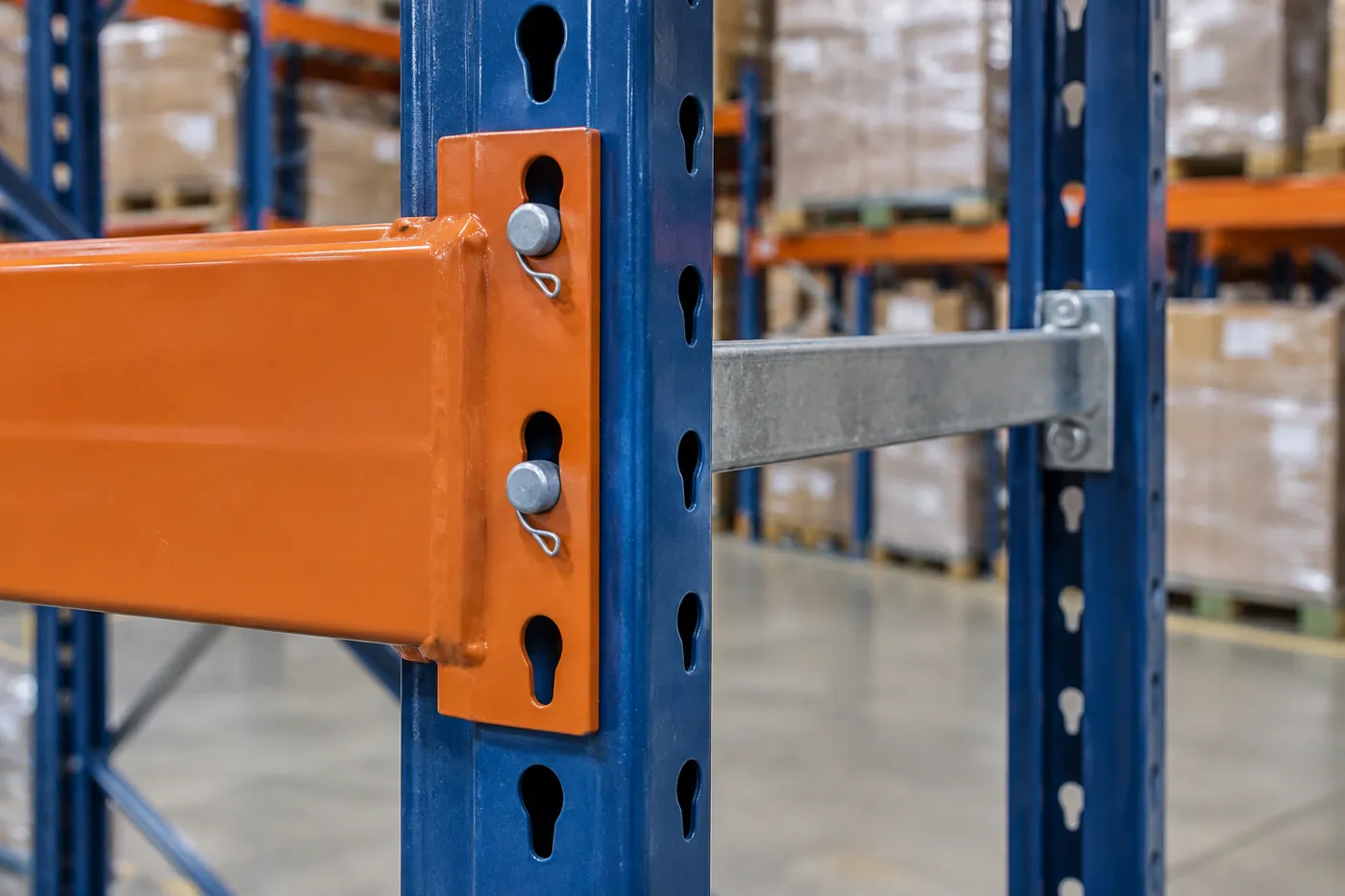
What a row spacer does. A pallet rack row spacer is a short steel tie bolted between the columns of two back-to-back frames. It sets the gap between the rows, keeps them parallel and square, and makes the pair act more like one stiffer unit.
Why the gap matters. The space between back-to-back rows is the longitudinal flue. Sprinkler designs depend on it staying open, so cartons must not be pushed into it. Our flue space and warehouse fire safety guide explains the rules.
On a relocation. Spacers move with the frames. Reinstall them at the same heights and gap, and replace any that are bent.
Code, seismic and permits in West Valley City and Salt Lake County
Seismic design. West Valley City and the rest of Salt Lake County are in a high seismic region. Storage rack is designed for earthquake loads under the adopted building code, and Utah moved to the 2024 International Building Code with ASCE 7-22 on July 1, 2026. Every frame is anchored to the slab, so a relocated rack gets new anchors in the new floor. See our pallet rack seismic compliance guidance and our notes on pallet rack anchor bolts.
Permits. Reinstalled rack in a new building is generally treated as a new installation for permit purposes, even though the steel is used. Salt Lake City, for example, requires a building permit for racking over 5 ft 9 in tall, with engineered plans for taller systems. Requirements differ by city, so confirm with the West Valley City building department before the crew arrives.
Fire protection. Boxed fitness equipment is mostly corrugated cardboard, plastic and foam packaging around steel, and it is combustible. Rack height, flue spaces and the stored commodity all interact with the sprinkler design, so check the new building’s sprinkler system against the planned rack height.
Floors. New buildings usually have good slabs, but check thickness and joints where frames will land. Anchor holes left in the old building should be patched when the lease ends.
The Rack Manufacturers Institute publishes ANSI/RMI MH16.1, the design standard for industrial steel storage racks, and OSHA general-industry rules cover safe stacking, housekeeping and powered industrial trucks in daily operation.
Installation and safety
A relocation adds a few risks that a new install doesn’t have. Used parts need checking, the crew is working in two buildings, and the customer is often moving stock at the same time. We keep to these basics:
- Never take down or reinstall rack with product still on it.
- Replace bent columns, cracked welds and damaged beam connectors instead of reusing them. Our rack inspection and repair guidance explains what to look for.
- Anchor every frame with the specified anchors and embedment. Our pallet rack installation page covers the full sequence.
- Pin every beam. Safety pins or clips stop a bump from a lift truck from lifting a beam out.
- Fit column protectors and end-of-aisle guards where rack faces forklift and hand-truck traffic, especially by the dock and the staging lane.
- Keep flue spaces, exits and fire equipment clear when the new rows go in.
- Post capacity signs before loading, and inspect on a set schedule afterward.
Serving West Valley City, Salt Lake City and all of Utah
Material Handling USA has been an industry leader in storage and material handling since 1997. We design, supply, install and relocate pallet rack for retailers, distributors and manufacturers across Utah. See our West Valley City pallet rack and pallet racking Salt Lake City pages for local service, or our Utah pallet rack page for statewide projects. For Utah projects call 801-328-8788.
What we publish. We name clients and describe the planning behind a project, along with the product types supplied. We do not publish addresses, facility layouts, room dimensions, quantities, prices or staff contacts.
Shop Pallet Rack Uprights, Beams, Wire Decks & Protection
Buy select items directly from our online store, or request a quote for volume, custom sizes and freight-rated orders.

Frequently asked questions
What kind of pallet racking is best for fitness equipment storage?
How should boxed treadmills be stored on pallet rack?
What size pallet rack bay works for boxed fitness equipment?
Can pallet racking be moved to a new warehouse?
Can relocated pallet rack be reinstalled with fewer beam levels?
Do I need a permit to reinstall pallet rack in a new building in Utah?
What does a pallet rack row spacer do?
Who provides the forklifts or lifts during a rack relocation?
Moving warehouses or storing heavy boxed products?
We design, supply, install and relocate selective pallet racking for Utah retailers and warehouses, and plan the move around your operations. Free design consultation.