
Bin Shelving for Plumbing, HVAC and Electrical Contractors
Bin shelving for the shop behind the service trucks: fittings, valves and electrical parts sorted by size, a fixed home for every part, and a restock routine that gets vans loaded and out the door before the first call.

By size
One bin per fitting and size
Van restock
Pick lists that match the truck
Open vs. locked
Consumables out, copper and gear controlled
800-326-4403
Free layout and quote
Why Contractor Shops Outgrow Loose Shelves and Cardboard
A plumbing, HVAC or electrical service company runs on small parts. A single van can carry hundreds of different fittings, valves, connectors and fasteners, and the shop behind the fleet holds the backup stock for every one of them. When that stock lives in supplier cartons on open shelves, the same few problems show up every week.
Technicians dig through mixed boxes at 6:30 in the morning looking for one size of copper elbow. A part that is sitting on the shelf gets reordered because nobody could find it. Someone makes a supply house run in the middle of a job for a fitting the shop already owns. Each of those is lost billable time, and it adds up across a fleet.
Purpose-built bin shelving fixes the physical side of that. Every part gets its own open-front bin, every size gets its own compartment, and stock is visible from the aisle, so the shop can see what is running low before a van leaves without it.
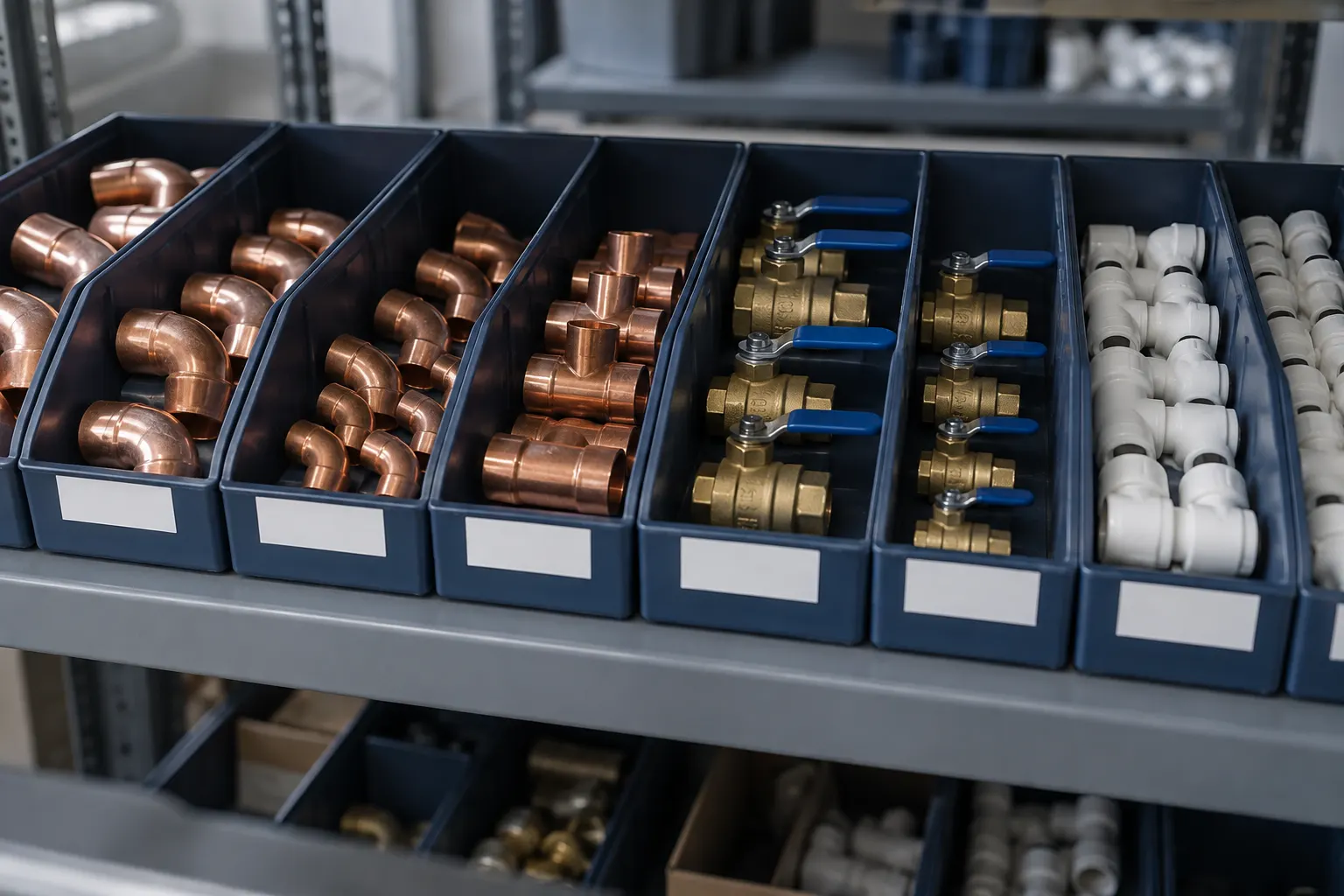
What a contractor bin shelving setup should do
- Sort by size, not just by type: 1/2-inch and 3/4-inch copper tees never share a bin.
- Match the van: shop bins follow the same part order as the truck shelving, so restock picking is one walk.
- Show what is low: open-front bins and simple refill rules make empty stock obvious.
- Separate open and controlled stock: cheap consumables out front, copper, controls and breakers behind a lock.
- Grow with the fleet: adding trucks should mean adding sections, not starting over.
How to Organize Bin Shelving by Trade
The shelving can be the same across trades. What changes is how parts are grouped, how big the bins are and how many sizes each item comes in. Start with the parts that go on every service call, and give them the best eye-level positions.
| Trade | Typical small parts | Bin setup that works | Keep elsewhere |
|---|---|---|---|
| Plumbing | Copper and PEX fittings by size, ball valves, supply lines, repair couplings, cartridges, washers and O-rings, hangers and straps | Long shelf bins with dividers so each size has its own compartment; larger hopper bins for PVC and ABS fittings | Pipe and tube on cantilever racking; water heaters and fixtures on pallet rack |
| HVAC | Capacitors, contactors, igniters, flame sensors, filter driers, brazing rod, flare and refrigeration fittings, line set insulation, thermostat wire | Small divided bins for electrical controls; medium bins for fittings and brazing supplies | Condensers, furnaces and coils on pallet rack; refrigerant cylinders per your safety program |
| Electrical | Wire connectors, conduit fittings and connectors, straps, boxes and covers, devices and plates, breakers, lugs and terminals | High-count small bins for connectors and terminals; wider bins or shelf space for boxes and covers | Wire spools on reel racks or carousels; conduit on cantilever or vertical racks |
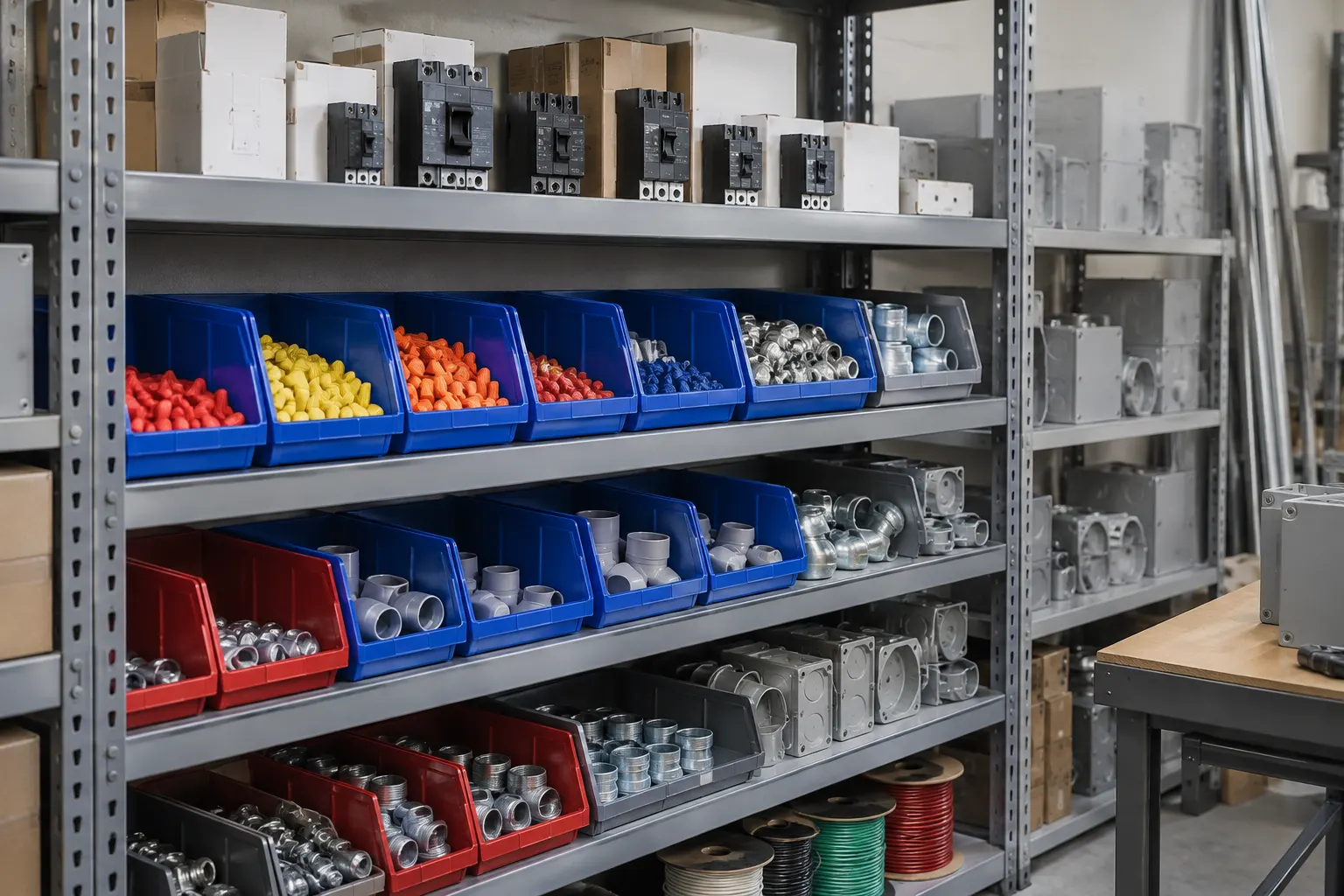
Electrical shops tend to have the highest part counts per section. Wire connectors, conduit fittings and terminals come in many sizes and colors, so plan for more, smaller bins per shelf and label each one by size. Boxed breakers and controls are higher value and often belong on a controlled shelf or in a locking cabinet.
HVAC shops split between small electrical controls and bulky equipment. Keep the controls and fittings on bin shelving near the restock area, and put boxed equipment on pallet rack, as in our HVAC contractor warehouse racking project.
Plumbing shops carry the widest range of fitting sizes. Divided long bins keep each size separate, and the pipe itself goes on cantilever racking for pipe and tubing. Wire spools for electrical crews belong on a wire spool carousel or reel rack rather than a bin shelf.
Using Bin Shelving to Restock Service Vans
For most service contractors, the shop exists to keep trucks stocked. The fastest restock routines treat each van like a small storeroom with a standard parts list, and the shop bin shelving like the warehouse that refills it.
The key is order. When shop bins are arranged in the same sequence as the van shelving, a restock list can be picked in one pass down the aisle, staged in a tote per truck and loaded without sorting at the van. A rolling utility cart carries a full van’s worth of totes in one trip.
Standard van lists also make refills predictable. Parts that every van uses each week are good candidates for a two-bin refill rule on the shop shelf, covered in our inventory bin system guide. Shops in Utah can also follow our step-by-step guide to small parts bin shelving for Utah HVAC and plumbing contractors.
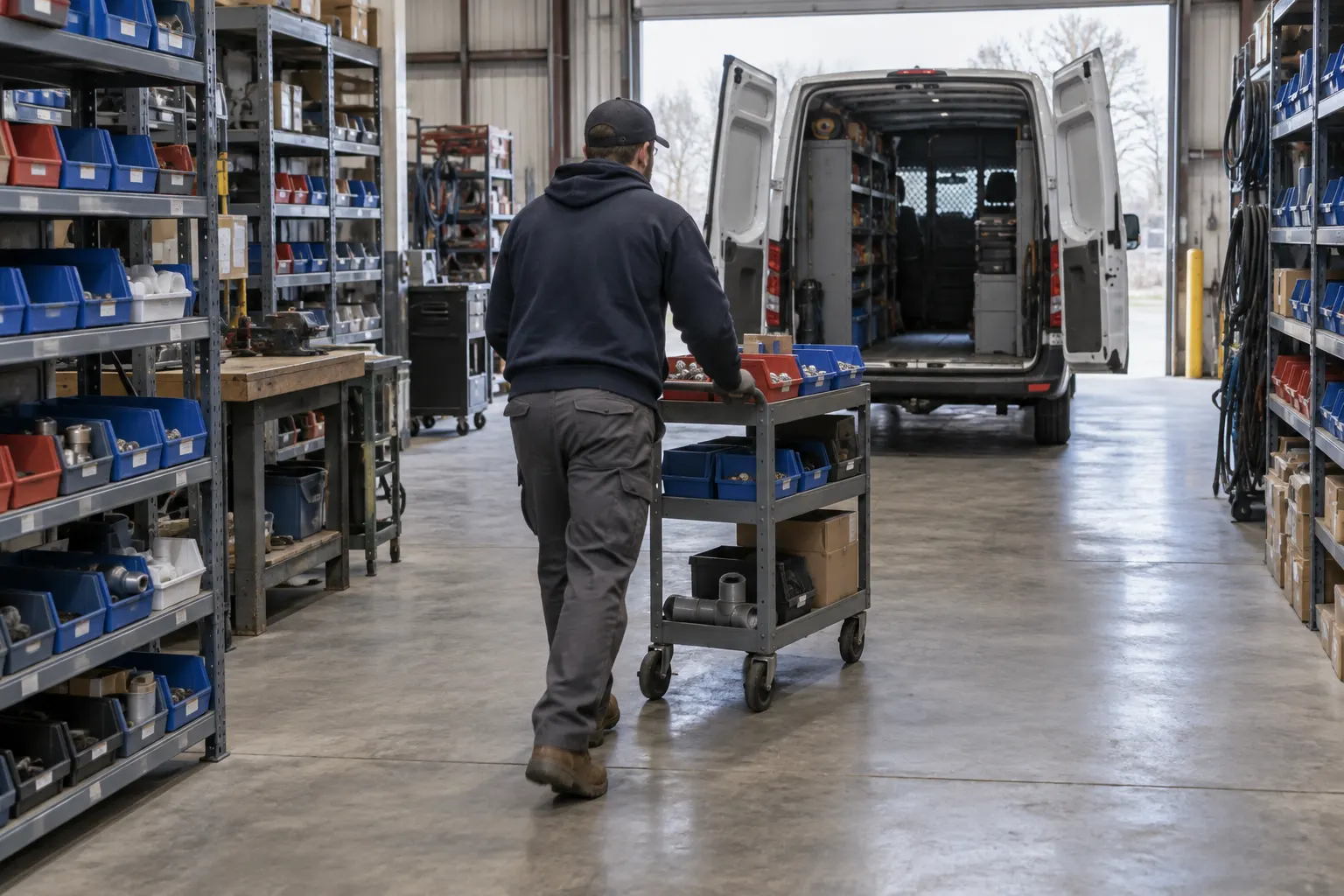
Set a standard van list
One list per truck type with the parts and quantities each van should carry.
Match the shop bins to it
Arrange shop bins in the same part order as the van shelving and label both the same way.
Pick into a tote per van
At the end of the day, pull what each van used, one pass down the aisle.
Refill the shop bins
Empty or low bins trigger a reorder before the next morning’s restock.
Laying Out a Contractor Shop Stockroom
Most contractor shops are a mix of a small stockroom, an open shop floor and a truck bay. A workable layout puts parts where the work happens and keeps control where it matters.
- Restock zone near the bay door: the fastest-moving bins and the tote staging area go closest to where vans park.
- Open stock for consumables: fasteners, straps, tape, connectors and common fittings on open bin shelving techs can reach without help.
- Controlled stock for high-value parts: copper fittings, controls, breakers and tools in a wire mesh security cage or locking bin cabinets.
- Job staging shelves: a few open sections for parts pulled for scheduled installs, labeled by job.
- Bulk storage separate: equipment, pipe and wire on rack built for it, not on bin shelving.
- Labels on everything: part and size on every bin front; our bin location labeling guide covers label types.
If the shop also runs a larger warehouse or yard, our construction company storage page covers yard and rack storage, and our warehouse bin shelving page covers pick zones for bigger operations. Supply houses and distributors with counter and will-call stock have different needs, covered on our electrical, plumbing and HVAC distributor storage page.
Bin Shelving Builds for Contractor Shops
Three builds cover most contractor shops. Many shops use two of them side by side.
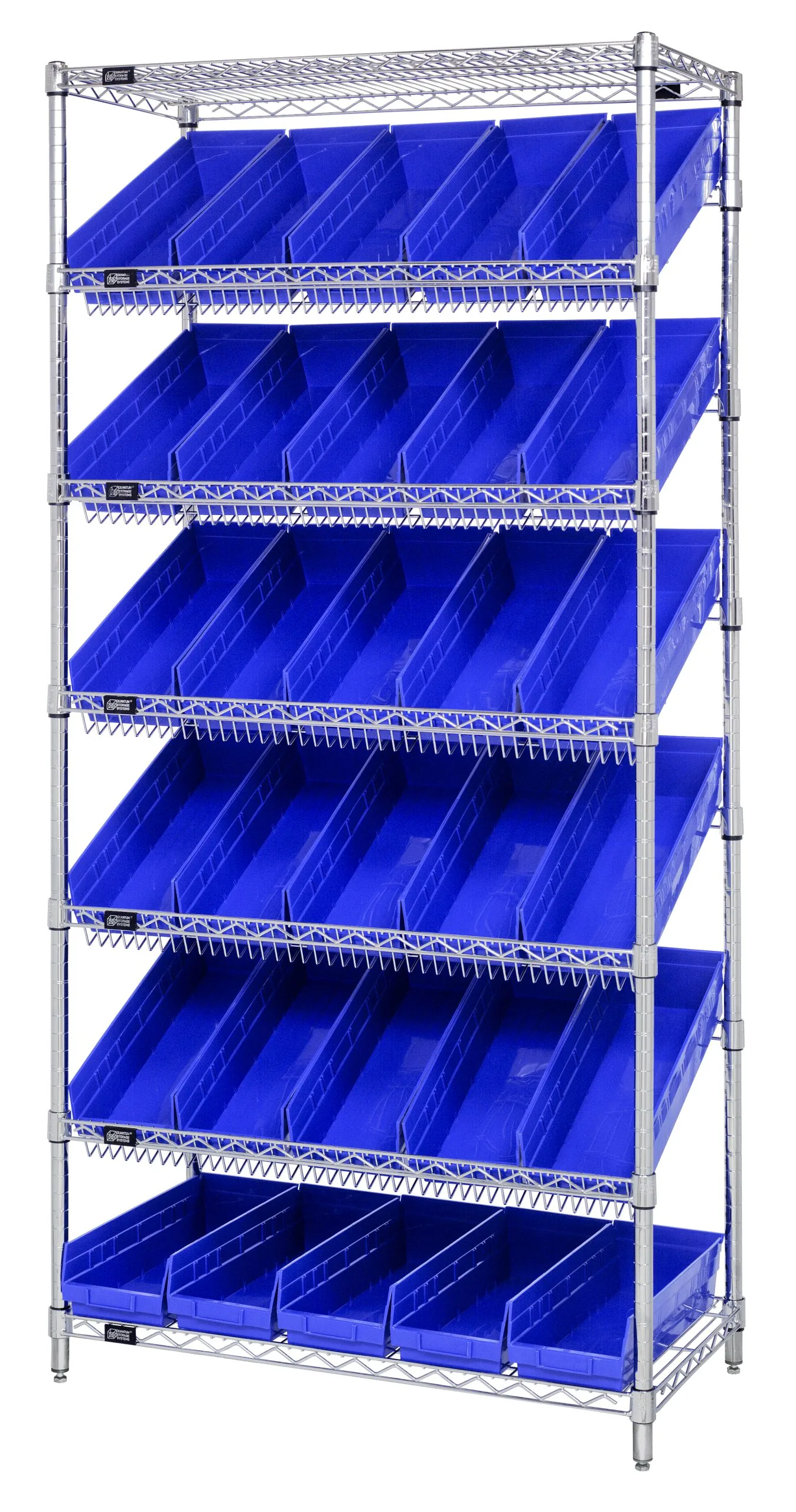 Wire shelving with slanted binsSmall fittings and connectors. Slanted shelves tip long bins toward the picker, and dividers split each bin by size.
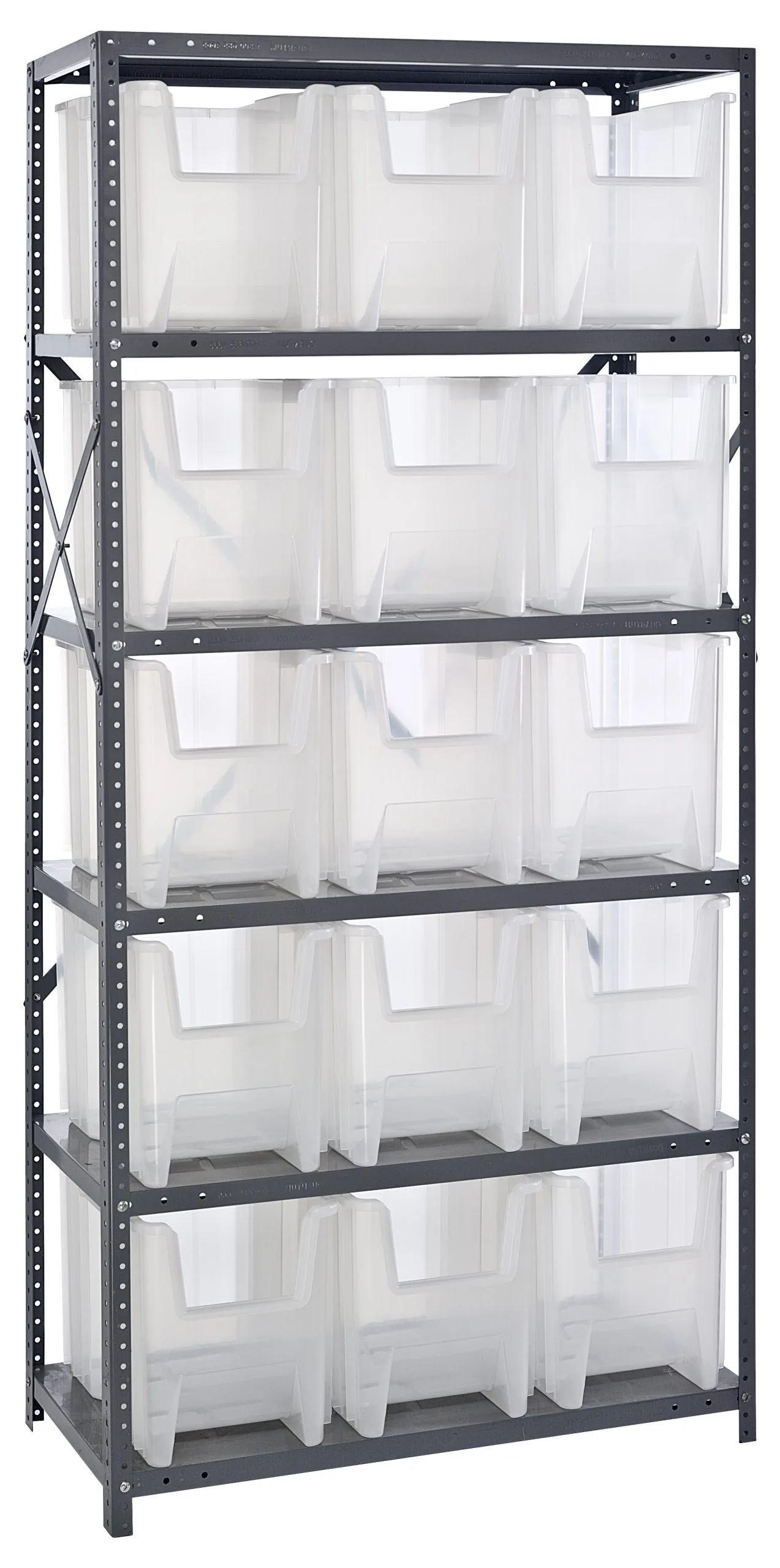
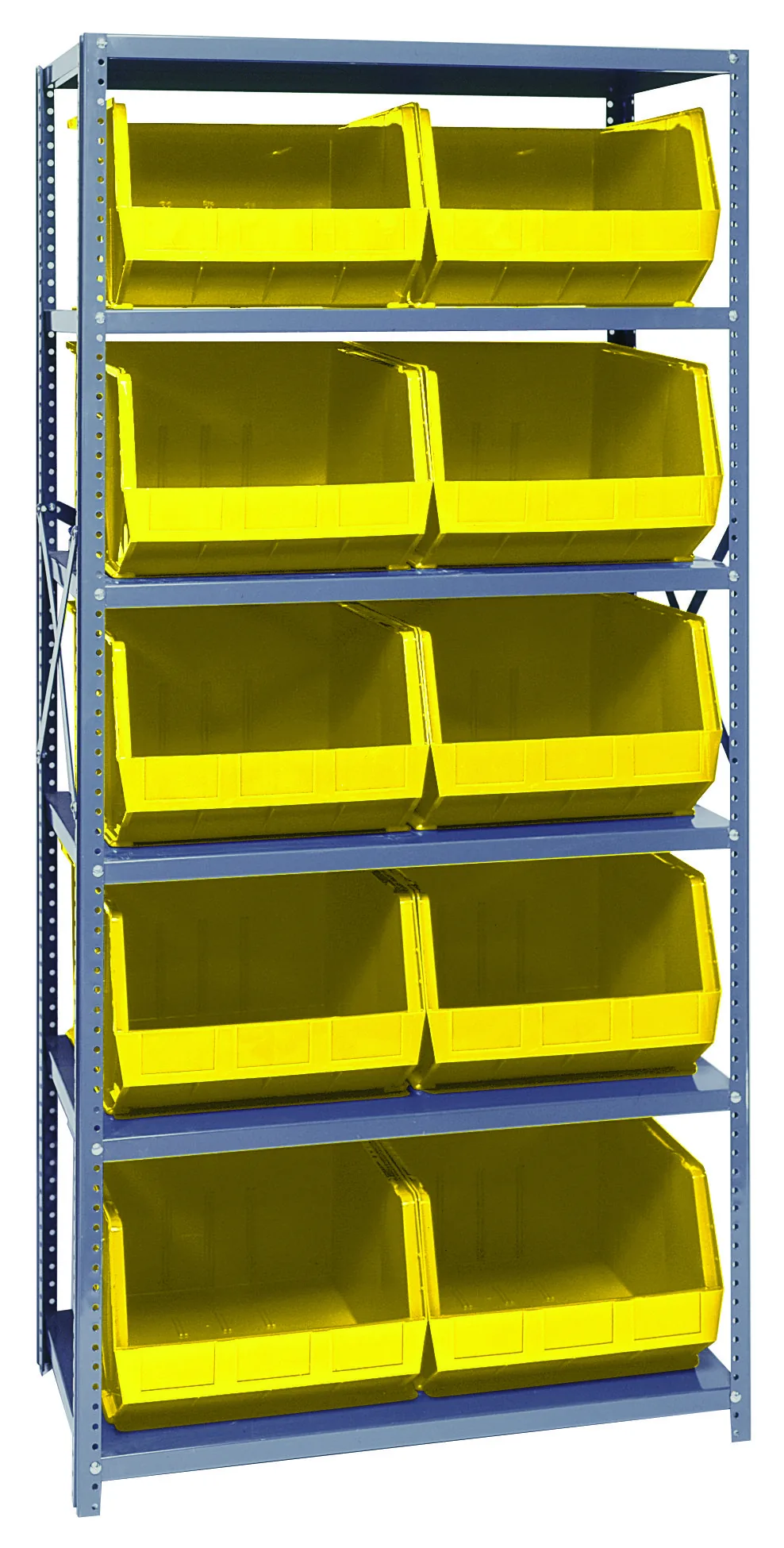 Steel shelving with large hopper binsBulkier fittings and PVC. Large open-front bins hold full supplier packs of larger parts and are easy to refill.
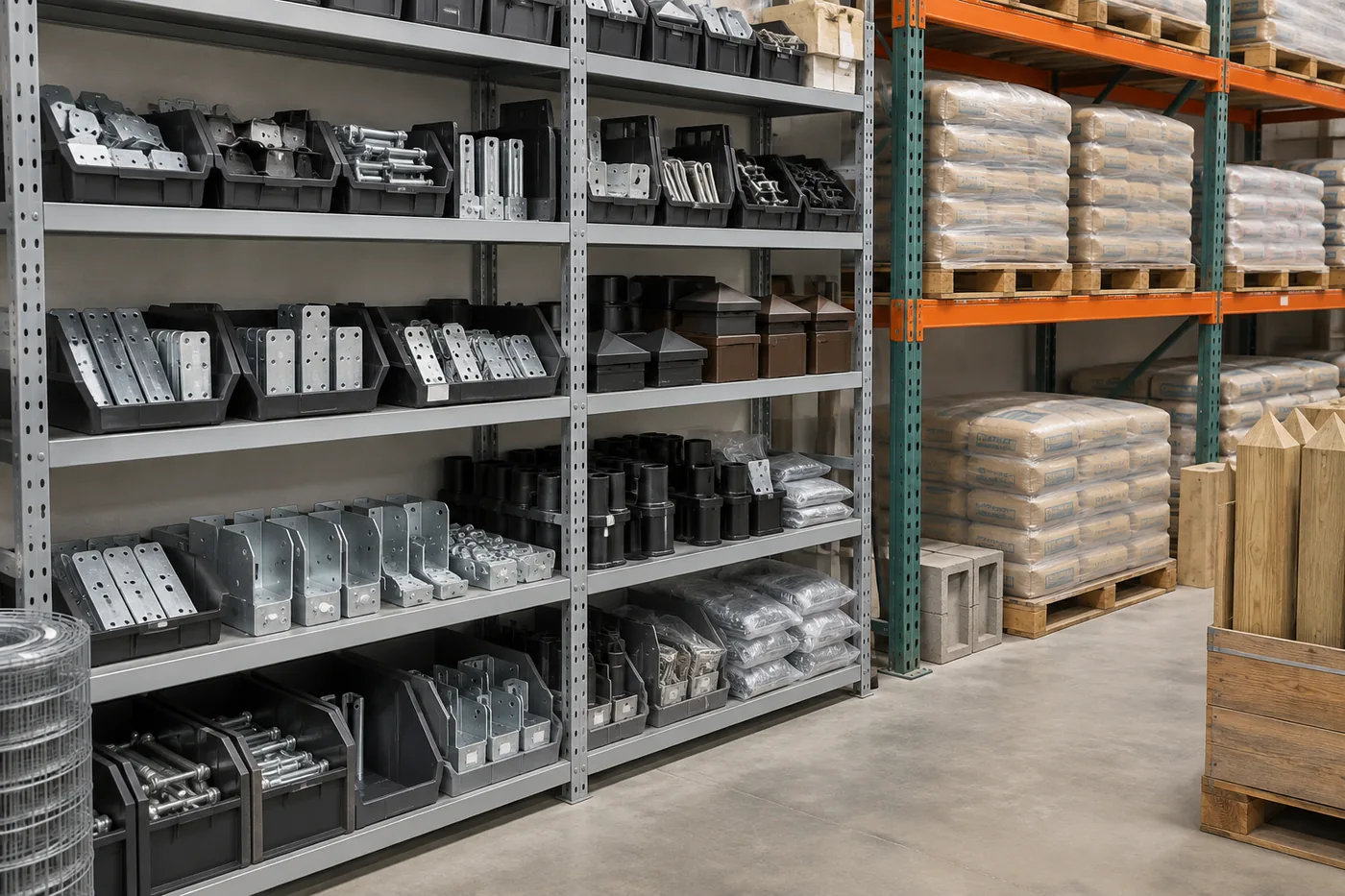 Open steel shelving with binsHeavy hardware and mixed stock. Wide open shelves carry heavy bins, boxed parts and job staging on the same unit.
Bins come in several families, from small shelf bins to large stacking bins; compare them on our industrial storage bins page. For the full range of complete bin shelving packages, sizes and shelf counts, see our main bin shelving systems page. Some common sizes are in stock at select manufacturers, subject to confirmation at quote time.
Planning Bin Shelving for Your Shop
A useful plan starts with the parts, not the shelving. Before you request a quote, gather:
- Your van stock list or a parts export, with rough weekly usage for the top items.
- Room size and photos of the current stockroom, including doors, windows and the path to the truck bay.
- Fleet size today and in two years, so the layout leaves room for more sections.
- What needs to be locked, and who should have access to it.
Send the parts and the room
Share your parts list, room dimensions or a sketch and a few photos.
Bin and layout plan
We size bins to your parts, set shelf counts and lay out open, controlled and staging zones.
One quote, delivered
Shelving, bins, dividers and label holders on one quote, shipped to your shop nationwide.
Call 800-326-4403 or request a quote. Contractors in Utah can also work with our Salt Lake City team through the Utah bin shelving page.
Shop Bin Shelving for Contractor Shops
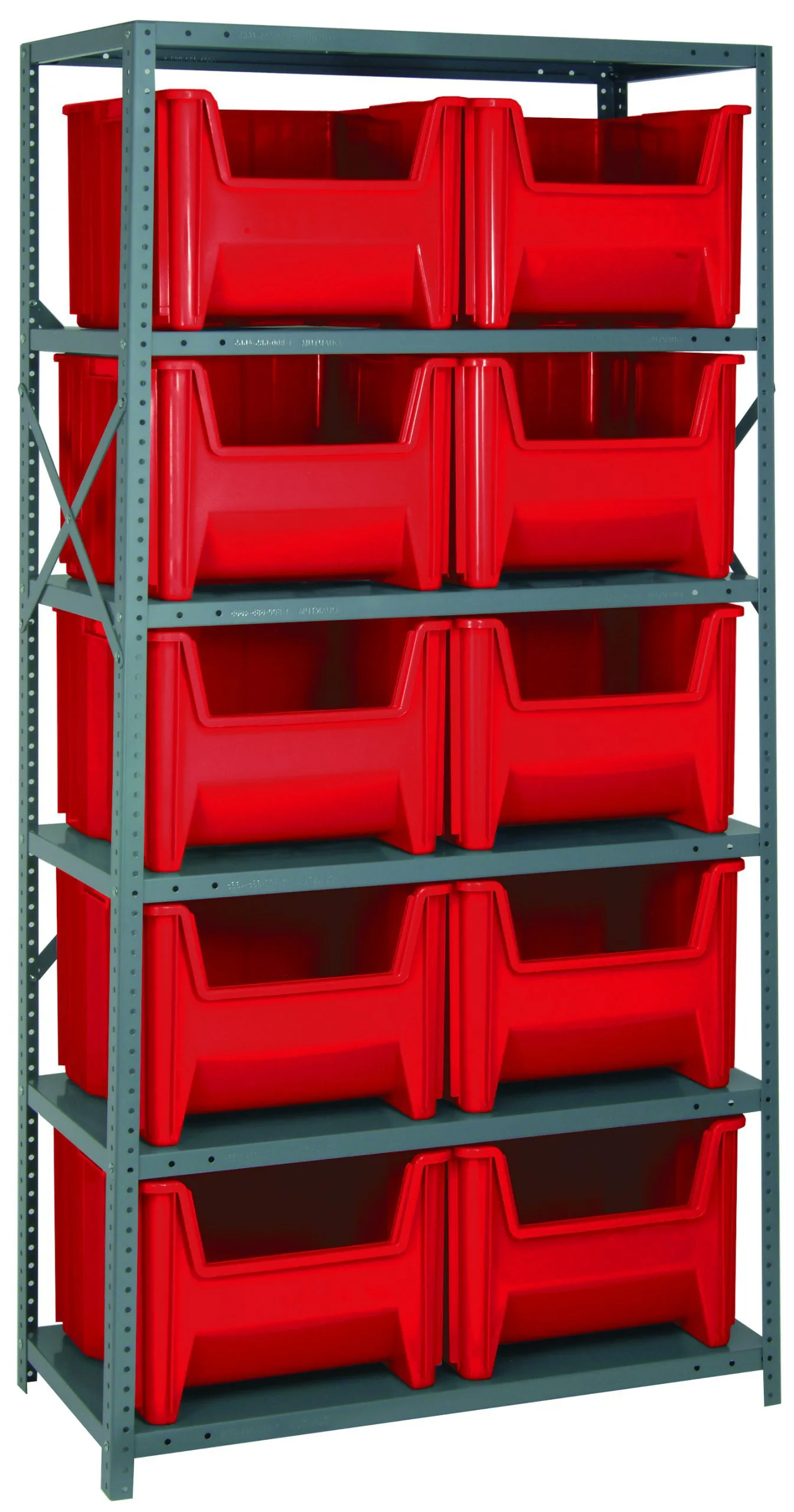
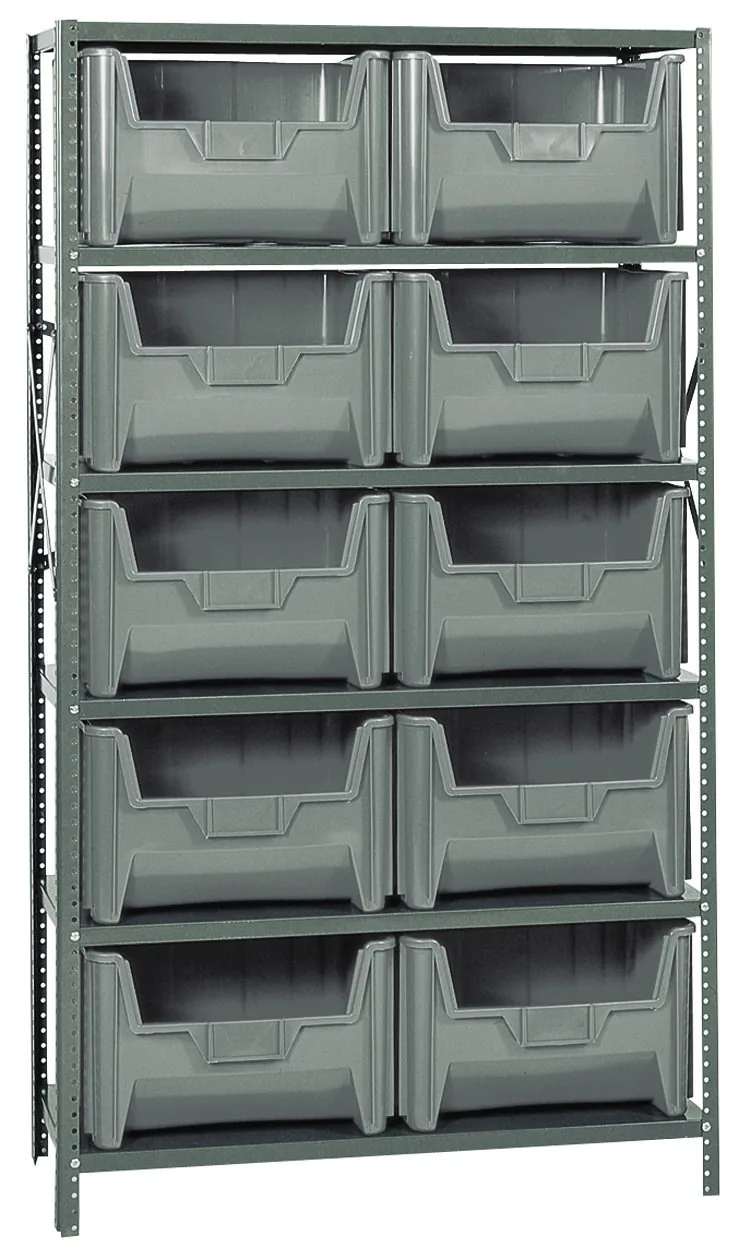
Buy select items directly from our online store, or request a quote for volume, custom sizes and freight-rated orders.
Get a free quote
Tell us what you are storing, the room size and your timeline. A project specialist will follow up with layout options and pricing. Prefer to talk? Call (800) 326-4403.
Contractor Bin Shelving FAQs
What is the best shelving for plumbing fittings?
How do contractors organize parts for service vans?
Should HVAC equipment go on bin shelving?
How do I keep copper fittings and breakers from walking off?
Can bin shelving grow as we add trucks?
Do you ship bin shelving outside Utah?
Ready to Organize Your Contractor Shop?
Send us your parts list and stockroom for a free bin shelving layout and quote.