
Locker Accessories: Benches, Sloped Tops, Bases, Locks & Parts
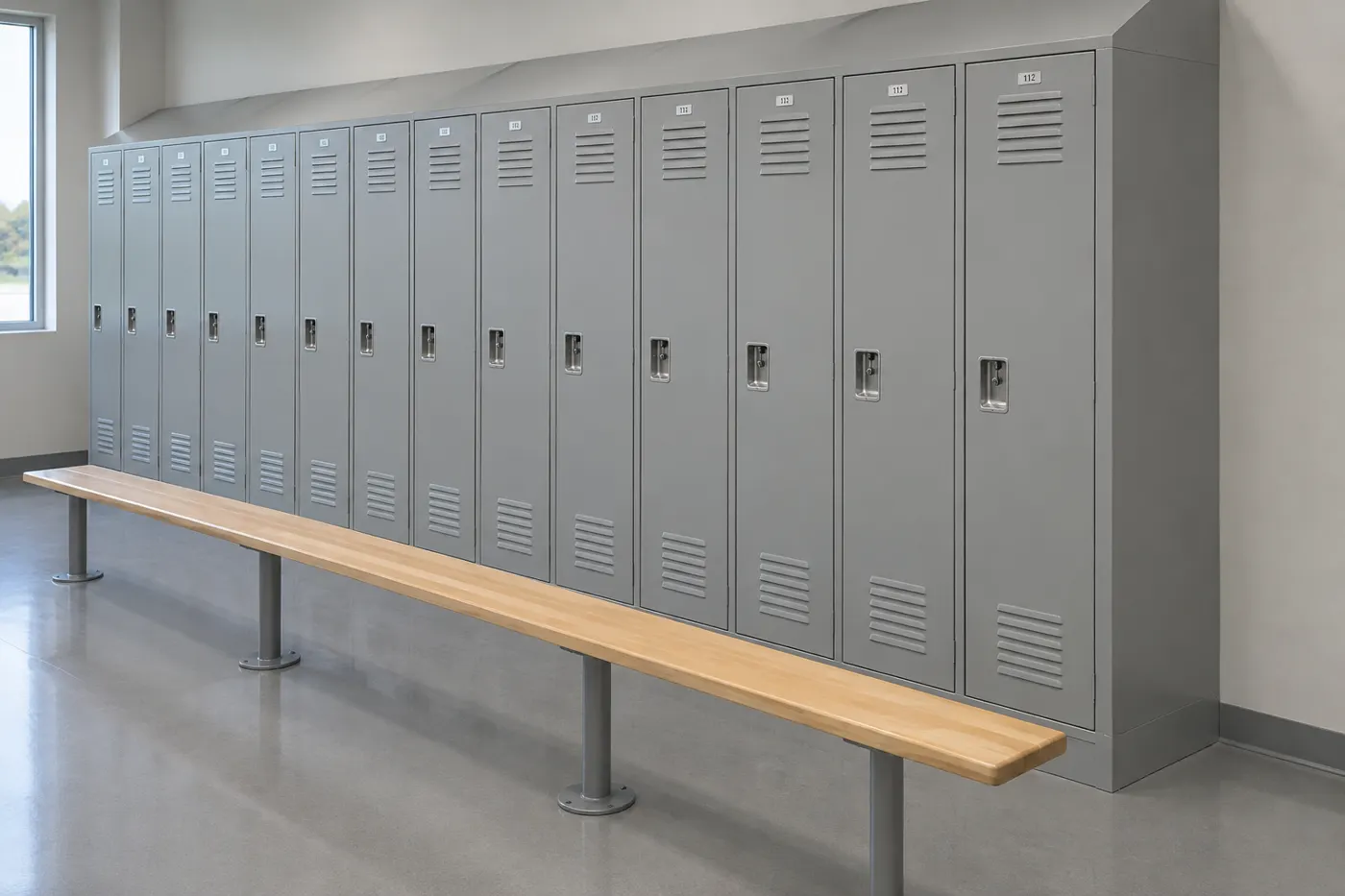
The accessories are what turn a row of steel lockers into a finished locker room: benches to sit and change, sloped tops that stop clutter, closed bases and end panels that hide legs and raw edges, and locks, number plates and hooks that make every locker usable. Shop Tennsco and Lyon locker accessories online, or send your locker list and we will match every part on one quote.
1,000+
Tennsco accessory listings online
17°
Tennsco sloping-top angle
17–19″
ADA bench seat height
Free Quote
Matched to your lockers
Shop Locker Accessories by Type
Benches, tops, bases, end panels, locks and numbering for Tennsco and Lyon steel lockers. Prices are current online prices for the lowest-priced listing of each type; sizes and colors must match your lockers. Some common items are in stock at select manufacturers, subject to confirmation, and freight is quoted by destination.


Browse all Tennsco locker accessories Browse Lyon lockers & accessories
What Locker Accessories Do (and Which Ones You Actually Need)
Steel lockers ship as boxes: a body, doors, a shelf and hooks. Everything that makes a bank look built-in, stay clean and work day to day is an accessory. On commercial jobs they fall into five groups:
- Seating — locker room benches and pedestals, including ADA benches.
- Finishing — sloped or flat tops, closed bases, Z-bases, boxed end panels, fillers and trim.
- Security — built-in combination and key locks, padlocks, master keys and handles.
- Identification — number plates, name plates and ADA locker labels.
- Interior and repair — hooks, coat rods, shelves, replacement doors, latches and touch-up paint.
Most accessories are sized to the locker, not the room. A sloped top matches the locker’s width and depth, a front base matches its width, an end panel matches its depth and height. That is why the easiest time to order them is with the lockers themselves — see our employee lockers guide for the lockers first.
Consumer “locker kits” are a different thing
Search results for locker accessories are full of magnetic shelves, mirrors and organizer kits for school hallway lockers. Those are personal add-ons. This page covers the facility-side parts that architects, facility managers and contractors specify for a locker room — the parts that bolt, snap or rivet onto the lockers.
Locker Room Benches and Pedestals
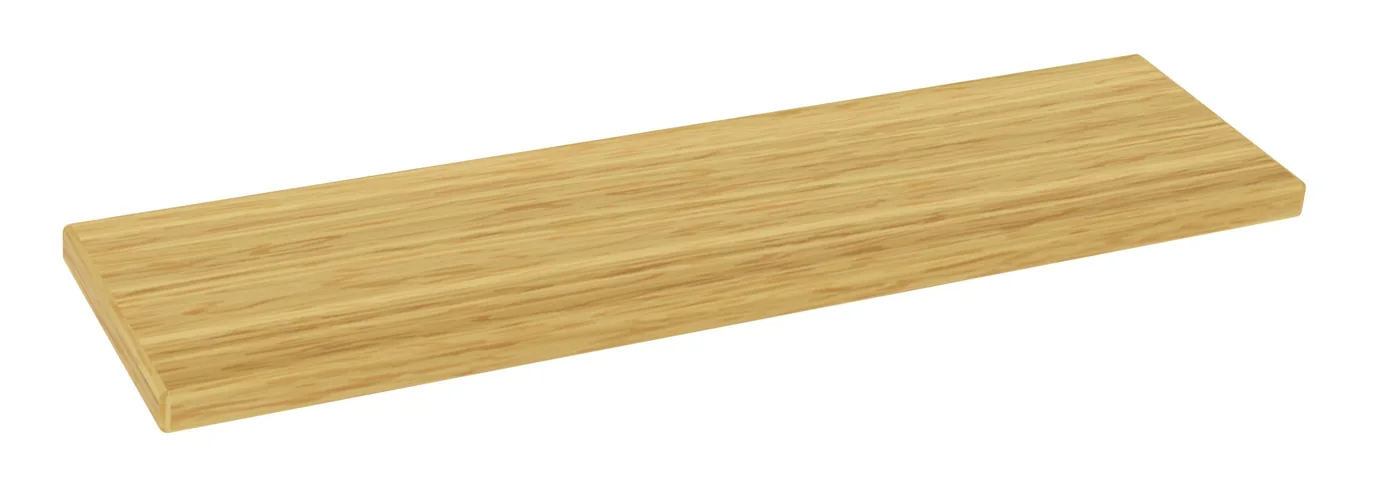
A bench in front of the lockers gives people a place to sit while they change shoes or boots, and keeps bags off the floor. Standard locker benches are long, narrow hardwood planks on steel or aluminum pedestals that bolt to the floor, so the bench cannot be dragged into the aisle.
For bench sizes, pedestal spacing, ADA bench rules, aisle widths and per-foot prices, see our full locker room benches guide.




Bench length, pedestals and spacing
| Item | Tennsco (published) | Lyon (published) |
|---|---|---|
| Top | 9-1/2″ wide × 1-1/4″ thick maple, beveled edges, lacquer finish | 9-1/2″ deep × 1-1/4″ mixed hardwood, radius edges, catalyzed lacquer |
| Lengths | 36″ to 96″ in 1-ft steps, up to 144″ | 3 ft to 12 ft |
| Seat height | Bench is 18″ high | Steel pedestal 16-1/2″ tall plus the 1-1/4″ top |
| Pedestals | 2 per bench; 3 pedestals for 108″–144″ benches | Steel, cast iron or aluminum pedestals |
| Pedestal spacing | Maximum 4 ft on center | Not more than 6 ft on center |
| Anchoring | Benches must be secured to the floor | Each pedestal screwed to the top and anchored to the floor |
From Tennsco’s locker accessory specification and GSA catalog and Lyon’s locker bench specifications. Follow the spacing for the brand you buy — a 10-ft Tennsco bench needs three pedestals.
Accessible benches are required, not optional. Section 803.4 of the 2010 ADA Standards says a bench complying with 903 shall be provided within an accessible dressing, fitting or locker room. Section 903 sets the bench: a seat 42″ long minimum and 20″ to 24″ deep, a seat surface 17″ to 19″ above the floor, back support (or the bench fixed to a wall) at least 42″ long, and strength for a 250-pound force at any point. A standard 9-1/2″ locker bench does not meet the depth rule, which is why ADA benches are a separate product.
Locker room layout, aisle widths and clearances around benches are covered in our locker room design guide and on the ADA lockers page.

Sloped Tops (Slope-Top Kits) for Lockers
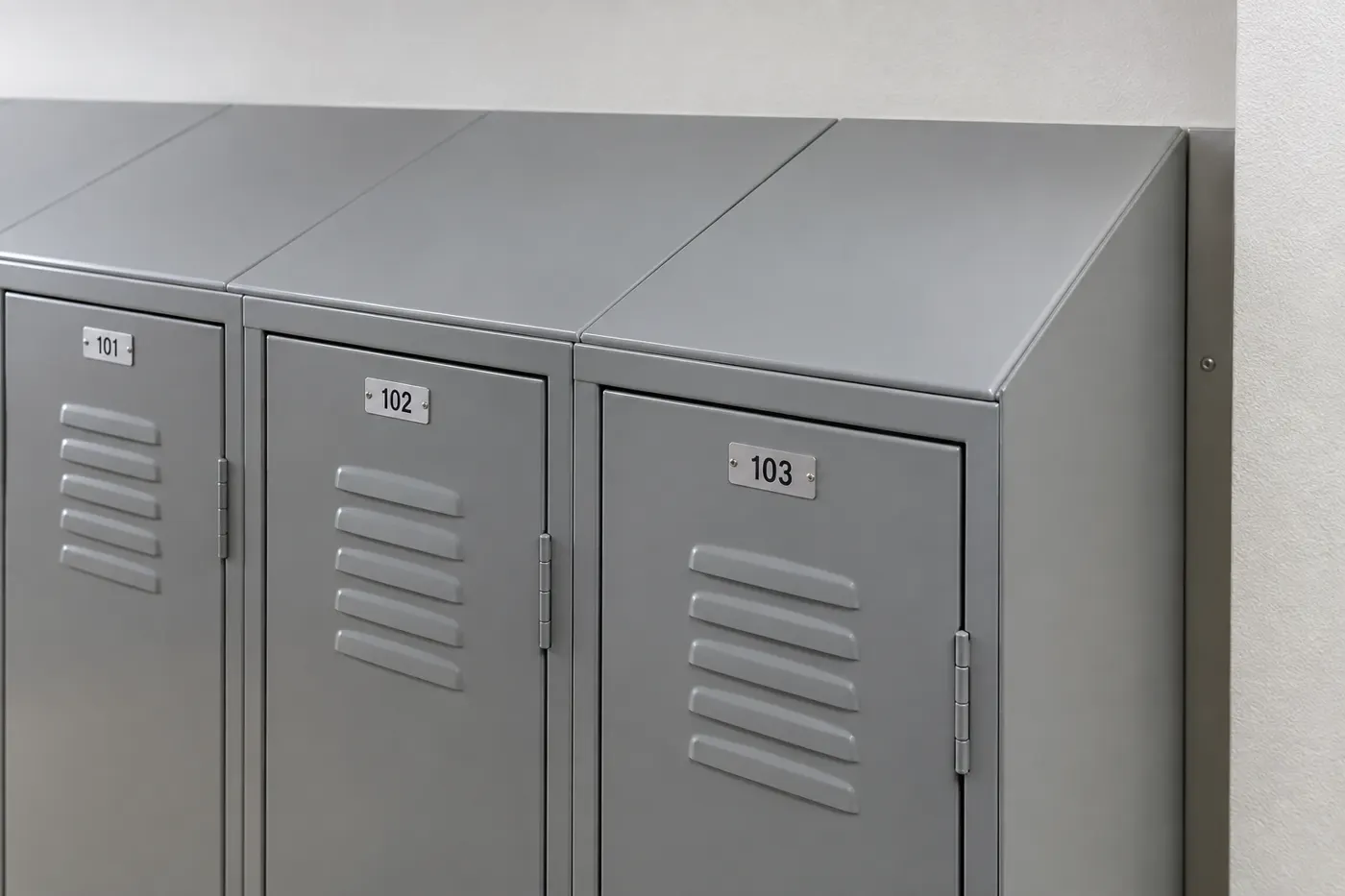
The flat top of a locker bank becomes a shelf for hard hats, boxes and dust within weeks. A sloped top angles from the front of the locker back toward the wall so nothing can sit up there, and cleaning is a wipe instead of a ladder job. Tennsco specifies its sloping tops in 22–24 gauge steel with a 17° slope, sold as one-wide or three-wide kits and installed in the field.
Lyon’s individual slope-top kits fit over each locker frame: a 1-wide kit includes one top and two sloped end panels; a 3-wide kit includes three tops, two interim supports and two end panels. Lyon also offers continuous sloping hoods in 5-ft sections for a smoother run on large projects.

- Order by locker width × depth. A 12″ × 18″ locker takes a 12″ × 18″ top. Our Tennsco listings cover widths from 12″ to 24″ and three-wide kits from 36″; Lyon kits run 12″ to 18″ wide and 12″ to 21″ deep.
- Match one-wide vs. three-wide to your units. A three-wide locker takes one three-wide kit; a run of one-wide lockers takes one-wide kits.
- Plan fillers. Tennsco sloping-top fillers close the space between two sloped tops or between a top and the wall; sloping-top corner fillers close inside corners where two banks meet.
- Flat-top banks use flat-top fillers and flat-top boxed end panels instead.

Retrofitting an existing room? Slope-top kits are one of the few accessories you can add years later without moving the lockers, as long as you know the make, width and depth. Lyon notes its kits convert standard flat-top steel lockers into sloping-top lockers and include hardware and instructions. Send us a photo of the locker label or the inside of a door and the measured width and depth, and we will match the kit.
Inside corners and wall gaps are where retrofits look unfinished. A corner filler closes the triangle between two banks that meet at 90°, so order one for every inside corner.
Closed Bases, Front Bases and Z-Bases
What goes under the lockers depends on whether they have legs. Lockers on 6″ legs are easy to clean under but collect lost socks, wrappers and dust; lockers without legs need something to sit on. There are three common answers.


Why bother with a base? Lyon puts it plainly: closed bases prevent items from rolling beneath the lockers. They also hide the legs, so a bank reads as built-in millwork rather than furniture. Tennsco describes its front and end bases as giving a flush, finished appearance and preventing dirt and dust build-up under the lockers.
Z-base or legs for new rooms? A Z-base raises lockers without legs off the floor and, per Lyon, sets back a little more than an inch for toe space, with optional adjustable rear legs to level the run. It is the usual choice on long new banks and on floors that are not level. Legs plus snap-in bases are faster and easier to retrofit.

End Panels, Filler Panels and Trim
Locker sides are punched with holes and seams for bolting units together. Wherever a side is exposed — the end of a free-standing row, the end facing a doorway — or wherever a bank stops short of a wall, finishing panels close it up.
| Part | What it does | How to size it |
|---|---|---|
| Flat-top boxed end panel | Tennsco: gives a finished look and a sturdier end to a row of free-standing lockers | Locker depth × overall height (our listings: 12″–24″ deep, 60″–78″ tall) |
| Sloping-top boxed end panel | Same job for banks with sloped tops; left- and right-hand versions | Depth × height, plus hand (which end of the row) |
| Flat filler panel | Closes the gap between the end locker and a wall at the front face | Gap width × locker height |
| Angle filler panel | Closes a gap where the bank meets a wall or turns a corner | Width × locker height |
| Filler panel frames, corner angles | Frame wide fillers and outside corners | Locker height and color |
| Vertical / horizontal trim, splice caps | Cover joints and recessed-bank edges for a built-in look | Height or width per run; color |
| Top and front fillers (Lyon) | Close the space between two lockers where an obstruction prevents a locker | Flat or sloping top; gap size |

Left or right? Sloping-top end panels follow the slope, so the panel for the left end of a row is not the same part as the right. Note the hand when you order, standing in front of the lockers.
Measure the actual gap. Walls are rarely square. Measure the gap between the last locker and the wall at the top, middle and bottom and order the filler for the widest point. If the gap is wider than a filler covers, a narrower one-wide locker may be a better answer — our locker sizes and specifications page lists the standard widths.
Locker Locks, Padlocks and Master Keys
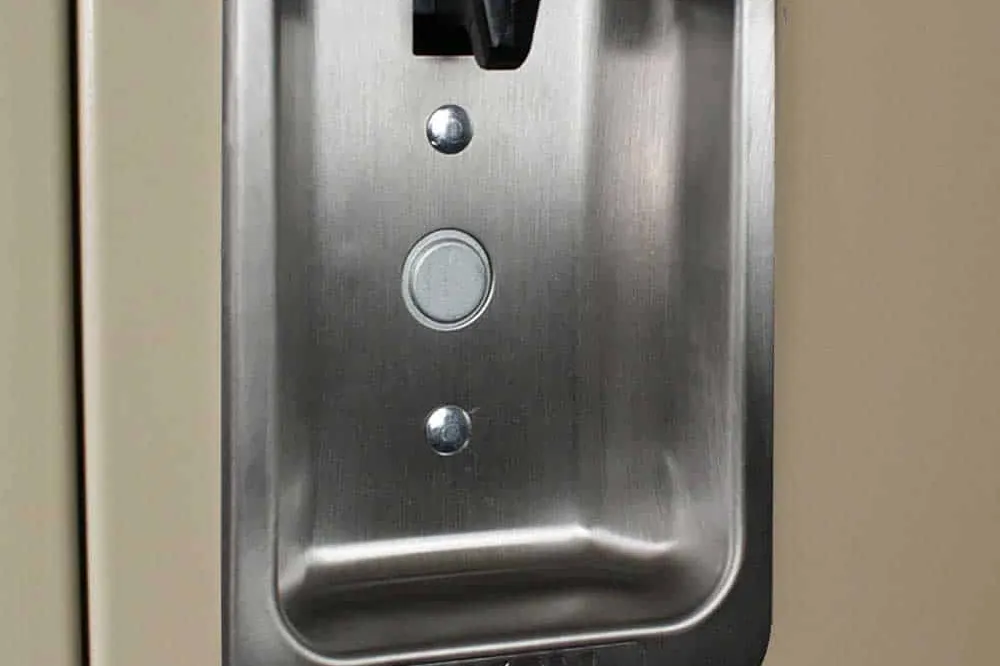
Most steel lockers ship with a recessed or lift handle and a padlock hasp, so the simplest lock is a padlock the employee brings or you issue. Built-in locks keep the door face flush and give the facility control of every locker. The right choice depends on who assigns the lockers and how often they turn over.
| Lock type | How it works | Best for | In our catalog |
|---|---|---|---|
| Combination padlock | Hangs on the hasp; master-keyed versions let staff open any lock | Assigned lockers, low cost, easy to swap | Tennsco combination padlock, master keyed or no key |
| Built-in combination lock | Mounted in the door; dead-bolt or spring-bolt | No lost keys; staff can reset between users | Tennsco dead-bolt and spring-bolt combination locks |
| Built-in key lock | Keyed cylinder in the door, master key available | Lockers issued with keys; schools, staff rooms | Tennsco grooved key lock; Lyon flat key lock |
| Master keys | One key for control on a series of locks | Emergency access and lock-outs | Tennsco master keys for combination, padlock and key locks |
| Electronic / smart locks | PIN, badge or app access with an access log | Shared lockers by shift or day | Smart locker systems (quote) |
Start with the handle. A recessed lift handle with a padlock hasp, like the Lyon handle shown, keeps the padlock inside the door line and out of the aisle; built-in locks mount through the same door.
Lyon flat key lock. Lyon lists its No. 7020 flat-key lock as the same lock for all Lyon lockers except Personal Effects and ExchangeMaster models, easy to install and furnished with two keys. Lyon’s built-in combination locks and combination padlocks carry five combinations per lock with a master key for emergency access, and Lyon notes lock options can be retrofitted to existing installations.
Retrofit rule: a built-in lock has to match the brand, latch system and door prep of the locker. Send the make and model (or a photo of the inside of the door) before you order locks for older lockers.
Locker Number Plates, Name Plates and ADA Labels
Numbering every door is what makes assignment, key control and maintenance requests work. Both manufacturers use small aluminum plates with black numbers:
- Tennsco: aluminum number plates 2-3/8″ × 3/4″ with 1/2″ high black numbers, attached near the top of the door with rivets. Supply the number sequence when ordering; Tennsco sells them in series of 25.
- Lyon: No. 5829 plates, etched black figures on aluminum, 2-3/4″ × 1″, with 1/2″ high numbers stocked 1–999. Blank plates are listed too, and Lyon can supply special number or letter sequences.
Tennsco also lists name plates and a blue ADA sticker to identify ADA-compliant lockers, which helps staff hold the accessible units for the people who need them.

Number before you install
Plan the numbering on the layout drawing (left to right, top to bottom, by bank) before the lockers go up. Riveting plates on a finished bank works, but matching the plan to the key and combination list on day one saves a re-do.
Locker Replacement Parts: Doors, Hooks, Shelves and Hardware
Lockers last decades; their doors, hooks and latches take the abuse. Our Tennsco accessory listings include the interior and repair parts people search for most — replacement doors, coat hooks, shelves and latch hardware — so a damaged locker can be fixed instead of replaced.


- Identify the locker. Look for the manufacturer label inside the door or on the frame. Tennsco and Lyon parts are not interchangeable.
- Measure the opening, not the body. Replacement doors are listed by width and height of the door.
- Match the color. Our Tennsco listings come in black, champagne/putty, light grey, medium grey and sand; Lyon lists dove gray and putty, plus touch-up paint in more colors.
- Send a photo. A picture of the locker front and the inside of the door lets us confirm parts on the first try.
Anchoring Hardware: Keep Locker Banks From Tipping

A tall, narrow locker with a full load and an open door can tip. Tennsco strongly recommends that all lockers be anchored to the floor or wall, and adjacent units are bolted together so the bank acts as one piece.
Lyon lists two anchoring parts. Anchoring angles for lockers without legs run front to rear inside the bottom of the locker as a bearing surface for floor or base fasteners: order one for each end of a row plus enough for angles on 36″ centers. Locker feet for lockers with legs are recommended on every leg when the backs are exposed (free-standing), and on the front legs only when the backs are against a wall and wall-anchored.
Benches anchor too: both manufacturers call for pedestals to be secured to the floor.
How to Plan a Locker Accessories Order
Accessory orders go wrong in one of two ways: a part is missing when the installers arrive, or a part does not fit the lockers. Building the list from the layout avoids both.
Draw the banks
Mark each bank’s length, which ends are exposed, inside corners, and gaps to walls.
Count per locker
One top per locker width (or one kit per three-wide unit), one front base per locker with legs, anchors per the brand’s rule.
Count per bank
End panels and end bases at every exposed end, fillers at every wall gap, corner fillers at every inside corner, a bench sized to the aisle.
Match brand and color
Same manufacturer, size and color as the lockers; numbering sequence and lock type decided before ordering.
Worked example: one 12-ft bank against a wall
| Accessory | Quantity | Why |
|---|---|---|
| Three-wide 12″ lockers (36″ units) | 4 units = 12 columns | Fills a 12-ft wall |
| Three-wide sloping top kits | 4 | One per three-wide unit, matched to depth |
| Closed base or Z-base | Covers 12 ft | Front bases per column on legs, or a Z-base run for lockers without legs |
| Boxed end panels | 1 or 2 | One per exposed end; none where the bank meets a wall |
| Filler panel | As measured | Closes any gap left at the wall |
| Locker room bench | One 96″–120″ bench | Centered on the bank, pedestals per spacing rule |
| Number plates | One per door | 12 for single-tier, 24 double-tier, 36 triple-tier |
| Locks | One per door | Built-in locks, padlocks or a master-keyed set |
Illustrative only; actual quantities depend on the locker model and layout. We build the accessory list into every locker quote. For tier choices see single-tier, double-tier, triple-tier and box lockers.
Get a free quote
Tell us what you are storing, the room size and your timeline. A project specialist will follow up with layout options and pricing. Prefer to talk? Call (800) 326-4403.
Locker Accessories FAQs
What accessories do steel lockers need?
What are sloped tops on lockers for?
How high should a locker room bench be?
How many pedestals does a locker bench need?
What is the difference between a closed base and a Z-base?
Can I add sloped tops or locks to existing lockers?
Do you sell replacement locker doors and parts?
Are locker accessories in stock?
Get Every Locker Accessory on One Quote
Send your locker list or layout, and we will match tops, bases, end panels, benches, locks and numbering.