
Small Security Cage in Leased Space: Superior Tile and Marble Case Study
How a commercial tile and stone contractor protects tools, setting materials and specialty product with a compact enclosure — in a leased Utah warehouse where the space is rented, the layout changes, and nothing can be built in permanently.
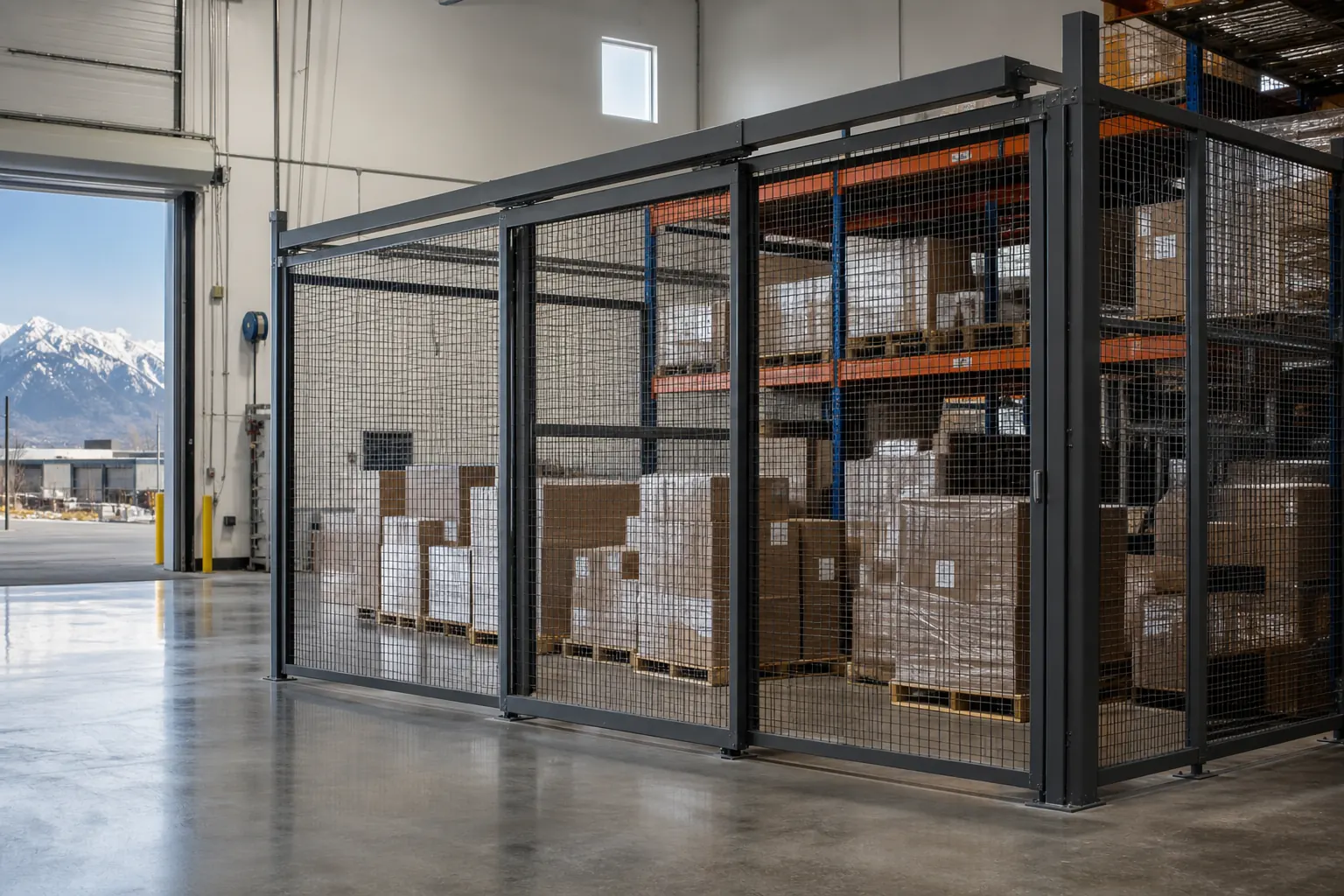
2018
Year Material Handling USA supplied cage and rack enclosure product
Utah
Superior Tile and Marble’s Utah operation serves the Salt Lake, Provo and Park City area
Compact
A small enclosure often protects most of the value in a shop
801-328-8788
Material Handling USA’s Salt Lake City line
The project
Superior Tile and Marble is a commercial tile and natural stone contractor working across the western United States, with a Utah operation serving the greater Salt Lake City, Provo and Park City area. Material Handling USA supplied welded wire security cage, partition and pallet rack enclosure product to the company in 2018.
This page sits under our security cage hub and describes the general problem of protecting high-value material in a compact, leased shop or warehouse. It contains no facility layout, no dimensions, no inventory detail and no security specifics for this customer.
Most published guidance on security cages assumes a large distribution center and a large budget. The far more common requirement is small: one enclosure, a few hundred square feet or less, protecting the fraction of the inventory that carries most of the value — in a building the company does not own and may not occupy in three years.
Why a small cage is usually the right answer
Value concentrates. In most trade-contractor shops, a small share of the items carries most of the loss exposure — cordless tools, diamond blades, saw and mixer equipment, specialty setting materials, and the last few boxes of a discontinued tile run. Enclosing that fraction costs a fraction of enclosing the building.
Big enclosures get propped open. A cage that everyone needs to enter twenty times a day stops being a control. A small one with a short access list stays shut.
Space is the expensive part. In leased industrial space, floor area has a monthly cost. A compact enclosure buys control without renting a room to put it in.
It can be measured honestly. A small enclosure is easy to size from what actually needs protecting, rather than from a guess about future growth — and a bolted system can be extended later.
Small does not mean weak. Panel gauge, mesh opening, frame and hardware are specified independently of footprint. A compact enclosure can be built to a higher standard than a large one, usually for less money than the large one costs.
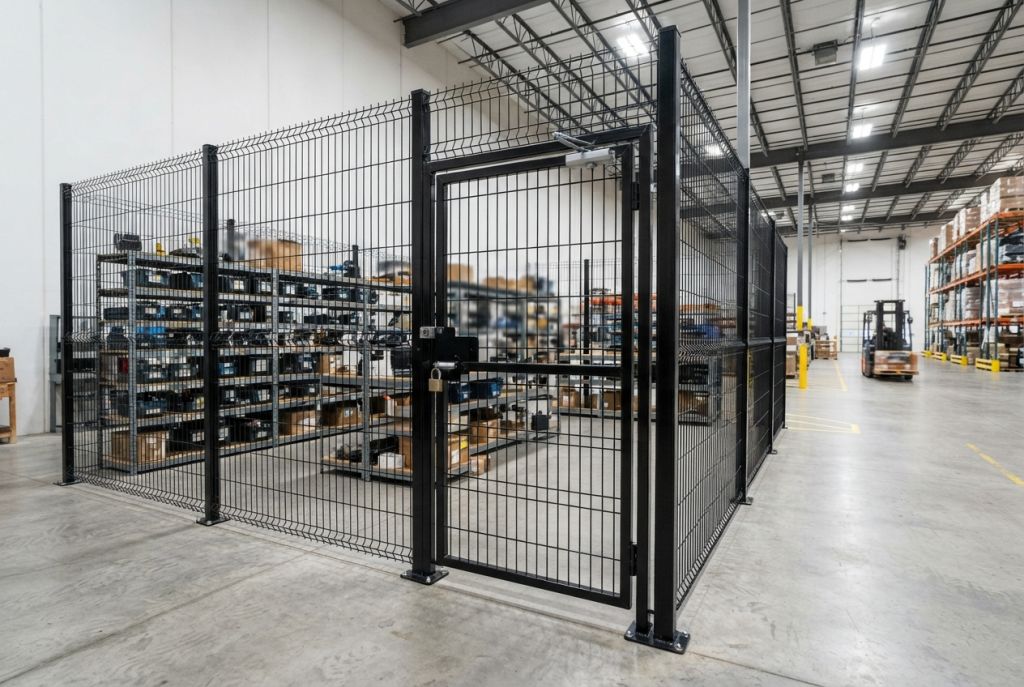
Sizing a compact enclosure
Small cages fail for predictable reasons, and nearly all of them are sizing decisions made before anyone measured what was going inside:
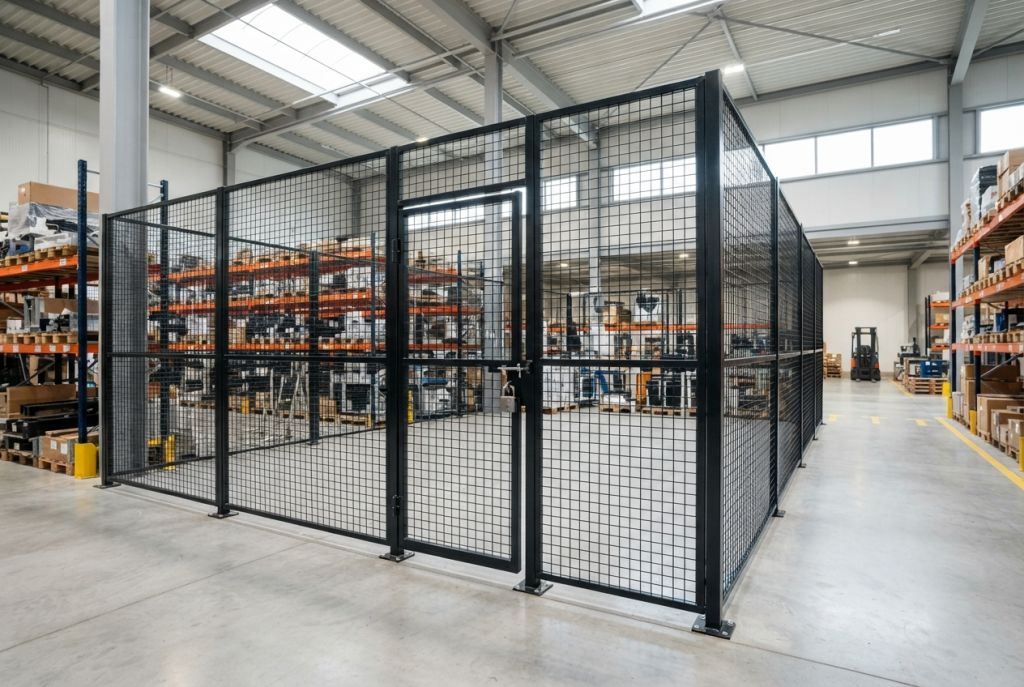
What a tile and stone contractor puts behind mesh
The list in a trade-contractor shop is short, specific, and different from a distribution warehouse:
- Portable power tools and batteries. Saws, grinders, mixers, drills and charged battery packs — the highest-turnover, highest-loss category in any construction trade, and a tool crib problem more than a storage one.
- Diamond blades, bits and consumables. Expensive, small, and easy to treat as disposable until the annual spend is added up.
- Specialty setting materials. Epoxies, specialty mortars and additives, which are costly, sometimes date-sensitive, and easy to over-draw when nobody is tracking them.
- Attic stock and discontinued product. The remaining boxes of a specific dye lot cannot be reordered. Losing them can mean re-doing a floor.
- Owner and jobsite returns awaiting disposition. Material with no clear owner is the material most likely to disappear.
- Small equipment shared across crews. Levelling systems, laser tools and layout equipment issued daily and returned inconsistently.
Palletized stone and tile is usually better protected by enclosing rack bays than by partitioning floor area — see pallet rack security enclosures.
Working inside a leased building
A tenant improvement is a landlord conversation. A bolted enclosure usually is not — which is a large part of why mesh gets specified in leased space.
- Nothing structural changes. A freestanding partition system does not alter walls, ceilings or the building’s occupancy classification, so it rarely triggers the approvals a framed room would.
- Anchoring is the one thing to confirm. Most leases allow floor anchors; some do not. Where drilling is restricted, stability comes from panel runs, returns and bracing designed into the layout.
- It leaves with you. At lease end the enclosure is unbolted, palletized and installed in the next building. A framed room is an improvement left behind.
- Exit routes still govern. Exit access must stay clear and adequately wide under 29 CFR 1910.36, and aisles and passageways around the enclosure are covered by 29 CFR 1910.176.
- Sprinklers belong to the building. Adding a mesh top or changing storage height affects the building’s fire protection design and should be reviewed with the landlord’s contractor.
- Seismic matters in Utah. Along the Wasatch Front, anchorage and bracing of storage equipment is a design consideration rather than an afterthought — worth confirming with the building owner before installation.
Specification notes for small enclosures
Installation and expansion
A compact enclosure is typically a single-day installation. The planning takes longer than the build.
- Survey the space as it is used. Floor condition, anchoring limits, clear height, sprinkler heads, lighting, existing rack lines and the route material takes in and out.
- Confirm the lease position. Anchoring, sprinkler coverage and anything the landlord needs to approve, agreed before ordering.
- Set panels and hang the door. Bolted systems go up quickly; the opening and door hardware take the most care because they take all the wear. Detail on our cage installation page.
- Move the right material in immediately. The enclosure only starts working when the high-value items are behind it and the working stock is not.
- Inspect it on a schedule. Latches, hinges, fixings and panel damage, using the checks in our maintenance and inspection guide.
Material Handling USA has been supplying and installing storage and security products since 1997 and is based in Salt Lake City. For Utah projects, see security cages in Utah and security cages in Salt Lake City, or call our local team at 801-328-8788. Nationally, start at the security cages hub.
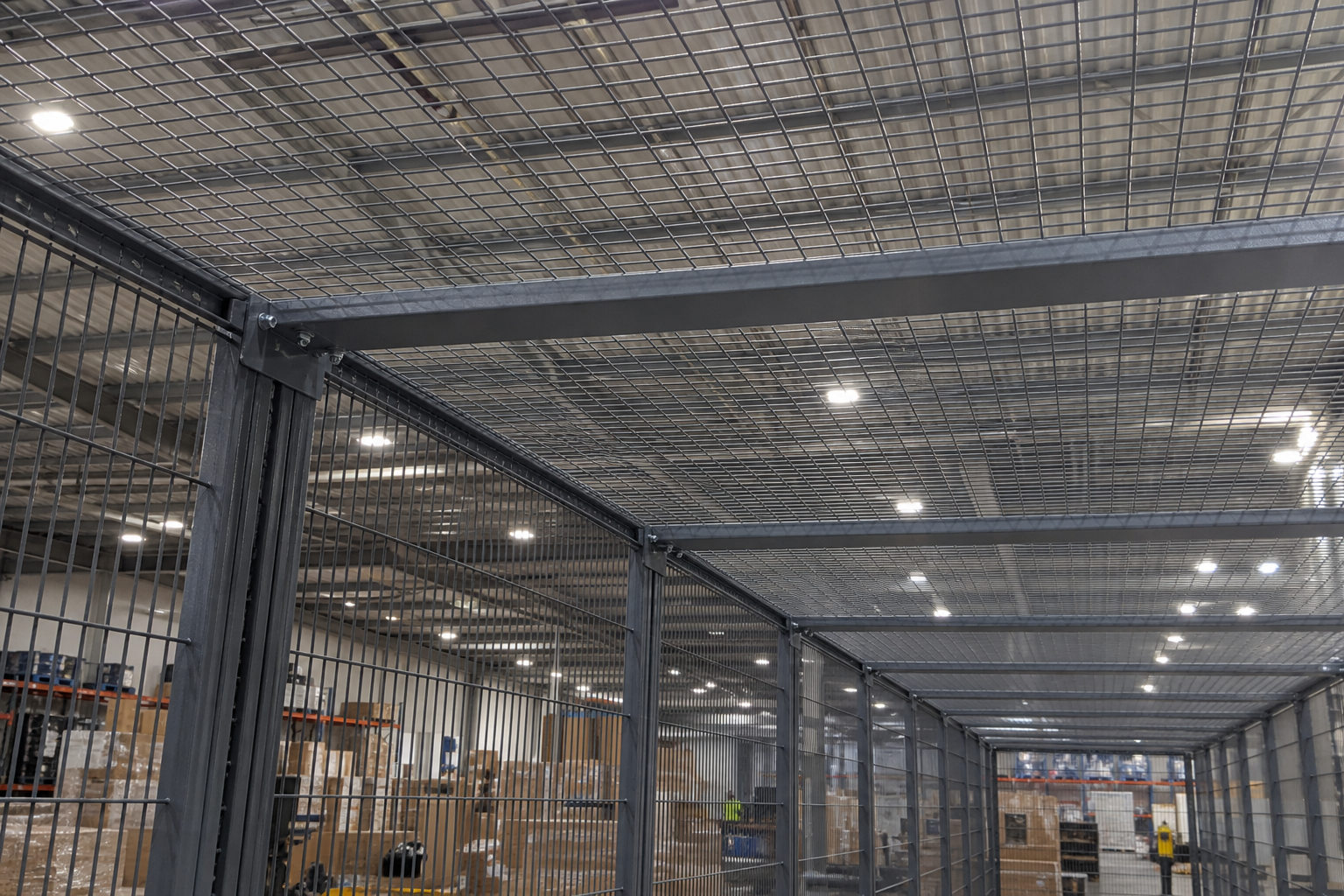
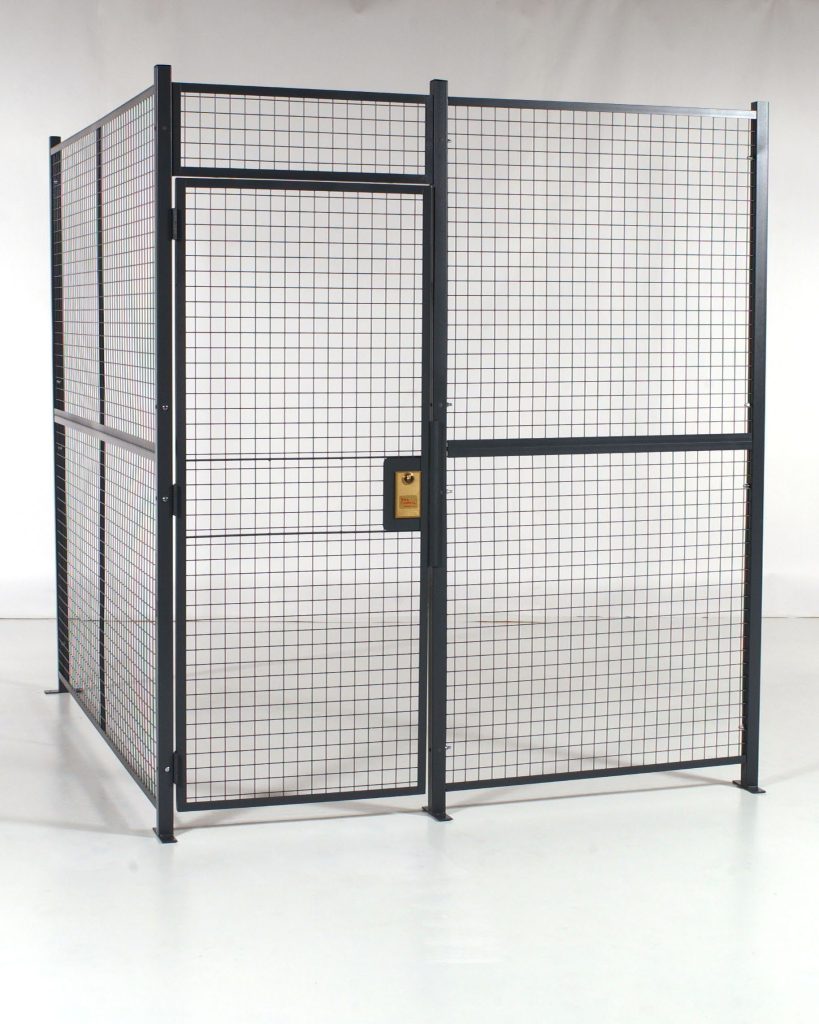
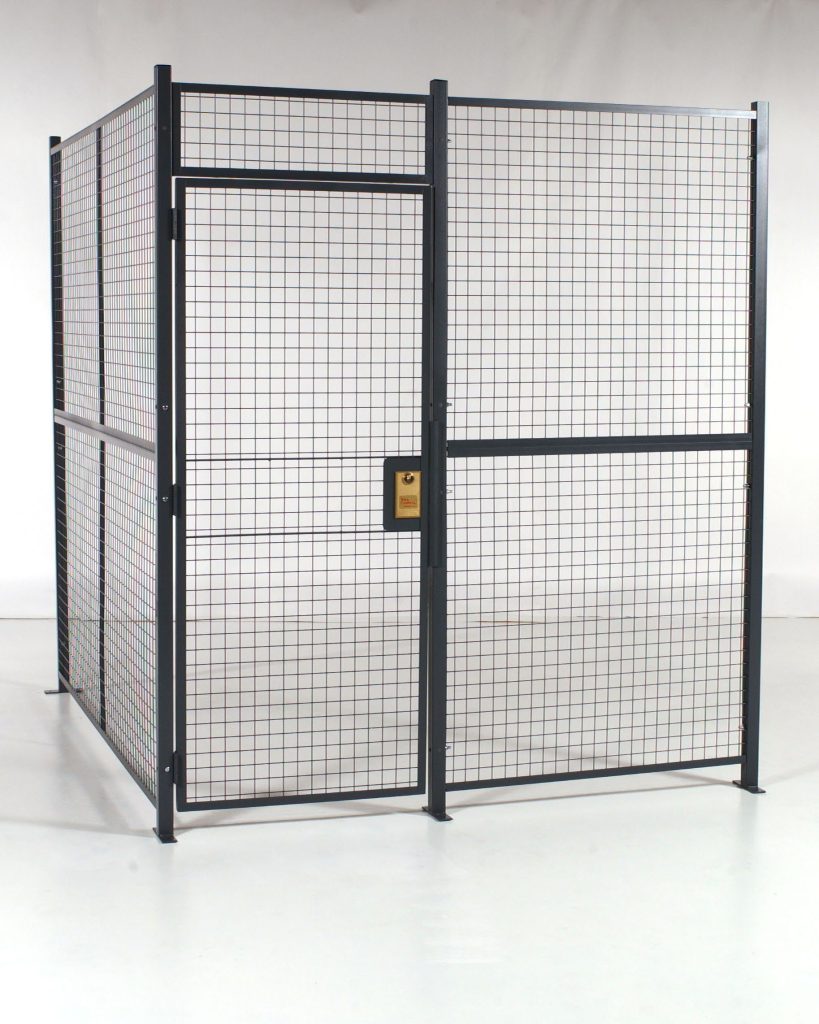
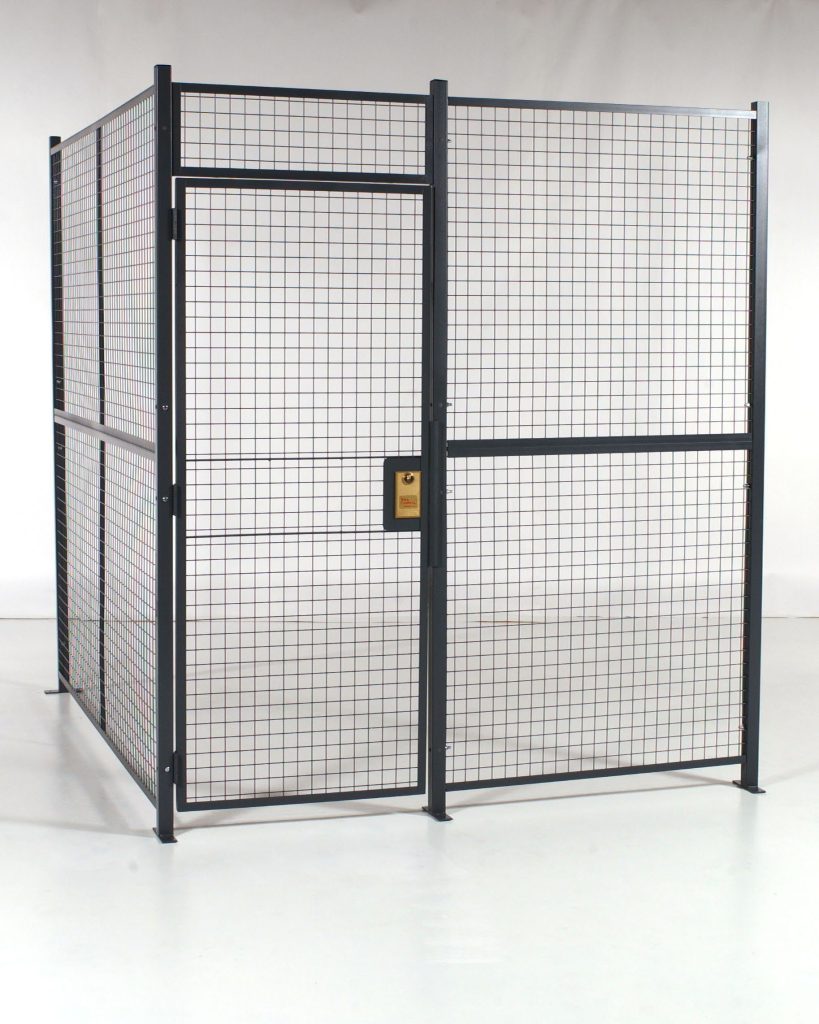
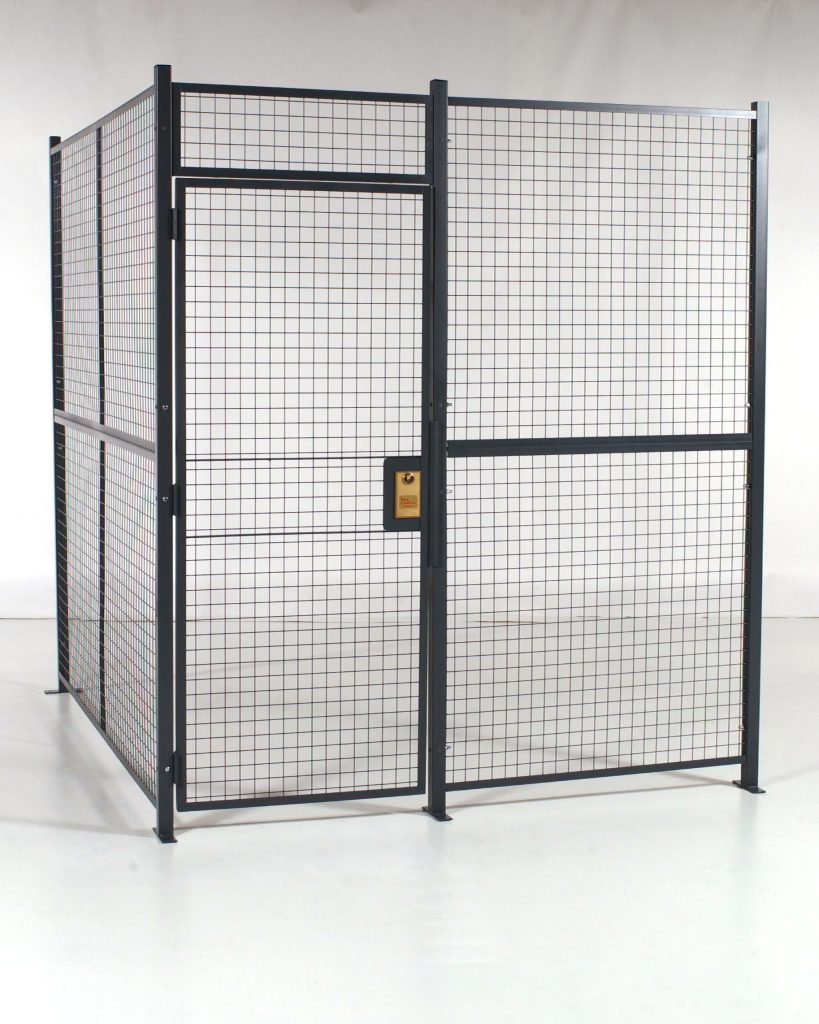
Shop Pre-Configured Wire Mesh Cage Kits Online
Standard-size welded wire cage kits, priced online, for smaller storage needs. Every kit still needs to be anchored to sound concrete — for tall, braced or engineered enclosures, request a quote with your building location and floor details.
Frequently asked questions
How small can a security cage be?
Is a small cage less secure than a large one?
Can a security cage be installed in a leased warehouse?
What if the lease does not allow anchoring into the slab?
How much should a small enclosure cost?
Should a small cage have a mesh roof?
Can it be expanded later?
What is the difference between a small cage and a tool crib?
How long does installation take?
Looking for a project like yours? Browse more warehouse, distribution and retail security cage case studies, see all security cage case studies.
A small enclosure protects most of the value
Material Handling USA designs, supplies and installs compact welded wire security cages, tool cribs and rack enclosures for shops and leased warehouses in Utah and nationwide.